You've survived the move — now comes the part people often overlook: greeting your new neighbors.
"What should I bring?" "How much should I spend?" "What's the etiquette with the noshi gift label?"
The questions pile up fast, but the answer is actually simple.
Choose a consumable that disappears without a trace — and make it something slightly nicer than what people would buy for themselves.
This guide covers everything: when and where to visit, how to write the noshi, and the best Japanese-made gifts at every budget — the ones that make a genuinely good first impression.
1. Basic Etiquette | When to Visit and Who to Visit
A well-timed greeting visit prevents neighborhood friction before it starts.
Visit the immediate neighbors — before or on moving day
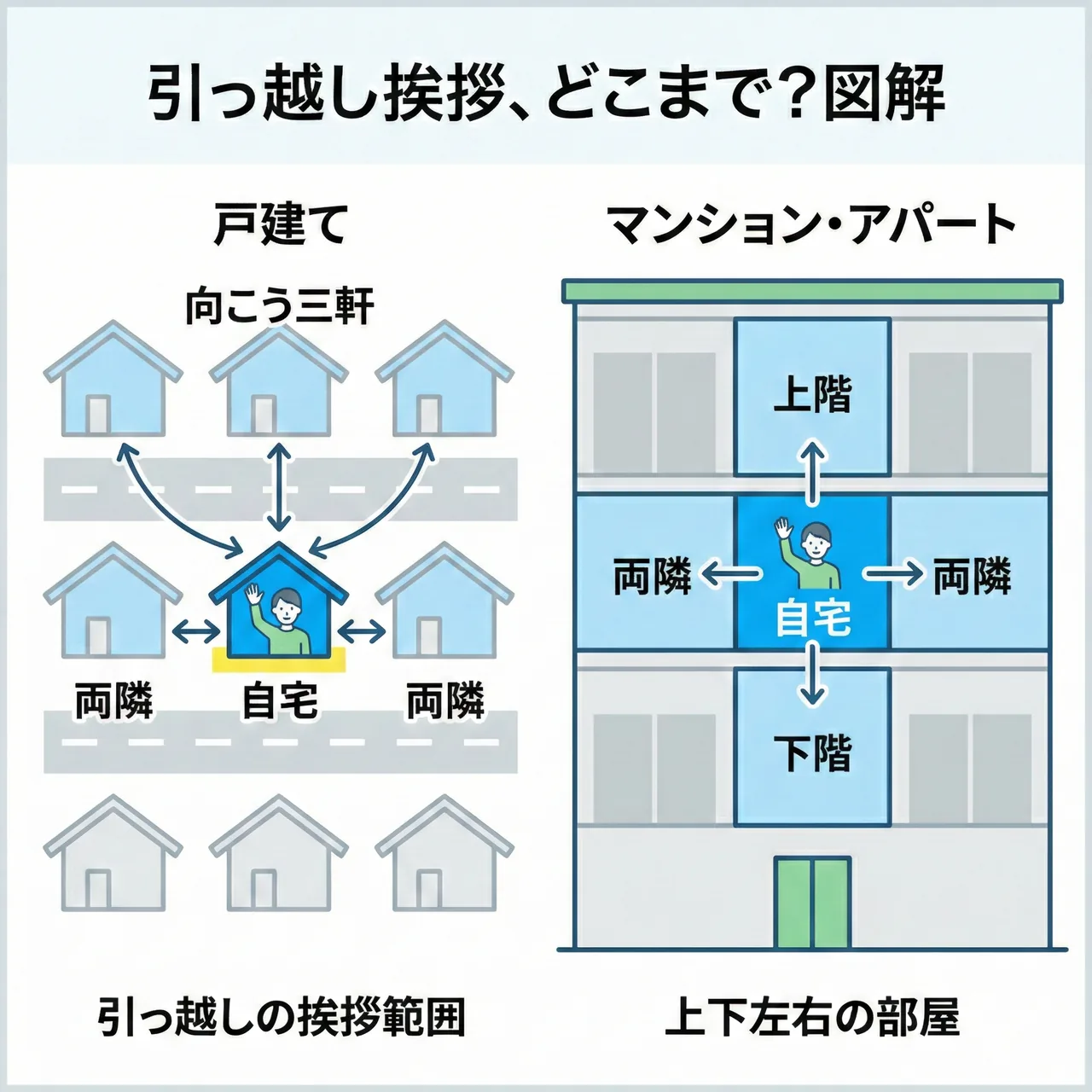
For a house: The traditional guideline is "three houses across, two on each side" — meaning the three houses directly opposite and the two on either flank. It's also courteous to include the house directly behind yours.
For an apartment or condo: The four units immediately above, below, left, and right are the minimum. Pay special attention to the unit directly below — footsteps travel downward, and a good relationship with that neighbor matters more than any other.
On timing: the moving truck will block the street and create noise, so ideally visit before the truck arrives, or at the latest by early evening on moving day.
2. Saying Goodbye to Your Old Neighbors | The Move-Out Greeting
Leave well, not just arrive well. Visiting your former neighbors before you go is a mark of character.
Visit the day before you move out
Moving day is too hectic for a proper goodbye, so go the day before. A simple "We're moving out tomorrow — sorry for any noise during the process" is enough.
Anyone you were genuinely close to, and your landlord or building manager, should receive a personal visit without fail.
3. The Noshi Gift Label | Complete Guide to Writing and Presenting
Attaching a noshi (熨斗) gift label to your gift signals care and formality — it's what separates a thoughtful neighbor from someone who handed over a bag from a convenience store.
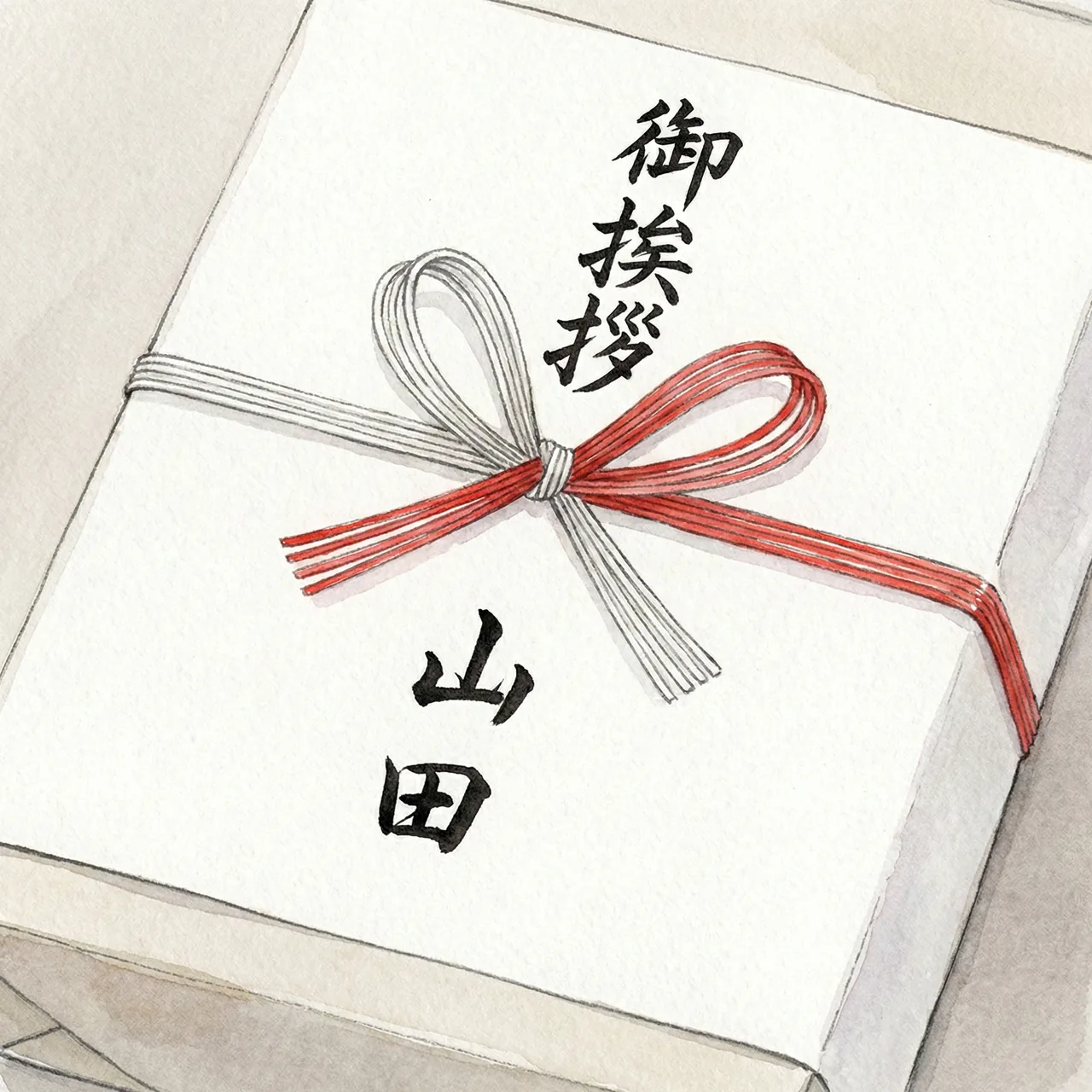
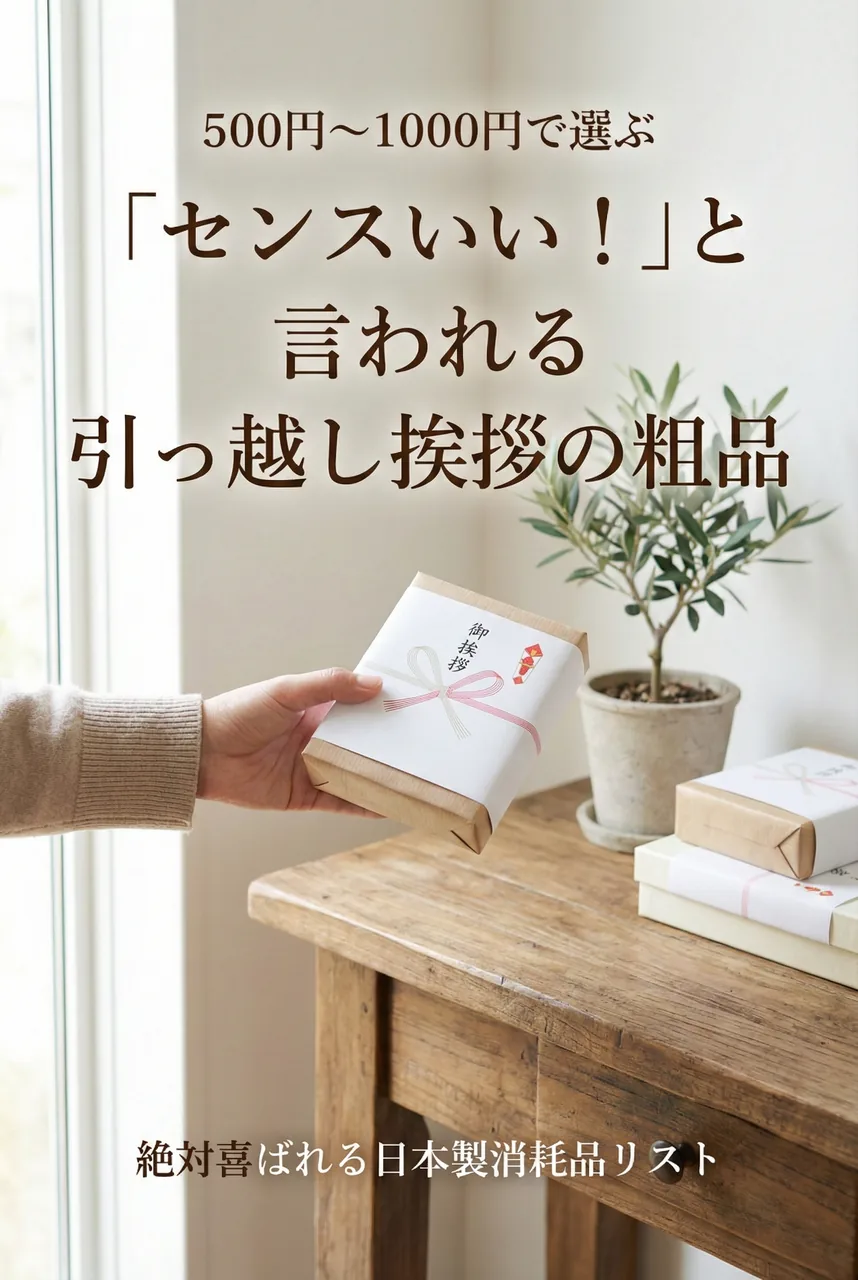
Use a red-and-white "bow knot" ribbon. The top line reads "御挨拶" (Greeting)
Because a new home is a joyful, repeatable event, the appropriate ribbon is a red-and-white bow knot (cho-musubi / hana-musubi) — the kind that can be tied and untied again.
For your new neighbors: Top line: 御挨拶 (Greeting). Bottom line: Your family name.
For your departing neighbors: Top line: 御礼 (Thank you) or 粗品 (Small gift). Bottom line: Your family name.
Placing the noshi on the outside of the wrapping (soto-noshi) is recommended — your name is visible immediately, which helps neighbors remember you.
4. What Makes a Great Greeting Gift | The Case for Japanese Consumables
You don't know your new neighbors' tastes, allergies, or family size yet. That constraint actually makes the right answer easier to find.
Skip scented products. Kitchen consumables are universally welcome
Detergents and fabric softeners are fraught — fragrance preferences vary wildly, and some people are chemically sensitive. Sweets introduce allergy risk.
The safest, most appreciated category is kitchen consumables: towels, cleaning cloths, plastic wrap, sponges. Everyone uses them, nobody is allergic to them, and they take up no permanent space.
Avoid anything they could buy for ¥100. Aim for "nice, but I'd never buy it myself"
A greeting gift from a 100-yen shop signals minimal effort. The goal is something your neighbor will unwrap and think: oh, this is actually good.
A premium Japanese-made consumable — something they'd enjoy but would feel slightly extravagant buying for themselves — hits that note perfectly. It's practical, culturally thoughtful, and genuinely impressive.
5. Best Gifts Under ¥1,500 | Japanese-Made Picks That Always Work
At this price point, you're giving something genuinely good without putting any social pressure on your neighbor to reciprocate.
Shirayuki Fukin — Mosquito-Net Kitchen Cloth (Nara Prefecture)
Beautiful, practical, and made from a traditional Nara textile.
These kitchen cloths are woven from mosquito-net fabric (kaya-ji), a traditional Nara craft known for its exceptional moisture absorption.
They arrive stiff with sizing — wash once and they open up into something soft and cloud-like.
The hand-dyed patterns come in a wide range of designs (including seasonal and regional motifs), making them feel like a genuine gift rather than a utility item.
Kamenoko Sponge — Silver-Ion Antibacterial Kitchen Sponge (Tokyo)
The premium sponge nobody buys for themselves — and can't go back to the cheap ones after.
From the makers of Japan's most famous tawashi scrub brush, this is the sponge taken seriously by people who care about their kitchen.
Silver-ion antibacterial treatment, exceptional water drainage, and a design that dries quickly — once you've used one, the standard supermarket sponge feels like a step backward.
The slim packaging is easy to carry in quantity, making it ideal when you're visiting several neighbors in one round.
6. Best Gifts Under ¥2,500 | For Landlords and Special Neighbors
For your landlord, the building manager, or a neighbor you know you'll be living next to for a long time, a slight step up in quality is appropriate.
Imabari Towel — Gift Set in Wooden Box (Ehime Prefecture)
Japan's most recognized towel brand, presented beautifully.
Imabari, Ehime is Japan's towel capital, and its towels are a benchmark of quality known nationwide.
For greeting gifts, look for sets of one or two face towels in a wooden box — these typically fall in the ¥1,500–¥2,000 range and feel considerably more substantial than the price suggests.
Crisp white towels carry the symbolism of a fresh start — a fitting message for a new-neighbor introduction.
Kayanoya — Dashi Stock Sampler (Fukuoka Prefecture)
A flavor that anyone who cooks will genuinely appreciate.
Kayanoya is Fukuoka's most celebrated premium dashi brand, used by home cooks and professional chefs alike.
Their small gift sets ("kokoro bakari") are designed specifically for moments like this — lightweight, long shelf life, and something most people would consider a treat rather than a staple.
A few packets are enough to transform everyday miso soup into something noticeably better.
Premium Rice Gift Pack — Two-Go Vacuum Cube
A light, practical gift with a gentle pun: "kome (rice) n to" — "nice to meet you."
Premium Japanese rice — Niigata Koshihikari, Yamagata Tsuyahime — vacuum-packed into tidy cube-shaped portions that make for surprisingly elegant presentation.
Rice has almost no dietary restrictions attached to it, the quality difference is obvious in the first bowl, and the packaging is small enough to slip into a gift bag with ease.
Many specialty rice retailers offer moving-greeting versions with celebratory packaging.
7. What to Do When Nobody Answers | The Letter Method
Visiting two or three times and still not catching anyone at home is perfectly normal. Here's the graceful solution.
Try twice at different times, then leave a gift with a handwritten note
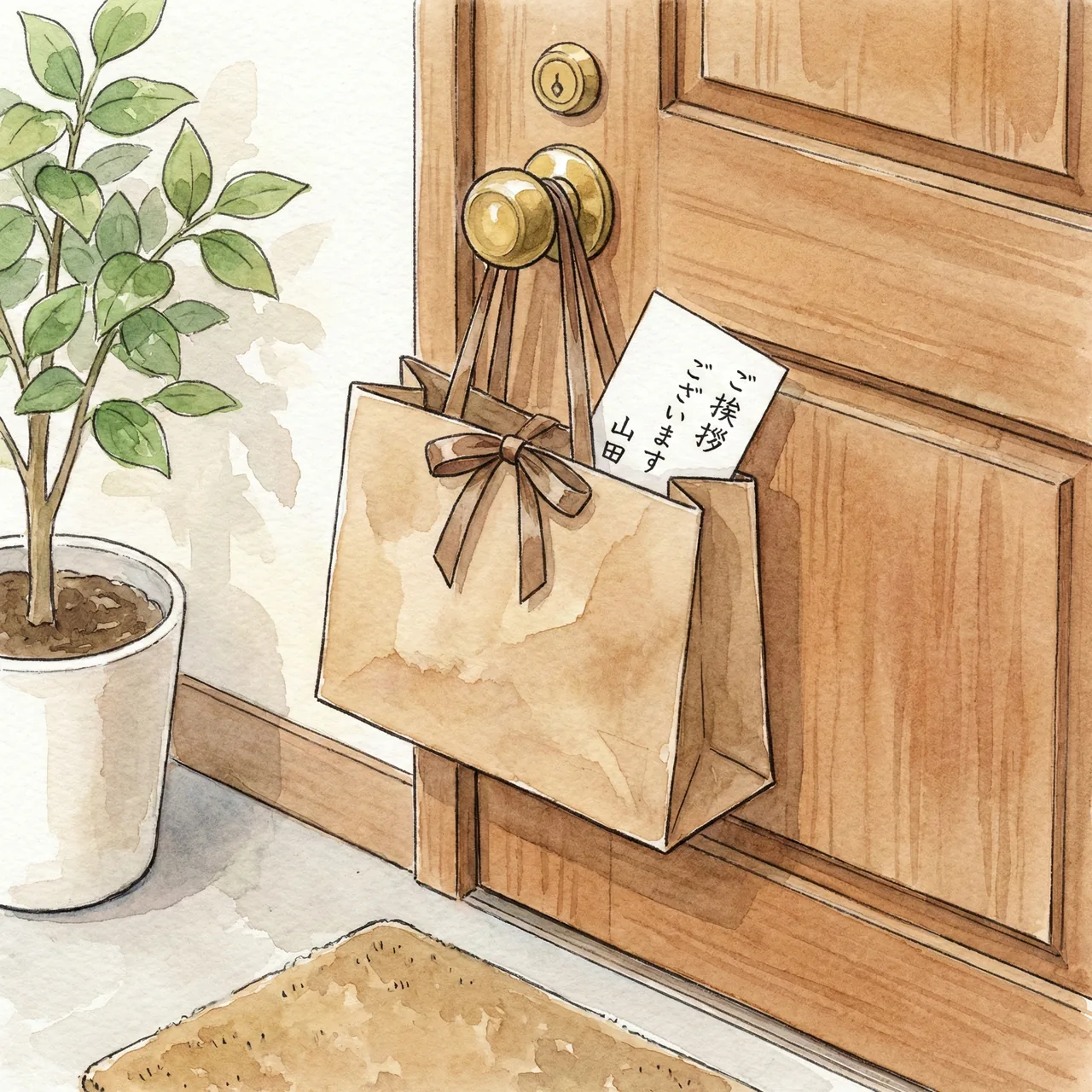
Try a weekday evening and a weekend afternoon — different schedules catch different people. If you still can't connect, don't keep ringing; leave the gift with a note attached, either on the door handle or in the parcel box.
Sample letter text:
"Hello. My name is [Family Name], and I moved into unit [XX] on [date].
I stopped by a couple of times hoping to introduce myself but wasn't able to catch you, so I'm leaving a small note instead.
I'm sorry for any disturbance during the move-in.
Please enjoy this small gift — and I look forward to being your neighbor."
8. Frequently Asked Questions
I'm a woman living alone. Do I really need to do the greeting rounds?
From a safety standpoint, it's not required.
Announcing that you live alone to strangers in your building carries security risks, and many women now skip the full greeting round for this reason.
If you do want to visit, consider limiting it to the building manager or landlord — or going with a male friend or family member for the visit.
Is it possible to spend too much on a greeting gift?
Yes — an expensive gift puts pressure on people to reciprocate.
A greeting visit is a light social gesture, not a formal gift exchange. Something in the ¥2,000–¥3,000 range can make your neighbor feel obligated to respond in kind, which is the opposite of what you want.
The ¥500–¥1,000 range remains the sweet spot — generous enough to feel genuine, modest enough to feel easy.
Can I give a gift card or QUO card instead?
It's not a faux pas, but it's not ideal for a first meeting.
Gift cards display their exact monetary value, which can feel transactional — some older neighbors may find it impersonal. For an initial introduction, a physical item (towel, food) conveys warmth in a way that cash-equivalent cards don't.
Save the gift cards for people you already know.
Should I mention that I have young children or a dog during the greeting?
Absolutely — this is one of the most important things to say.
A simple "We have a toddler who can be noisy" or "We have a dog who barks sometimes" said upfront dramatically increases your neighbors' tolerance for those sounds later.
People are far more forgiving of noise they were warned about than noise that came without notice.
We're moving into a brand-new building where everyone is new. Still greet?
Yes — especially then.
Everyone is in the same position, which makes it easier: no established social hierarchy, no awkwardness about who goes first.
The person who introduces themselves first tends to set a warm tone that benefits the whole floor. First impressions in a new building stick — start yours well.
Final Thoughts: A Small Gift, a Great Start
A ¥500 gift and a genuine smile at the door can prevent years of neighborhood friction — and create the kind of neighborly relationship where people look out for each other.
Choosing a high-quality Japanese-made consumable signals something beyond the gift itself: that you live thoughtfully, and that you're worth knowing.
Pick something you'd be happy to receive yourself, wrap it neatly, and knock on those doors.