
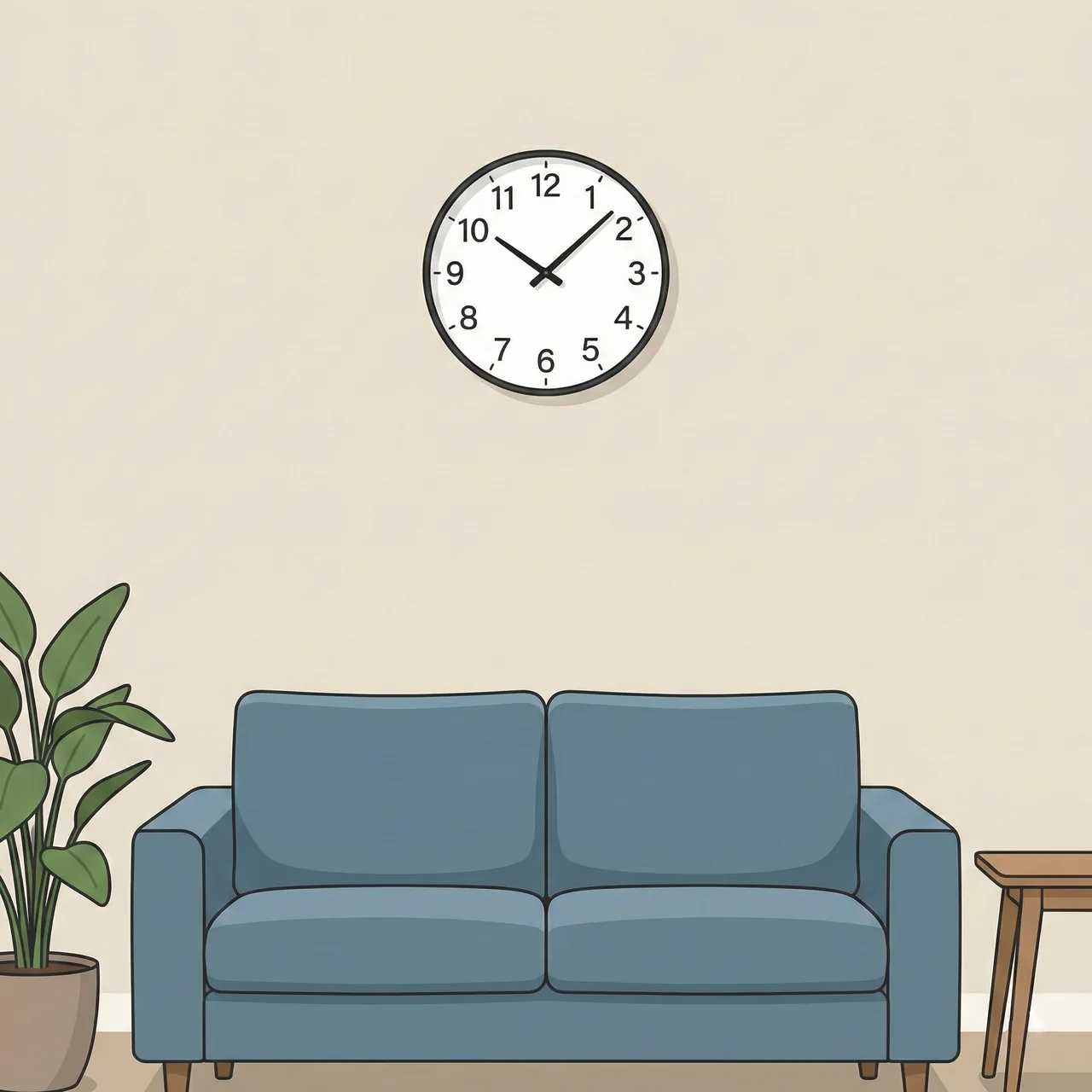
Glance up from the sofa and see your favorite clock on the wall — that small detail can make your home feel noticeably richer.
Yes, your phone tells you the time in an instant. But a wall clock in the living room has long since moved beyond timekeeping. It's now the face of the room — a piece of interior decor that sets the mood every hour of the day.
Choose on design alone, though, and you may end up with a clock whose tick-tick-ticking keeps you awake, or one whose hands are impossible to read across the room.
This guide covers how to choose a Japanese-made wall clock that looks great in any space, and introduces some of the finest silent models available.
1. Size & Material: How to Make a Clock the Room's Star
A clock can be a beautiful accent in any room — but go too large, and it feels oppressive.
The sweet spot for most living rooms: 25–30 cm diameter with a wood frame
For a typical living or dining room (roughly 130–200 sq ft), a clock with a diameter of 25–30 cm (about 10–12 inches) hits the golden ratio — large enough to read easily, small enough not to dominate the wall.
As for material, a wood frame — plywood (formed veneer) or solid timber — pairs naturally with the white walls and light flooring common in modern homes. The warmth of wood softens the room in a way that metal or plastic simply can't.
2. Silent Wall Clocks: Solving the Tick Problem with Sweep Movements
Even the most beautiful clock becomes a problem if it keeps you awake at night with a relentless tick-tick-tick.
Essential for bedrooms and home offices: the silent sweep second hand
Clock movements come in two types. A step movement advances the second hand one click per second — that's the classic ticking sound. A sweep movement (continuous second hand), by contrast, rotates the hand smoothly and continuously, producing virtually no sound at all.
If the clock is going in a bedroom, study, or anywhere you need quiet concentration, always look for "sweep" in the specifications.

3. Radio-Controlled vs. Quartz: Choosing the Right Movement
The choice comes down to whether you prioritize effortless accuracy or design freedom.
Radio-controlled: always accurate, but signal reception can be tricky
A radio-controlled clock receives a time signal broadcast and sets itself automatically — you never need to adjust it manually.
The downside: in reinforced concrete buildings, or rooms far from windows, the signal may not reach reliably, causing the time to drift. The internal radio receiver also constrains dial design somewhat, limiting the visual options.
Quartz: greater design freedom, and the beauty of handcrafted dials
A standard quartz clock runs on a battery and doesn't auto-sync, but it opens up far more possibilities in terms of aesthetics.
The most striking handcrafted clock faces — delicate artisan finishes, unusual materials, bespoke typography — are almost always quartz. If interior appeal matters most, this is your category.
4. Clock Faces & Fonts: How Typography Defines a Room's Character
The dial is the clock's face. The typeface used for the numerals — or the absence of numerals entirely — shapes the entire atmosphere of a room.
Match legibility to your room's style: Nordic, modern, or Japanese
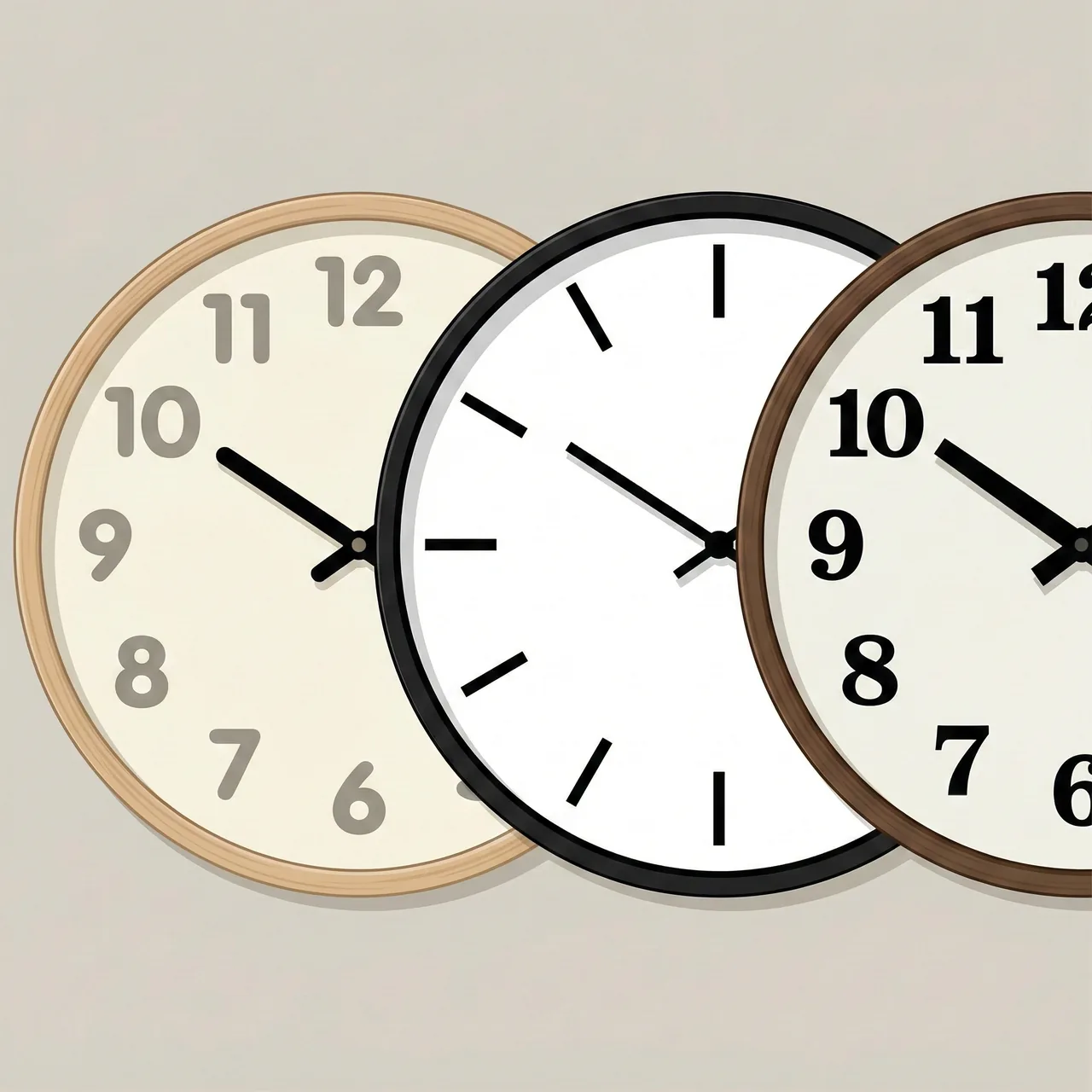
Nordic / Natural: Rounded, soft numerals or hand-drawn script. Relaxed and inviting.
Modern / Hotel-style: Minimal markers or clean sans-serif digits. Sleek and unobtrusive.
Japanese / Retro: Bold, character-driven typefaces — think the strong serif numerals used in classic Watanabe-Riki designs.
If children are in the household, readability becomes just as important as style. Make sure small hands can learn to read the time easily.
5. 3 Recommended Japanese Wall Clock Brands
Japan's design clock makers combine precision engineering with artisan craftsmanship. Here are the three names worth knowing.
Lemnos (Toyama Prefecture)
Japan's world-class design clock brand — the Campagne is an enduring icon.
Born from the traditional casting craftsmanship of Takaoka City, Toyama, Lemnos has grown into Japan's most internationally recognized clock manufacturer.
Their signature model, the Campagne, features gentle curves in beech wood and a beautifully considered dial with generous negative space. It blends seamlessly into virtually any room, from Scandinavian interiors to minimal modern spaces.
Lemnos collaborates with celebrated designers and has pieces in museum collections worldwide.
KATOMOKU (Gifu Prefecture)
Seamless bent-wood frames using the same tradition as magewappa bento boxes.
Made in a small workshop in Gifu Prefecture, KATOMOKU clocks are the definition of honest craft.
Each frame is steam-bent from a single plank of wood — no joints, no seams, just a perfectly smooth circle. The result is a refined simplicity that photographs beautifully and works in any setting.
Despite being handmade, nearly every model features both a radio-controlled movement and a silent sweep second hand — function to match the form.
Lemnos Birdhouse Clock
The cuckoo clock, reimagined for modern living.
The cuckoo clock has evolved. Lemnos's Birdhouse Clock keeps the charm of the original — a little bird appearing on the hour, singing on a bellows-driven "coo-coo" — but wraps it in a clean, modern triangular-roof silhouette that suits contemporary apartments just as well as traditional homes.
Unlike electronic chimes, the natural bellows sound is gentle and soothing, not startling. A built-in light sensor silences the chime automatically at night, so you can enjoy the whimsy without any sleep disruption.
6. How to Hang a Wall Clock Without Damaging Rental Walls
Don't let the fear of wall damage stop you from owning a great clock.
Gypsum board hooks (Hyper Hook) leave a near-invisible mark
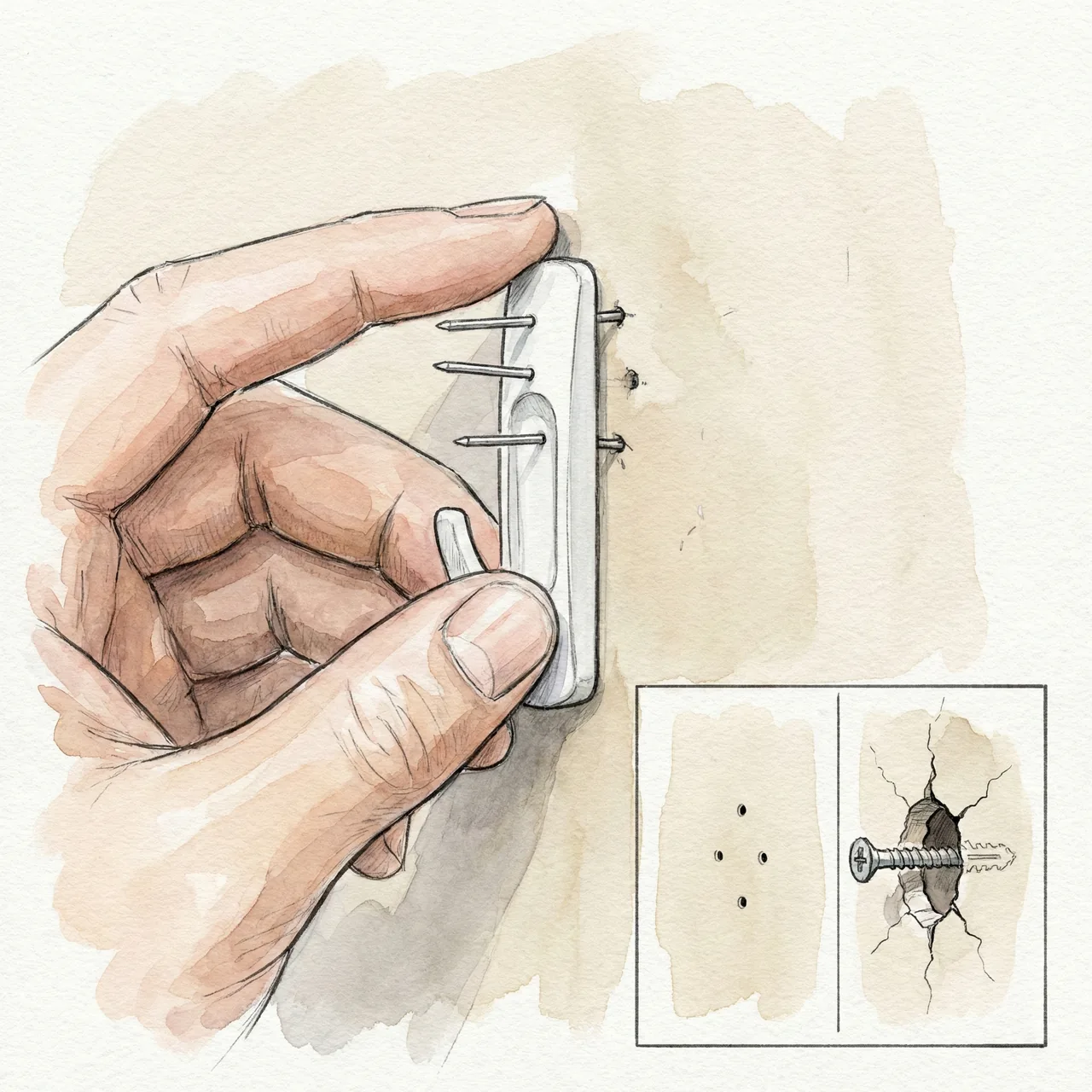
Most interior walls in Japanese homes are made of gypsum board (drywall). Hooks designed specifically for gypsum board — such as the popular Kakemakuri or Hyper Hook series — use extremely thin pins similar to staples, leaving a hole barely visible to the naked eye after removal.
Load capacity is typically 5–7 kg (11–15 lb), which is more than enough for even a heavy solid-wood clock. No drilling, no patching — just a small push and your clock is hanging securely.
7. Frequently Asked Questions
Alkaline or manganese (carbon-zinc) batteries — which is better for wall clocks?
Manganese (carbon-zinc) batteries are generally recommended.
A wall clock draws a very small, steady current over a long period — exactly the use case manganese batteries handle well, since they recover power between uses.
Alkaline batteries deliver too much power too quickly, which can sometimes cause liquid leakage or timekeeping errors. Always check the manual — some radio-controlled models do specify alkaline.
My radio-controlled clock won't sync. What should I do?
Try the "forced reception" button near a window, away from electronics.
Televisions, computers, air conditioners, and other appliances generate electrical noise that interferes with the time signal. Move the clock close to a window and trigger manual reception there.
If it still won't sync — particularly in thick-walled concrete buildings — consider a model that also allows manual time setting as a fallback.
How high should I hang a wall clock?
Slightly above eye level — roughly 180–200 cm (5'11"–6'7") from the floor — works for most rooms.
Too high and you're constantly looking up; too low and furniture may obscure the clock. Stand in your typical viewing position and find a height where the clock falls naturally into your field of vision without your eyes having to hunt for it. Also avoid spots where overhead lighting will reflect off the glass.
Can I turn the hands directly with my fingers to set the time?
Never — this is the most common cause of clock damage.
Forcing the hands by hand can chip the delicate gears or bend the hand shaft. Always use the time-setting knob (crown) on the back of the clock to advance the hands.
For radio-controlled clocks, press the reset button and wait for the hands to move automatically to the correct position.
What are the pros and cons of a clock without a glass cover?
Pro: no glare from any angle. Con: dust settles directly on the dial.
Many design-forward clocks omit the cover glass to allow a cleaner, flatter look — and it genuinely helps readability, since overhead lighting won't create reflections that wash out the numerals.
The trade-off is that dust accumulates on the hands and dial, requiring periodic gentle cleaning with a soft brush or microfiber duster.
Final Thoughts: A Clock Worth Looking Up For
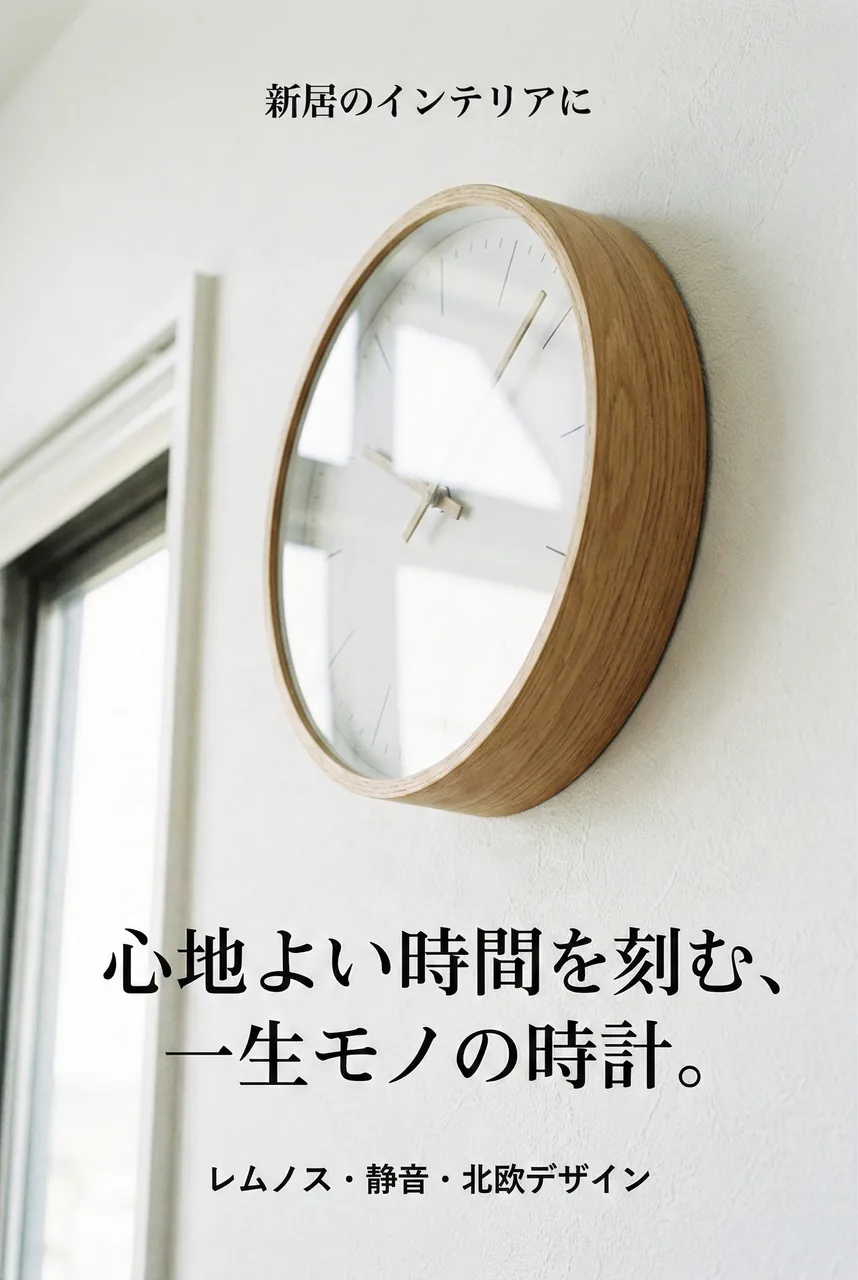
A wall clock is a long-haul investment — buy the right one and it will still be on your wall ten years from now.
So don't settle. Choose something that makes you smile every time you glance up.
The kind of clock that makes a rushed morning feel just a little more dignified.
The kind whose quiet sweep hand is the only sound in the room on a still winter evening.
We hope you find a Japanese-made wall clock that becomes exactly that kind of partner in your home.