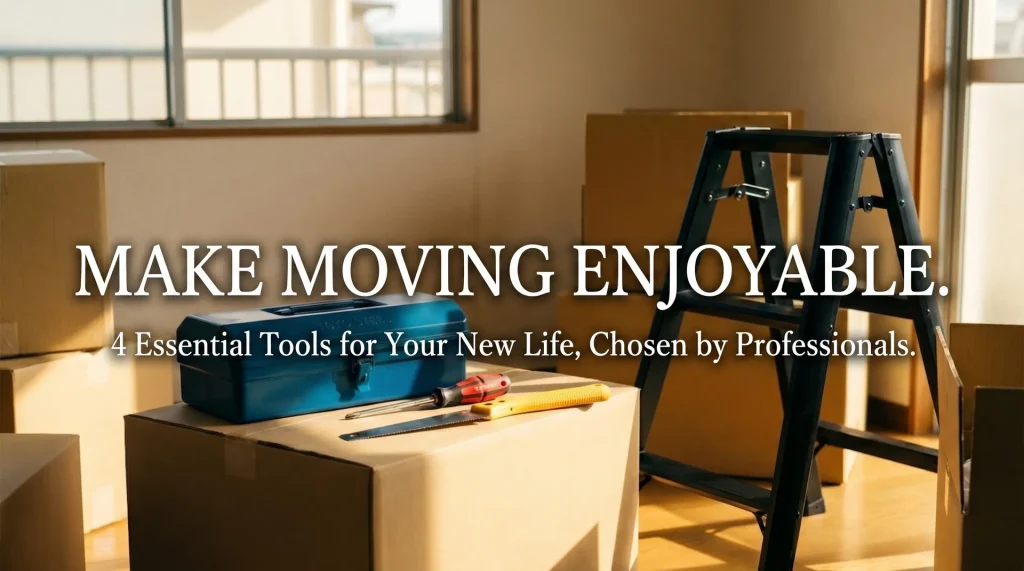
Moving doesn't end when the last box is taped shut.
Unboxing everything, assembling furniture, hanging curtains, measuring walls — the real work starts on moving day itself.
And yet, most people try to tackle all of it with a flimsy box cutter and a plastic screwdriver from the dollar store.
The right tools don't just make the job faster — they make it safer, less exhausting, and even enjoyable.
This guide introduces four categories of Japanese-made tools that professionals rely on every day: tools that combine serious function with designs beautiful enough to leave out on a shelf long after the boxes are gone.
1. Cut Every Box Safely | The Cardboard Saw "Danchan" by Hasegawa Hamono
Opening dozens of boxes with a standard box cutter is slow, tiring, and risky — one slip and you've sliced through something valuable inside.
Hasegawa Hamono — "Danchan" Cardboard Saw
A saw that tears cardboard without touching what's inside.
Made by a bladesmith in Seki City, Gifu — Japan's cutlery capital — the Danchan has a serrated, saw-like blade designed to rip through cardboard by dragging, not slicing.
The rounded blade tip is the key: even if you push too hard, you can't stab through to the contents or cut your hand.
The fluorine-coated version resists tape adhesive buildup, so the blade stays smooth through dozens of boxes without losing grip.
2. Assemble Furniture Without Stripped Screws | The VESSEL Ball-Grip Screwdriver
Assembling a bed or bookshelf with the tiny hex key that came in the box is a recipe for hand pain and stripped screw heads.
VESSEL — Ball-Grip Screwdriver
Japan's most-used screwdriver, trusted by professionals across every trade.
The round, palm-filling grip is the secret: your whole hand wraps around it, generating strong torque with surprisingly little effort.
The tip precision is exceptional — it seats into a screw head with an almost magnetic snap, which means even beginners rarely strip a screw.
This is the driver sitting in the toolbox of every Japanese carpenter, plumber, and electrician. Now it belongs in yours too.
3. Keep Every Tool in One Place | The Toyo Steel Mountain Toolbox
Screwdriver, tape measure, box cutter — they all end up scattered across different rooms. Finding the right tool eats more time than using it.
Toyo Steel — Mountain Tool Box
Pressed from a single sheet of steel — no seams, no weak points.
Made by a small factory in Osaka, the Mountain Tool Box is a Japanese design classic. A single steel sheet is pressed into shape, which means no welded joints and no hidden points of failure.
It's won the Good Design Award, and for good reason: it looks at home on a living room shelf as easily as in a garage.
Put all your tools in here and leave it somewhere visible — you'll never search for a screwdriver again.
4. A Ladder You Leave Out | The Hasegawa Kogyo lucano Stepladder
Installing light fixtures, hanging curtain rods, cleaning the top of the refrigerator — new homes always involve work at height.
Hasegawa Kogyo — lucano Stepladder
The ladder you don't hide in a closet.
Traditional ladders are ugly — you use them, then you hide them. The lucano is different.
Not a single screw is visible on its surface. Folded flat, it stands upright on its own, looking like a modern sculpture rather than a tool. It works perfectly well as a plant stand or side table between uses.
This is what Japanese design does best: making a purely functional object beautiful enough to live with.
5. Measure Rooms Without a Helper | The Tajima Stiff-Blade Tape Measure
Measuring for curtains or furniture with a floppy fabric tape is an exercise in frustration — it bends, it droops, it gives you inaccurate numbers.
Tajima — Rigid Blade Tape Measure (Gōatsu Convex)
A blade stiff enough to extend two meters unsupported — no second person needed.
Tajima is Japan's top professional tape measure brand, used on construction sites nationwide.
The "rigid blade" (gōatsu) design gives the steel tape enough backbone to extend nearly two meters straight into the air without sagging or folding back on itself.
Measuring ceiling height, room length, or furniture placement alone becomes effortless — and the readings are accurate enough for furniture orders and curtain cuts.
6. Protect Your New Home from Day One | Smart Uses for Masking Tape
Masking tape isn't just for labeling boxes. Applied on move-in day, it can protect your new home for years.
Kamoi Kakoshi — mt Masking Tape
Protect bathroom tracks and kitchen caulk from day one — replace instead of scrub.
The door tracks in your bathroom and the silicone caulk lines in your kitchen are notorious dirt traps. Once mold takes hold, they're almost impossible to clean properly.
The solution: cover them with masking tape on move-in day. When the tape gets dirty, peel it off and put on a fresh strip. No scrubbing, no chemical cleaners, no mold.
mt tape is specifically designed to peel off cleanly without leaving adhesive residue — safe for rental apartment walls, and available in colors that can look intentional rather than makeshift.
7. Protect the Floor (and Your Feet) | Japanese Room Shoes for Moving Day
During a move, you'll be walking back and forth across floors that haven't been cleaned yet — in socks. And once you're carrying heavy boxes up and down stairs, regular slippers are a hazard.
What you need are room shoes that stay on your feet.
ABE HOME SHOES (Yamagata Prefecture)
Washable canvas babouche slippers that stay on your feet when you need them most.
Made by a long-established slipper maker in Yamagata, these canvas room shoes have a 2-way design that sets them apart from ordinary slippers.
Fold the heel up and they wear like a shoe — secure enough for carrying heavy boxes up and down stairs without slipping off.
When the move is done and they're dirty, throw them straight in the washing machine.
They come in a wide range of colors, making them a popular "first matching item" for couples setting up a new home together.
8. Frequently Asked Questions
Are 100-yen shop tools really that different from these?
For a single use, they might be fine. For moving day, they're not up to the job.
Cheap blades lose their edge quickly, which means you end up pressing harder — increasing the chance of slipping and hurting yourself or damaging your belongings.
Cheap screwdrivers are even more dangerous: a poorly fitted tip can strip the screw head on an expensive piece of furniture, making it impossible to disassemble later.
Think of the difference in price as buying safety and protecting your furniture's lifespan.
Isn't a plastic toolbox lighter and more practical?
For portability, yes. For long-term durability, steel wins every time.
Plastic toolboxes crack with age, especially when dropped. The Toyo Steel box is press-formed from a single sheet — drop it and it dents, but it never splits or falls apart. Those dents just become part of its character.
If this is going to be your one toolbox for life, steel is the right choice.
Any gloves with a good grip for moving heavy boxes?
Yes — skip plain cotton work gloves and get a pair with rubber grip dots on the palm.
Plain cotton gloves are slippery. You end up squeezing boxes harder than necessary, which drains your grip strength within an hour.
Rubber-grip gloves hold boxes securely with much less force, which dramatically reduces the muscle soreness you feel the next day.
How long a tape measure do I actually need?
For measuring a new home, 5.5 meters (18 feet) is the sweet spot.
A 2-meter or 3-meter tape forces you to measure in segments and add the numbers together — errors creep in.
At 5.5 meters, you can cover a typical room's longest dimension in one pull, giving you accurate numbers for curtains, rugs, and large furniture placement.
Do I really need furniture pads under every leg?
Absolutely — and attach them before you place the furniture down.
The most common floor-scratching mistake: you place a heavy bookshelf, realize later the pads aren't on, and drag it slightly to reposition. One scrape and the floor is marked.
Stick felt pads (sold as "furniture sliders" in most hardware stores) to every leg before the piece goes down. After that, you can reposition furniture with one finger — no lifting needed.
Final Thoughts: Better Tools, Better Start
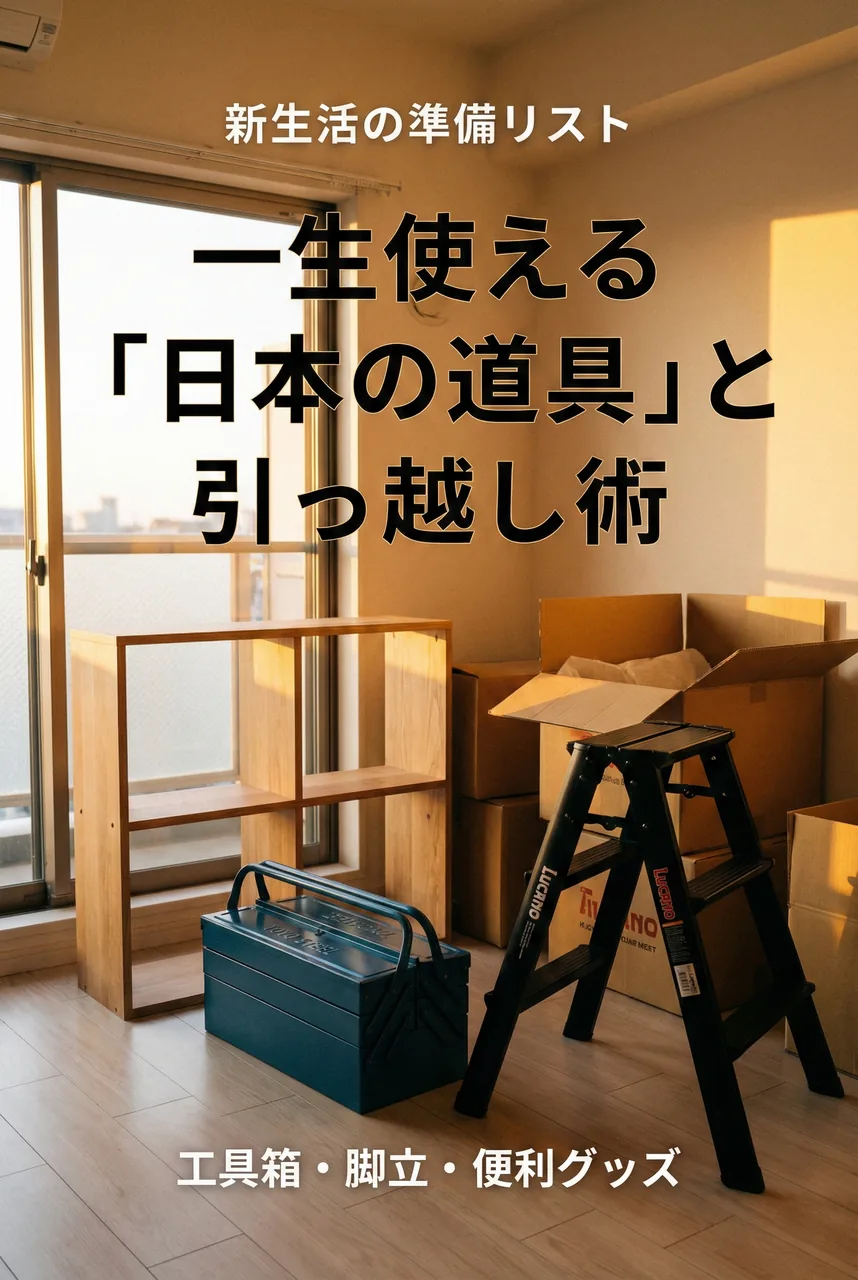
A new home. New furniture. A new chapter.
Why not equip yourself well for all of it?
There's a real difference between wrestling with the wrong tools and working smoothly with the right ones. The latter puts you in the right frame of mind for a new life — and the Japanese-made tools in this guide won't disappear into a drawer after moving day. They'll stay with you, getting better with use, for years to come.