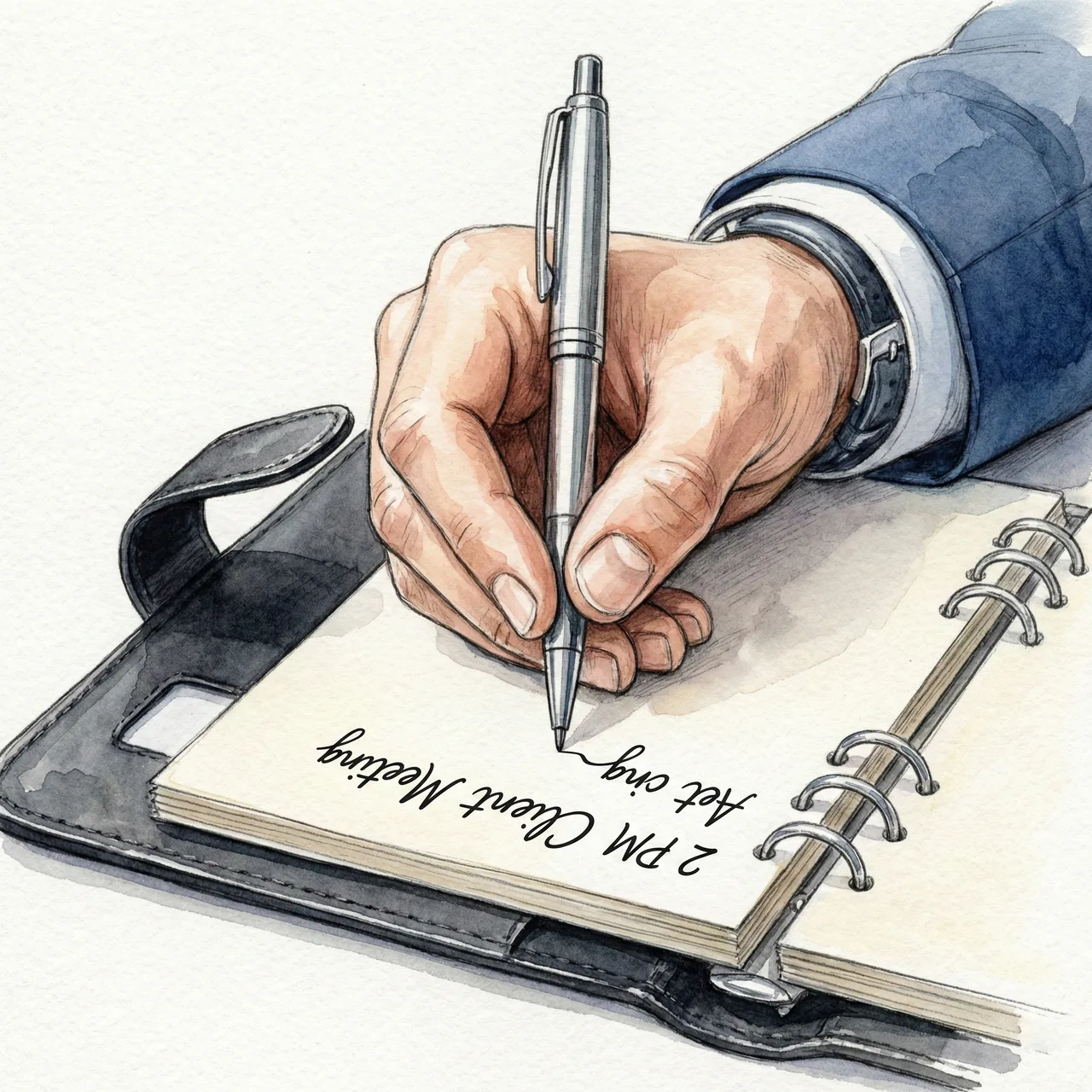
In an age when most communication happens on screens, the moment you put pen to paper — signing a document, jotting a handwritten note — says something about who you are.
When choosing a pen as a gift for a new graduate or a promotion, you might hesitate over a fountain pen: "Will they actually use it? Isn't maintenance a hassle?" That's exactly where a Japanese premium ballpoint pen shines.
Without the overseas luxury-brand markup, Japanese ballpoint pens offer something more valuable: a nib ground to tolerances measured in microns, designed to render every stroke — even the subtle lifts and pressures of Japanese script — with total fidelity. And they simply don't break.
This guide introduces the finest models available in the $50–$100 range, along with advice on picking the right one as a gift.
Quick Reference: Ink Types at a Glance
| Ink Type | Writing Feel | Dry Time | Best For |
|---|---|---|---|
| Low-viscosity oil-based (e.g. Acroink) | Smooth, effortless glide | Fast | Business, left-handed writers |
| Gel ink (water-based) | Vivid, crisp lines | Moderate | Planners, notebooks |
| High-viscosity oil-based (traditional) | Firm, controlled stroke | Fast | Carbon-copy forms, delivery slips |
| Emulsion ink (e.g. Fure-Fure) | Near fountain-pen smoothness | Fast | Gifts, premium everyday use |
1. Why a Premium Ballpoint Makes the Perfect Gift
A fine pen given to someone starting a new chapter says: "I believe in what you're about to do."
More practical than a fountain pen — ready to write anywhere, anytime
Fountain pens are wonderful instruments, but they come with caveats: ink can leak during flights due to air pressure changes, and neglect the pen for a few weeks and the nib dries out. A premium ballpoint needs none of that care.
Pull it from your pocket, write — it works perfectly every time. It handles carbon-copy forms, receipts, and any other surface a fountain pen might struggle with. For the real world of business, that reliability is priceless.
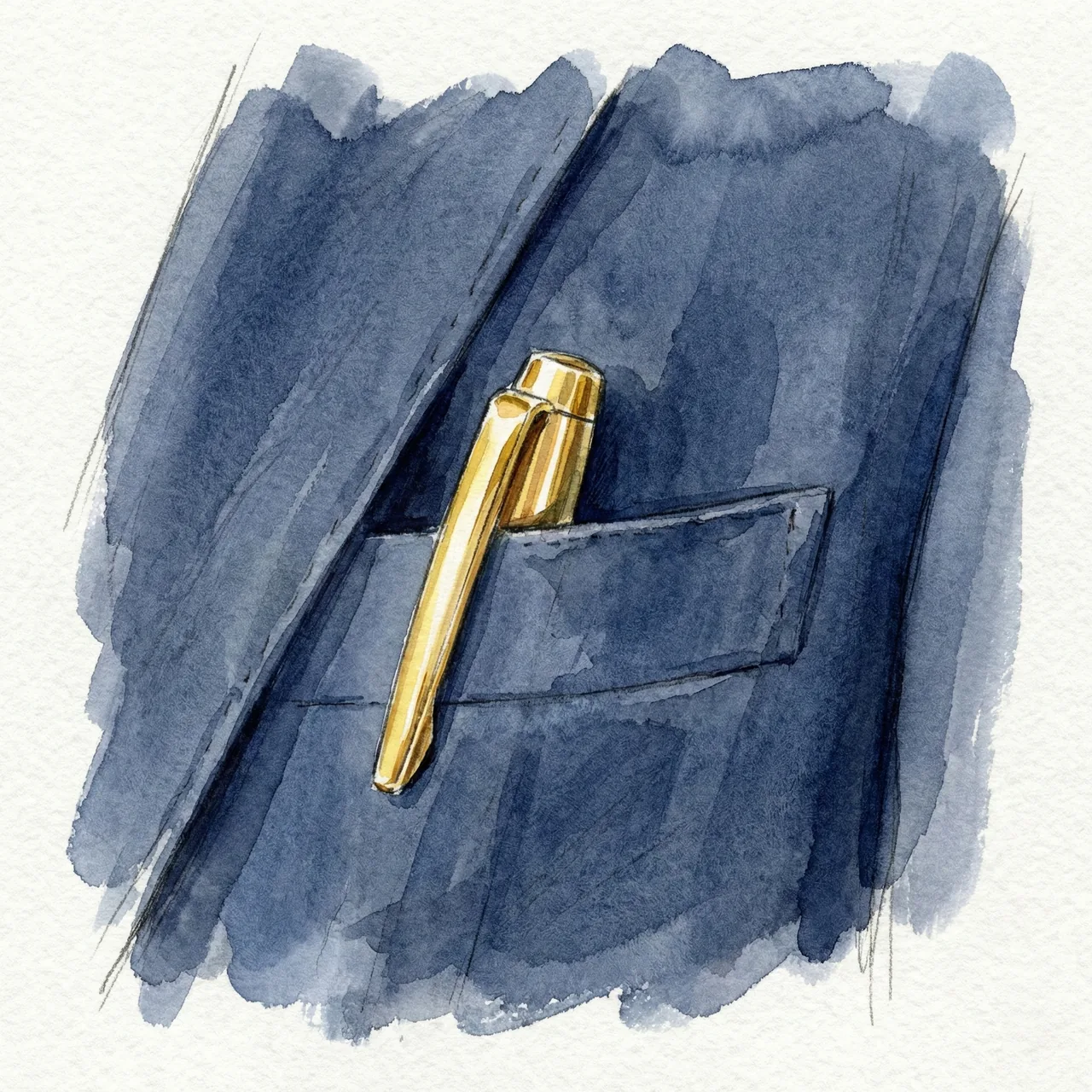
The clip visible above the breast pocket is part of a professional's appearance
Tuck a pen into a jacket's breast pocket, and the clip is the one thing the world sees. The difference between a plastic convenience-store pen and a precision-machined metal clip is immediately apparent — to everyone in the room.
A high-quality pen functions as quiet personal accessory: part of how a professional presents themselves, without ever calling attention to itself.
2. Ink Types and Writing Feel: The Low-Viscosity Revolution
Still think ballpoint pens are scratchy and stiff? Japan's ink technology has made that a relic of the past.
PILOT Acroink and the low-viscosity oil-based breakthrough
Today's gold standard is low-viscosity oil-based ink — a Japanese innovation. Unlike traditional ballpoint ink (thick, slightly gummy), this ink flows with a smoothness comparable to water-based pens while retaining oil-based durability: waterproof, fade-resistant, and safe on official documents.
PILOT's Acroink, used in their premium lines, is considered one of the finest inks ever put in a ballpoint. Once you've tried it, going back is hard.
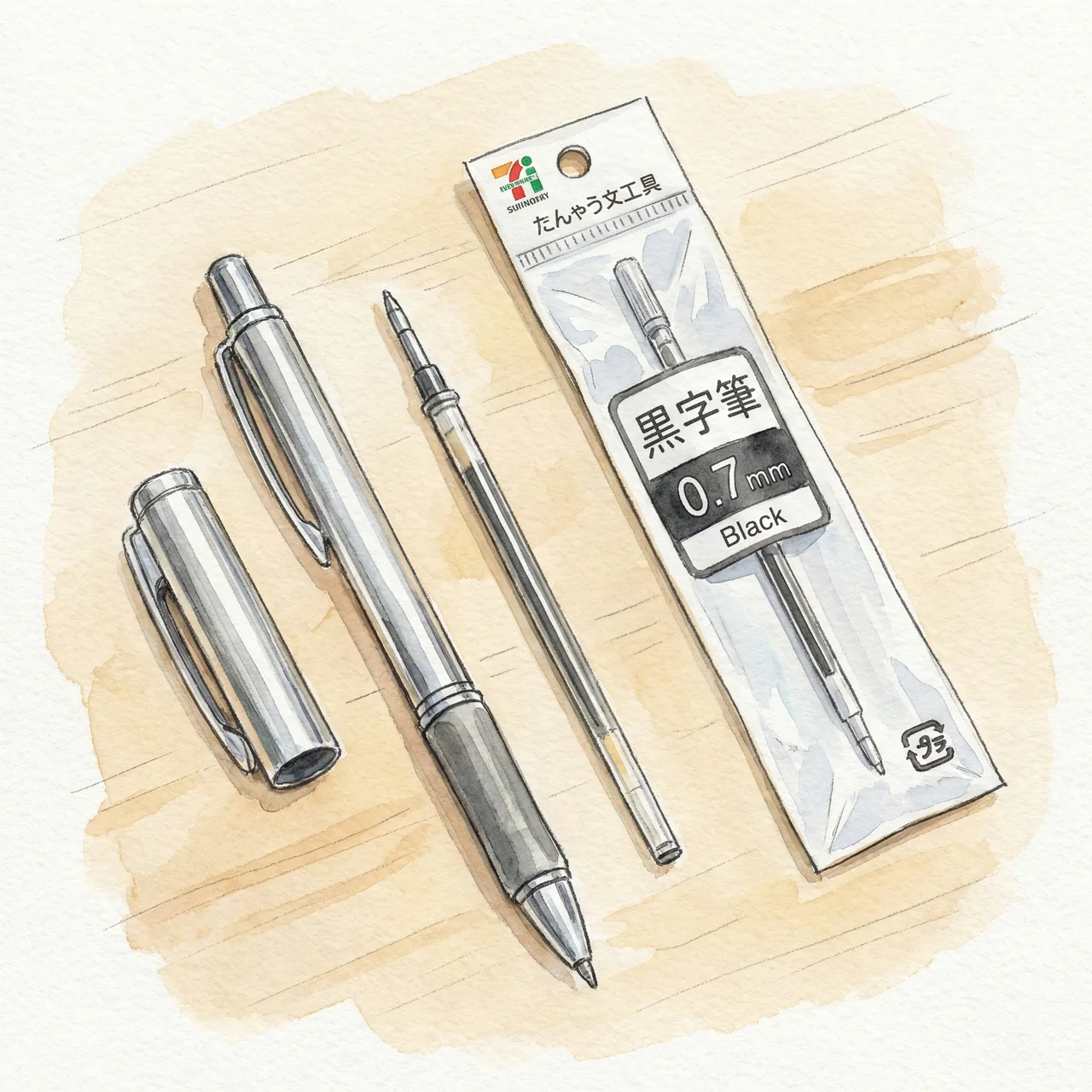
Refill availability matters: Japanese brands are easy to resupply
Overseas luxury brands often require a special trip to a boutique just to replace a refill — which means many gifted pens end up sitting in a drawer unused.
With PILOT, Mitsubishi Pencil (uni), and SAILOR, replacement refills are available at major stationery stores across Japan and internationally through their Amazon stores. The knowledge that you can keep it going indefinitely makes the pen feel like a true long-term companion, not a precious object to be treated with kid gloves.
3. Barrel Materials: Wood, Metal, and the Science of Balance
The material of the barrel determines how the pen feels in your hand — its temperature, weight, and grip.
Wood barrels develop a patina with use — birch, whisky cask, and beyond
Wood-barreled pens — like Mitsubishi's Pure Malt series (made from actual whisky barrel wood) or PILOT's Legno — are perennially popular for good reason. Wood absorbs moisture from the hand, so it doesn't slip; use it daily and the oils from your skin gradually deepen its luster into a rich, one-of-a-kind finish. Cold days are no problem either — unlike metal, wood never feels icy to the touch.
Weight distribution is everything: a front-heavy pen writes itself
Premium pens are typically weighted, but what matters is where the weight sits. A forward-weighted (low center of gravity) design lets the pen's own weight do much of the work — you apply less pressure, your hand tires more slowly, and strokes become more even and controlled.
This is one area where a well-engineered metal-bodied pen genuinely outperforms lighter alternatives.
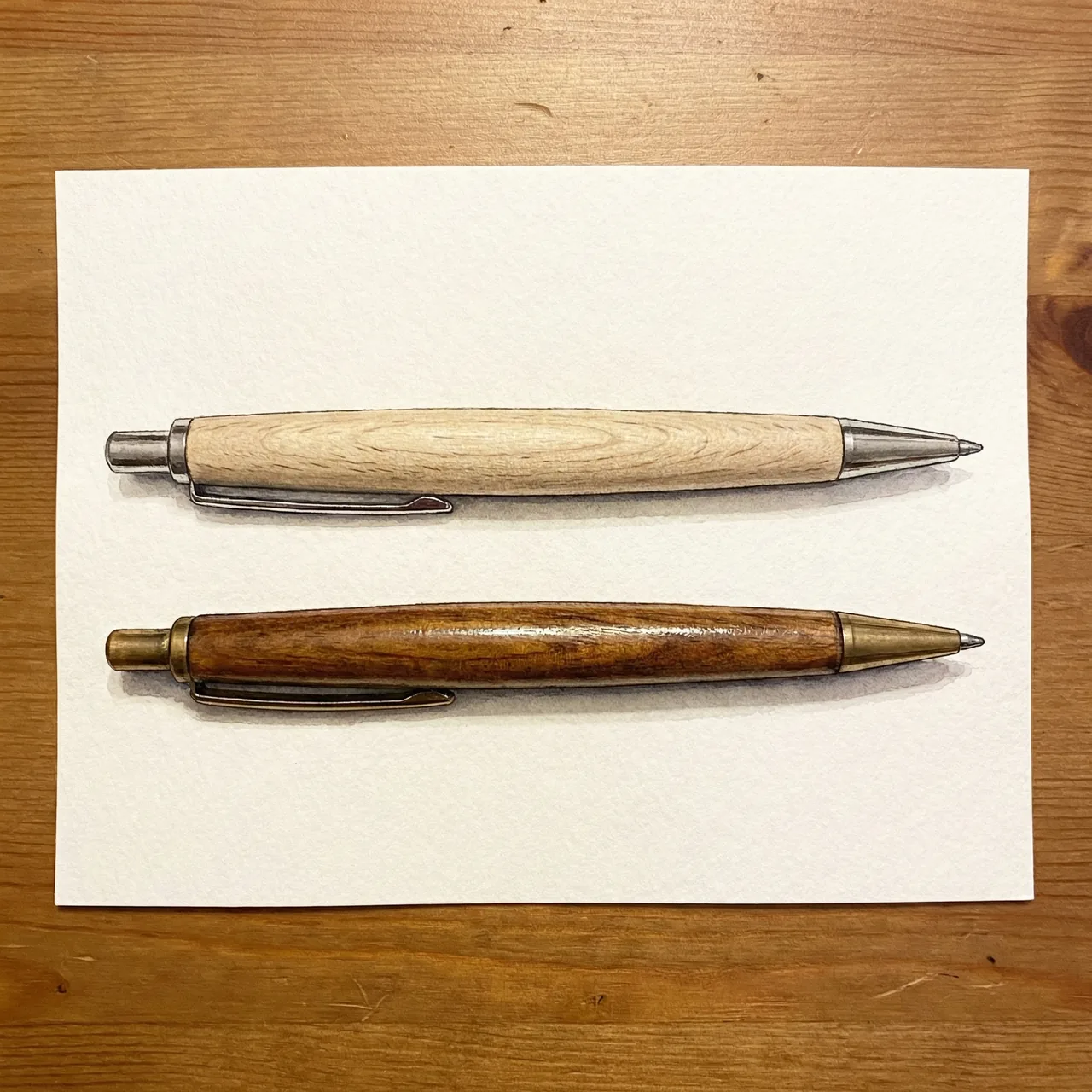
4. 3 Recommended Japanese Premium Ballpoint Pens
Writing feel, design, and mechanism — each of these pens represents the pinnacle of Japanese craftsmanship in a different way.
PILOT TIMELINE〈FUTURE〉
A near-future mechanism: the nib disappears entirely into the barrel.
Developed as "a pen that transcends its era," the Timeline is unlike anything else in the category.
Its defining feature is the Double Action system: the nib retracts fully inside the body — no exposed tip to snag or stain your pocket. Extending and retracting it is a silky, satisfying motion that becomes genuinely addictive.
Loaded with low-viscosity Acroink for a writing experience that matches the engineering spectacle of the design.
SAILOR Professional Gear Ballpoint
Fountain-pen gravitas in a ballpoint — the anchor cap says it all.
SAILOR is one of Japan's most celebrated fountain pen houses, and their Pro Gear ballpoint brings that same commanding presence to everyday writing.
A wide barrel, a satisfying heft in the hand, and the iconic anchor emblem on the top cap give it an authority that few pens can match. The weight balance is exquisite — lovers of larger grips will find it hard to put down.
The matte-finished Imperial Black and Stainless colorways are among the most popular gift choices for men.
Itoya (伊東屋) ROMEO No. 3
A watch-crown top and surgeon-precise balance — Ginza stationery at its finest.
The original brand from Itoya, Tokyo's legendary Ginza stationery store since 1904.
The Romeo No. 3 is engineered around the act of writing: a streamlined silhouette that slides smoothly into any pocket, and a top cap modeled after a watch's crown (the winding knob), lending it a watchmaker's attention to detail.
Its gel ink (easy FLOW) is so smooth it's been described as writing under its own weight — the pen does the work while you guide it.
5. Personalized Engraving: Font Choices and Lead Times
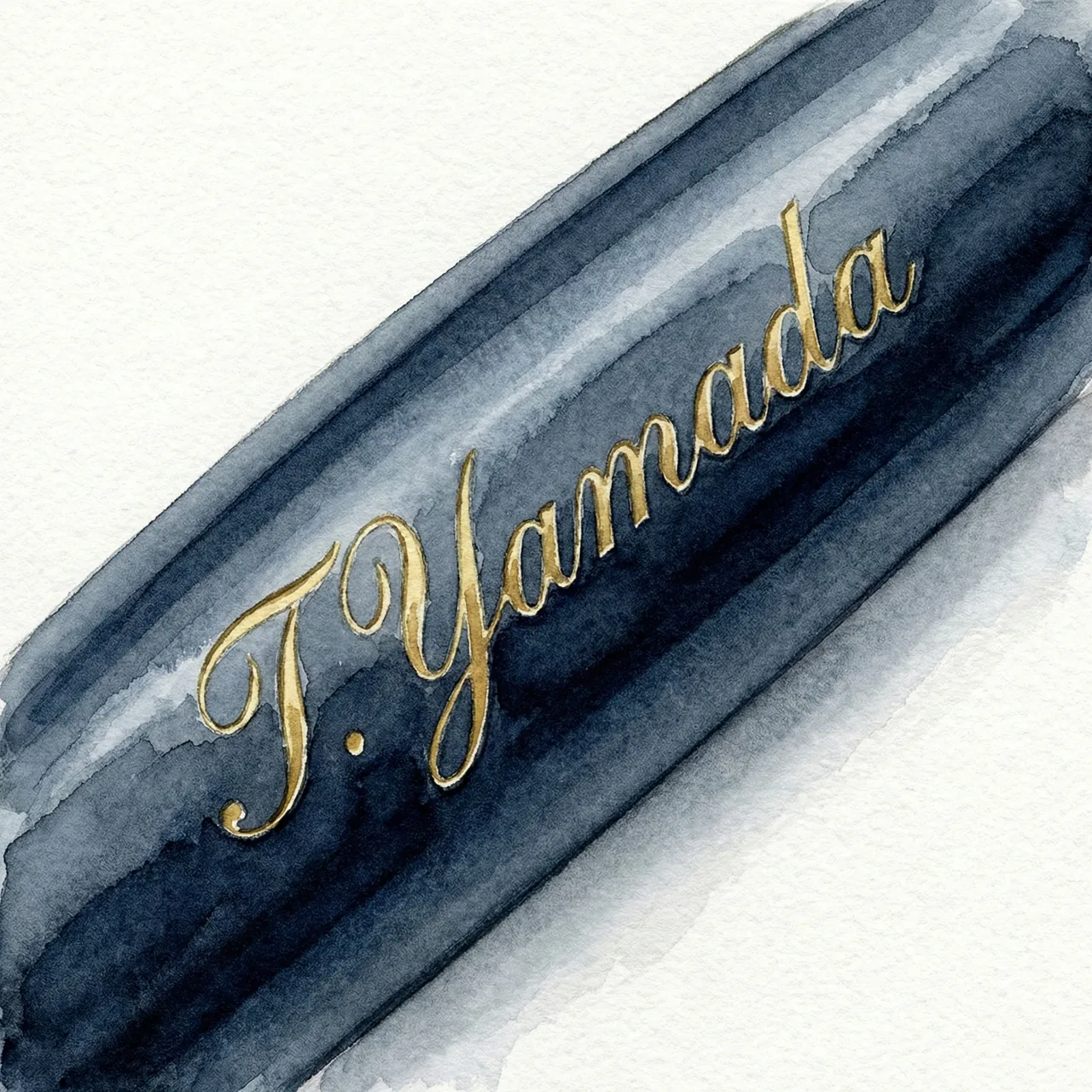
Engraving a name transforms a fine pen into a one-of-a-kind keepsake. But a few decisions can make or break the result.
Script or block lettering — match the font to the recipient
- Script (cursive): By far the most popular choice. Elegant and understated — works in business settings without drawing attention.
- Block (print): Clear and modern, often preferred when engraving in Japanese characters (kanji) rather than Roman letters.
As a default, Roman script lettering is the safest bet — it complements the pen's design rather than competing with it.
For the fill color, gold and silver are available, but bare engraving (no fill, just the incised letters) has a restrained elegance that often reads as more sophisticated.
6. Frequently Asked Questions
Twist mechanism or push-button — which is better for professional settings?
Twist (rotation retraction) wins, hands down.
A push-button makes an audible click — fine in casual settings, but potentially jarring in a quiet meeting or client presentation. The unhurried, two-handed motion of a twist cap signals composure rather than hurry.
That said, some occasions — fast note-taking, for instance — favor the instant readiness of a click. Know your context.
What's the real difference between a $50 and a $100 pen?
Primarily the barrel material and finish.
The ink refill is often identical across price points from the same brand. Above the $80–100 mark, barrels shift from resin to brass or other metals, adding meaningful weight and durability. Multi-layer lacquer finishes also appear at this tier, giving the color a depth and luminosity that single-coat finishes simply can't match.
Are these pens comfortable for left-handed writers?
Yes — low-viscosity oil-based ink (like Acroink) is ideal for left-handed use.
Water-based inks dry slowly enough that a left-handed writer's hand can smear freshly written lines. Japan's low-viscosity oil-based inks dry almost on contact, eliminating that frustration entirely.
The ink has stopped flowing — what should I do?
Replace the refill rather than attempting home remedies.
Soaking the tip in hot water or heating it with a lighter risks permanent damage. If you've lost track of the refill model number, take the old cartridge to a stationery shop — the staff can usually match it by sight.
What colors work well as a gift for a woman?
Pearl white, champagne gold, and soft pastels are consistently popular.
There's no reason a professional pen must be black or navy. A slightly slimmer barrel with a pearl or satin finish — like PILOT's Cocoon or Cavalier — pairs well with a variety of planner colors and reads as both elegant and purposeful.
I can't decide between a ballpoint and a fountain pen as a gift.
Match the pen to how the person actually writes.
If they're signing documents, filling out forms, or working with carbon-copy paper regularly, a ballpoint is the pragmatic choice. If they love the ritual of writing — long letters, journaling, deliberate notes — a fountain pen will bring a deeper kind of joy. When in doubt, ask casually: "Do you write much by hand these days?" The answer will tell you everything.
Final Thoughts: One Pen That Makes Every Signature Count
You can buy a pen for a dollar. So why spend fifty or a hundred?
Because the pen you reach for changes how you write. A beautiful instrument invites care — slower, more deliberate strokes, better posture, more considered words.
That's the quiet power of a great writing tool: it doesn't just record your thoughts. It shapes the quality of your thinking in the moment you commit it to paper.
For someone starting something new, a Japanese-made premium ballpoint is a gift that will be in their hand for years — a small daily reminder that the details matter.
Japanese Glass Pens: Wearable Jewels That Write in Every Color
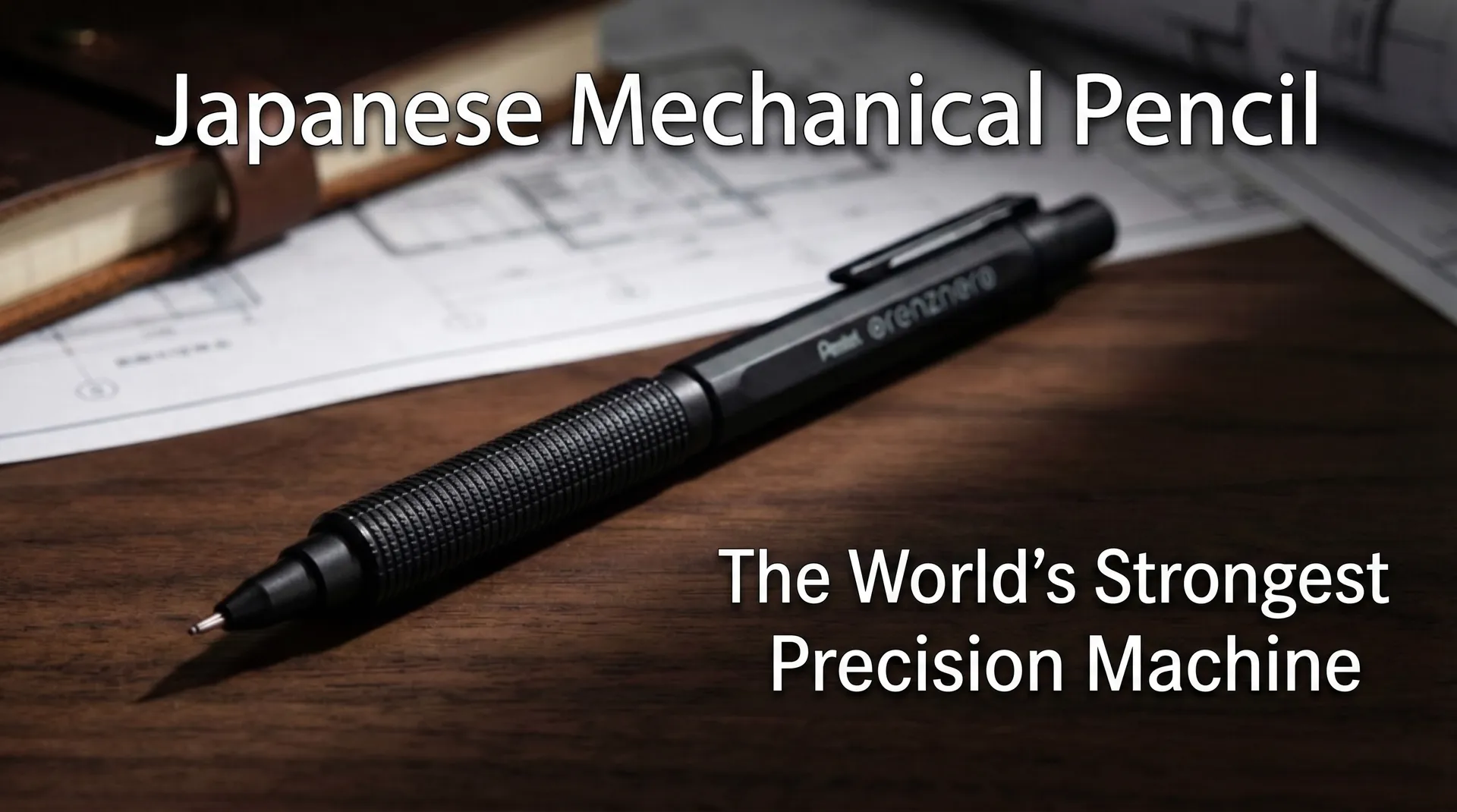
Japanese Mechanical Pencils: From Drafting Tools to Premium Everyday Carry