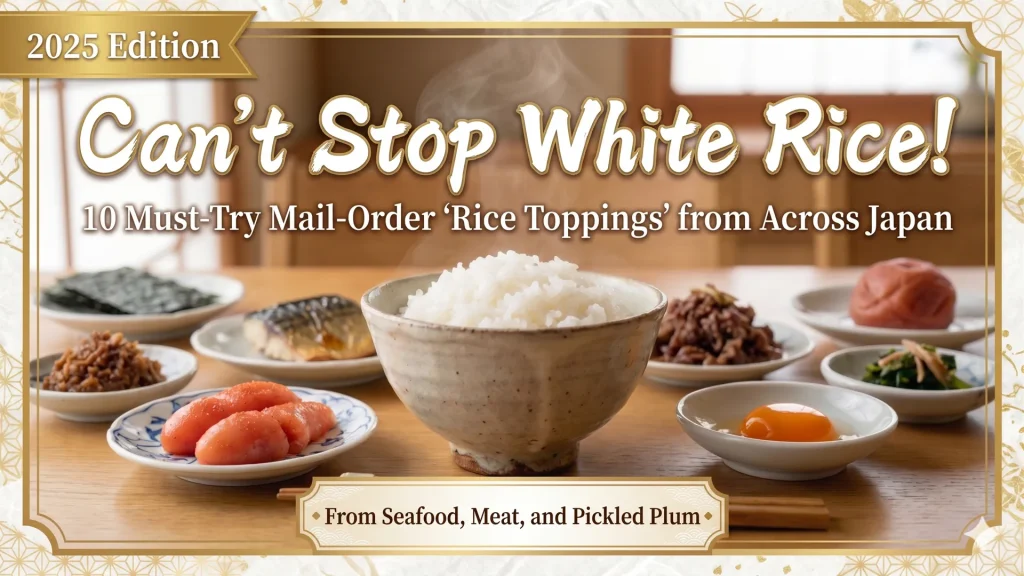
The answer to "what should I make for dinner?" is sometimes as simple as a bowl of excellent rice with something worth putting on top.
Or a slow weekend morning, made better by a single well-chosen addition.
Japan's best gohan no tomo (rice accompaniments) can't be found at a supermarket. They come from farmers, fishermen, and small producers who make one thing and make it well — the kind of food that turns plain white rice into a complete meal.
This guide covers the picks worth ordering: for your own table, for gifts, or for anyone who eats rice and deserves better than the standard options.
Quick Reference: Rice Accompaniment Types at a Glance
| Type | Representative Foods | Shelf Life | Best Scene |
|---|---|---|---|
| Tsukudani (simmered preserves) | Clams, dried seaweed, small fish | Ambient 3–6 months | Bento, gifts, daily staple |
| Furikake (rice seasoning) | Nori, sesame, salmon | Ambient 6 months–1 year | Kids' bento, breakfast, travel |
| Mentaiko & fresh seafood | Mentaiko, ikura, oyster oil | Refrigerated 1–2 weeks | Special occasions, sake pairing |
| Fermented (pickles, miso) | Umeboshi, nukazuke, miso | Refrigerated 1 month+ | Daily meals, health-conscious eating |
1. Seafood: Ocean Flavor at Its Peak
Japan is a seafood country. Here are the producers who capture freshness at its source and ship it straight to your table.
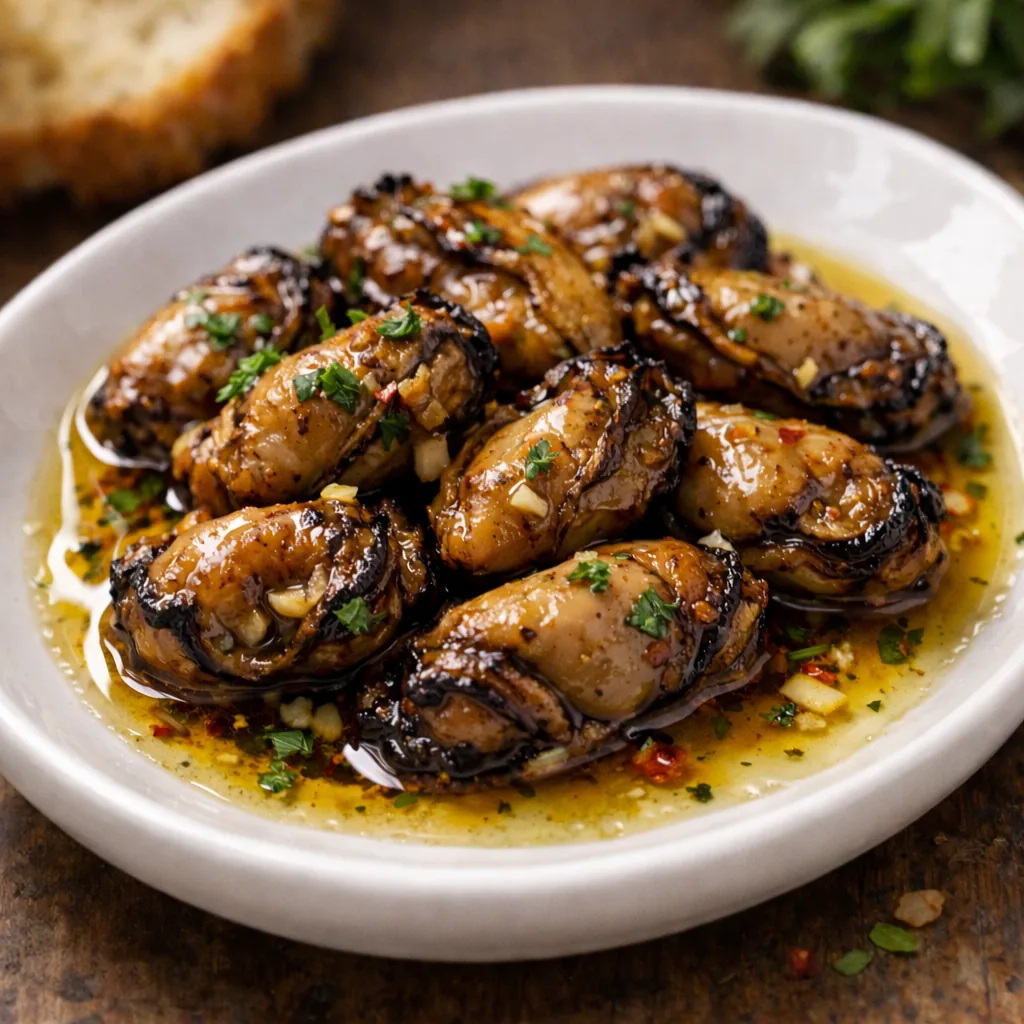
Concentrated oyster umami — Wagaki's Oyster Oil
Wagaki / Oyster Oil
Wagaki knows the oyster beds of Matsushima and the Sanriku coast intimately. Their plump oysters preserved in oil make an instant "oyster rice" when spooned over a hot bowl — rich, briny, immediately satisfying.
The remaining oil has the oysters' full flavor dissolved into it. Use it to finish pasta, drag bread through it, or drizzle over grilled vegetables. And as a sake companion, it's in a class by itself.
Bones and all, impossibly soft — Kinoya's Kinkazan Mackerel
Kinoya (Ki no Ya Ishinomaki Suisan) / Kinkazan Mackerel
Kinoya from Ishinomaki, Miyagi Prefecture, overturns the assumption that canned fish is a convenience product. The "fresh-pack" method: Kinkazan mackerel landed at the port in the morning, canned the same day without freezing. Open the lid and the aroma is fresh fish, not tin.
The bones soften completely — the whole thing is edible. Nutritionally dense, and a serious morning meal on its own with rice.
Just-out-of-the-water soft — Ooshio Suisan's Fresh Shirasu
Ooshio Suisan / Fresh Shirasu
Three generations of fishing in the Seto Inland Sea at Ooshio Suisan in Kagawa Prefecture. Shirasu (whitebait) caught in these calm, sheltered waters goes straight into the processing facility for kamaage (boiled) preparation.
Modern freezing technology means the texture you get at home — fluffy, almost cloud-like — is as close to eating on the beach as you'll get without being there. The simplest preparation: fresh rice, one egg yolk, a little soy sauce. Done.
2. Meat: Rich, Satisfying Picks
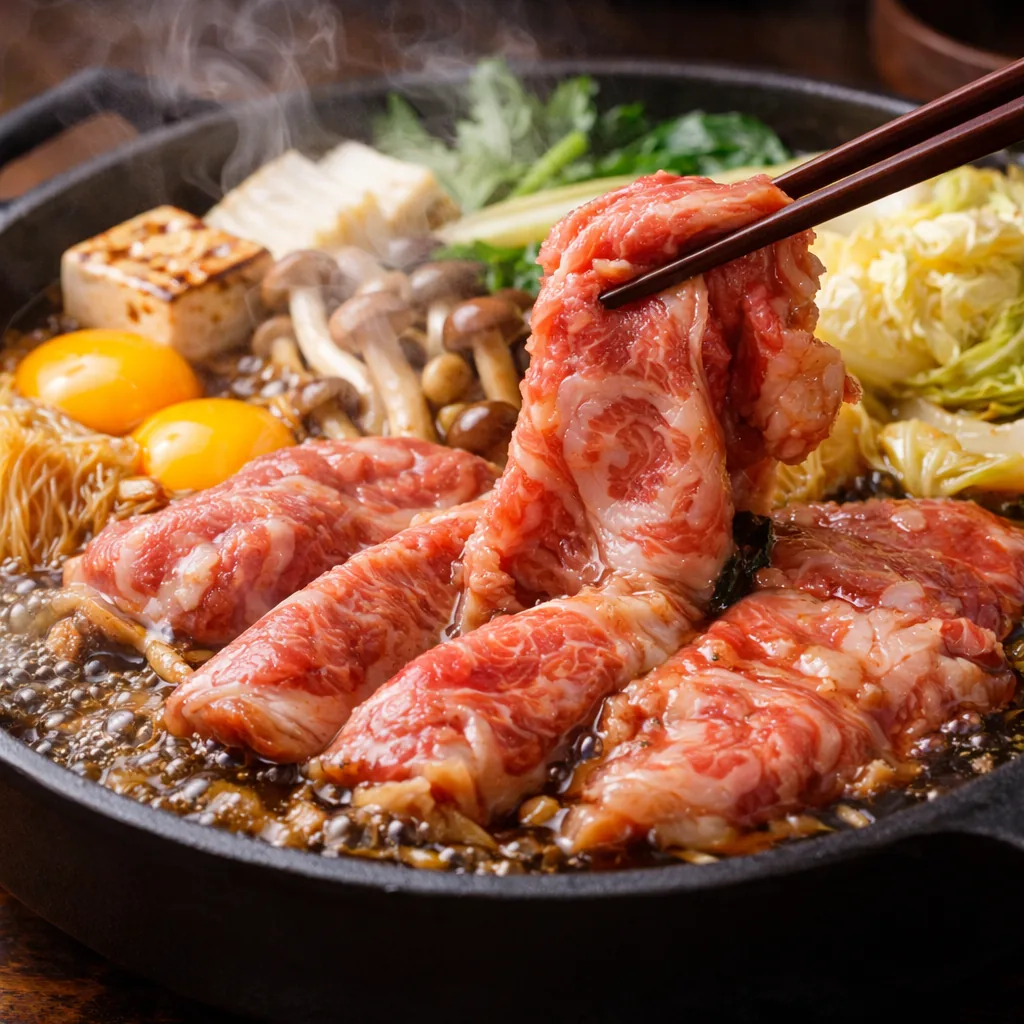
When you want something substantial — rice with meat that has actual presence.
Charcoal aroma, instantly — Miyazaki Tsuma Jidori Farm's Charcoal Chicken
Miyazaki Tsuma Jidori Farm / Charcoal-Grilled Chicken
Open the bag and the charcoal smell hits you immediately. Miyazaki's Tsuma Jidori breed — raised longer than standard commercial chicken — grilled over charcoal by skilled craftspeople.
Each bite releases the breed's characteristic fat and umami. Add a little yuzu kosho and spoon over rice for an instant grilled chicken bowl. Beer pairing is obvious, but it's equally at home beside a cold sake.
A butcher's interpretation — Ishikawa Seinikuten's Meat Miso
Ishikawa Seinikuten / Meat Miso
Ishikawa Seinikuten, a butcher shop in Aichi Prefecture, brings the same attention to quality they apply to raw cuts to their prepared products. The meat miso and soboro (seasoned ground meat) have visible chunks — this isn't a homogeneous paste, it's a butcher's work.
The fat seeps gently into hot rice, changing the texture of every grain it touches. Makes an excellent onigiri filling as well — still delicious cold.
3. Everyday Staples: Japanese Classics That Never Get Old
The things you eat every day matter most. These are the versions worth upgrading.
Actually sour — Umeboys' Additive-Free Nanko Umeboshi
Umeboys
If modern umeboshi taste too sweet to you, Umeboys is the answer.
Umeboys — a team from Hokkaido who revived abandoned farmland in Wakayama to grow Nanko-ume the old way. No sweeteners, no preservatives. Ripe Nanko-ume, salt, and red shiso. That's the complete ingredient list.
Properly tart umeboshi sharpens the sweetness of the rice it sits on. The real version does something the sweetened commercial kind cannot.
Texture you don't expect — Satou Shouten's Handmade Konjac
Satou Shouten / Handmade Konjac
Satou Shouten in Yamagata Prefecture has been making konjac (konnyaku) by hand for generations. The first bite is a surprise: a snap and springiness that supermarket konjac doesn't have.
The dengaku (grilled with miso sauce) and the spicy simmered version are both substantial enough to anchor a rice meal. Calorie-light but genuinely satisfying — works well for anyone watching what they eat without wanting to sacrifice flavor.
Mineral-rich from the source — Ise Hijiki Honpo's Furikake & Nimono
Ise Hijiki Honpo / Furikake & Simmered Hijiki
Ise Hijiki Honpo sources hijiki seaweed from the rich waters off the Ise-Shima coast of Mie Prefecture. Thick, long strands with real chew — not the thin, soft product that shows up in most supermarket hijiki dishes.
The soft furikake and the simmered preparation are mineral-forward, mild in flavor, and appropriate for everyone at the table — from small children to older adults. A permanent fixture for health-conscious households.
4. Special Feature: The Ultimate TKG (Egg on Rice)
Exceptional richness — Mori no Mebuki Tamagoya's Premium Eggs
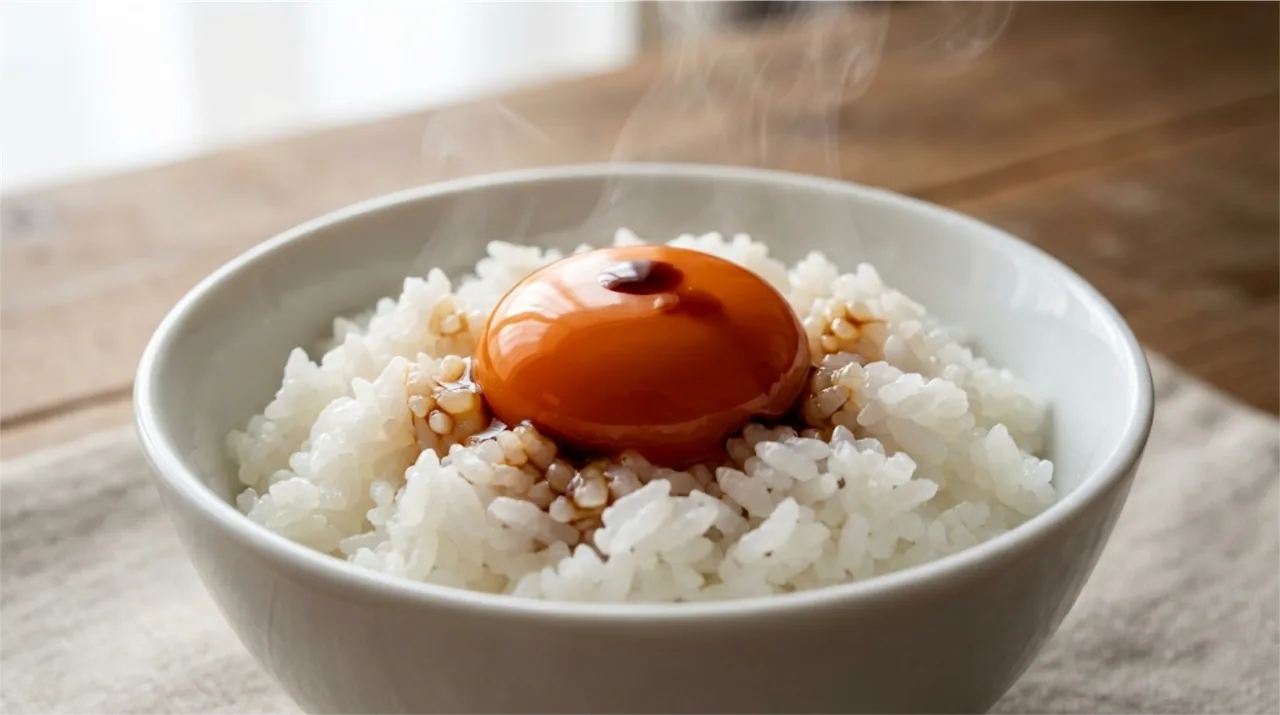
The king of rice accompaniments is TKG — tamagokake gohan, a raw egg cracked over hot rice.
The eggs from Mori no Mebuki Tamagoya in Miyagi Prefecture can be pinched with chopsticks — the yolk has enough structure to hold its shape. The richness is concentrated, the depth genuine.
Hot rice, one egg, good soy sauce. That's the world's most straightforward luxury breakfast.
View Mori no Mebuki Tamagoya Brand Page
Visit Official Site →5. The Best Rice Deserves the Best Bowl
Now that the toppings are sorted, consider the vessel — a chawan (rice bowl) and proper chopsticks.
A well-made rice bowl with a smooth rim changes the experience of eating from it. Good chopsticks make tasting each ingredient separately, without mixing, effortless.
6. Frequently Asked Questions
How long does it keep after opening?
Jarred tsukudani and simmered items keep reasonably well, but anything preservative-free should be refrigerated and finished within 1–2 weeks of opening. Always check the label on each product, as shelf life varies significantly.
What's the etiquette for gifting food like this?
Rice accompaniments are consumable gifts — they put no obligation on the recipient, and no storage headache. The one practical note: refrigerated and frozen products require the recipient to be home at delivery. For flexible timing, choose ambient-storage items like tsukudani, umeboshi, or quality furikake.
How can I minimize shipping costs?
Ordering multiple items from the same producer combines them into a single shipment. Many brands also offer a first-order "trial set" with free or reduced shipping — check each brand page before buying single items.
Are there options safe for young children?
Yes, many. Umeboshi, hijiki, nori tsukudani, and handmade konjac are often made without chemical additives or preservatives — look for "additive-free" (無添加) or "natural ingredients only" labeling.
Spicy items like mentaiko and chili-seasoned seafood products should be introduced by age rather than ingredient.
What makes a good ochugen or oseibo gift from this category?
Ambient-temperature items (tsukudani, umeboshi, furikake) are the most practical gifts — the recipient doesn't need to be home at delivery and there's no spoilage risk.
For premium gifting, a well-curated assortment of regional specialties from multiple producers tends to land well. Old-established brands with clear regional identity (Fukui, Miyagi, Wakayama) add the context that makes the gift feel considered.
Can rice accompaniments be used beyond rice?
Absolutely. Umeboshi works as a seasoning in pasta and dressed salads. Nori tsukudani is excellent spread on toast. Mentaiko goes into potato salad or pasta. Oyster oil can become a salad dressing.
The "just put it on rice" framing is just the beginning — treat them as versatile condiments with strong flavor profiles.
7. Final Thoughts: Turn Your Daily Rice into Something Special
Japan has more serious food producers than most countries — people who grow one variety of plum on reclaimed land, who can fish the same morning it's caught, who make konjac by hand the way it's always been made.
White rice is the canvas. What goes on top is where the country shows itself.
Order something as a reward for yourself, or for someone whose taste you want to honor.
Key Takeaways
- Seafood: Oyster oil, Kinkazan mackerel — freshness is the selling point. Also excellent as sake accompaniments.
- Meat: Jidori charcoal chicken and artisan meat miso — high satisfaction, genuinely a full meal with rice.
- Everyday staples: Umeboshi, hijiki, konjac — additive-free versions of daily foods are worth the upgrade for regular use.