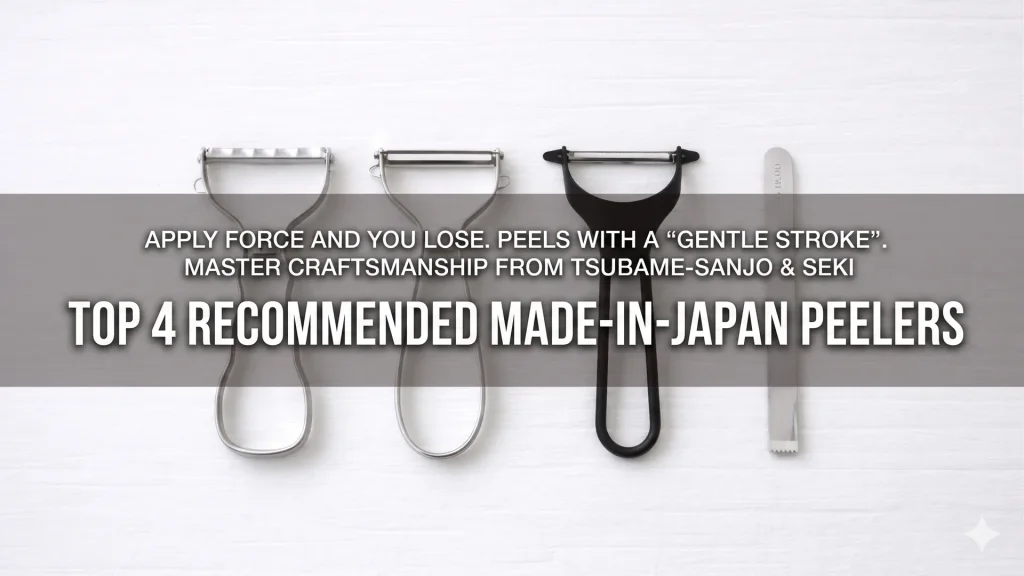
Think all peelers are basically the same?
If you're pressing down hard just to get through a potato skin, that's the tool's fault — not yours.
Japanese peelers from craftsmen in Tsubame-Sanjo and Seki peel vegetable surfaces paper-thin, in a single
gliding stroke — no force, no thick chunks of wasted flesh, no fighting the grain.
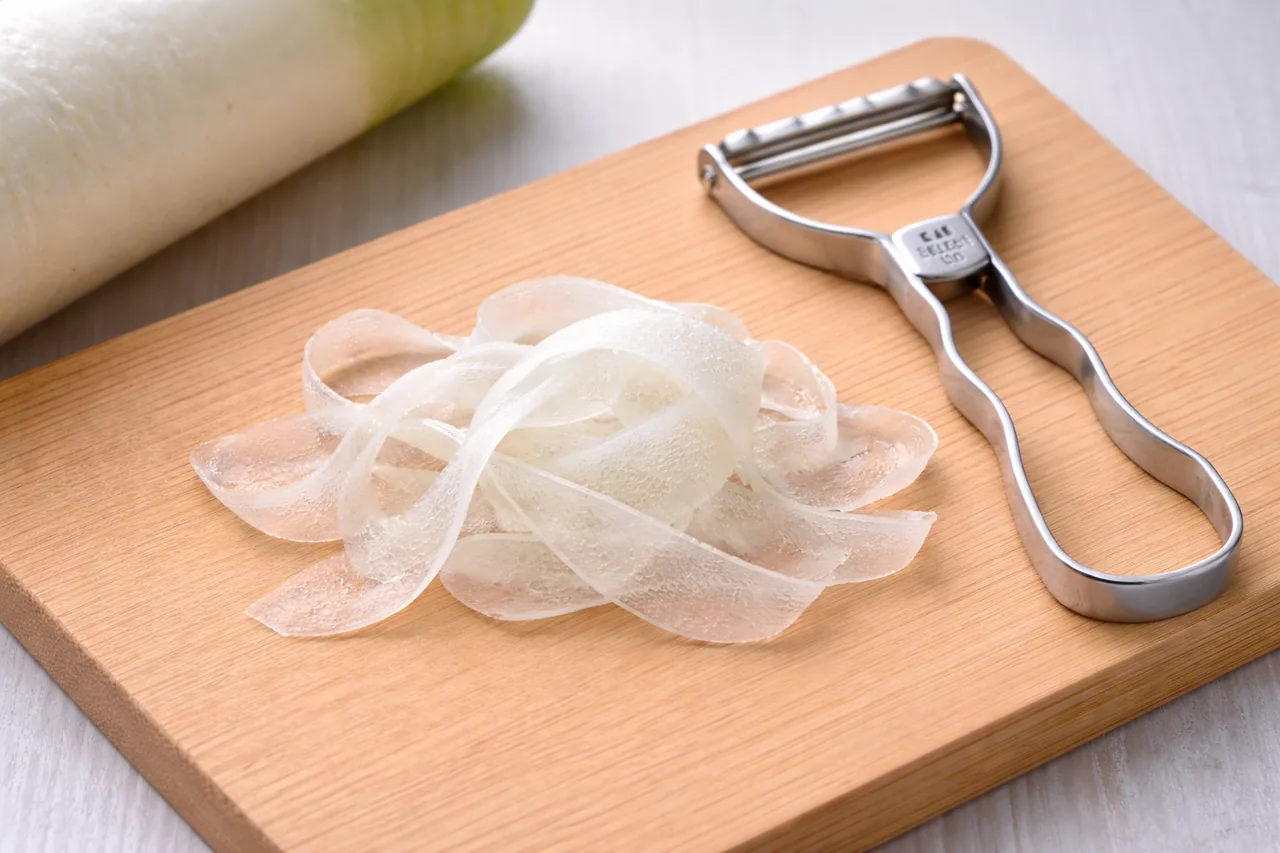
The peel is so fine you can see through it. The cut surface stays glossy. The vegetable tastes better.
This guide covers how to choose the right Japanese peeler and introduces 4 brands that genuinely change how
prep work feels.
A Cut Above the Rest: What Makes Japanese Peelers So Good
1. Blade Sharpness on Par with Kitchen Knives
Most inexpensive peelers use a simple bent metal strip as a blade. High-end Japanese peelers use a heat-treated blade — the same process applied to kitchen knives. The result: tomato skins, fibrous burdock root, even the tough skin of kabocha squash peel without snagging or dragging.
2. No Wasted Flesh — Maximum Yield
A dull peeler doesn't just take the skin — it takes a thick slab of vegetable with it. Precision-made peelers from Tsubame-Sanjo follow the contour of the vegetable, removing only the skin in an ultra-thin layer. Over time, less waste means real savings — and better-tasting food.
3. Ergonomic Design That Doesn't Fatigue
Ever finished peeling a bag of potatoes with an aching wrist? Japanese manufacturers design handles specifically for comfortable, prolonged use — grip angle, anti-slip texture, weight distribution. The difference becomes obvious the first time you peel a full pot's worth of carrots and realize your hand doesn't hurt.
How to Choose Without Getting It Wrong
1. Shape: T-Type vs. I-Type
- T-Type (Y-Peeler)
- The most common shape. Pull toward you and the blade follows. Best for long vegetables like carrots and daikon, and for peeling wide flat surfaces. Whether you're a beginner or a professional cook, starting with a T-type is the right call.
- I-Type (Straight / Knife-Style)
- Peel away from you, like a knife. Better for rounding apples or potatoes in a single continuous motion. Popular with experienced cooks who want the peeler to feel like an extension of their knife hand.
2. Blade Angle: The Angled-Blade Advantage
A growing trend is the angled blade — where the cutting edge meets the food at a diagonal rather than straight on. The angled entry reduces resistance at the start of each stroke, so peeling begins with almost no effort. If sharpness is your main priority, look specifically for an angled-blade model.
3. Specialized Types: Julienne & Cabbage Peelers
Beyond standard peeling, a purpose-built peeler is one of the most useful kitchen purchases you can make. A cabbage julienne peeler produces restaurant-style shredded cabbage directly from the head — no cutting board, no knife skills required. A julienne peeler turns burdock, carrot, or daikon into fine strips in seconds. Once you own one, you'll wonder how you managed without it.
4 Recommended Brands
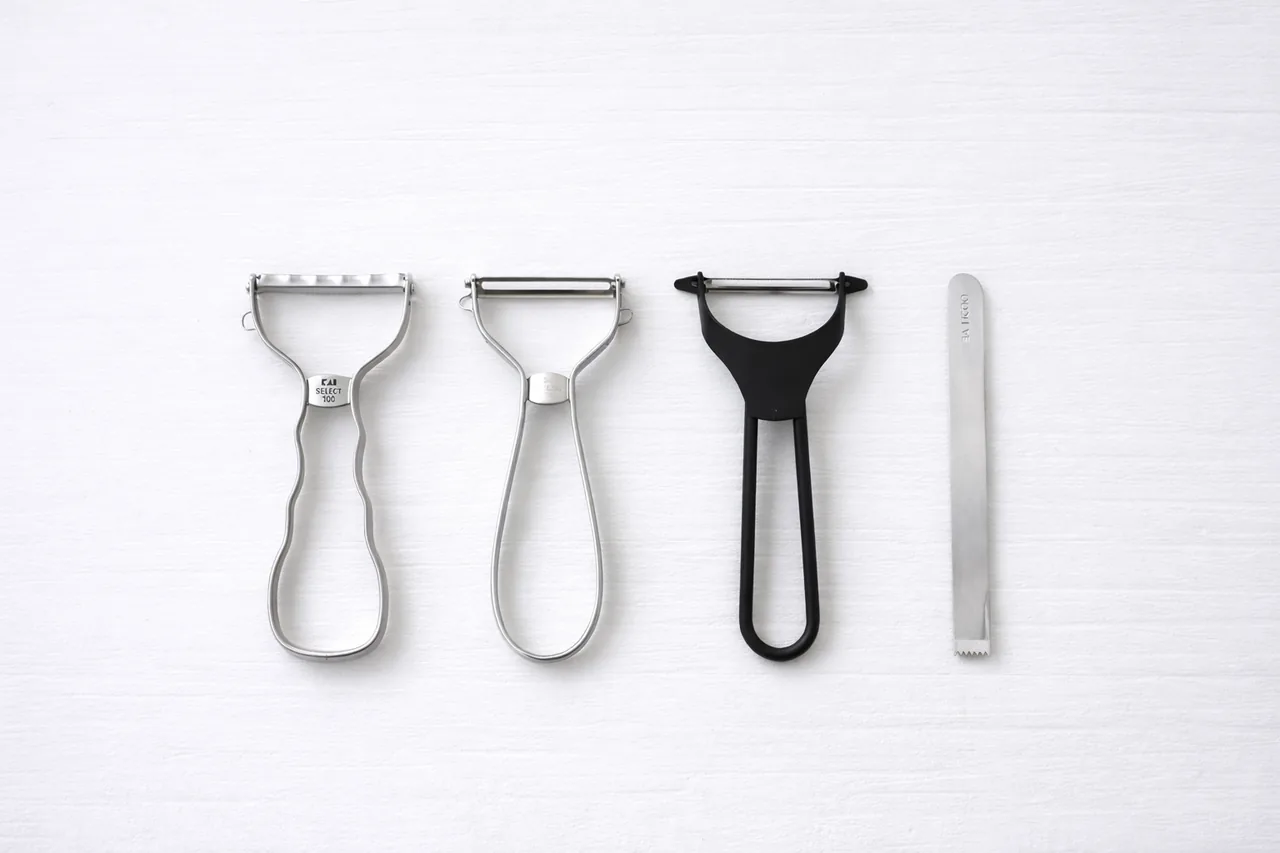
Selected from Japanese peeler makers for their combination of sharpness, usability, and design.
1. The Precision Standard: Kai Corporation / Select 100
Kai Corporation / Select 100
The benchmark Japanese peeler — recommended by professional cooking instructors across
Japan.
Made by Kai Corporation, a Seki blade manufacturer with over 100 years of history.
The defining feature is the precisely calculated angled blade: resistance drops to almost
zero at the start of each stroke, and the peeling motion becomes effortless and continuous.
The wave-contoured handle fits the hand naturally from the first use. If you buy only one Japanese peeler,
this is the one.
Kai Select 100 T-Peeler — Angled Blade, Made in Japan
The Kai Select 100 is widely considered the finest everyday peeler made in Japan. Heat-treated angled stainless blade (same process as their kitchen knives), wave-grip handle for fatigue-free extended use. Made in Seki, Gifu — Japan's cutlery capital. ~$14.
View on Amazon2. The Specialist: Shimomura Kogyo
Shimomura Kogyo (Tsubame-Sanjo)
The ideas brand from Tsubame-Sanjo — a specialized peeler for every conceivable task.
Known for the "Pro Grade" and "Full Vegi" series, Shimomura excels at solving specific kitchen frustrations.
Their cabbage julienne peeler produces the light, airy shredded cabbage you get at a tonkatsu restaurant —
directly from the head, no cutting board needed.
Affordable enough to own several. If you have a specific vegetable problem, Shimomura has already built the
answer.
Shimomura Full Vegi Cabbage Julienne Peeler — Made in Tsubame-Sanjo
Swipe directly across a cabbage head and produce restaurant-quality fine julienne without a cutting board or knife. Diagonal blade design from Shimomura Kogyo, Niigata's famous metalworking region. The fastest way to make tonkatsu-shop shredded cabbage at home.
View on Amazon3. Industrial Precision: Prince Industry / FD STYLE
Prince Industry (Tsubame-Sanjo) / FD STYLE
A tool that belongs in a serious kitchen — or a serious gear collection.
Prince Industry, a Tsubame-Sanjo manufacturer known for inventing the world's first bottle opener, brings the
same industrial philosophy to their FD STYLE kitchen line.
The peeler has a rugged, no-nonsense form with the precision and durability that professional cooks rely on.
The kind of kitchen tool that makes a statement about the person who owns it.
See the Prince Industry brand page
Prince Industries FD STYLE Peeler — Fluorine-Coated Stainless, Tsubame-Sanjo
All-stainless peeler with fluorine (non-stick) coating from Prince Industry's FD STYLE line. Industrial design with professional build quality — the kind of gear-feeling tool that fits naturally in a well-equipped kitchen. Made in Tsubame-Sanjo, Niigata.
View on AmazonBonus Pick: The Corn Peeler That Rewires Your Brain — Yoshikawa / EAtrCO
Yoshikawa / EAtrCO — "Poro" Corn Peeler
A purpose-built tool from Yoshikawa that makes corn kernels fall off like magic.
From Yoshikawa's "EAtrCO" (Ii-toko) series — seamless stainless steel, no seams or joints to trap food.
Run the dual blades along a cooked ear of corn and the kernels fall away cleanly at the base — no knife, no
mess, no splattering across the kitchen.
Perfect for corn rice, salads, or any dish where you want intact kernels.
This is the kind of purpose-built tool that makes you think: "Why didn't I own this sooner?"
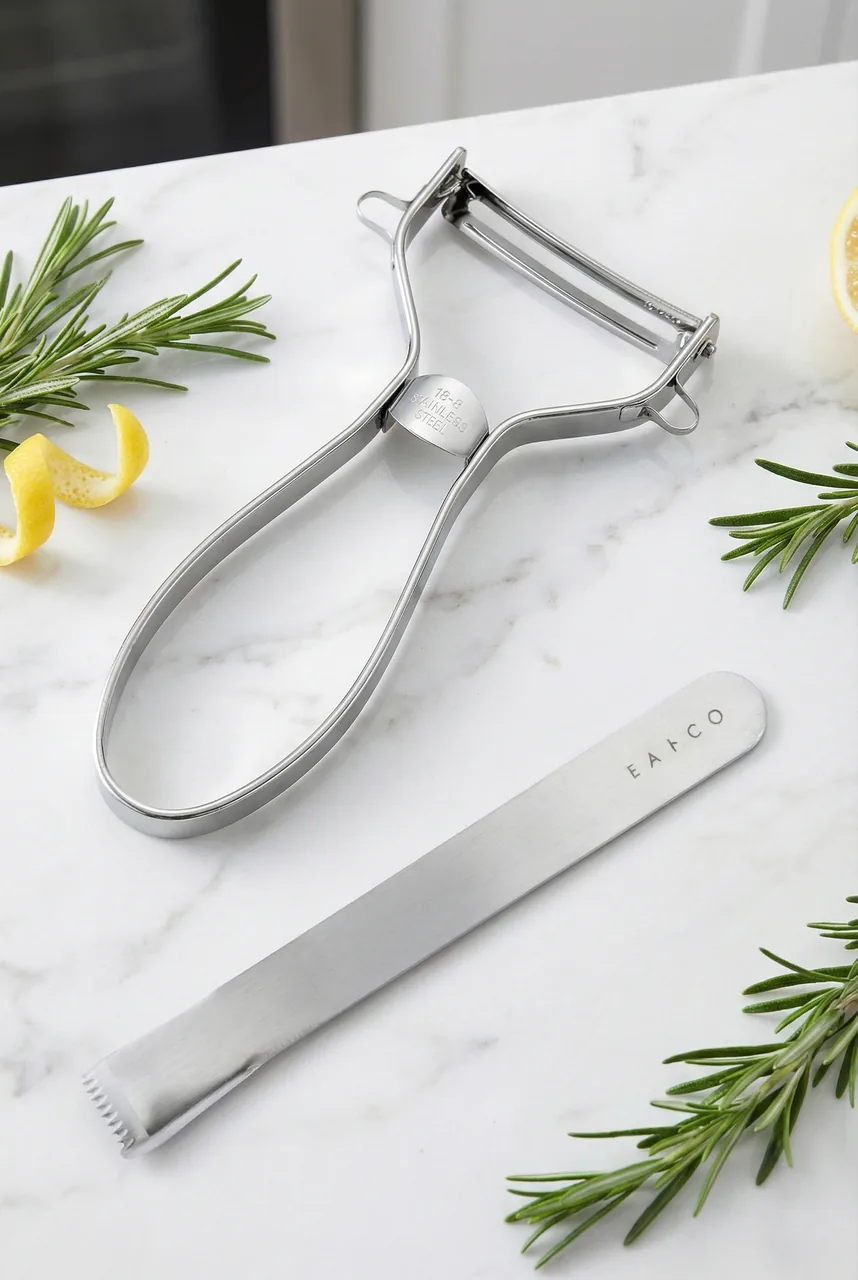
Yoshikawa EAtrCO "Poro" Corn Peeler — 18/8 Stainless, Made in Japan
Dual-blade corn stripper from Yoshikawa's seamless stainless EAtrCO series. Run it down a boiled cob and kernels fall cleanly at the base — no knife required, no scatter. 18/8 stainless steel, no joints or seams. Made in Tsubame-Sanjo, Japan. ~$18.
View on AmazonHow to Keep the Blade Sharp
Can I put it in the dishwasher?
All-stainless models are generally dishwasher-safe. However, the blade can nick against other utensils in the basket and lose its edge over time. Stand it upright in the cutlery basket with the blade facing away from other items, or simply rinse it by hand — it takes five seconds and the blade lasts significantly longer.
How long does the blade last? Are replacement blades available?
With daily use, most blades stay sharp for 1–2 years before you notice a drop in performance. Kai and some professional models sell replacement blades separately. For household peelers, replacing the whole tool is the norm — and at a few thousand yen, getting back to razor-sharp performance is a genuinely cheap upgrade.
Final Thoughts: It's "Just a Peeler" — Until You Use a Good One
"I have to press down hard." "The vegetable keeps jamming in the blade." Those small frustrations add up, and they make cooking feel like a chore. Switch to a Tsubame-Sanjo or Seki peeler, and peeling transforms from a task into a satisfying motion.
When in doubt, choose this:
- Best sharpness, no-fail first pick:
→ Kai Select 100 - Cabbage julienne, specialized tasks:
→ Shimomura (Full Vegi / Pro Grade) - Industrial design and Tsubame-Sanjo build quality:
→ Prince Industry FD STYLE or Yoshikawa EAtrCO
Curry, nikujaga, salads — the peeler is in your hand every single day. Reach for a good one, and let that small, ordinary moment be genuinely enjoyable.
Complete your Tsubame-Sanjo & Seki kitchen toolkit