Soy sauce, miso, vinegar, mirin, sake. The basic seasonings of Japanese food are all birthed from "fermentation."
Among cheaply sold seasonings in supermarkets are those force-fermented over short periods; but traditional "naturally brewed" seasonings are slowly aged taking from a year to several years amidst the temperature shifts of the four seasons.
A mellow saltiness with harsh edges removed, deep umami, plump aromas. These are tastes extractable only through the workings of microorganisms and the accumulation of time.
Improving culinary skills. The "Sa-Shi-Su-Se-So" supporting Japanese kitchens.
"Why does my usual cooking somehow taste so good?" That might be thanks to your seasonings. Wooden-vat brewed soy sauce, miso from brewery-dwelling yeast, dashi from hongare-bushi. Here, we collected authentic seasonings and fermented foods crafted carefully over time. Precisely because they are used daily, changing them to something just a little better completely shifts the scenery of your dining table.
How to choose Seasonings & Fermented Foods
The Origin of "UMAMI" Boasted to the World, Dashi
"Dashi" is the strongest tool to produce satisfaction while reducing calories and salt.
・Dried Bonito: "Hongare-bushi," repeating smoking and molding, yields a clear, elegant dashi without off-tastes.
・Kelp: Richness and sweetness vary based on producing areas like Rishiri, Rausu, or Hidaka.
・Awase Dashi: Blending Bonito (inosinic acid) and Kelp (glutamic acid) sparks a "synergistic effect" where umami feels 7-8 times stronger.
Recently, additive-free dashi packs are also excellent. Tearing the bag and sprinkling the contents into stir-fries allows it to be used as a natural seasoning as well.
Cooking Transforms with "Mirin" and "Oil"
[Hon-Mirin vs Mirin-style Condiments]
Please try using "Hon-Mirin" at least once. Hon-Mirin made solely from glutinous rice, koji, and shochu presents a complex sweetness and richness not found in sugar, adding beautiful glazes to dishes. It also possesses effects preventing ingredients from breaking apart while boiling.
[Japanese Vegetable Oils]
Cold-pressed rapeseed oil, aromatic sesame oil, rice bran oil. Japanese oils resist oxidation well, frying foods crisply. Rice oil, in particular, is habit-free and versatile even for dressings and baking.
Frequently Asked Questions (Q&A)
Q. Where to store soy sauce and miso?
A. A cool, dark place is fine before opening, but "refrigerator" is standard post-opening. Specifically, soy sauce oxidizes and turns black, dropping flavor upon air contact. Choosing double-structured anti-oxidation bottles or selecting small bottles and using them up quickly is the trick.
Q. Is anything labeled "Additive-free" good for health?
A. Beyond the "additive-free" label, check the "ingredients list." Items made solely from things existing in a kitchen (soybeans, wheat, salt, etc.) represent the true form of seasonings.
CHINOSHIO(地の塩社)
Kawamura Shoyu
Shinryo
KUBARA
Ajino Hyoshiro
Uneno (ODASHI)
ON THE UMAMI
Hita Shoyu
Kezuribushi no Yamaichi
KAKUKYU Hatcho Miso
NORTH FARM STOCK
Sanshu Mikawa Mirin
KOKONOE MIRIN
Hakusen Shuzo
Inoue Shoyu
JA Hyuga
Kuramoto Isegura
Inoue Seikoen
Olive no Mori – Shodoshima Healthy Land Co., Ltd.
Hinode Seimensho
Okinawa Kokuto
Ishigaki no Shio
Oga Kobo
Aizu Tenpo
Odaka Koubou
GUIDES & STORIES for this category
We've picked up related guides and stories for this category from our selection of Japanese-made products.
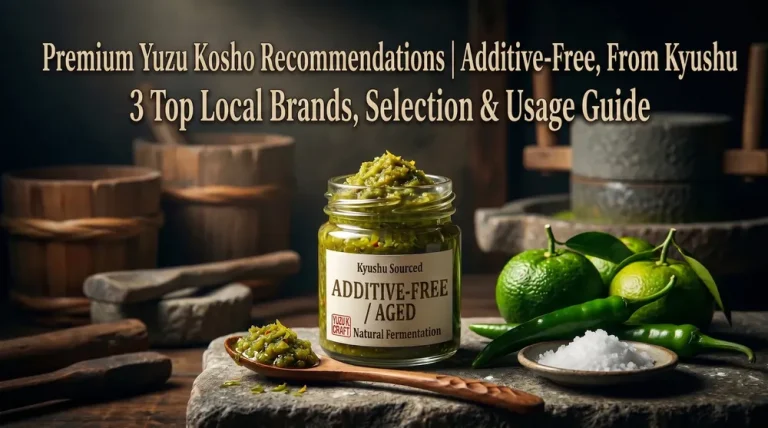
Yuzu Kosho: Three Ingredients, and Read the Label
Real yuzu kosho is yuzu peel, ch…

Shodoshima Olive Oil: Why Japan Grows Olives
A 1908 fishing treaty is why Jap…

Japanese Honey: Why Only 6% of It Is Japanese
Japan imports 94% of its honey, …
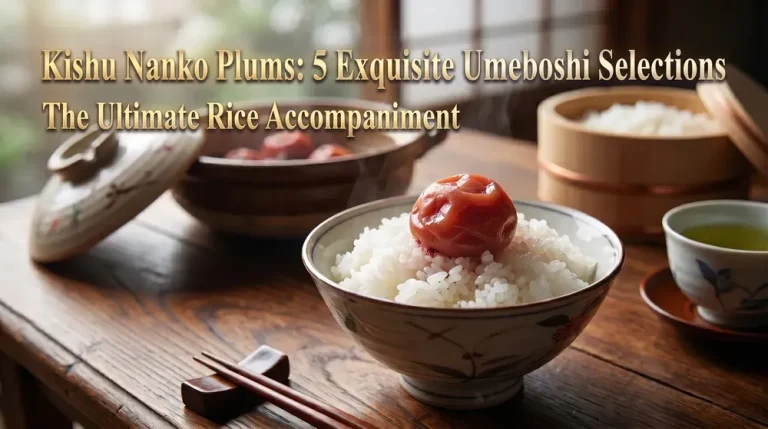
Umeboshi: How to Buy the Real Thing (3 Types)
Most umeboshi sold abroad is swe…

Japanese Premium Jams & Spreads: 5 Best Mail-Order Picks
Upgrade your toast with Japan's …
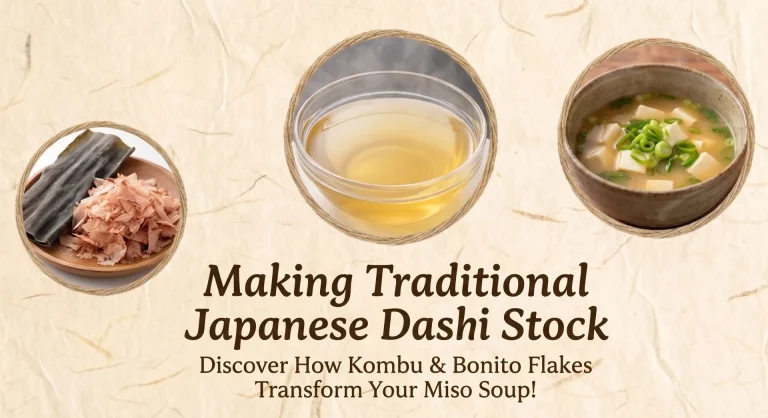
How to Make Japanese Dashi: Kombu & Katsuobushi in 4 Steps
Remove kombu just before boiling…
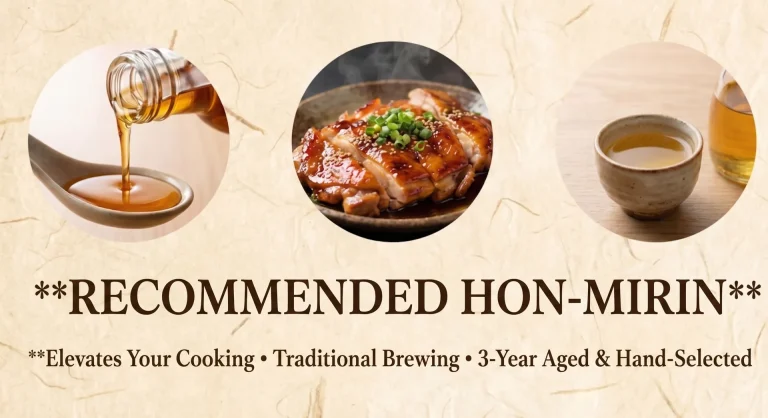
Japanese Hon Mirin: The 3-Ingredient Rule & Top Brands
Hon mirin is the upgrade that tr…
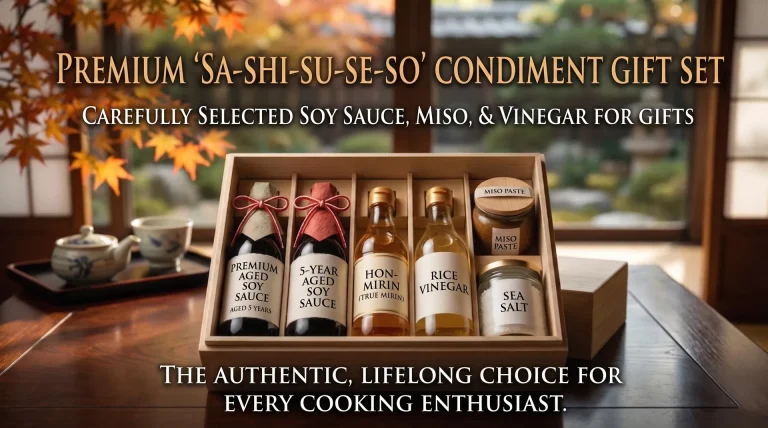
Japanese Seasoning Gifts: Premium Soy Sauce, Miso & Vinegar
Seasonings make the best Japanes…