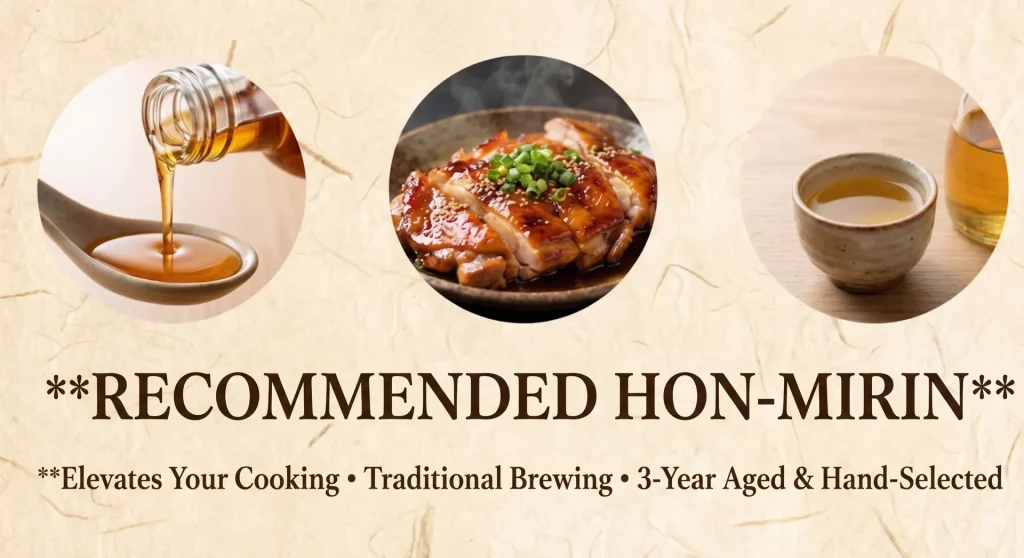
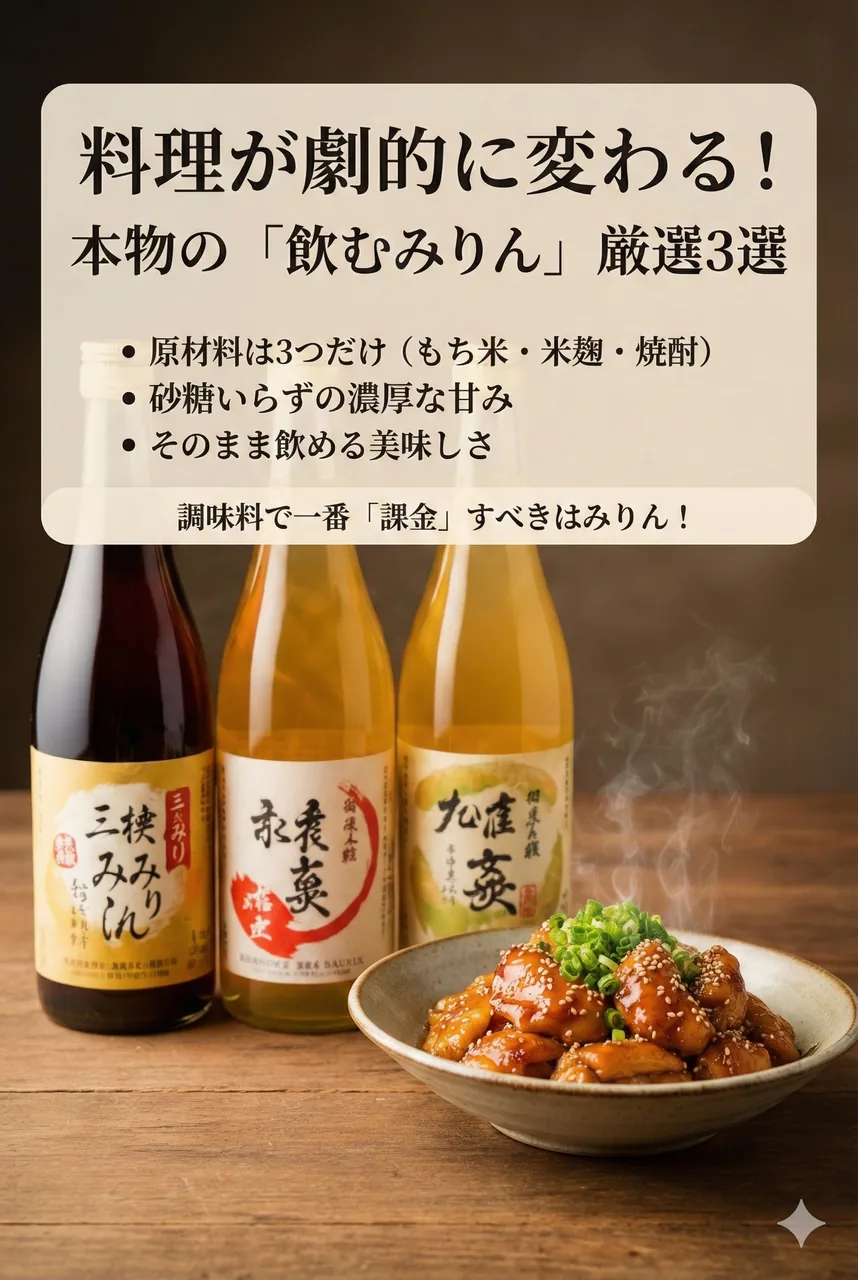
When choosing hon mirin, look for exactly three ingredients:
① Glutinous rice (mochigome)
② Rice koji
③ Shochu (distilled spirit)
Mirin made with only these three — by traditional methods — is sweet enough to replace sugar entirely and rich enough to sip straight from the bottle.
"Mirin is just mirin, right? The cheap bottle is fine." If that sounds familiar, mirin may actually be the single condiment upgrade with the greatest impact on your cooking.
This guide selects the finest artisan hon mirin — bottles that will quietly transform every dish you make with them.
Quick Reference: Hon Mirin vs. Mirin-Style Seasoning at a Glance
| Type | Alcohol | Sweetness Source | Characteristics |
|---|---|---|---|
| Hon mirin (traditional method) | ~14% | Natural saccharification of glutinous rice | Finest depth, glaze & umami |
| Hon mirin (industrial method) | ~14% | Glutinous rice + added sugars | Affordable; less complex flavor |
| Mirin-style seasoning | Under 1% | Starch syrup, glucose | Limited cooking effect |
| Fermented seasoning (mirin-type) | ~14% | Glutinous rice saccharification + salt | Contains salt; not subject to liquor tax |
1. Hon Mirin and Mirin-Style Seasoning Are Not the Same Thing
The supermarket shelf lines up similar-looking bottles side by side, but the contents are completely different.
Here are the three main types to know.
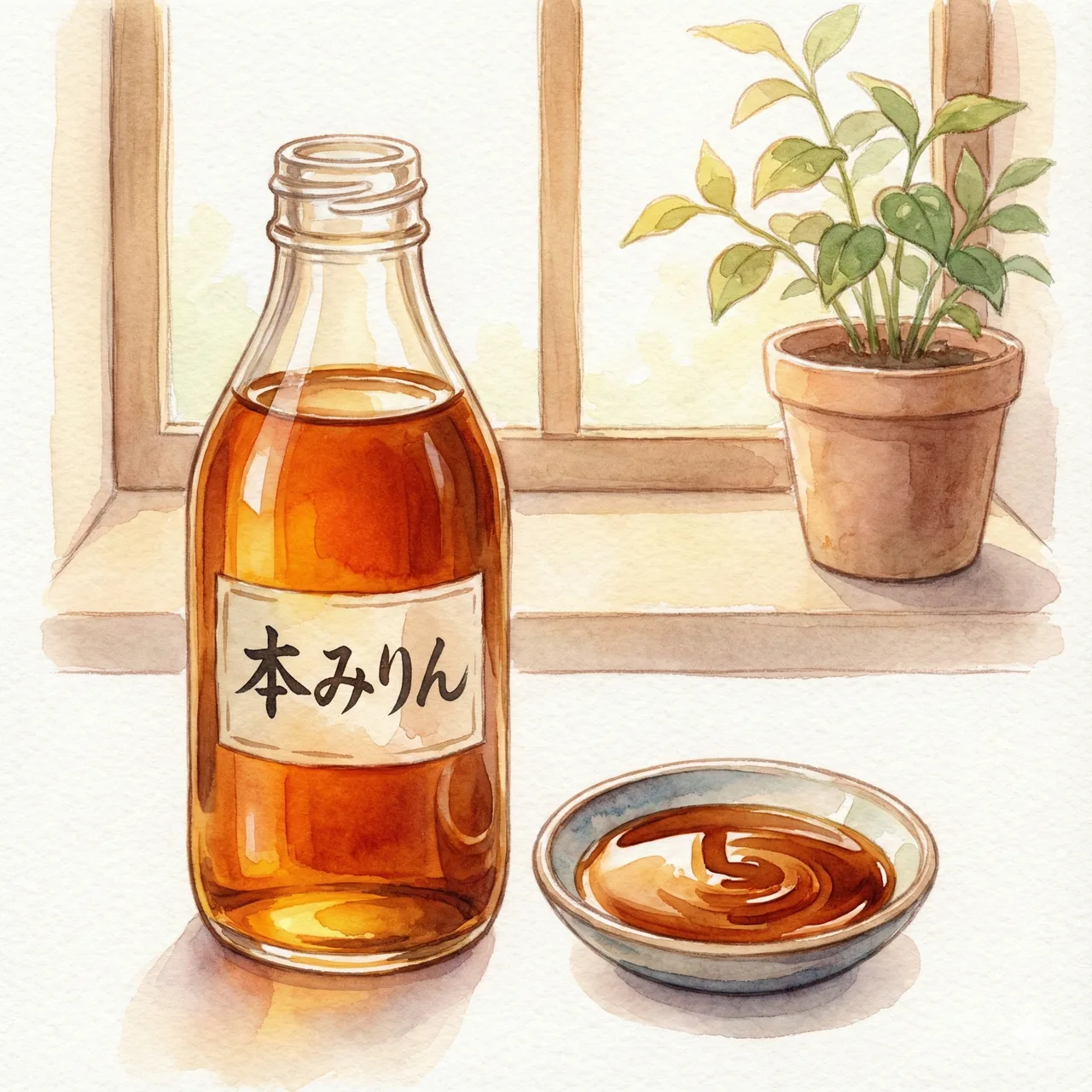
① Hon mirin (~14% alcohol)
Made by fermenting and aging glutinous rice, rice koji, and alcohol.
The rice starch converts naturally into sugar, producing a complex, rounded sweetness. The alcohol helps flavors penetrate ingredients and eliminates unwanted odors.
Because it is subject to Japan's liquor tax, it costs a bit more — but the difference in cooking results is significant.
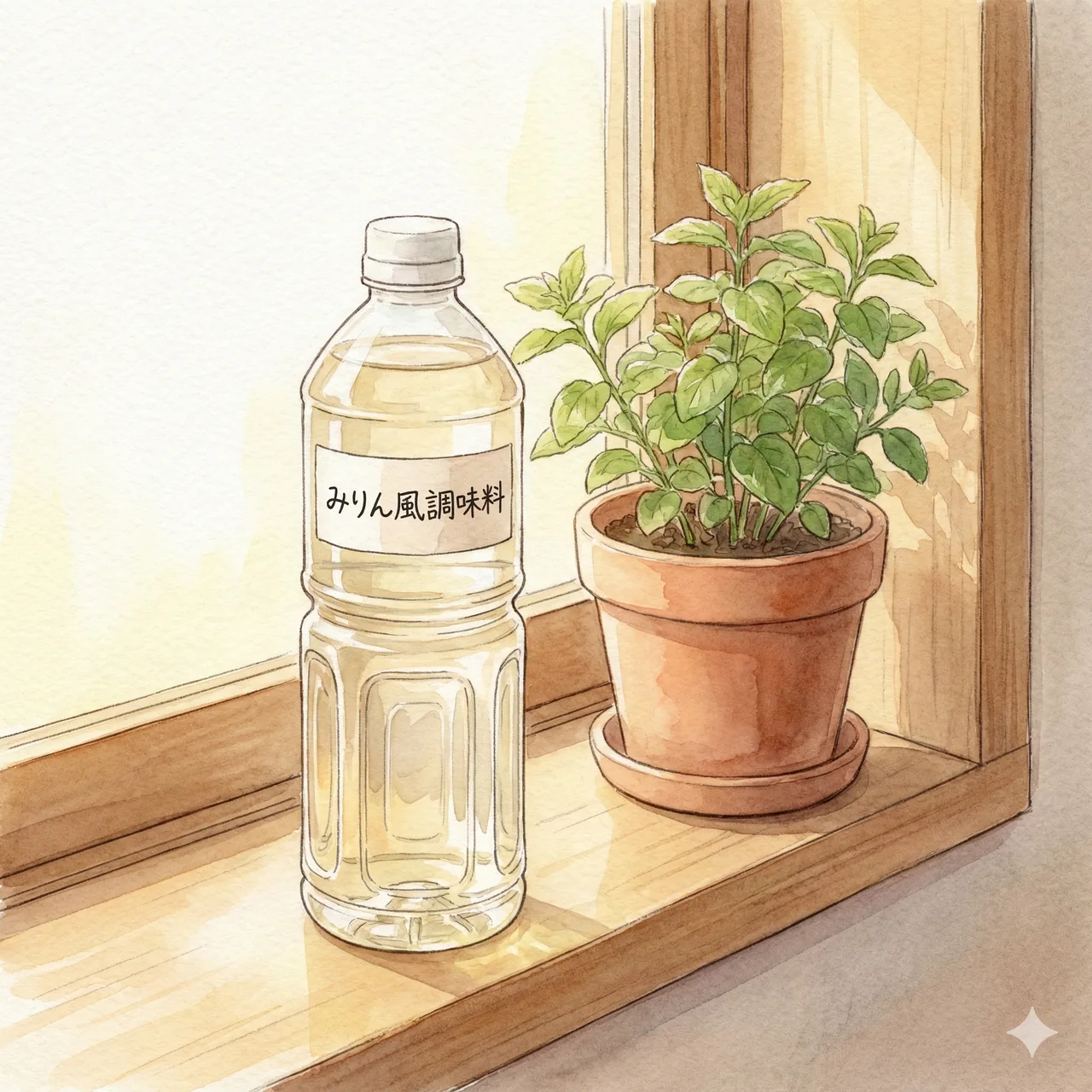
② Mirin-style seasoning (under 1% alcohol)
A syrup made from starch syrup, glucose, and flavoring agents — not fermented rice.
Because it contains almost no alcohol, there is no need to cook it off, but the cooking effects of real mirin (odor elimination, flavor penetration) are absent.
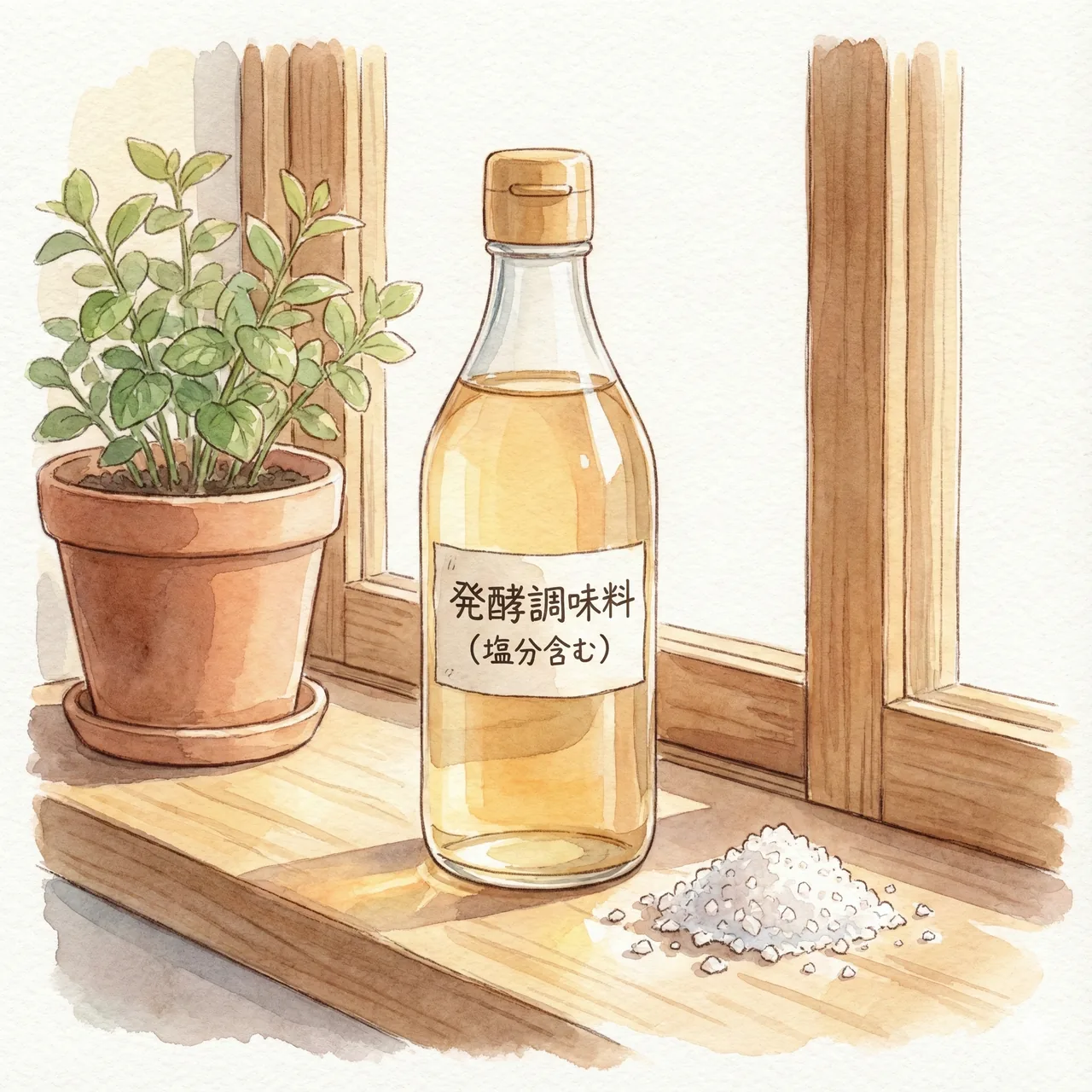
③ Fermented seasoning (mirin-type)
Hon mirin with salt added to make it undrinkable — and therefore exempt from liquor tax.
It works in cooking, but because it contains salt, you need to reduce the soy sauce or salt in your recipe to compensate.
2. How to Choose: Read the Ingredient Label
Even within "hon mirin," there are two quality tiers.
This is the most important distinction. Always flip the bottle over and check the back label.
Premium: Traditional method (junmai hon mirin)
Ingredients: glutinous rice, rice koji, authentic shochu
Aged slowly for months to years using old-fashioned methods.
Deep amber in color with a concentrated, complex umami and natural sweetness.
This is the tier recommended in this guide.
Standard: Industrial method
Ingredients: glutinous rice, rice koji, brewed alcohol, sugars (starch syrup, etc.)
Brewed alcohol and sugars are added to shorten the aging process and reduce cost.
Affordable and widely available, but lacking the depth and nuance of the traditional method.
3. 3 Traditional Hon Mirin That Transform Your Cooking
Once you try these, there is no going back. Professional chefs reach for all three.
Each is good enough to drink straight from the bottle.
Kakuya Bunjiro Shoten — "Sanshu Mikawa Mirin," Aichi
When in doubt, start here. The defining bottle of traditional hon mirin.
Aged for nearly two years to draw out the full flavor of glutinous rice.
Opening the bottle releases an intoxicatingly rich aroma, and the taste is lush and dark — like black sugar syrup.
Used in teriyaki or simmered fish, it produces a gorgeous, mirror-like glaze.
Hakusen Shuzo — "Fukurai Jun," Gifu
3-year aged depth — refined enough for Castella cake makers.
No artificial seasonings or food additives of any kind.
Regarded as the equal of Mikawa Mirin, Fukurai Jun is slightly mellower and more elegant in sweetness.
It also makes a fine toso (New Year's spiced sake), enjoyed straight on its own.
Kokonoe Mirin — "Kokonoe Zakura," Aichi
Japan's oldest mirin-specialist producer — a work of artisanship.
Crafted using techniques preserved since the Taisho era, it is a staple at traditional restaurants and renowned unagi (eel) restaurants across Japan.
Noticeably viscous — even a small amount imparts deep richness and umami to any dish.
4. Beyond Simmered Dishes: Using Mirin on Ice Cream and in Cocktails
Good mirin is too good to save only for nimono (simmered dishes).
Here are three ways to use it that you may not have considered.
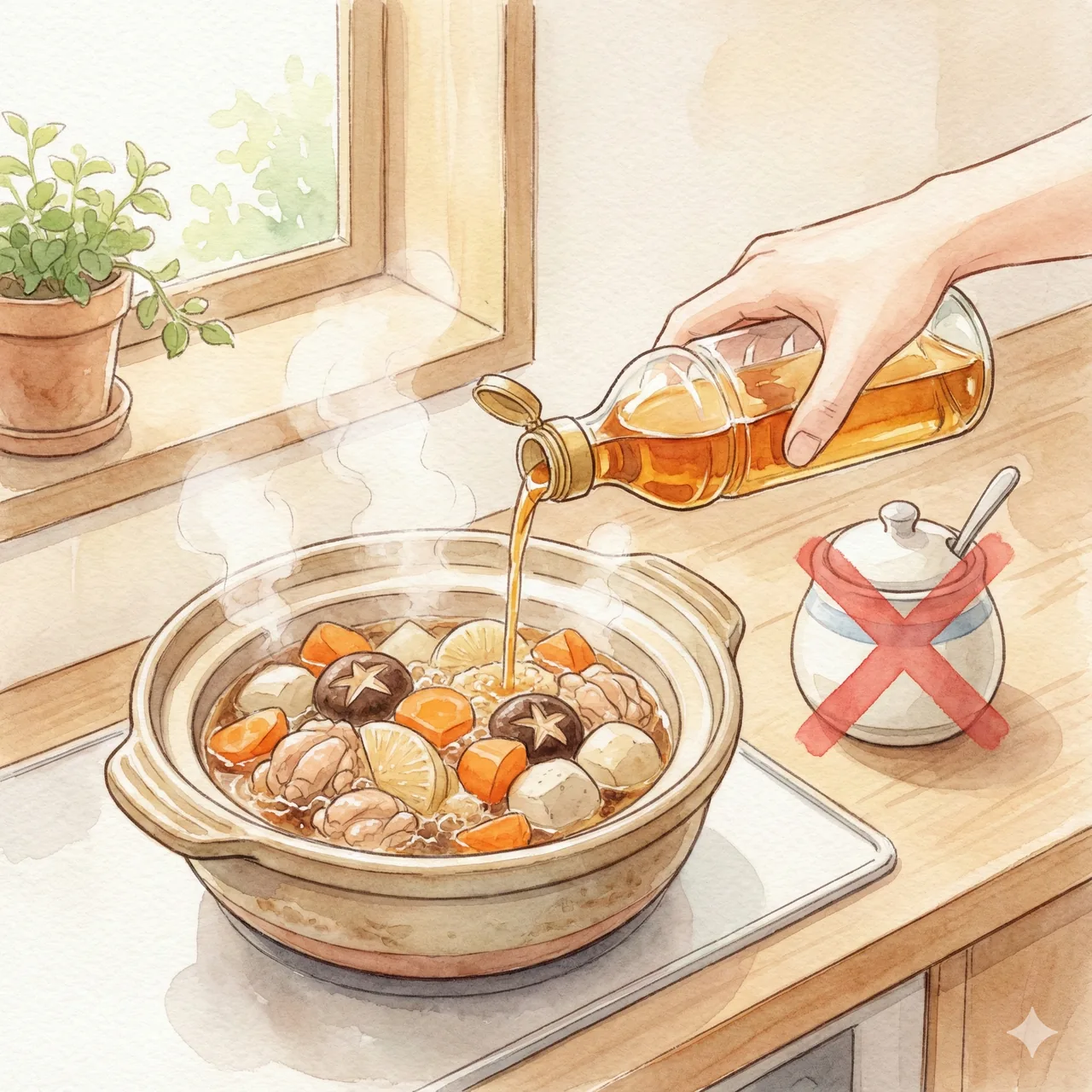
Use 1: As a substitute for sugar
When making simmered dishes or dashimaki tamago (rolled egg), try adding mirin only — no sugar at all.
Instead of a sharp, forward sweetness, you get a rounded, layered sweetness with depth.
Because mirin raises blood sugar more gradually than refined sugar, it is also the healthier choice.
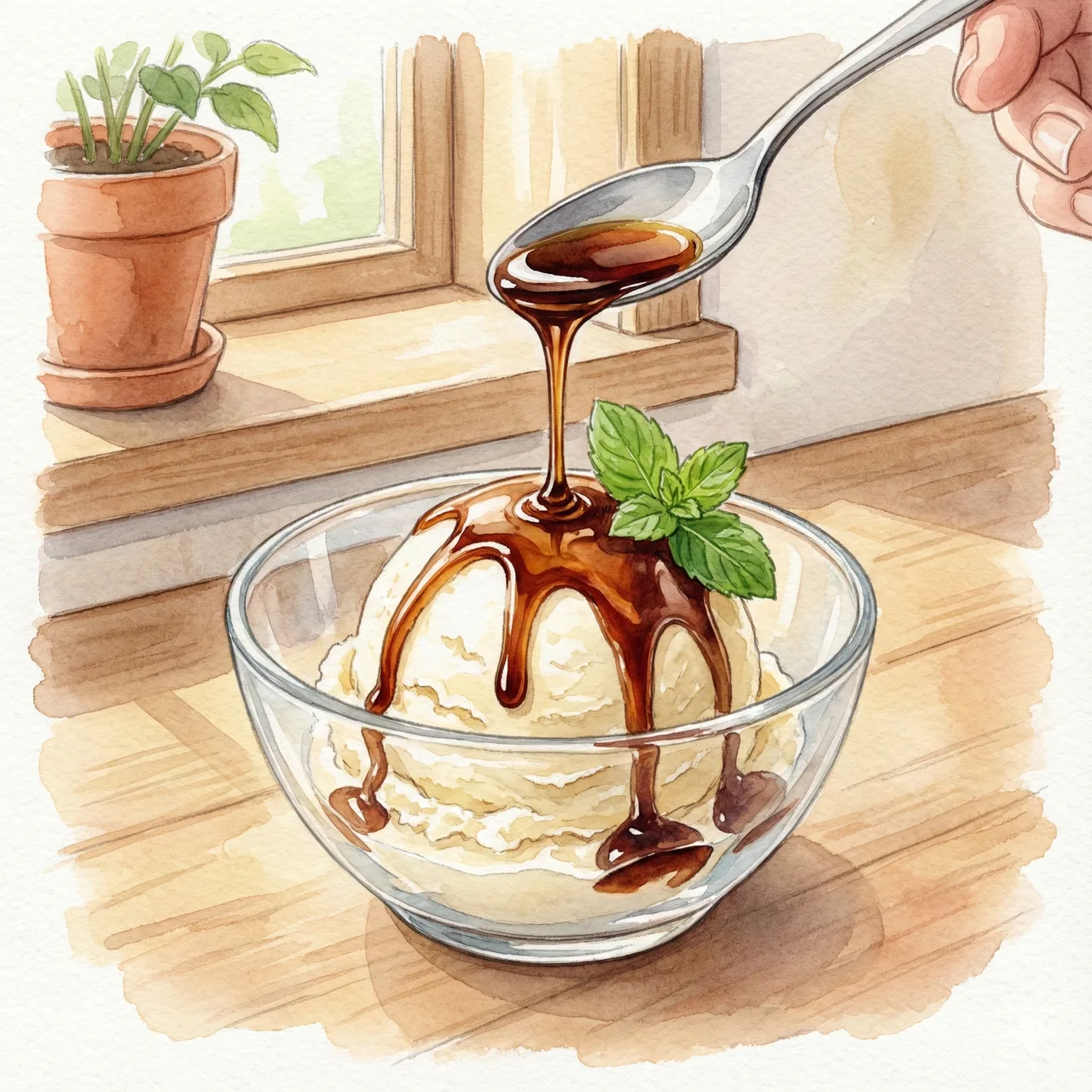
Use 2: Over vanilla ice cream or yogurt
Try it — drizzle a little hon mirin over vanilla ice cream.
It adds a rum-like warmth that transforms a simple scoop into a sophisticated dessert.
For applications without heat (like dressings), make "neri-kiri mirin" first: gently heat it to cook off the alcohol, then use as a syrup.
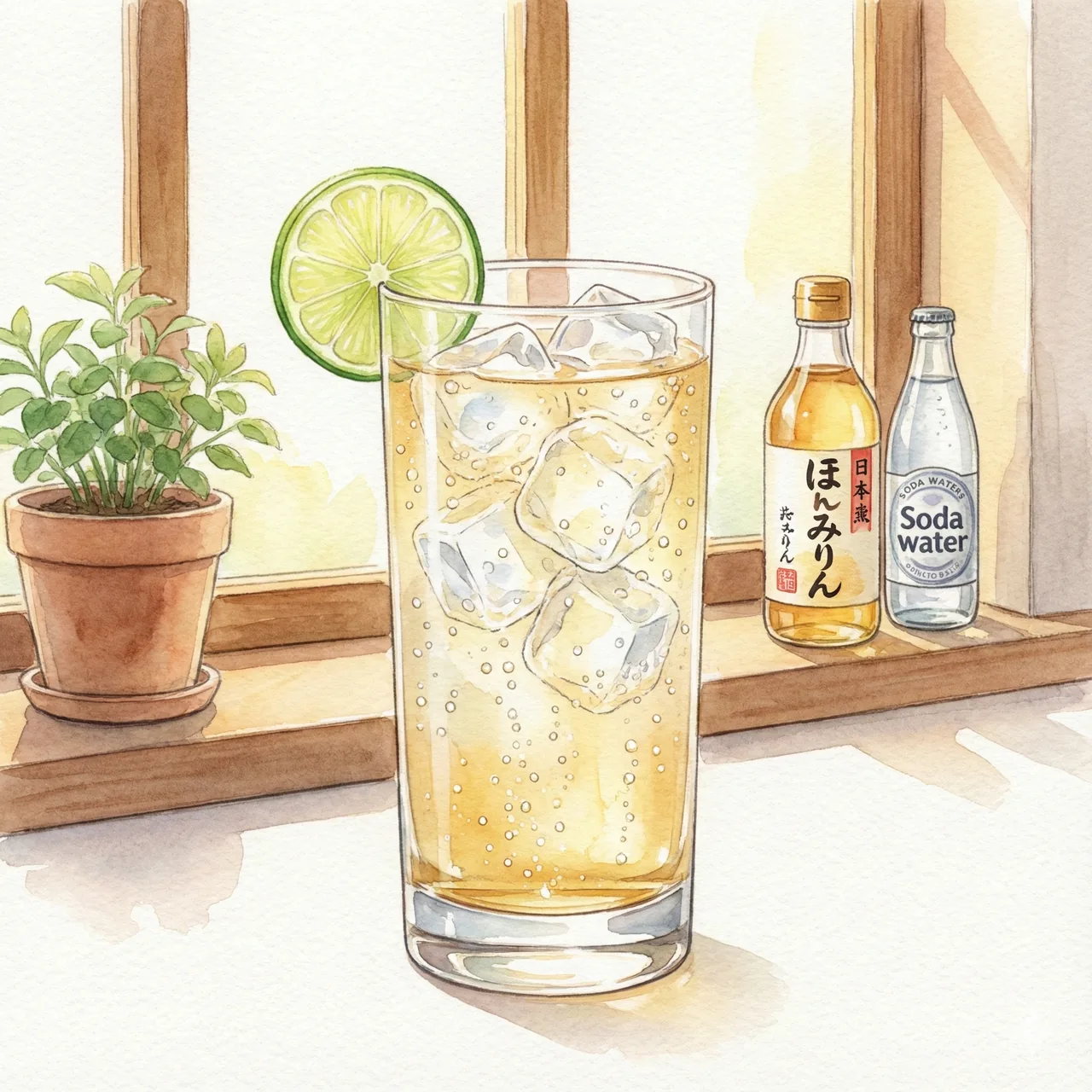
Use 3: Mirin tonic (sparkling cocktail)
Hon mirin is classified as a liqueur. Dilute it with sparkling water and squeeze in a lime or lemon — you have a gently sweet, aromatic cocktail.
It makes a pleasant nightcap as well.
5. Real Experience: Switching to Mikawa Mirin Meant Using Less Sugar
I used to cook with whatever mirin-style seasoning was on sale at the supermarket.
I followed recipes to the letter but the results never matched restaurant cooking — so I kept adding sugar and mentsuyu to compensate.
Then I switched to Sanshu Mikawa Mirin, and the first thing I made changed everything.
A batch of nikujaga (meat and potato stew) seasoned with mirin and soy sauce alone — the flavor was perfect on the first try, nothing else needed.
The bottle costs around ¥1,000 (roughly $7), which initially felt steep. But a small amount goes a long way, and I stopped buying sugar entirely, so the actual cost difference is smaller than it looks.
More than anything: I started feeling confident about my cooking. That alone made it worth it.
6. Frequently Asked Questions
Should hon mirin be refrigerated?
No — hon mirin is best stored in a cool, dark place at room temperature.
Refrigeration can cause the natural sugars to crystallize and turn the liquid cloudy or thick.
Because it contains alcohol, it won't spoil at room temperature.
Note: mirin-style seasoning (which has almost no alcohol) should go in the refrigerator after opening.
How long does it keep?
Unopened, about 1 to 1.5 years.
After opening, the color deepens and flavor gradually changes, but it rarely spoils.
For best flavor, aim to use an opened bottle within about 3 months.
My mirin has turned white and lumpy — is it safe?
This is just the natural sugars crystallizing in the cold — the quality is completely fine.
Gently warm it in a bain-marie (bowl over hot water) and it will return to normal.
Keep this in mind if your kitchen gets cold in winter.
What does "nikiri mirin" mean?
Nikiri mirin is hon mirin that has been gently heated to cook off the alcohol.
Using raw hon mirin directly in no-heat applications (dressings, sashimi dipping sauce) leaves an alcoholic note, so nikiri mirin is used instead.
A quick 30–60 seconds in the microwave works as a shortcut.
Why does hon mirin create such a beautiful glaze on teriyaki?
The sugars and organic acids in hon mirin form a coating on the surface of food when heated.
The complex sugar composition (multiple types of sugar from fermentation) creates a deeper, more luminous glaze than plain sugar alone.
This is the mechanism behind the glossy finish on teriyaki chicken and unagi (eel) sauce.
How do I use mirin differently from cooking sake?
Cooking sake primarily removes odors, tenderizes meat, and draws out umami.
Mirin primarily adds sweetness, creates a glaze, and prevents ingredients from breaking apart during cooking.
Most simmered dishes and teriyaki recipes call for both — each enhances the effect of the other.
7. Final Thoughts
It's just mirin — until it isn't.
Real hon mirin is an aged fermented liqueur, concentrating the full flavor of rice over months or years.
How to choose:
· Only 3 ingredients (glutinous rice, rice koji, shochu)
· Avoid mirin-style seasoning
· When in doubt: Mikawa Mirin or Fukurai Jun
Switch to either of these and your everyday nimono will start tasting like restaurant cooking.
Try the real thing at least once — the difference is immediate.
Japanese Seasoning Gifts: Premium Soy Sauce, Miso & Vinegar
How to Make Japanese Dashi: Kombu & Katsuobushi in 4 Steps