Sanshu Mikawa Mirin
Real hon-mirin, brewed in Mikawa and aged with time.
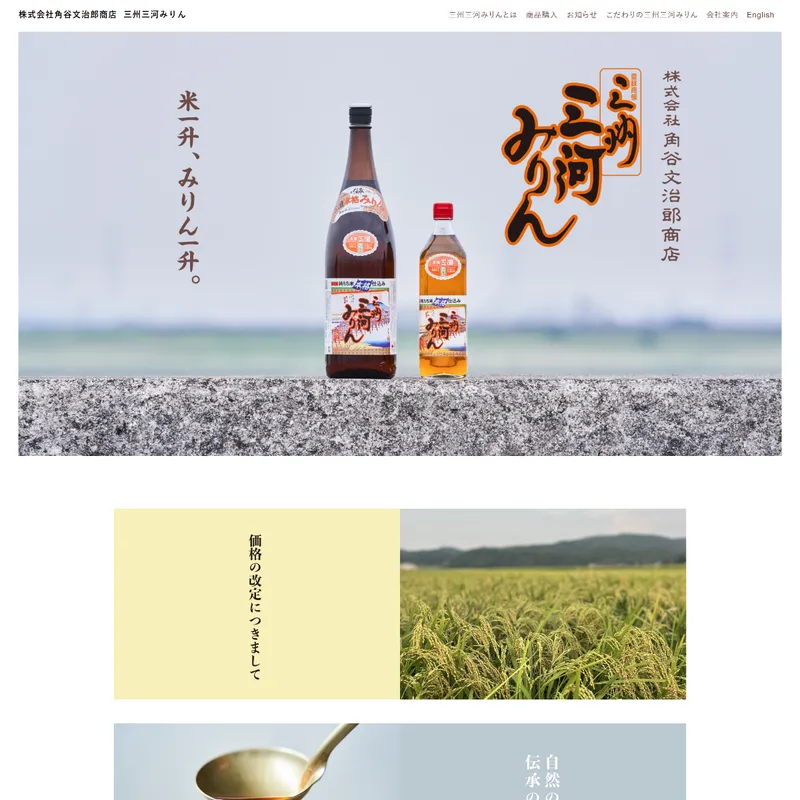
Born in Hekinan, Aichi, Sanshu Mikawa Mirin is brewed with just three ingredients: glutinous rice, rice koji, and rice shochu. Kakutani Bunjiro Shoten, founded in 1910, keeps the local Mikawa idea of "one sho of rice for one sho of mirin," and lets the brew mature slowly before bottling. All rice is milled in-house, and the brewery also makes its own koji and fragrant rice shochu, building flavor from grain to bottle. At around 14% alcohol, it is classified as real hon-mirin — mellow on the tongue, and known in cooking for shine, gloss, and depth. In addition to the standard "Sanshu Mikawa Mirin," the lineup includes "Organic Sanshu Mirin" using organic rice, and the sugar-free Sanshu Umeshu made by steeping green plums in Mikawa mirin.
Why We Love It
Start with a classic teriyaki glaze to see the clean sweetness and beautiful shine. A small splash in simmered dishes or fish helps flavors settle in gently. Try it in tamagoyaki or dressings for a deeper, rice-born richness. If you are curious, take a tiny sip to notice the aroma. The Organic Sanshu Mirin pairs well with simple dishes that let ingredients shine. For a different angle, the sugar-free Sanshu Umeshu — made by steeping green plums in Mikawa mirin — tastes best well chilled, served as a pre-meal drink.

PROFILE About the Company / Workshop
Kakutani Bunjiro Shoten traces its roots to 1910, when the founder Bunjiro chose Nishihama-cho in Hekinan as the base and obtained licenses to produce mirin and otsurui shochu. The company was incorporated in 1982, and in 1983 it received corporate licenses for mirin and otsurui shochu. The brewery has stayed in Mikawa, building its work around mirin for generations.
The recipe is straightforward: glutinous rice, rice koji, and rice shochu. Steamed rice is brewed with koji and shochu, then pressed and matured before bottling. The brewery follows a traditional method, using rice shochu (otsurui). Brewing and aging are described as taking two years, while industrial methods are often stated as 40-60 days. Alcohol content is around 14%.
The flagship Sanshu Mikawa Mirin comes in 300 ml, 700 ml, and 1,800 ml. Organic Sanshu Mirin uses domestically produced organic rice as its base and is brewed by the traditional Mikawa method referred to as "one sho of rice for one sho of mirin." For another expression of mirin, the sugar-free Sanshu Umeshu is made by steeping green plums in Mikawa mirin, offered in rich and dry styles.
Rice is sourced from designated domestic areas and milled in-house. The rice milling and shochu facility is located in Minatomoto-cho, and the brewery also produces fragrant shochu for its brewing. The company obtained organic certifications (JONA and OCIA) in 2000. It has also expanded places to share mirin culture, including a kitchen studio completed in 2019 and the "Mirin Brewery" opened at VISON in Mie in 2021.
Three ingredients, all from rice
Made only with glutinous rice, rice koji, and rice shochu. The rice is steamed, fermented, and matured over time before bottling. Kakutani Bunjiro Shoten has focused on mirin-making since 1910, keeping the recipe simple and the craft steady.
"One sho of rice, one sho of mirin"
A key Mikawa principle the brewery continues to value. Rice from designated domestic production areas is milled in-house, and the brewery also produces its own koji and aromatic rice shochu. The process stays close to the grain, from preparation to aging.
Traditional brewing and long aging
Sanshu Mikawa Mirin is brewed by a traditional method. High-quality glutinous rice is steamed in a wagama kettle, then matured through long saccharification and aging with rice shochu (otsurui shochu). The brewing and aging period is described as taking two years, in contrast to industrial methods often noted as 40-60 days.
Around 14% alcohol: real hon-mirin
With alcohol around 14%, it is classified as hon-mirin. It tastes mellow and rich, and in cooking it is known for an elegant sweetness and a glossy finish. Its alcohol content is also described as helping flavors penetrate and settle into ingredients.
PRODUCTS Featured Products & Services
Contains promotional content
Sanshu Mikawa Mirin
The signature hon-mirin brewed with glutinous rice, rice koji, and rice shochu, then aged before bottling. Available in 300 ml, 700 ml, and 1,800 ml. A classic choice when you want clean sweetness and a glossy finish.
Organic Sanshu Mirin
Made with domestically produced organic rice and brewed by the traditional Mikawa method. The flavor is described as naturally sweet, savory, and aromatic — an organic expression grown within the brewery's mirin-focused tradition.
Sanshu Umeshu (No Sugar Added)
A plum liqueur made by steeping green plums in Mikawa mirin without adding sugar. Two styles are offered: rich and dry. Chill it well to enjoy the aroma before a meal.
LINKS Official Links / Social Media
- Official Website https://mikawamirin.jp/
- Online Shop https://mikawamirin.buyshop.jp/
- Contact Form https://thebase.com/inquiry/mikawamirin-buyshop-jp
- What is Sanshu Mikawa Mirin? https://mikawamirin.jp/concept
- Commitment (Method) https://mikawamirin.jp/commitment
- Company https://mikawamirin.jp/company
- English https://mikawamirin.jp/english