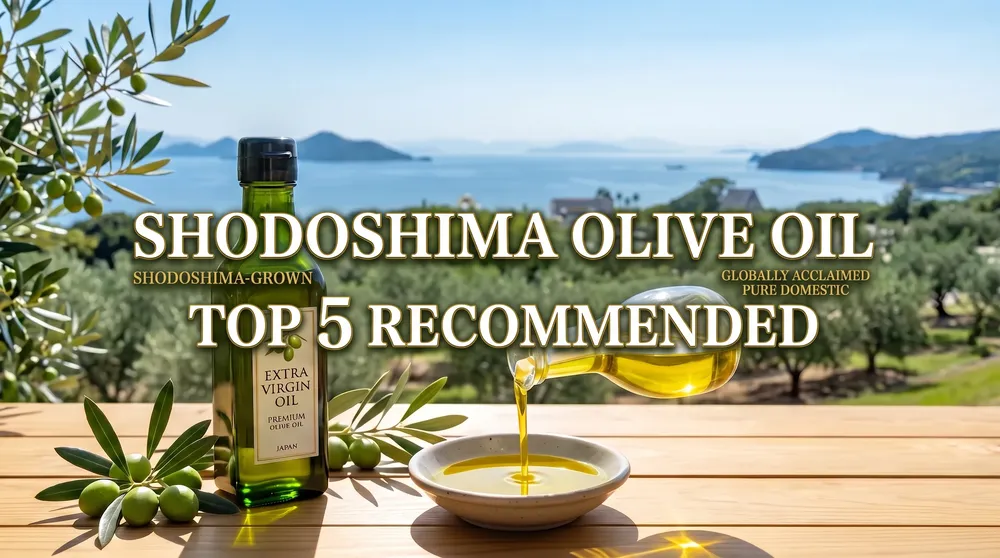
Japan grows olives because of a fishing treaty with Russia.
After the Russo-Japanese War, Japanese boats won the right to fish the Sea of Okhotsk and the Bering
Sea — much longer voyages, and the catch had to survive the trip home. Olive oil was
what preserved it. So in 1908 the government started olive trials in three prefectures.
Only one of them worked.
That island is Shodoshima, and it still makes around 90% of Japan's olive oil — a
production so small that the interesting question is not whether it is good, but
how to tell whether the bottle in front of you is actually from there.
Quick Reference: Reading the Label
| What it says | What it means |
|---|---|
| "100% Shodoshima-grown" | The fruit was grown there. This is the one |
| "Processed in Shodoshima" | ⚠ Imported oil, bottled there |
| Acidity stated | Good sign. Extra virgin means ≤0.8% |
| Dark glass bottle | Required. Light destroys olive oil |
| The peppery sting at the back of your throat is the freshness test. It comes from polyphenols and it fades as the oil ages. | |
Why Japan Grows Olives At All
It is one of the more satisfying chains of cause and effect in Japanese agriculture, and every link is documented.
- Japan won the Russo-Japanese War (1904–05), and the treaty that followed gave Japanese fishermen the right to work Russian waters — the Sea of Okhotsk and the Bering Sea.
- Those are long voyages. The catch had to survive the journey back, and at the time olive oil was what you preserved fish in.
- So demand appeared suddenly, and Japan grew no olives.
- In 1908 the government began olive trials in three prefectures: Kagawa, Kagoshima and Mie.
- Only Shodoshima, in Kagawa, succeeded. The Seto Inland Sea gives it a mild climate with unusually little rain — the closest thing Japan has to Mediterranean conditions.
Japan's olive industry exists because sardines needed preserving on the way back from
Russia. The fish-packing rationale disappeared long ago; the trees did not.
More than a century later, Shodoshima produces around 90% of Japan's olive oil —
still the only place in the country where it really works.
Why Japanese — Small Enough to Press the Same Day
In 2020 Shodoshima produced 399 tonnes of olives — about 70% of Japan's entire
crop.
That is roughly what one mid-sized Mediterranean estate handles. Japan's whole
olive industry is, by world standards, a rounding error — and that turns out to be the reason
the oil is good rather than a reason to doubt it.
Because the two things that ruin olive oil are time and bruising
Olive oil degrades from the moment the fruit leaves the tree. Damaged fruit starts fermenting; delay between picking and pressing raises acidity and strips aroma. Everything that makes an olive oil excellent is a logistics problem.
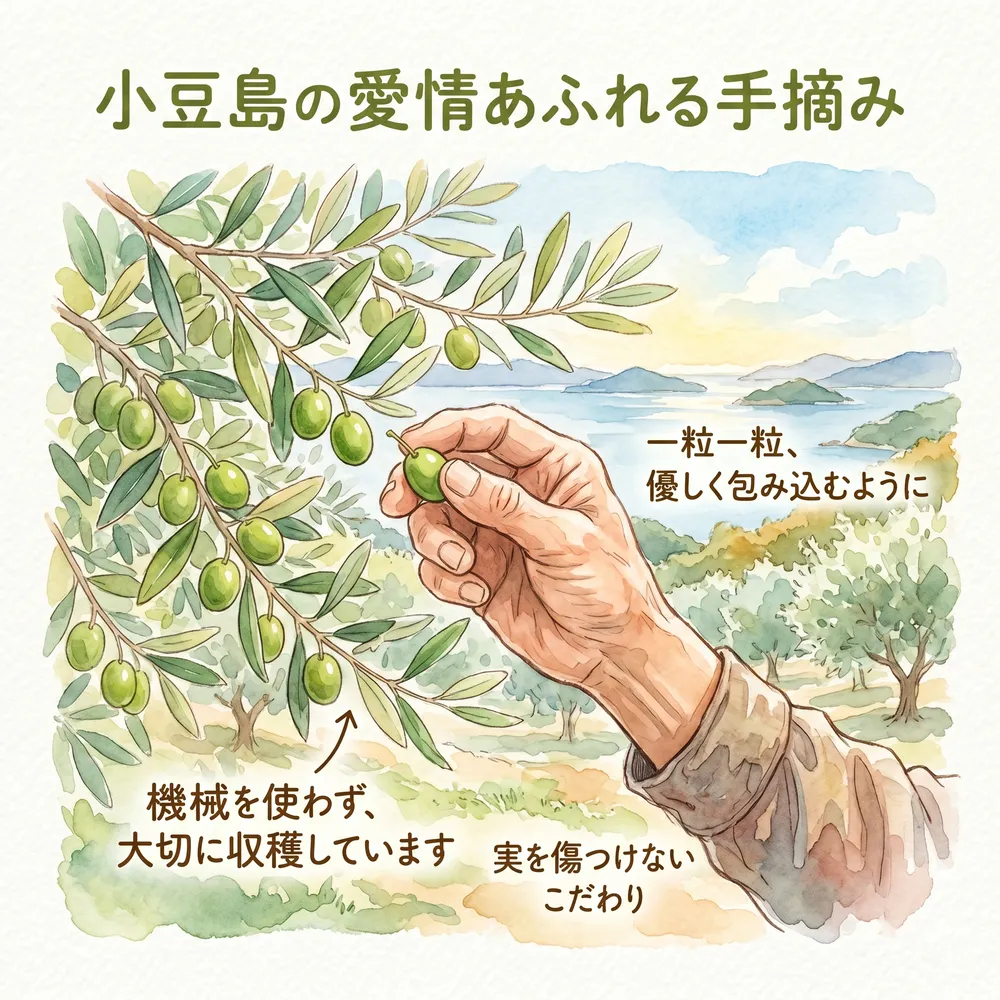
- Hand-picking — fruit taken individually rather than shaken or beaten from the tree, so it arrives unbruised. Labour-intensive and only possible at small scale.
- Pressing the same day. The mill is on the island, minutes from the groves. There is no long haul to a regional processor.
- Harvesting green. Early-picked green fruit (ryokka) yields far less oil per tonne but gives the grassy, bitter, peppery character that fresh olive oil is prized for. It is a deliberate decision to produce less.
This is also why it costs what it costs. Hand-picked, green-harvested, small-batch
oil from Japanese farmland is never going to compete on price with a Mediterranean co-operative —
and a bottle can run several times what a good imported extra virgin costs.
Independent confirmation exists, though: Agri-Olive Shodoshima has won at the
New York International Olive Oil Competition, the largest and most-cited
competition in the industry — judged blind, against the Mediterranean.
⚠ "Processed in Shodoshima" Is Not "From Shodoshima"
A bottle can legitimately say "Shodoshima" while containing no Japanese olives at
all. Imported bulk oil, shipped to the island and bottled there, is
processed in Shodoshima.
What you want is "Shodoshima-grown," or 100% domestic. The distinction is on the
label, and it is the single most useful thing in this guide.
If you already know about olive oil fraud, this will be familiar. The global trade has a long-documented problem with oil being blended, relabelled by port of bottling, or sold as extra virgin when it is not. Japan is not exempt from that logic — a famous regional name attached to a scarce product is exactly the situation where it happens.
What a genuine bottle tells you
- That the olives were grown in Japan, not merely bottled here.
- The harvest year, and ideally the pressing date.
- The variety — Mission, Lucca, Nevadillo Blanco and Manzanillo are the ones grown on Shodoshima.
- The acidity figure. Producers who have a good one publish it.
Vagueness is the signal. An oil that is genuinely from a 399-tonne harvest has every reason to say so precisely, and no reason to be coy about it.
Acidity, Light, and the Peppery Sting
Acidity is a measurement, not a taste
"Extra virgin" has a defined threshold: free fatty acid content of 0.8% or below. It is not a marketing adjective — it is a laboratory number, and a bottle above the line cannot legally use the term.
You cannot taste acidity directly. What it measures is damage — bruised fruit, delay before pressing, poor storage. Producers who get their fruit to the mill within hours end up far below the limit, and the ones who do tend to print the figure.
The peppery catch in your throat is the useful test
Swallow a small amount of good fresh olive oil and it stings at the back of the throat — enough to make you cough. That sensation comes from oleocanthal, one of the polyphenols in olive fruit.
It is the most practical freshness test available to a buyer, because polyphenols
degrade with time and light. A fresh, early-harvest oil bites. An old or heat-damaged one
goes smooth and flat — which some people mistake for mildness.
Bitterness and pepperiness are not faults in olive oil. They are the signal.
Light is the enemy you can actually control
- Dark glass or a tin, always. Clear bottles look appealing on a shelf and destroy the contents.
- Store it in a cupboard, not beside the hob. Heat and light together are the fastest route to rancid.
- Not in the fridge. It clouds and solidifies, which is harmless but pointless — cold does not preserve it meaningfully.
- Buy small bottles. Olive oil is at its best in the months after pressing and does not improve. A large bottle you use slowly is a false economy.
How to Buy It
An honest note: the Shodoshima producers are small farms selling domestically, and we could not confirm English-language direct sales for any of the growers we would otherwise recommend by name. So here is what to check instead, which works whether you are buying on the island, in a Tokyo department store, or through a forwarding service.
The four checks, in order
- 1. "Shodoshima-grown" or "100% domestic," not "processed in Shodoshima." This single distinction separates the real thing from imported oil in a Japanese bottle.
- 2. A harvest year, and ideally a pressing date. Olive oil is a dated product. A bottle without one is asking you not to look.
- 3. Dark glass or tin. Non-negotiable, and it tells you whether the producer is thinking about the oil or the shelf.
- 4. A stated acidity figure. Extra virgin means 0.8% or below; good Shodoshima producers publish numbers well under that.
Names worth knowing
Agri-Olive Shodoshima is the one with international recognition — a New York International Olive Oil Competition award, judged blind against Mediterranean producers, which is the most useful outside verification available for a Japanese olive oil.
Toyo Olive is the oldest of the established growers — founded in 1955, farming its own groves and running the largest oil press in Japan, with cultivation, pressing and sale all under one roof. That vertical integration is the concrete version of the same-day pressing argument above.
Inoue Seikoen, Olive Island and Shodoshima Olive Park are the other names to know. All of these sell primarily within Japan and their sites are Japanese-only, so a forwarding service or a visit is the practical route.
Realistically: this is a thing to buy in Japan. Prices run several times a good
imported extra virgin, the bottles are small, and the shipping is awkward.
Which makes it an unusually good souvenir and a poor staple. Buy a small bottle,
use it raw where you can taste it, and keep your everyday cooking oil separate.
We have not linked a marketplace search, because there is nothing there.
Shodoshima oil is made in tiny quantities by farms selling into Japan —
it does not reach international marketplaces, and a search returns imported oil
from somewhere else entirely.
The links above go to the producers themselves. They are in Japanese, which is
the honest state of things and tells you something useful about how small this is.
Using It, and Storing It
Do not cook with it. Not because it cannot take heat — it can, and its smoke point is higher than people assume — but because heat destroys exactly what you paid for. The aroma compounds and the peppery polyphenols are volatile.
- Finish, do not fry. Over grilled fish, on a salad, on tomatoes, into soup at the table. Anywhere it goes in cold and stays cold.
- It works startlingly well with Japanese food, which is not a coincidence — a grassy, peppery oil sits naturally alongside soy, dashi and raw fish. Over cold tofu with a pinch of salt is the standard demonstration and it is genuinely convincing.
- Keep a second, cheaper oil for cooking. This is the single change that makes a good bottle worth owning.
- Use it within a few months of opening. Oxygen does the same work as light, slowly.
Shodoshima also makes shinzuke — new-salted green olives, cured only
briefly and available fresh in autumn. They are nothing like a jar of brined supermarket olives:
crisp, mild, faintly bitter.
If you are on the island in October or November, this is the thing to eat, and it
barely travels.
Frequently Asked Questions
Why does Japan grow olives?
Because of a fishing treaty. After the Russo-Japanese War, Japanese boats gained
access to the Sea of Okhotsk and Bering Sea, and olive oil was used to preserve fish on the
long voyage home.
In 1908 the government trialled olives in Kagawa, Kagoshima and Mie. Only Shodoshima
worked, and it still produces around 90% of Japan's olive oil.
How do I know it is really from Shodoshima?
Look for "Shodoshima-grown" or 100% domestic — not "processed in Shodoshima."
Imported bulk oil bottled on the island can legitimately carry the place name.
A genuine bottle states the harvest year, the variety and usually the acidity.
Vagueness on a scarce product is the warning sign.
Why is it so expensive?
Because there is almost none of it. Shodoshima's whole 2020 harvest was 399 tonnes
of olives — roughly one mid-sized Mediterranean estate.
Add hand-picking, same-day pressing and early green harvesting — which
deliberately yields less oil per tonne — and the price follows from the method.
It tastes peppery and makes me cough. Is it off?
The opposite — that is the sign of a fresh, high-polyphenol oil. The sting comes
from oleocanthal, and it fades as the oil ages or is exposed to light.
Bitterness and pepper are not faults in olive oil. A bottle that tastes smooth and
flat is usually old, not mild.
Can I cook with it?
You can, and you should not. Heat destroys the aroma compounds and polyphenols
that make an expensive oil worth its price.
Use it raw as a finishing oil and keep a cheaper oil for the pan. That split is
what makes a good bottle worth buying at all.
Should I refrigerate it?
No. It clouds and solidifies, and the benefit is negligible. Light and
heat are the real enemies — a dark bottle in a closed cupboard is what it needs.
Buy small bottles. Olive oil does not improve with age, and a large bottle used
slowly ends up worse than a small one used quickly.
Final Thoughts: A Rounding Error, Done Properly
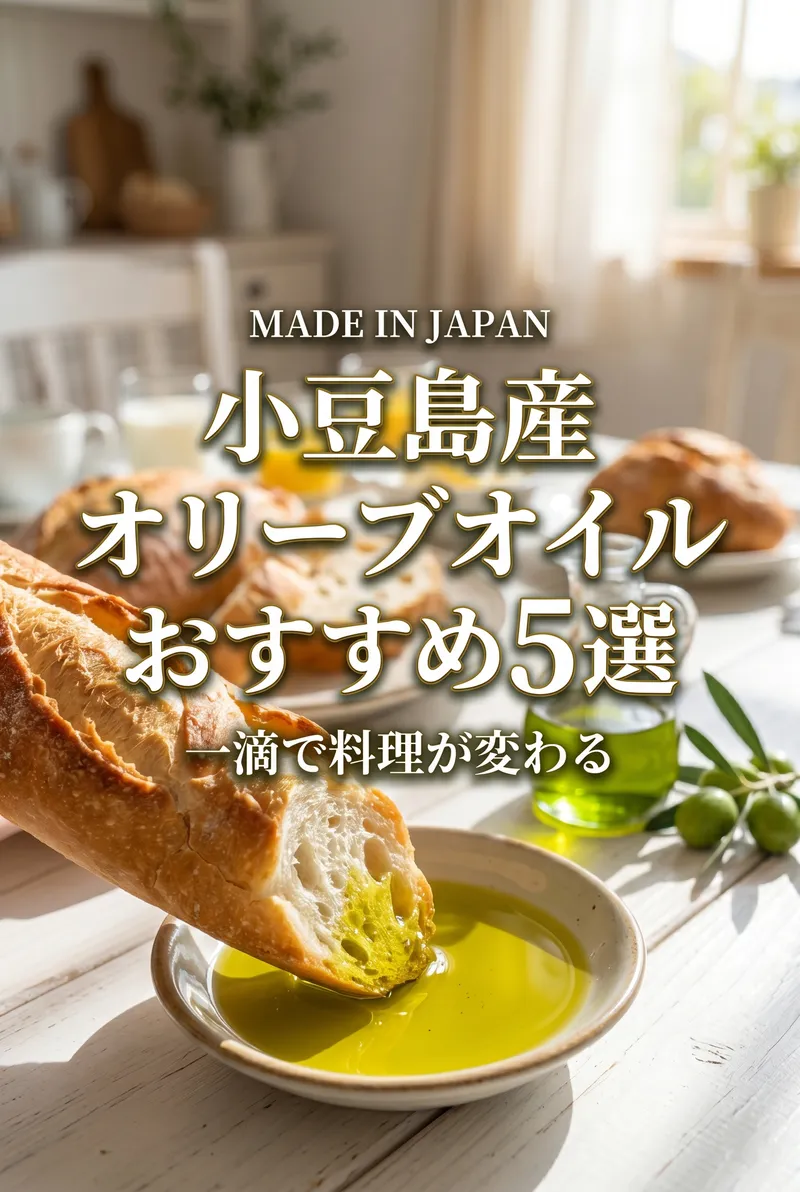
Japan's entire olive industry is smaller than a single Mediterranean estate, and it exists because sardines needed preserving on the way back from Russian waters. Neither fact is a reason to buy it — but both explain why the oil is made the way it is.
The one thing to take away is the label distinction. "Shodoshima-grown" and "processed in Shodoshima" are different products at similar prices, and only one of them contains Japanese olives.
Then buy a small dark bottle, keep it out of the light, and never put it in a pan. If it catches at the back of your throat, you got a good one.
Japanese Honey: Why Only 6% of It Is Japanese
Umeboshi: Salt, Time, and Nothing Else