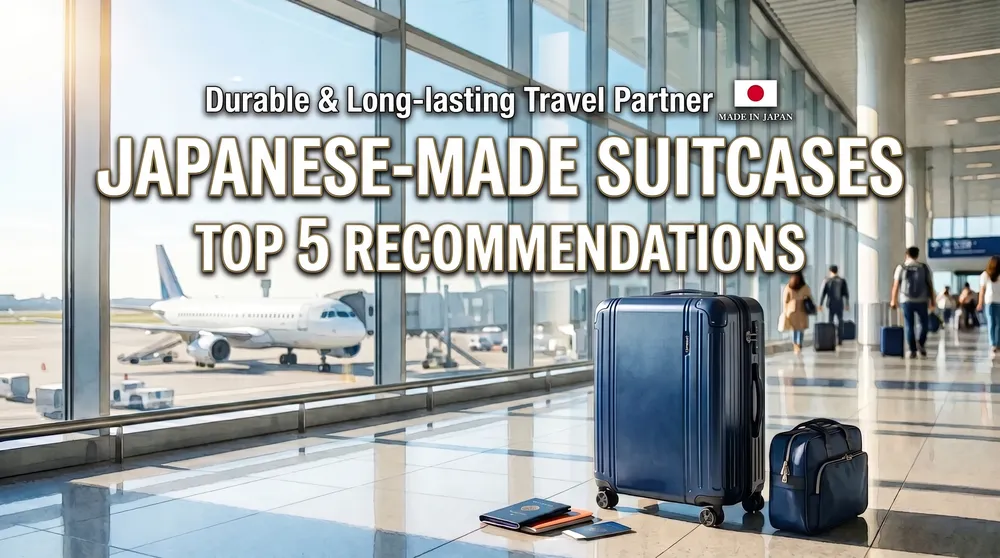
If you are buying a suitcase for a trip to Japan, check the weight limit before anything
else.
JAL allows 10kg for your carry-on and personal item combined — a limit most American
carriers do not impose at all, and one that a hard-sided case eats into before you pack anything.
And on domestic aircraft with fewer than 100 seats, the size allowance drops sharply,
which catches people on regional routes.
Then there is the suitcase itself. One line is still built in Japan — Proteca, at a single
factory in Hokkaido — and it has a feature almost no Western case has: a brake on the
wheels.
Quick Reference: Before You Buy
| Question | Answer |
|---|---|
| Carry-on weight in Japan | 10kg total, bag + personal item |
| Carry-on size (100+ seats) | 55 × 40 × 25cm, 115cm total |
| Carry-on size (under 100 seats) | 45 × 35 × 20cm, 100cm total |
| How big for how long? | Roughly 10 litres per night |
| Proteca is the only suitcase line still manufactured in Japan, at ACE's Akabira factory in Hokkaido — around 210,000 cases a year. | |
⚠ Japan's Carry-On Rules Are Stricter Than Yours
The binding constraint on Japanese domestic flights is weight, not size — and most travellers arriving from the US have never had a carry-on weighed.
| Aircraft | Max dimensions | Weight |
|---|---|---|
| 100 seats or more | 55 × 40 × 25cm — 115cm total | 10kg, including your personal item |
| Fewer than 100 seats | 45 × 35 × 20cm — 100cm total |
Two things catch people.
- The 10kg is combined. Your suitcase and your rucksack are weighed together. A hard-sided cabin case can be 3kg empty, so you have around 7kg of actual belongings.
- The small-aircraft rule is real and it is common. Regional Japanese routes — island hops, smaller cities — frequently use aircraft under 100 seats, and the allowance drops to 45 × 35 × 20cm. A case that boarded your international flight without comment can be refused on the domestic leg.
The practical consequence: buy lighter than you think you need. On a trip where
you will take domestic flights, every 500g of empty suitcase is 500g of shopping you cannot
bring home — and Japan is a country people buy things in.
Check your specific route. Rules differ by airline and change; the figures above
are the JAL domestic framework and are indicative rather than a guarantee.
Why Japanese — One Factory in Hokkaido
Suitcase manufacturing left Japan decades ago, as it left most developed countries.
One line stayed.
Proteca is made at ACE's Akabira plant in Hokkaido — around
210,000 cases a year, entirely in Japan. ACE launched the brand in 2005, and the
name is a contraction of Protect, Technology and ACE.
Domestic production at Akabira started about fifty years ago, and ACE has been accumulating suitcase engineering for roughly seventy.
An important distinction: not everything ACE sells is made in Japan. Akabira also
operates as the mother plant for their overseas production — the reference factory
that the others are built to match.
Proteca is the Japan-made line. If Japanese manufacture is what you are buying, buy
Proteca specifically rather than assuming the parent brand.
What domestic production actually buys you here is iteration. A factory in the same country as the design team, the repair centre and the customer, making a fifth of a million units a year, finds out quickly which hinge cracks and which wheel bearing fails — and every case comes back there under warranty.
The Brake You Have Never Had
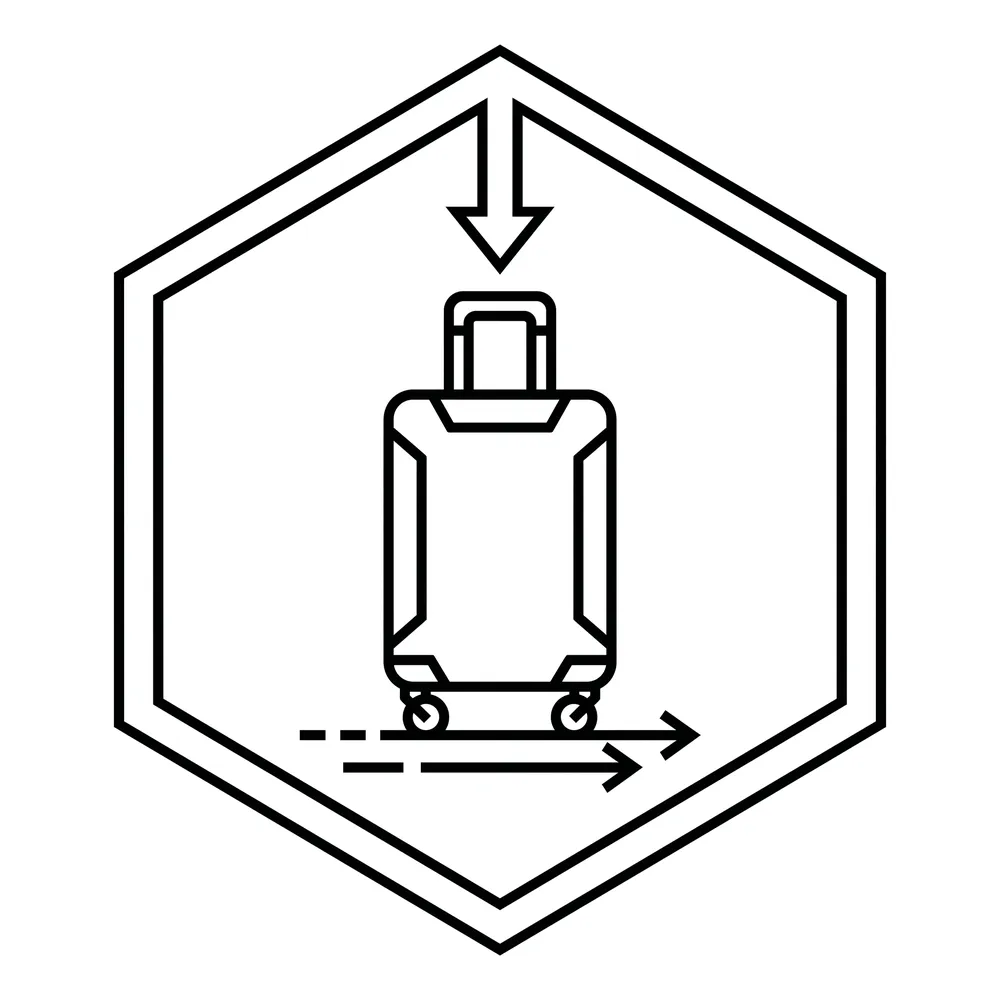
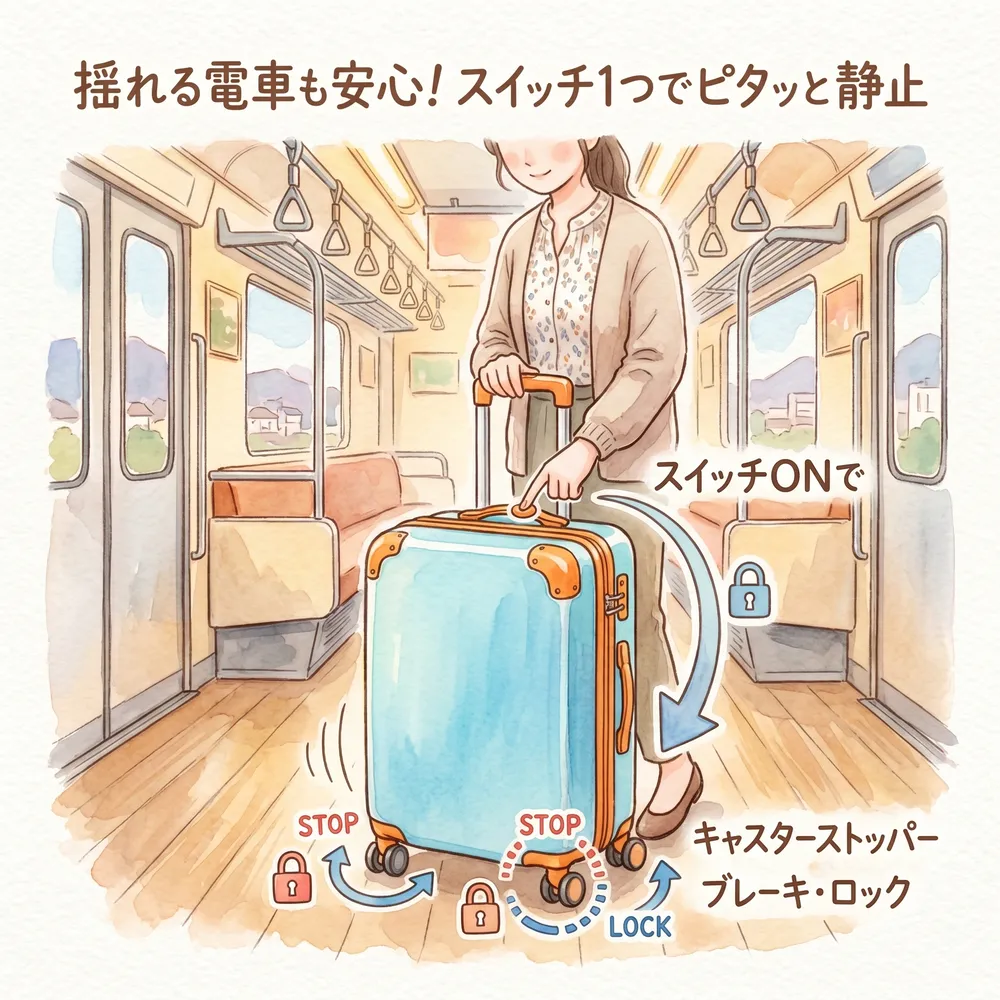
Japanese suitcases have a stopper — a brake that locks the wheels. Almost no
Western case offers one, and once you have used it the omission seems strange.
It exists because Japan travels by train. A suitcase standing in a carriage
rolls away when the train moves; on a platform, in a lift, on any sloped concourse, an unbraked
four-wheel case is a loose object. The stopper turns it into furniture.
And the wheels themselves
- Four wheels, not two. Four-wheel spinners push alongside you rather than being dragged behind. Better in a station, worse on broken pavement.
- Quiet casters are a real specification in Japan, not a marketing line — a hard wheel on a hard station floor is genuinely loud, and Japanese makers compete on it.
- Bigger wheels roll over more. Small wheels catch on tactile paving, which Japanese stations have everywhere.
- Wheels are the part that fails. Look for a brand that replaces them rather than a case that is beautiful and disposable.
Frame or zip
Frame cases close with a metal latch; zip cases with a zip. Frames are more rigid and harder to open illicitly. Zips are lighter, which — see the 10kg rule — matters more than it used to, and can expand.
For travel in Japan, zip. The weight saving is worth more than the marginal rigidity, unless you are carrying something fragile.
Ten Litres a Night
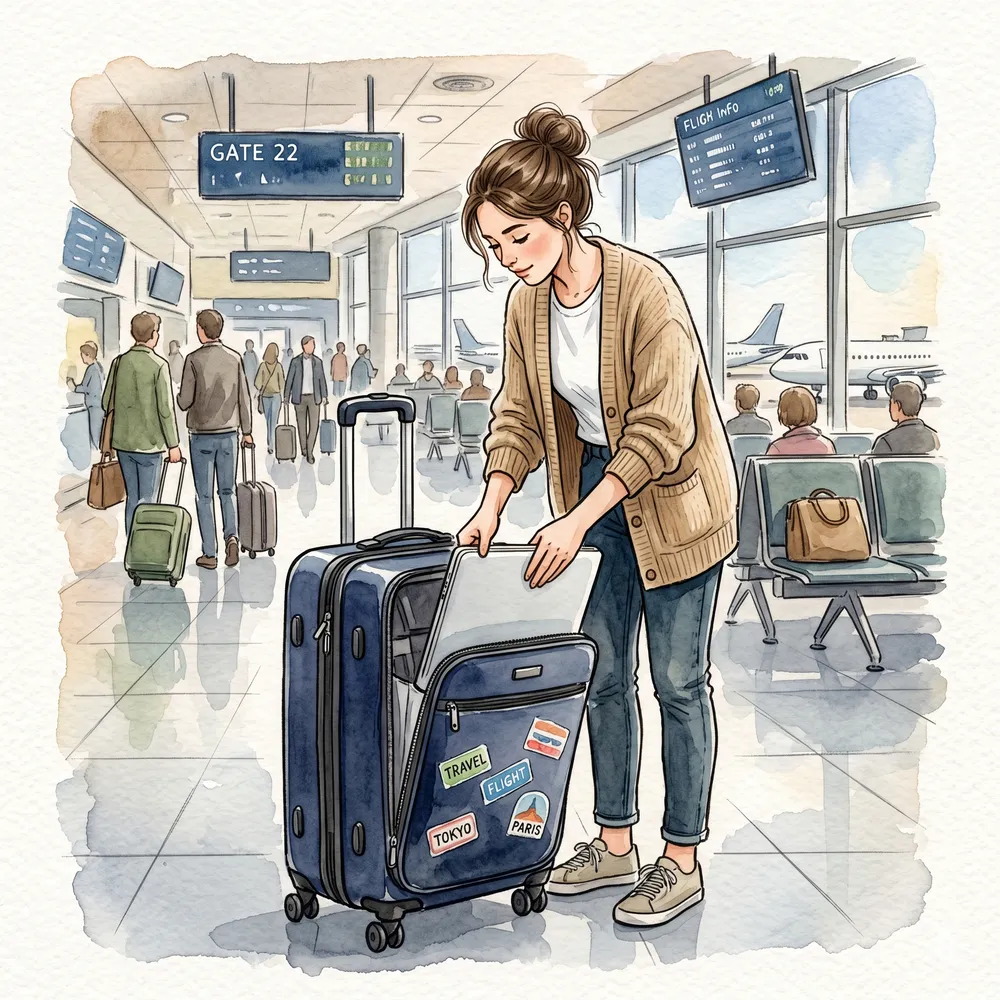
Japanese suitcases are sold by litre, and the rule of thumb is about 10 litres per night. It is crude and it works.
- 1–2 nights — 20–30L, cabin size
- 3–4 nights — 30–40L, still cabin
- 5–7 nights — 50–70L, checked
- Over a week — 75L and up
Then add for what you will buy. This is the adjustment nobody makes and everybody needs — people return from Japan with more than they left with, and an exactly-sized case becomes a problem on the way home.
Expandable zip cases solve this properly, adding a few centimetres of depth for the return leg. It is worth more than it sounds.
What to Buy
Proteca — the Japan-made line
The only suitcase range still manufactured in Japan, and the reason this
article exists. Light shells, quiet four-wheel casters, wheel stoppers as standard, and a
three-year warranty on every product.
ACE run an English site, including pages on the Akabira factory itself, with a
route through to a global online store — which makes this reachable from outside Japan rather
than a forwarding-service project.
- Made
- Akabira, Hokkaido — ~210,000/year
- Since
- Brand launched 2005; factory ~50 years
- Standard
- Wheel stopper, quiet casters
- Warranty
- Three years, all products
- English
- Yes — official English site
Perfect for: Anyone travelling in Japan by train, and anyone who has had a case fail at the wheels.
Which size, concretely
For a Japan trip with domestic flights, buy the lightest cabin case that meets the
smaller aircraft dimensions — 45 × 35 × 20cm — and check a larger case for the things
you buy.
For a Japan trip without domestic flights, the standard cabin size is fine and
you can use the full 55 × 40 × 25cm. The 10kg still applies.
- Domestic flights planned
- 45 × 35 × 20cm cabin case
- No domestic flights
- 55 × 40 × 25cm is fine
- Buying things
- Expandable, or check a bigger case
- Weight to target
- Under 3kg empty for a cabin case
Perfect for: Not being the person repacking on the floor at Itami.
We have not linked a marketplace search here. Proteca sells primarily through its
own channels and Japanese retail, and a generic search for "Japanese suitcase" returns cases that
have nothing to do with it.
The official English site is the route, and it is a better one than usual for a
Japanese manufacturer.
Warranty, Lifespan, and the Wheels
Every Proteca carries a three-year warranty, which in a category where airlines routinely damage the product is more meaningful than it sounds.
- A good suitcase lasts roughly ten years of normal use, and what ends it is almost always the wheels or the handle, not the shell.
- Clean the casters when you get home. Hair and grit wind around the axle and destroy the bearing — this is the single maintenance task that matters, and it takes two minutes.
- Store it unlocked and slightly open, somewhere dry. A sealed case in a humid cupboard grows mould in the lining.
- If an airline damages it, report it before leaving the airport. Claims made after you have left are far harder, and most carriers require it at the baggage desk on arrival.
TSA locks
A TSA-approved lock can be opened by US security with a master key, so they inspect
the case rather than cutting the lock off.
Japanese suitcases fit them as standard — the export market made it universal. If
you fly to or through the United States, a non-TSA lock is a lock you may lose.
Frequently Asked Questions
What is the carry-on limit on Japanese domestic flights?
10kg, counting your carry-on and personal item together — stricter than most US
carriers, which often do not weigh cabin bags at all.
Size is 55 × 40 × 25cm on aircraft with 100 or more seats, but only 45 × 35 × 20cm on
smaller ones, which regional routes frequently use. Check your specific flight.
Are Japanese suitcases actually made in Japan?
Proteca is. Most others are not. ACE builds Proteca at the Akabira factory in
Hokkaido — around 210,000 cases a year, entirely domestic.
But Akabira also serves as the mother plant for ACE's overseas factories, so the
parent brand is not all Japanese-made. If domestic manufacture matters to you, look for Proteca
specifically.
What size should I buy?
Around 10 litres per night — 30–40L for a long weekend, 50–70L for a week.
Then add capacity for what you will buy in Japan, which people consistently
underestimate. An expandable zip case handles this better than sizing up, because it stays small on
the way out.
Frame or zip?
Zip, for travel in Japan. Frames are more rigid and marginally more secure, but
heavier — and with a 10kg combined carry-on limit, weight is the constraint that actually bites.
Zips also expand, which frames cannot.
What is a caster stopper and do I need one?
A brake that locks the wheels so the case cannot roll. Almost unheard of on Western
suitcases and standard on Japanese ones.
If you are travelling by train, yes. A four-wheel case in a moving carriage, on a
platform or in a lift will roll away, and stopping it with your foot for an hour is worse than it
sounds.
How long should a suitcase last?
About ten years, and it will fail at the wheels or the handle. The shell almost
never gives out first.
Clean grit and hair out of the casters after each trip — it is the one maintenance
job that changes the answer, and it takes two minutes.
Final Thoughts: Weigh It Before You Fall in Love With It
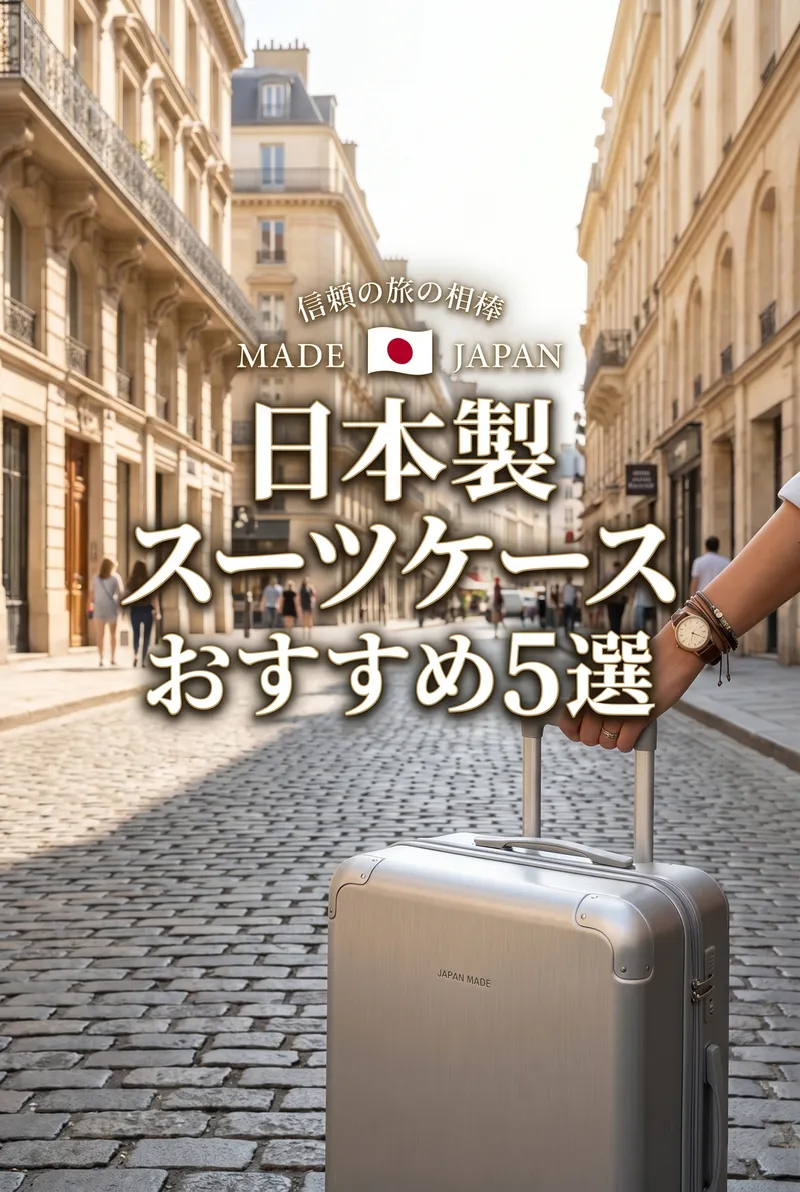
The most useful thing in this guide is a number: 10kg, carry-on and personal item combined. A hard cabin case can be a third of that empty, and Japan is somewhere people buy things. Start from the weight and work backwards.
Then, if you want the Japanese-made one, it is Proteca — one factory in Hokkaido, 210,000 cases a year, three-year warranty, and an English site that will actually sell to you.
And take the wheel stopper seriously. It sounds like a gimmick until the first time your suitcase sets off down a train carriage without you.
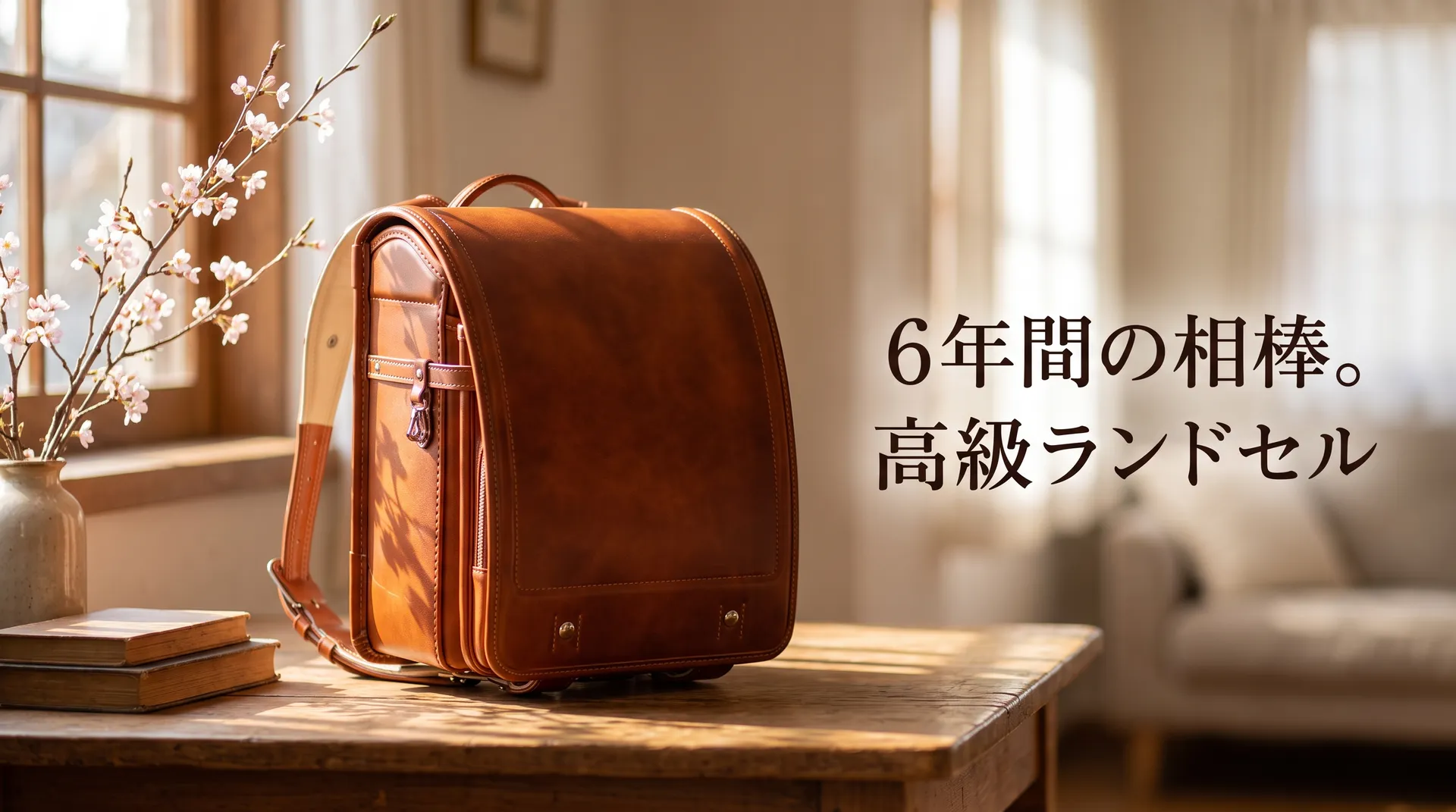
Randoseru: The Japanese School Bag, and the Adult Version
Japanese Formal Bags: Structure Over Branding