"The funeral call came at short notice. Was my bag hardware too shiny?"
In Japan, formal occasions — weddings, funerals, coming-of-age ceremonies, memorials — come
with a set of dress code rules that extend beyond clothing to the bag. The unspoken standards
are precise: no shiny hardware, no noise, no excessive decoration. A bag that
violates these standards doesn't just look wrong — in Japan's ceremony culture, it signals
disrespect for the occasion.
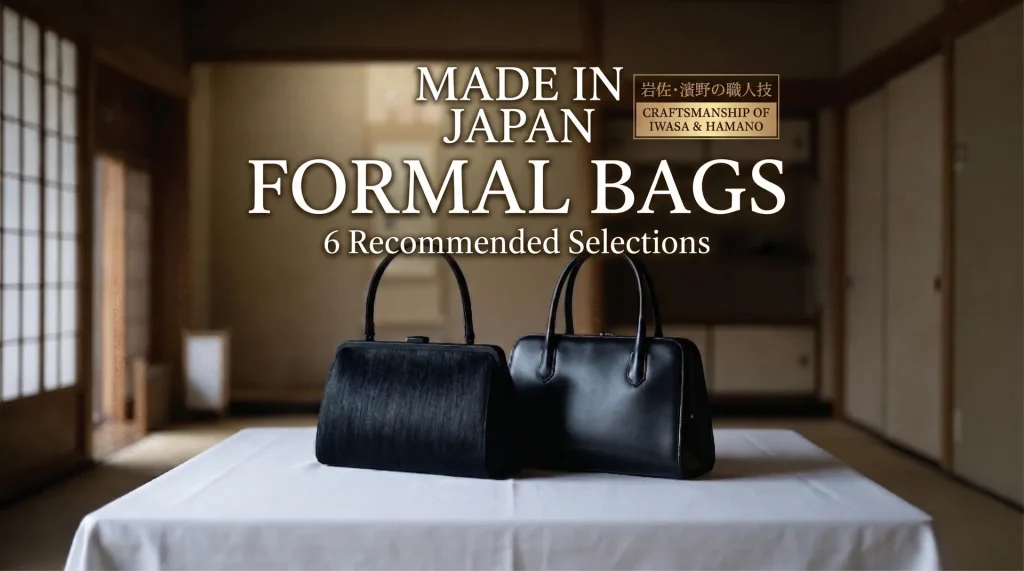
Japan has specialist formal bag makers with nearly a century of history. IWASA (岩佐) has made
nothing but formal bags since the early Showa era. Hamano Leather (濱野皮革工藝), founded in 1880,
is purveyor to the Imperial Household. These aren't fashion brands — they're toolmakers for
a specific social function, and they understand that function completely.
This guide explains the Japanese ceremony dress code for bags, the materials to know, and
the six picks worth considering.
Quick Reference: Japanese Formal Bags at a Glance
| Product | Material | Occasion | Best for |
|---|---|---|---|
| IWASA Horsehair bag | Horse hair (horsehair) | Funeral / memorial | Highest-grade funeral bag; lifetime investment |
| IWASA Hakata-ori (water-repellent) | Hakata weave + DWR | Dual-use (wedding & funeral) | One bag for both occasion types |
| IWASA Inner magnet model | Satin / synthetic | Dual-use | Practical function + ceremony-appropriate form |
| IWASA Men's Yonezawa-ori | Yonezawa weave + DWR | Men's dual-use | Men who attend formal ceremonies regularly |
| Hamano formal handbag | Premium leather | Dual-use | Imperial purveyor quality; gift for milestone occasions |
| Tokyo Soeur formal bag | Water-repellent fabric | Dual-use | Accessible entry point from a formal wear specialist |
1. The Unspoken Rules: No Shine, No Noise, No Excess
The three rules
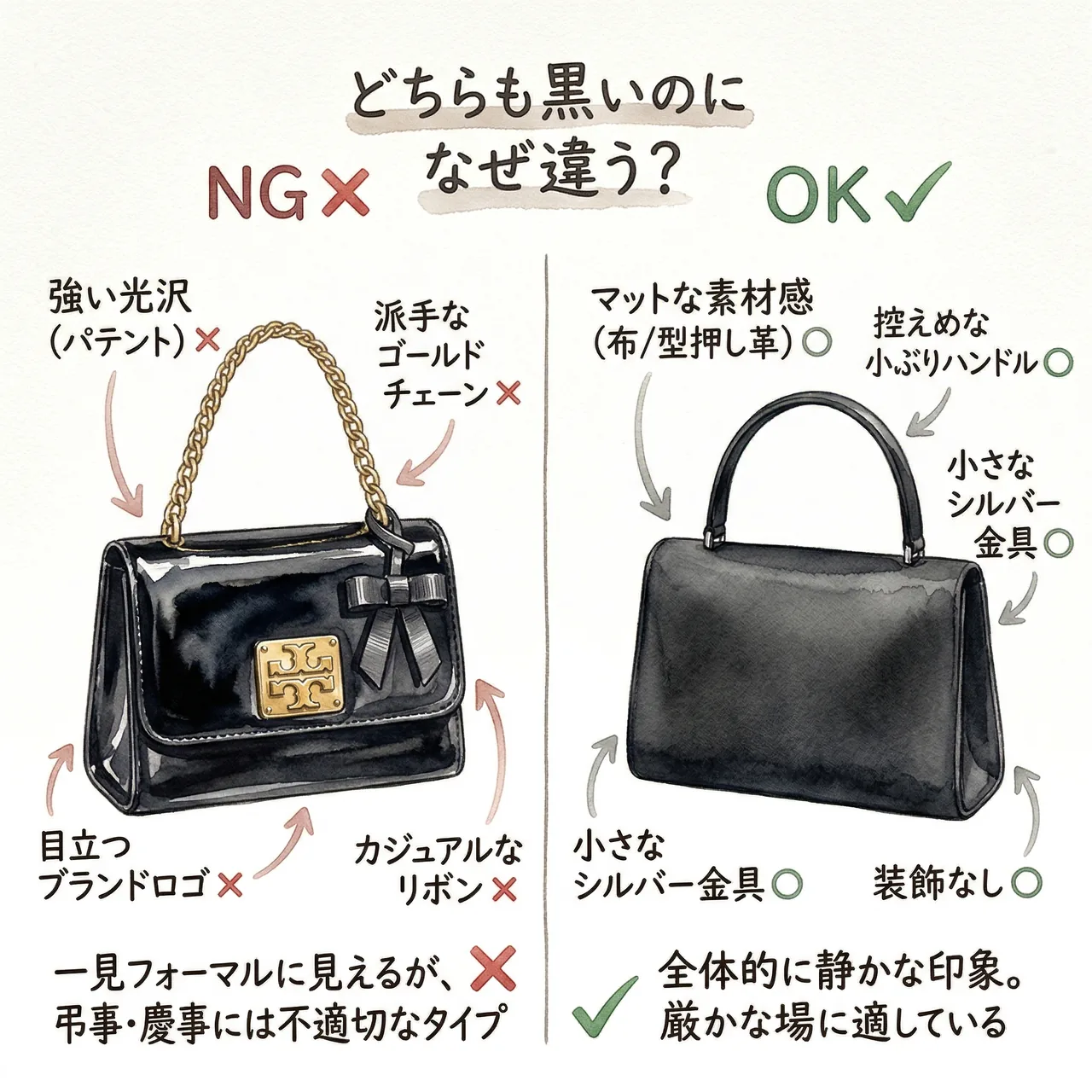
Japanese ceremony culture has precise standards for bags that aren't always written down, but
are universally understood among attendees:
No shiny hardware. Gold or silver metallic hardware is inappropriate at funerals
and memorials. For all funeral-context occasions, matte or darkened hardware is the standard.
Even at weddings, very prominent shiny hardware can read as ostentatious.
No noise. Chain-handle bags, bags with multiple metal decorations, or bags whose
hardware clinks when moved are inappropriate. In the quiet of a funeral hall, an audible bag
is deeply incongruous.
No excessive decoration. Prominent brand logos, fur trim, colourful prints — all
inappropriate for formal ceremony contexts. A formal bag should be virtually invisible as a
design statement.
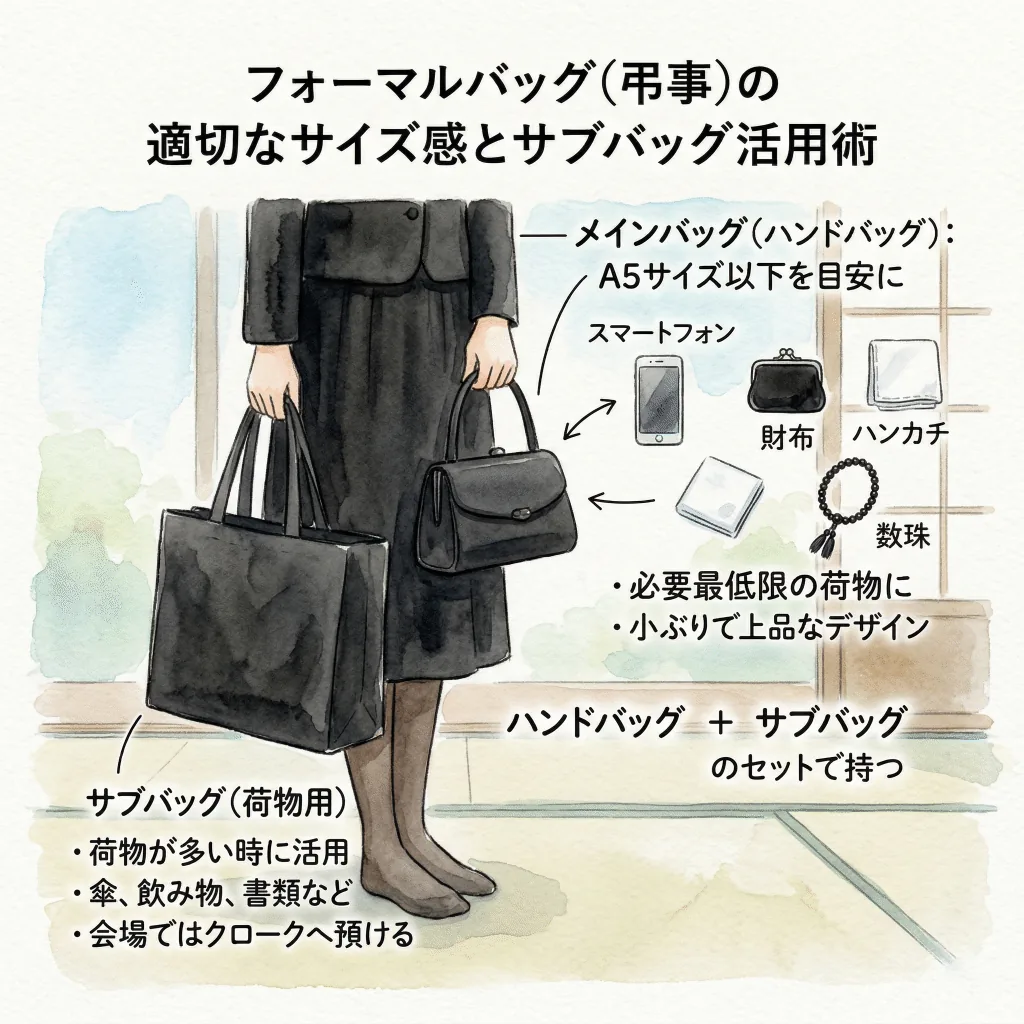
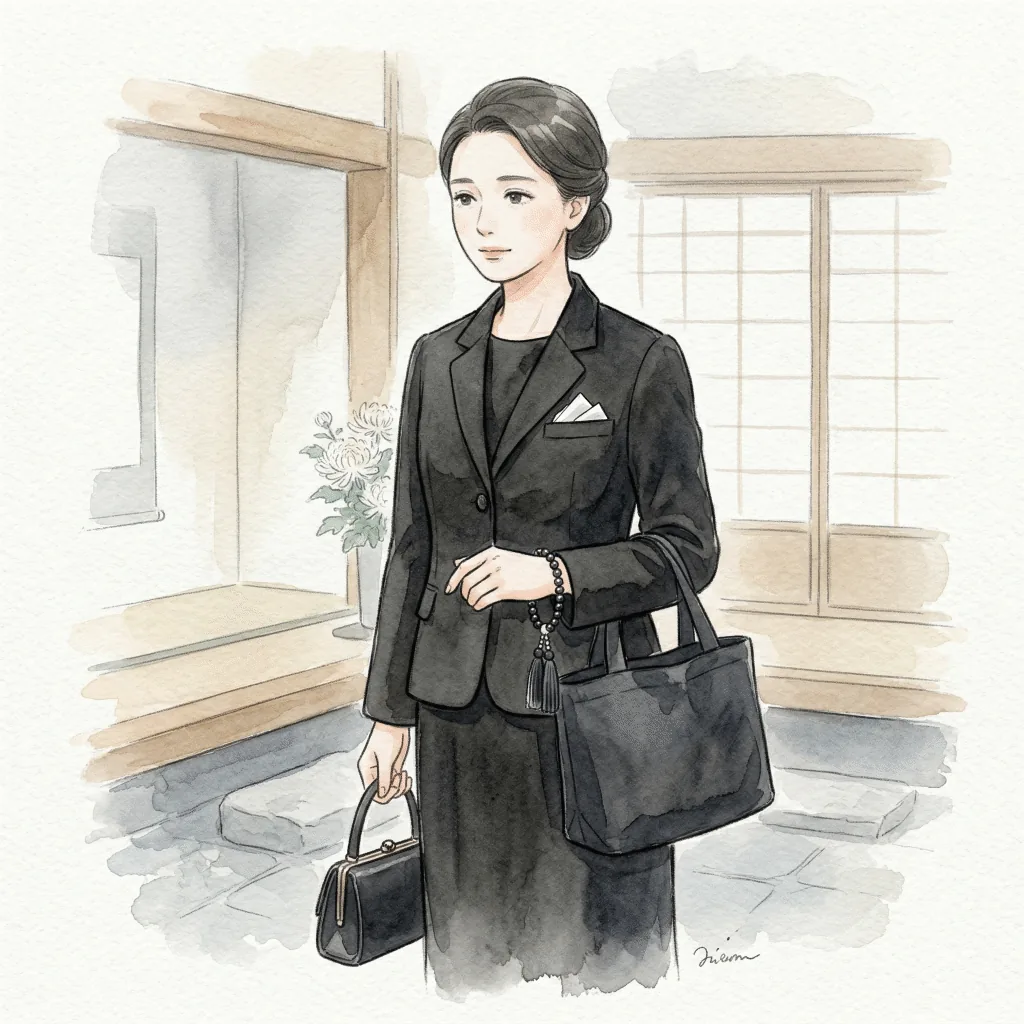
Size is also regulated: a formal bag should be smaller than A4 — enough to hold a phone, wallet, handkerchief, and any ceremonial items (an envelope of condolence money, prayer beads). Large totes and everyday shoulder bags are inappropriate for formal funeral contexts, though a separate plain sub-bag in black fabric may be carried for additional items.
2. Why Specialist Japanese Makers Understand This
IWASA — A Formal Bag Specialist Since the Early Showa Era
Tokyo-based IWASA (岩佐) has made nothing but formal bags and formal footwear for nearly
a century. Unlike fashion brands that add a black bag to their seasonal range, IWASA designs
exclusively for ceremony contexts — the bag's function in a funeral hall or wedding venue
is the only brief their designers work from.
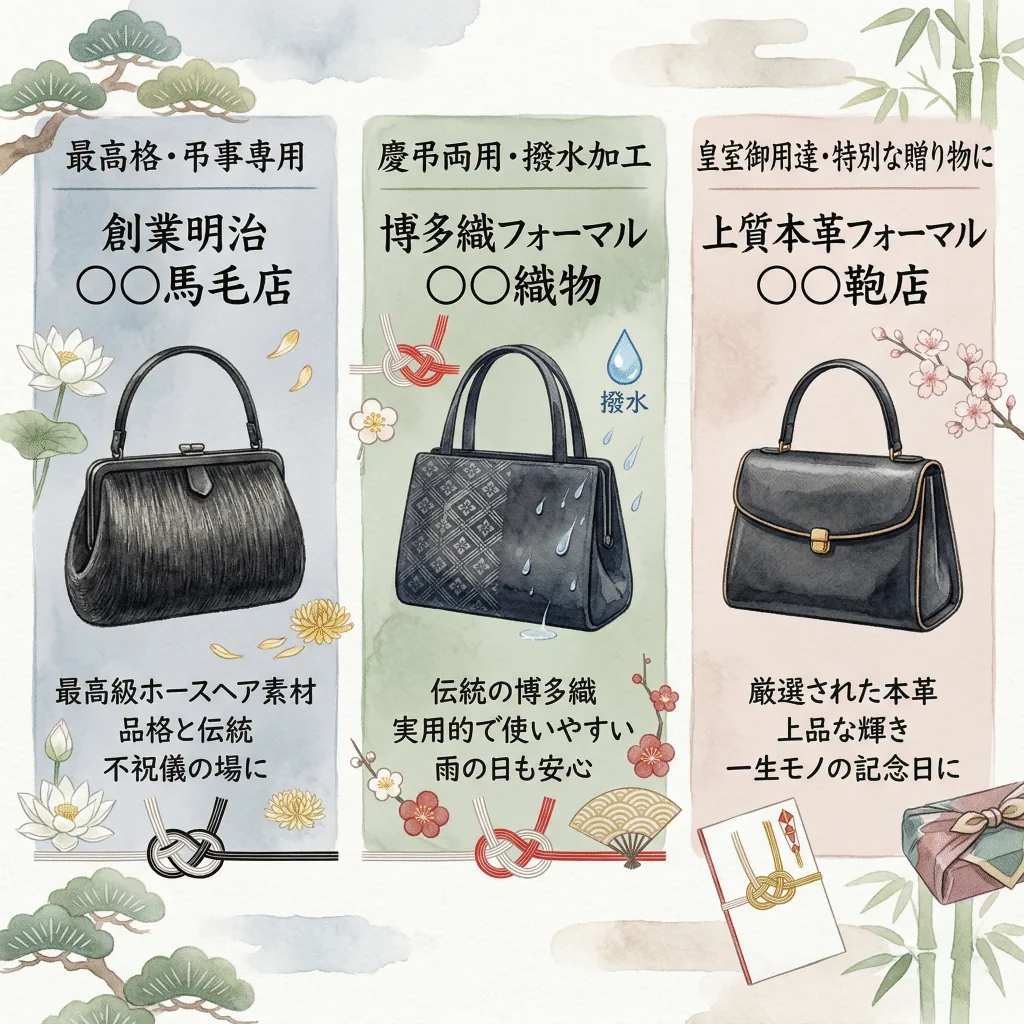
They use Japanese traditional textile materials — Hakata weave from Fukuoka, Yonezawa weave
from Yamagata — alongside horse hair and structured satin. Each material is chosen for how
it behaves in formal contexts, not for seasonal trends.
Hamano Leather — Imperial Household Purveyor Since 1880
Hamano Leather Craft (濱野皮革工藝) was founded in 1880 in the Meiji era and has held the designation of purveyor to the Imperial Household of Japan. The workshop in Karuizawa, Nagano handles leather selection, cutting, and hand-stitching entirely in-house. A Hamano formal bag is described in Japan as an "heirloom-grade object" — something passed from mother to daughter. The price reflects craft of this standard: these are long-term investments, not seasonal purchases.
3. How to Choose: Material, Size & Hardware
By material
- Horsehair (ホースヘア)
- Horse tail hair woven into fabric. Absorbs light rather than reflecting it — the deepest, most matte black available in a bag material. Considered the highest-grade material specifically for funeral and memorial contexts. Durable; holds its form for decades. The specialist choice when funeral attendance will be regular.
- Hakata weave / Yonezawa weave (water-repellent)
- Traditional Japanese woven textiles with a modern DWR (durable water-repellent) finish. Appropriate for both funerals and weddings. The texture reads as Japanese craft without being overtly decorative. The water resistance makes them practical for outdoor or rainy ceremony use.
- Genuine leather
- Ages with use and develops a patina. Hamano's leather is exceptional quality. Important: some leather finishes develop shine over time — for funeral use, confirm the leather stays matte rather than glossing up with age.
- Satin / synthetic
- Accessible entry price point. Well-made satin formal bags are ceremony-appropriate when hardware and form are correctly specified. The practical choice for occasional use.
By size and function
- Size
- Smaller than A4. The bag should hold: a smartphone, a wallet, a handkerchief, a condolence envelope, and prayer beads — nothing more is needed at a funeral. If you carry more, use a separate plain black sub-bag.
- Handle type
- Hand-carry (handbag) is the formal default. Shoulder strap versions exist, but the strap is typically removed for funeral use. At weddings and parties, shoulder carry is generally fine.
- Interior function
- An inner magnetic closure allows quiet, smooth opening — useful during ceremonies where fumbling with a clasp is conspicuous. A small interior partition for prayer beads or the condolence envelope helps.
4. Six Picks: IWASA, Hamano & Tokyo Soeur
No.1 — IWASA Horsehair Formal Handbag (Ladies)
The highest-grade option in the IWASA range. Horse tail hair woven into fabric produces a black that absorbs light rather than reflecting it — the exact quality required for the most formal funeral contexts. The form is restrained: no decorative elements, no hardware that announces itself. Buy this in your thirties and use it for decades. IWASA has an English-language website with international ordering.
- Material
- Horsehair, made in Japan
- Occasion
- Funeral, memorial — the most appropriate material for these contexts
- Best for
- A lifetime formal bag investment; regular ceremony attendance
No.2 — IWASA Hakata-ori Formal Bag (Water-Repellent, Dual-Use)
Hakata weave is a traditional textile from Fukuoka with a tight, structured surface that reads as refined rather than decorative. IWASA's water-repellent Hakata-ori version is designed for dual-use — appropriate for both wedding receptions and funerals. The DWR finish handles outdoor ceremonies and rainy days without the bag showing water marks. If you want one formal bag that covers all ceremony types without compromise, this is the most practical choice.
- Material
- Hakata weave + DWR finish, made in Japan
- Occasion
- Wedding and funeral dual-use
- Best for
- One-bag solution for all formal occasions
No.3 — IWASA Inner Magnet Formal Bag
Ceremony contexts require quiet access to the bag's contents — prayer beads need to come out for the incense offering, the condolence envelope needs to be accessible at the reception desk. This IWASA model has an inner magnetic closure that opens with one smooth motion rather than a clasp that requires two hands or makes a clicking sound. The interior partition separates ceremonial items from phone and wallet. Practicality and ceremony-appropriate form, together.
- Material
- Satin / synthetic, made in Japan
- Occasion
- Dual-use
- Best for
- Those who prioritise functional access during ceremonies
No.4 — IWASA Men's Yonezawa-ori Formal Bag
Most formal bag guides assume a female audience. IWASA also makes a men's version using Yonezawa weave — a traditional textile from Yamagata Prefecture with a structured, understated surface. For men who attend formal ceremonies regularly (as MC at weddings, as a primary family mourner at funerals), carrying a proper formal bag rather than an everyday business bag makes a difference that other attendees will notice. Water-repellent. Suited to suit styling.
- Material
- Yonezawa weave + DWR, made in Japan
- Occasion
- Men's dual-use (wedding and funeral)
- Best for
- Men who attend formal occasions regularly
No.5 — Hamano Leather Formal Handbag
Founded in 1880, Hamano Leather Craft (濱野皮革工藝) holds the designation of purveyor to the Imperial Household of Japan. The Karuizawa workshop handles every stage in-house. A Hamano formal bag is the category's highest expression: leather selected for how it ages, hand-stitched by craftspeople who have spent years on this specific work. In Japan, this is described as "something worth passing to your daughter." The appropriate gift for a wedding, a retirement, or a milestone birthday.
- Material
- Premium leather, handmade in Karuizawa, Japan
- Occasion
- Dual-use; wedding receptions; high-formality events
- Best for
- Lifetime investment; significant gift occasion
No.6 — Tokyo Soeur Black Formal Bag
Tokyo Soeur (東京ソワール) has been a formal wear specialist since 1969 — formal dresses, accessories, and bags all designed together as a coordinated system. Their formal bags benefit from the same understanding of ceremony dress codes as their clothing line: the proportions, the hardware specification, the fabric choice are all informed by decades of designing for this specific purpose. The most accessible price point in this guide. A strong first formal bag for anyone building their ceremony wardrobe.
- Material
- Water-repellent fabric, made in Japan
- Occasion
- Dual-use
- Best for
- Entry price point; first formal bag; 20s–30s
5. How to Use by Occasion
Funeral and memorial (弔事)
The formal bag carries: condolence envelope (香典袋), prayer beads (数珠), a white handkerchief, phone, and wallet. This is the complete contents. For additional items (change of clothes, return gifts), carry a separate plain black fabric sub-bag. Inside the ceremony hall, only the formal bag is held — the sub-bag is left elsewhere.
Wedding and formal reception (慶事)
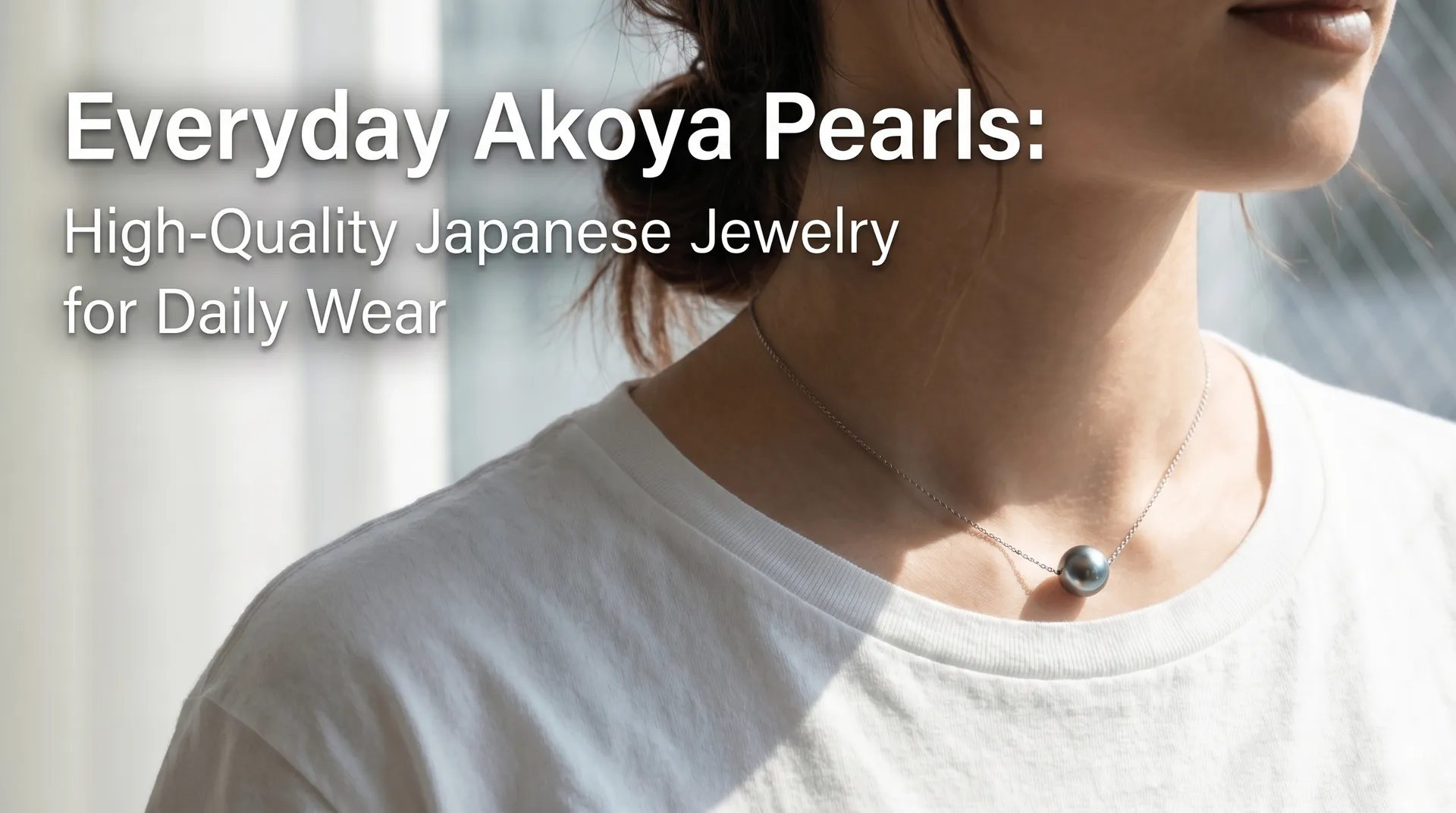
At weddings and formal receptions, the rules are somewhat more relaxed. A dual-use formal bag works well. Pearl accessories are the standard complement to a formal bag for women — Japan pearl (Mikimoto, Tasaki) is specifically associated with this context. If the formal bag has a shoulder strap, you may use it at a party reception; for the ceremony itself, hand-carry is more appropriate.
6. Care & Storage
- After use
- Wipe the surface gently with a soft dry cloth to remove any moisture or surface marks. Allow to air briefly before storing.
- Storage
- Store in a dust bag (usually included with good-quality bags) in a dry, cool location away from direct light. Stuff with tissue paper or a soft cloth to maintain the bag's shape. Do not store compressed or under other items.
- Horsehair specific
- If wet, wipe immediately and air-dry in shade. Do not apply heat. Avoid prolonged moisture contact — horsehair is durable but water causes structural damage if not addressed quickly.
- Leather bags
- Once or twice a year, apply a small amount of leather cream specifically formulated for the leather type. Buff to a matte finish — for formal bags, preserve the matte quality rather than polishing to shine.
7. Frequently Asked Questions
Should I have separate bags for funerals and weddings?
Ideally yes — a horsehair bag dedicated to funeral use gives the best result in that context. But practically, a dual-use bag (Hakata-ori or Yonezawa-ori type with matte hardware) handles both occasions without being inappropriate at either. Start with a dual-use bag; add a dedicated funeral horsehair bag later if funeral attendance becomes more frequent.
Can I use the shoulder strap at a funeral?
In strict Japanese etiquette, shoulder-carry is inappropriate at funerals — hand-carry is the standard. In practice, this varies by the formality of the event and the age of the attendees: older Japanese guests will notice, younger attendees may not. As a rule of thumb, remove the strap during the ceremony itself; it can be reattached for transit.
Can I use a designer brand bag (Louis Vuitton, Chanel) at Japanese ceremonies?
At weddings (慶事), high-end designer bags are generally acceptable if the hardware and decoration aren't excessive. At funerals (弔事), conspicuous brand logos are considered inappropriate — the emphasis on the brand over the solemnity of the occasion is the problem. The Louis Vuitton monogram (cowhide) also raises questions in contexts where animal materials are symbolically significant. The practical answer: a specialist Japanese formal bag avoids all of these questions entirely.
What is "horsehair" and why is it the highest grade for funerals?
Horsehair fabric is woven from the tail hair of horses. The fibers are extremely fine and produce a surface that absorbs light rather than reflecting it — the deepest, most matte black achievable in a woven material. This quality — the refusal to catch light — is why it has been associated with mourning contexts for over a century. It also has exceptional durability: a good horsehair bag holds its shape and surface for decades without degradation.
What's the price range for Japanese formal bags?
Tokyo Soeur entry models: approximately ¥10,000–20,000 (around $70–140). IWASA standard models: ¥20,000–50,000 (around $140–350). Hamano leather: ¥50,000–several hundred thousand yen (from ~$350 upward). As a lifetime purchase used perhaps twice a year, even the higher-end options represent excellent value per use. The horsehair IWASA models sit in the middle range and are the most recommended starting point for genuine long-term quality.
Is a formal bag a good gift?
An excellent gift for milestone occasions: a daughter's wedding, a mother's 60th birthday, a retirement. The Hamano brand in particular carries enough cultural weight in Japan that the gift communicates genuine investment. For international recipients unfamiliar with Japanese ceremony culture, the English-language IWASA website explains the context well and handles international orders.
Final Thoughts: Ready for the Occasion You Didn't Expect
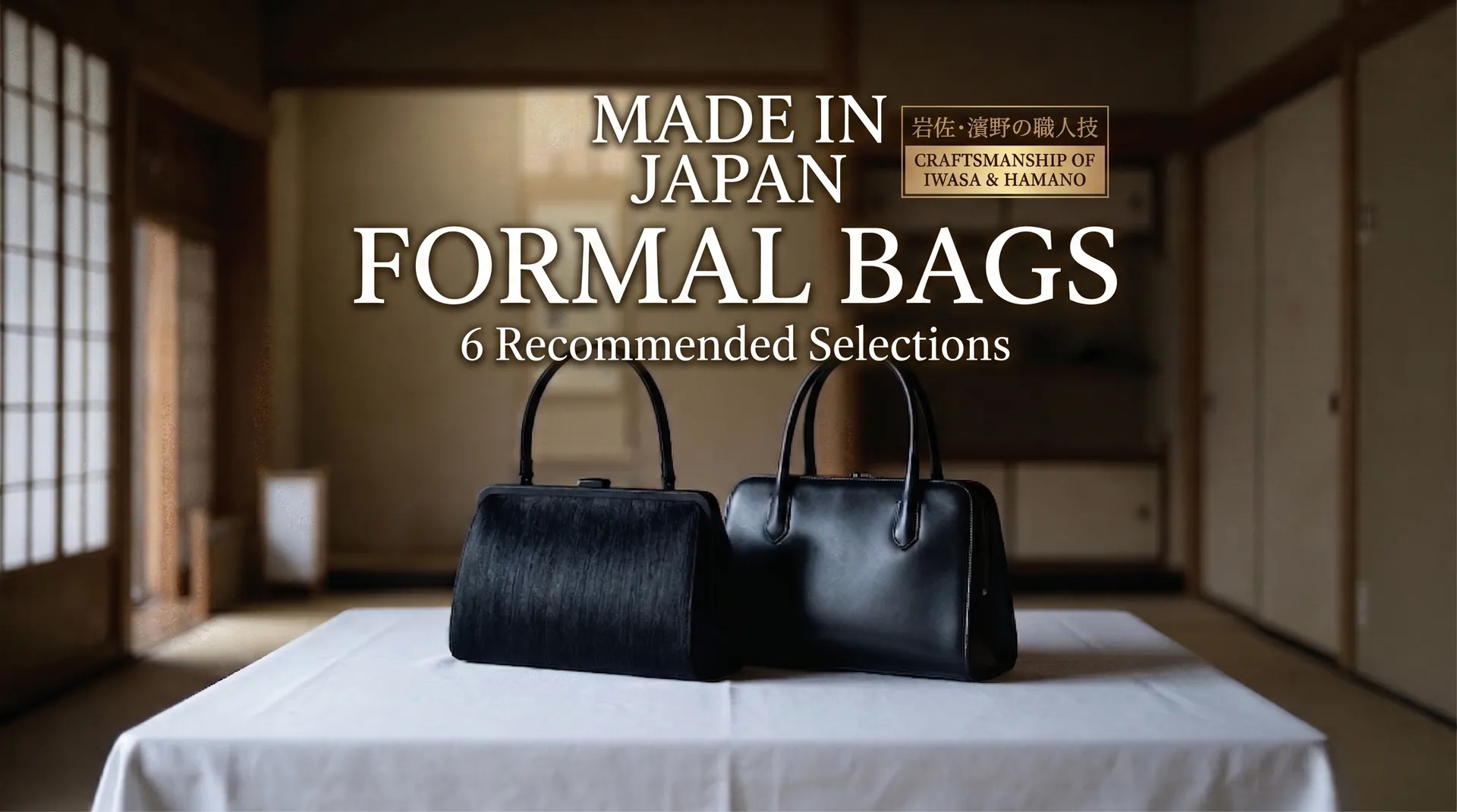
Formal occasions in Japan arrive without much notice. The phone call about a funeral gives
you a day, sometimes less. In that moment, you either have the right bag or you don't.
The Japanese specialist formal bag makers have spent decades solving exactly this problem:
a bag that is always ready, never inappropriate, that improves with age rather than
deteriorating. IWASA's horsehair for those who want the highest-grade funeral option.
The Hakata or Yonezawa weave models for versatile dual-use. Hamano leather for when
the bag itself is the occasion.
One good formal bag, chosen carefully, handles everything that formality requires for
the rest of your life.
Japanese Pearl Jewelry: Mikimoto, Tasaki & the Formal Occasion Tradition
Japanese Leather Wallets: 7 Brands That Age Beautifully