The Japanese one does not plug in.
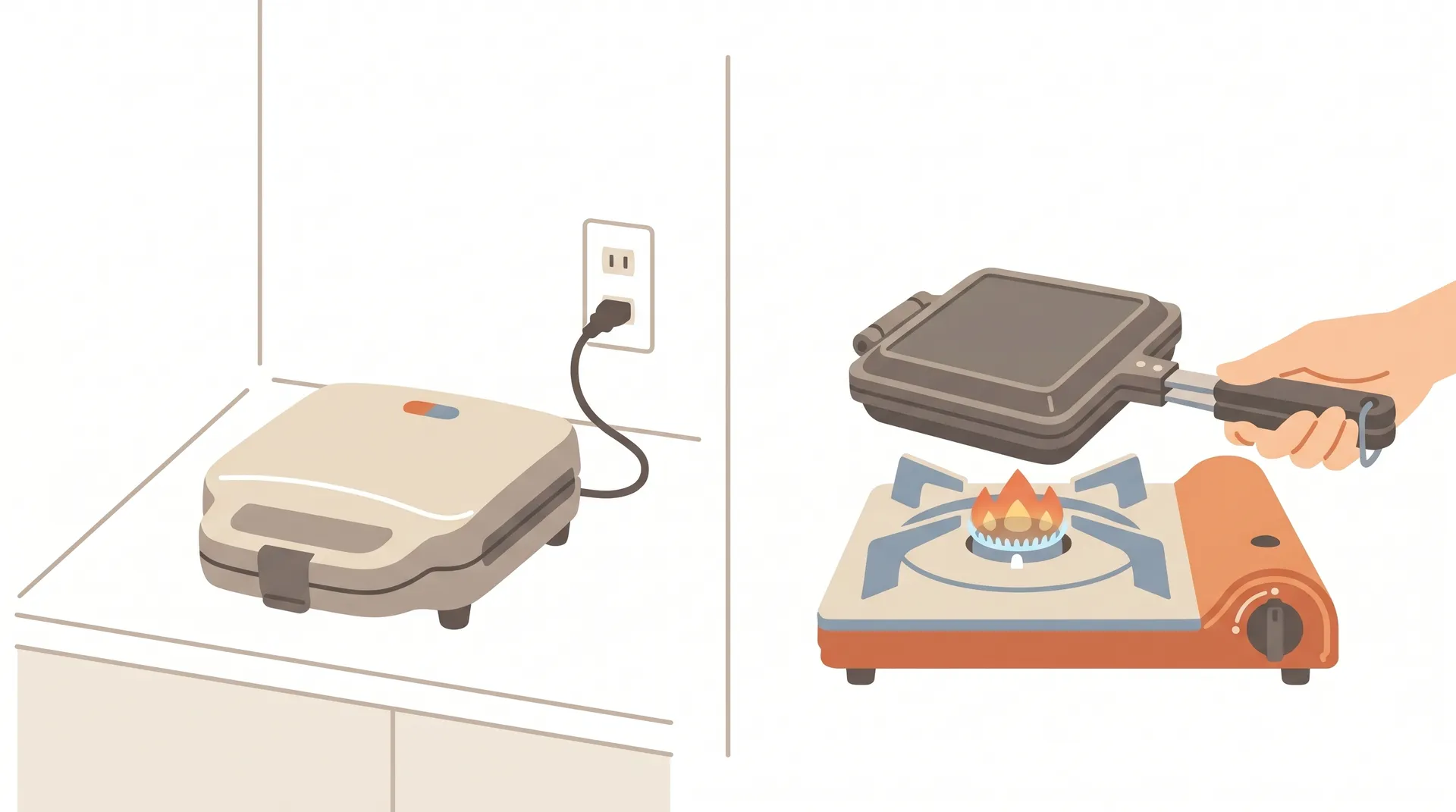
Search for a Japanese sandwich maker and you will picture a compact electric press. The thing
Japanese cooks actually use is a cast iron form that sits on the hob — closer to
what English calls a pie iron or a jaffle iron than to anything with a cord.
Which means there is no voltage problem, no transformer, and no adapter. It works on
gas, on induction, and on a campfire. And unlike every Western pie iron, the two halves come
apart — which turns out to be the entire argument.
Quick Reference: What This Actually Is
| Question | Answer |
|---|---|
| Does it need electricity? | No. It is a pan. No voltage question at all |
| What do I call it in English? | Pie iron, jaffle iron, or stovetop panini press |
| What makes the Japanese ones different? | The halves detach into two small pans |
| Induction hob? | Iron models yes. Aluminium models no |
| These are genuinely available in English — several are stocked on Amazon outright, which is rarer than it should be for Japanese kitchenware. | |
No Plug, So No Problem
Most Japanese kitchen appliances come with a warning attached: 100V, and a transformer big enough to run a rice cooker is not worth owning.
None of that applies here, because this is not an appliance. It is a pan with a lid that
clamps.
It works anywhere heat does — a gas ring, an induction hob if the body is iron, a
camping stove, or the edge of a fire. There is nothing to convert and nothing to plug
in.
That is also why it is popular in Japan among people who camp. An electric press needs a kitchen; this needs a flame. The same tool does breakfast at home and lunch on a river bank, which is a large part of why the category has the following it does.
The one compatibility question worth asking is induction. Iron and steel models work on an induction hob; aluminium ones do not, because induction needs a ferrous base. If your kitchen is induction, check the material before the design.
Why Japanese — The Halves Come Apart
A Western pie iron is two plates joined permanently by a hinge. It works, it has worked for a century, and it is a nuisance to wash — food gets into the joint and stays there.
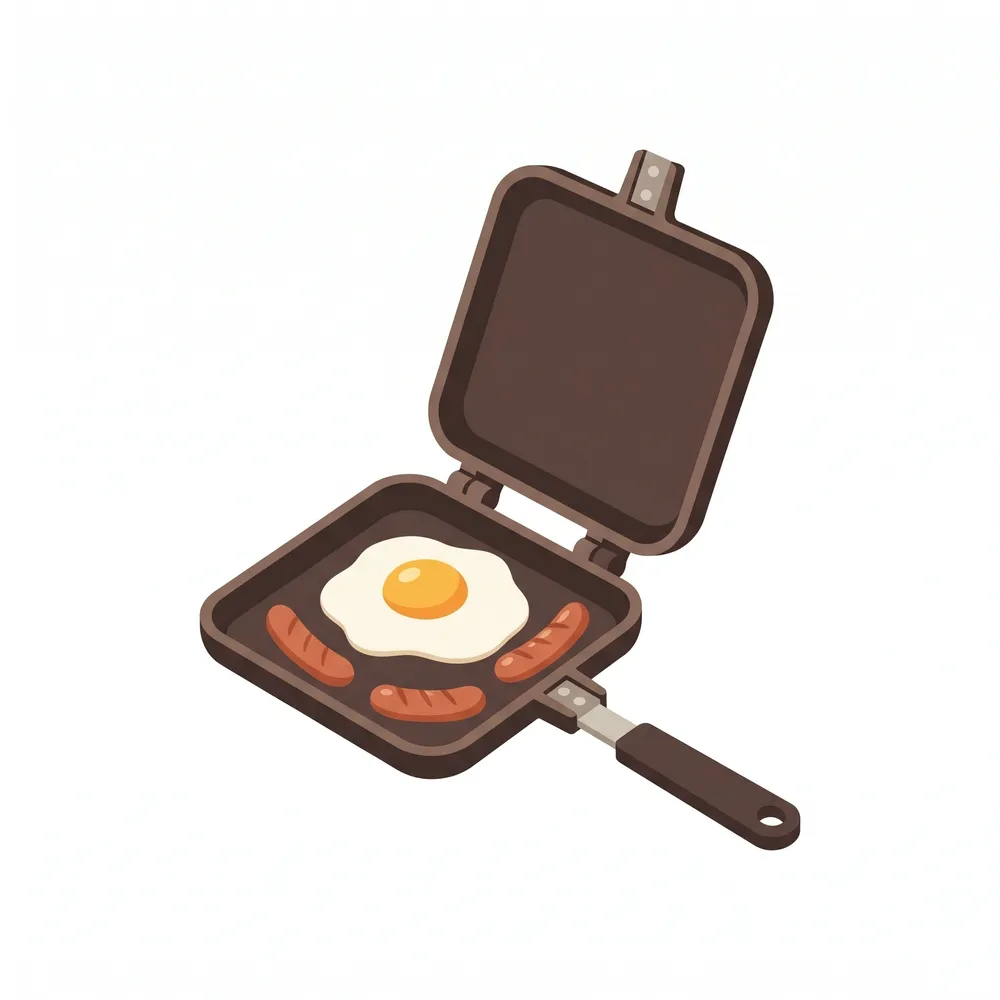
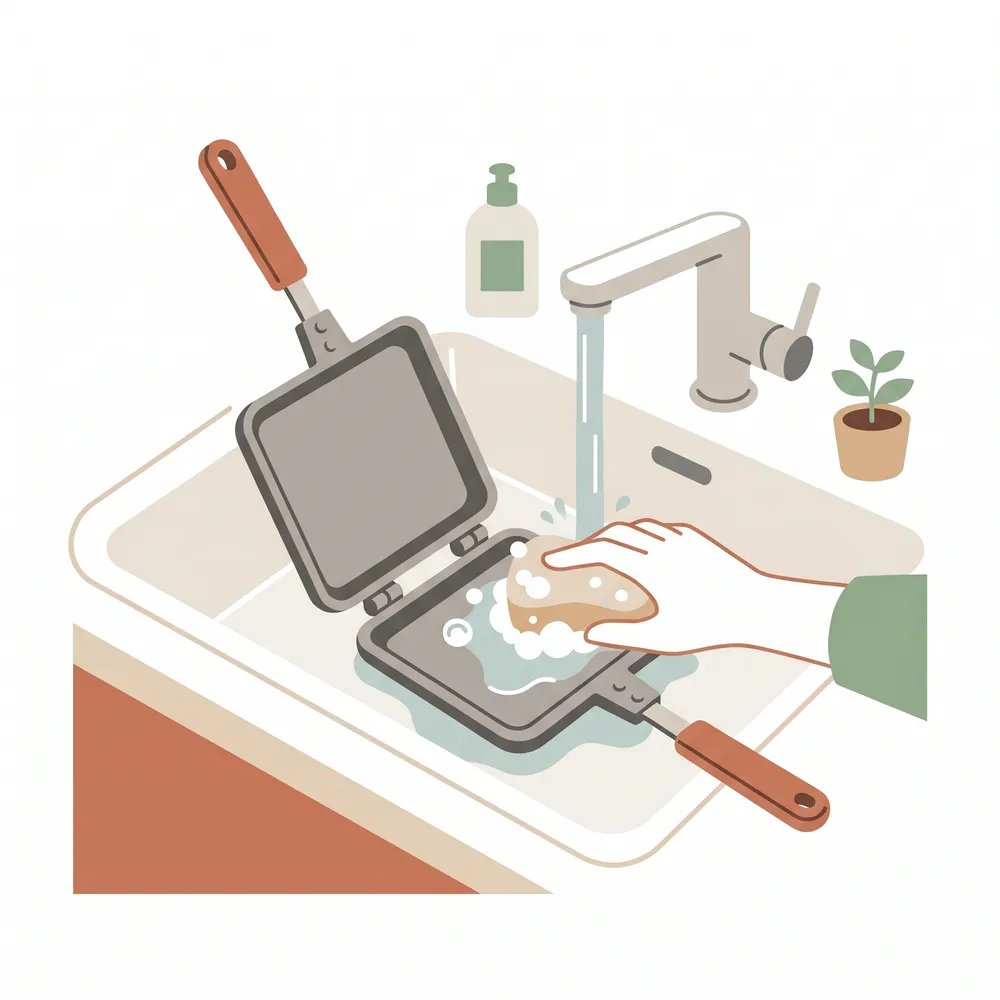
The Japanese versions detach. Lift the top plate to roughly 45 degrees and it
lifts off the hinge entirely.
Two consequences, and both are larger than they sound.
- You can wash both halves properly, under a tap, on all surfaces. Nothing is trapped in a joint.
- You now own two small frying pans. Eggs in one, bacon in the other, on a single camping stove. The tool does more than one job.
The most thorough version of this is 4w1h, developed by the Tsubame-Sanjo Kitchen Laboratory — set up in 2017 by Sugiyama Metal, a metalworking firm in Tsubame. Their 2022 redesign made the plates fully separable specifically so they could be used as independent pans.
Tsubame-Sanjo is the reason these exist at a quality no camping-goods company would
bother with. The Niigata district has made metal goods for four centuries and supplies a
large share of Japan's kitchen tools.
A hot sandwich press is a trivial object to a place that makes surgical instruments and
knives — which is why the pressing is even, the edges seal properly, and the thing does not
warp on a fire.
Choosing: Separable, Iron, Crimped
- Separable, if you can. It costs a little more and it decides whether you use the thing. A press that is annoying to wash gets used twice.
- Iron for induction, aluminium for weight. Iron works on every heat source and holds temperature better; aluminium is lighter for carrying and heats faster. If you have an induction hob, iron is not optional.
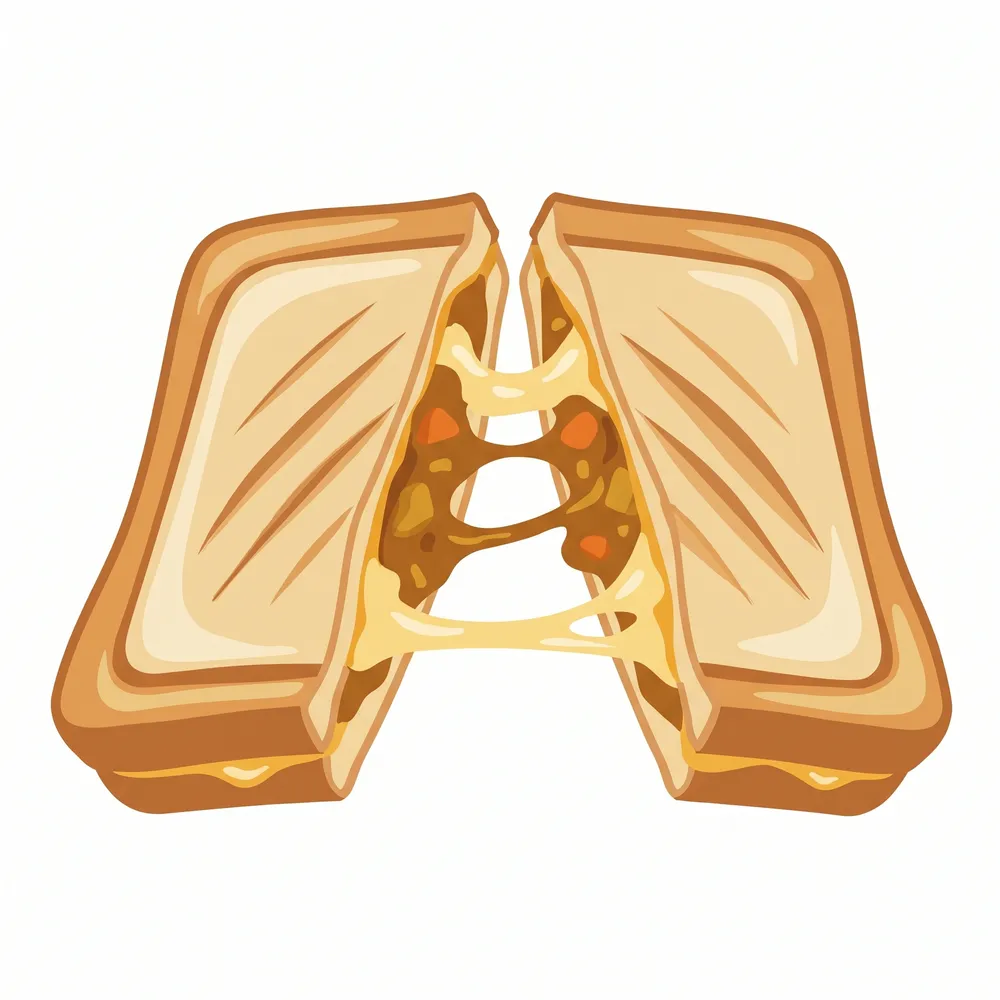
- Single or double. A single compartment gives one large sealed sandwich; a double presses a divider down the middle so you get two halves that hold their filling when you pick them up. Double is better with anything wet.
- Look at the crimp. The rim should press the bread edges together firmly enough to seal — that is what makes it a pocket rather than a toasted sandwich. A shallow crimp leaks.
- Check whether it cuts the crusts. Some Japanese models press hard enough to trim the edges off, sealing and cutting in one action. Divisive, and worth knowing before it happens.
- Non-stick or bare metal. Coated is easier and has a lifespan; bare iron seasons like a skillet and lasts indefinitely but needs care. Modern Japanese coatings are PFOA- and PFOS-free.
What to Buy
i-WANO — separable, and the one to get
Made in Tsubame-Sanjo, with a top plate that lifts off at about 45 degrees so
both halves wash properly and work as individual pans.
Non-stick fluororesin coating, PFOA- and PFOS-free. This is the design
argument of this whole article in a single product, and it is stocked in English.
- Made
- Tsubame-Sanjo, Japan
- Separates
- Yes — lift to 45° and detach
- Coating
- Non-stick, PFOA/PFOS-free
- Weight
- Around 0.75kg
- Heat
- Gas, camping stove, open fire
Perfect for: Anyone who will actually use it more than once. The washing is the whole battle.
Shimomura Kihan — iron, induction, and it brands the bread
A Tsubame-Sanjo maker's iron double press, and importantly induction-compatible
— which most stovetop models are not.
Double-sided embossing presses a pattern into the bread, and it trims the
crusts as it seals. Iron holds heat far better than aluminium, which shows on the second and
third sandwich.
- Material
- Iron — works on induction
- Type
- Double compartment, embossed
- Crusts
- Trims them as it presses
- Made
- Tsubame-Sanjo, Japan
Perfect for: Induction kitchens, and making more than one sandwich in a row.
Bawloo — the original
Bawloo is the name that started the Japanese hot sandwich, and it is still
made in Japan to essentially the original pattern. Aluminium, light, and the reference against
which the others are judged.
Single seals one large sandwich; double presses a divider down the middle so
each half holds together. Aluminium means no induction — check your hob.
- Material
- Aluminium — not induction-safe
- Versions
- Single and double compartment
- Weight
- Light — the camping choice
- Status
- The original Japanese design
Perfect for: Gas hobs and campfires, and anyone who wants the one everybody else copied.
And the design-led one: 4w1h, from the Tsubame-Sanjo Kitchen Laboratory. Fully
separable plates, deliberately minimal, and sold through
English-language
Japanese exporters rather than general retail.
Worth seeking out if the separable design is what interests you — it is the version
that took the idea furthest.
Using It Without Burning It
- Low heat, longer. This is the whole technique. High heat burns the outside before the filling warms, every time. Two to three minutes a side on a low flame is the target.
- Turn it over. It is a two-sided tool and both sides need the same time. Setting a timer for the first side and matching it for the second is the difference between even and patchy.
- Butter the outside of the bread, not the pan. It browns better and the press stays cleaner.
- Do not overfill. The rim needs bread-on-bread contact to seal. Filling that reaches the edge means it leaks, burns onto the crimp, and the pocket never forms.
- Thin-sliced bread seals better. Thick bread fills the cavity before the crimp closes.
Cleaning, which is why you bought the separable one
Wash it while it is still warm. Cheese and sugar set like glue as they cool and
become genuinely difficult afterwards.
If something has burned on, soak it in hot water rather than scraping. A metal
implement on a non-stick surface ends the coating, and with it the press.
Wooden or silicone tools only.
Dry it completely before storing — particularly bare iron, which will rust in a
cupboard given the chance.
Frequently Asked Questions
Does it need electricity? What about voltage?
No, and there is no voltage question at all. The Japanese hot sandwich maker is a
stovetop press — a metal form you heat on a hob.
It works on gas, on a camping stove, over a fire, and on induction if the body is
iron. No transformer, no adapter, nothing to check.
What is this called in English?
A pie iron (US camping), a jaffle iron (Australia and South Africa), or a stovetop panini
press — which is how they are usually listed for sale.
The Japanese versions differ in one respect that matters: the two halves detach
instead of being permanently hinged.
Why does it matter that it comes apart?
Washing, and versatility. A hinged press traps food in the joint; a separable one
washes completely on every surface.
And the two halves work as small frying pans — eggs in one, bacon in the other, on
a single camping stove. One object doing two jobs is most of the reason to own it.
Will it work on an induction hob?
Only if it is iron or steel. Induction requires a ferrous base, so
aluminium models — including the classic Bawloo — will not work.
If your kitchen is induction, check the material first and the design second.
Why does mine burn on the outside and stay cold inside?
The heat is too high. This is the single most common mistake — a stovetop press
transfers heat quickly and the bread browns long before the filling warms.
Low flame, two to three minutes a side, and turn it. If it browns in under a
minute, turn the heat down.
Can I use metal tools to get the sandwich out?
Not on a coated press. A fork or metal spatula scratches the non-stick surface and
once it goes, food sticks permanently.
Wood or silicone. And wash it while still warm — cheese and sugar set hard as they
cool.
Final Thoughts: The One With No Cord
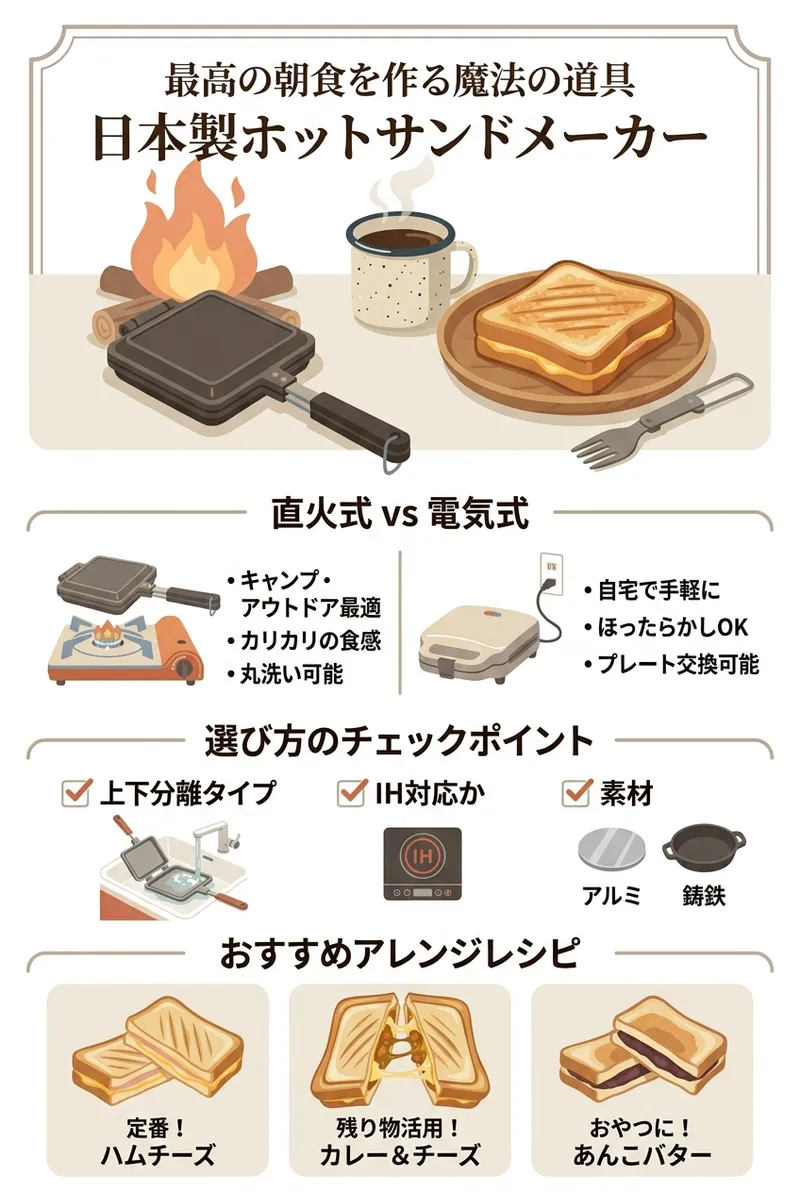
Almost every Japanese kitchen appliance this site covers comes with a voltage warning. This one does not, because it is not an appliance — it is a piece of pressed metal from a district that has been making metal for four hundred years.
Buy the separable version. The difference between a hinged press and one that comes apart is the difference between a thing you use and a thing you wash once and put away.
Then turn the heat down. Low flame, three minutes a side, and don't overfill it — every failure with this tool is one of those three.
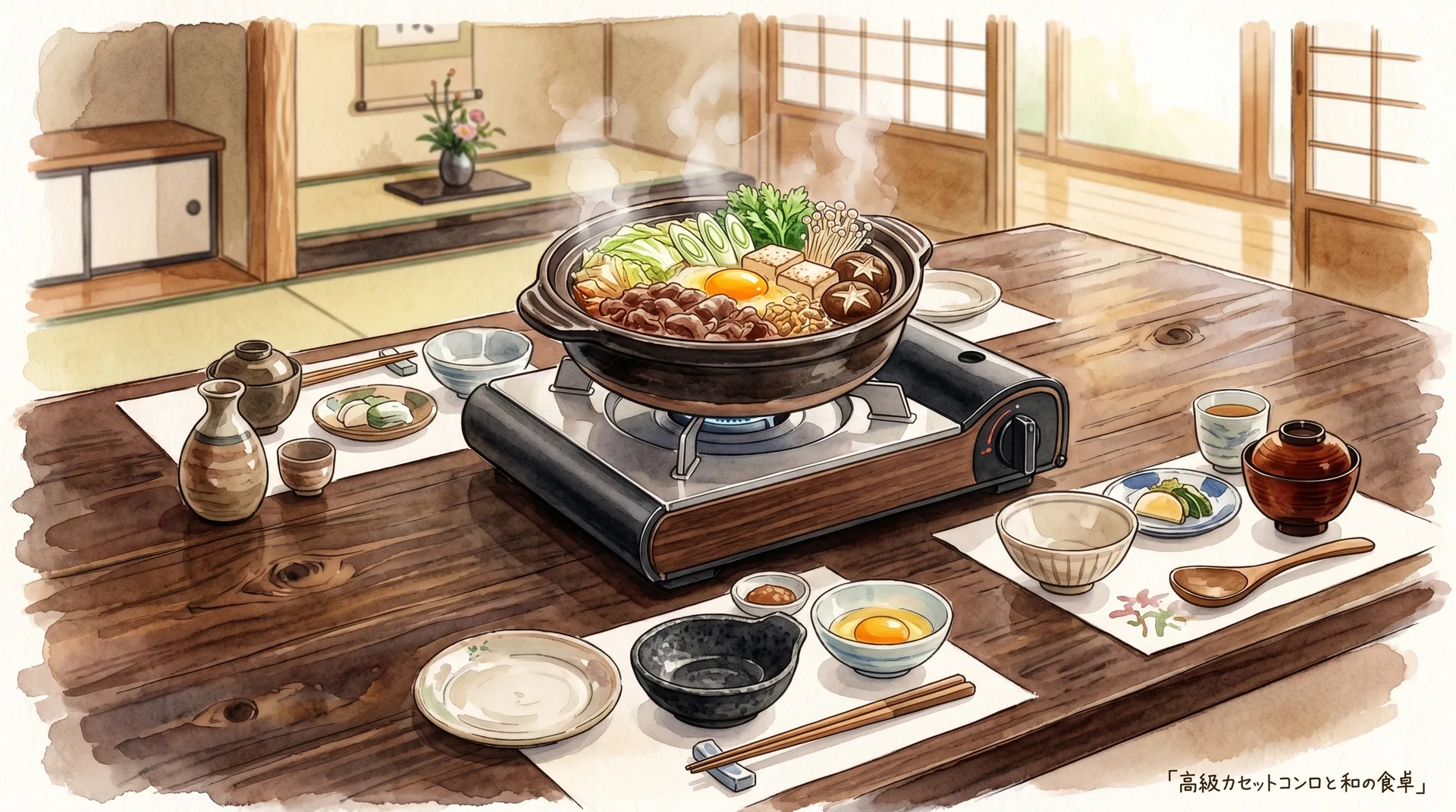
Iwatani Cassette Stoves: Fuel Is the Real Question
Benriner Slicers: The Last Slice Is the Dangerous One