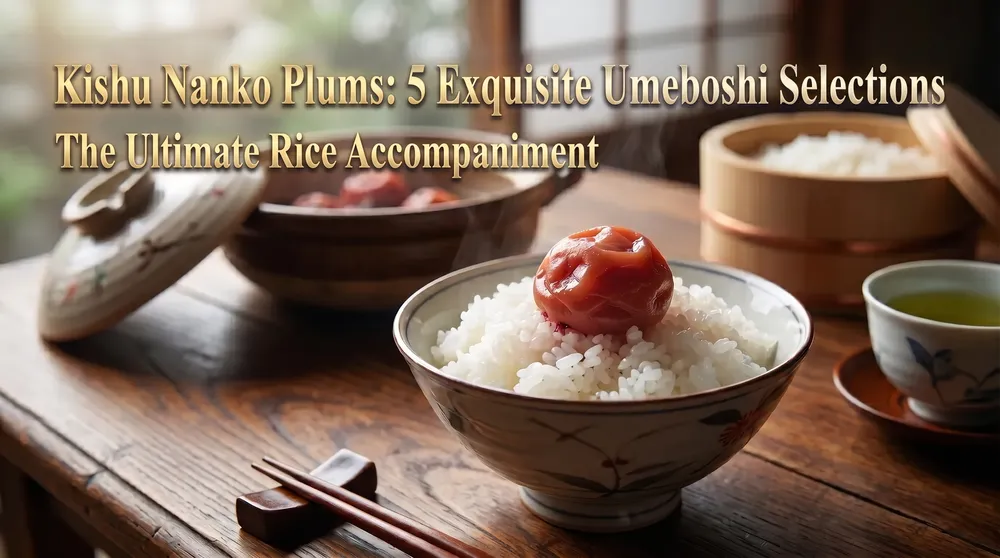
If the umeboshi you have tried tasted like sour candy, you have probably never had umeboshi.
Most of what is sold outside Japan is Chinese-grown plum, sweetened with artificial
sweeteners and dyed red.
Real umeboshi comes in three distinct types, and they are so different from each
other that liking one tells you nothing about the others. Honey-cured is a sweet snack. Shiso-cured
is the classic thing you put on rice. Shirayoshi — salt and plum, nothing else — is
aggressively sour and will change your mind about what this food is.
This guide explains the three, shows you exactly what to look for on a label, and
points to the ones you can actually buy.
Quick Reference: The Three Types of Umeboshi
| Type | Salt | Tastes like | Eat it |
|---|---|---|---|
| Honey hachimitsu |
3–8% | Sweet-sour, soft, fruity | On its own, with tea. The gateway type |
| Shiso shiso-zuke |
8–12% | Sour, savoury, herbal | On rice. This is the classic |
| Salt only shirayoshi |
18–22% | Violently sour and salty, then deeply savoury | Onigiri, in shochu, when you are ill |
| The single word to look for is “Nanko” (南高). It is the plum variety from Wakayama that makes thin-skinned, thick-fleshed umeboshi. If the label does not name a variety or an origin, it is almost certainly not Japanese-grown fruit. | |||
Why Japanese Umeboshi?
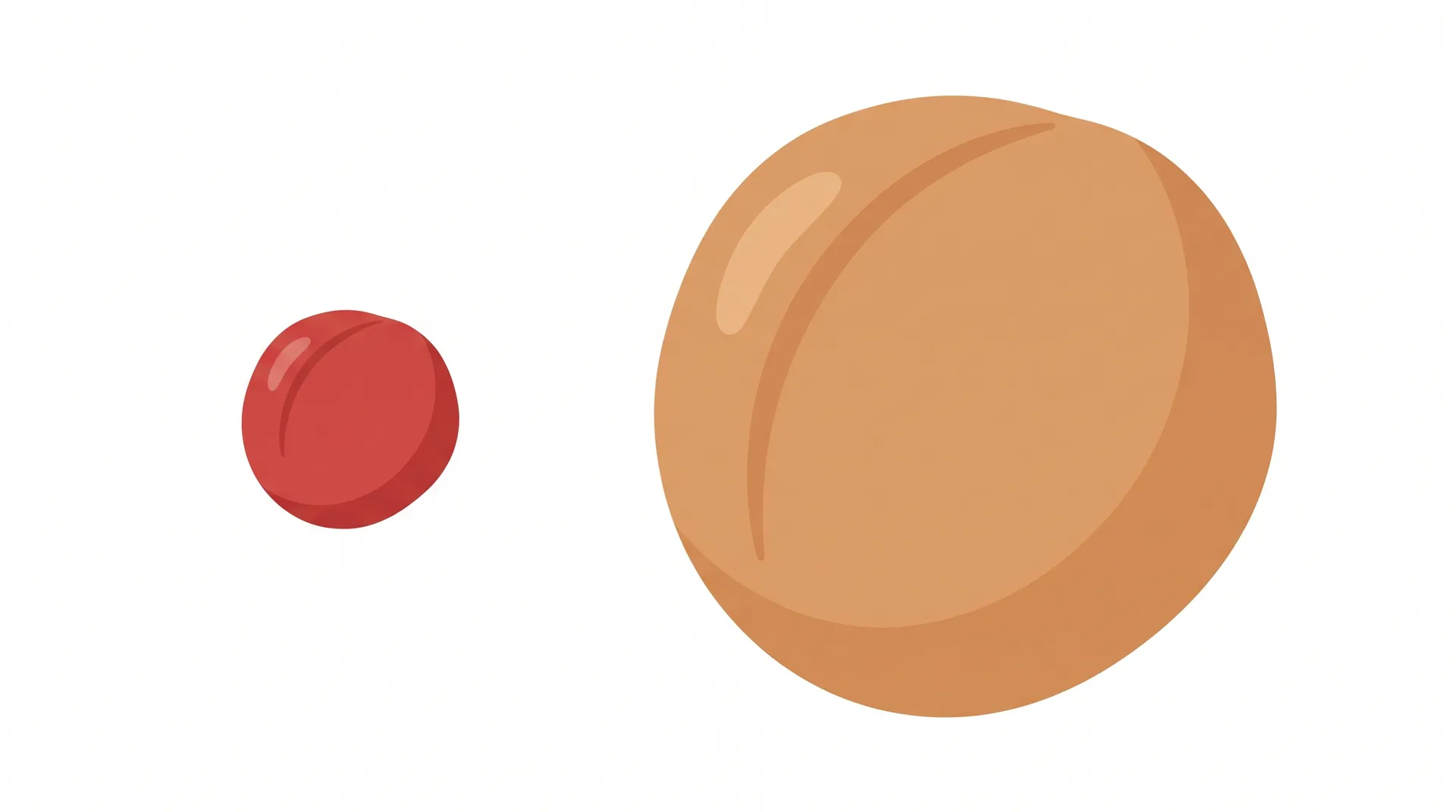
Ume is not a plum, botanically — it is closer to an apricot, and it is inedible raw. Salt curing is not a way of preserving a fruit people already ate. It is the process that made the fruit edible in the first place, and it has been done in Japan for over a thousand years. Samurai carried umeboshi as field rations.
Nanko, and why the good ones fall off the tree
The Nanko variety was developed in Wakayama Prefecture — historically called
Kishu — and it is close to purpose-built for this: thin skin, small stone, and a lot of soft
flesh.
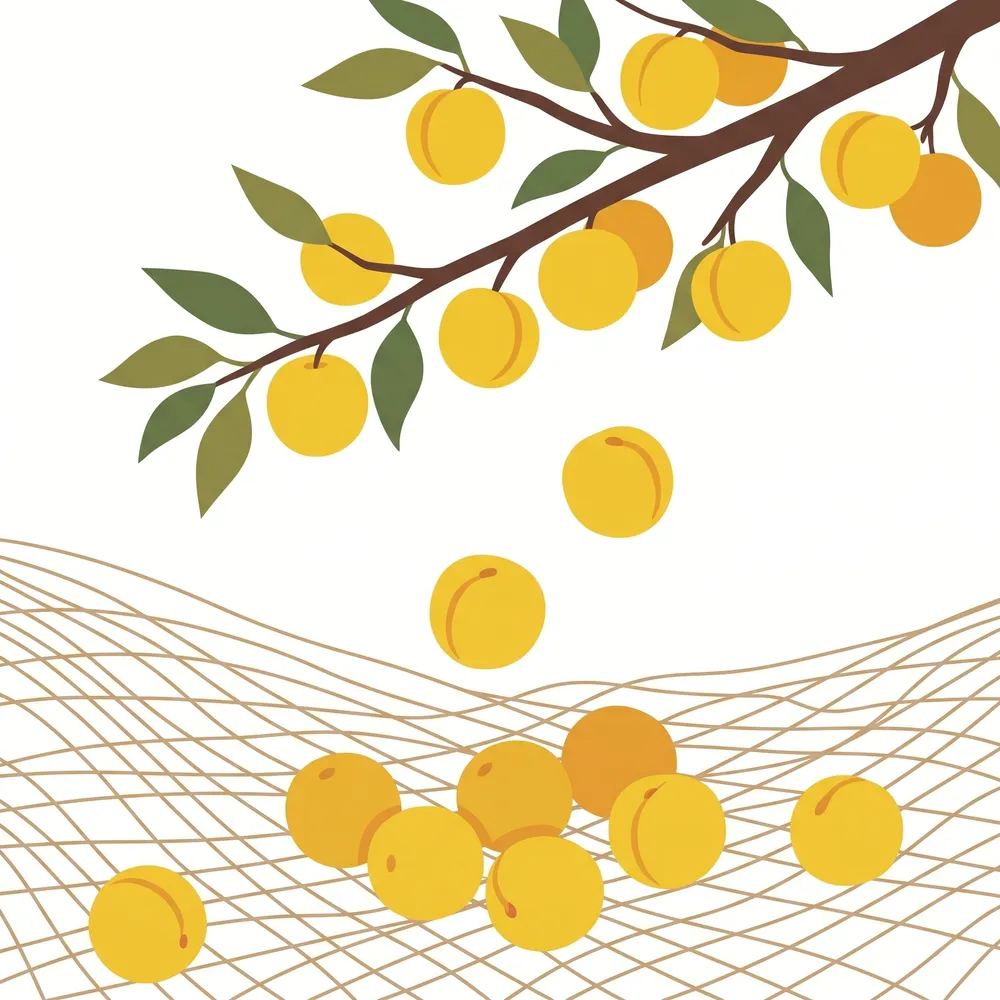
Premium producers do not pick the fruit. They wait for it to ripen fully on the tree and
drop onto nets underneath. Fruit picked green never softens the same way; a
tree-ripened ume smells like peach and turns into something that dissolves on the tongue.
Did you know: the red colour is a leaf, not a dye
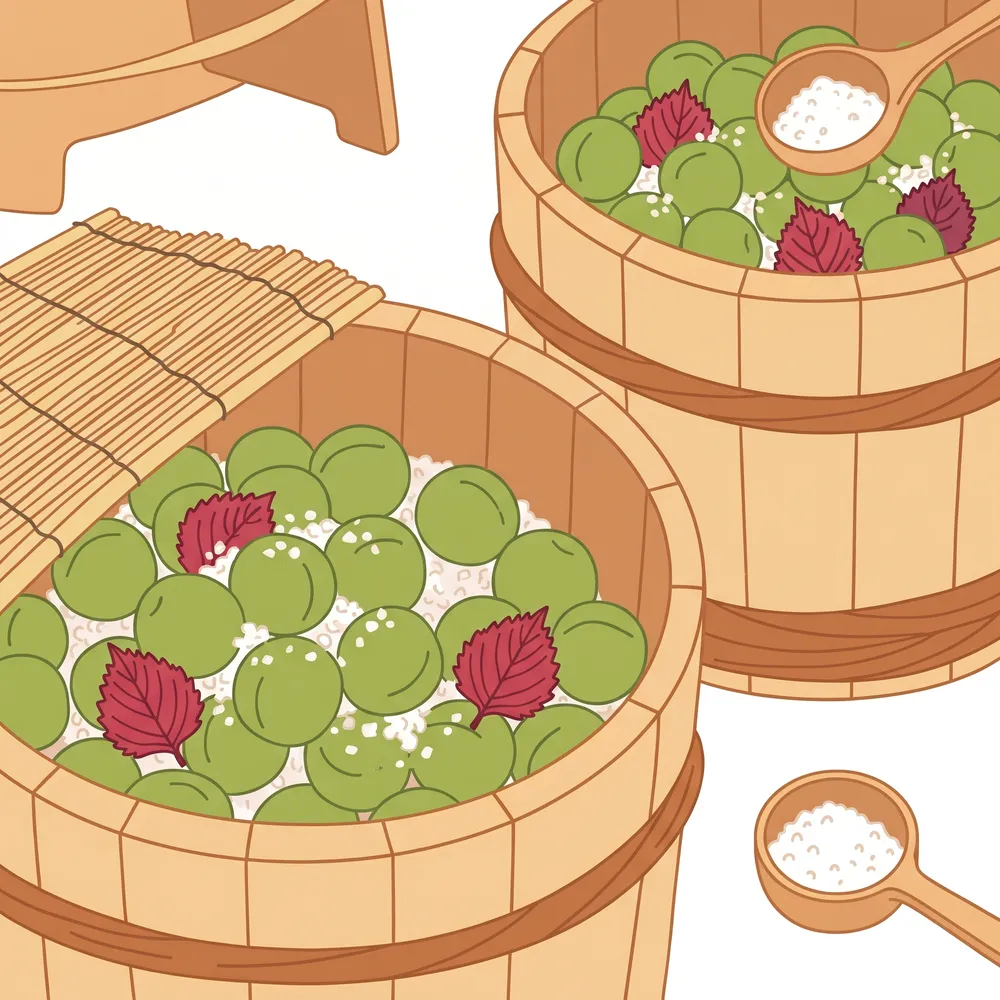
Traditional umeboshi gets its red from red shiso leaves packed in with the plums
during curing. The salt and plum acid pull the pigment out of the leaf and into the fruit — a
dyeing process that happens by itself over months.
This is why colour is a useful test. A cheap umeboshi is bright, even red because it was dyed.
A real shiso-cured one is uneven, duller, and more purple than scarlet.
How to Read the Label (And Spot the Fakes)
Most umeboshi on international shelves is what Japan calls chōmi umeboshi — "seasoned pickled plum." It is a legitimate product category, but it is a manufactured flavour, not a cured fruit. The plums are usually imported, de-salted, then soaked in a solution of sweeteners and flavourings.
Four things to check, in order
| ① Variety | Look for "Nanko" or "Nanko-ume". A producer using good fruit says so. Silence means imported |
| ② Origin | Wakayama is the answer you want. "Product of Japan" alone can mean plums imported and processed in Japan |
| ③ Ingredients | A real one is short: plum, salt, shiso — plus honey if honey-cured. MSG, sorbitol, stevia, acesulfame K or red dye mean seasoned, not cured |
| ④ Salt % | Should be stated. Under 5% cannot be a traditional cure — it has been de-salted and re-seasoned |
None of this makes the sweet ones bad. Honey umeboshi is delicious and it is what most people should start with. The point is knowing which one you are buying — and a honey-cured plum made from real Nanko fruit is a very different thing from a Chinese plum soaked in syrup.
The Three Types, Properly Explained
Salt percentage is the whole map
Everything about an umeboshi — flavour, texture, shelf life, how you eat it — follows from how
much salt it was cured in.
Traditional curing is 18–22% salt. At that concentration nothing can grow, which
is why properly made umeboshi keeps for years at room temperature. Households in Japan have jars
older than their children.
Everything below that is a modern product: de-salted after curing, then re-flavoured, and
it needs refrigeration. Softer, sweeter, and with a real expiry date.
Honey (3–8% salt) — start here
Cured normally, de-salted, then steeped in honey. The result is soft enough to collapse, sweet-sour rather than sour, and closer to a confection than a pickle. If you have never eaten umeboshi, this is the one that will not shock you — and in Japan it is eaten with green tea as a sweet, not with rice.
Shiso (8–12% salt) — the one you picture
Cured with red shiso leaves, which give it colour and a distinctly herbal, minty edge. This is the standard Japanese household umeboshi and the one that belongs on rice. Sour enough to be bracing, salty enough to season a whole mouthful of plain rice, but nowhere near the intensity of the traditional cure.
Shirayoshi (18–22% salt) — the real thing
Plum, salt, sun. Nothing else. The first one is genuinely shocking — a wave of sour and salt that makes your jaw ache — and then a deep fruity savouriness arrives underneath that no sweetened version has.
This is the umeboshi of onigiri, of Japanese home cooking, and of the shochu highball with a plum crushed into it. It keeps essentially forever. Buy this third, not first, but do buy it eventually — everything else is a variation on it.
Did you know: grilling it changes the chemistry
Heat an umeboshi in a dry pan or toaster oven until it browns slightly and it produces
mumefural, a compound that does not exist in the raw fruit and forms only when
ume is heated.
The practical result is a different flavour: the sharp acidity backs off and the savoury depth
concentrates. Grilled umeboshi dropped into rice porridge is standard Japanese sick food, and it
is worth doing even when you are well.
What to Actually Buy
Japan's famous umeboshi houses do not export. What is available internationally are Nanko-plum products from smaller producers — and they are the real thing, provided you check the label. Grouped by type.
Honey-cured Kishu Nanko — the one to try first
Made from named Kishu Nanko plums rather than unspecified imports, at around 3% salt. Soft, sweet-sour, and easy. Buy this to find out whether you like umeboshi at all — then work up.
- Type
- Honey-cured (hachimitsu)
- Plum
- Kishu Nanko
- Salt
- ~3%
- Keeps
- Refrigerate after opening
Perfect for: A first umeboshi, or eating with tea as a sweet.
Shiso-cured — the one for rice
Two good options here. Yamasan's is 100% Kishu Nanko with no colour additives, so the red is genuinely from the shiso. Eden's is Wakayama-grown, aged a year with red shiso, no MSG and no chemical additives — and it is the easiest to find in North American health-food shops as well as online.
- Type
- Shiso-cured (shiso-zuke)
- Plum
- Kishu Nanko / Wakayama-grown
- Watch for
- Colour additives and MSG — both of these avoid them
Perfect for: Rice, onigiri, and understanding what the classic actually tastes like.
Salt-only — the real thing, when you are ready
Plain salted Kishu Nanko, no honey, no seasoning. This will not taste like the others. Buy a small pack, eat one with a bowl of plain rice, and understand that everything else in this guide is a softened version of it.
- Type
- Salt-cured (shirayoshi style)
- Plum
- Kishu Nanko
- Keeps
- Essentially indefinitely at room temperature
Perfect for: Onigiri, shochu, cooking — and the reader who wants the unedited version.
If you are in Japan: the houses worth seeking out
These are the names Japanese buyers reach for. None of them export, so there is no honest link to give — but they are worth a detour in a department store food hall.
- Shokibai
- Honey-cured, using only oversized grade-A Nanko. The benchmark for the sweet style
- Nakata Foods
- Over 120 years old. Their inaka-zuke shiso cure with bonito is the everyday standard in Wakayama
- Godaian
- Long-aged, each plum wrapped in washi paper in a paulownia box. The formal gift
Perfect for: Anyone travelling, or asking a friend in Japan for a favour.
How to Eat It
One plum, one bowl of rice
The classic pairing is not a garnish — it is a ratio. One umeboshi seasons an entire bowl
of plain rice, taken in small amounts with each mouthful. This is why the salt level
that seems absurd on its own makes sense in use.
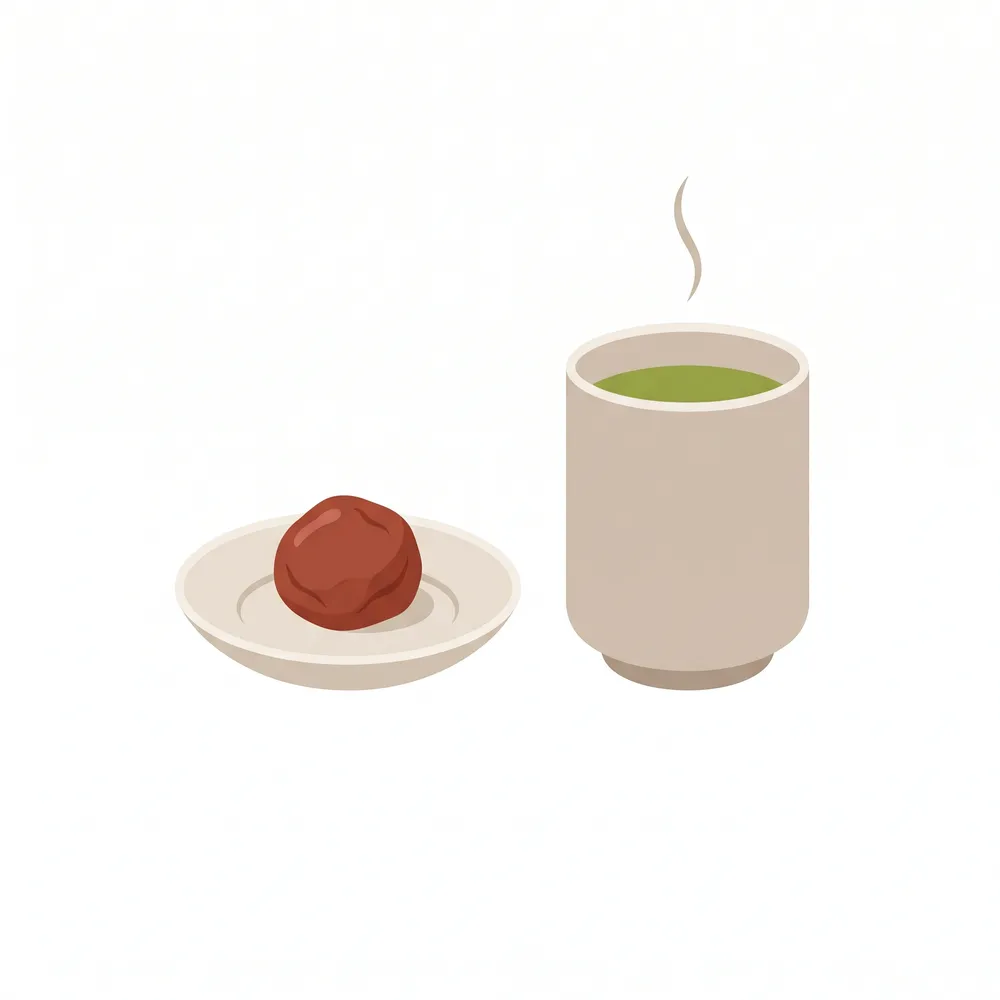
Honey-cured is the exception. In Japan that one is eaten alone with hot green tea, where the
tea's bitterness and the plum's sweet acidity meet. Treat it as a sweet, not a pickle.
Three things worth trying
Onigiri. A salt-cured plum in the centre of a rice ball, wrapped in nori. The
original purpose — the salt kept the rice safe on long journeys.
Grilled, in porridge. Brown it in a dry pan, break it into rice porridge. Standard
Japanese sick food and genuinely restorative.
In shochu. Drop a salt-cured plum into shochu with hot water and crush it as you
drink. The drink gets steadily more savoury as you go.
Storage
Salt-cured keeps at room temperature indefinitely. Honey- and shiso-cured are lower-salt modern products — refrigerate them, and expect a few months once opened. Always use a clean, dry utensil: water in the jar is what spoils them.
Frequently Asked Questions
What does umeboshi taste like?
It depends entirely on which of the three types you eat. Salt-cured is intensely sour and salty with a deep fruity finish. Shiso-cured is sour and herbal, made for rice. Honey-cured is sweet-sour and soft, closer to a candied fruit. People who say they hate umeboshi usually met the salt-cured one first, with no rice.
How can I tell if umeboshi is real or artificially flavoured?
Read the ingredients — a real one is three or four items long. Plum, salt, shiso, and honey if it is the sweet type. MSG, sorbitol, stevia, acesulfame K or red colouring mean it is a seasoned product made from de-salted, usually imported plums. Also look for "Nanko" and "Wakayama" on the label.
How long does umeboshi last?
Traditional salt-cured umeboshi keeps for years at room temperature — at 18–22% salt, nothing survives to spoil it, and Japanese households keep jars for decades. Honey and low-salt versions are different products: refrigerate them and use within a few months of opening.
Is umeboshi too salty to be healthy?
One plum a day is the traditional serving, and that is the right frame. A single salt-cured umeboshi carries a meaningful amount of sodium, so it is a seasoning for a bowl of rice rather than a snack to graze on. If you are watching sodium, the honey type at 3% is a reasonable alternative.
Can I make the salt-cured ones milder?
Yes — soak them in lightly salted water. Plain water pulls out flavour along with the salt and leaves the fruit flat, so use water with a little salt in it and soak for a few hours to overnight, tasting as you go. This is exactly how commercial honey umeboshi is made before it is re-steeped.
What is the white powder on the surface?
Almost always salt that has crystallised out, which is normal and harmless. On a traditionally cured plum you may also see fine white crystals of citric acid. Mould, by contrast, is fuzzy, coloured and localised — if it looks like anything other than salt, discard it.
Final Thoughts: Buy Two, Not One
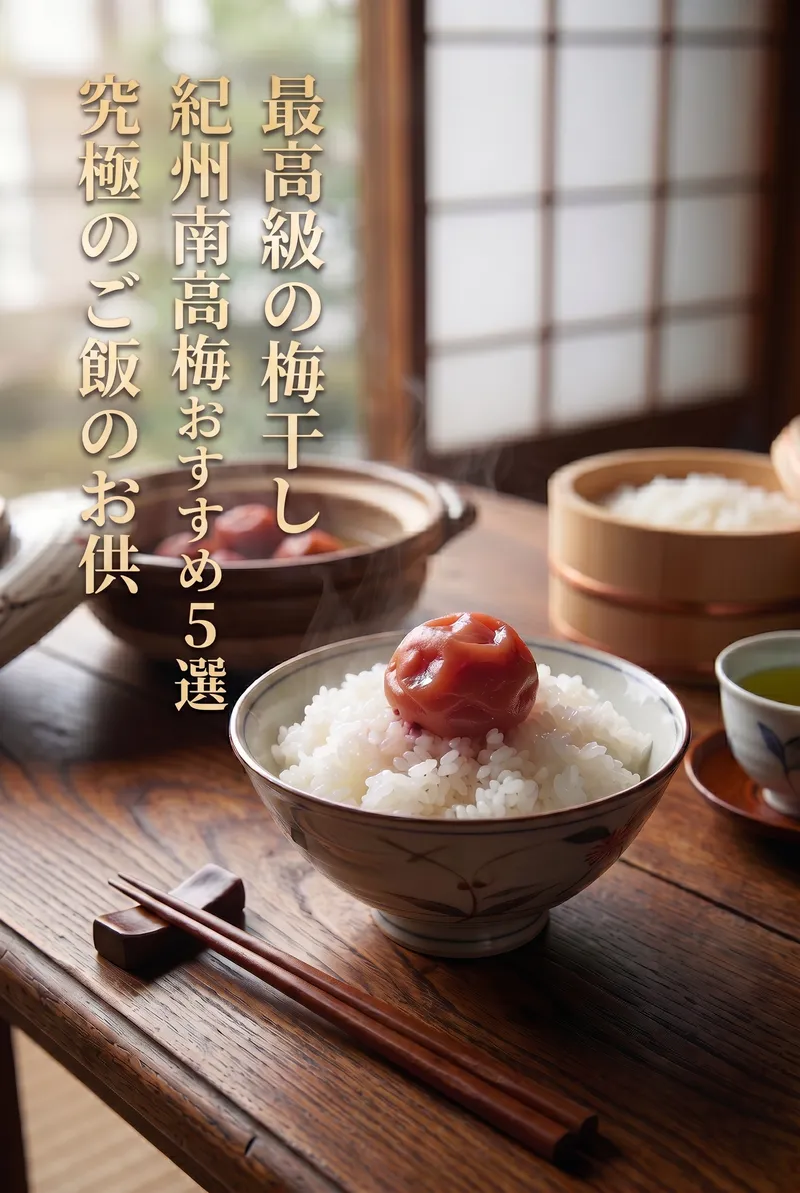
Get a honey-cured Nanko to eat with tea, and a shiso-cured one to put on rice. Between them you
will understand the food, and neither will shock you into giving up on it.
The salt-cured plum can wait until you want it. When you do, it will taste like the thing the
other two were made from — because it is.
A thousand years ago, someone in Japan looked at a fruit too sour to eat and decided it was
worth saving anyway. Everything here follows from that one stubborn decision.

Japan's 7 Best Brand Rice Varieties

Japanese Rice Accompaniments: Best Mail-Order Picks