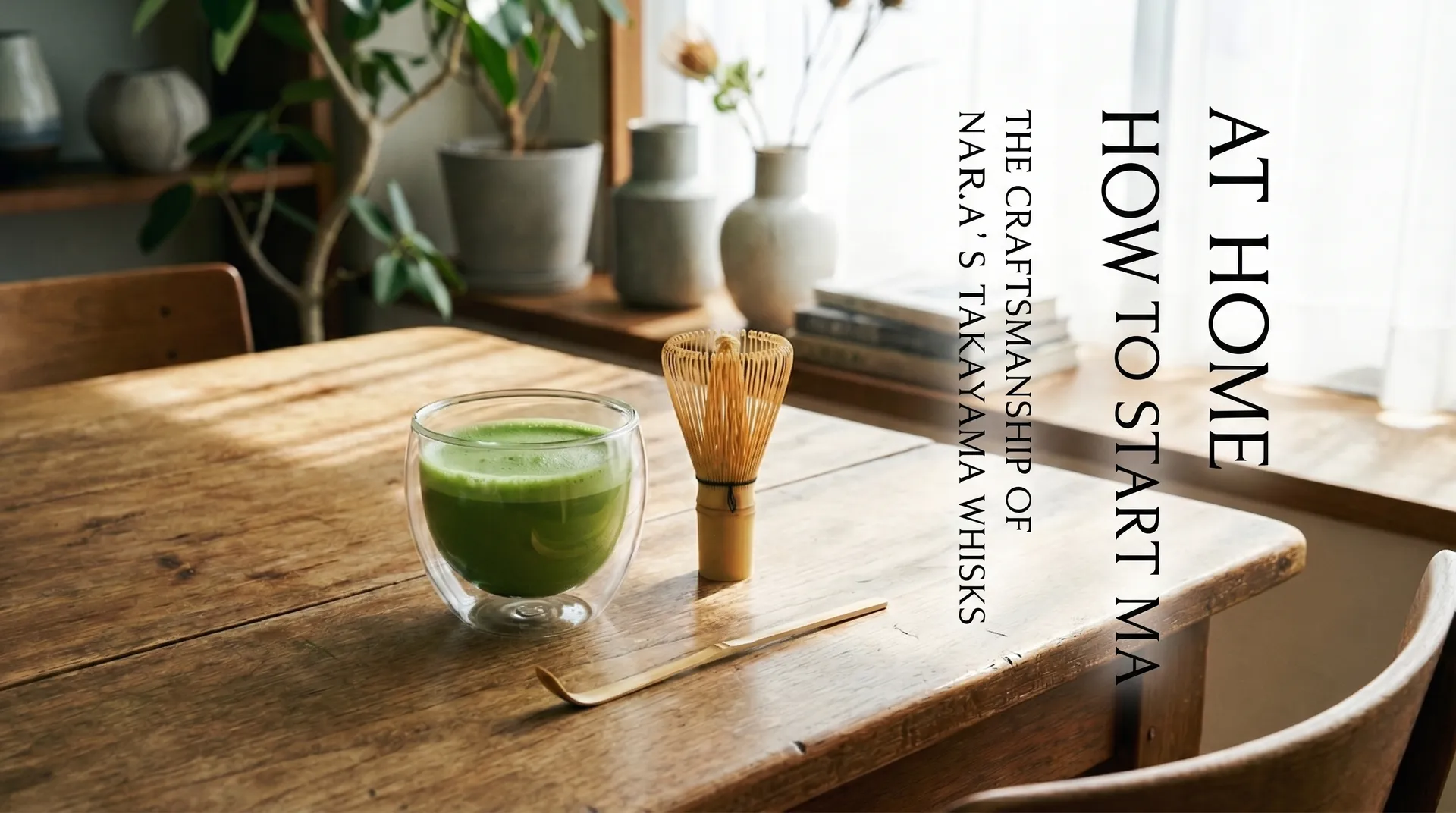
"I bought expensive tea leaves, but it never tastes as good at home as it does at the tea shop."
"It's always too bitter — I can never get that sweet, mellow flavor."
Sound familiar?
The truth is, when it comes to sencha (Japanese green tea), the taste is determined less by the price of the leaves
and more by water temperature and
steeping time — which account for 90% of the result.
The golden rule: brew sencha at 70°C for about 60 seconds.
Pouring boiling water straight from the kettle is the most common mistake — and it's an easy one to fix.
In this guide, you'll learn the simple cooling technique that unlocks sencha's natural sweetness,
plus the ideal brewing parameters for each tea type.
Quick Reference: Sencha Brewing by Tea Type
| Tea Type | Water Temp | Steeping Time | Flavor Profile |
|---|---|---|---|
| Sencha (standard) | 70–75°C | 60–90 sec | Balanced sweetness and umami |
| Gyokuro | 50–60°C | 2–3 min | Richest in theanine; deeply sweet |
| Fukamushi (deep-steamed) | 70–80°C | 30–45 sec | Brews dark and full-bodied quickly |
| Houjicha / Bancha | 95°C+ | 30 sec | Toasty aroma is the main appeal |
Why Temperature Matters: Catechins (Bitterness) vs. Theanine (Sweetness)
The same tea leaves can produce completely different results depending on water temperature.
This is because different compounds in green tea dissolve at different temperatures.
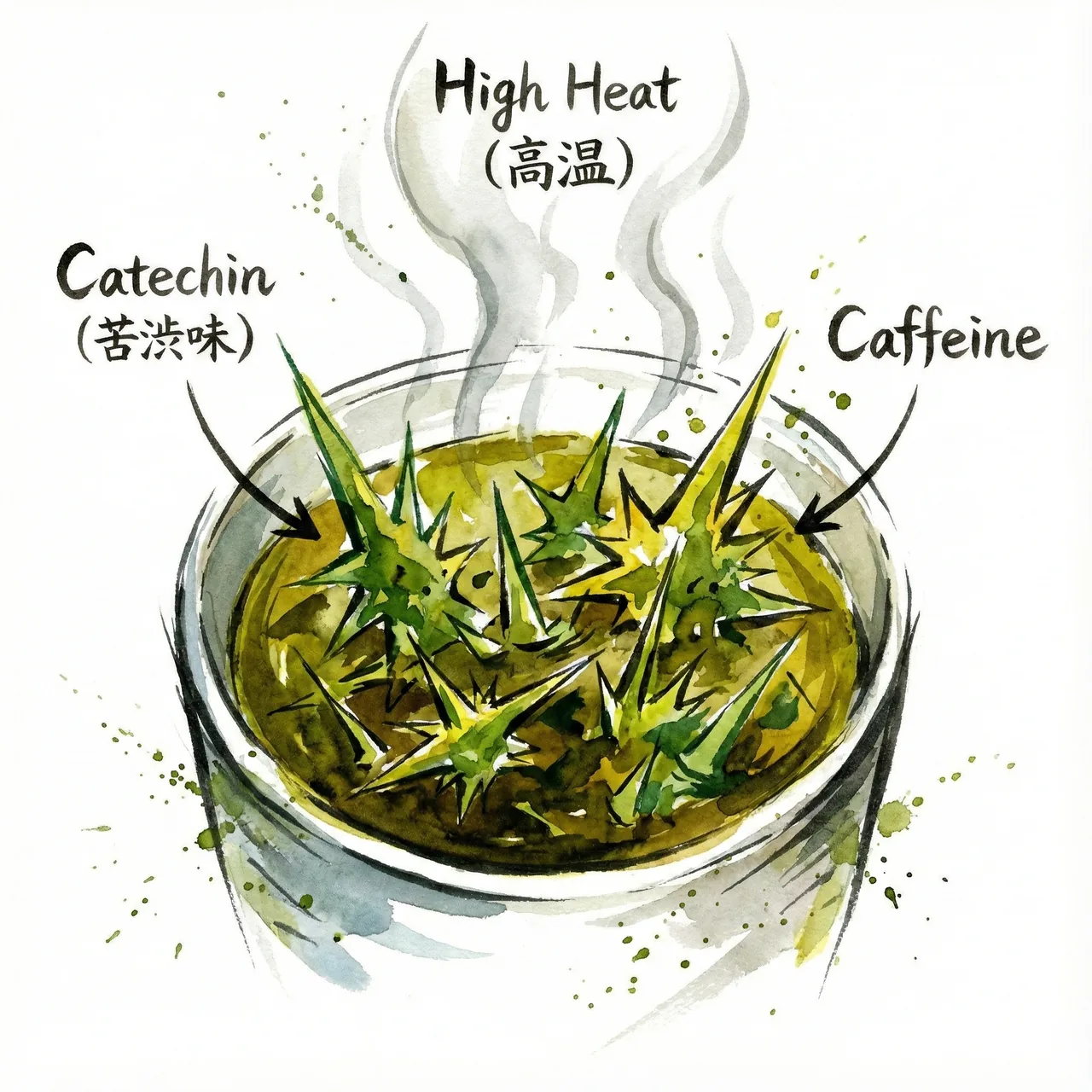
High Heat (90°C+) Extracts Bitterness
Boiling water causes catechins — the compounds responsible for astringency — to rush out of the
leaves all at once.
Caffeine, which adds sharpness and bitterness, is also extracted in large amounts at high temperatures.
The result is a bracing, stimulating brew — but the tea's natural sweetness gets buried.
Lower Heat (Around 70°C) Brings Out Sweetness
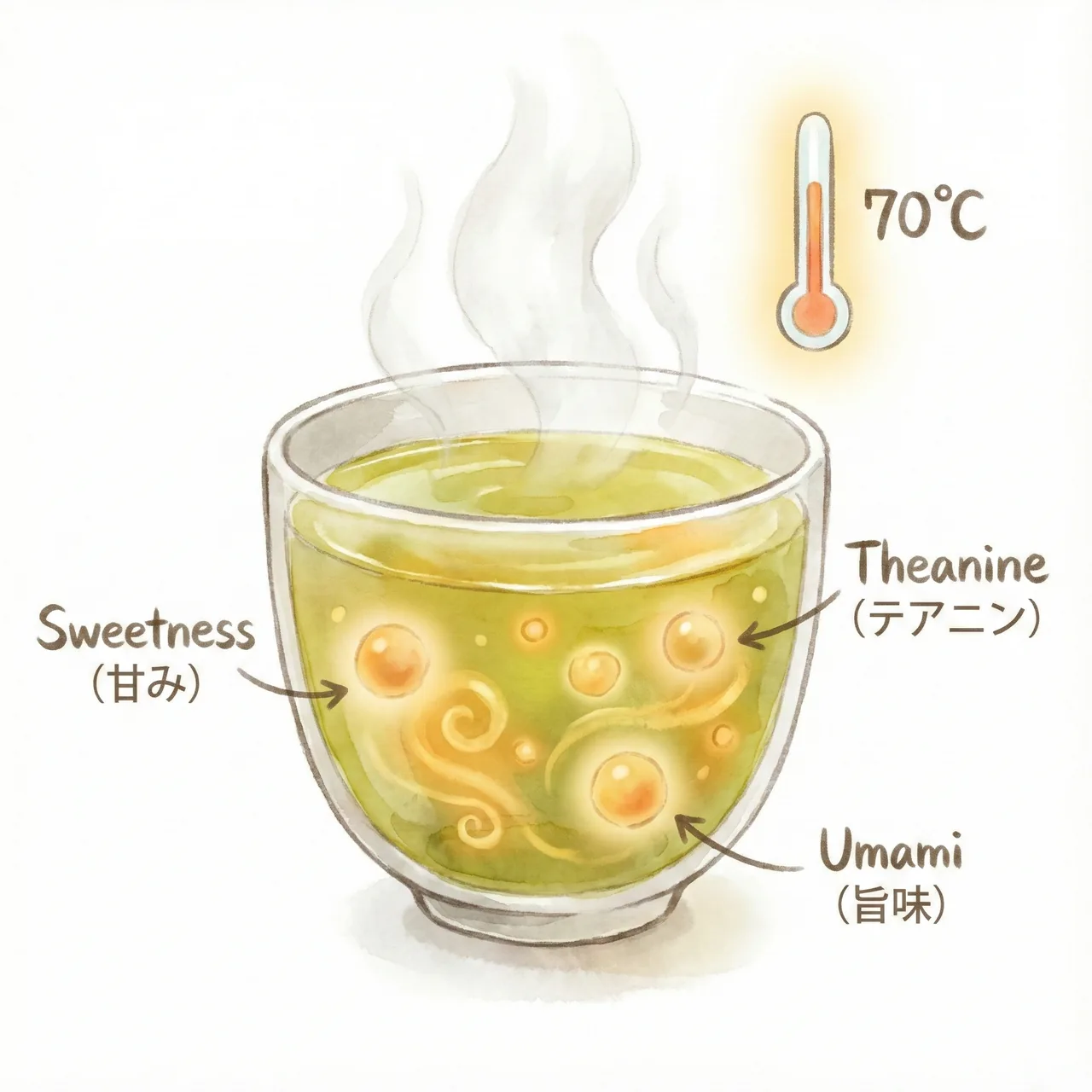
Cooler water slows down the extraction of catechins significantly.
Meanwhile, theanine — the amino acid responsible for the umami and sweetness in tea — dissolves
readily even at lower temperatures.
The result is a smooth, round, almost broth-like cup with very little bitterness.
How to Brew Sencha: The 4-Step Method
Let's walk through the process step by step.
The instructions below are for brewing two servings using a standard-grade loose-leaf sencha.
Step 1: Cool the Water (the Most Important Step)
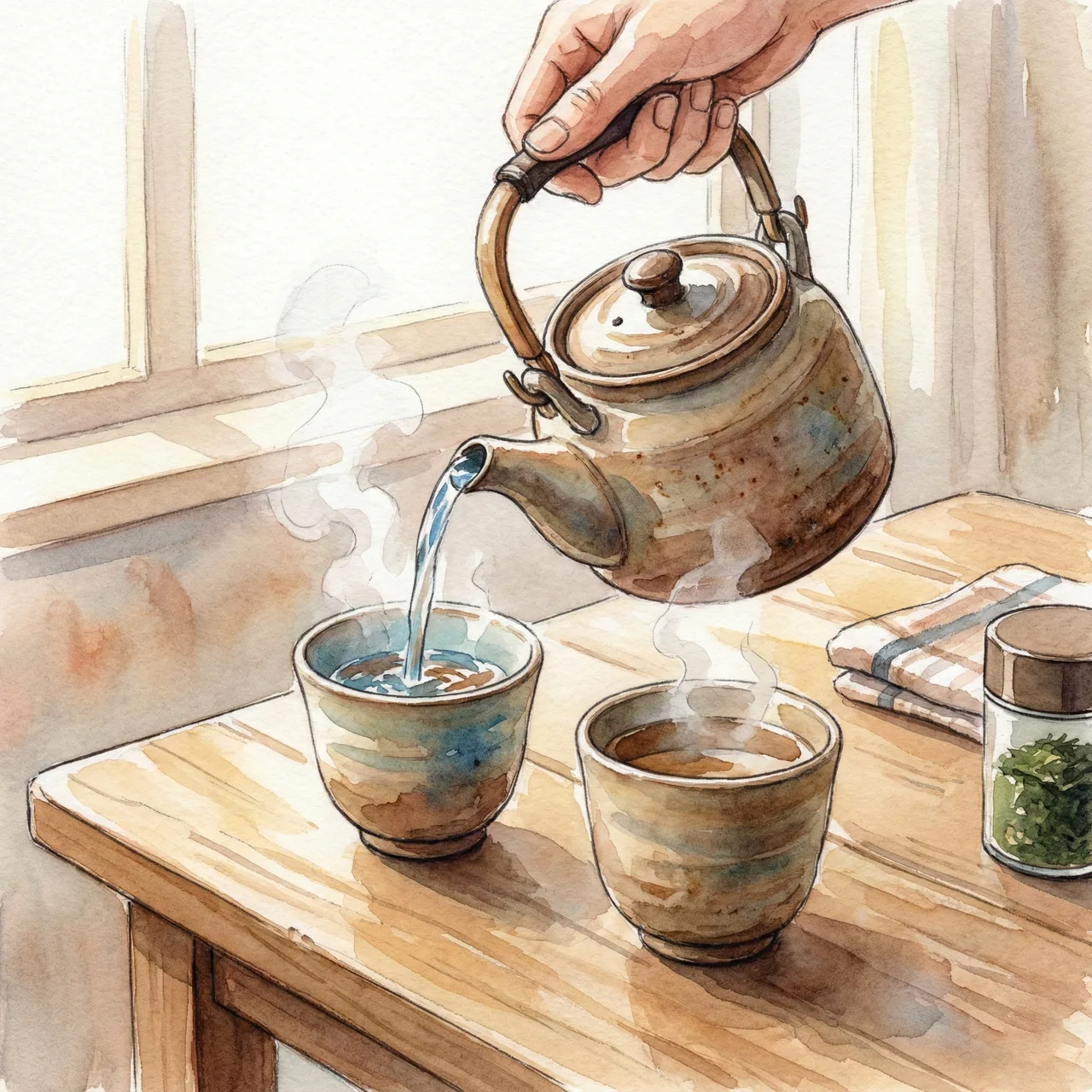
Start by pouring your boiled water into the teacups you'll be drinking from.
This achieves two things at once:
1. The cups warm up, so the tea stays hot longer.
2. Each time you pour into a new vessel, the water drops by about 10°C.
In winter, wait 1–2 minutes after pouring into the cups and you'll hit the ideal range of 70–80°C.
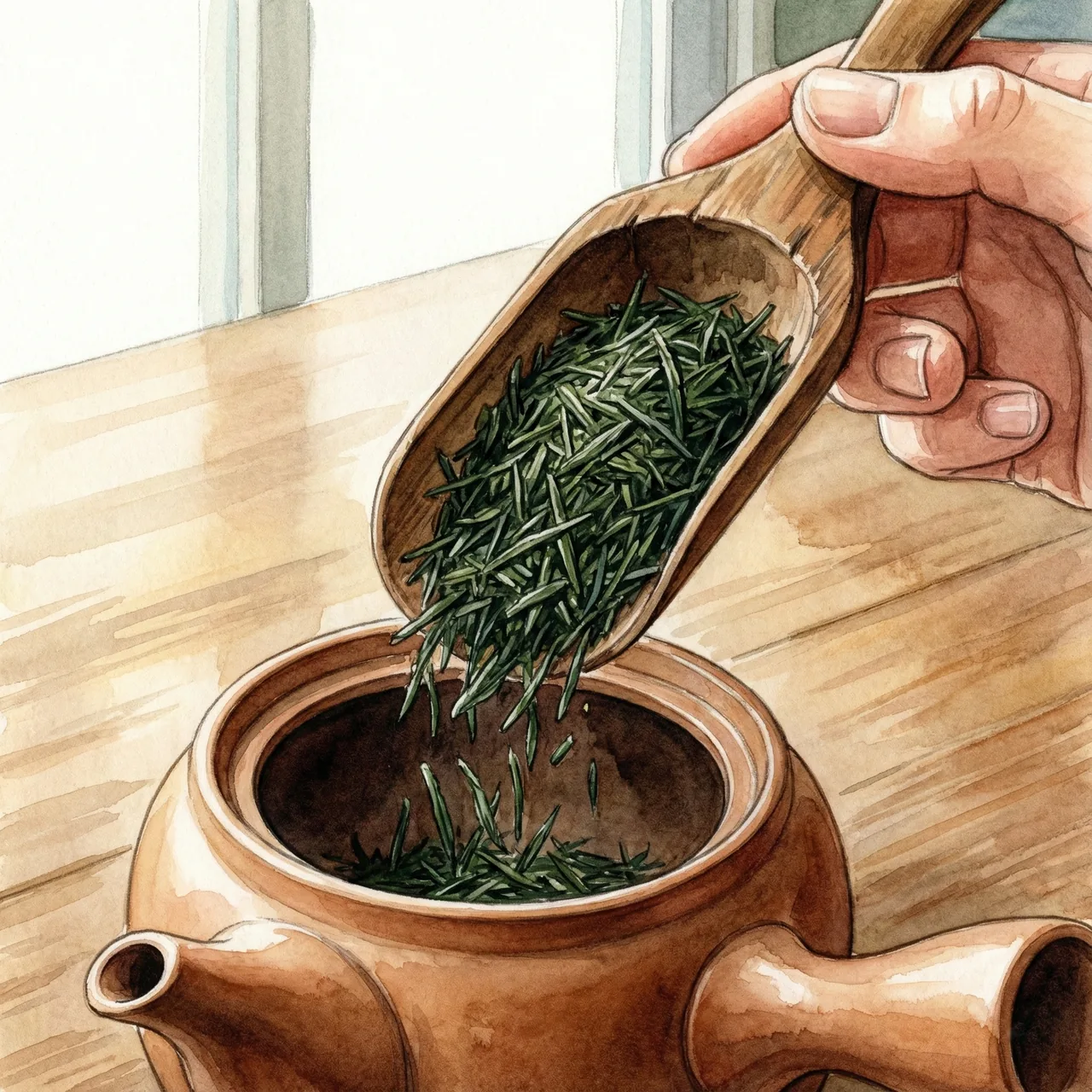
Step 2: Measure the Leaves into Your Kyusu
For two servings, use about 4–5g of loose-leaf tea (roughly one heaping tablespoon).
It might feel like more than expected — that's fine. A generous amount of leaves produces a richer, more
flavorful cup.
Too few leaves and you'll end up with watery tea that tastes like warm water with a hint of green.
Step 3: Pour and Wait — Without Shaking
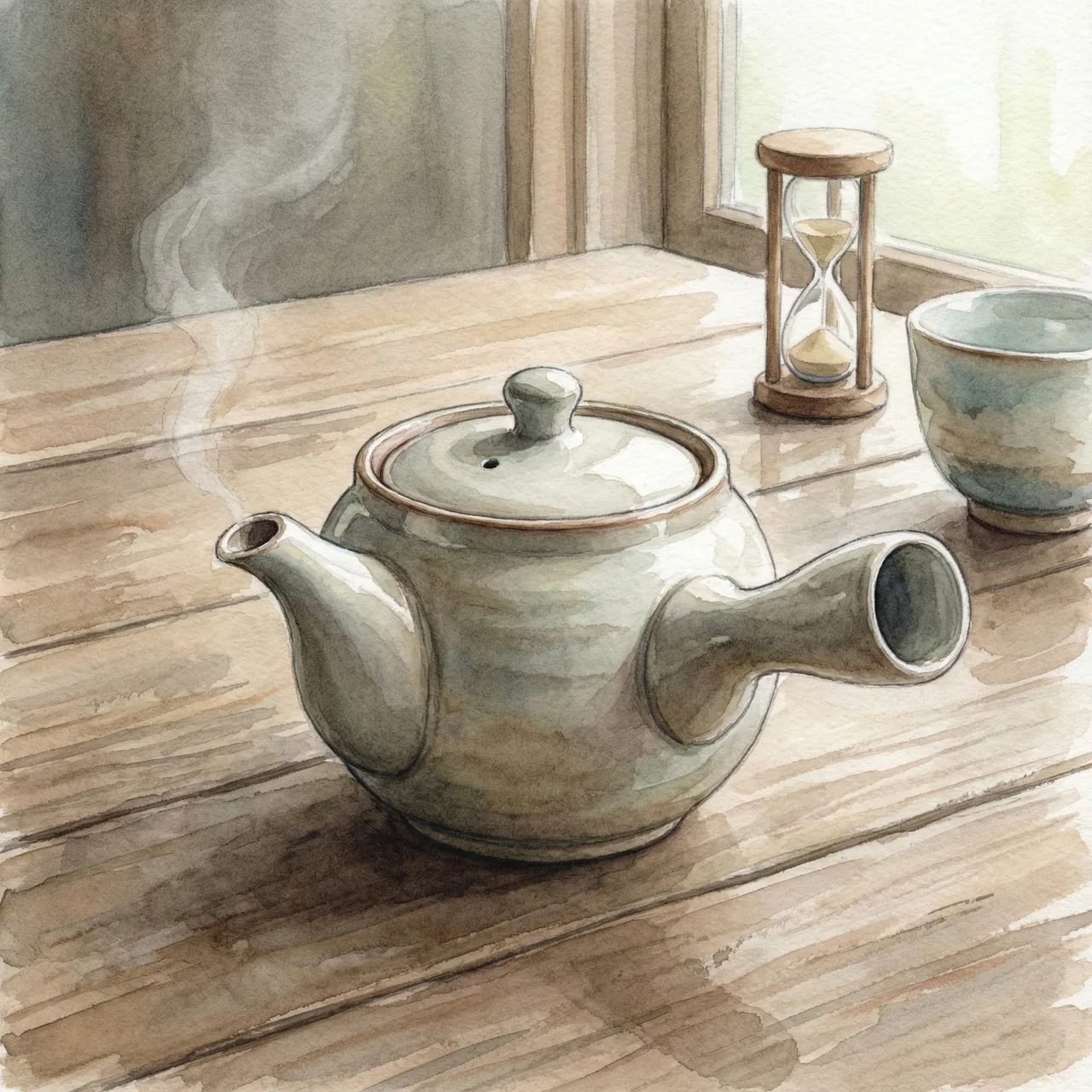
Once the water in the cups feels comfortable to hold (that's your 70°C signal), pour it gently into the
kyusu.
Now the key: do not shake or swirl the teapot.
Agitating the leaves increases bitterness. Simply put the lid on and let the leaves open at their own pace.
Step 4: Pour in Rotation — and Don't Waste the Last Drop
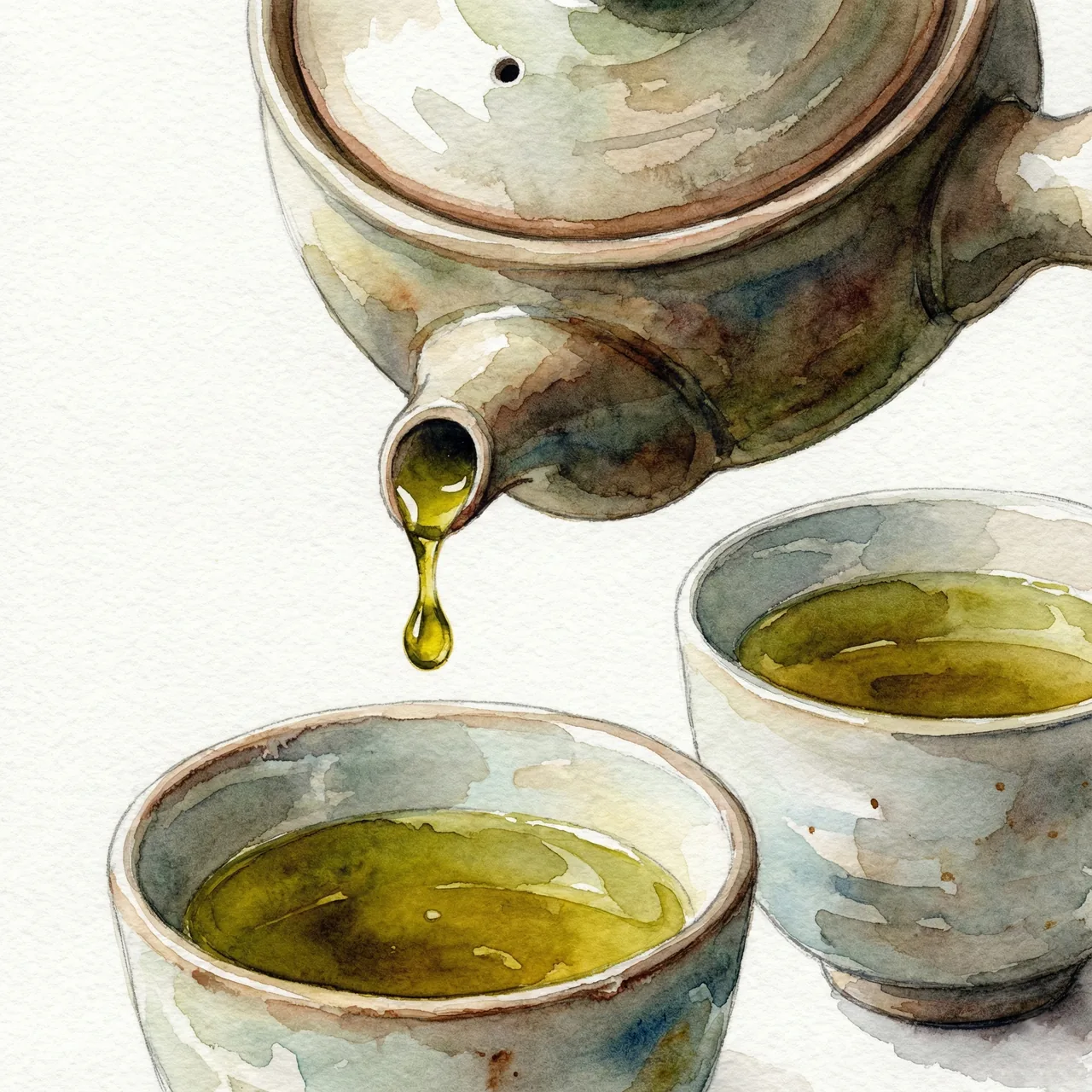
When serving multiple cups, pour in a rotating pattern — a little into each cup, then back again — so every cup
has the same strength.
The most important step: pour out every last drop (the "golden drop").
The final drops from the kyusu are the most concentrated in umami. Tilt the pot completely and shake out the
last drip.
This also keeps the leaves from sitting in moisture, which preserves the flavor for a second brew.
Fukamushi vs. Asamushi: Steeping Time Differences
"Wait about 60 seconds" is the general rule — but the ideal steeping time actually varies depending on how deeply
the leaves were steamed during production.
Check the packaging to identify what type of sencha you have.
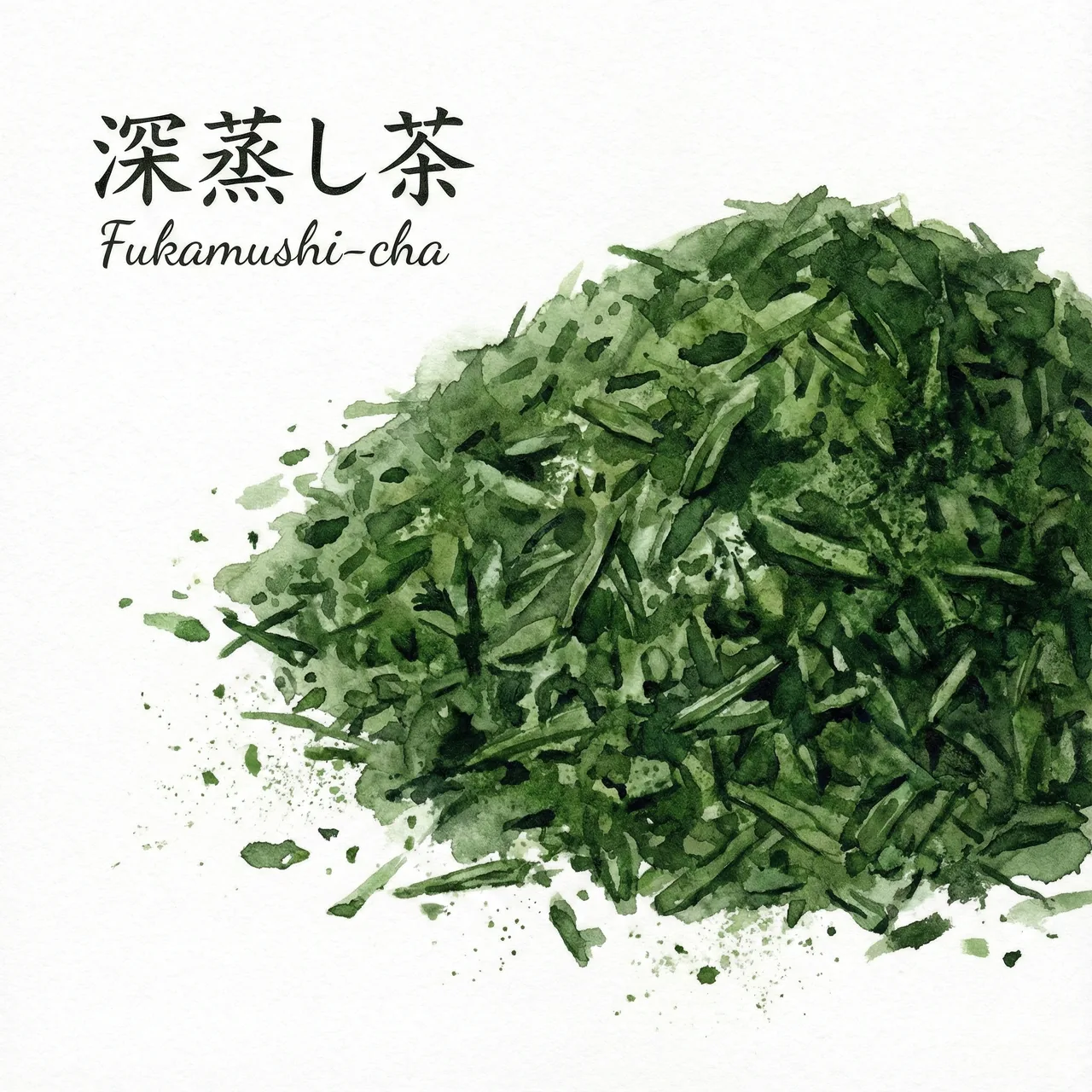
Fukamushi-cha (Deep-Steamed Sencha — common in Shizuoka)
Steeping time: 30–45 seconds (shorter)
These leaves are steamed for longer during production, which breaks them down into smaller, finer particles.
Because there's more surface area in contact with the water, color and flavor brew out very
quickly.
Over-steeping makes it bitter fast — pour as soon as the timer's up.
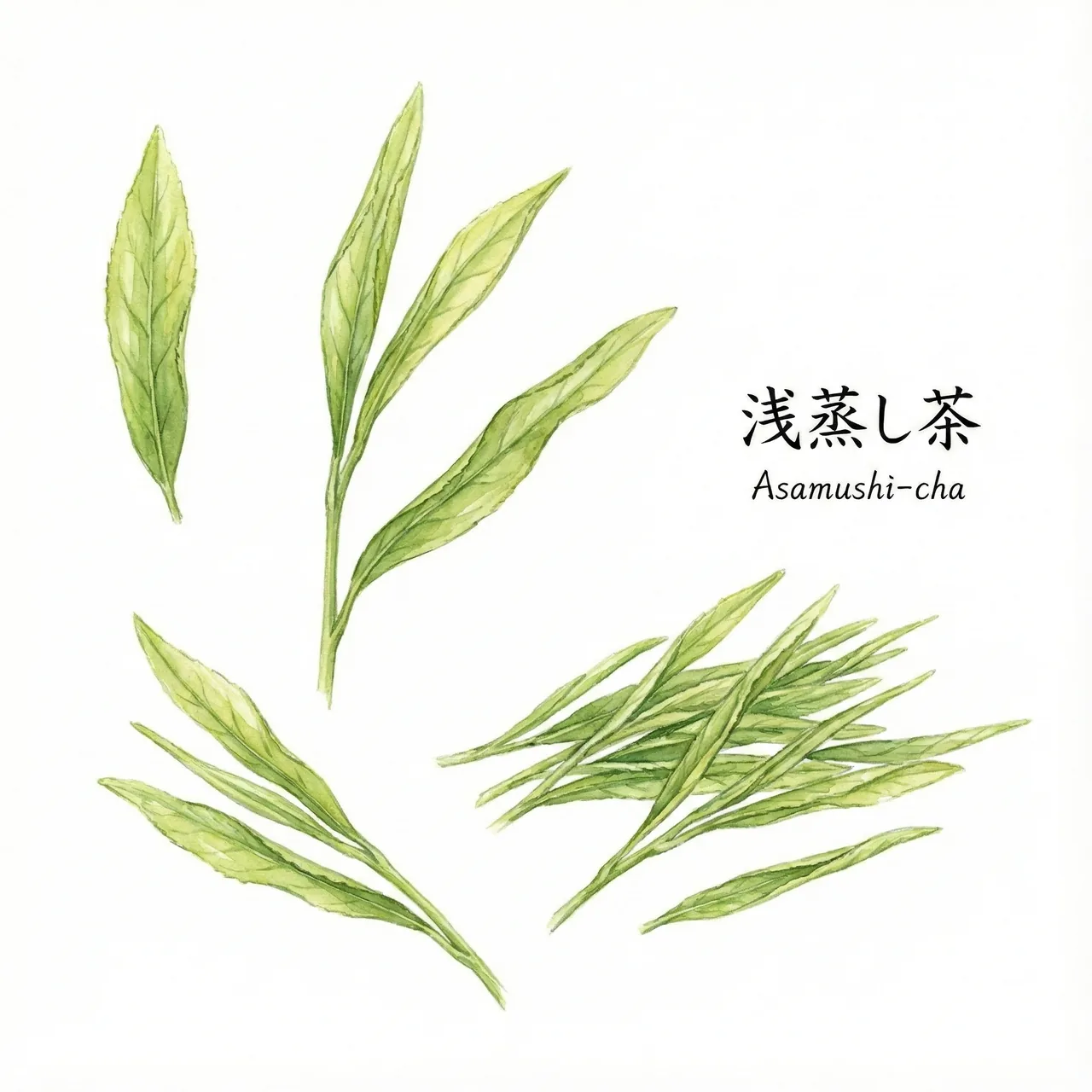
Asamushi-cha / Standard Sencha (Lightly Steamed — common in Kyoto/Uji)
Steeping time: 60–90 seconds (longer)
The leaves are long and needle-like, retaining their original shape after steaming.
They unfurl slowly in the water, releasing umami gradually over a longer steep.
Given enough time, these leaves produce a golden, translucent brew with an elegant, refined
sweetness.
The Right Kyusu: How Your Teapot Affects the Taste
If you want to take your sencha to the next level, the material of your kyusu (Japanese teapot) makes a real
difference.
Japanese-made teapots — especially those fired from Tokoname clay (Tokoname-yaki) or Banko clay
(Banko-yaki) — are widely regarded as the best for brewing green tea.
Why Unglazed Earthenware Works Best
Unglazed ceramic kyusu (fired without a glaze coat) have a porous surface with microscopic pores.
These pores absorb excess tannins and off-flavors, producing a smoother, rounder cup over
time.
There's also a natural reaction between catechins in the tea and trace iron in the clay, which further softens
the taste.
Glass or porcelain teapots let the aroma shine through more directly — but for sheer mellow flavor, unglazed
clay wins.
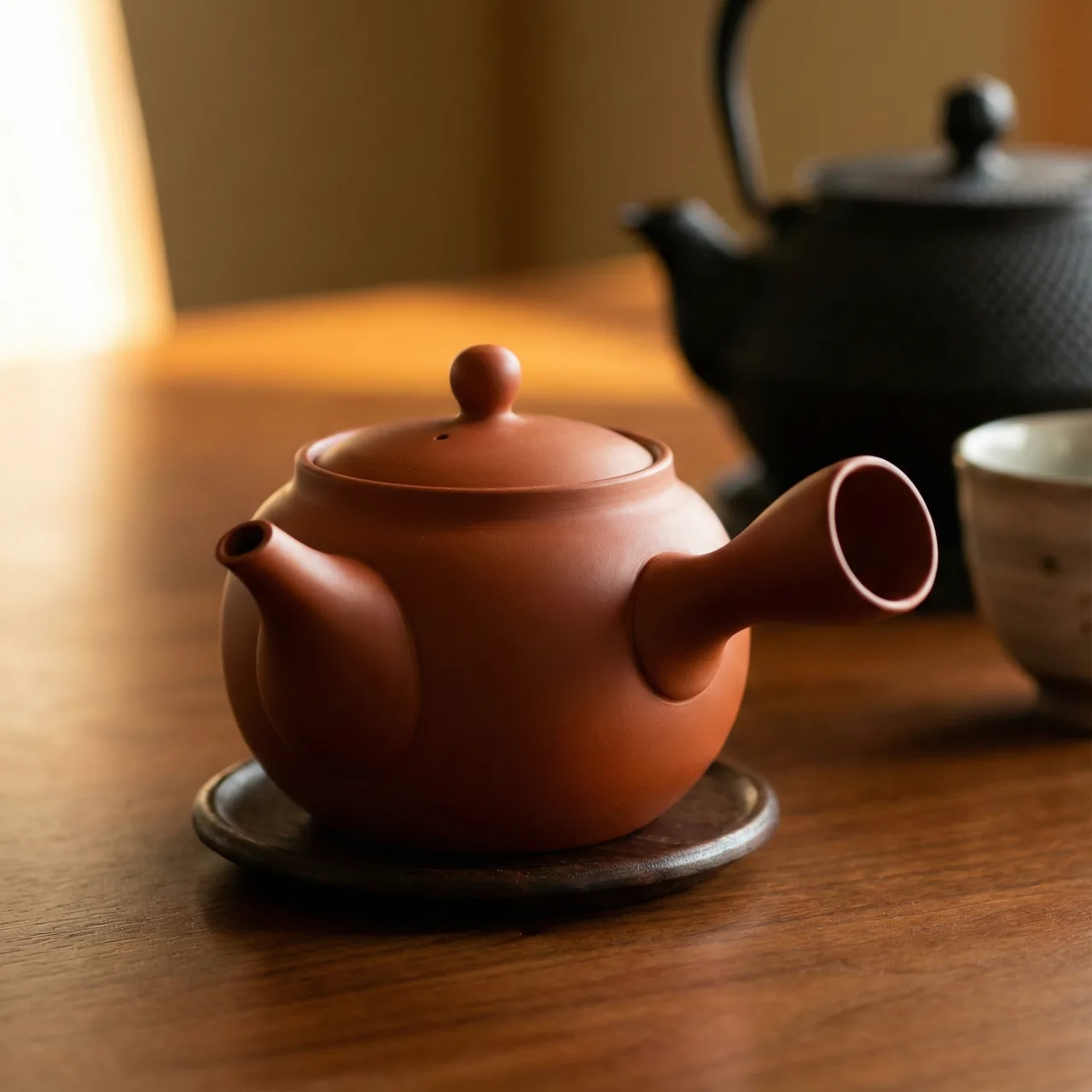
Tokoname Kyusu Teapot (260ml) — by KIMIKURA
An unglazed Tokoname-ware clay teapot with a built-in stainless mesh filter. The natural clay gradually absorbs bitterness over time, producing a progressively smoother, mellower cup. Made in Japan.
View on AmazonFrequently Asked Questions
I followed the steps but my tea still tastes weak. What am I doing wrong?
Try increasing the amount of tea leaves by 1.2–1.5x.
Thin-tasting tea almost always comes down to using too few leaves. When you hold back to "save" the tea, the
result is hot water with a faint green flavor.
Also, if your water is too cool (especially in winter), the compounds won't extract well — try brewing at a
slightly higher temperature around 80°C.
How do I get a good second brew from the same leaves?
For the second steep, use boiling water and pour immediately — no waiting.
By the second steep, the leaves are already fully open.
The idea is to intentionally extract catechins and caffeine this time, producing a crisper, more refreshing
cup.
Pour boiling water in, then pour it straight out into the cups without any steeping time.
Can I make good tea with tap water?
Yes — Japan's tap water (soft water) is actually ideal for green tea.
The one issue is chlorine, which can dull the flavor. To remove it, boil the water for an extra 2–3
minutes after it comes to a full boil before brewing.
If you prefer bottled water, always choose soft water. Hard water (common in European imports) inhibits extraction
and produces weak, flat-tasting tea.
Should I also brew genmaicha and houjicha at 70°C?
No — roasted and toasted teas should be brewed with near-boiling water (around 95°C).
For genmaicha (brown rice tea) and houjicha (roasted tea), the main appeal is the toasty aroma. High heat is what
unlocks it and fills the room with that characteristic fragrance.
The rule of thumb: low temperature for umami (sencha, gyokuro); high temperature for aroma (bancha,
houjicha).
Can I wash my clay kyusu with dish soap?
No — unglazed clay teapots should generally not be washed with detergent.
The porous surface absorbs soap residue and fragrance, which will leach into your tea and affect the flavor.
Simply rinse thoroughly with plain water, remove the tea leaves, and leave the lid off to dry
completely in a well-ventilated spot. That's all the maintenance a clay kyusu needs.
What's the best way to store loose-leaf sencha?
After opening, transfer to an airtight container and store in a cool, dark place or the
refrigerator.
The four enemies of tea freshness are: oxygen, moisture, light, and heat. Once the bag is open, oxidation begins
every time air gets in.
Use a sealed tea canister or resealable bag, and try to finish the tea while it's still fresh.
If storing in the fridge, let the container come to room temperature before opening to prevent
condensation from forming on the leaves.
Final Thoughts: One Small Step for a Much Better Cup
Brewing great sencha doesn't require special equipment or professional skill.
The key points to remember:
· Cool the water in your teacups first — target 70°C (this is the most important step)
· Don't hold back on the leaves — use a little more than you think you need
· Don't shake the kyusu — and pour out every last drop
That one extra minute of patience — waiting for the water to cool — is what creates both a calmer mindset and a
sweeter cup.
Try this method at your next tea break and see what a difference it makes.
The same leaves you've always had will taste like something from a premium tea house.
Best Japanese Kyusu Teapots: Tokoname & Banko-ware Picks Ranked

Premium Japanese Tea Gifts: Top Brands by Region and Style