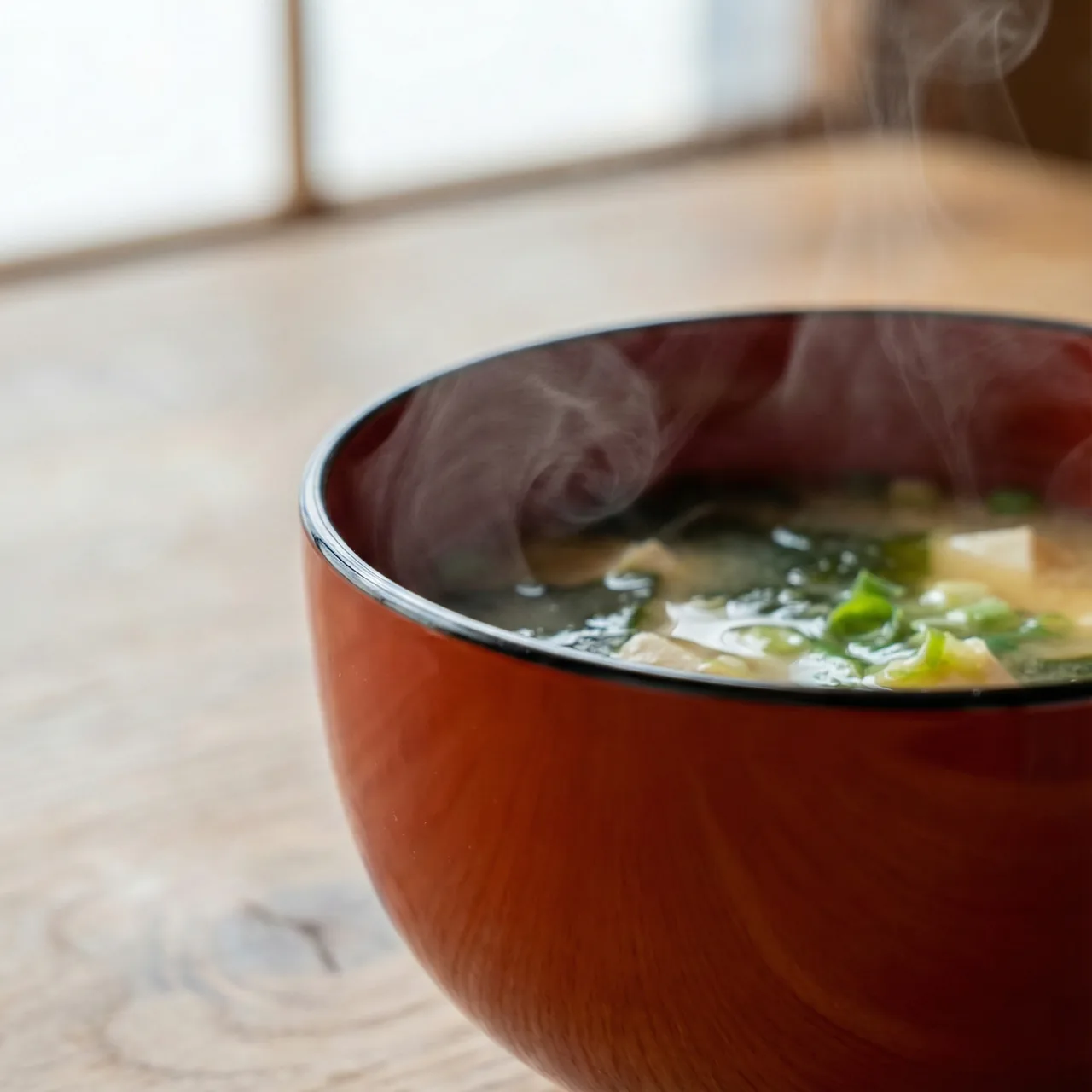
After rich meals and indulgent eating, your body craves one thing: a simple, carefully made bowl of miso soup.
Not the kind made with powdered instant stock — the kind made with real dashi, drawn from katsuobushi and kombu.
But pulling dashi from scratch every morning takes time most people don't have.
That's where premium dashi packs come in — whole ingredients ground fine and sealed in a bag, so you get genuine flavor without the effort.
This guide covers the best mail-order dashi packs and miso available in Japan today, plus the bowl and tools that make miso soup as good as it can be.
Quick Reference: Dashi Packs & Stock Types at a Glance
| Type | Main Ingredients | Additives | Features |
|---|---|---|---|
| Premium Dashi Packs | Katsuobushi, kombu, niboshi | Additive-free | Rich aroma, natural umami depth |
| Granulated Stock (standard) | Salt, MSG | Contains salt & seasoning | Convenient, inexpensive |
| Red Miso (Aka-miso) | Soybeans, salt, koji | Minimal | Rich, bold, full-bodied (Aichi style) |
| Blended Miso (Awase-miso) | Rice, soybeans, barley | Minimal | Balanced, versatile, all-purpose |
1. Why Dashi Packs? The Real Difference from Powder and Granules
The inexpensive granulated dashi sold in supermarkets and the mail-order dashi packs featured here look similar from the outside — but they are completely different products.
The difference in cost is real, but so is the difference in what you're actually drinking.
① You're Drinking the Ingredients Themselves
Most granulated stock is adjusted with salt and MSG to create a consistent flavor profile.
Premium dashi packs, by contrast, are simply ground katsuobushi, kombu, niboshi, or aji packed into a bag — nothing added.
Drinking the dashi is equivalent to consuming the full nutrition of fish and seaweed in every bowl. Additive-free formulas are also safe for young children.
② Tear the Bag Open — Instant Seasoning
The contents of a dashi pack are finely ground premium ingredients.
Beyond miso soup, tear the bag open and the powder becomes a powerful all-purpose seasoning for fried rice, sautéed vegetables, and okonomiyaki.
③ Effortless Sodium Reduction
Strong umami satisfies the palate with significantly less salt.
When dashi is genuinely flavorful, you naturally use less miso — which means lower sodium without any sense of sacrifice. A practical advantage for anyone watching blood pressure.
2. Best Japanese Dashi Packs & Miso: 6 Picks for 2025
Selected from across Japan — dashi packs and premium miso that will genuinely transform your morning miso soup.
Equally excellent as gifts for anyone who values their health and kitchen.
Kubara Honke (Fukuoka) / Kayanoya Dashi
The undisputed bestseller. One pack, and anyone can make restaurant-quality dashi.
From Fukuoka, Kayanoya dashi is a staple at department stores across Japan. The defining element is yaki-ago (grilled flying fish) — a smoky, elegant depth that lifts the umami of every ingredient it touches. The best place to start if you've never tried premium dashi packs.
Uses: Miso soup, simmered dishes, hot pot — all-purpose
Aji no Hyoshiro (Fukuoka) / Ago-Iri Hyoshiro Dashi
The original ago-dashi. More body and salt — for those who like a fuller flavor.
Hyoshiro and Kayanoya are Fukuoka's two pillars of premium dashi — and Hyoshiro skews slightly bolder: a bit more salt, a bit more depth. Even with less miso, the flavor holds. Excellent for udon broth and clear soups, not just miso. The pick for cooks who prefer a more assertive dashi.
Uneno (Kyoto) / Additive-Free Dashi Packs
Founded in the Meiji era. A clear Kyoto dashi with zero off-notes.
Obsessive about ingredient sourcing and production method, Uneno produces a dashi of remarkable purity — clean, transparent, with absolutely no muddiness. Ideal for Kyoto-style cooking and clear soups where the natural color and flavor of ingredients must shine through. For cooks who want the real thing without compromise.
ON THE UMAMI (Niigata) / Dashi Packs
Stylish packaging. Popular as a gift — and the vegetable dashi is genuinely excellent.
A modern dashi brand from Niigata, with packaging clean enough for gift-giving on any occasion. Beyond standard Japanese dashi, the lineup includes vegetable dashi and tomato dashi — expanding naturally into Western-style soups and stews. A gift that works across tastes and cooking styles.
Hita Shoyu (Oita) / Premium Blended Miso
Served to the Imperial household. Barley koji from Kyushu — sweet, fragrant, extraordinary.
Great dashi deserves great miso. Hita Shoyu's blended miso uses the barley koji characteristic of Kyushu — rich in sweetness and aroma, it transforms everyday ingredients into something that feels like a special meal. If you've only ever used supermarket miso, this is a genuine revelation.
Kakukyu (Aichi) / Hatcho Miso
The icon of Aichi. Hatcho miso's singular bitter depth — nothing else comes close for shellfish soups.
Made using methods unchanged since the Edo period, Hatcho miso is the definitive soybean miso. Its distinctive astringency and deep, complex richness are unmatched for shijimi clam soup, nameko mushroom soup, and anything where you want the miso itself to be the centerpiece. A long fermentation process is also said to contribute significant health benefits.
3. The Bowl and Tools That Make Miso Soup Complete
The best dashi and miso in the world poured into a plastic bowl will taste half as good as it should.
Miso soup is unique in Japanese cuisine: it is the only dish you drink directly from the bowl, lips to rim.
Lip Feel Is Everything: Why a Lacquer Soup Bowl Changes the Experience
A lacquered wooden shiruwan (soup bowl) offers a smoothness and warmth on contact that ceramic or plastic simply cannot replicate.
The moment the rim touches your lips, there's an immediate softness. Your hands stay comfortable even with very hot soup inside. And the low thermal conductivity of wood means the soup cools more slowly — every sip stays at the right temperature longer.
The bowl is not decoration. It's part of the experience.
Related: Japanese Soup Bowls — Wood vs. Lacquer & 5 Best Picks
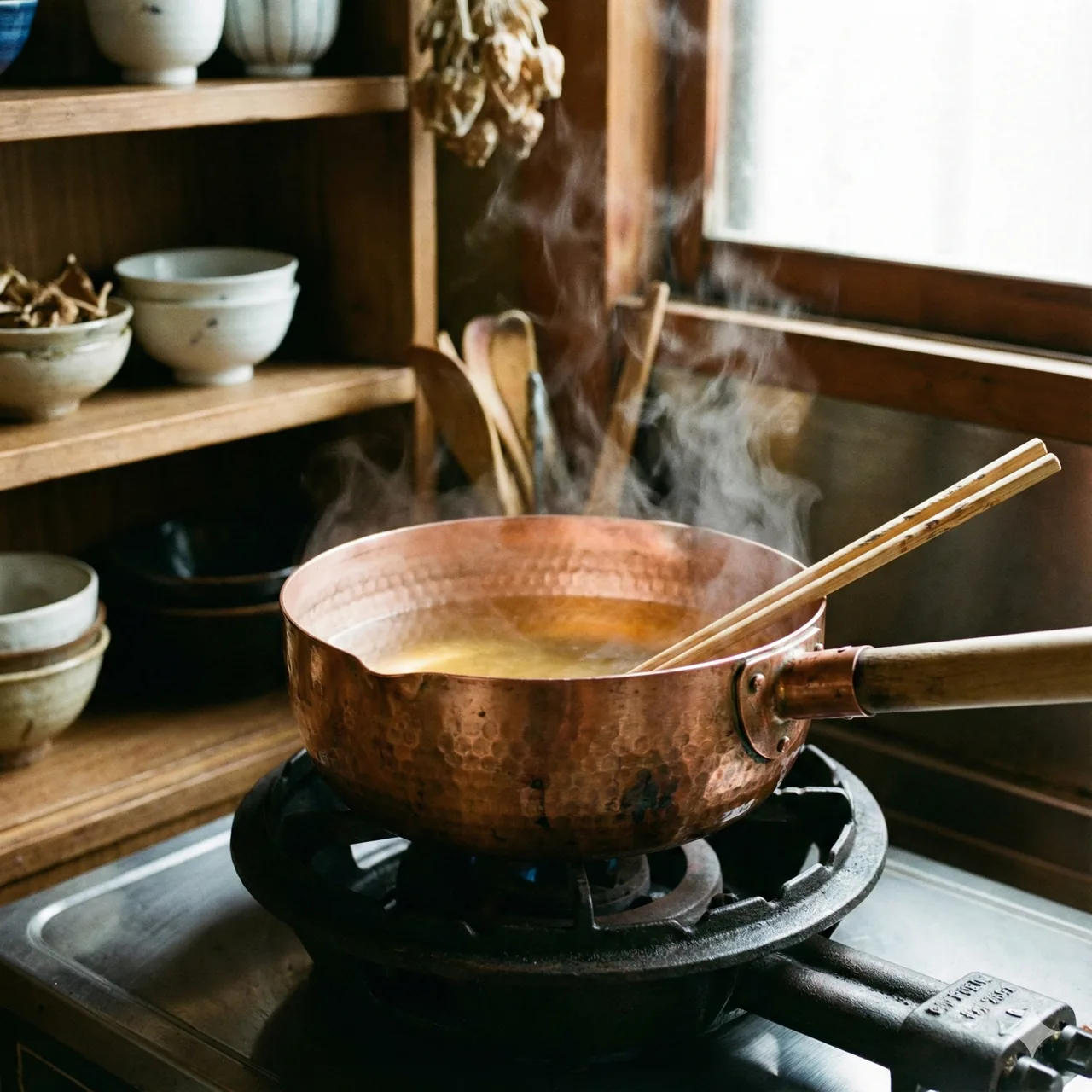
The Morning Ritual: Making Dashi in a Yukihira Nabe
A yukihira nabe (Japanese saucepan) — with its pour spout and thin, fast-conducting aluminum or copper walls — is the ideal tool for drawing dashi and making miso soup.
Water boils in minutes. The pour spout lets you decant directly into bowls without a ladle.
Used over years, aluminum and copper develop a character of their own — turning a routine task into a small daily ritual worth returning to.
Related: Yukihira Nabe — Japan's Everyday Saucepan, Explained
4. Frequently Asked Questions
How should I store dashi packs?
Because the ingredients are ground fine, they are very sensitive to humidity. After opening, always reseal the zipper completely or transfer to an airtight container and store in the refrigerator. Freezer storage is also recommended for longer shelf life.
What do I do with the used dashi pack after brewing?
Don't throw it away. Tear the bag open, sauté the contents briefly with soy sauce, mirin, and sake, and you have a nutritious homemade furikake (rice seasoning) or tsukudani (simmered relish). Nothing wasted.
Which is better — blended miso (awase) or red miso (aka-miso)?
It depends on the ingredients. Blended or white miso suits mild, delicate ingredients — tofu, fu wheat gluten, light vegetables, aburaage. Red miso and hatcho miso are the right match for shellfish (shijimi, asari), rich meats, and mushrooms like nameko — anywhere you want the miso to stand up to strong flavors.
What's the most reliable miso soup ingredient combination?
The classic that never fails: tofu + wakame + green onion.
Tofu provides plant protein, wakame provides minerals, green onion provides fragrance — and together they showcase dashi umami without competing with it.
From there, rotate with seasons: nameko mushroom and tofu, shijimi clam (the traditional hangover cure), or hearty root vegetables in tonjiru for colder months.
Should I refrigerate miso after opening?
After opening, refrigerator storage is standard practice.
At room temperature, fermentation continues — the color darkens and the flavor drifts from its intended profile. For long-term storage, the freezer is ideal: miso doesn't freeze solid, so you can scoop directly from a frozen block without thawing.
5. Final Thoughts: The Simplest Form of Self-Care
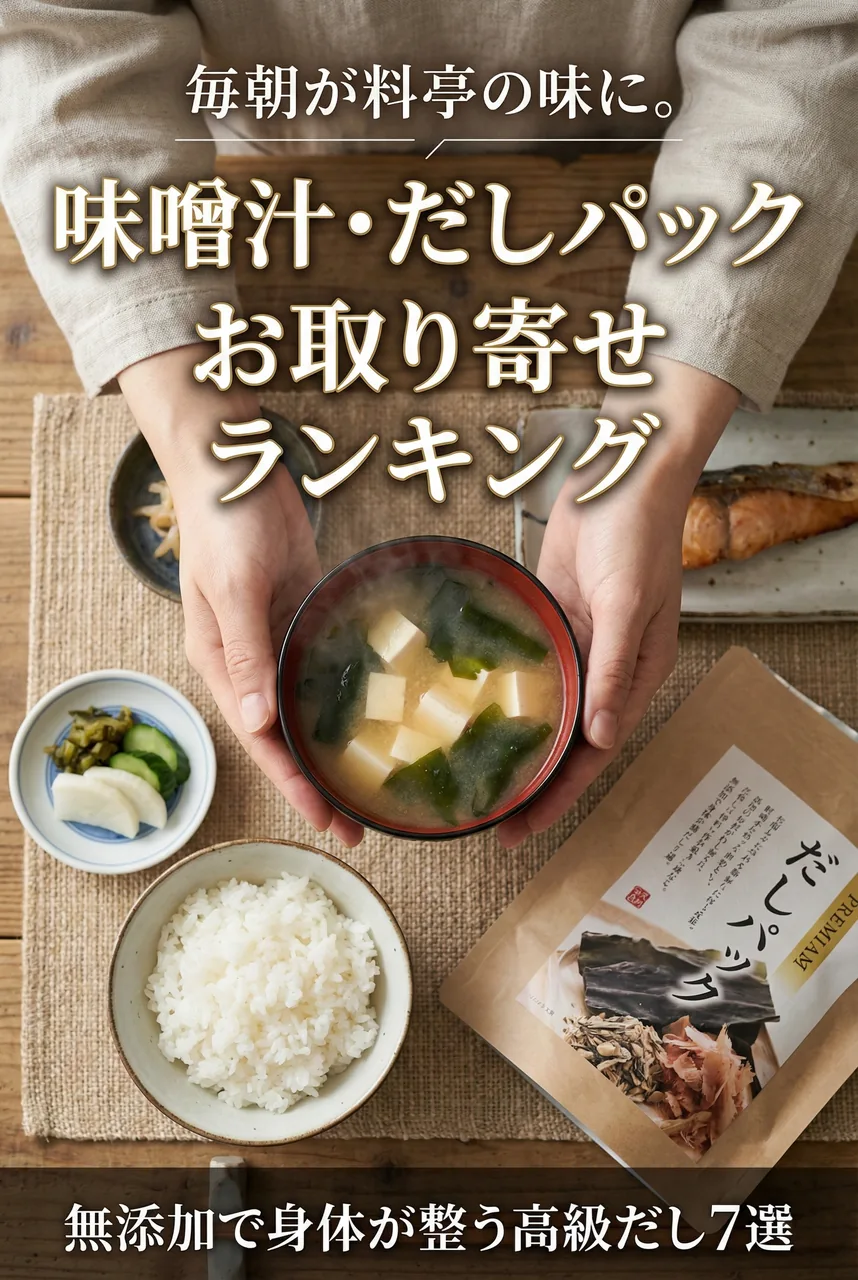
Starting your day with a warm, properly made bowl of miso soup is one of the most straightforward acts of care you can extend to yourself and the people you cook for.
Good dashi takes five minutes. A great bowl changes the whole experience.
Take care of yourself — one bowl at a time.
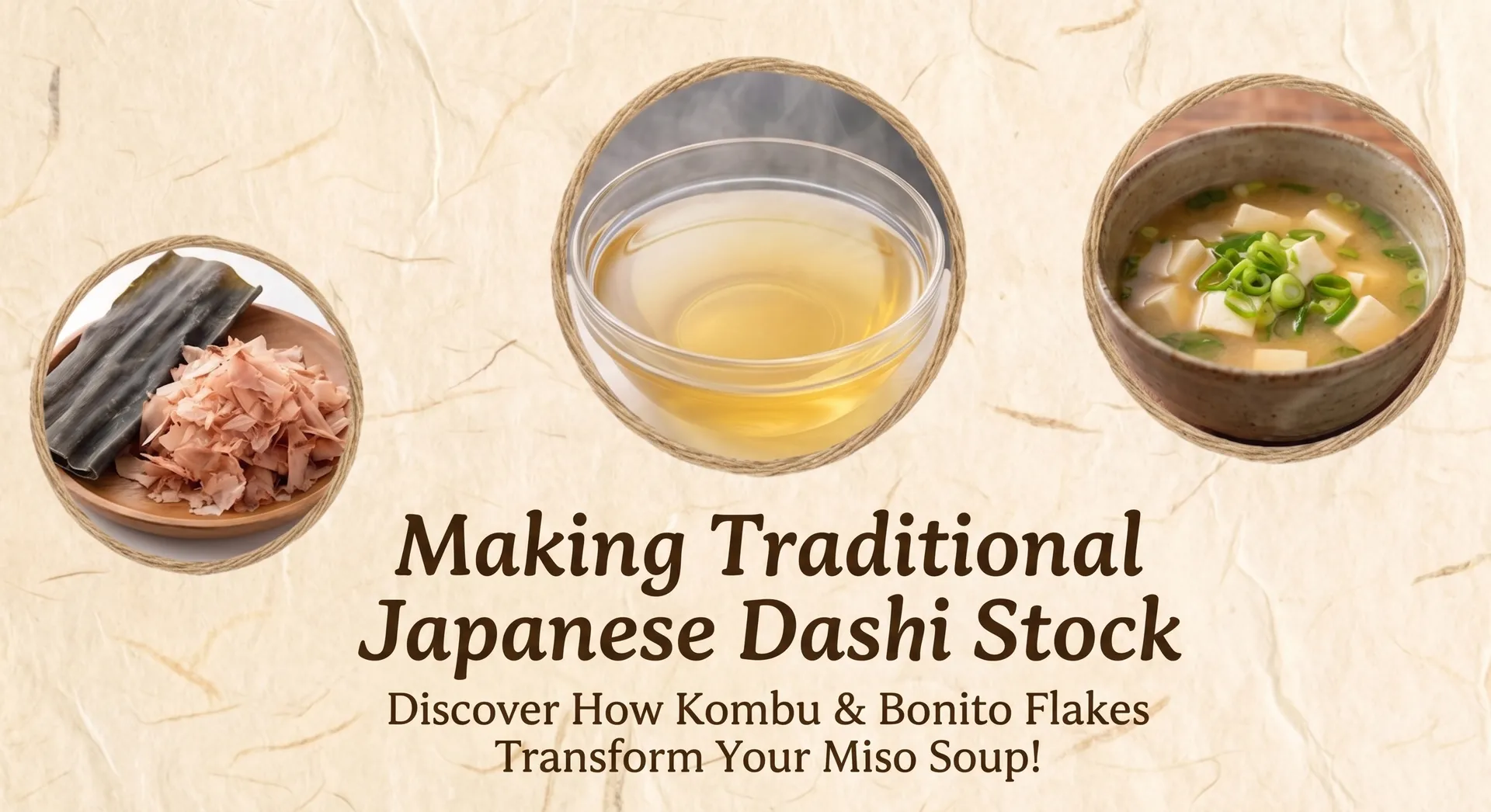
How to Make Japanese Dashi: Kombu & Katsuobushi Ichiban-Dashi

Suribachi & Surikogi: Japanese Mortar & Pestle Guide