Japanese cooking begins with dashi — the clear, umami-rich broth made from katsuobushi and kombu.
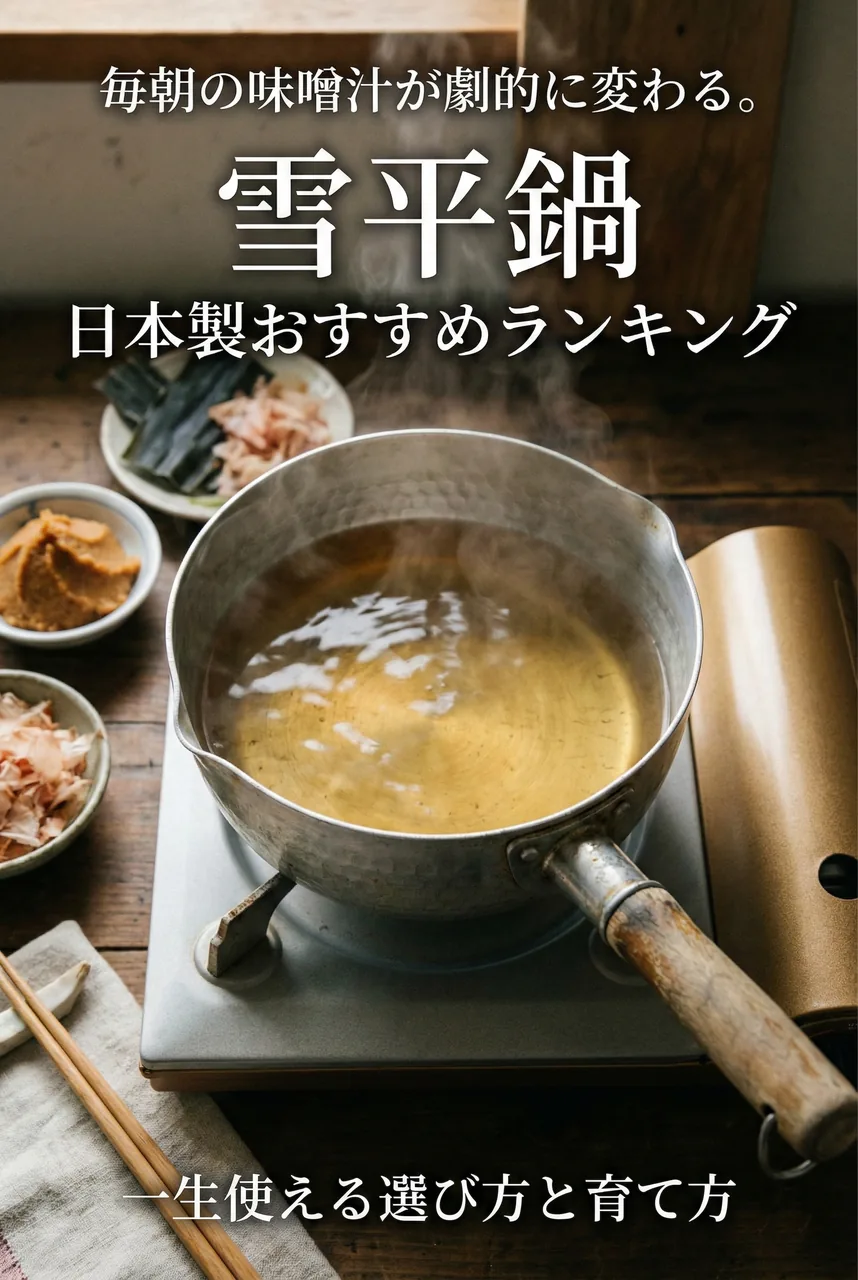
Every morning, the yukihira nabe goes on the burner. Water boils in minutes. Dashi is done.
That brief ritual — five quiet minutes before the day begins — is something Japanese home cooks hold onto.
Why do professional cooks all reach for a yukihira pot?
Because nothing boils water faster, and nothing handles a pour spout better.
This guide covers what makes yukihira nabe different, how to choose one that lasts a lifetime, and 4 Japanese-made picks worth owning.
1. What Is a Yukihira Nabe? How It Differs from Other Pots
A yukihira nabe (行平鍋) is a single-handled Japanese saucepan with pour spouts on both sides — a fixture in every professional Japanese kitchen.
Its defining traits are thin walls, light weight, and exceptional heat conductivity, combined with those pour spouts (usually on both sides) that let you decant broth directly into bowls.
How It Differs from Double-Handled or Thick-Bottom Pots
- Water boils fastest of any pot: Unlike thick-bottomed stew pots, yukihira is made from extremely thin aluminum or copper with exceptional thermal conductivity — water reaches a boil in a fraction of the time. That's why Japanese home cooks reach for it every morning to make miso soup.
- One hand, no ladle needed: The pot is light enough to lift one-handed and tip directly, using the pour spout to distribute broth cleanly into individual bowls without spilling a drop.
- The rounded base creates natural convection: Instead of a flat-bottomed cylinder, the interior curves upward like a bowl. As water heats, it rises from the center and rolls in a natural current — uniform boiling with no dead spots.
Where Yukihira Nabe Truly Excels
The combination of fast heat and natural convection makes a yukihira nabe dramatically better for these tasks:
- Dashi and miso soup: Water boils instantly, and after adding ingredients, it returns to a boil just as fast — locking in aroma without overcooking.
- Blanching greens: Spinach and komatsuna spin naturally in the rolling boil, cooking evenly and coming out a vivid, bright green.
- Simmered fish and nimono: The convection current circulates cooking liquid up and around the ingredients — even a small amount of broth reaches the top of the food without constant attention.
On the other hand, thick stews and curries — anything that needs low, slow simmering — are not what yukihira is built for. The thin walls that make it so fast can also cause scorching under prolonged heat. Quick boiling, blanching, and dashi-making are where yukihira is unbeatable.
Quick Reference: Yukihira Nabe Materials at a Glance
| Material | Features | Weight | Best For |
|---|---|---|---|
| Aluminum | Fastest heat conductivity. Light and easy to handle. May darken over time. | ◎ Very light | Daily dashi, miso soup, blanching greens |
| Copper | Even, uniform heat. Develops a beautiful amber patina with use. | ○ Medium | Simmered fish, dashi, serious Japanese cooking |
| Stainless Steel | Rust-resistant, easy care. Many models are IH-compatible. | ○ Medium | IH kitchens, everyday use, beginners |
| Ceramic | High heat retention, works on direct flame. Heavy and fragile. | △ Heavy | Porridge, chawanmushi, as a small donabe substitute |
3. How to Choose a Yukihira Nabe That Lasts a Lifetime
Yukihira nabe all look similar from the outside, but the material determines how it cooks, how it ages, and how much care it needs.
Choose based on your cooking style — gas or IH, convenience or craftsmanship.
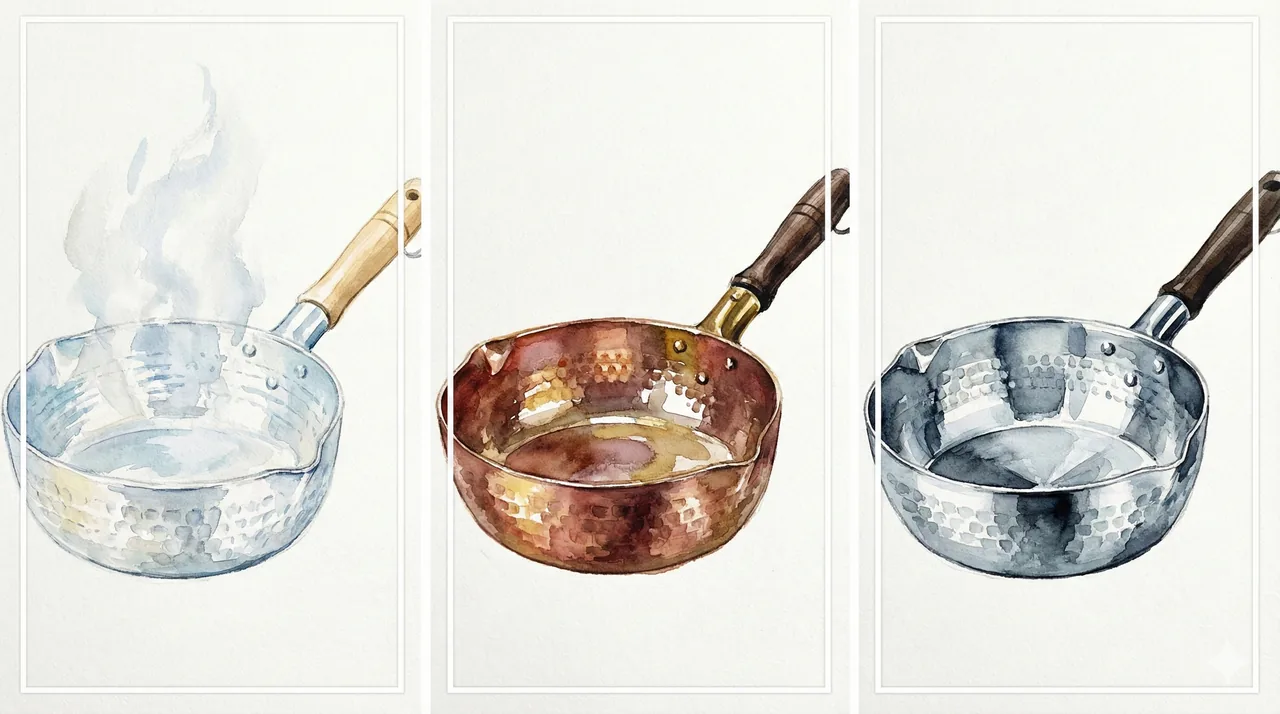
① Aluminum — Light, Fast, and Built to Last
The name yukihira traces back to Ariwara no Yukihira, a Heian-era poet said to have used such a pot to cook salt-grilled seafood for the ama (female divers) of Suma.
Aluminum is the material of choice for professional kitchens. Its thermal conductivity is extraordinary — water boils before you know it. And the hammer-dimple surface (tsuchime) that craftsmen pound into each pot isn't just decorative: it increases surface area for better heat transfer, and more importantly, it work-hardens the soft aluminum alloy — a metallurgical process that dramatically increases the pot's structural strength and resistance to deformation.
Note: standard single-layer aluminum doesn't interact with magnetic fields, so most traditional aluminum yukihira are not IH-compatible.
② Copper — The Professional's Choice for Delicate Cooking
Copper conducts heat even more uniformly than aluminum, and has natural antimicrobial properties.
Even on low heat, the entire pot surface warms evenly — meaning simmered dishes cook gently without breaking apart, and flavors develop with remarkable depth.
The price is higher, but watching a copper pot develop its amber patina over years of use is one of the genuine pleasures of owning quality cookware.
③ Stainless Steel — The Modern IH-Compatible Option
Heat conductivity is lower than aluminum or copper, but stainless steel doesn't rust and retains heat well.
Most importantly, many stainless yukihira models are fully IH-compatible — making this the practical choice for modern kitchens with induction cooktops.
Durable and low-maintenance, stainless is the straightforward option for everyday cooking.
4. Best Japanese-Made Yukihira Nabe: 4 Picks for 2025
From the go-to choice in professional kitchens to IH-compatible options for home cooks, these are the Japanese-made yukihira worth owning.
#1 — Nakao Aluminum (Tokyo) / Hand-Hammered Aluminum Yukihira
The definitive yukihira nabe. The #1 choice in professional Japanese kitchens.
Each pot is hand-hammered by craftsmen — the dimpled tsuchime surface isn't decoration; it increases heat efficiency and structurally strengthens the aluminum through work-hardening. Water boils astonishingly fast. If you can only own one yukihira, start here. (Gas only — not IH-compatible.)
Features: Professional grade, ultra-light, exceptional heat conductivity
#2 — Nakamura Copper Works (Tokyo) / Copper Yukihira Nabe
A copper masterpiece. Simmered dishes taste noticeably better.
From the legendary Tokyo workshop best known for tamagoyaki pans, this copper yukihira is entirely handcrafted — including the interior tin lining, applied by hand. The even heat distribution is in a different class: low and slow simmering produces results that aluminum simply can't replicate. A lifetime tool that develops character with every use.
#3 — Yoshikawa (Niigata) / aikata Stainless Yukihira
The IH answer. A modern yukihira with a pour spout that never drips.
Stainless steel, fully IH-compatible. The pour spout geometry has been engineered to eliminate dripping — tipping this pot over a bowl leaves zero mess. The wooden handle fits comfortably in the hand, and the clean design works beautifully in contemporary kitchens. The practical choice for IH households.
#4 — Ambai / Aluminum × Teak Yukihira Nabe (Koizumi Makoto Design)
Functional beauty taken to its extreme. Aluminum and teak, perfectly paired.
Designed by Makoto Koizumi, this pot deliberately leaves the aluminum interior uncoated — letting the material's natural properties speak for themselves. The handle is water-resistant teak. Beautiful enough to hang in the kitchen as an object. (IH-compatible model also available.)
5. Darkening Is Normal: Caring for Your Yukihira Nabe
Aluminum and copper pots change color with use — and that's not damage, it's the pot maturing.
A few basic techniques keep your yukihira in excellent shape for decades.
Removing Dark Stains from Aluminum
Aluminum can darken on the inside over time — a natural oxidation reaction with water (called kokuhenge, or blackening).
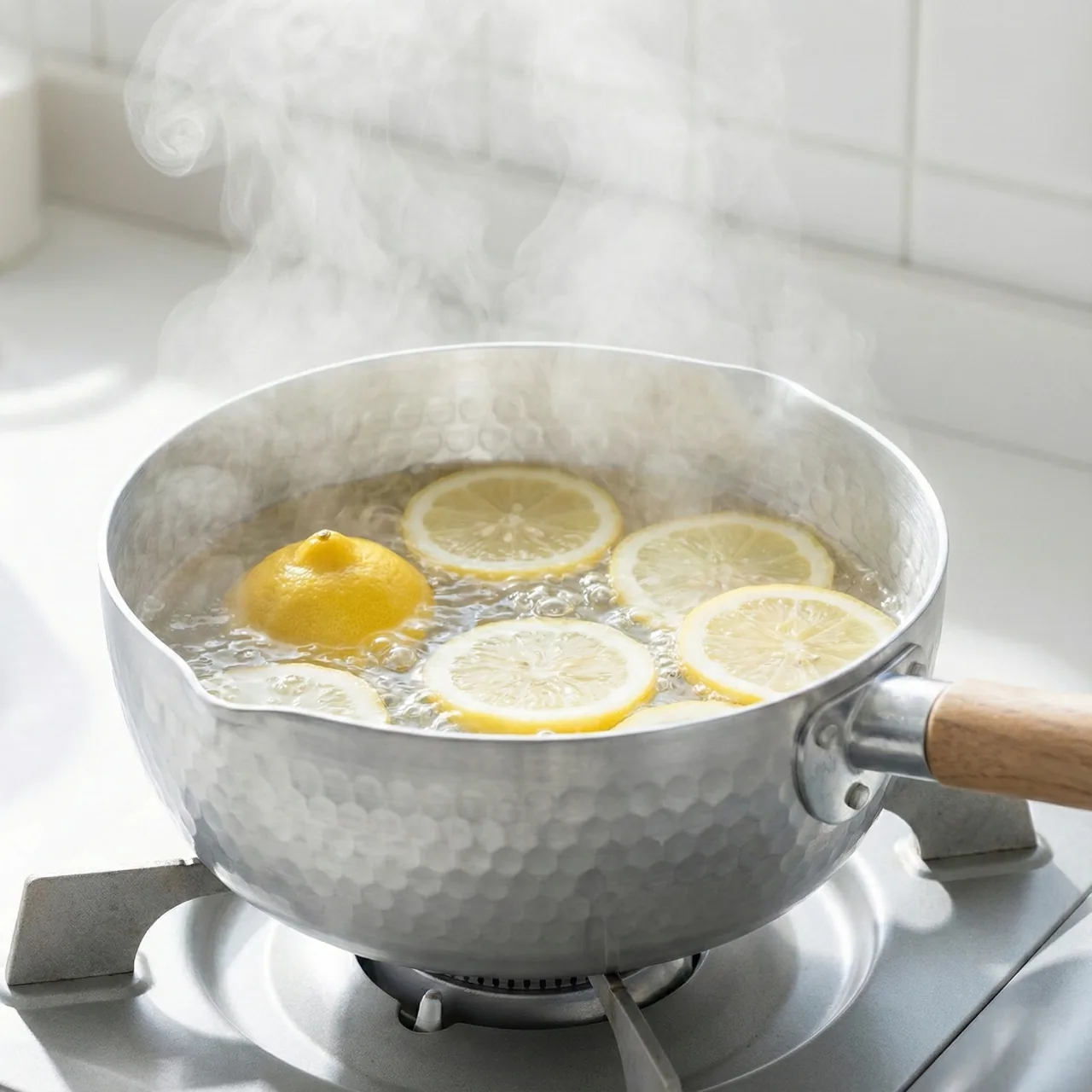
It's harmless, but if the discoloration bothers you, try this: drop in a few lemon slices or apple peels and simmer for 15 minutes.
The mild acid lifts the staining and restores the original brightness without abrasives.
What to Do When Food Scorches
Reach for the steel wool only as a last resort.
First, fill the pot with water, add 1 tablespoon of baking soda, and bring to a boil. Let it cool completely without disturbing it.
The scorched residue loosens and lifts away with a soft sponge — no scrubbing required.
6. Frequently Asked Questions
Can I use it for deep frying?
Technically yes, but with caution. Yukihira pots have a rounded, relatively shallow base — oil temperature fluctuates quickly, and splattering is more likely than with a dedicated tempura pot.
For a small amount of pan-frying or shallow-frying a few pieces at a time, it works fine. For serious deep frying, a dedicated pot with straighter sides is the better tool.
The handle has started to wobble. Does that mean it's time to replace the pot?
Not at all — replace just the handle.
Most yukihira nabe use a wooden handle (moku-e) attached with a screw or nail, and replacement handles are readily available from hardware stores or the manufacturer.
Swapping the handle takes minutes and returns the pot to like-new condition. This replaceability is one of the reasons yukihira nabe are considered lifetime tools.
Is there a first-use ritual I should follow?
For aluminum: simmer rice washing water (the milky water from rinsing rice) or vegetable scraps like daikon leaves on the first use. This creates a thin protective film on the surface that reduces future darkening.
For copper: wash with mild dish soap and begin using immediately. If you'll be cooking with oil, a quick "oil seasoning" — wiping the inside with a thin coat of cooking oil before first use — helps prevent sticking.
Why doesn't a traditional aluminum yukihira work on IH? (The science)
Because IH heating relies on electrical resistance, and aluminum doesn't provide it.
Induction cooktops work by generating a magnetic field through a coil; when that field passes through a ferromagnetic metal (like iron or certain stainless steels), the resistance creates heat within the metal itself. Aluminum and copper are non-magnetic — the field passes straight through them without generating resistance, so the pot stays cold. IH-compatible yukihira models solve this by bonding a layer of iron or magnetic stainless steel to the base.
Green patina appeared on my copper pot. Is it toxic?
Completely safe. Using the pot as-is poses no health risk.
The idea that verdigris (rokusho) is poisonous was a widespread myth in Japan for generations — but in 1984, Japan's Ministry of Health officially confirmed through long-term research that copper patina is harmless. If the appearance bothers you, mix equal parts vinegar and salt, apply with a sponge, and rub. The chemical reaction removes the green in seconds and restores the copper's shine.
Where can I buy a replacement wooden handle?
Large hardware stores, the manufacturer's online shop, or Amazon — typically for a few hundred yen.
Handle sizes are fairly standardized across most yukihira nabe. Remove the old handle by extracting the screw or pin, tap the new handle firmly into place, and re-secure it. The whole job takes under five minutes and leaves you with what feels like a brand-new pot.
7. Final Thoughts: The Right Tool Makes Food Taste Better
A yukihira nabe isn't just a pot — it's the tool that sharpens your cooking.
Tomorrow morning, heat water in a new yukihira and take the time to make dashi properly.
The aroma that rises, the depth in the miso soup that follows — you'll notice the difference immediately.
And when that bowl of soup arrives at the table, serve it in a bowl worth drinking from.

Nanbu Tekki Cast Iron: How to Choose & 5 Best Japanese Brands
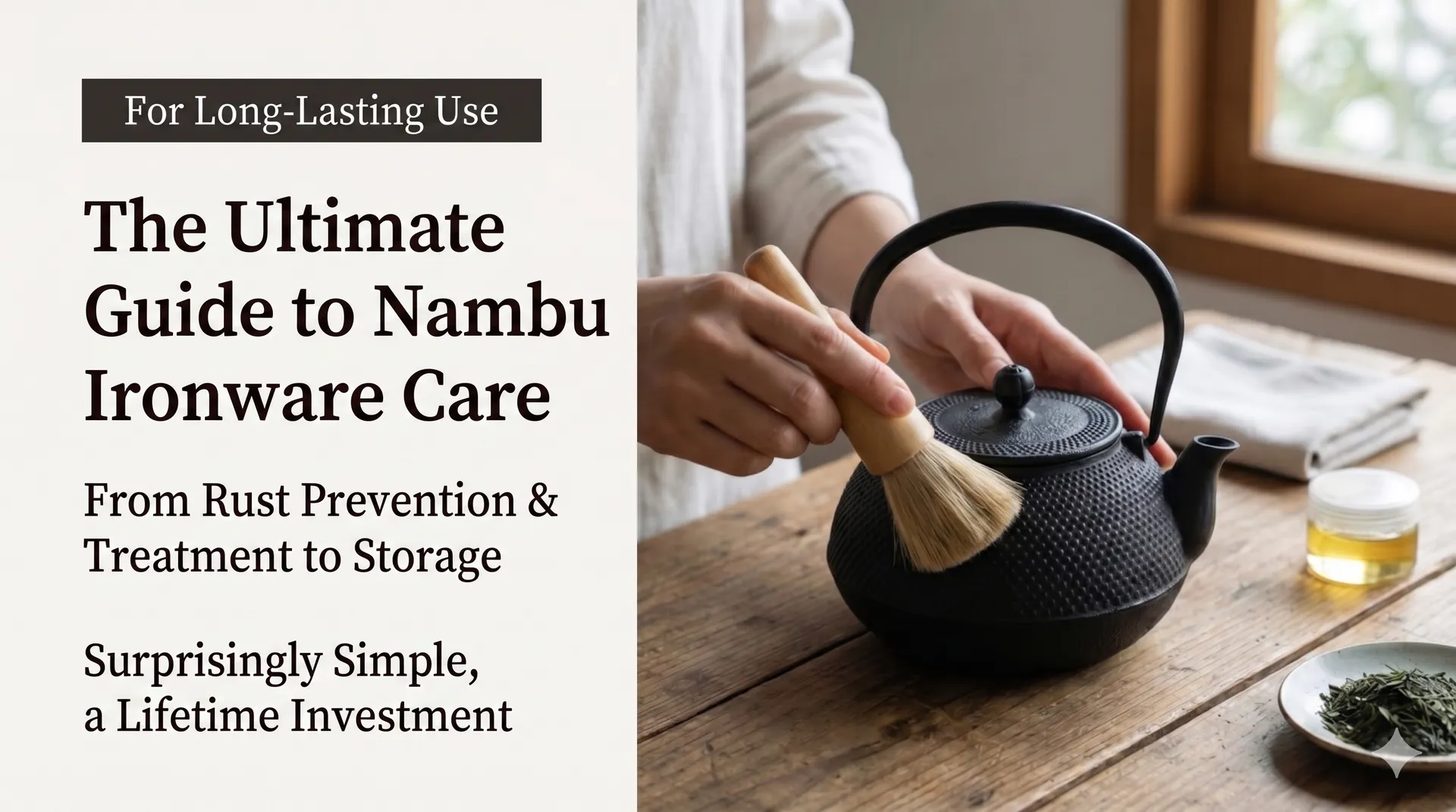
Tetsubin Care Guide: Rust Removal & Long-Term Maintenance