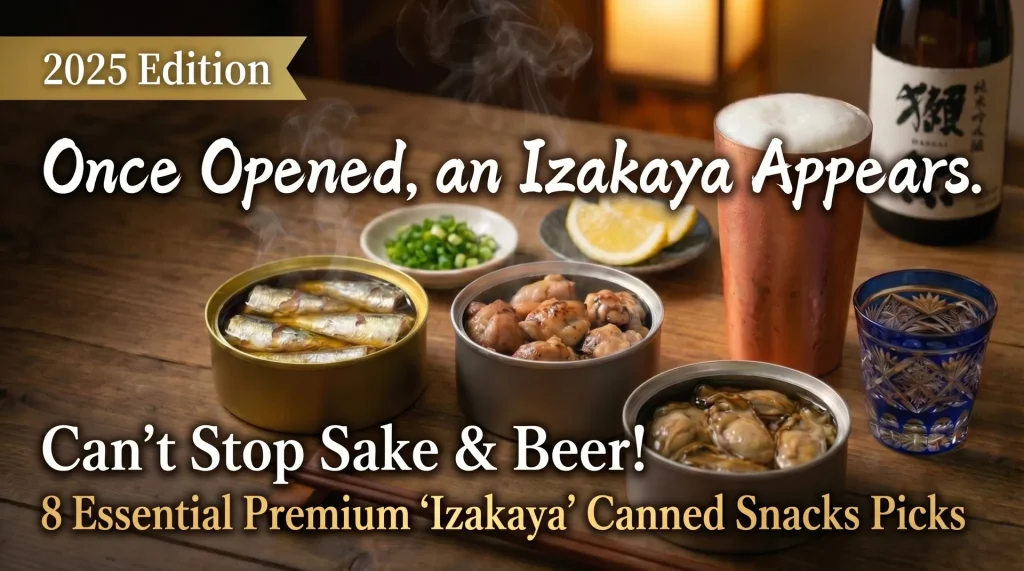
After work, the sound of a can opening. If you're reaching for a bag of chips to go with that drink, there's a better option you haven't tried yet.
Today's premium Japanese canned foods are not preservation foods. They are small-format luxury dishes — a chef's recipe sealed inside a can.
Pop it open and you're already at a private izakaya. No prep, no cleanup.
This guide covers the best Japanese premium tsumami (drinking snacks) in canned form — selected for sake, shochu, beer, and wine drinkers alike. Pour your drink and read on.
Quick Reference: Premium Canned Food by Type
| Type | Representative Products | Price Range | Best Drink Pairing |
|---|---|---|---|
| Seafood (mackerel, sardine) | Amanohashidate oil sardines, Tamuracho mackerel | ¥600–¥1,500 | Sake, shochu — Japanese umami flavors |
| Oyster, scallop | Hiroshima smoked oyster, Hokkaido scallop | ¥800–¥2,000 | Wine or sake — refined, luxurious |
| Meat, chicken | Hotei premium charcoal yakitori | ¥400–¥1,200 | Beer, highball — savory, smoky |
| Vegetables, ajillo | Hokkaido ajillo series, Kantsuma | ¥500–¥1,500 | Wine, whisky — bar-style Western flavors |
1. Sake & Shochu Pairings: 3 Japanese-Style Picks
First, the Japanese-style canned foods — made with traditional techniques and flavored with dashi and soy sauce, the kind that pair naturally with warm sake or shochu on the rocks.
Restaurant-grade from the can — Takenaka Kanzume's Amanohashidate Oil Sardines
Takenaka Kanzume / Amanohashidate Oil Sardines
A legendary canned product from the Tango Peninsula in Kyoto. Fresh Japanese sea sardines from the Sea of Japan, preserved in their own oil using techniques that have stayed unchanged for generations — the result is a beautiful golden oil and sardines with no trace of fishiness.
Excellent straight from the can, but add a drop of soy sauce and warm it slightly, and it becomes the kind of amuse-bouche you'd pay for at a kaiseki restaurant.
The charcoal difference — Hotei Foods Premium Yakitori
Hotei Foods / Yakitori (Premium Line)
Hotei is synonymous with canned yakitori in Japan — but most people haven't tried the premium line. Only domestic chicken, more pronounced charcoal aroma, a richer tare glaze. The quality gap over the standard version is immediately obvious.
Add a dash of shichimi togarashi (seven-spice chili), and you're at a proper yakitori stand. A can that genuinely earns its place next to a cold beer or glass of shochu.
200 years of craft — Tamuracho's Fukui Mackerel in Soy
Tamuracho / Mackerel in Soy Sauce
Tamuracho, based in Obama City, Fukui Prefecture, has been canning fish for over 200 years. Fat-rich mackerel simmered in a proprietary soy-based broth so generous that it pools at the bottom of the can.
That broth at the bottom is the point. The concentrated umami from the mackerel — word is you could drink a full go of sake on that broth alone. Not subtle. Exactly right for a serious drink.
2. Beer & Wine Pairings: 2 Western-Style Picks
For baguette and crackers nights — the bar-style canned foods that work with European drinks.
The category-defining series — K&K Kantsuma
Kokubu Group / K&K Kantsuma
The series that started Japan's premium canned food movement. Over 100 SKUs in the lineup, but the standouts are the thick-cut bacon in honey mustard and the Hiroshima smoked oysters in oil. The ingredient size and seasoning quality are in a different league from convenience store snacks.
Wine, highball, whatever you're pouring — Kantsuma works.
Hokkaido ingredients, Spanish technique — Hokuto's Ajillo Series
Hokuto / Hokkaido Ajillo Series
Hokuto, a Hokkaido seafood processor, makes an ajillo series using distinctly local ingredients — kinmedai (golden eye snapper), whale, and octopus — simmered in garlic oil.
Transfer to a skillet, heat through, drag baguette through the remaining oil. That's the whole move, and it takes three minutes. Everything happens in the can.
3. Pro Techniques: Two Ways to Make a Can Twice as Good
Premium canned food is already good straight from the can — but two small moves push it noticeably further.
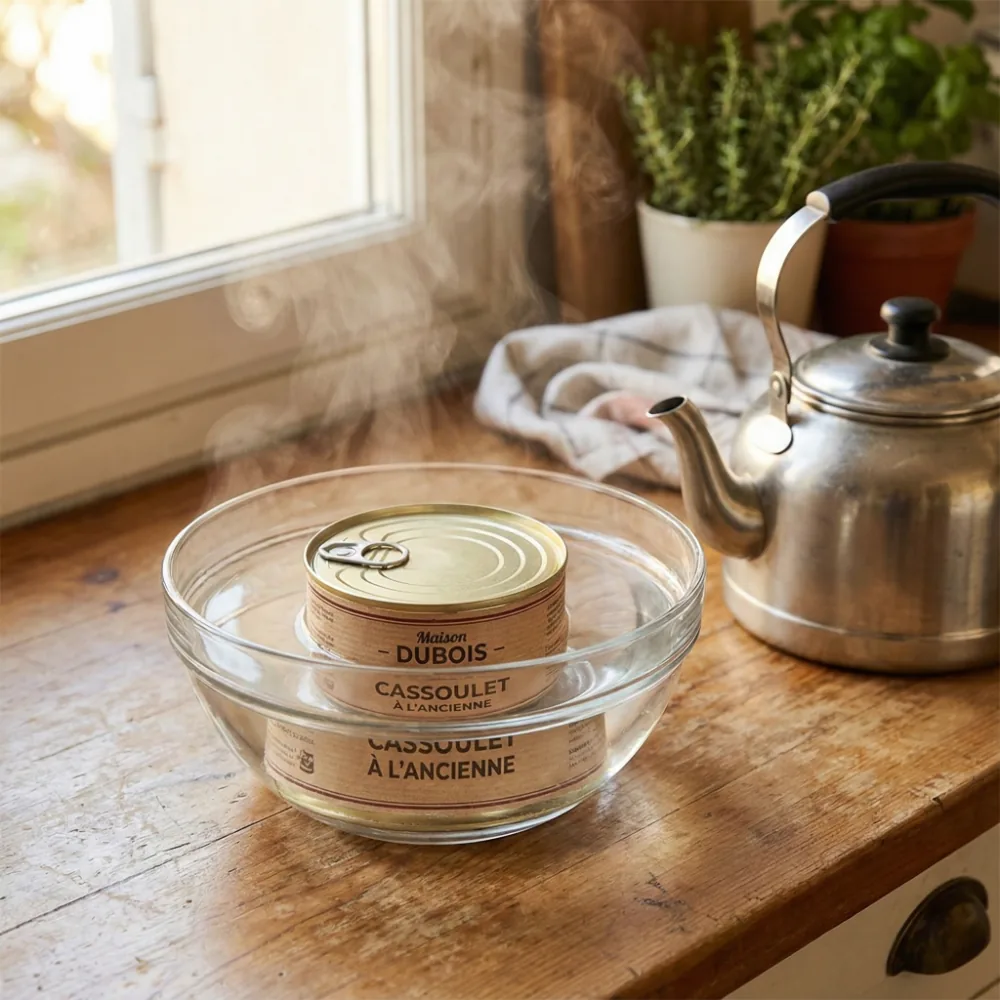
Technique 1: Warm the can in hot water before opening
This is the most important one. The fat in meat and fish solidifies at room temperature — you're eating congealed fat, not fluid fat.
Five minutes before opening, submerge the sealed can in a bowl of hot water. The fat liquefies, the aroma releases, and the texture becomes entirely different. This alone moves the quality up two levels.
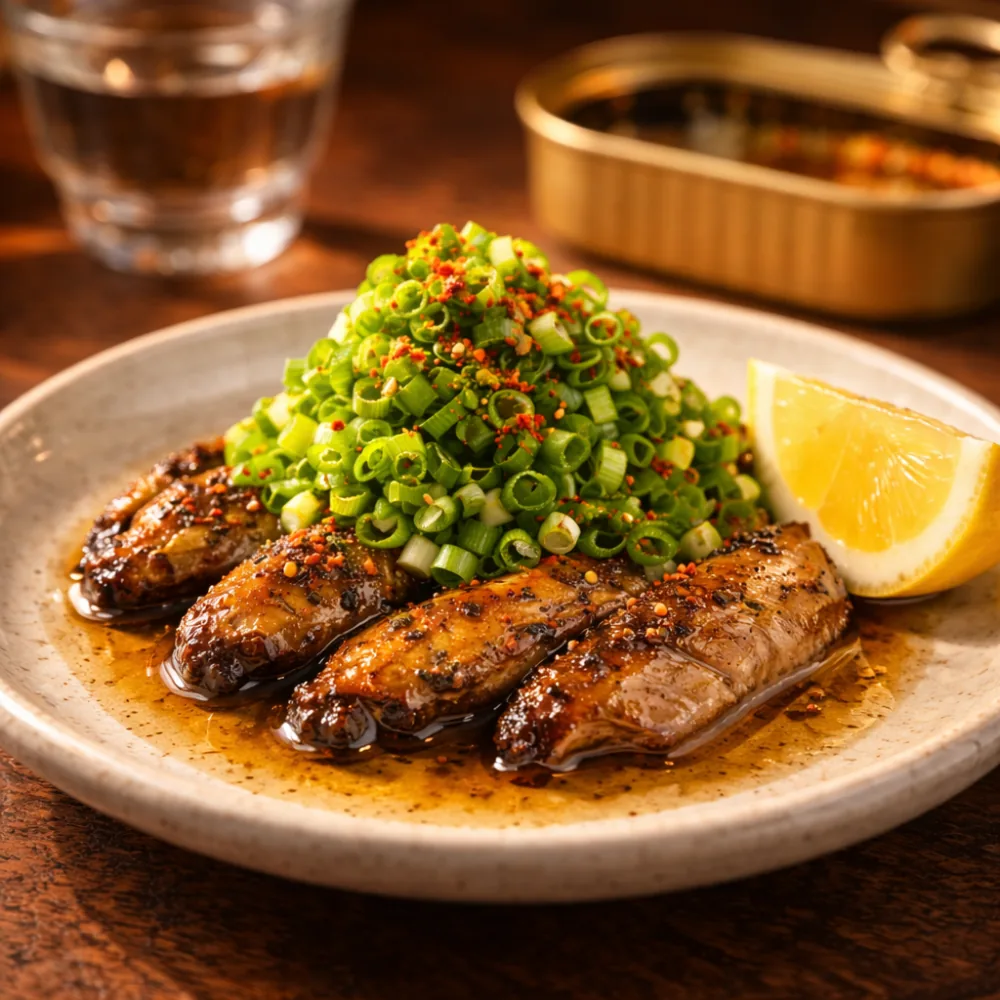
Technique 2: Add garnishes generously
Rich, concentrated flavors need something fresh against them.
Green onion, shichimi chili, lemon juice, black pepper.
Use more than feels right — the point where it "looks like too much" is about right. Color brightens, the convenience-food impression disappears, and it photographs well.
4. Frequently Asked Questions
Can I heat the can directly on a flame or in the microwave?
Both are strictly off-limits.
Direct heat can dissolve the interior coating of the can. A microwave will arc and spark. Always warm via the hot-water method (submerge the sealed can) or transfer contents to a heat-safe container before microwaving.
How long does it keep after opening?
The moment a can is opened, it starts to degrade. To prevent a metallic taste from developing, always transfer any leftovers to a glass or plastic container, refrigerate, and finish within 2 days.
Is it safe to eat after the best-by date?
Canned goods have extremely long shelf lives, and the best-by date is a flavor guideline, not a safety cutoff. The flavor may have declined past that date, but the food won't be dangerous unless the can is swollen or has a foul odor — in which case, don't eat it.
Are premium canned foods well-received as gifts?
Very much so. They store at room temperature, which means no refrigeration inconvenience for the recipient. They work equally well for drinking friends, solo-living adults, and dual-income households who appreciate a quality treat without having to cook it.
Multi-variety assortment sets are widely available and make a natural gift for ochugen, oseibo, or Father's Day.
Which canned food pairs with which drink?
As a general rule: sake and shochu go with seafood-based cans (mackerel, oil sardines, oysters). The fat and umami mirror the savory depth of Japanese spirits.
Beer and highball pair with charcoal chicken and spiced meat. Wine pairs with oil-preserved items, ajillo, and smoked seafood. Match the flavor base of the drink with the flavor base of the can.
5. The Right Glassware for the Right Drink
The food is taken care of — now consider the vessel.
The difference between drinking beer from a can and drinking it from a proper thin-walled glass or copper tumbler is not subtle: the temperature holds differently, the foam behaves differently, and the first sip is noticeably better.
Match the quality of the food with the quality of what you're drinking from.
6. Final Thoughts: Stock These, and Nothing Nights Become Something
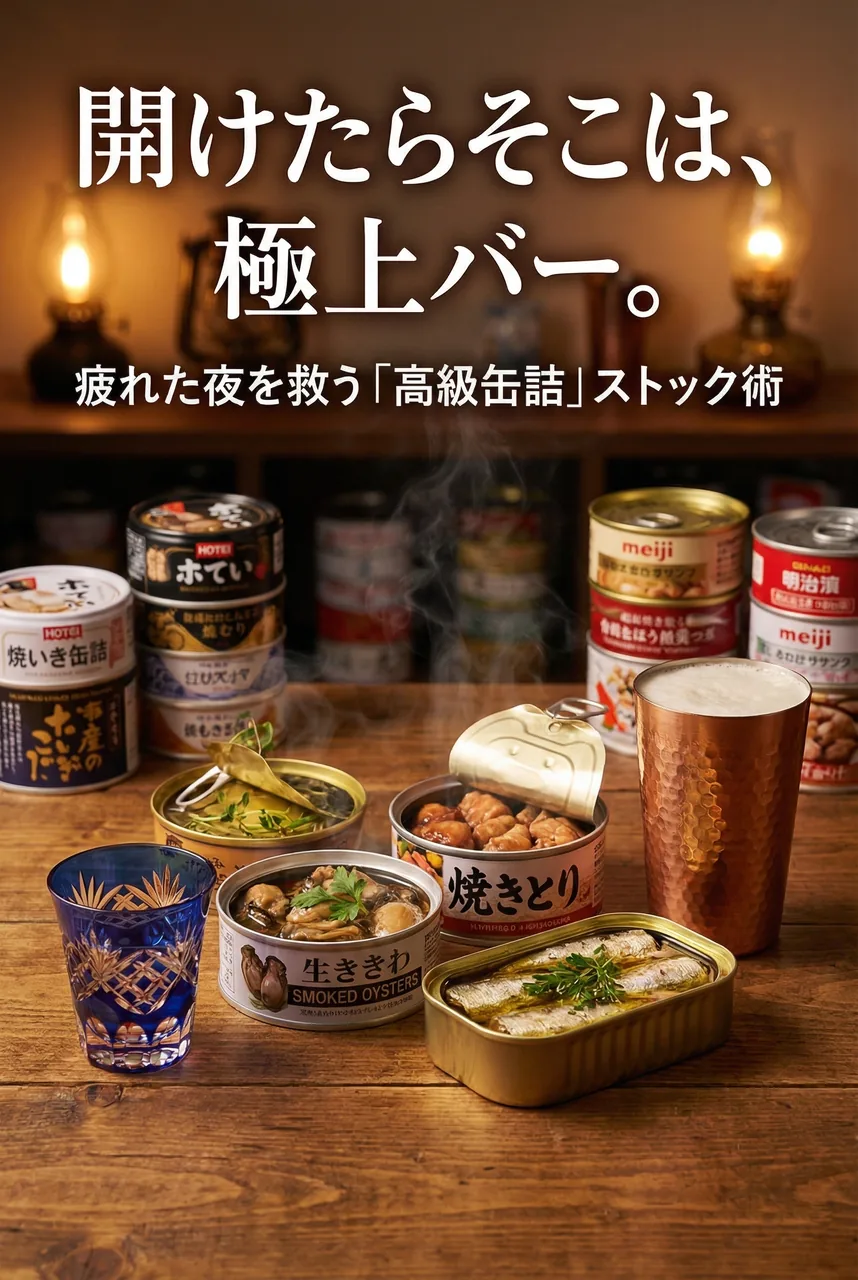
"Too tired to cook anything tonight." Those are exactly the nights these cans exist for.
Warm one in hot water. Pour whatever's open. Five minutes, no dishes beyond a plate.
Start with three that sound interesting and keep them in the cupboard. Knowing they're there makes the end of a long day something to look forward to.