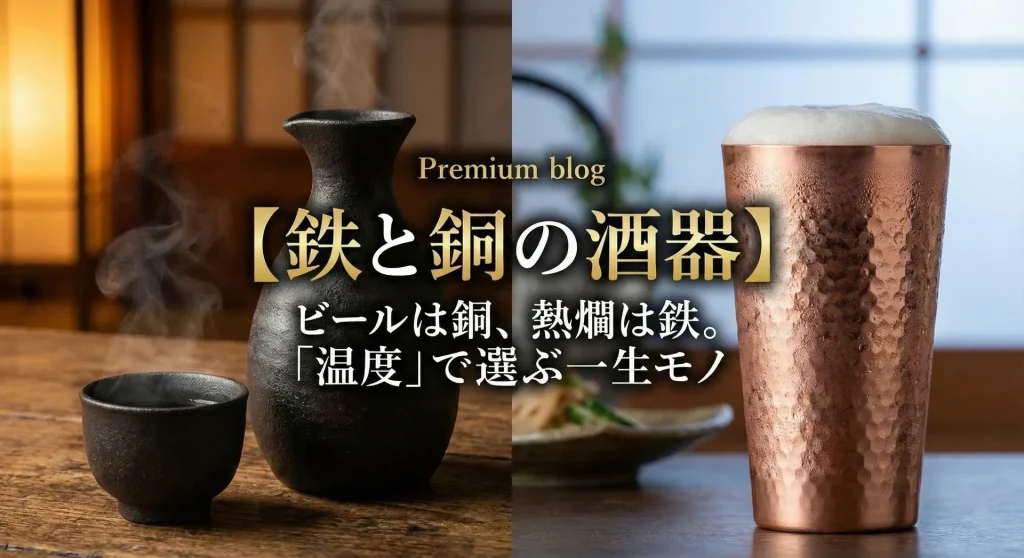
For hot sake: iron. For cold beer: copper.
Japanese drinkers have used this principle for centuries — matching the vessel material to the drink's temperature
to optimize flavor, sensation, and the ritual of drinking.
This guide covers two of Japan's most storied metal crafts: Nambu Tekki iron from Iwate Prefecture
and Takaoka copper from Toyama — explaining why each metal works the way it does and which specific
products are worth owning.
Quick Comparison: Iron vs Copper (and other metals)
| Material | Cold / Hot | Weight | Care | Price range |
|---|---|---|---|---|
| Copper (銅) | ◎ Cold (extremely fast chill) | Medium | Hand-wash; dry immediately | $40–$160 |
| Iron / Nambu tekki (鉄) | ◎ Hot (exceptional heat retention) | Heavy | Hand-wash; dry immediately; no soap on interior | $60–$300 |
| Tin (錫) | ○ Cold (ionic softening effect) | Medium | Hand-wash; no boiling water | $60–$180 |
| Titanium (チタン) | ◎ Both (vacuum double-wall) | Very light | Dishwasher-safe | $80–$250 |
Iron vs Copper: Which to Choose?
| Factor | Nambu Tekki Iron (南部鉄器) | Takaoka Copper (高岡銅器) |
|---|---|---|
| Thermal conductivity | Low — holds heat in, doesn't release it quickly | Very high — cools to drink temperature almost instantly |
| Ideal temperature | Hot sake, warmed sake (kanzake, nurukan) | Cold sake, beer, iced drinks |
| Effect on taste | Keeps sake at peak temperature longer; adds rustic depth | Intensifies coldness; antimicrobial properties; creamy foam |
| Best drinks | Hot sake, shochu oyuwari (hot water), hot tea | Beer, cold sake, highball, iced coffee |
Takaoka Copper: Why Beer Tastes Better
Takaoka, Toyama Prefecture — the same city that produces NOUSAKU tin — has been Japan's copper casting center for over 400 years. Copper from Takaoka supplies everything from Buddhist temple bells to kitchenware to drinkware.
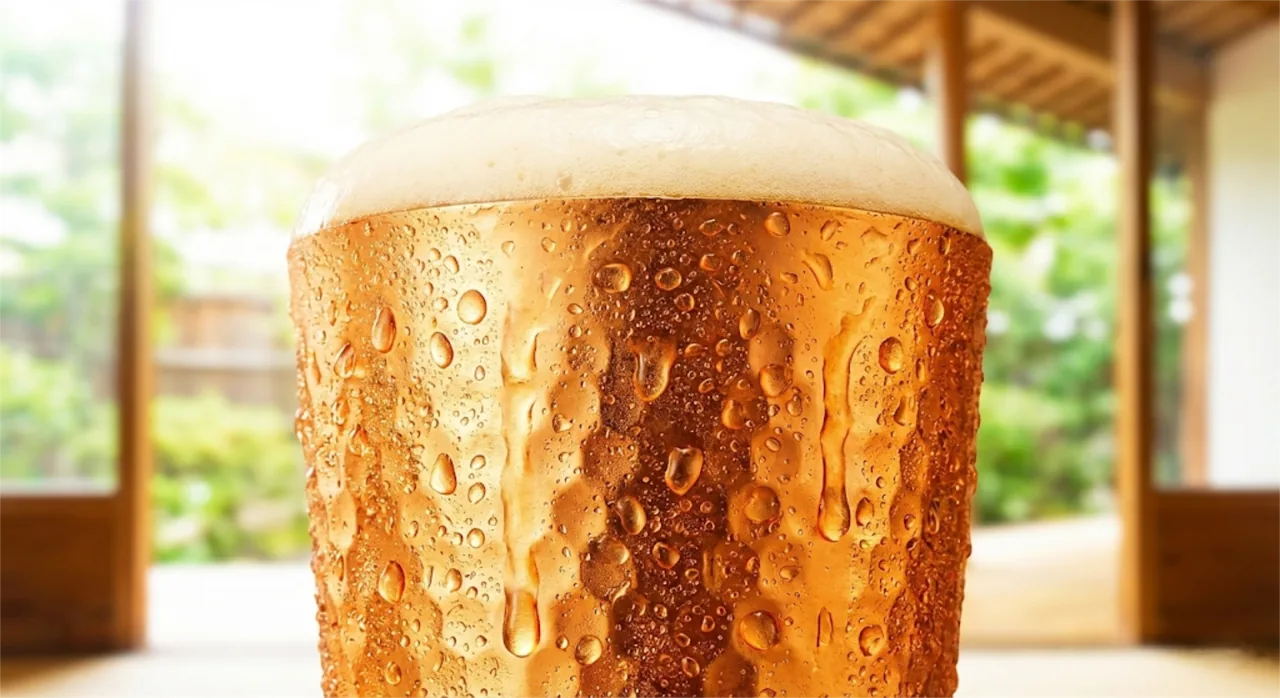
Three Reasons Copper Makes Beer Better
- Extreme thermal conductivity: Copper conducts heat approximately 25× faster than stainless steel and 2× faster than aluminum. Pour cold beer in and the outer surface of the cup reaches nearly the same temperature within seconds — your lips touch cold metal, not air-temperature glass or stainless.
- The nashiji foam effect: Many Japanese copper tumblers have a micro-textured interior surface (called nashiji — "pear skin") created by fine hammer work. This roughness provides more nucleation sites for CO₂ bubbles, producing a finer, creamier foam head than a smooth-interior vessel can.
- Antimicrobial properties: Copper has been recognized as an antimicrobial surface — "water stored in a copper vessel doesn't go bad" is a traditional Japanese saying that has scientific backing. Copper ions inhibit bacterial growth, keeping the drink microbiologically clean.
Nambu Tekki Iron: The Vessel That Keeps Sake Warm
Nambu Tekki (南部鉄器) from Iwate Prefecture is Japan's most internationally recognized ironware tradition. The heavy, dark vessels are immediately distinctive — and they work through straightforward physics.
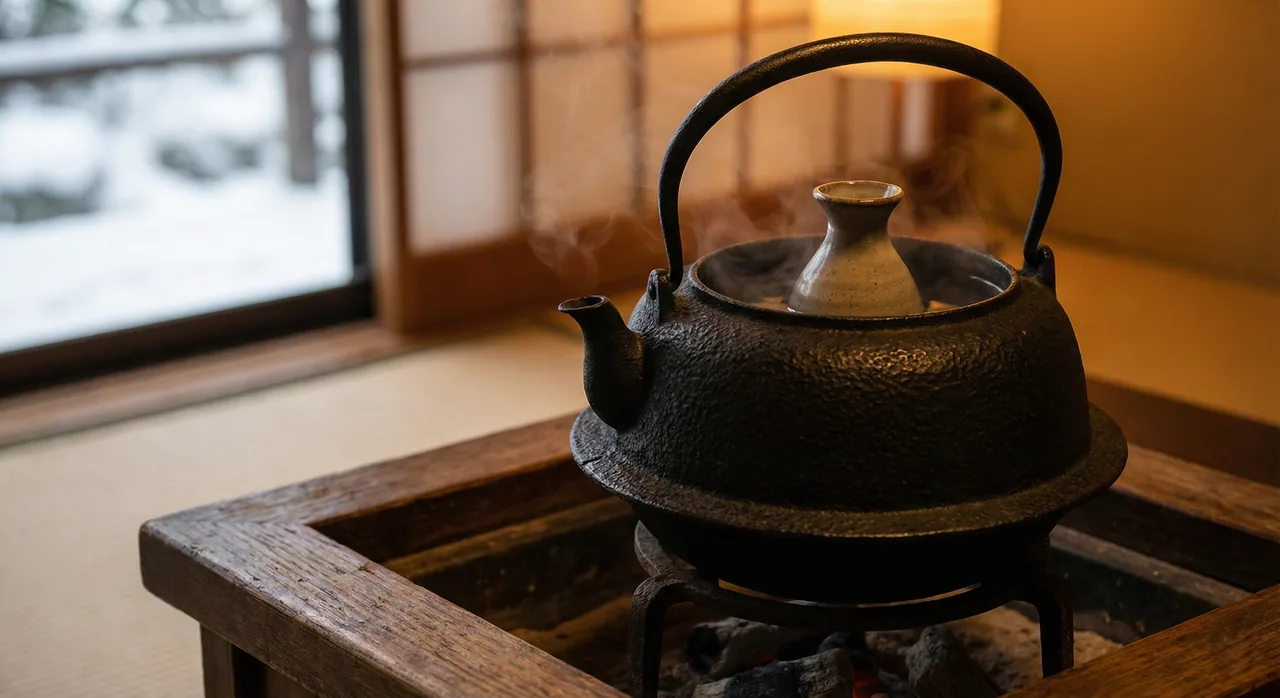
Heat Retention — Iron's Core Property
Iron has a high specific heat capacity — it takes a lot of energy to change its temperature, in either direction.
Once a cast iron tokkuri or sake cup is warmed with hot water before use, it maintains that heat for an
exceptionally long time.
This means kanzake poured into a preheated iron cup stays at ideal drinking temperature through a long
conversation — not just the first sip.
The Tetsubin Tabletop Method
The most refined use of Nambu Tekki iron in sake culture is the tetsubin yūsen method — warming sake in a
chirori (metal sake warmer) placed inside an iron kettle of hot water on the table.
The iron kettle retains heat for a very long time, creating a stable, consistent warming environment. Rather than
warming sake once in a microwave or stove, this method keeps a steady supply of perfectly warmed sake throughout
the evening — with the bonus that a tetsubin simmering on the table creates an atmosphere that nothing else
replicates.
Care and Maintenance
Copper Care
- Hand-wash only — dishwashers cause oxidation and discoloration.
- Dry immediately — water left on copper causes green patina (verdigris). This is natural but undesirable on drinkware; wipe dry after every wash.
- No acidic drinks for extended periods — don't leave acidic liquids (citrus drinks, vinegar) in copper for hours. Brief contact is fine.
- Patina on the outside is normal and beautiful — the amber-to-brown aging of copper is called wabi in Japanese aesthetics and is considered part of the vessel's character.
Nambu Tekki Care
- No soap on the interior — iron kettles and interior surfaces are treated with heat to create a rust-inhibiting layer; soap breaks this down. Rinse the interior with hot water only.
- Dry completely after use — the #1 enemy of iron is moisture. Always dry fully before storing.
- A little surface rust is not the end — light surface rust can be removed with a soft brush and boiling water; repeat until the water runs clear. Re-season the interior by boiling water several times.
- Never put in dishwasher — the extreme moisture environment will cause severe rust.
Recommended Brands
Copper: Asahi (食楽工房 Shokuraku Kobo) — Tsubame-Sanjo, Niigata
While extremely high-end hammered copperware can be hard to find internationally, Asahi's Shokuraku Kobo line
represents the absolute best of Tsubame-Sanjo's world-renowned metal polishing industry. Their pure copper
tumblers are highly functional and widely available.
The interior of their beer tumblers often features special polishing or plating that creates the perfect amount of
surface friction to generate a remarkably creamy foam head when pouring beer.
- Region
- Tsubame-Sanjo, Niigata Prefecture
- Best for
- Beer foam enhancement, iced coffee, cold sake
- Price range
- $30–$80 per piece
Iron: Iwachu (岩鋳) — Nambu Tekki, Iwate
Iwachu, founded in 1902 in Morioka, Iwate Prefecture, is arguably the most globally recognized producer of
authentic Nambu Tekki ironware. They make everything from heavy tetsubin kettles to delicately crafted sake
tokkuri sets.
For sake enthusiasts, an Iwachu iron sake carafe (pre-warmed with hot water) and matching guinomi cups will
transform your hot sake experience, keeping your kanzake warm far longer than ceramics or glass.
- Tradition
- Nambu Tekki (designated Traditional Craft)
- Made in
- Morioka, Iwate Prefecture
- Best for
- Hot sake, tea ritual, exceptional heat retention
- Price range
- $50–$200 per piece
Pure Copper Mugs (Moscow Mule Style) — Tsubame-Sanjo
If you want the immediate chilling effect of pure copper for cocktails like the Moscow Mule or for iced highballs,
there are many accessible pure copper mugs produced in the Tsubame-Sanjo region of Japan.
Unlike mass-produced imports, genuine Japanese versions often feature safe tin plating on the interior so the
copper doesn't react with acidic ingredients (like lime juice), making them entirely food-safe while preserving
the rapid cold-retention exterior.
- Material
- Pure copper exterior, typically tin-lined interior
- Made in
- Tsubame-Sanjo, Niigata (various producers)
- Best for
- Moscow Mule, cold cocktails, iced highball
- Price range
- $25–$60 per piece
FAQ
Is drinking from copper safe?
Yes, with two caveats. Pure copper is safe for most beverages — it's been used as a cooking and drinking vessel
for thousands of years globally.
The caveats: (1) Don't leave highly acidic drinks (undiluted lemon juice, vinegar) in contact with unlined copper
for extended periods — acid leaches more copper ions than is ideal. (2) Avoid using copper with alcohol content
above ~40% for extended soaking.
For beer, sake, and most spirits served in the moment, copper is safe and traditional. Many Japanese producers
line the interior with lacquer (urushi) or tin for an additional safety margin.
Does Nambu Tekki iron really affect sake taste?
The primary effect of iron on sake is through temperature, not ionic chemistry (unlike tin). Hot sake held in an
iron vessel stays hot longer, which maintains the sake at its optimal serving temperature — and temperature is one
of the biggest variables in how sake tastes.
Some sake drinkers also report that iron gives hot sake a subtle earthiness or mineral quality — this is
subjective and depends on the sake style and the specific vessel.
Can I heat sake directly in a Nambu Tekki tokkuri?
Yes — that's the traditional method. Place the iron tokkuri directly in a pot of simmering water (yūsen method) or
use a tetsubin iron kettle as the heat source. Do not use a microwave (iron in microwave = sparking hazard).
Heat the vessel itself with hot water first before filling with sake — the preheated iron will maintain
temperature dramatically longer.
How do I prevent copper from turning green (verdigris)?
Green patina (verdigris) on copper drinkware forms when copper reacts with oxygen and moisture over time. It is
not harmful on the exterior but should not be inside the vessel where it contacts drinks.
Prevention is simple: dry the vessel completely after every wash. A quick wipe with a dry cloth immediately after
washing prevents almost all verdigris formation. If it appears on the exterior, a mixture of salt and white
vinegar will remove it — then dry immediately afterward.
Which is better as a gift — copper or iron?
It depends on the recipient's drinking habits:
— Beer drinker or cold sake fan: copper tumbler — the thermal effect is immediately obvious and
impressive.
— Hot sake drinker or tea drinker: Nambu Tekki iron — particularly a tokkuri and cup set, which
makes the ideal winter sake setup.
Both materials require hand-washing and careful drying — worth mentioning in a gift note so the recipient
understands the care requirement from the start.
Can I use copper or iron tumblers for drinks other than sake and beer?
Absolutely. Copper's rapid-chill property makes it excellent for iced coffee, cold brew, Moscow Mules (gin/vodka with ginger beer — a drink traditionally served in copper mugs), and any cold cocktail. Iron's heat retention works for hot tea, warm cider, or any hot drink you want to keep warm at the table.
Summary
- Copper (Tsubame-Sanjo / Takaoka): the cold-drink specialist — instant chill, creamy foam, antimicrobial. Best for beer, cold sake, iced drinks. Asahi (Shokuraku Kobo) represents pure copper excellence; Tsubame-Sanjo and Takaoka offer accessible, high-quality copperware.
- Iron (Nambu Tekki): the hot-drink specialist — unmatched heat retention for kanzake and hot sake. Iwachu provides the global standard for the traditional tetsubin method.
- Both require hand-washing and immediate drying — the care is simple but non-negotiable.
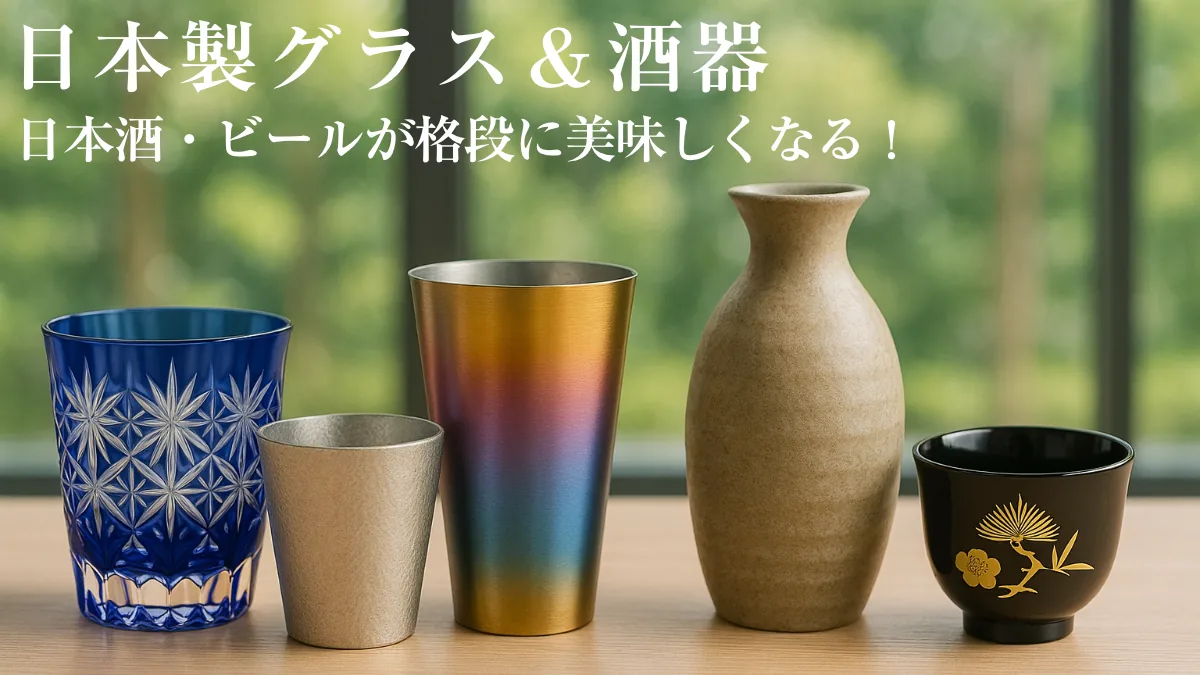
Japanese Metal Tumblers: Tin vs Titanium Ranked
Japanese Sake Vessels: Guinomi, Ochoko, Tokkuri & More