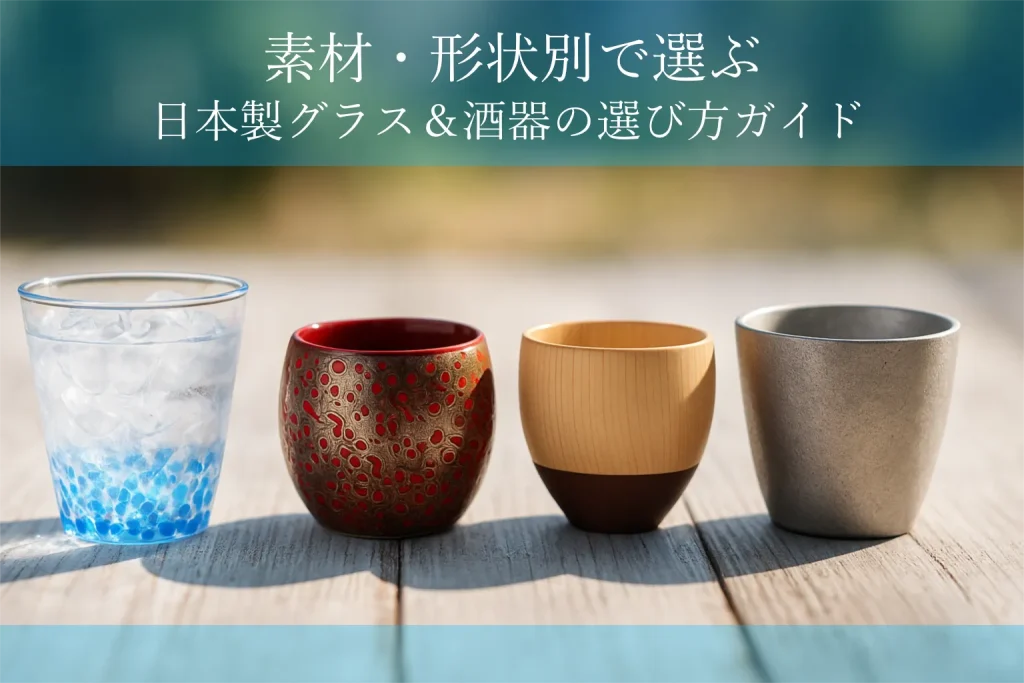
The same sake poured into a tin cup, a crystal glass, and a pottery guinomi tastes noticeably different — and that's not your imagination.
The material of a drinkware vessel directly affects temperature, mouthfeel, aroma, and taste.
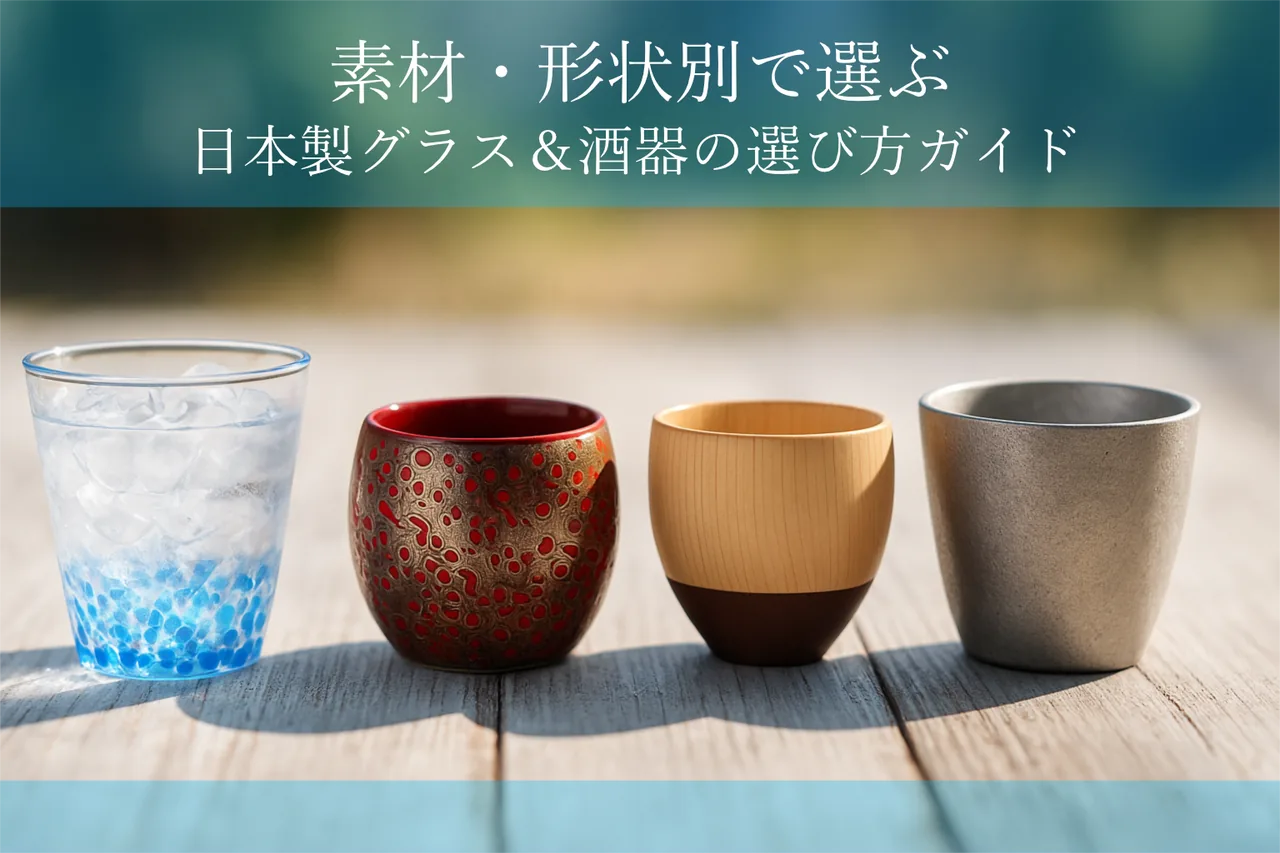
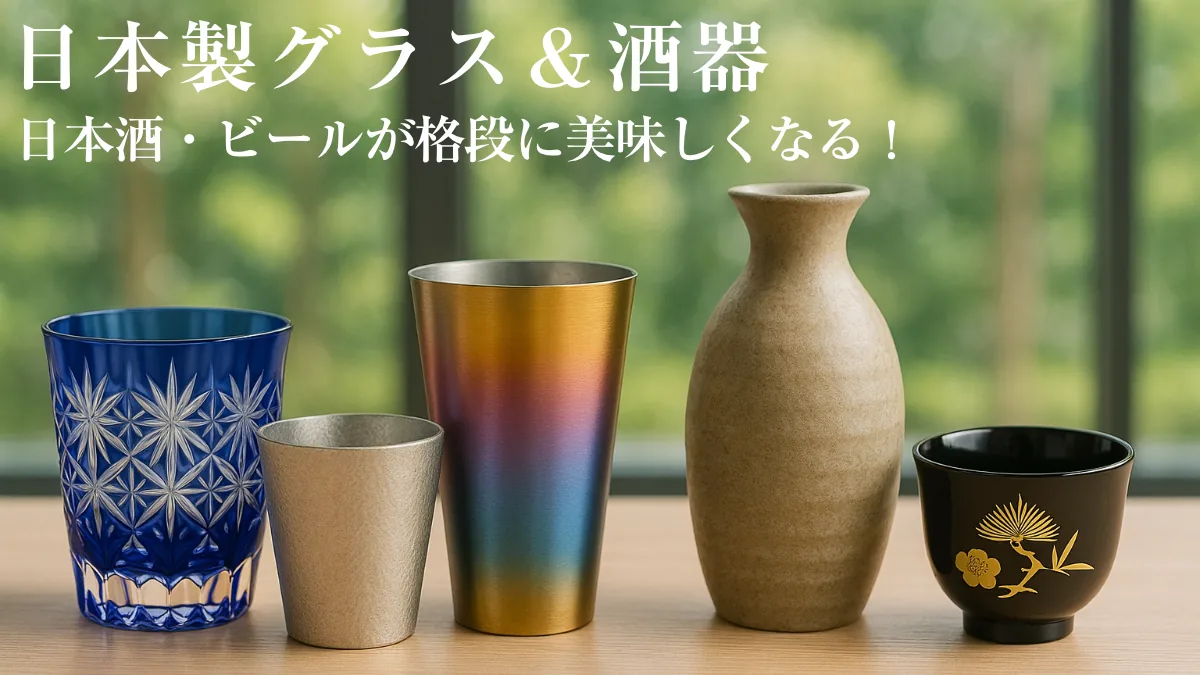
Japanese craftspeople have refined this understanding over centuries, producing drinkware in glass, tin, titanium, copper, ceramics, and lacquer — each engineered to elevate a specific drink.
This guide breaks down the science and the tradition, so you can pick the right material for what you love to drink.
Quick Comparison: Japanese Drinkware Materials
| Material | Clarity | Weight | Durability | Best For |
|---|---|---|---|---|
| Soda-lime glass | High | Medium | Medium | Everyday use, beer, water |
| Crystal glass | Exceptional (sparkle) | Slightly heavy | Lower (chips easily) | Whisky, sake, gifting |
| Heat-resistant glass | High | Medium | High (thermal-safe) | Hot drinks, warmed sake, microwave use |
| Tin (suzu) | Opaque | Medium | High | Cold sake, beer, chilled cocktails |
| Titanium | Opaque | Very light | Excellent | Beer, highball, outdoor use |
| Ceramics / pottery | Opaque | Heavy | High | Hot sake (kanzake), shochu |
| Lacquerware (urushi) | Opaque | Very light | Medium (hand-wash only) | Ceremonial sake, hot sake |
Why Material Changes the Taste: The Science
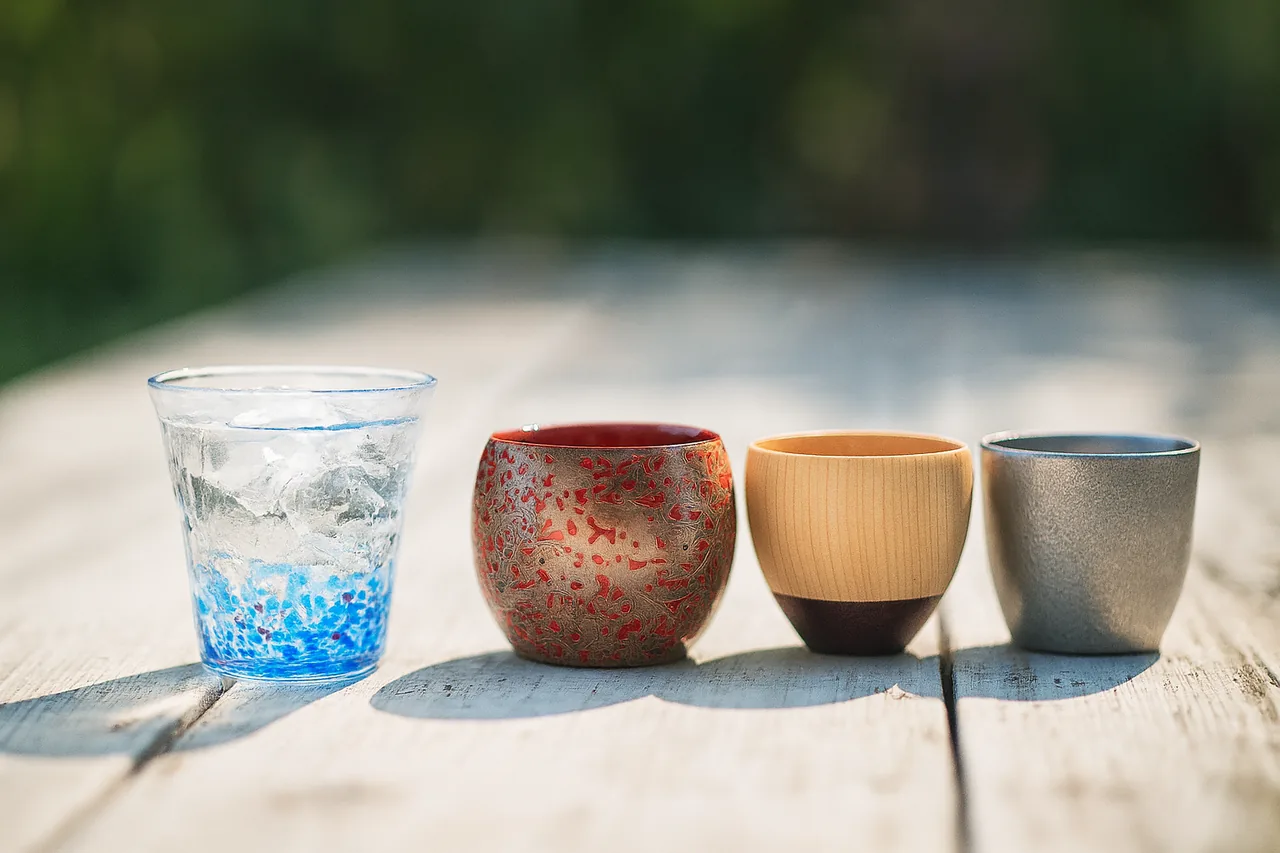
Three physical properties determine how a vessel changes the drinking experience:
1. Thermal Conductivity — How Fast the Vessel Gets Cold (or Stays Warm)
Tin and copper have very high thermal conductivity. The moment you pour cold sake in, the entire vessel chills almost instantly — delivering an intense, clean coldness directly to your lips.
Ceramics and lacquerware, by contrast, have very low conductivity. Heat-resistant pottery can hold warm sake for a surprisingly long time, and the outside stays comfortable to hold.
2. Rim Thickness — The Mouthfeel Factor
The thinner the rim, the more liquid flows smoothly onto the palate without interruption. Shotoku Glass's usuhari (thin-blown) glasses push this to the extreme at 0.9mm — the rim virtually disappears, making delicate ginjo sake or craft beer feel different than from any other vessel.
A thick ceramic rim, on the other hand, slows the pour slightly and softens the taste.
3. Opening Shape — How Aroma Reaches Your Nose
A tulip shape with a narrowing opening concentrates fragrance inside the bowl — ideal for aromatic whisky or daiginjo sake.
A wide-mouth flare releases aroma immediately and broadly — great for ale-style craft beer or robust sake.
Four Key Materials Explained
1. Glass — Clarity and Precision
- Soda-lime glass is affordable and versatile — the workhorse of everyday glassware.
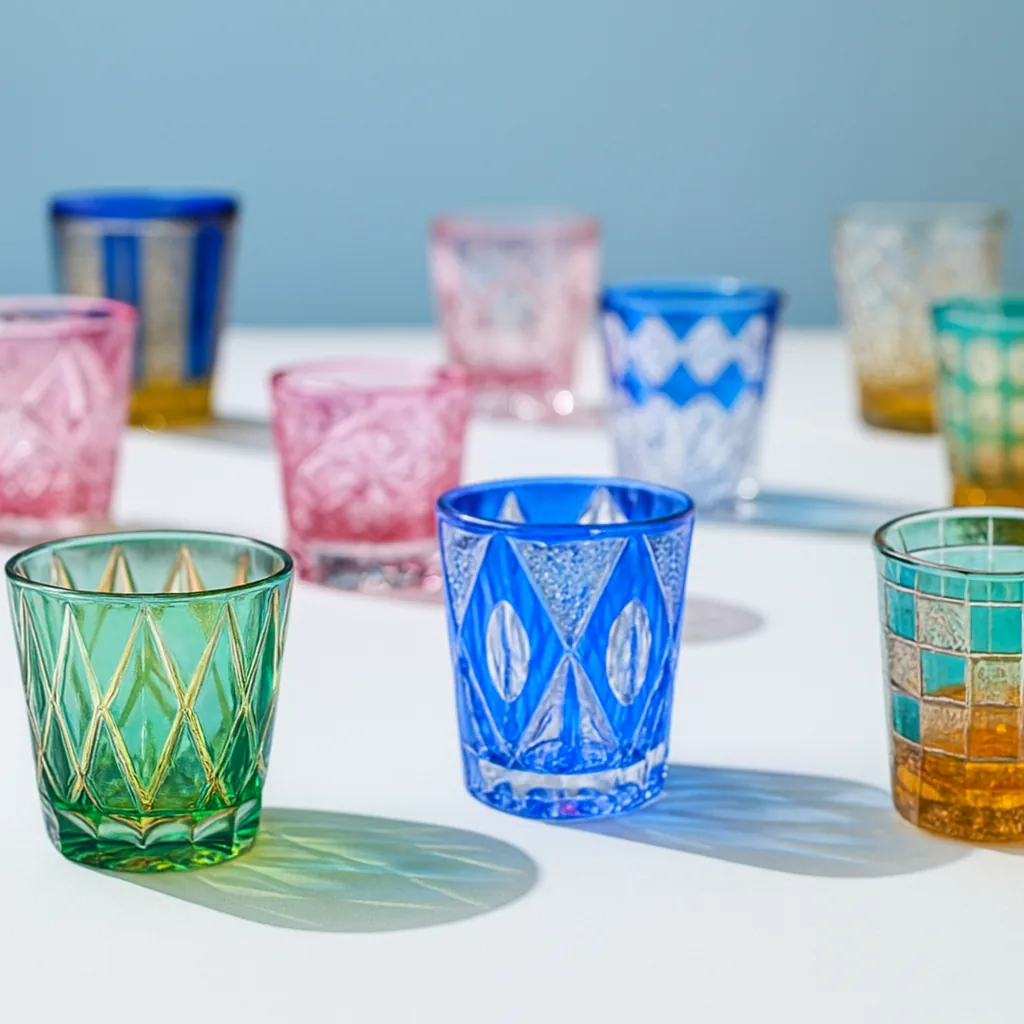
- Crystal glass contains minerals that raise the refractive index dramatically. Light bounces through the cuts and curves like a prism. KAGAMI Crystal is Japan's most prestigious producer, supplying the Imperial Household.
- Heat-resistant glass (like borosilicate) handles thermal shock without cracking — perfect for warmed sake or hot tea.
- Kiriko (cut glass) combines soda-lime or crystal with intricate wheel-cut patterns. Edo kiriko and Satsuma kiriko are Japan's two regional traditions.
- Pros: see the drink's color and carbonation; ultra-thin rims possible; neutral flavor.
- Cons: fragile; no insulation.
- Best drinks: cold sake (ginjo/daiginjo), craft beer, whisky, cocktails.
2. Metal — Tin and Titanium
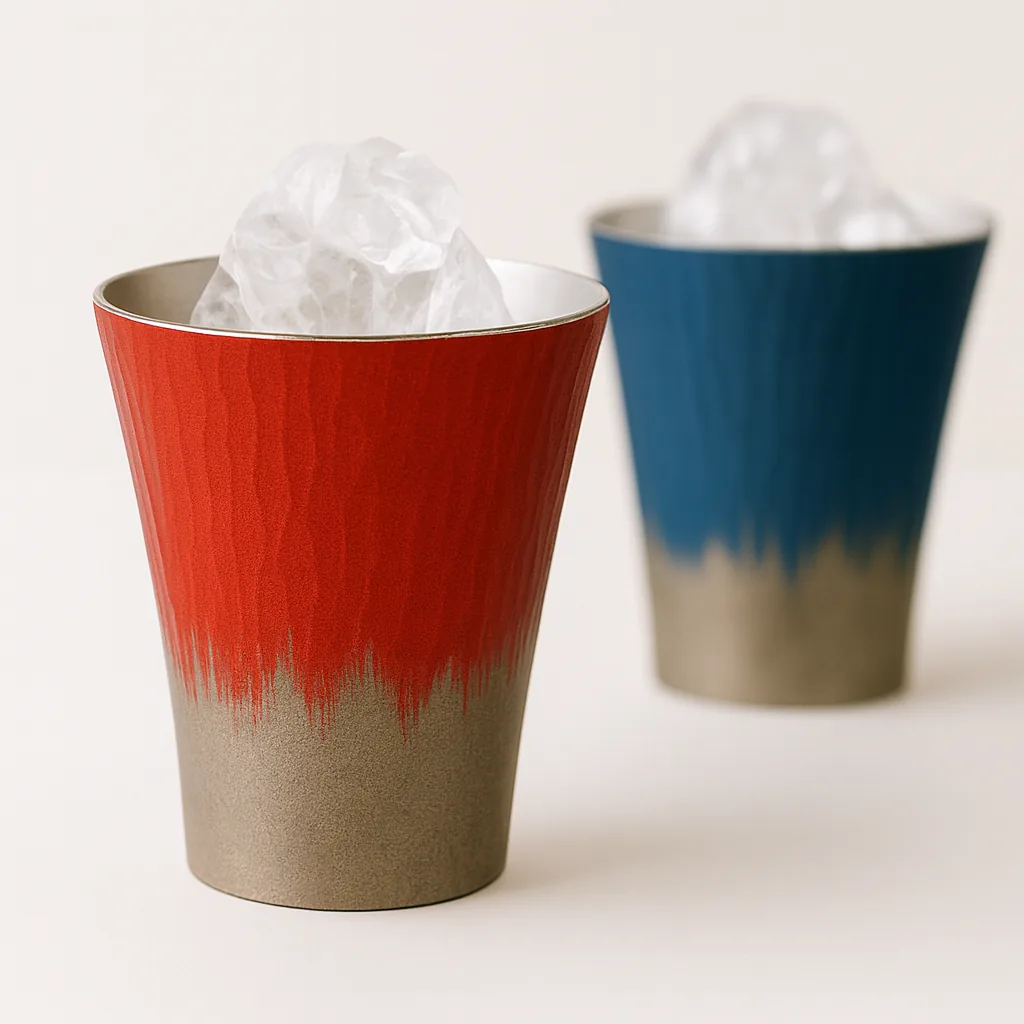
- Tin (suzu) has exceptionally high thermal conductivity. Cold sake poured in immediately chills the entire cup. Tin ions are also said to soften the harshness of alcohol, giving the drink a rounded edge. NOUSAKU of Takaoka is Japan's benchmark tin brand.
- Titanium is lightweight, rust-proof, and hypoallergenic (the same metal used in medical implants). Double-wall titanium tumblers maintain temperature for hours — like a personal vacuum flask for your drink. HORIE is the premium brand in this category.
- Pros: superb cold retention (tin); extreme insulation (titanium double-wall); dishwasher-safe (most titanium).
- Cons: opaque — you can't see the drink; tin is hand-wash only.
- Best drinks: beer, chilled cocktails, shochu on the rocks, highball.
3. Ceramics and Pottery
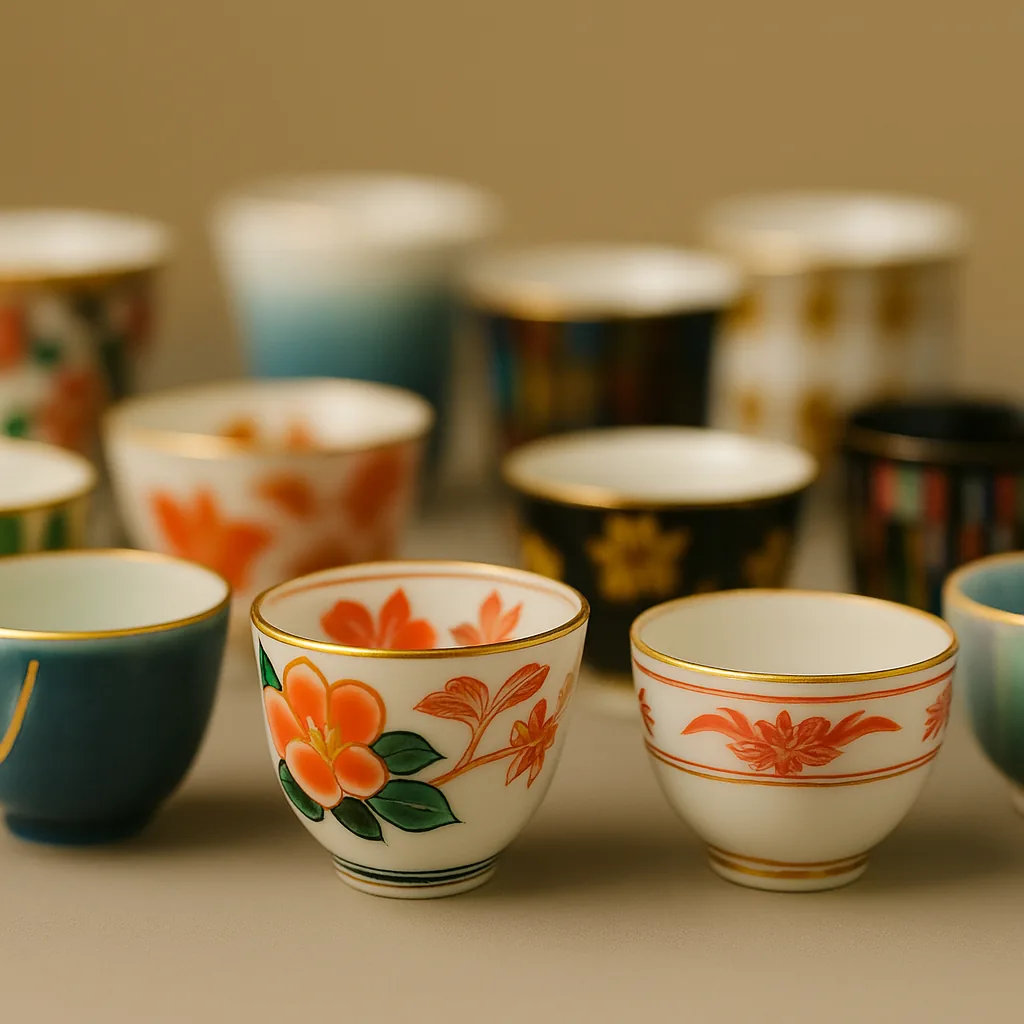
- Pottery (陶器, tōki) has a slightly porous surface that softens the taste of sake and shochu — the roughness creates micro-turbulence that rounds the edges.
- Porcelain (磁器, jiki) is denser and smoother. Arita-yaki and Kutani-yaki represent the pinnacle of Japanese porcelain.
- Pros: excellent heat retention; holds warm sake longer than any other material; handmade character makes each piece unique.
- Cons: opaque; heavier; the drink's color is invisible.
- Best drinks: hot sake (kanzake), shochu oyuwari (hot water), earthy junmai sake.
4. Lacquerware (Urushi)
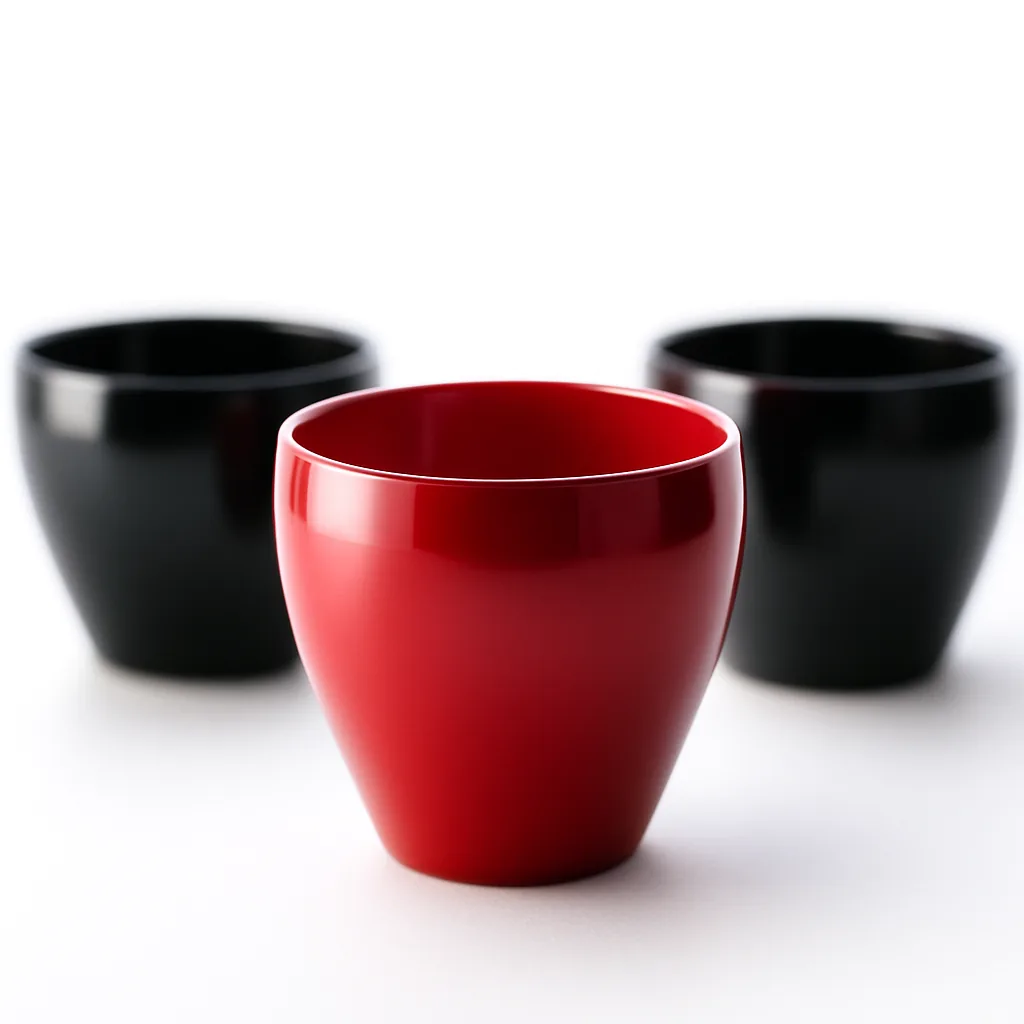
- Japanese lacquer (urushi) is applied in dozens of layers to a wooden or paper-mâché base. The result is feather-light, almost perfectly insulating, and silky-smooth to the lips.
- Hot sake stays comfortably warm inside, while the outside stays cool enough to hold bare-handed. Cold sake produces no condensation.
- Wajima-nuri from Ishikawa Prefecture is the most prestigious lacquerware tradition.
- Pros: elegant; ultralight; no condensation; silkiest mouthfeel of any material.
- Cons: requires hand-washing; sensitive to UV light and drying; strict no-dishwasher rule.
- Best drinks: ceremonial toso sake, hot sake, special-occasion pours.
Shape Guide: Choosing by Drink Type
Once you've chosen your material, shape determines aroma delivery and mouthfeel. Here's how it breaks down by drink:
Beer: Control the Foam and the Throat-Hit
| Shape | Effect | Best Beer Style |
|---|---|---|
| Tall tumbler (straight cylinder) | Preserves carbonation; drives beer forcefully to the back of the throat | Lager, pilsner — for that classic throat-refreshment rush |
| Weizen glass (curved, with waist) | Waist supports foam head; concentrates banana-and-clove aroma | Hefeweizen, white beer |
| Wide-mouth goblet | Releases aroma broadly; encourages slow, appreciative sipping | Ales, stouts, complex craft beers |
Sake: Collect the Aroma or Set It Free
- Wine-glass shape: The bowl traps fragrance inside. The best format for aromatic ginjo and daiginjo — allows you to nose the sake before drinking, just like Burgundy wine.
- Ochoko / guinomi: Small volume means you finish before the temperature changes. Ideal for kanzake (warm sake) and honjozo with a clean, sharp finish.
- Flat cup (hirahi): Wide opening spreads the liquid across the full tongue on contact. Amplifies the umami of rich junmai sake.
FAQ
What's the best drinkware material for enjoying cold sake?
Tin is the strongest choice for cold sake. Its high thermal conductivity chills the vessel almost instantly, and the mineral ions are said to soften the alcohol's bite. NOUSAKU's tin guinomi is the go-to recommendation.
If you want to see the sake's color and clarity, a thin-blown glass (usuhari style) is a close second — delicate, neutral, and beautiful.
Which materials are dishwasher-safe?
The following should always be hand-washed:
- Lacquerware: High heat and harsh detergent cause the urushi to crack and discolor.
- Tin: Deforms at dishwasher temperatures; high-pressure jets cause dents.
- Kiriko (cut glass) and thin-blown glass: Risk of chipping from contact with other dishes and water pressure.
Most titanium tumblers are dishwasher-safe — check the product spec. Standard thick-walled glass and porcelain are generally fine.
I have a metal allergy. Which material is safest?
Titanium is the safest metal drinkware for people with sensitivities. It is the same grade of material used in dental and surgical implants, and allergic reactions are virtually unheard of.
Tin is also low-risk, but if you are uncertain, stick with titanium, glass, or ceramics.
Does crystal glass really make a drink taste different?
The taste difference is not from the glass itself — crystal is chemically neutral, like soda-lime glass. The difference comes from the shape that crystal allows: the higher workability of crystal lets craftspeople make thinner rims and more precise bowl curves than standard glass.
That said, the optical brilliance of crystal — the way it bends and scatters light — undeniably makes the drinking ritual feel more special, which has a real psychological effect on how we perceive taste.
What's a good budget for quality Japanese drinkware?
For everyday glass: $30–$60 gets you a well-made Japanese piece (usuhari style, Toyo-Sasaki fine crystal).
For traditional crafts — tin, kiriko, lacquerware, titanium double-wall — expect $80–$200 per piece. Pair sets for gifting typically range $150–$400.
Top-tier KAGAMI Crystal in a paulownia wood box can reach $500+, appropriate for retirement or milestone gifts.
What's the best all-around material if I'm not sure what I drink most?
A titanium double-wall tumbler (e.g., HORIE Titanes) is the most versatile starting point. It works beautifully for beer, highball, and even cold water. It's nearly indestructible, dishwasher-safe, and hypoallergenic.
If your priority is sake enjoyment specifically, a tin guinomi (NOUSAKU) or a thin-blown glass tumbler (Shotoku usuhari) will immediately transform how cold sake tastes — for a fraction of the cost.
Summary
Japanese drinkware isn't just aesthetics — each material is engineered (consciously or through centuries of refinement) to change how a drink tastes and feels:
- Glass (especially thin-blown): neutral, visual, ultra-precise mouthfeel
- Tin: instant cold, softened taste — the traditional sake metal
- Titanium: modern, versatile, maximum cold retention
- Ceramics: heat retention, earthy texture, traditional warmth
- Lacquerware: ultralight, silky, ceremonial
Match the material to the drink you love most, and the right vessel will make every pour noticeably better.
Best Japanese Drinkware: Top 10 Picks Across Every Material
Japanese Metal Tumblers: Tin vs Titanium Compared