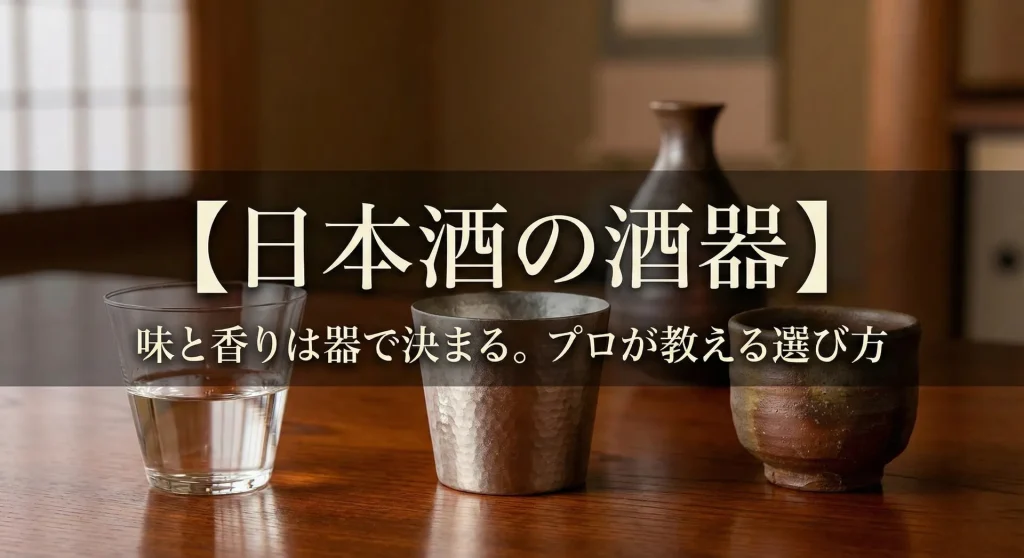
Sake is one of the few drinks in the world that is consumed across a temperature range of nearly 60°C — from
"snow-chilled" (yukihie, 5°C) to "hot sake" (atsu-kan, 55°C+) — and the vessel you choose should be matched to the
temperature you're serving.
The difference is not subtle. Drinking daiginjo sake from a thin glass versus a thick pottery cup changes the aroma,
the perceived sweetness, the finish, and the overall experience so dramatically that they feel like different
drinks.
This guide covers every category of Japanese sake vessel — guinomi, ochoko, tokkuri, katakuchi, and
chirori — explaining when to use each, what material to choose, and which brands are worth seeking out.
Quick Reference: Japanese Sake Vessel Types
| Vessel | Opening | Best Sake Type | Purpose |
|---|---|---|---|
| Guinomi (ぐい呑み) | Wide | Ginjo, daiginjo | Aroma spreads broadly; umami and acidity come through fully |
| Ochoko (お猪口) | Narrow | Honjozo, dry sake | Clean throat-hit; contains aroma; emphasizes sharpness |
| Tokkuri (徳利) | Narrow neck | Kanzake (hot sake) | Retains heat; ideal for yūsen (hot-water warming) |
| Katakuchi (片口) | Wide + spout | Cold sake, room temp | Opens aroma; easy to pour; table presentation |
| Chirori (ちろり) | Narrow + handle | Any sake (warming vessel) | Metal vessel for rapid, precise heating of sake |
Shape and Rim: Why Guinomi and Ochoko Taste Different
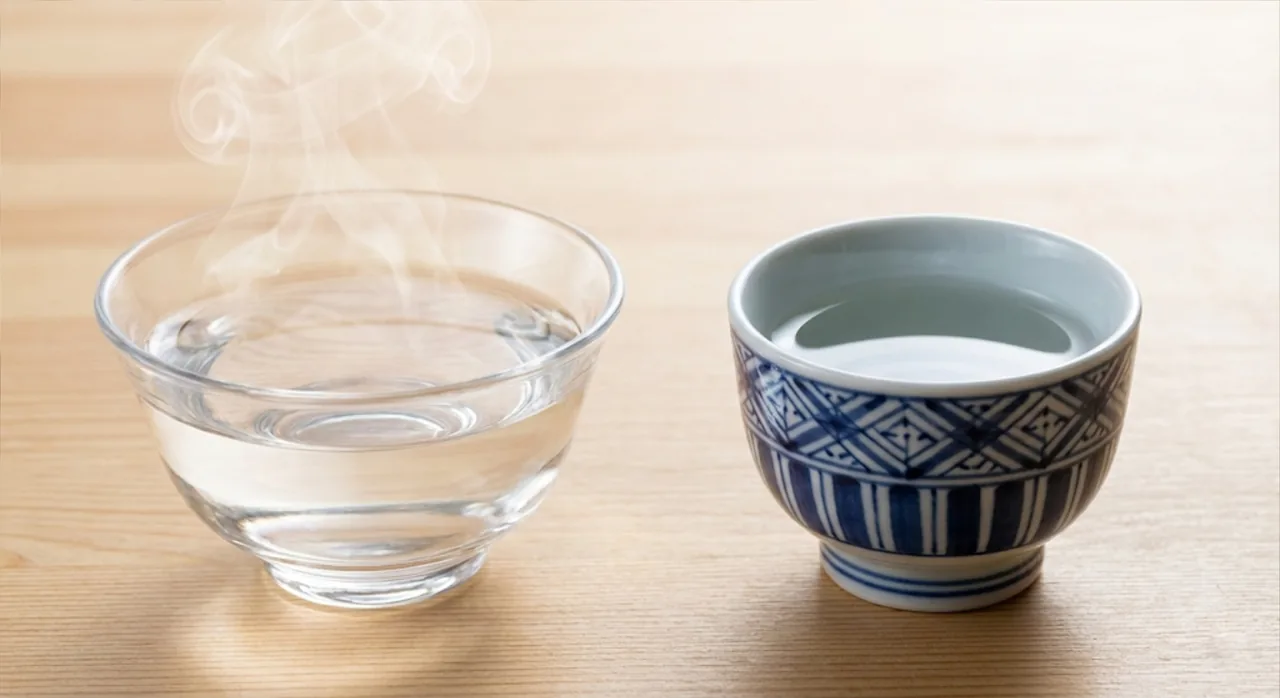
The opening width (口径, kōkei) and rim thickness of a sake cup determine how the liquid arrives on your palate — and therefore what characteristics you perceive.
| Factor | Guinomi (wide opening) | Ochoko (narrow opening) |
|---|---|---|
| Aroma release | Aroma spreads broadly. Wide surface area contact with air liberates fragrance — ideal for aromatic ginjo and daiginjo sake. | Aroma is contained. Less surface area = less fragrance escape. Emphasizes the clean, alcohol-forward character. |
| Flavor | Sake spreads across the full tongue. Umami, acidity, and complexity register across multiple taste zones simultaneously. | Sake flows to the center-back of the tongue. Throat-hit and sharpness (kire) are more prominent. |
| Best sake | Junmai daiginjo, ginjo, aged (koshu) | Honjozo, futsu-shu, sharp dry sake |
The Rim Thickness Factor
- Thin rim (glass, tin): Sake flows rapidly onto the front of the tongue and spreads quickly. Delicate sweetness and subtle flavors come through more clearly. The best choice for premium sake you want to fully appreciate.
- Thick rim (pottery, stoneware): The flow is slower, depositing sake toward the middle of the tongue. Roundness, body, and richness register more strongly. The best choice for rich junmai sake and hot sake.
Material Rule: Cold Sake = Tin or Glass; Hot Sake = Pottery
Cold Sake: Tin or Thin-Blown Glass
For cold sake (reishu, hiyahiya, yukihie — all forms of chilled sake), the ideal materials are:
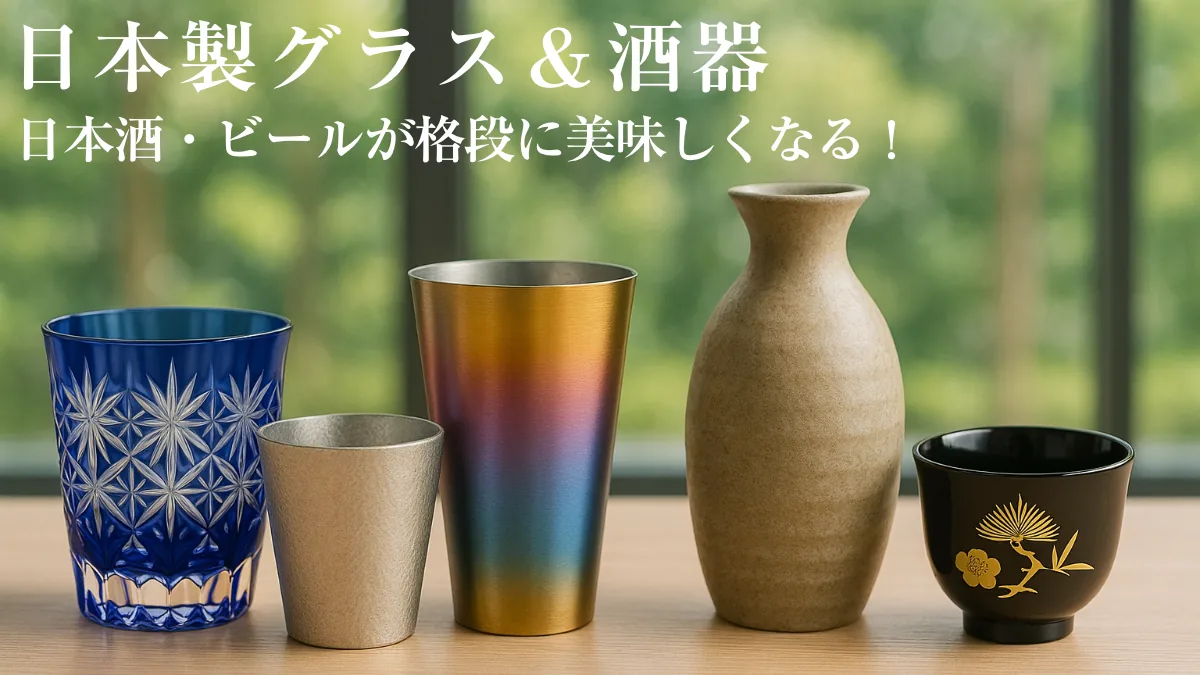
- Tin: highest thermal conductivity of common sake vessel materials. The vessel becomes cold almost instantly; tin ions neutralize harshness for a smoother, rounder cold sake. NOUSAKU guinomi is the benchmark.
- Thin-blown glass (usuhari): the rim disappears on the lips, delivering cold sake with maximum clarity. Shotoku Glass's usuhari daiginjo is designed specifically for this. Also compatible with wine-glass style vessels for aroma-forward ginjo.
Hot Sake: Pottery (Earthenware)
For kanzake and nurukan (warm/hot sake), pottery is the unambiguous best choice:
- Earthenware pottery (Bizen-yaki, Shigaraki-yaki, Hagi-yaki, etc.): low thermal conductivity means heat is retained longer. The thick walls act as insulation. The rough clay surface adds a tactile earthiness that complements the warm umami of hot sake.
- Pre-warm the vessel with hot water before pouring sake — this extends heat retention dramatically.
Important: Standard soda glass (not heat-resistant) will crack if filled with very hot sake. If using glass for hot sake, use only glass labeled heat-resistant (耐熱ガラス). Single-wall metal vessels (copper, stainless) become too hot to hold. Use double-wall metal or pottery for hot sake.
Serving Vessels: Tokkuri, Katakuchi & Chirori
The serving vessel — what you pour from — affects the experience as much as the cup you drink from. Decanting sake from the bottle into a ceramic or metal server opens the aroma and allows the sake to "breathe."
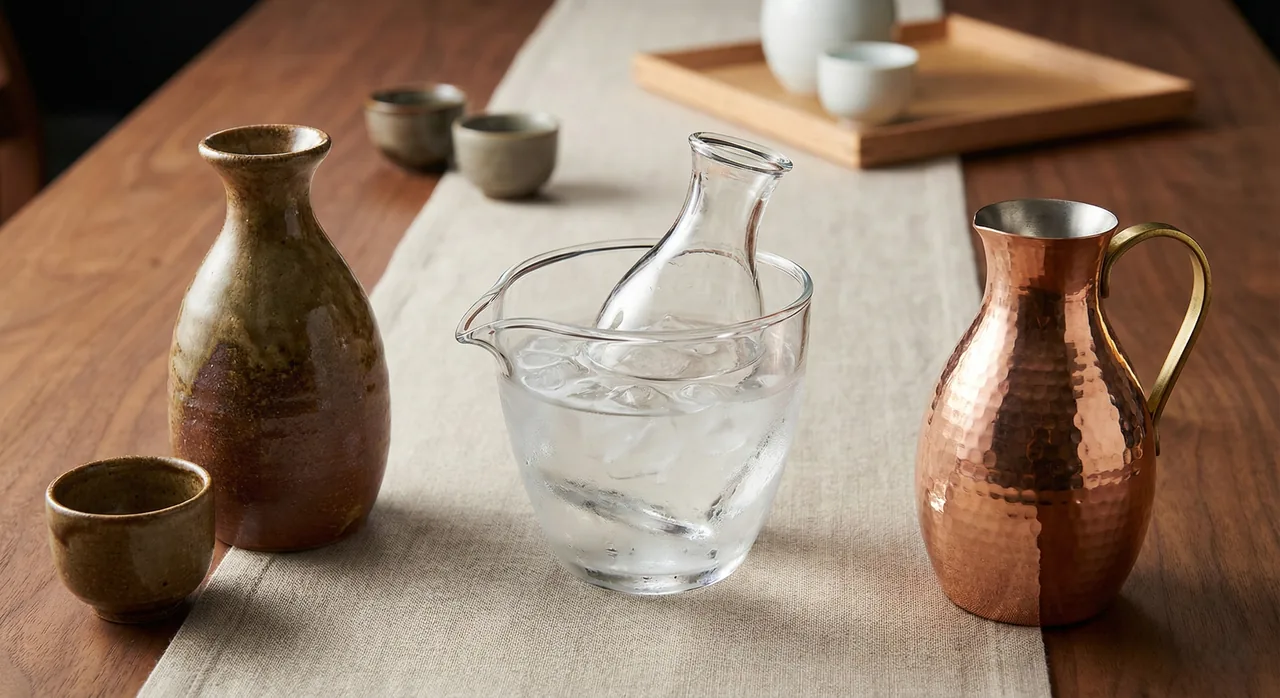
Tokkuri (徳利) — Hot Sake's Vessel
The narrow-necked, round-bellied tokkuri is designed for one purpose: holding sake while keeping it warm through
the yūsen (hot-water bath) method. The narrow neck limits the surface area through which heat escapes, while the
round belly maximizes the volume that can be kept warm. Most tokkuri are ceramic — pottery for hot sake, porcelain
for cold.
Classic capacity: 180ml (one gō) or 360ml (two gō).
Katakuchi (片口) — Cold Sake Presentation
A wide-mouthed pouring bowl with a small spout. Because the opening is large, sake poured into a katakuchi
immediately contacts more air, which opens the aroma — the same principle as decanting wine. The katakuchi also
creates an elegant tablescape for cold sake presentation.
Easier to clean than a tokkuri because there's no narrow neck to navigate.
Chirori (ちろり) — The Sake Warmer
A cylindrical metal vessel with a handle, used exclusively for warming sake. The metal body (tin or copper)
conducts heat rapidly, allowing precise temperature control when the chirori is placed in hot water. A tin chirori
is ideal — the tin gently softens the sake as it warms, so the ionic effect and the heat work together.
Used with a tetsubin iron kettle as the heat source for the most refined version of this method.
Recommended Sake Vessel Brands
NOUSAKU — Tin Guinomi & Chirori (Takaoka, Toyama)
The benchmark tin sake vessel brand internationally. NOUSAKU's tin guinomi delivers the purest version of the cold-sake tin experience: immediate chill, ionic softening of the alcohol, and a satisfying weight in the hand. Their tin chirori is the ideal warming vessel for those practicing the yūsen method at home.
- Material
- 100% pure tin
- Made in
- Takaoka, Toyama
- Best for
- Cold sake, gifting, sake enthusiast sets
- Price range
- $60–$200 per piece
Shotoku Glass — Usuhari Daiginjo (Tokyo)
The usuhari daiginjo model is purpose-built for cold ginjo sake: a 250ml tulip-shaped thin-blown glass with a small convection bump on the interior base. Swirl the glass and the bump generates a current that lifts the aroma — the same aerating principle as a wine decanter, in miniature. The 0.9mm rim completes the experience.
- Material
- Thin-blown soda glass (0.9mm)
- Made in
- Sumida, Tokyo
- Best for
- Ginjo, daiginjo cold sake
- Price range
- $30–$45 per glass
Japanese Pottery Guinomi — Bizen, Shigaraki, Hagi
For hot sake, the best approach is to purchase from one of Japan's great unglazed pottery traditions: Bizen-yaki
(Okayama), Shigaraki-yaki (Shiga), or Hagi-yaki (Yamaguchi). Each has a distinct character — Bizen is dark and
earthy with a clay-fire surface; Hagi is softer with a pale crackle glaze; Shigaraki is rough and wild with
natural ash glaze.
All three are excellent for kanzake. The micro-porous unglazed surface is thought to subtly interact with the sake
— some enthusiasts report that the character of the pottery itself comes through slightly in the taste over time,
as the clay absorbs sake and seasons.
- Material
- High-fired earthenware (各種 焼き物)
- Made in
- Various (Okayama, Shiga, Yamaguchi)
- Best for
- Kanzake, nurukan, pure sake drinking ritual
- Price range
- $30–$200 per guinomi (handmade pottery)
FAQ
What's the best vessel for a sake beginner who wants to try hot and cold sake?
Start with two pieces:
1. A tin guinomi (NOUSAKU) for cold sake — the effect is dramatic and immediately obvious.
2. A ceramic tokkuri and ochoko set for hot sake — look for any well-made stoneware set from a Japanese
producer.
With these two setups, you can experience both temperature extremes and decide which style you prefer, then invest
further in the direction you enjoy.
Can I use a wine glass for sake?
Yes, and for aromatic ginjo sake, it's an excellent choice. The wide bowl concentrates aroma in the same way as a
Burgundy or Pinot Noir glass. Several Japanese sake breweries now recommend specific wine glass styles for their
most fragrant sake.
An ISO standard wine glass or a RIEDEL Vinum works well. For the purist: a tulip-shaped sake glass (like the
Usuhari Daiginjo) is designed specifically for sake and works slightly better than a wine glass because the bowl
geometry is calibrated for sake's lighter viscosity.
What temperature is optimal for kanzake (hot sake)?
Japanese sake temperature vocabulary gives a useful guide:
— Hinatakan (日向燗): ~30°C — barely warm, almost body temperature
— Nurukan (ぬる燗): ~40°C — warm, the most popular kanzake temperature
— Jokan (上燗): ~45°C — noticeably hot
— Atsu-kan (熱燗): ~50°C — very hot, enhances sharpness
For most sake styles, nurukan (40°C) is the sweet spot — the warmth amplifies umami and sweetness without making
the alcohol feel harsh. Atsu-kan suits dry, light sake where the heat adds crispness.
Are pottery sake cups safe to use with all sake types?
Yes. All food-safe Japanese pottery is appropriate for sake of any style. The question is whether a specific
vessel enhances the sake you're serving — see the shape and material guidance above for optimal pairings.
The only exception: very old, unglazed pottery with lead-based glazes (antique pieces made before modern food
safety standards). Modern Japanese pottery from established kilns is always food-safe.
How do I clean a tokkuri without a bottle brush?
For standard rinsing: fill the tokkuri with hot water, swirl, and pour out — repeat 2–3 times. This is sufficient
for regular cleaning after sake.
For staining or stubborn residue: fill with a dilute solution of baking soda and hot water, let sit for 30
minutes, then rinse thoroughly. Dry immediately by placing upside-down on a clean cloth or rack.
For unglazed earthenware tokkuri: use only water — soap or detergent can penetrate the porous clay and add an
off-flavor to future sake.
Does expensive sake need an expensive vessel?
Not necessarily, but a well-matched vessel will let you taste more of what you're paying for. A $200 daiginjo
poured into a thick ceramic mug will taste significantly worse than from a thin-glass or tin vessel — the cup is
actively suppressing the qualities that make the sake worth $200.
A $30 usuhari glass or $60 tin guinomi, matched to the sake style, will outperform a $200 poorly matched cup every
time. The investment in the right vessel is small compared to what it unlocks in the sake.
Summary
- Cold sake (ginjo/daiginjo): tin guinomi (NOUSAKU) or thin-blown glass (Shotoku Usuhari Daiginjo)
- Hot sake: pottery tokkuri and ochoko — Bizen, Shigaraki, or Hagi earthenware
- Aroma-first approach: wide opening (guinomi or wine glass) — more surface area, more fragrance
- Throat-hit / sharpness: narrow opening (ochoko) — contains aroma, emphasizes kire
- Warming ritual: tin chirori in a Nambu Tekki tetsubin hot water bath
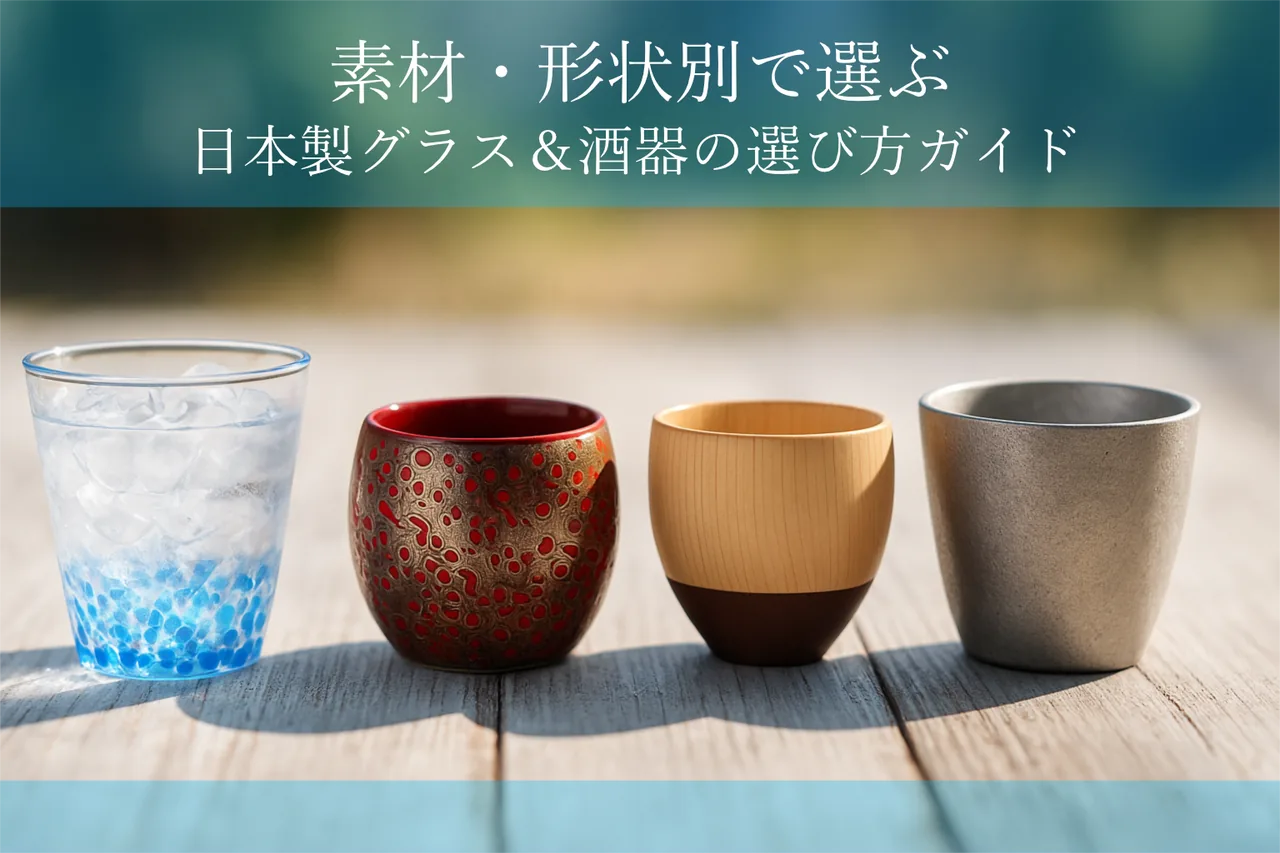
Japanese Drinkware Materials: How Glass, Tin & Lacquer Change Your Drink
Japanese Metal Tumblers: Tin vs Titanium Ranked