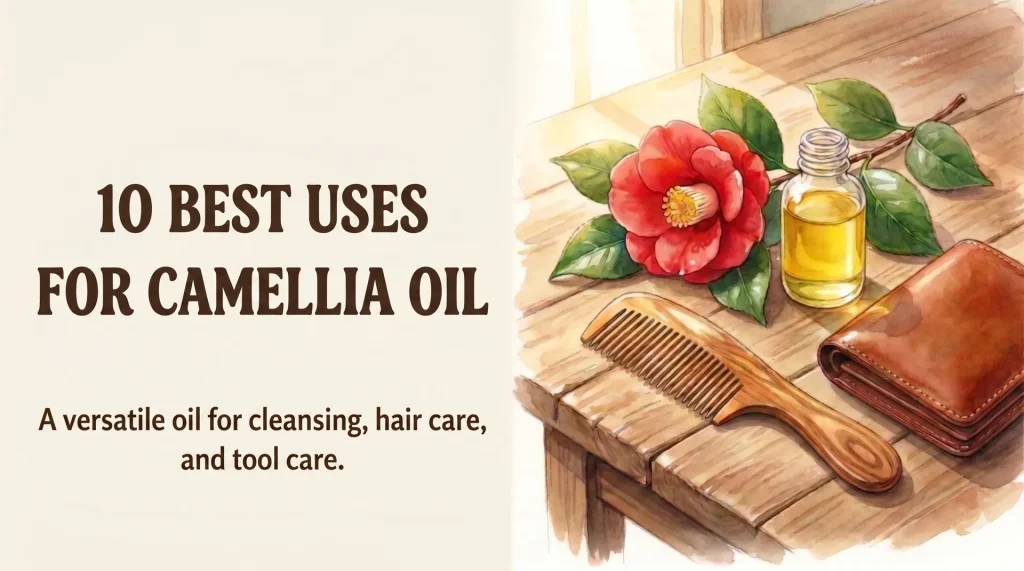
Bought a bottle of tsubaki oil and ended up barely using it after the first few hair treatments?
You're not alone — and you're missing out on a lot.
Tsubaki oil (椿油),
Japan's traditional camellia oil, is counted among the world's three great beauty oils — and for good reason. It
works just as well on your skin and household tools as it does on your hair.
From drawing out blackheads with an oil cleanse, to conditioning your leather bag, to protecting your kitchen knife
from rust — one small bottle handles it all.
This guide covers how to choose tsubaki oil (starting with the iconic Oshima Tsubaki brand) and
walks through 10 practical uses you probably haven't tried yet.
Quick Reference: 10 Tsubaki Oil Uses at a Glance
Everything you can do with one bottle — in one table.
| Use | Category | How to Apply | Amount |
|---|---|---|---|
| ① Leave-in treatment | Hair | Work into damp ends after towel-drying | A few drops |
| ② Scalp cleanse | Hair | Massage into dry scalp before shampooing | 1–2 tsp |
| ③ Wet styling | Hair | Spread on palms, then smooth through hair | 1–2 drops |
| ④ Pore blackhead pack | Skin | Massage in circles → warm towel rinse | Small amount |
| ⑤ Toner booster | Skin | Apply a tiny amount after cleansing, before toner | Minimal |
| ⑥ Hand & nail care | Skin | Rub into hands and nails before bed | A few drops |
| ⑦ Tsuge comb conditioning | Tools | Soak oil into teeth regularly | As needed |
| ⑧ Leather conditioning | Tools | Buff in thin layer with soft cloth (caution on raw leather) | Small amount |
| ⑨ Rust prevention | Tools | Wipe thin coat on iron before storing | Small amount |
| ⑩ Wood furniture care | Tools | Rub into dry spots on wood surfaces | As needed |
1. The Oil Closest to Human Skin: The Power of Oleic Acid
Why has tsubaki oil remained beloved in Japan from the Heian period all the way to today?
The answer lies in its remarkably high concentration of oleic acid.
It matches your skin's own composition
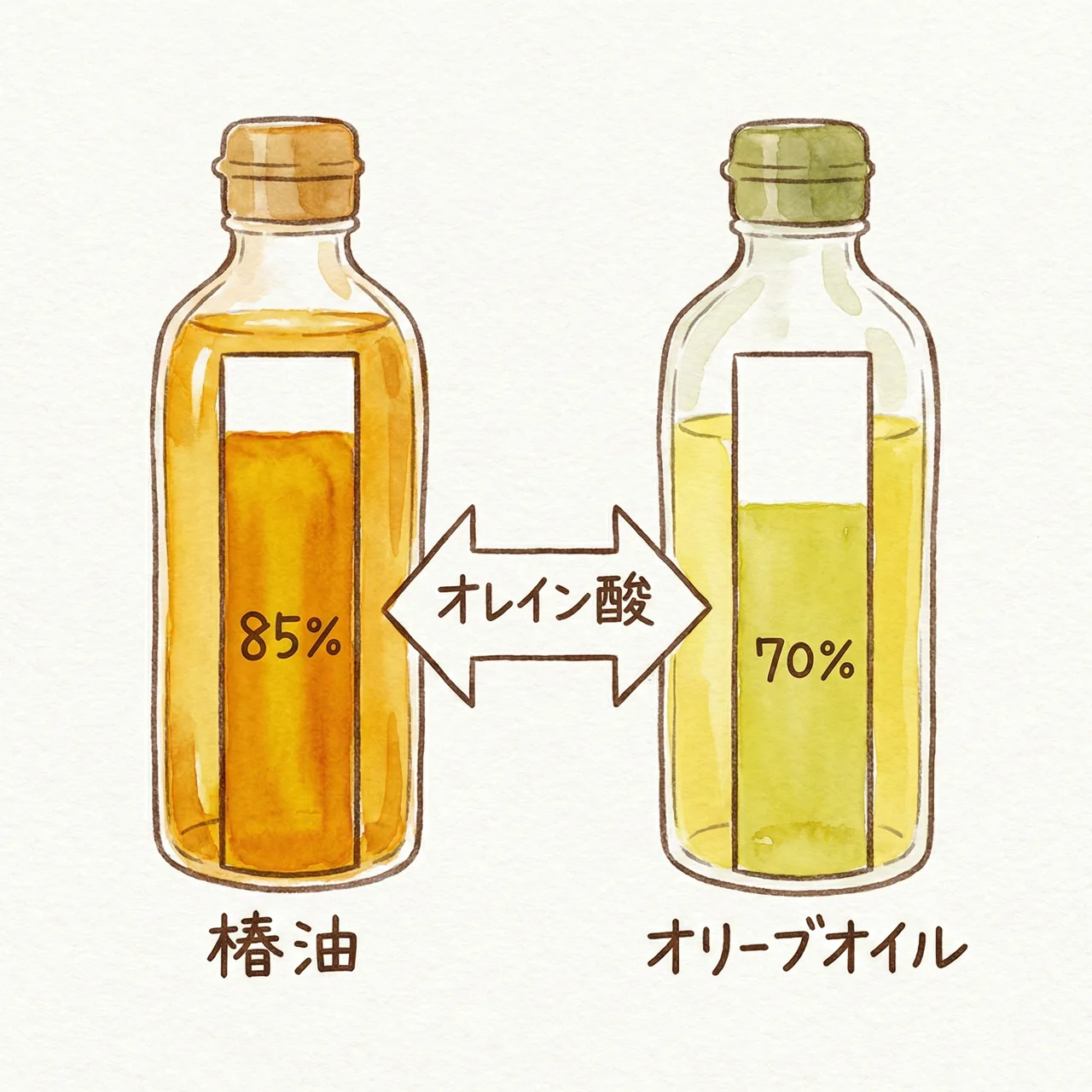
About 40% of human sebum is made up of oleic acid.
Tsubaki oil contains approximately 85% oleic acid — more than any other plant oil, including
olive oil.
That's why it absorbs instantly rather than sitting on the surface of your skin or hair. It doesn't feel foreign
— it feels like it belongs.
As a non-drying oil, it also resists oxidation, meaning it won't turn rancid quickly or leave
an unpleasant smell after application.
2. Hair Care: Leave-in Treatment, Scalp Massage & Styling
Let's start with the most well-known use.
The number-one mistake people make? Using too much. Start with one drop.
Use ①: Leave-in Hair Treatment
After towel-drying, spread a few drops between your palms and work the oil into your ends.
It creates a protective barrier against heat from your blow dryer, leaving hair smooth and manageable by
morning.

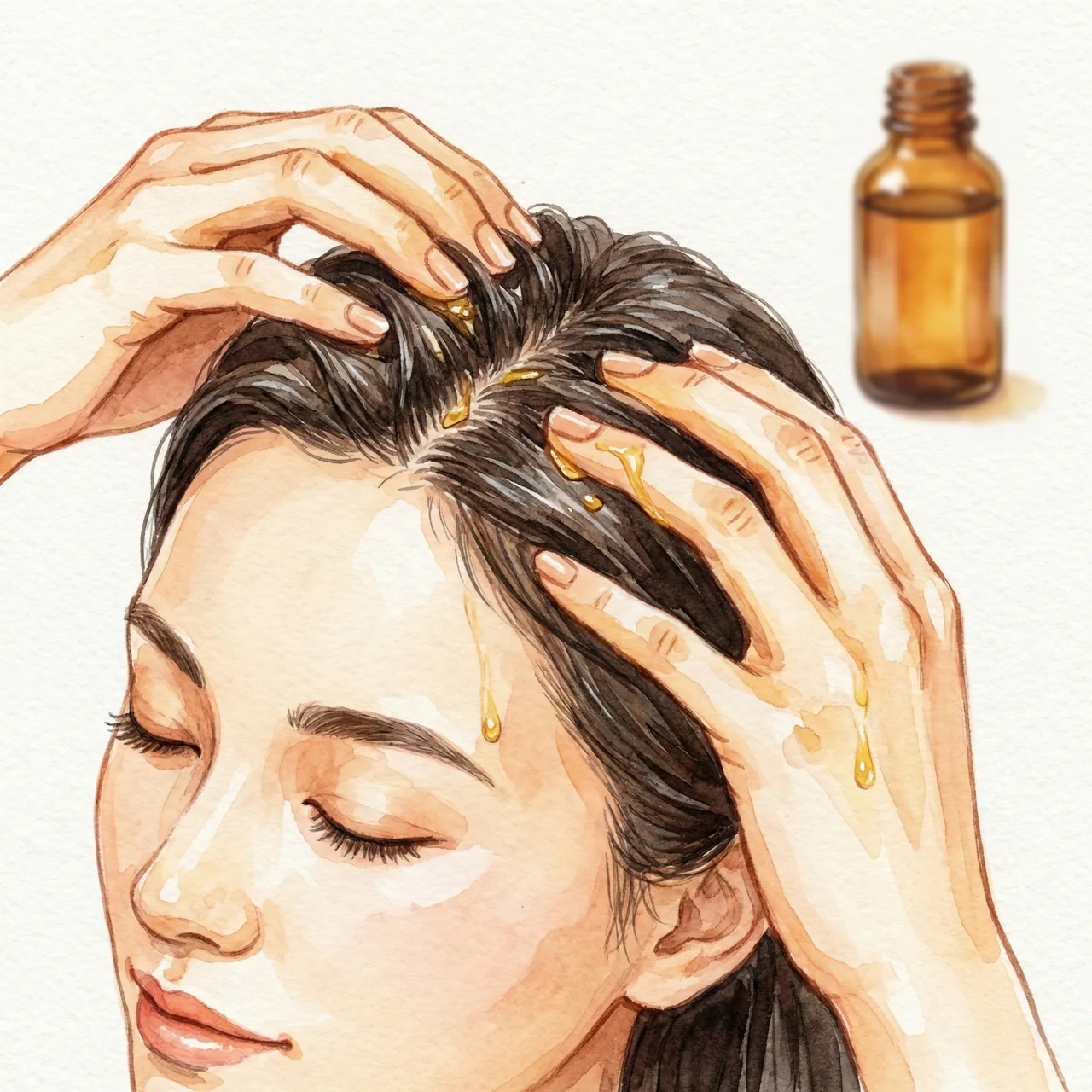
Use ②: Pre-Shampoo Scalp Cleanse
Before shampooing, apply 1–2 teaspoons of tsubaki oil to your dry scalp and massage gently with your
fingertips.
The oil dissolves sebum buildup clogging your follicles — then your shampoo rinses it all away cleanly.
Great for scalps prone to dryness or itchiness.
Use ③: Wet-Look Styling
Tsubaki oil is perfect for achieving a natural wet-hair look without the stiffness of wax.
It won't harden, so you get soft, natural texture and shine — while also taming frizz.
Style and condition at the same time.

3. Skin Care: Oil Cleansing, Pore Packs & Moisture Booster
Properly refined tsubaki oil is safe and effective for facial use.
From removing makeup to prepping skin for toner, its versatility in skincare is hard to beat.
Use ④: Oil Cleansing — the Right Way
Tsubaki oil dissolves oil-based makeup, including waterproof formulas, making it an effective oil cleanser.
How to use:
① Dispense 3–4 drops onto dry hands and spread across fingers
② Apply to dry face and massage in gentle circles for 30 seconds to 1 minute
③ Wet your hands slightly to emulsify the oil, then rinse thoroughly with lukewarm water
④ Follow with your regular cleanser (optional for dry skin types)
Key point: always start with a dry face.
Water causes the oil to emulsify prematurely, cutting the cleansing effect in half.

3 Reasons Your Oil Cleanse Might Not Be Working
Reason ① You're starting with wet hands or a wet face
Water causes instant emulsification and weakens the cleansing power. Always begin with completely dry skin.
Reason ② You're not massaging long enough
You need at least 30 seconds — ideally a full minute — for the oil to bond with makeup and impurities. Rushing
to rinse means residue stays behind.
Reason ③ You're skipping the emulsification step
Before rinsing, add a small amount of water to your hands and rework the oil until it turns milky white. Skip
this step and you'll rinse off the oil but leave a film on your skin.
※ For stubborn waterproof eyeliner, use a dedicated eye makeup remover first.
Use ⑤: Pore Blackhead Pack
Apply tsubaki oil to areas with visible pores (nose, chin) and massage gently in small circles.
Leave for about 5 minutes, then press a warm wet cloth over the area and wipe away — or simply rinse with your
cleanser. Plugs loosen and lift away naturally.
A gentle, natural alternative to pore strips.
Use ⑥: Pre-Toner Moisture Booster
Right after cleansing, while your skin is still slightly damp, pat a minimal amount of tsubaki oil across your
face.
Apply your toner on top and you'll notice an immediate difference in how soft and supple your skin feels — the
oil acts as a pathway, drawing moisture deeper into the skin.

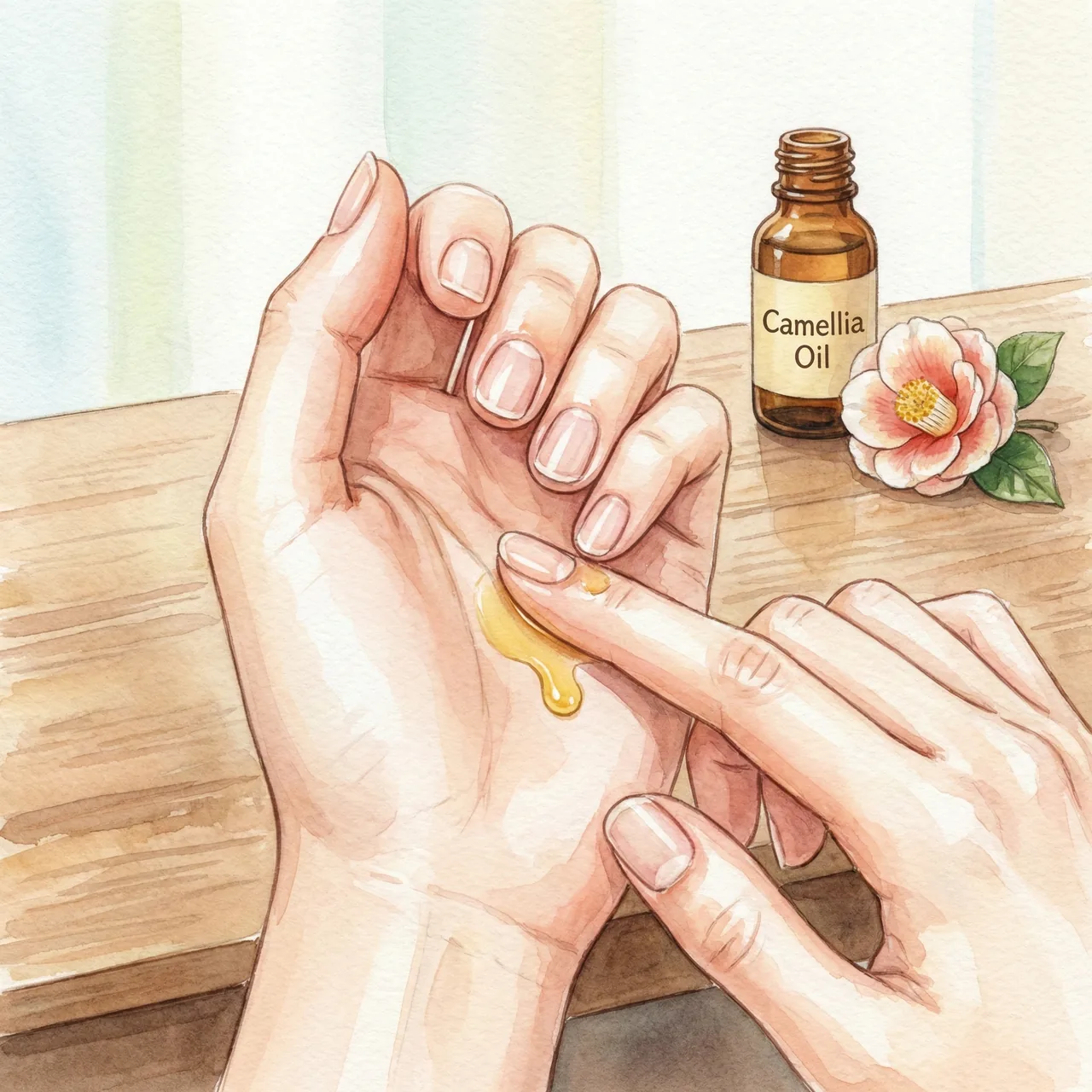
Use ⑦: Hand & Nail Care
Before bed, massage a few drops into your hands and cuticles.
Regular use keeps hangnails at bay and strengthens nails over time.
4. Tool Care: Wooden Combs, Leather Goods & Cast Iron
This is where tsubaki oil really shines.
Its non-drying nature — meaning it never fully hardens or becomes sticky — makes it ideal for
maintaining everyday tools.
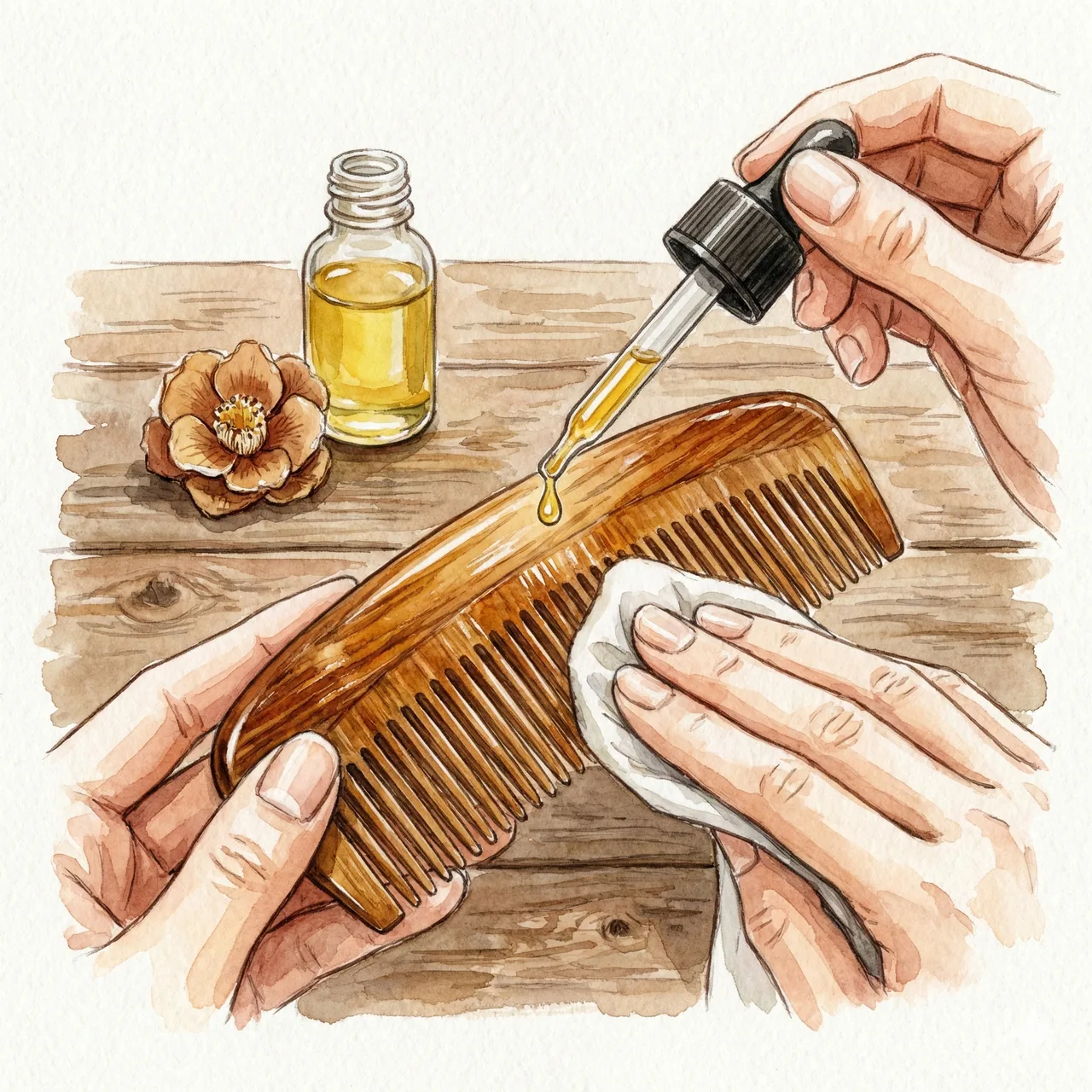
Use ⑧: Conditioning a Tsuge Comb
Tsuge combs (made from Japanese boxwood) must never be washed with water — tsubaki oil is the traditional care
method.
Regularly soaking the oil into the teeth keeps the comb gliding smoothly through hair and restores its
anti-static properties.
See the related guide below for full instructions.
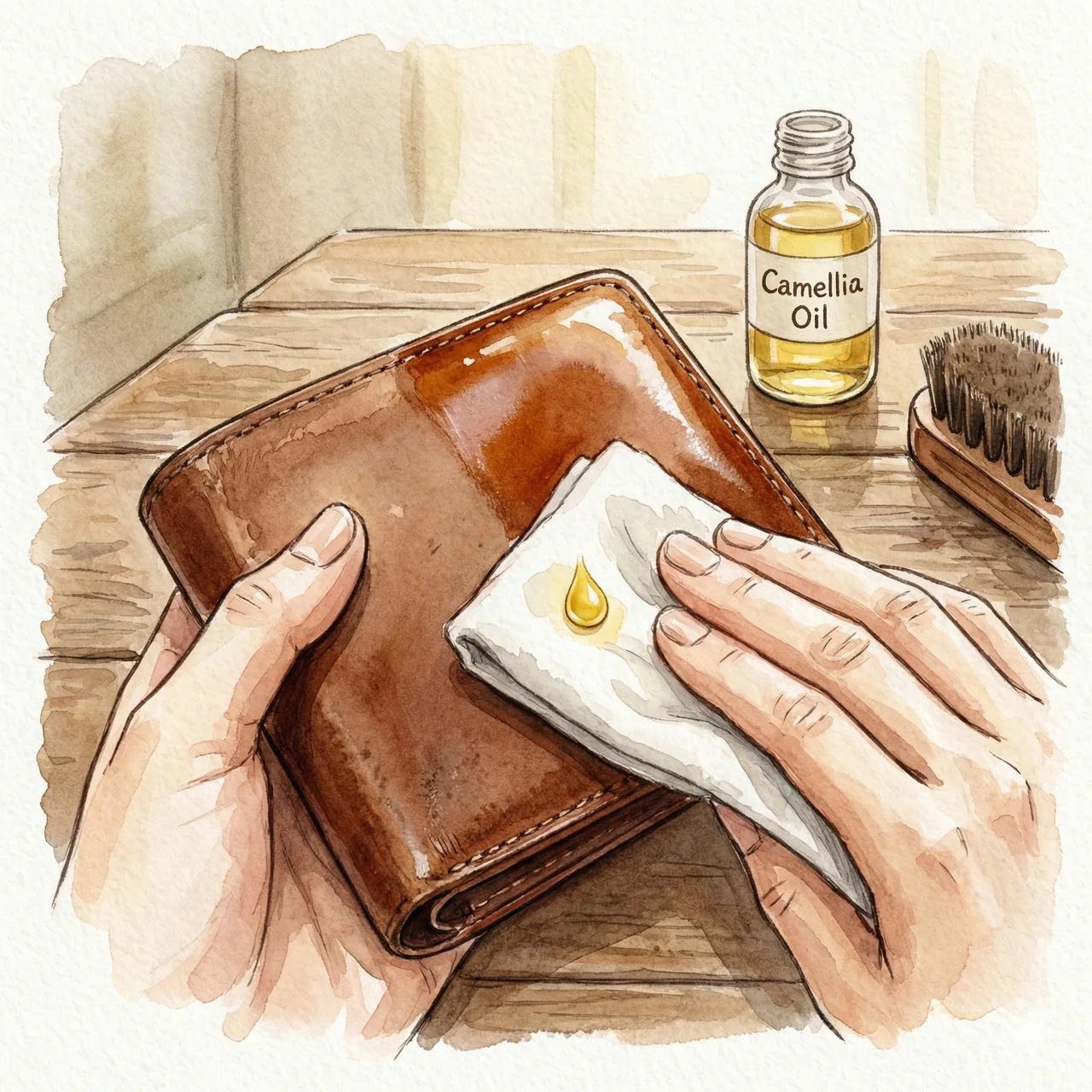
Use ⑨: Leather Bag & Wallet Conditioning
No leather cream on hand? Tsubaki oil works as a substitute.
Apply a thin layer with a soft cloth to nourish the leather and bring back its natural sheen.
※ Test on an inconspicuous area first — raw (veg-tan) leather can absorb unevenly and may show spots.
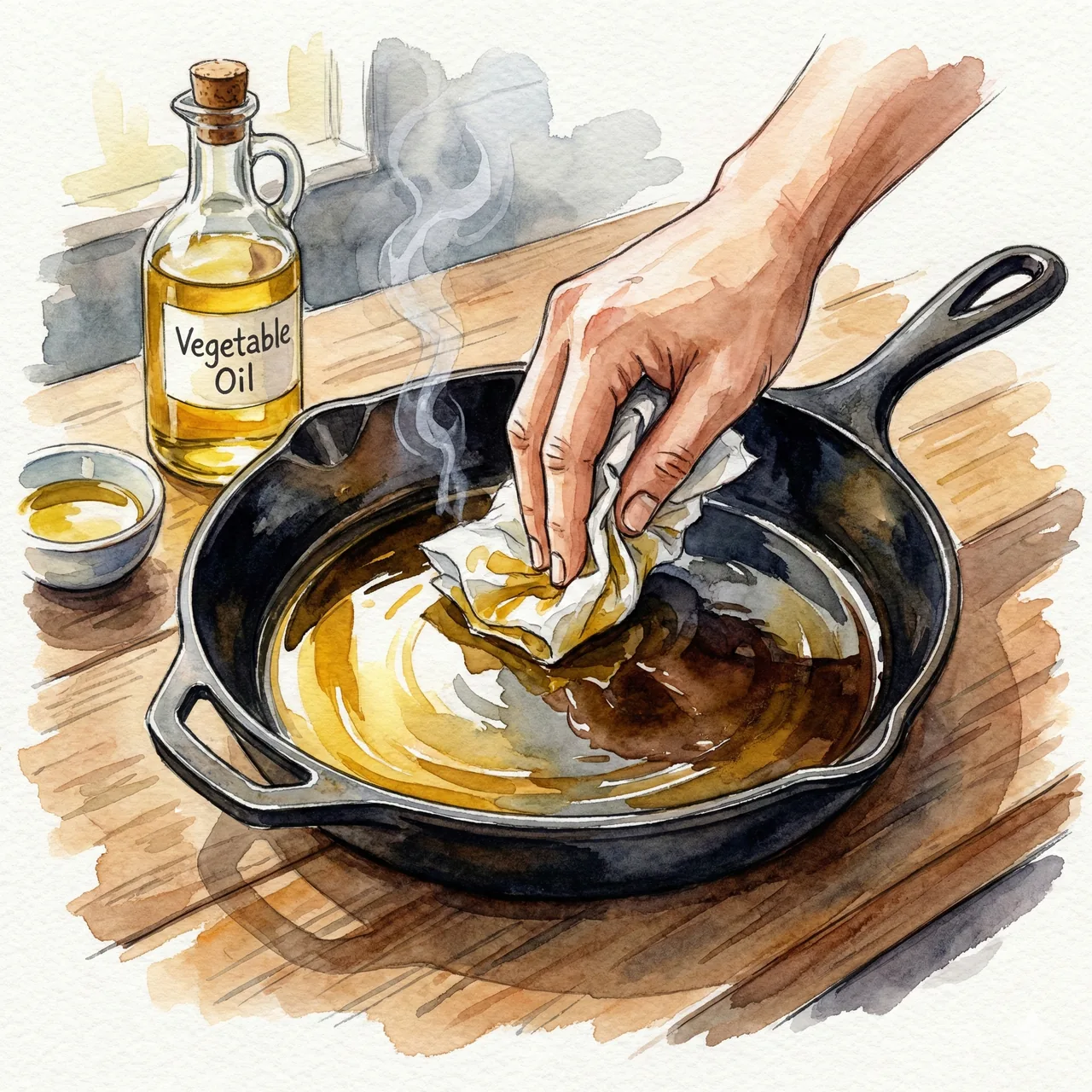
Use ⑩: Rust Prevention for Cast Iron & Knives
Food-grade tsubaki oil is an excellent choice for protecting iron cookware and kitchen knives.
Unlike vegetable oil, it doesn't oxidize and turn sticky over time — making it ideal for wiping a thin coat over
iron pans, tetsubin kettles, or knife blades before long-term storage.
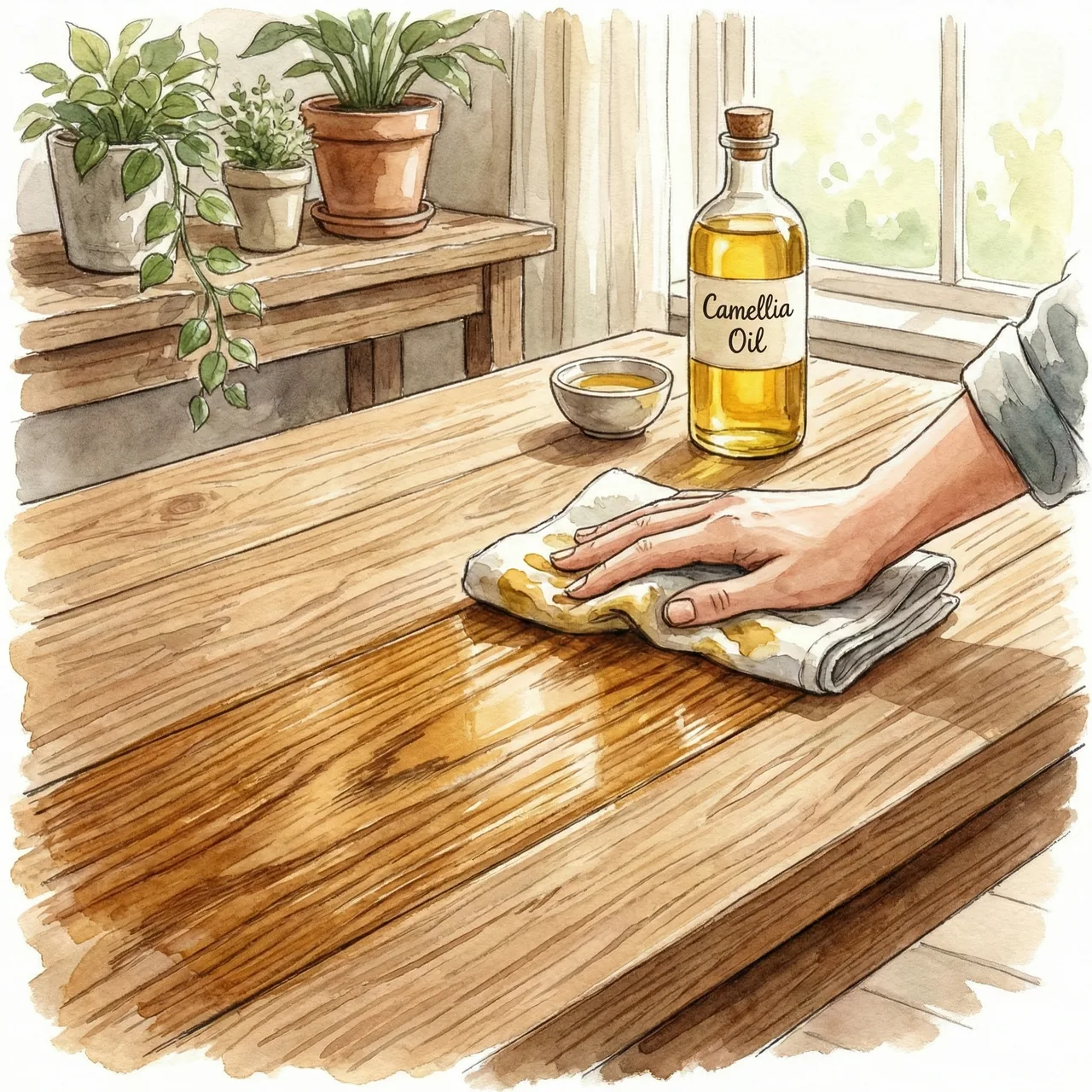
Use ⑪: Conditioning Wooden Furniture
Solid wood tables or floors showing signs of dryness? Tsubaki oil penetrates deep into the grain.
It prevents cracking from dryness while enhancing the natural beauty of the wood.
5. How to Choose: Heated vs. Cold-Pressed
Tsubaki oil comes in two main types — a golden yellow and a clear variety.
Your choice depends on how you plan to use it.
Oshima Tsubaki (大島椿) — Tokyo
Japan's most iconic tsubaki oil — the one in the yellow box.
Made by heating the seeds before pressing, giving it a warm, faintly nutty aroma and a slightly richer
texture.
Affordable and versatile: equally at home in your hair care routine, on your skin, or conditioning your kitchen
tools.
100% natural, so it's safe for facial use as well.
View Oshima Tsubaki Brand Page
Oshima Tsubaki Camellia Oil — 100% Pure, English Packaging (60ml)
Japan's most iconic tsubaki oil — heat-pressed and versatile for hair, skin, nail, and tool care. US English-labeled packaging, 60ml.
View on AmazonKamiyo Tsubaki (神代椿) — Tokyo / Toshima Island
A cold-pressed oil that performs like a serum.
Pressed without heat and filtered multiple times, the result is a clear, nearly odorless oil with a lighter,
silkier feel.
Its superior absorption and moisture retention make it the better choice for facial skincare — as a post-cleanse
booster or facial massage oil.
View Kamiyo Tsubaki Brand Page
Kamiyo Tsubaki — Cold-Pressed Camellia Oil from Toshima Island
A cold-pressed, nearly odorless camellia oil from Toshima Island, Tokyo. Superior absorption and purity for facial skincare — available in fragrance-preserved Gold and deodorized Silver.
Visit Official Site6. Frequently Asked Questions
Will tsubaki oil cause sun damage if I use it in the morning?
Generally, no.
Sun damage from oil (sometimes called "oil burn") typically comes from impurity-heavy mineral oils oxidizing under
UV exposure.
Refined tsubaki oil is highly resistant to oxidation and actually absorbs small amounts of UV-B rays, offering
mild protection for both skin and hair.
Can I use it if I'm prone to breakouts?
Use with caution.
Oleic acid is known to feed acne-causing bacteria. Avoid leaving tsubaki oil on active breakouts.
That said, using it as a rinse-off oil cleanser is generally fine — it lifts impurities rather than sitting on the
skin.
The smell puts me off. Is there an odorless option?
Yes — look for "refined" or "cold-pressed" on the label.
Traditional tsubaki oil has a characteristic scent, but modern refining techniques have produced nearly odorless
versions (such as Oshima Tsubaki's refined camellia oil).
Cold-pressed oils also tend to have a lighter scent.
How long does it keep after opening?
Use within about one year of opening.
Store away from direct sunlight in a cool location.
If it starts smelling off or appears darker in color, stop using it on your skin — but you can repurpose it as a
lubricant for door hinges or rusty tools.
How do I avoid that greasy feeling?
The trick is to use less than you think you need.
Never apply directly to hair — warm one drop between your palms until it's spread thin, then smooth it through
your hair.
If it feels like enough, it's probably already too much. Less is always more with tsubaki oil.
What's the difference between Oshima Tsubaki and other brands?
Oshima Tsubaki is a heat-pressed oil known for its value and versatility.
It's affordable, widely available, and works well for hair, body, and tool maintenance.
Cold-pressed options like Kamiyo Tsubaki are clearer, nearly odorless, and absorb more easily — making them better
suited for facial skincare.
For a first bottle, Oshima Tsubaki is the safe bet. For facial use, cold-pressed wins.
Final Thoughts: One Bottle for a Simpler Life
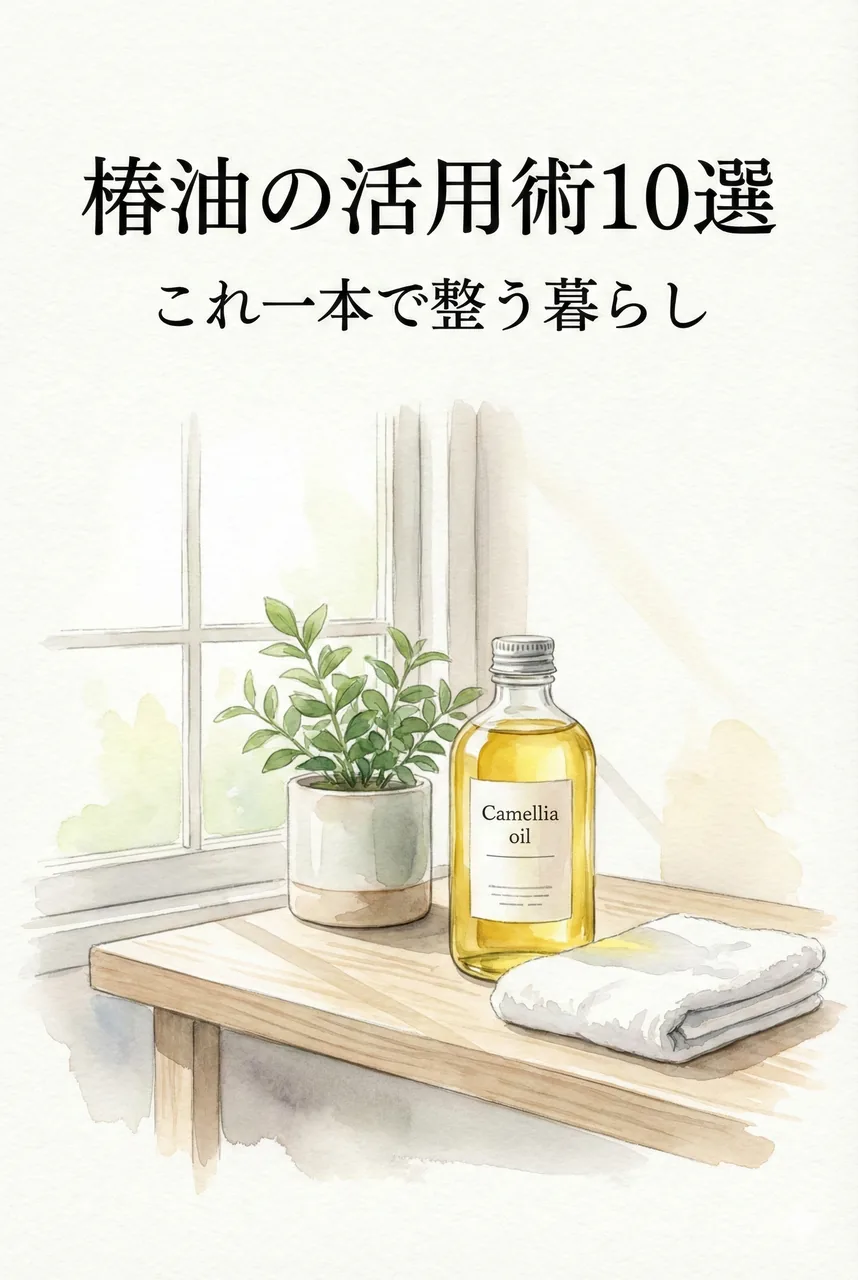
Hair treatment, oil cleanser, nail oil, leather conditioner, rust protector — you don't need a separate product
for each.
One quality bottle of tsubaki oil covers all of it.
There's something quietly satisfying about caring for yourself and your tools with the same thing.
It's a small ritual — but one that brings a sense of intention to everyday life.
Start with a small bottle, and see how many uses you find for it.


Tsuge Combs: Benefits & How to Care for One

Cast Iron Pans: How to Keep Vegetables Crisp & Prevent Rust