"I soak for twenty minutes but by the time I'm in bed my feet are cold again…"
"I want the hot spring experience, but I can't get away right now…"
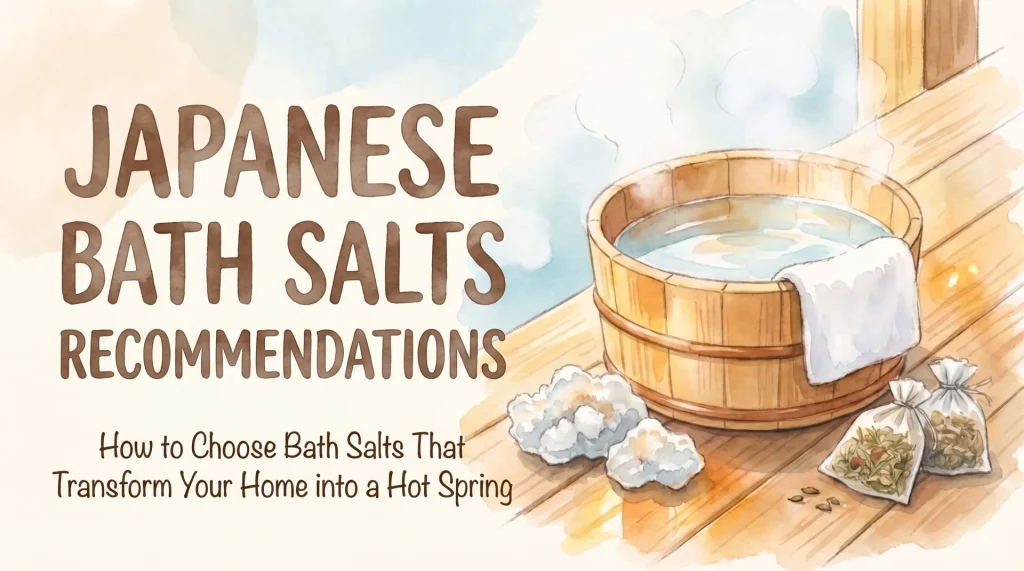
The answer Japan has had for centuries: yunohana (湯の花) and yakuto (薬湯) — hot spring crystals and medicinal herb baths you add directly to your bathtub.
The fizzing bath tablets at the drugstore are fine, but they're a different category entirely. Natural yunohana (crystallized hot spring minerals) and yakuto (bundles of dried medicinal herbs) change the quality of the water itself — the way it feels against the skin, how deeply it heats you, and how long the warmth lingers after you get out.
Slip into bed after a proper yakuto bath and you may not need socks.
This guide introduces Japan's most effective bath additives and covers the one critical precaution — sulfur content — that protects your bathtub equipment.
Quick Reference: Bath Additive Types at a Glance
| Type | Main Ingredient | Effect | Scent |
|---|---|---|---|
| Hot Spring (Onsen) Type | Sulfates, bicarbonate, mineral salts | Circulation, warming, fatigue recovery | Neutral to sulfurous |
| Medicinal Herb (Yakuto) Type | Dried herbs: angelica root, sichuan lovage, ginger | Cold extremity relief, skin improvement | Herbal / kampo medicine |
| Aroma / Plant Extract Type | Essential oils, botanical extracts | Relaxation, stress relief | Floral, citrus, herbal |
| Carbonated / Effervescent Type | Sodium bicarbonate, citric acid | Circulation boost, refreshing sensation | Fruit, herb |
1. Yunohana: More Than "Essence of Hot Spring"
The shelves are full of products labeled "hot spring essence" — but yunohana is something categorically different.
Actual Crystallized Hot Spring Minerals
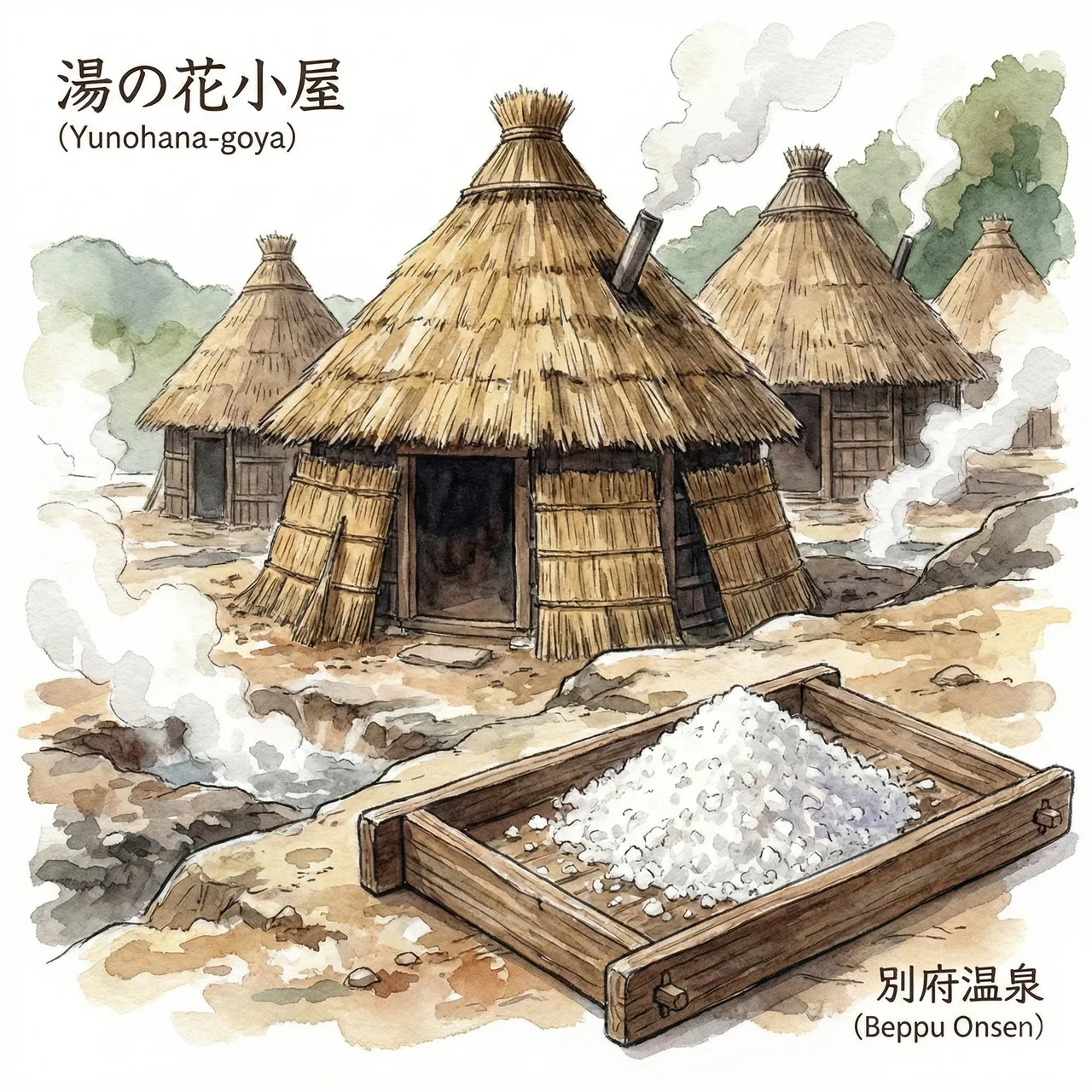
Yunohana (literally "hot spring flowers") are formed when hot spring vapor rises, cools at the surface, and the dissolved minerals crystallize on the earth. They are not manufactured — they are collected.
In other words, when you add yunohana to your bath, you're not adding "essence" or a synthetic approximation. You're adding the minerals themselves — the same compounds that give Japan's famous hot springs their therapeutic properties.
The water becomes slightly silky to the touch. Heat penetrates more deeply. Skin feels notably smoother after drying.
The yunohana from Beppu (Oita Prefecture) and Kusatsu (Gunma Prefecture) are the most famous — some of the manufacturing methods are designated intangible cultural folk heritage.
2. Yakuto: The Medicinal Herb Bath for Cold and Fatigue
No elegant fragrance here — this is traditional Japanese pharmacopoeia applied to bathwater.
Squeeze It to Release the Medicine
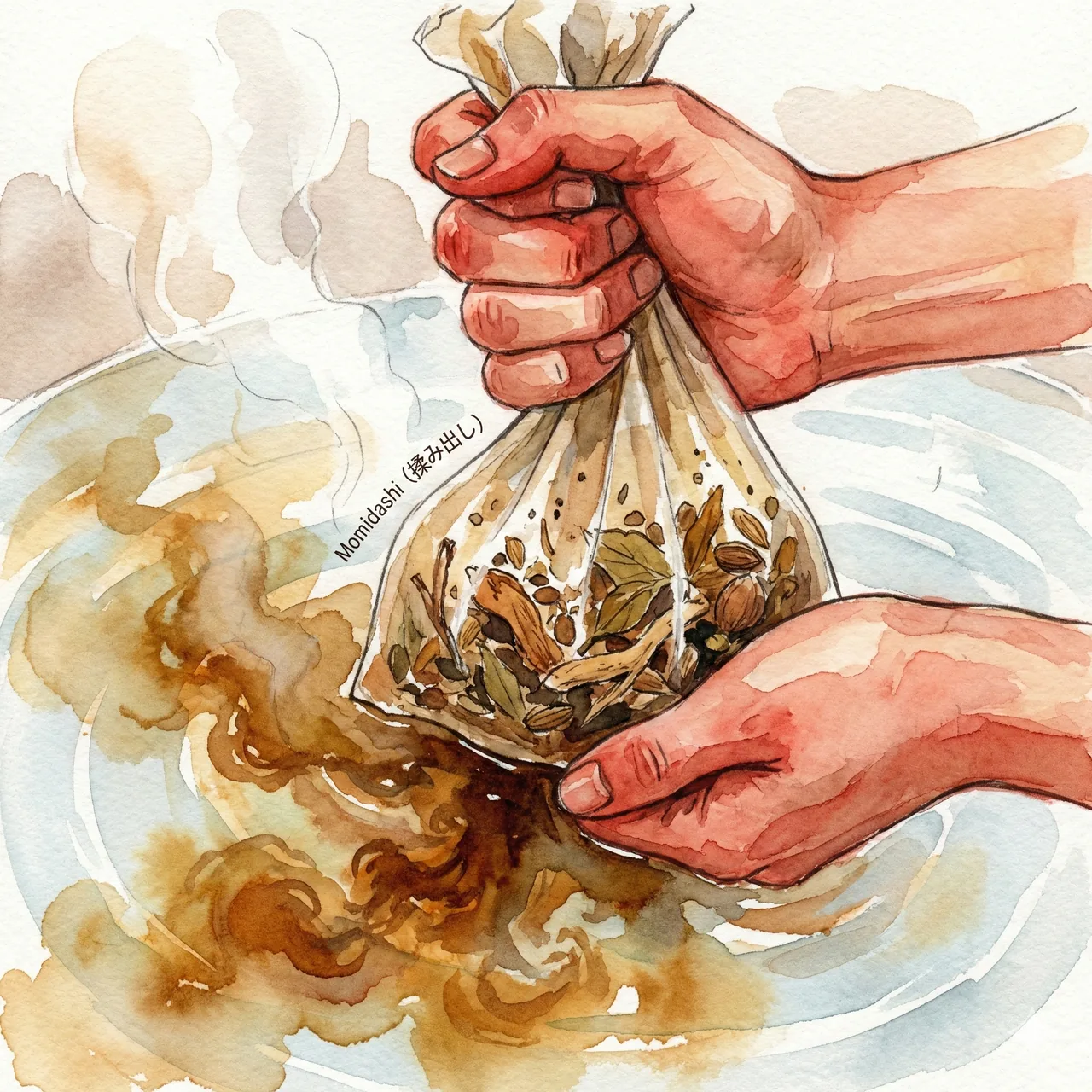
A yakuto pack contains dried herbs — typically Japanese angelica root (toki), Sichuan lovage (senkyu), dried citrus peel (chinpi), ginger, and others — sealed in a non-woven cloth bag.
The defining technique: knead and squeeze the bag in the bathwater to release the herbal compounds into the bath. The water turns amber and the room fills with the deep, resinous scent of kampo (Chinese herbal medicine).
This isn't a spa fragrance experience — it's a treatment. The vasodilating and diaphoretic compounds in these herbs create a noticeably stronger warming effect than standard bath products.
Keep one on hand as a rescue item for those days when you feel a chill coming on.
3. Three Japanese Bath Additives Worth Buying
Selected for genuine warming efficacy, not just fragrance.
Murakami Shokai — Beppu Onsen Yakuyo Yunohana (Oita)
The real thing — 100% natural crystals from a thatched-roof collection hut.
Made using a manufacturing method designated as Japanese intangible cultural folk heritage. The yunohana is collected from the Myoban (alum) hot spring district in Beppu, where steam rises through purpose-built thatched huts and minerals crystallize on the earthen floor over weeks.
Dissolves quickly in the bath, turning the water a mild white. The water feels noticeably silkier — moisture lingers on the skin after drying.
Effective for heat rash, eczema, and cold extremities. The retro packaging has been unchanged for decades, and for good reason.
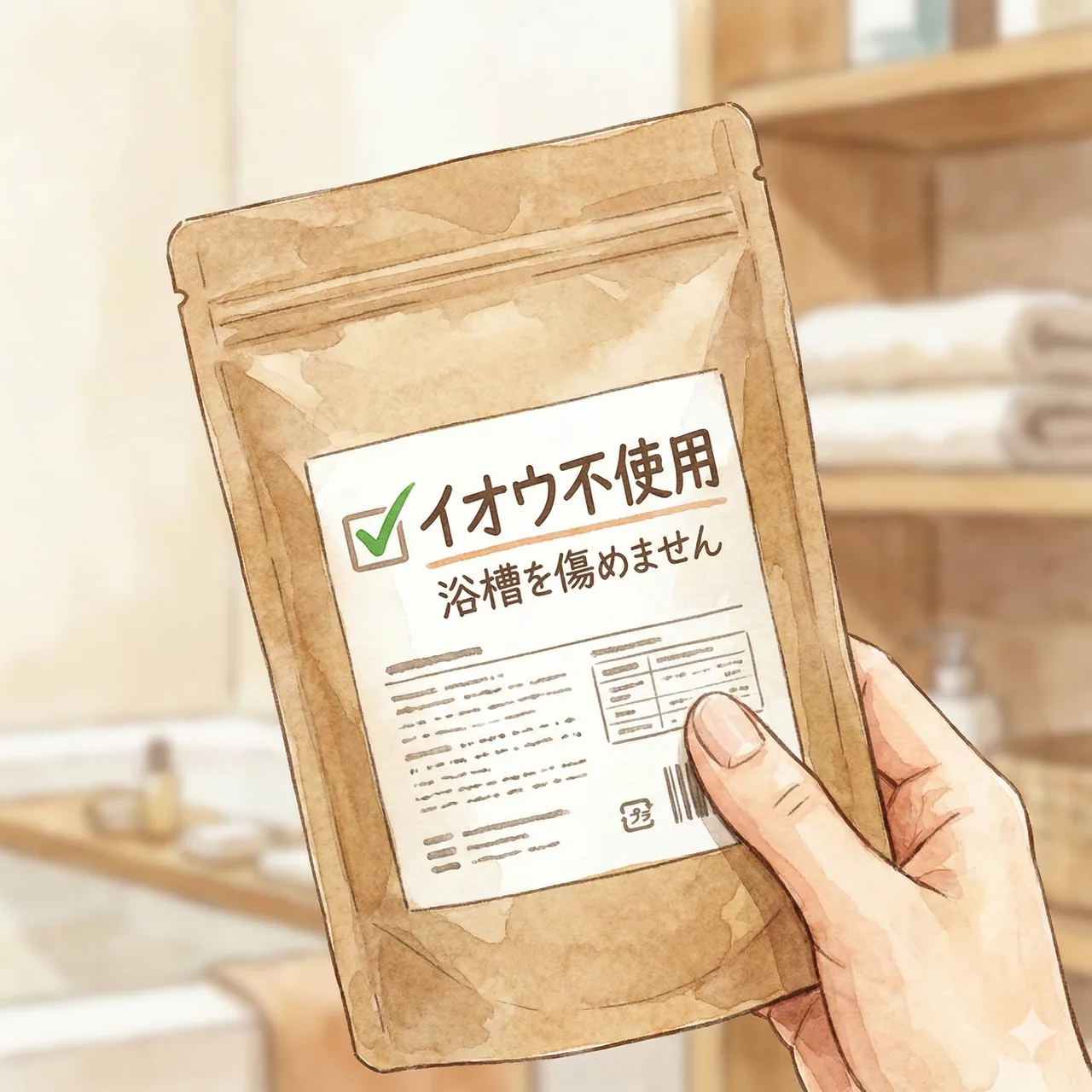
Note: this product does not contain sulfur, so it is safe for most bathtub heating systems — but rinse the tub after use as a precaution.
Kokusanyakuhin — Hida Yokuto (Gifu)
100% medicinal herbs — nothing else added.
A yakuto product as close to nature as it gets: Japanese angelica root, Sichuan lovage, boi (silkworm mulberry root), and other medicinal herbs, dried and packed directly into a cloth bag. No artificial fragrance, no synthetic compounds, no fillers.
Steep the bag in the bath and knead it; the water turns deep brown and the bathroom fills with the unmistakably restorative scent of an authentic herbal medicinal bath.
The warming effect persists long after you leave the bath — users often describe feeling warm enough to skip socks or an extra blanket. The go-to item for stubborn cold feet and fatigue that lingers.
Earth Conscious — Domestic Epsom Salt (Tokushima)
The modern bath salt that works with any bathtub system.
Despite the name, Epsom salt contains no sodium chloride — it's magnesium sulfate, a mineral compound. No salt means no corrosion risk, making it compatible with recirculating bath heating systems (oiyaki/tsuiTaki) unlike most hot spring additives.
The diaphoretic effect is intense — most users sweat heavily within 10–15 minutes, making it useful for detox, reducing puffiness, and flushing retained water.
Colorless and odorless, it serves as a neutral base that you can customize with a few drops of your preferred essential oil.
4. Protecting Your Bathtub: The Sulfur Warning
The most important safety note when using natural bath additives is about sulfur and your bathtub's heating system.
Check for "No Sulfur" on the Label Before Using the Recirculation Function
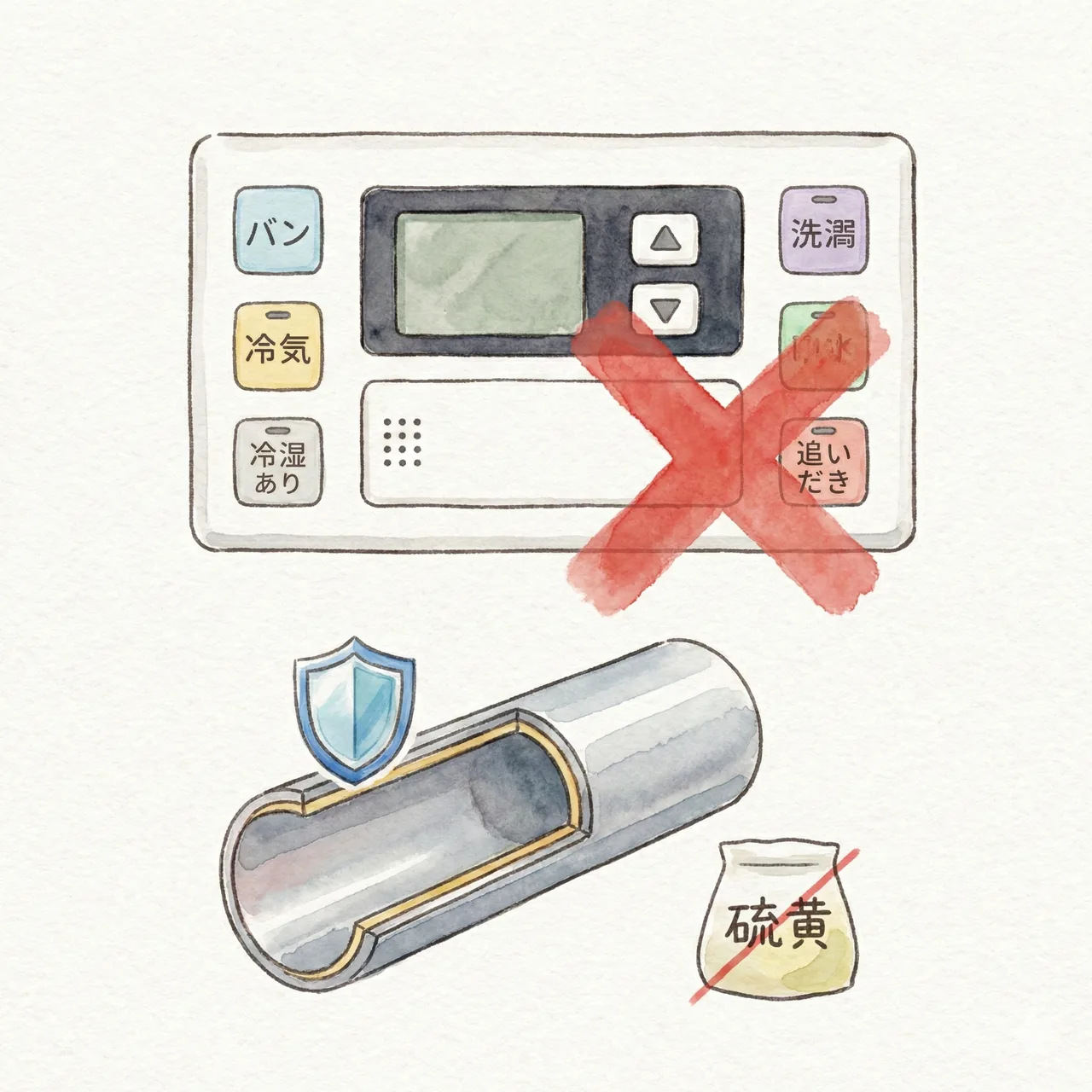
Sulfur in hot spring minerals corrodes metal. Bath heating systems (the kind that recirculate water through pipes for reheating) contain copper and other metals that sulfur can damage irreversibly.
Before using any hot spring bath additive with a recirculating heater, check the packaging for the phrase "does not contain sulfur" (or equivalent in the ingredients list).
If a product contains sulfur (Kusatsu Onsen yunohana, for example), do not use the recirculation function. Drain the bath completely after use and rinse the tub and pipes thoroughly with fresh water.
Don't Reuse Bathwater with Natural Additives for Laundry
Natural mineral and herb bath additives can leave mineral deposits on fabric, cause discoloration, or make clothing stiff and rough.
On days you use yunohana or yakuto, avoid the common Japanese practice of reusing bathwater for laundry.
5. As a Gift: Japanese Bath Salts That Feel Considered
Bath additives are "consumables" — they don't accumulate, they don't impose, they don't require decisions about where to put them. For those reasons, they're among the most gracious gifts you can give.
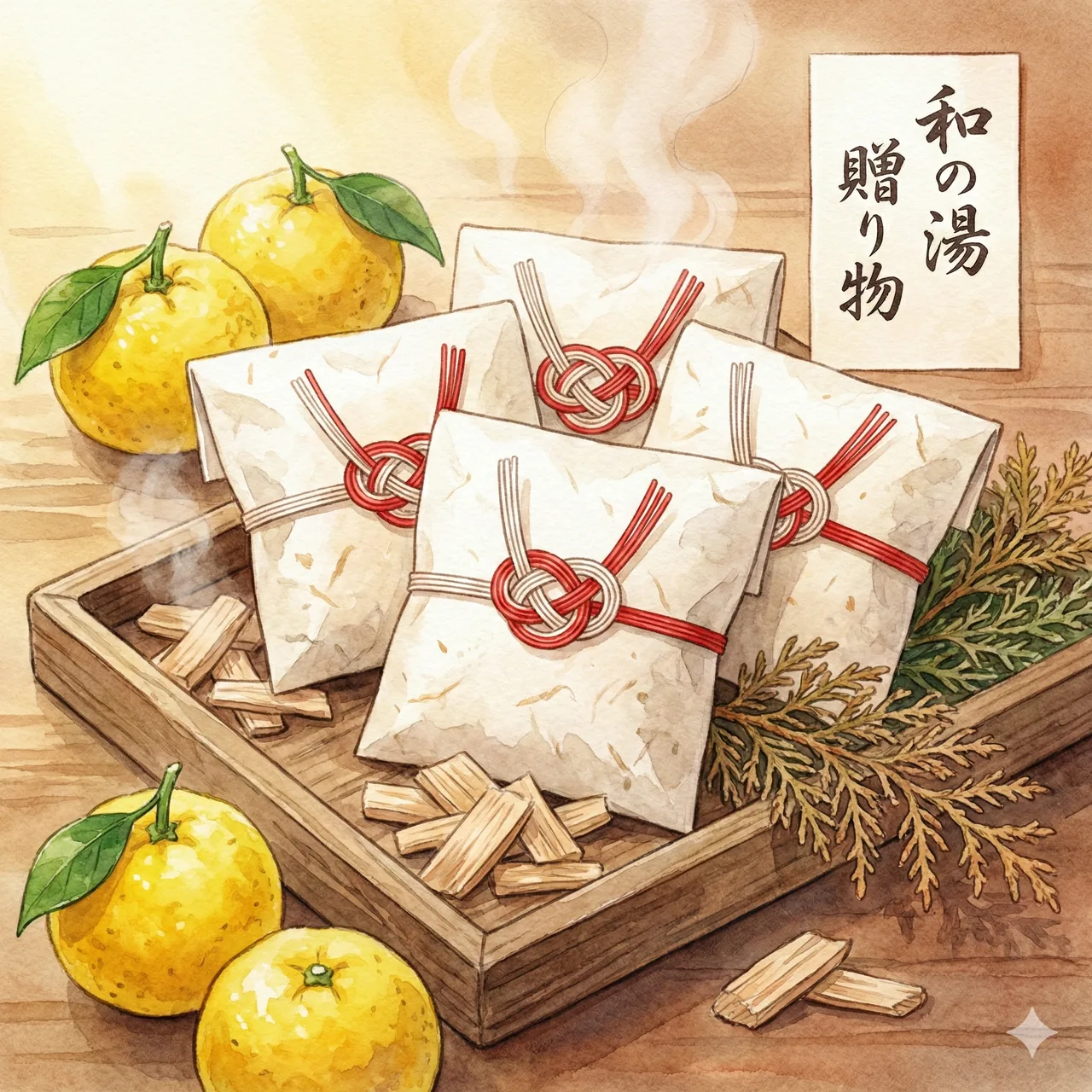
Japanese bath salts are especially well-suited for gifting because of their packaging. Washi-wrapped bath salts, yuzu (Japanese citrus) or hinoki (Japanese cypress) scented formulas, and beautifully boxed yunohana sets all convey thoughtfulness and cultural depth without being impractical.
When choosing a gift for someone whose bathtub setup you don't know, select salt-free (no sodium chloride) or neutral pH formulas — these are safe for virtually any bathtub type, including those with recirculating heaters.
Frequently Asked Questions
Are these safe to use with young children?
Avoid strong medicinal herb baths for children, especially infants.
The diaphoretic (sweat-inducing) effect and the intensity of yakuto can be too stimulating for young children's skin. Look for products labeled "safe for babies" or choose mild unscented options like diluted Beppu yunohana (which is also used traditionally for infant heat rash).
When in doubt, consult a pediatrician before using any therapeutic bath additive with young children.
Do bath additives have an expiration date?
Most are labeled for approximately 3 years unopened.
Natural products — particularly yunohana and yakuto — can lose potency over time as volatile aromatic compounds evaporate and moisture infiltrates.
Use opened products within a reasonable timeframe. Yunohana stored in sealed, dry conditions keeps well for years; yakuto can absorb ambient humidity and should be used within a year of opening.
What's the ideal bath temperature for these products?
38–40°C (100–104°F) — slightly below what most people consider "hot."
Water above 42°C (108°F) activates the sympathetic nervous system, making it harder to wind down afterward.
Yunohana and yakuto are more thermally efficient than plain water — at the same temperature, you heat up faster and more completely. A 15-minute soak at 38–40°C with these additives produces better results than a shorter, hotter plain bath.
Will the bath additives stain my tub?
Yakuto (herb baths) carry the most risk of discoloration.
The tannins and pigments in dried herbs can adhere to soap scum and lime scale deposits in the tub. On days you use yakuto, drain and rinse the tub the same evening — don't leave the water to sit overnight.
Yunohana and Epsom salt are generally safe for any tub surface used as directed.
Can people with sensitive skin use these?
Yunohana is often recommended for sensitive or irritated skin; yakuto should be approached with caution.
Beppu alum-type yunohana has a long traditional use for skin conditions including eczema and heat rash — it's generally mild and well-tolerated.
Yakuto contains ginger and other compounds with significant vasodilating properties, which can cause tingling or mild irritation in sensitive individuals. Start with a very diluted amount and check your skin's response before using a full dose.
I accidentally used a sulfur product with the recirculation heater. What now?
Don't panic — one incident rarely causes immediate damage. Flush the system with clean water immediately.
Drain the bath completely and wipe the tub clean. Refill to above the circulation inlet with fresh cold water, then run the recirculation function once. This pushes clean water through the pipes and flushes out the sulfur-bearing bathwater.
If you repeat this habitually, corrosion will accumulate — but a single incident, promptly rinsed, is unlikely to cause lasting damage.
Final Thoughts: Reset the Day Before You Sleep
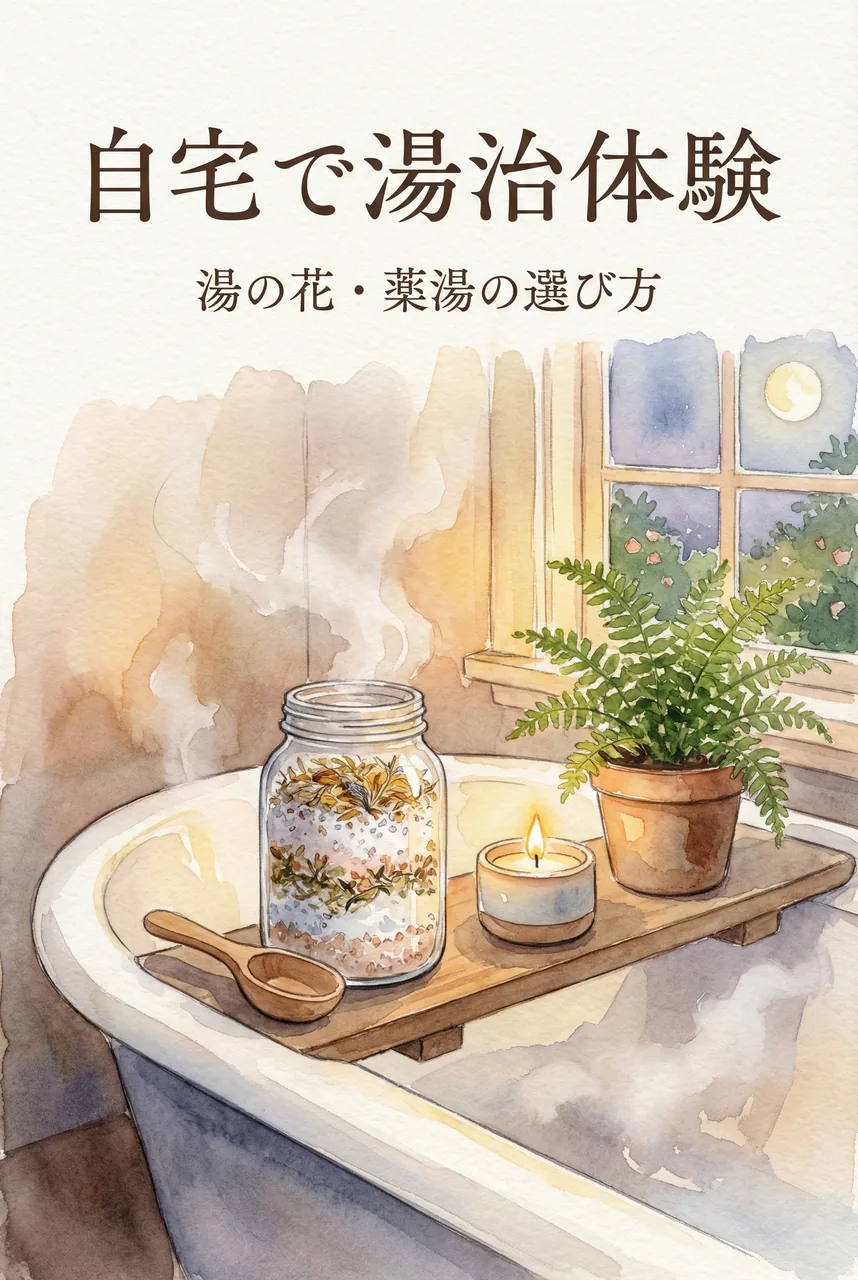
A quick shower serves its purpose — but the Japanese concept of toji (therapeutic bathing) is something different.
A long soak with yunohana or yakuto isn't a luxury so much as maintenance. Heat the body from the inside, release the held tension of the day, and move toward sleep with a quality of calm that a shower can't provide.
Even once a week makes a measurable difference. The water is waiting.

Japanese Tsuge Boxwood Combs: No Static, Natural Shine
Japanese Camellia Oil: 10 Ways to Use It for Hair and Skin