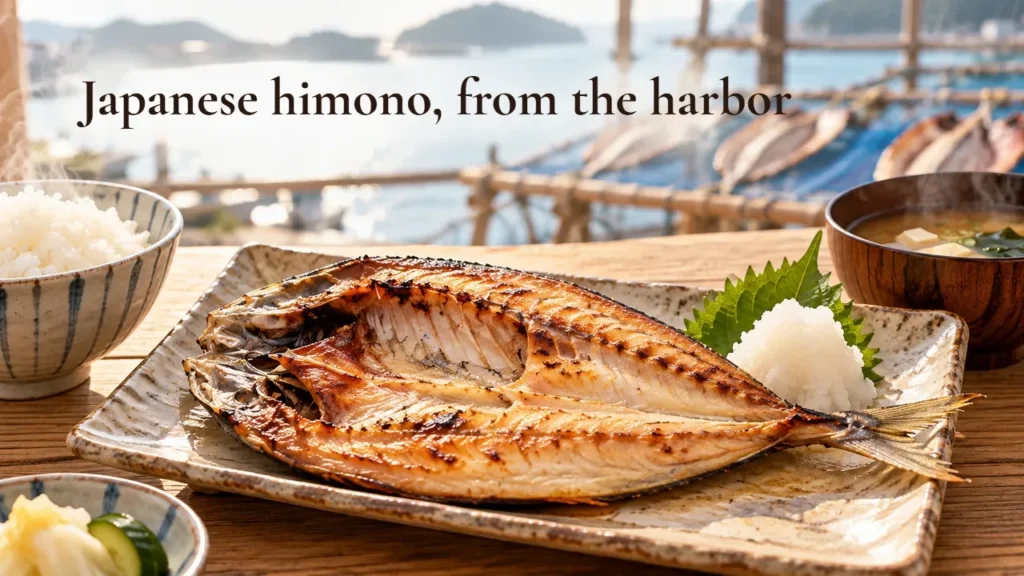
Two shops' aji (horse mackerel) himono can smell and taste completely different when grilled.
The difference comes not only from the fish but from the brine it soaks in, and how it's dried.
Himono — salted, dried fish — is the grilled fish at the heart of a Japanese breakfast. One Numazu shop soaks its fish in a brine topped up for decades and dries it under the sun whenever the weather allows. On Niijima, in the Izu Islands, a famously pungent himono was born because salt was too precious to throw the brine away.
This guide covers three Japanese himono: sun-dried aji from Numazu, overnight-dried nodoguro from Hamada Port in Shimane, and kusaya from Niijima — plus how to grill and keep them, and where to taste them.
Quick Reference: 3 Japanese Himono at a Glance
| Himono | Fish and brine | Maker | Best for |
|---|---|---|---|
| Sun-dried ma-aji ▾ | Japanese horse mackerel, topped-up brine | 土和商店 (Numazu, Shizuoka) | Everyday breakfast |
| Nodoguro ichiya-boshi ▾ | Blackthroat seaperch, salt | Isohama Honpo (Hamada, Shimane) | A formal gift |
| Kusaya ▾ | Blue muroaji, kusaya brine | Kusaya no Kikumago (Niijima, Tokyo) | With sake |
Click a himono to jump to it.
1. Why Japanese: Fish, Salt and the Way It's Dried
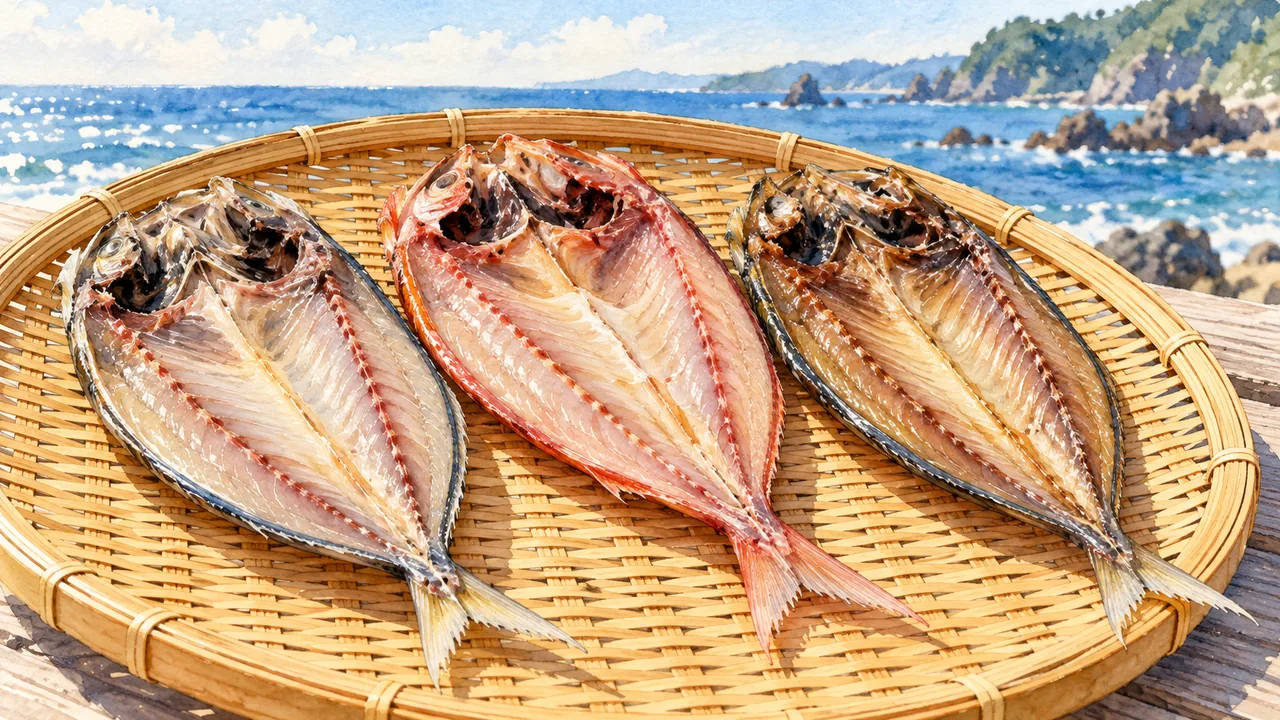
Split, soaked in brine, dried
Himono is fish that's been split open, soaked in salt water (brine), and dried by wind and sun. Grilled, it's the classic centerpiece of a Japanese breakfast with rice and miso soup — and of a ryokan breakfast tray.
The same himono tastes different depending on which fish, what brine and how it's dried. The three makers here each keep their region's himono in a different way.
2. Numazu: Topped-Up Brine and Sun-Dried Aji
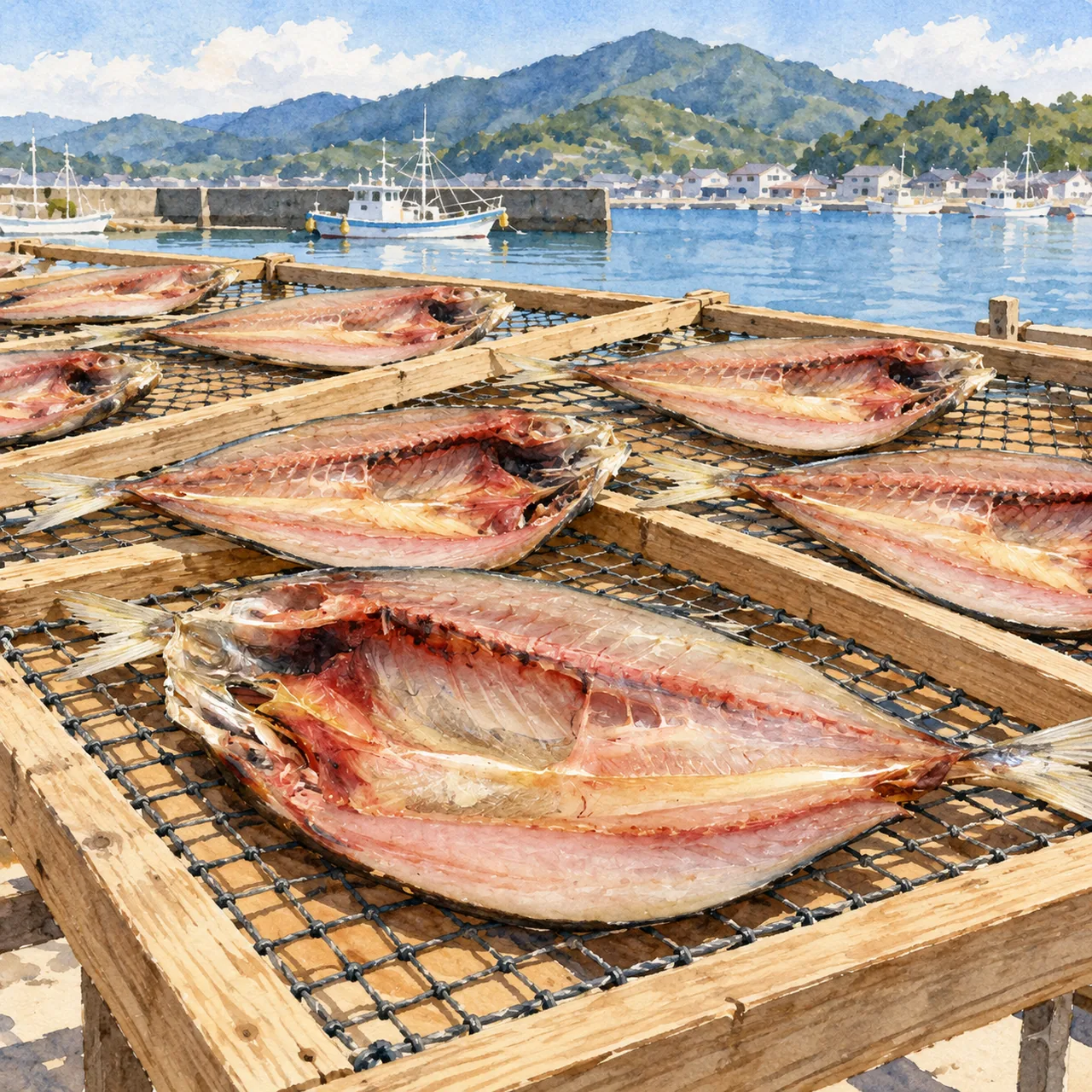
Chosen at the fish market, split by hand, dried in the sun
土和商店 is a himono specialist in Numazu, Shizuoka, founded in 1930. It makes himono and sells them in its own shop, and holds buying rights at the Numazu fish market, so it chooses its fish with its own eyes.
Craftsmen split each fish by hand and dry it with care — by sun-drying, now rare, whenever the weather allows. The ingredients are fish and salt only, with no antioxidants.
Topped-up brine becomes fish sauce
The shop has topped up the same brine for many years. It has fermented into something like fish sauce, giving depth even though only fish and salt go in. According to the shop, Numazu is Japan's largest himono-producing town — and this shop keeps the old way there.
土和商店 Numazu Himono, Select Ma-aji, 100 g × 6 — just fish and salt
Japanese ma-aji soaked in topped-up brine and sun-dried. Six 100 g (3.5 oz) fish; the only ingredients are aji and salt. Shipped frozen within Japan.
Just the right size for breakfast. Grill it and serve with rice and miso soup.
3. Hamada, Shimane: Nodoguro, the "Toro of White Fish"
From the port straight to the company's own plant
Nodoguro — standard Japanese name akamutsu, blackthroat seaperch in English — is a Sea of Japan fish so rich in fat and melting in texture that it's called "the toro of white fish."
Isohama Honpo is in the fish-processing park of Hamada, Shimane. Fish landed at Hamada Port go quickly to its plant, where experienced hands handle everything from raw prep to finishing in-house.
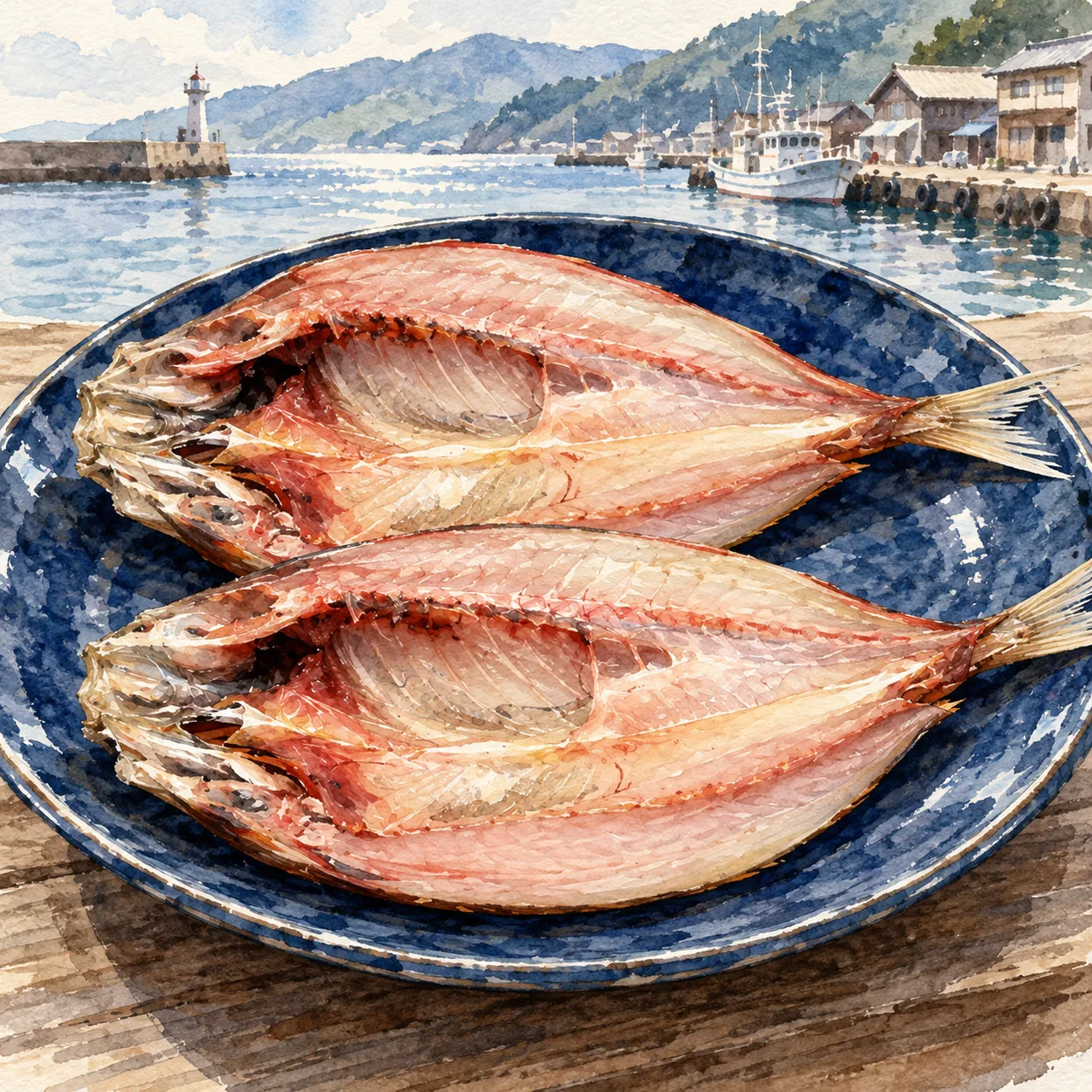
Isohama Honpo Hamada Port Nodoguro Ichiya-boshi, about 130 g × 4 — the San'in coast's luxury fish
Nodoguro from the San'in coast, overnight-dried with only salt. Four fish of about 130 g (4.6 oz). Depending on the catch, they may be landed at Shimonoseki in Yamaguchi instead.
On the grill, the fat sizzles out. A year-end gift, a celebration, or something special for someone you respect. Sold in Japan.
4. Niijima: Kusaya, Born from Not Wasting Salt
Salt wisdom from 350 years ago
Kusaya is a dried fish of the Izu Islands. According to the Tokyo Metropolitan Government, about 350 years ago Niijima and the other Izu islands paid salt as tribute to the shogunate. Salt was so precious that the brine fish were soaked in wasn't thrown away; it was reused again and again, with salt added.
Over time the brine took on the flavor of the fish and developed its distinctive character — and fish soaked in this "kusaya brine" and dried is kusaya. Kusaya no Kikumago makes it on Niijima. It's famous, too, for its powerful smell when grilled; fans love it.
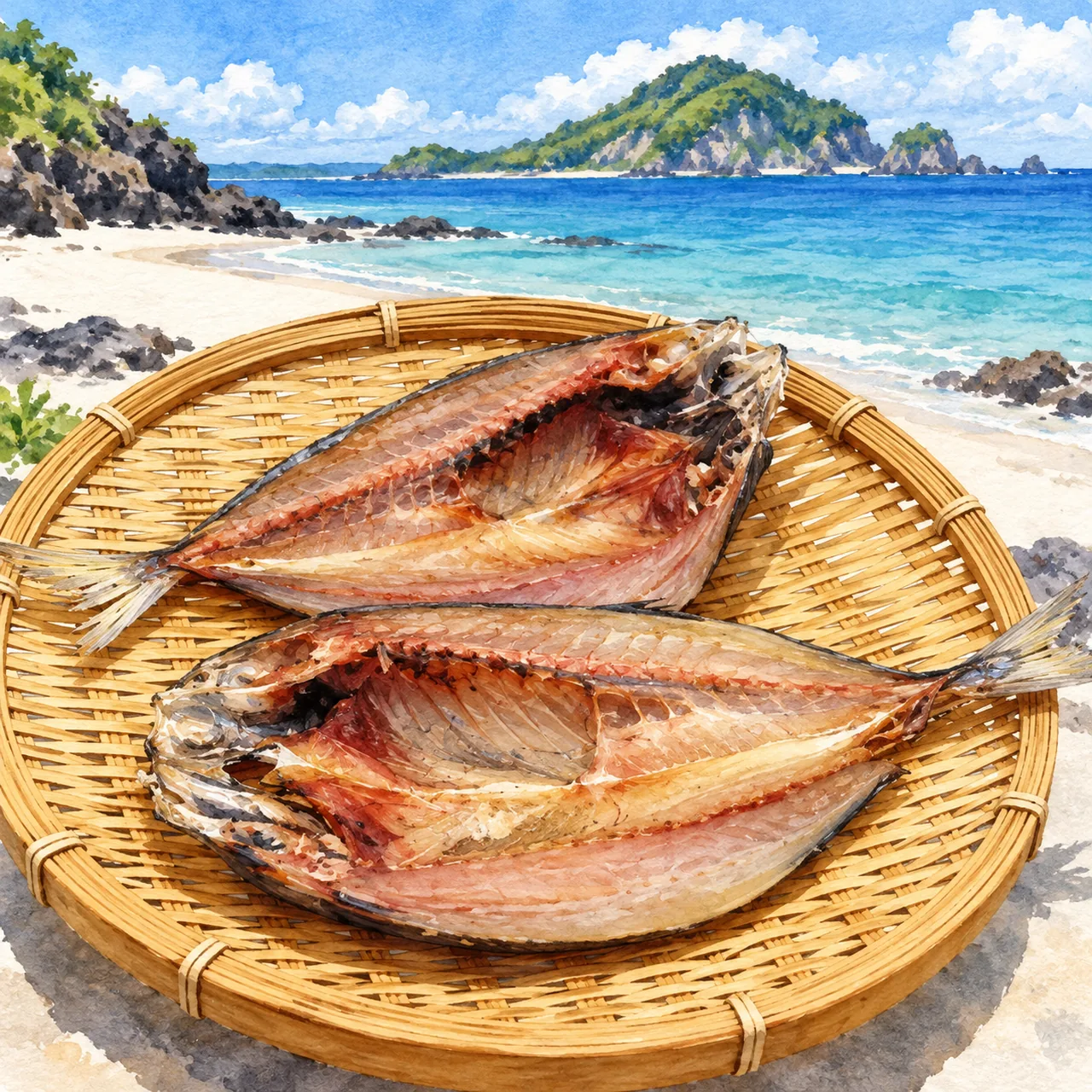
The finest kusaya: blue muroaji in autumn
Tokyo's materials describe kusaya of ao-muroaji (blue mackerel scad) as the finest, and local fish caught in autumn as exceptional. Soft-dried muroaji has depth; tobiuo (flying fish) is lighter — each has its fans.
Kikumago Niijima Kusaya, Blue Muroaji, Vacuum-Packed — the classic, soft-dried
Thick, fatty blue muroaji soaked in kusaya brine and dried. Soft "naka-boshi" (medium-dried), vacuum-packed: two bags of three large or two medium fish. The fish come from Kagoshima or the waters around Niijima.
Grill and flake it — with sake, or over ochazuke. Sold in Japan.
5. Grilling and Storing
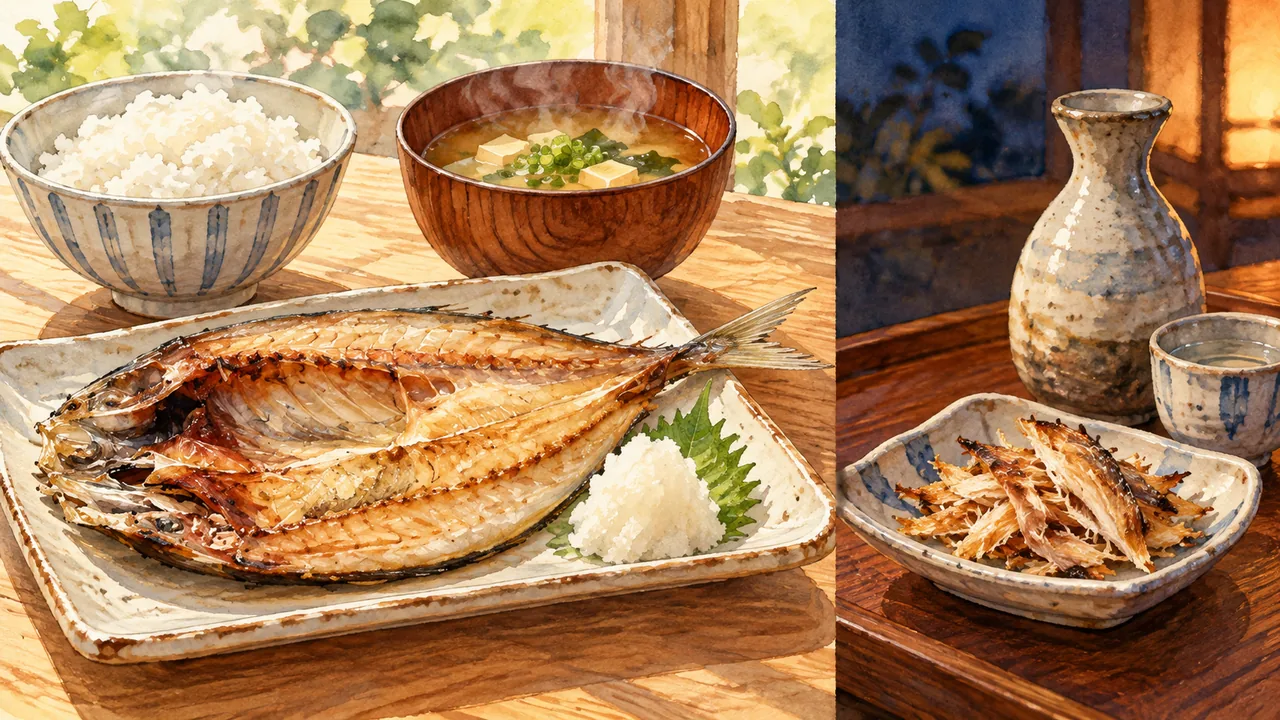
Thaw naturally, then grill
The Numazu shop's himono arrive frozen, and it recommends thawing naturally before grilling — on a fish grill, or in a frying pan or microwave. Serve hot with grated daikon. Nodoguro's fat gives off a toasty aroma as it grills. Grill kusaya, then flake it by hand for sake or ochazuke.
Freeze or refrigerate on arrival
The Numazu shop gives two weeks frozen or five days refrigerated after delivery. Kikumago recommends keeping kusaya refrigerated at 10°C (50°F) or below, frozen for longer. Split them on arrival into what you'll eat soon and what goes in the freezer.
6. Where to Taste Himono
These himono are frozen or chilled fish, sold and shipped within Japan; we couldn't find them on Amazon.com. Rules on bringing fish products into other countries vary — check before you pack any.
The easiest way to taste good himono is in Japan: as part of a ryokan or set-meal breakfast, at himono shops in harbor towns, and in the himono corners of department-store food halls. Numazu, the town of the first shop here, is a himono town by its own account.
Look for 干物 (himono), 天日干し (sun-dried), 一夜干し (overnight-dried), あじの開き (split aji), のどぐろ (nodoguro) and くさや (kusaya).
7. Frequently Asked Questions
Can I grill himono straight from frozen?
The Numazu shop recommends thawing naturally first. Makers' instructions vary, so check what comes with your fish.
What's different about sun-dried himono?
It's the traditional way — drying under the sun. The Numazu shop still sun-dries whenever the weather allows, which has become rare.
Are nodoguro and akamutsu the same fish?
Yes. Akamutsu is the standard Japanese name; nodoguro ("black throat") is a common name. In English it's blackthroat seaperch, and in Japan it's nicknamed "the toro of white fish."
Why does kusaya smell so distinctive?
Because it's soaked in a long-used "kusaya brine." When salt was precious, the brine was reused with salt added, and it took on the fish's flavor, creating its unique character.
I'm worried about the smell of grilling kusaya.
Choose vacuum-packed or pre-grilled kusaya. Kikumago also sells grilled, flaked kusaya in jars and sticks. If you grill it, ventilate well.
Which makes the best gift?
For a formal gift, nodoguro ichiya-boshi. For something enjoyed every day, Numazu's aji. Kusaya is for someone who loves sake.
Final Thoughts: Fish, Salt and Sunlight
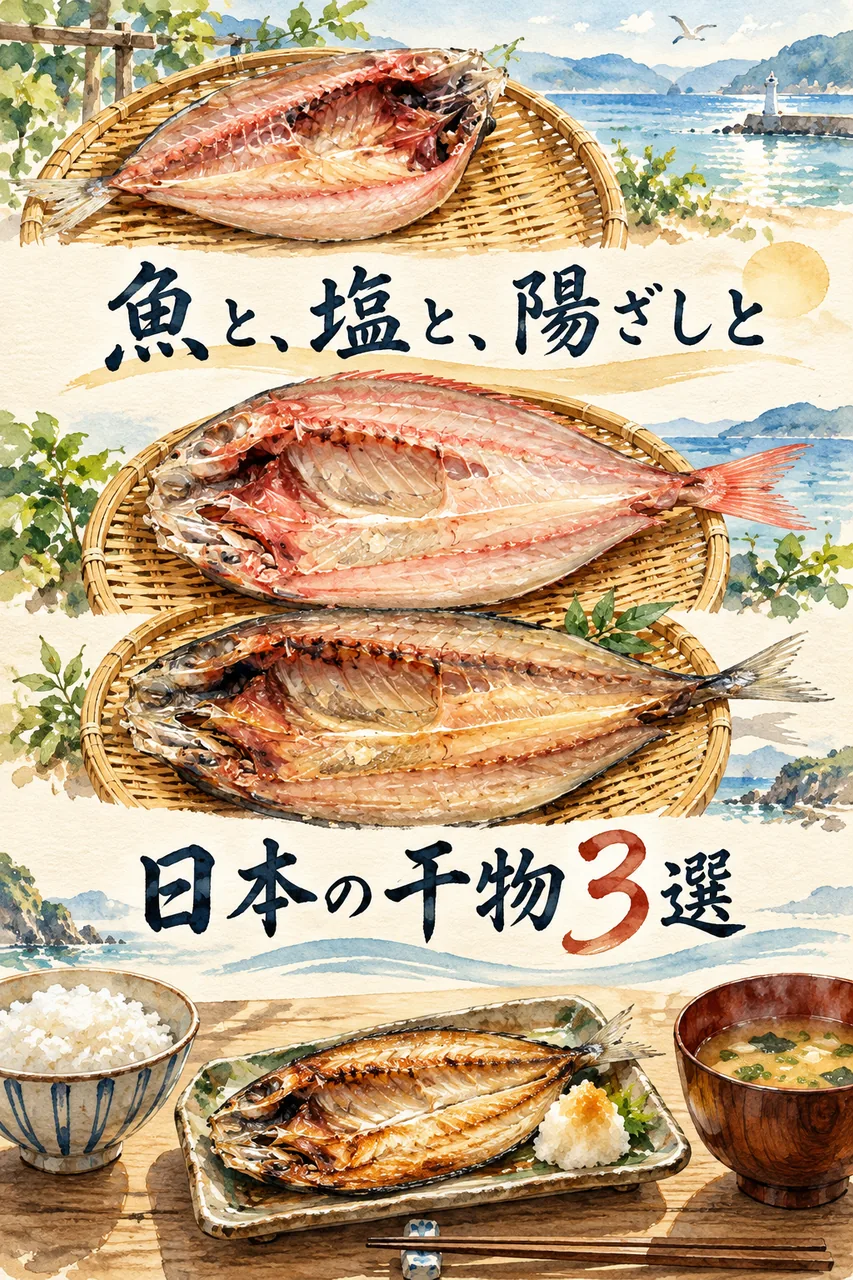
Himono changes with the fish, the salt and the drying.
Numazu aji soaked in brine topped up for decades and dried in the sun. Hamada's nodoguro, landed at the port and finished in the maker's own plant. And Niijima's kusaya, born of an island life that couldn't waste salt. Each one is a maker keeping a harbor's himono alive.
If you're in Japan, order grilled himono at breakfast — and taste the difference the brine makes.
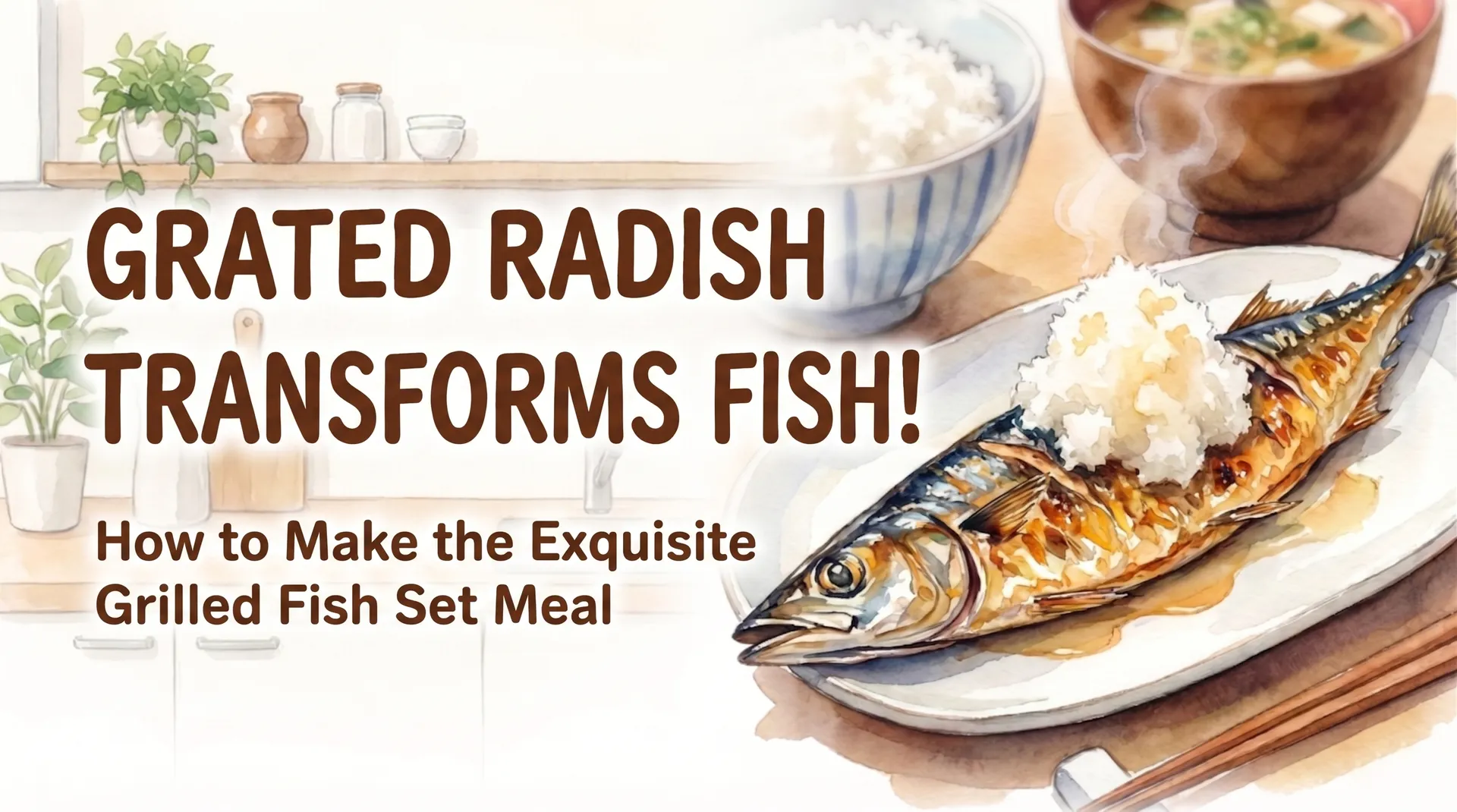
Japanese Grilled Fish & Daikon Oroshi: Restaurant Results at Home

Japanese Snacks & Bar Bites: 7 Best Mail-Order Picks