Kanten is Japanese agar — the seaweed jelly that sets Japanese sweets like yokan. Since it comes from seaweed, you would expect it to be made by the sea.
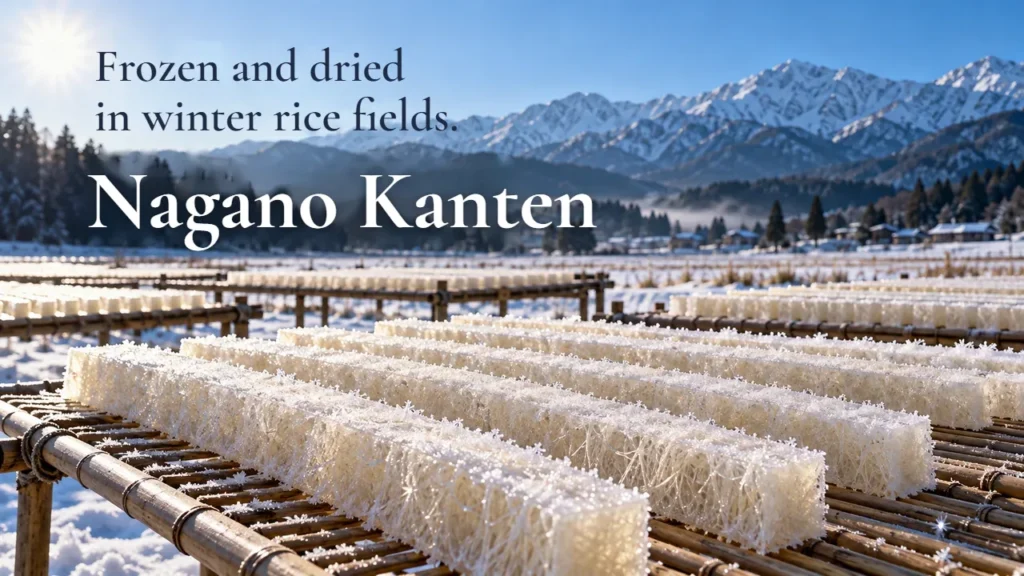
Yet bar kanten is made in Suwa, Nagano, a landlocked mountain basin — in rice fields, in the middle of winter.
At night the temperature drops toward −10°C (14°F); by day the sky is clear and the air is dry. That swing is used to freeze the kanten, then dry it, again and again. In winter, Suwa's resting rice fields fill with rows of white bars laid out to dry — a scene called kanten-boshi.
This guide covers three natural kanten products: Suwa's bar kanten, thread kanten made from nothing but tengusa seaweed in Yamaoka, Gifu, and tokoroten from Izu — the jelly that kanten is made from. It also explains how to use them, and how kanten differs from gelatin.
Quick Reference: Natural Kanten and Tokoroten at a Glance
| Product | Form | Where it's made | Best for |
|---|---|---|---|
| Shinano Kanten Half Kanten ▾ | Bar kanten (kaku kanten) | Suwa, Nagano | Yokan, fruit jellies |
| Tamano Gozen Thread Kanten ▾ | Thread kanten (ito kanten) | Yamaoka, Gifu | Salads, soups |
| Izu Kappa Kakitagawa Tokoroten ▾ | Fresh tokoroten | Izu, Shizuoka | Pushed into noodles and eaten as is |
Click a product to jump to it.
1. Why Japanese: Kanten Began as Frozen Tokoroten
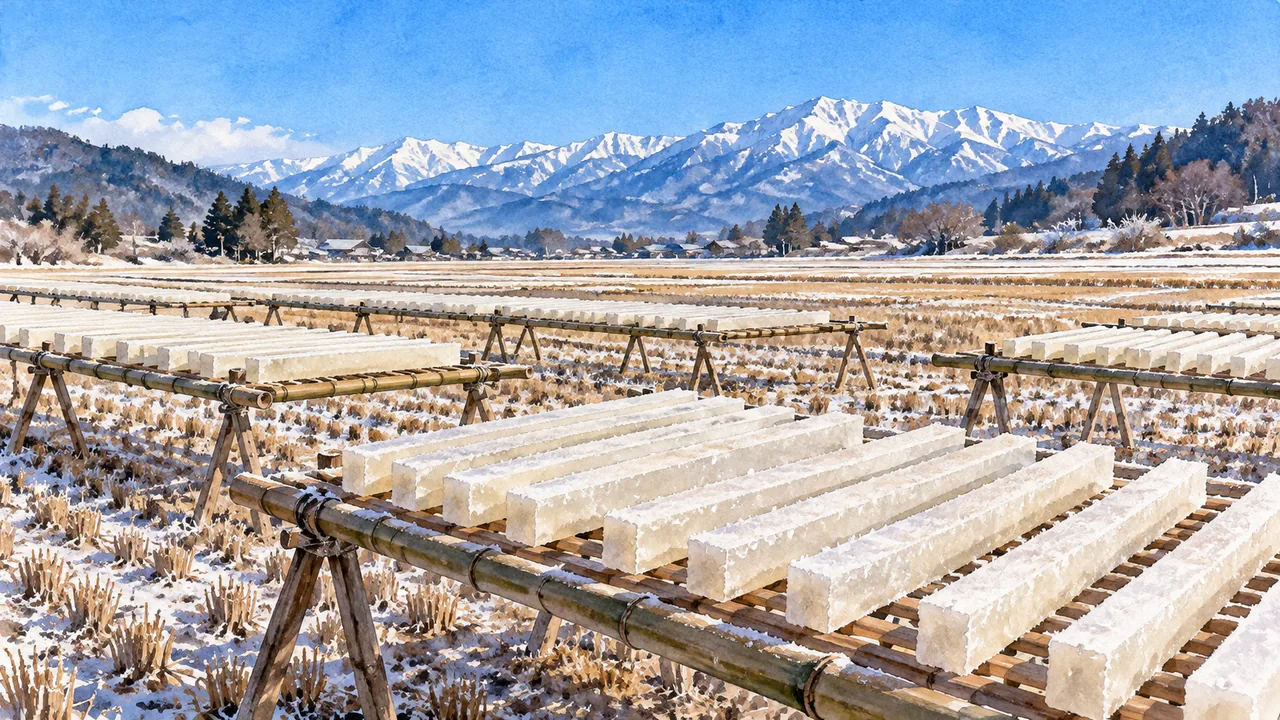
Leftover tokoroten at an inn in Fushimi
Kanten is said to have started at an inn in Fushimi, Kyoto. The inn served tokoroten — a jelly made by boiling tengusa seaweed — to a traveling party from the Satsuma domain. The leftovers were put outside, where they froze and dried. When someone soaked them in water and ate them, the seaweed smell was gone and the jelly was clear and handsome. It was named after "kan-zarashi no tokoroten," tokoroten exposed to the winter cold — kanten, literally "cold sky" (according to Nagano Prefecture's official tourism site).
Today there are two kinds. Natural kanten — bar kanten and thread kanten — is made outdoors, using winter's day-night temperature swing to freeze and dry it over and over. Industrial kanten, such as powdered kanten, is made by extracting the gelling substance from seaweed by machine. Natural kanten is made mainly from tengusa (Gelidium seaweed), and is prized for its smooth, springy texture.
In English, kanten is usually sold as "agar" or "agar agar" — the name of the same seaweed gel, borrowed from Malay. "Kanten" is the Japanese name, and it points to the Japanese way of making it.
2. Suwa's Bar Kanten: Frozen and Dried in Winter Rice Fields
A winter trade brought home by a peddler
Kanten making came to Suwa around 1830. Kobayashi Kumezaemon, a traveling peddler from Anayama village (now Tamagawa in Chino City), saw kanten being made while working away from home in Tanba, west of Kyoto. He thought the climate of his home would suit it perfectly, and brought the technique back.
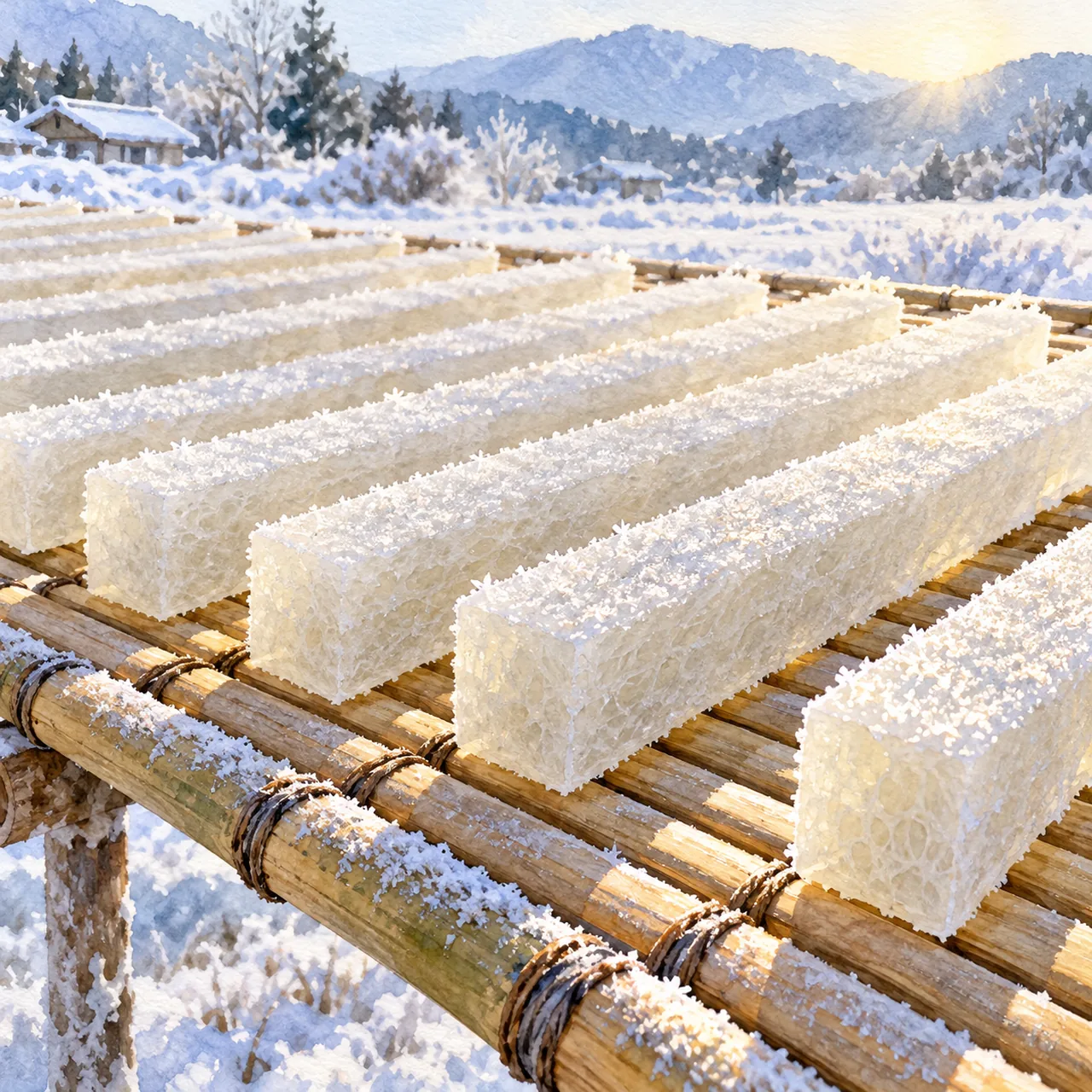
He was right. Suwa sits high in the mountains: nights fall to −5°C (23°F), and below −10°C (14°F) in the coldest spells. Being inland, the air is dry, the days are mostly sunny, and the gap between day and night is large. The groundwater is clean, too. Bar kanten — kaku kanten, also called bo kanten ("stick kanten") — is handmade, laborious and at the mercy of the weather, and today it is made only in the Suwa area, anywhere in Japan (Nagano Prefecture's official tourism site).
The railway that made Suwa's kanten
Tengusa grows in the sea, and Suwa has no coast — getting the seaweed there was the problem. According to Nagano Prefecture, when the Chuo Line railway opened in 1905, tengusa became easy to bring in, and kanten became the region's signature product. The sea provides the seaweed; the mountain winter finishes it.
Shinano Kanten Half Kanten (4 bars × 5 packs) — bar kanten cut to an easy size
Natural bar kanten from Suwa, a Shinshu (Nagano) specialty. The bars are cut to half length so they're easier to use, packed four to a bag, five bags to a set. The red seaweed is a mix of Japanese and imported.
Bar kanten is what you use for yokan, fruit jellies and anmitsu: kanten frozen and dried in a winter rice field, melted down again in your kitchen. Sold in Japan.
3. Yamaoka's Thread Kanten: Tengusa and Nothing Else
Pushed out in fine threads, then dried
Besides bars, natural kanten also comes as fine threads — ito kanten. Yamaoka, in Ena City, Gifu, is another center of natural thread kanten.
Chikori-mura's "Tamano Gozen" is natural thread kanten from Yamaoka, and its only ingredient is tengusa. It has the smooth, springy texture that natural kanten made from tengusa is known for.
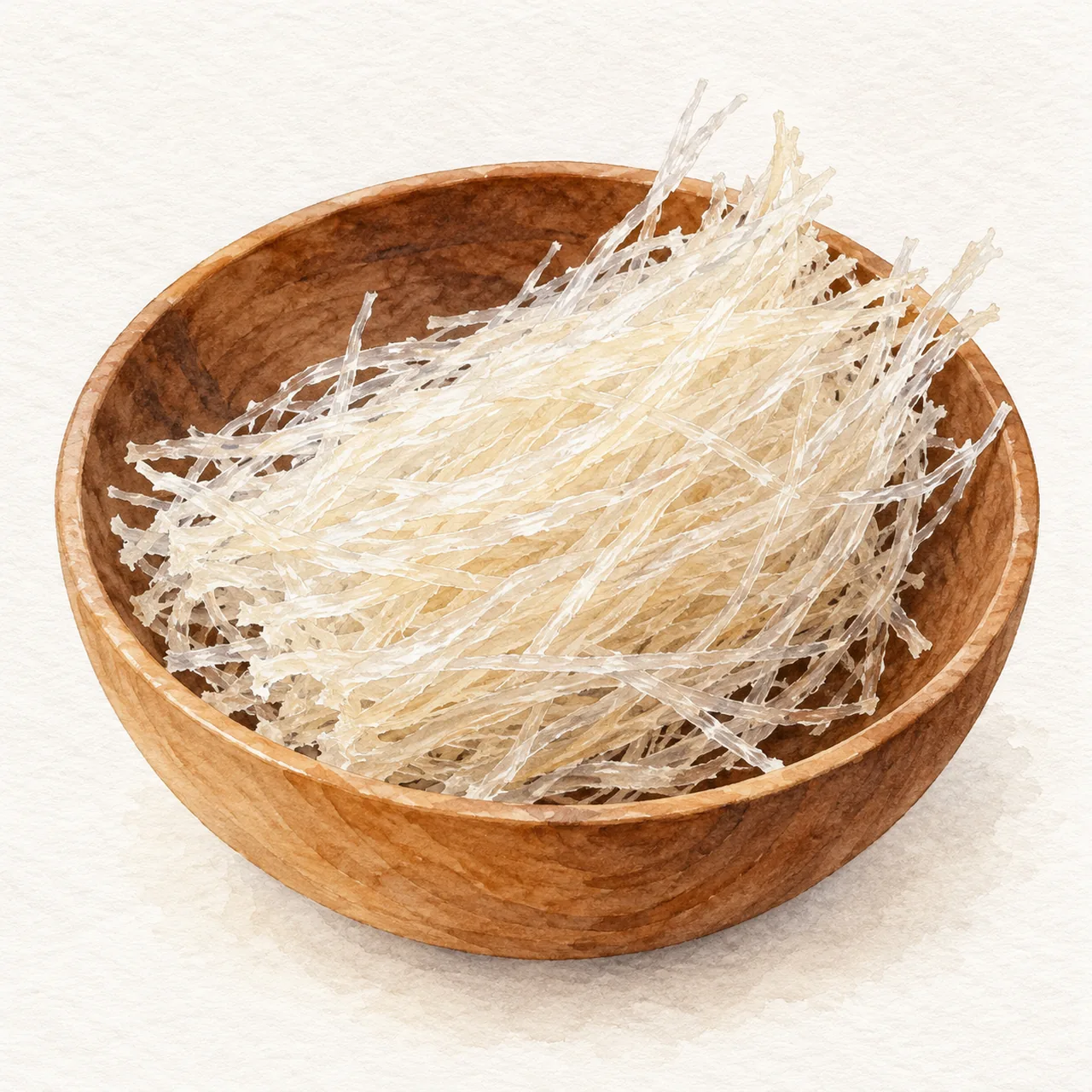
Tamano Gozen Natural Thread Kanten, 100% Tengusa — one ingredient
Natural thread kanten from Yamaoka, made from tengusa alone. It comes from Chikori-mura in Nakatsugawa, Gifu. Soak it in water and it's ready to use.
Add it to salads, vinegared dishes and soups — the thin threads add a texture that makes an everyday dish feel like someone took extra care. Sold in Japan.
4. Izu Kappa's Tokoroten: Where Kanten Comes From
Kanten is tokoroten, exposed to the cold
Izu Kappa was founded in 1869. It makes tokoroten from tengusa harvested in Izu only, using spring water from the Kakita River, which rises from Mt. Fuji's underground water.
In Izu Kappa's own words: "Kanten is tokoroten that has been exposed to the winter cold." What froze and dried outside that inn in Fushimi was tokoroten, too. If you want to understand kanten, try the jelly it starts as. Tokoroten is pushed through a wooden press into noodles and eaten cold, often with vinegar and soy sauce.
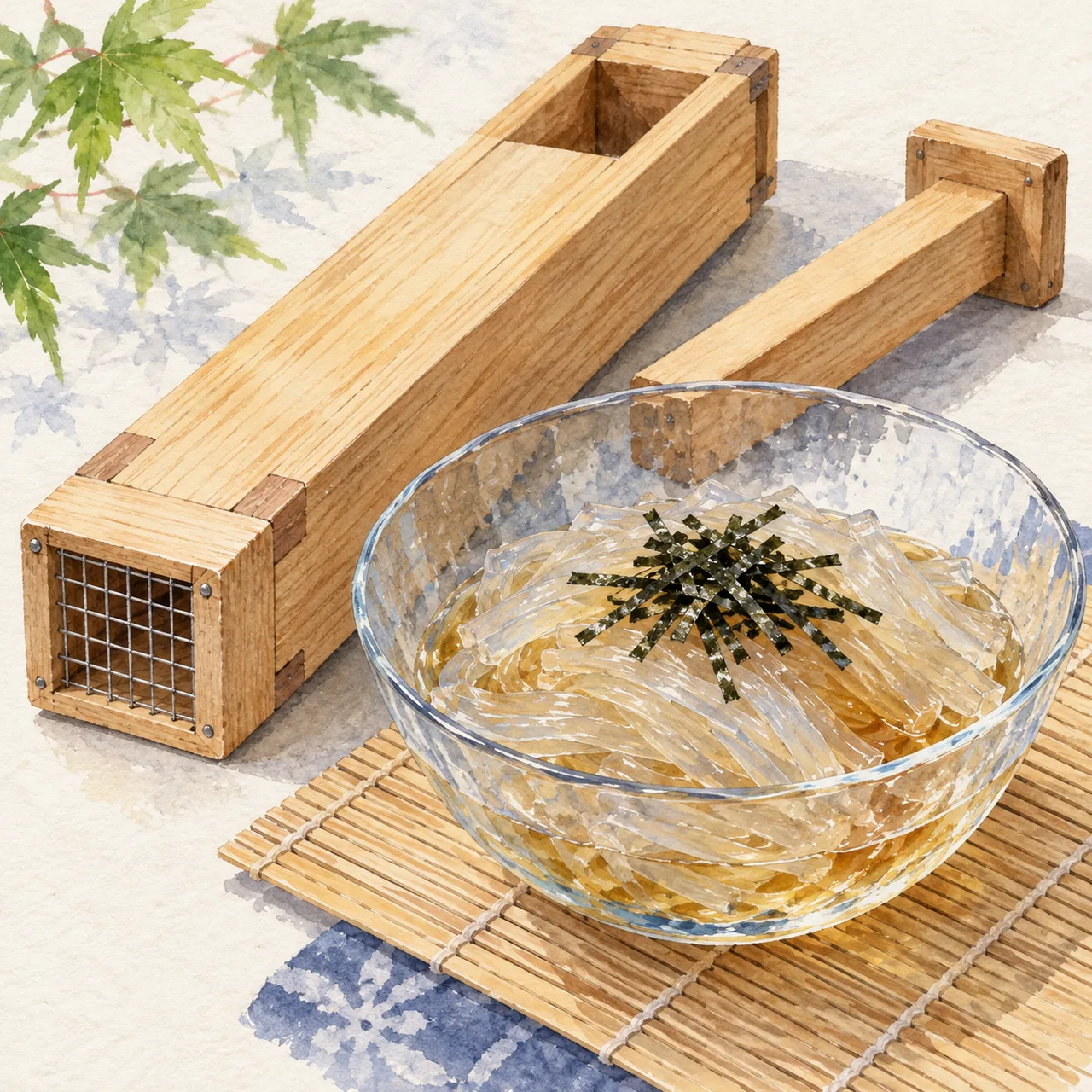
Izu Kappa Kakitagawa Spring Water Tokoroten, 6 servings — press it, try six sauces
Tokoroten from 100% Izu tengusa and Kakita River spring water. Six servings, six different sauces, and a plastic press. Each block is about 10 × 3 × 2 cm (4 × 1.2 × 0.8 in).
Pushing the jelly through the press is half the fun, and something the whole family can do. Switch sauces and compare. Fresh, chilled and sold in Japan.
5. How to Use Kanten (and How It Differs from Gelatin)
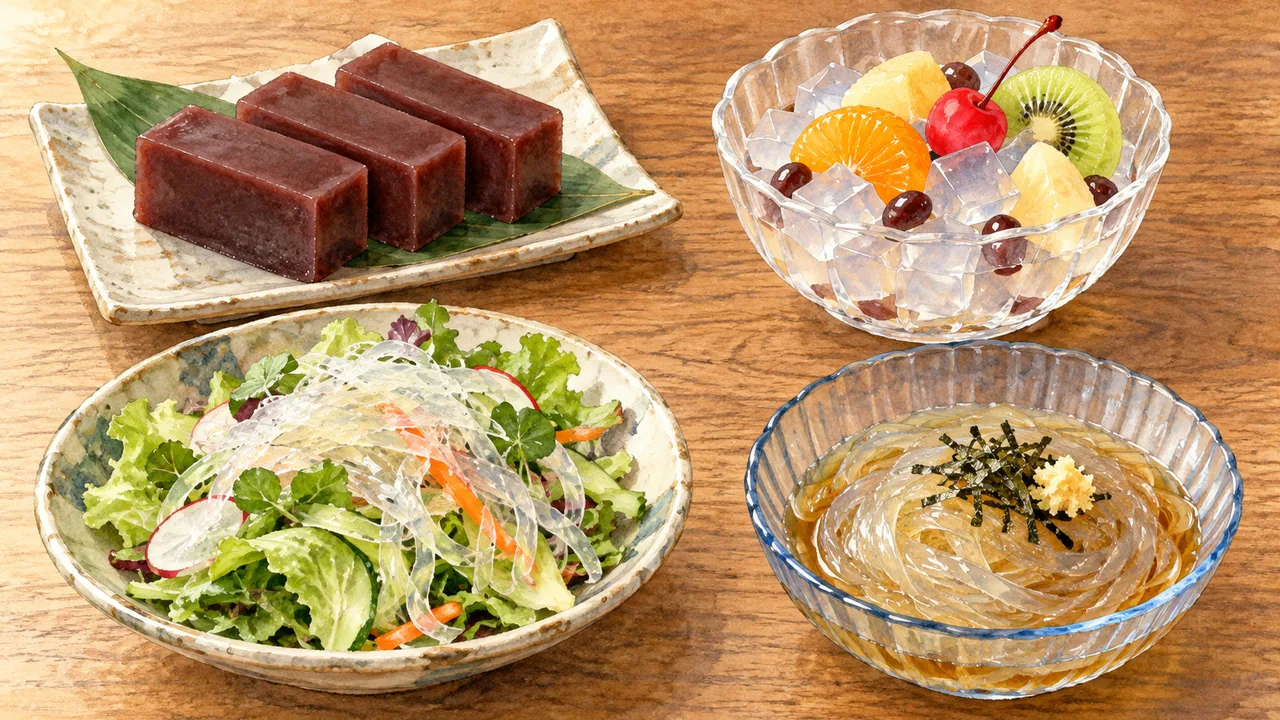
Bar kanten: soak, tear, melt
Soak the bar in water until soft, squeeze out the water, tear it into small pieces, put it in a pan with water and simmer until it dissolves completely. Add sugar or sweet bean paste, pour it into a mold and let it set — that's yokan, or a simple kanten jelly.
Thread kanten only needs soaking in water; then it goes straight onto salads, into vinegared dishes or soups.
Kanten vs. gelatin
Kanten comes from seaweed, so it is entirely plant-based — gelatin is made from animal collagen. That makes kanten the usual choice for vegetarian and vegan jellies.
It also behaves differently. Kanten has to be boiled to dissolve, sets as it cools without needing the fridge, and doesn't melt at room temperature — which is why yokan keeps its shape on a plate. The texture is firmer and cleaner-breaking than gelatin's wobble. Recipes written for gelatin need adjusting: start with a small amount of kanten and test.
Store dried kanten dry, at room temperature
Bar and thread kanten are dried foods, so they keep at room temperature, away from moisture. Keep them in the pantry and you can make a kanten dessert whenever the mood takes you.
Tokoroten is fresh, so refrigerate it as the package says and eat it soon.
6. Buying Kanten Outside Japan
The three products in this guide are sold in Japan; we couldn't find them on Amazon.com. Most "agar" sold abroad is powder, and the package often doesn't say where or how it was made.
If you're shopping at a Japanese grocery store or ordering from a Japanese online shop, these words on the label help:
· 角寒天 / 棒寒天 (kaku kanten / bo kanten) — bar kanten
· 糸寒天 (ito kanten) — thread kanten
· 天然寒天 (tennen kanten) — natural kanten, frozen and dried outdoors
· 長野県 / 諏訪 / 茅野 — Nagano, Suwa, Chino; 岐阜県 / 山岡 — Gifu, Yamaoka
· 天草 / てんぐさ — tengusa seaweed
Dried kanten is light and keeps for a long time, so it's an easy thing to bring home from a trip to Japan. Fresh tokoroten is not — enjoy that one while you're there.
7. Frequently Asked Questions
Is kanten the same as agar agar?
Yes — kanten is the Japanese name for agar. "Natural kanten" refers specifically to the Japanese method of freezing and drying the jelly outdoors in winter, mainly from tengusa seaweed.
What's the difference between natural kanten and powdered kanten?
The method and the raw material. Natural kanten is frozen and dried outdoors, again and again, using winter's temperature swing, and is made mainly from tengusa. Industrial kanten, such as powder, is made by extracting the gelling substance from seaweed by machine.
Where is bar kanten made?
According to Nagano Prefecture, only in the Suwa area today. Hard frosts at night, dry air and a big gap between day and night temperatures are what bar kanten needs.
Why is kanten made in Suwa, so far from the sea?
Because its winter is ideal for it. Around 1830, a peddler from Chino, Kobayashi Kumezaemon, saw kanten being made in Tanba and brought the technique home. The Chuo Line railway, opened in 1905, made it easy to bring in the tengusa.
Can I use kanten instead of gelatin?
Yes, and it's plant-based. But it must be boiled to dissolve, sets firmer, and holds its shape at room temperature, so adjust the amount — start small and test.
When can I see kanten drying in the fields?
In the coldest part of winter. In Chino, bar kanten making starts around mid-December each year, and the resting rice fields fill with rows of drying kanten.
Final Thoughts: The Sea's Seaweed, Finished by a Mountain Winter
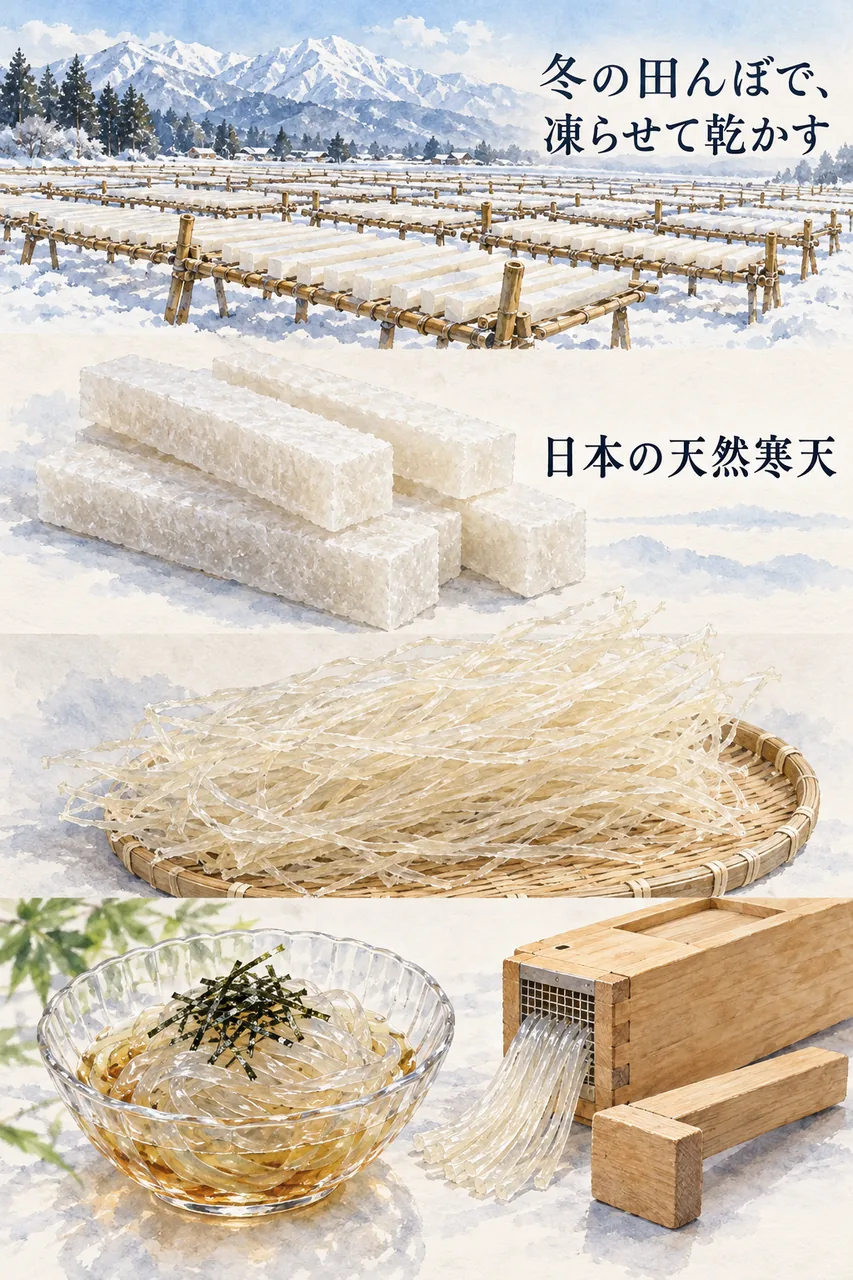
Kanten is made from tengusa, a seaweed from the sea. But what finishes it is the cold of a Nagano winter.
Bar kanten, brought home by a peddler around 1830 and now made only in Suwa. Thread kanten from Yamaoka, made from tengusa alone. And tokoroten from Izu Kappa, pressed from spring water — the jelly kanten begins as. Each one is shaped by Japan's winter and its water.
This winter, try making yokan at home with natural bar kanten.
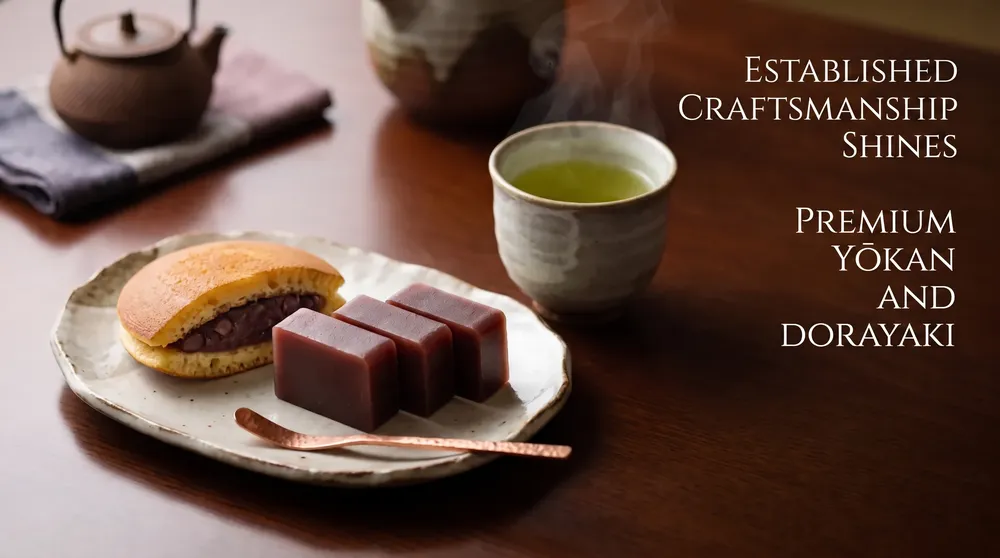
Yokan: Japan's 500-Year-Old Energy Bar
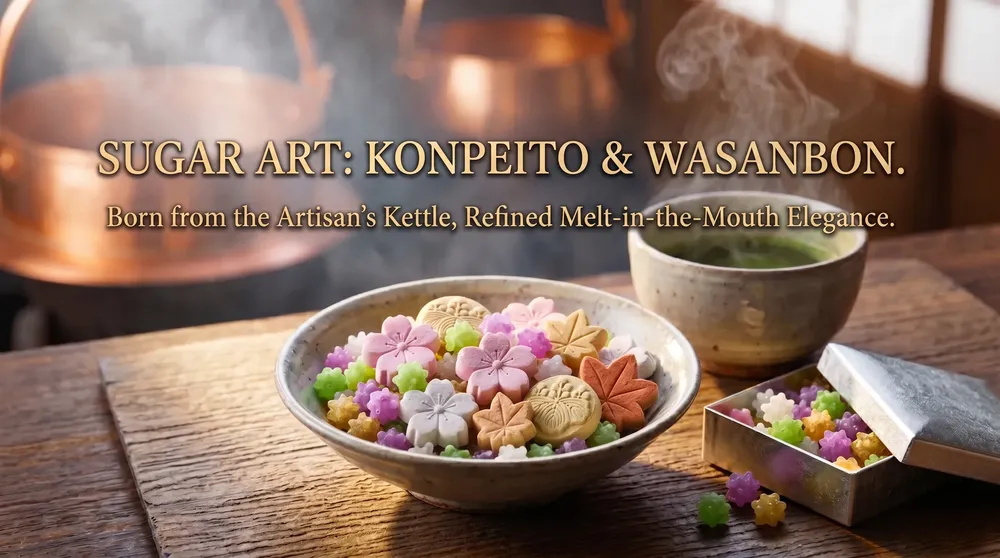
Konpeito and Wasanbon: Two Weeks to Make a Sweet