How do you know you're buying real kuzu starch?
Check the ingredients. Hon kuzu — "true kuzu" — lists one thing: kuzu starch.
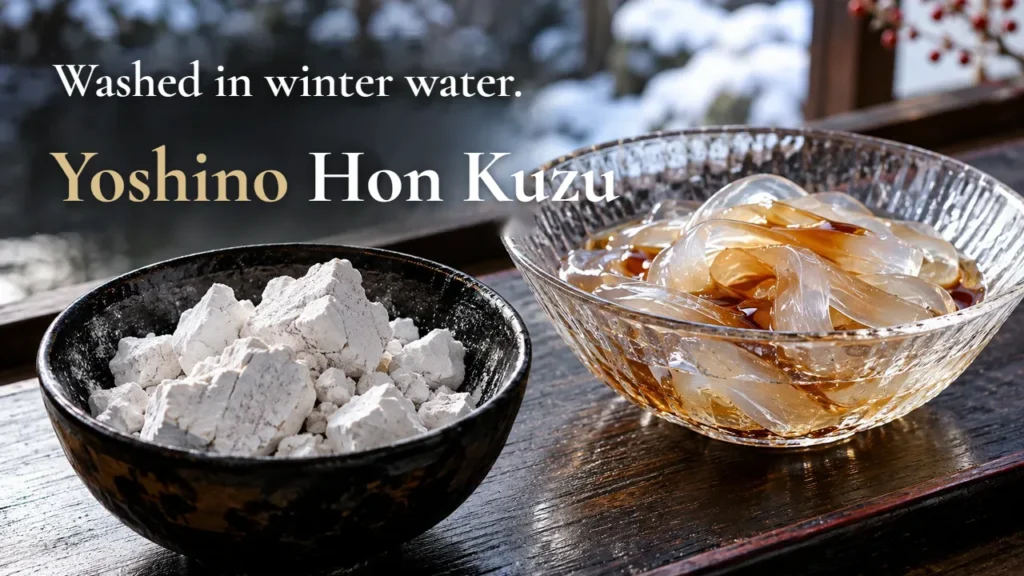
Hon kuzu is the starch taken from the root of the kuzu vine. In Yoshino, Nara, it is made in the coldest weeks of winter, washed in cold water again and again until it turns pure white. One old maker compares the work to "the same as washing rice."
This guide covers four hon kuzu products: from Morino Yoshino Kuzu Honpo, founded in the mid-16th century; Kurokawa Honke, which refines its kuzu with water from the same well it has used for 300 years; kuzuyu from Tengyokudo, born in a village called Kuzu; and sesame tofu from Kohachido in Akizuki, Fukuoka. It also covers how to use kuzu at home, and where to buy pure Japanese kuzu outside Japan.
Quick Reference: Hon Kuzu at a Glance
| Product | Maker | What sets it apart | Use |
|---|---|---|---|
| Yoshino Hon Kuzu 180 g ▾ | Morino Yoshino Kuzu Honpo (Ouda, Nara) | Washed only in midwinter groundwater | Wagashi, thickening |
| Yoshino Hon Kuzu ▾ | Kurokawa Honke (Nara) | Well water used for 300 years | A pantry staple |
| Hon Kuzuyu Kiwami ▾ | Tengyokudo (Gose, Nara) | Hon kuzu with wasanbon sugar | Stir into hot water |
| Goma-dofu Zen ▾ | Kohachido (Akizuki, Fukuoka) | Sesame kneaded with hon kuzu | Thaw and eat |
| Clearspring Organic Japanese Kuzu ▾ | Producer in southern Kyushu | Pure kuzu, sold internationally | Buying outside Japan |
Click a product to jump to it.
1. Why Japanese: Hon Kuzu Is Told Apart by Its Ingredients
The same vine as American kudzu
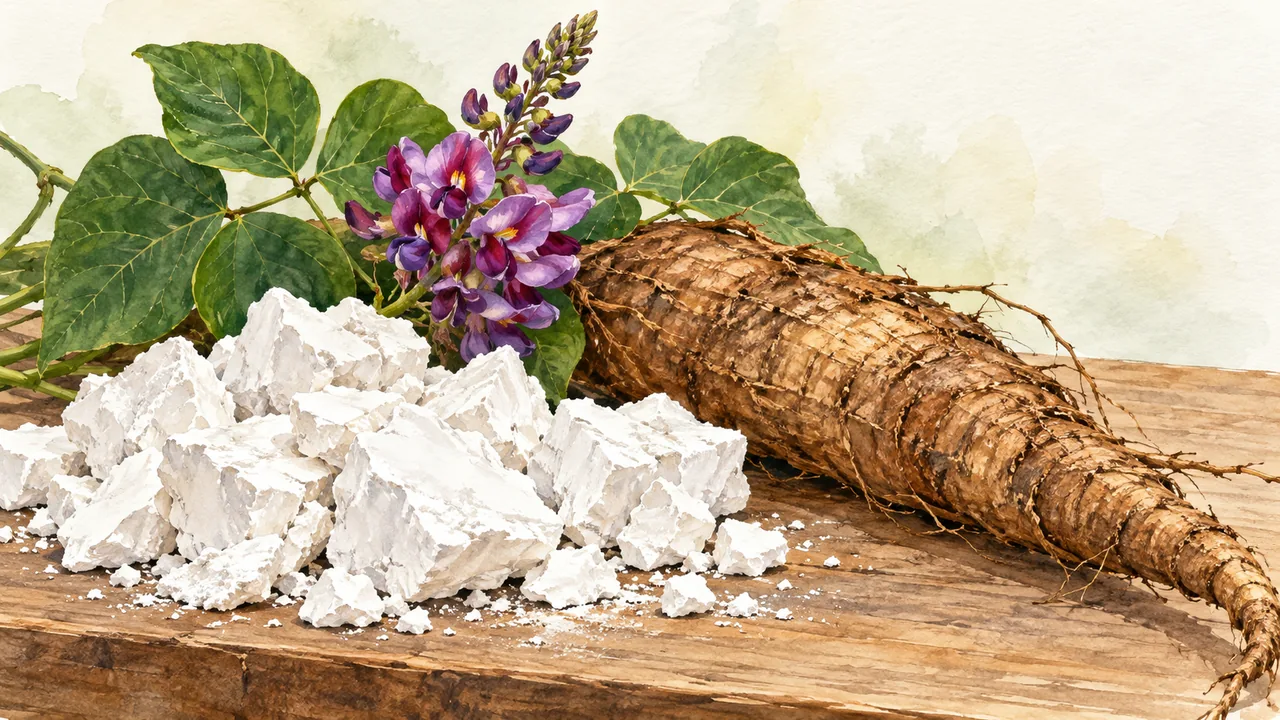
Kuzu is a climbing vine in the bean family. Its flower is one of Japan's "seven flowers of autumn," its stem fibers were woven into a cloth called kuzu-fu, and the starch extracted from its root is hon kuzu (as Morino Yoshino Kuzu Honpo explains).
If you live in the American South, you know the plant: it is kudzu, the vine that was shown at the 1876 Centennial Exposition in Philadelphia and now covers hillsides across the Southeast. In Japan, the same plant's root has been turned into a fine, pure-white starch for centuries.
Look for "kuzu starch" and nothing else
Not every powder with kuzu in its name lists kuzu alone. If you want hon kuzu, read the ingredients. Morino's Yoshino Hon Kuzu in this guide lists a single ingredient: kuzu starch — the raw material is Japanese, and it is processed in Nara Prefecture.
2. Morino Yoshino Kuzu Honpo: Washed Only in Midwinter Groundwater
Work that can only be done in an Ouda winter
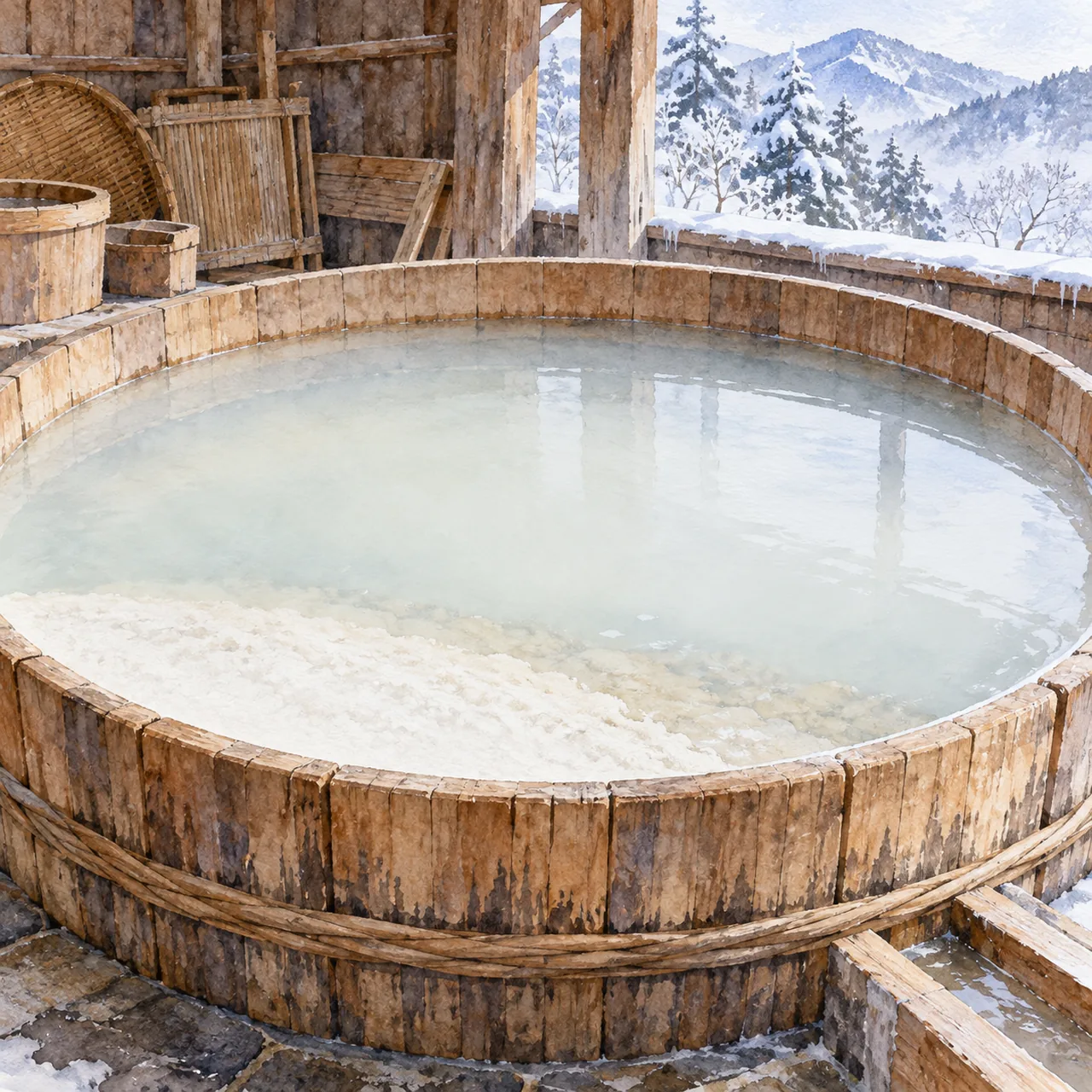
Morino Yoshino Kuzu Honpo is a kuzu house in Ouda, Uda City, Nara, founded in the mid-16th century. It refines the starch in kuzu roots using only groundwater, again and again, in the coldest part of the year, then dries it into hon kuzu.
Ouda's winters are bitterly cold, and its groundwater is clean and pure. Those conditions keep bacteria from multiplying during the long, painstaking process, so the kuzu comes out consistently. This method — refining kuzu in winter groundwater — is called Yoshino-zarashi ("Yoshino washing"), and the kuzu it produces is Yoshino hon kuzu.
A kuzu maker's herb garden, among Japan's oldest
On the hill behind Morino stands the Morino Old Medicinal Herb Garden. It was started in the Kyoho era (1716–1736) by Tosuke, the 11th generation of the kuzu-making family, and is said to be one of Japan's oldest herb gardens, alongside Tokyo's Koishikawa garden. About 250 kinds of plants still grow there, and visitors come through the seasons.
Morino Yoshino Kuzu Honpo Yoshino Hon Kuzu 180 g — kuzu and nothing else
Yoshino-washed hon kuzu with no additives. The only ingredient is kuzu starch; the raw material is Japanese and it is processed in Nara. The particles are extremely fine, which gives a silky texture.
Its body, stretch and clarity have made it a mainstay of summer wagashi and Japanese cooking. Also sold in 100 g and 300 g bags. Sold in Japan.
3. Kurokawa Honke: Water from a 300-Year-Old Well
Keeping the taste by not changing
Kurokawa Honke is another long-established maker of Yoshino hon kuzu in Nara. It makes its kuzu with a traditional refining method that has barely changed since the company began, using water from a well it has drawn on for 300 years.
Hon kuzu is made by washing it in water, many times over. Kurokawa Honke has drawn that water from the same well for three centuries — and that is how it has kept its taste.
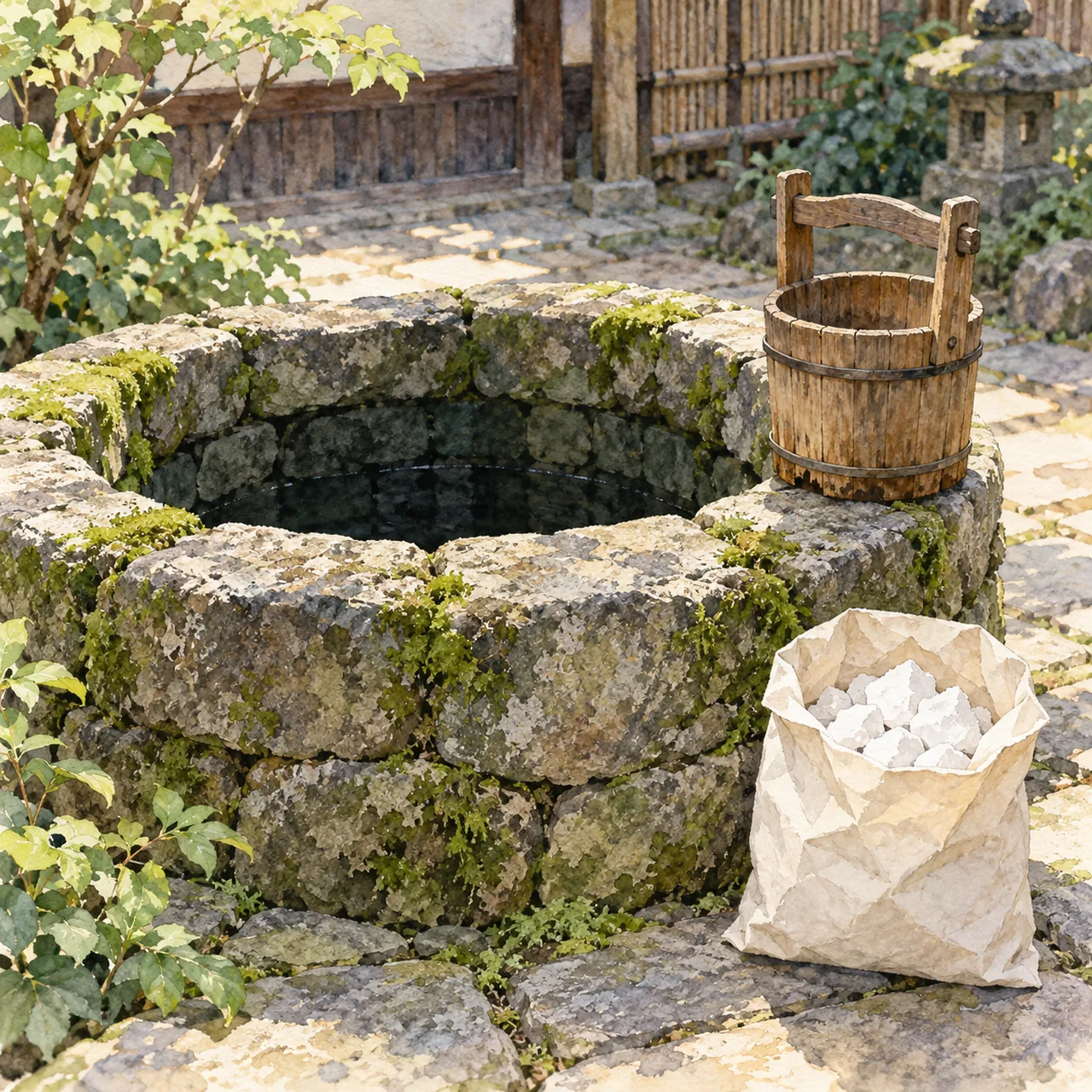
Kurokawa Honke Yoshino Hon Kuzu — the bag to keep in the pantry
Yoshino hon kuzu, refined with water from a 300-year-old well. Use it for kuzuyu, kuzu mochi or thickening sauces.
Buyers describe it as "clean-tasting — the best I've had" and "always in our kitchen." Sold in Japan.
4. Tengyokudo: "The Same as Washing Rice"
A kuzu shop born in a village called Kuzu
Tengyokudo began in 1854, in the old village of Kuzu (now Tomoge, Gose City, Nara). At first it collected kuzu that local farmers dug in the mountains and refined during the farming off-season. From 1870 it made kuzu in its own works, and it has kept the Yoshino-zarashi method for more than 150 years.
This is how Tengyokudo describes Yoshino-zarashi: "Isn't it the same as washing rice? You wash the kuzu in clean water and carefully skim off the scum. You let it settle overnight, and the next day you do the same thing again." That slow, laborious step, it says, is the most important of all.
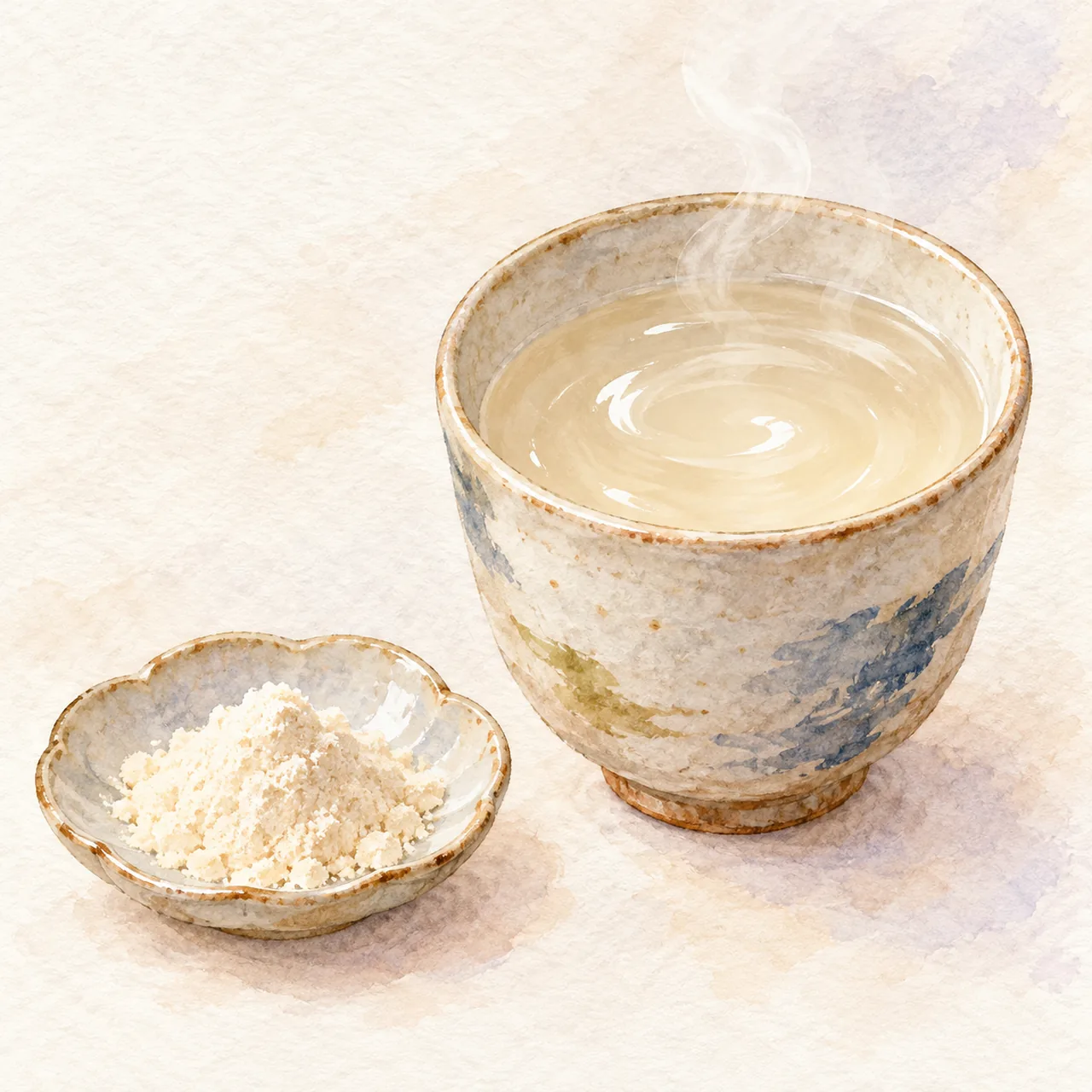
Tengyokudo Hon Kuzuyu Kiwami — melts away on the tongue
Kuzuyu made with Tengyokudo's "Koki" hon kuzu and melt-in-the-mouth wasanbon sugar. Kuzuyu is kuzu stirred into hot water until it turns clear and thick. This one slips smoothly over the tongue, and the gentle sweetness of wasanbon spreads.
A cup for a cold night — and the easiest way to taste what hon kuzu feels like. Sold through Tengyokudo's own shop in Japan.
5. Kohachido: Sesame Tofu Kneaded with Hon Kuzu
A labor-heavy dish from temple cooking
Goma-dofu, "sesame tofu," contains no soybeans: it is sesame and kuzu, kneaded slowly and left to set. It is said to have been brought by Zen monks, and has long been a dish of shojin ryori, Buddhist temple cuisine.
Kohachido, in Akizuki, Fukuoka, wanted to bring hon kuzu goma-dofu — normally a lot of work — to home tables, and after much testing created a frozen version. It has the soft, chewy texture only hon kuzu gives, and a toasty sesame aroma.
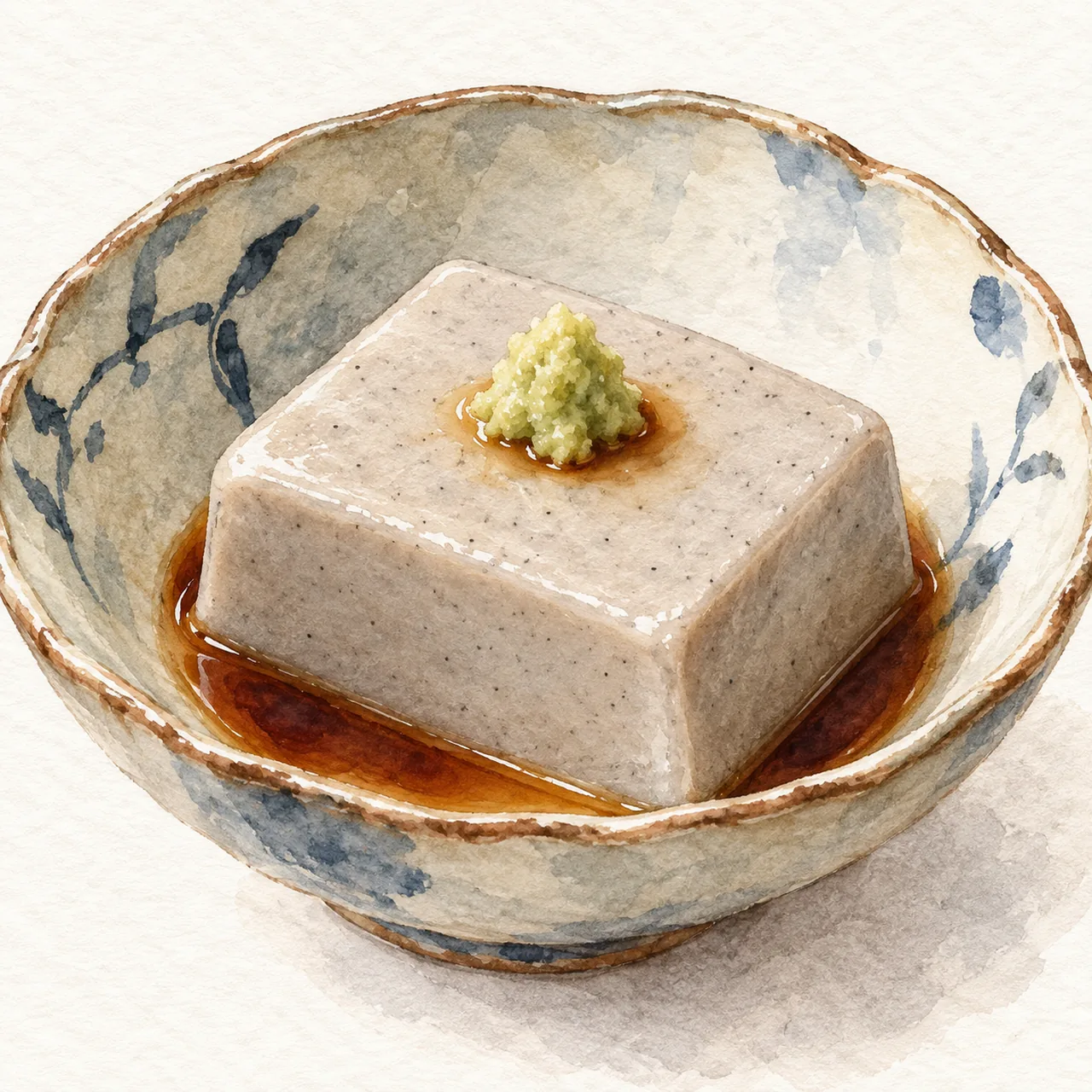
Kohachido Goma-dofu Zen, 8 pieces — chewy hon kuzu, fragrant sesame
Frozen sesame tofu made from sesame and hon kuzu. It keeps for 180 days from production, frozen.
Eat it with wasabi and soy sauce — or, as Kohachido suggests, as a dessert with kinako (roasted soybean flour) and kuromitsu (black sugar syrup), or in zenzai (sweet red bean soup). Sold frozen, in Japan.
6. Using Kuzu at Home
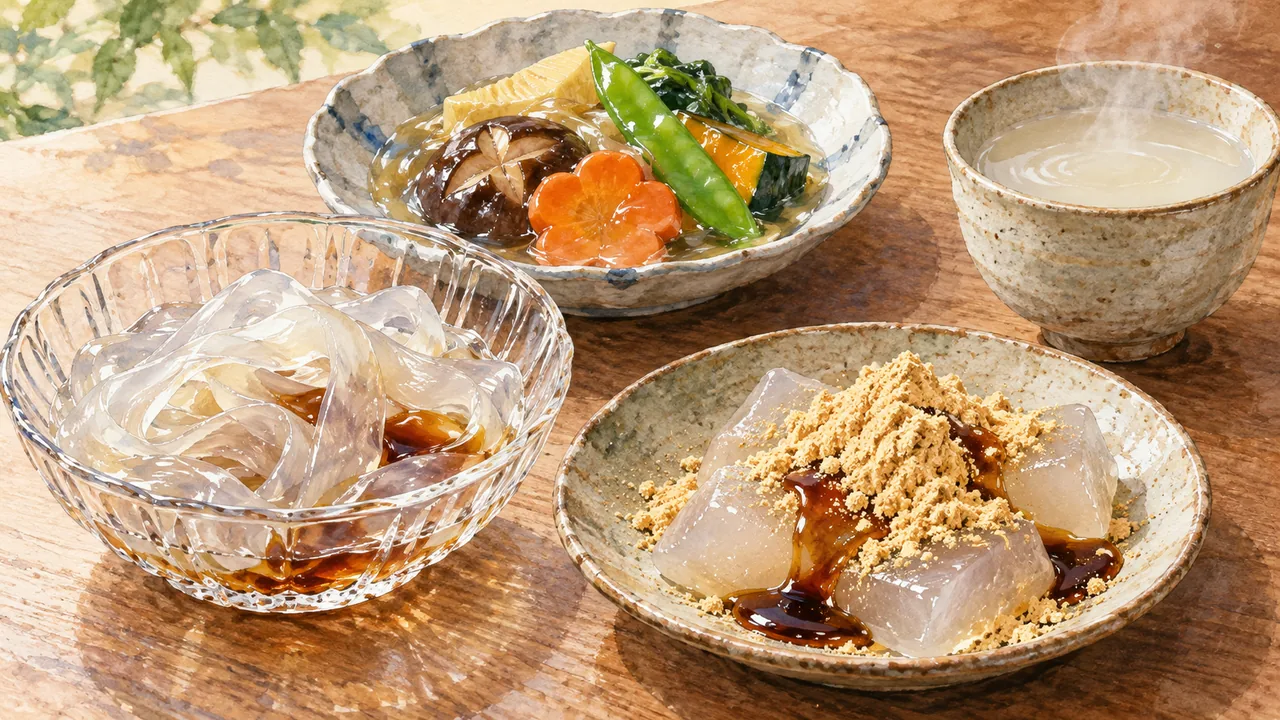
From thickening to wagashi
Use hon kuzu like you would cornstarch or arrowroot to thicken sauces and soups: dissolve it in a little cold water first, then stir it in. Chunks of kuzu should be crushed before dissolving.
For sweets, it makes kuzu mochi, kuzukiri (clear kuzu noodles) and kuzu manju. Morino says hon kuzu's body, stretch and clarity are exactly what summer wagashi and Japanese cooking call for.
Store it dry, at room temperature
Keep hon kuzu at room temperature, away from direct sunlight and moisture (Morino's storage instructions), and seal the bag well once it's opened.
With a bag on the pantry shelf, it's ready whenever you want to thicken a sauce or make a sweet.
"Yoshino Hon Kuzu" is a protected regional name
According to Morino, the Yoshino kuzu makers' cooperative registered "Yoshino Hon Kuzu" and "Yoshino Kuzu" as regional collective trademarks in 2007 — to protect the name of good kuzu made by Yoshino-zarashi as the name of a place.
7. Buying Pure Japanese Kuzu Outside Japan
The four products above are sold in Japan; we couldn't find them on Amazon.com. A lot of "kudzu powder" sold abroad doesn't say where it was made, so read the label the same way: one ingredient, kuzu, and a stated Japanese origin.
One pure kuzu that is sold internationally comes from Clearspring, whose producer is in southern Kyushu — one of the few remaining makers of pure kuzu starch in Japan, according to Clearspring. It isn't Yoshino kuzu, but it is Japanese kuzu and nothing else.
Clearspring Organic Japanese Kuzu (125 g)
Pure kuzu root starch from a producer in southern Kyushu. Sold in chunks — crush them, dissolve in cold water, and use as you would any kuzu.
Clearspring Organic Japanese Kuzu (125 g)
Loading product details…
If you're shopping in Japan or at a Japanese grocery store, look for 本葛 (hon kuzu), 吉野本葛 (Yoshino hon kuzu), and an ingredients line reading only 葛澱粉 or 葛. Hon kuzu is dry, light and keeps well — an easy thing to bring home.
8. Frequently Asked Questions
Is kuzu the same as kudzu?
Yes — the same vine. Kuzu is the Japanese name; in the US it is known as kudzu. Hon kuzu is the pure starch refined from its root.
How can I tell if kuzu is pure?
Read the ingredients. Morino's Yoshino Hon Kuzu lists only kuzu starch, from Japanese raw material. Not every product with kuzu in its name lists kuzu alone, so check.
What is Yoshino-zarashi?
Refining kuzu starch by washing it repeatedly in cold winter groundwater. Tengyokudo describes washing the kuzu in clean water, skimming the scum, letting it settle overnight, and repeating the next day.
What can I make with hon kuzu?
Wagashi such as kuzu mochi and kuzukiri, thickened sauces and soups, and kuzuyu. Body, stretch and clarity are what hon kuzu brings.
How do I eat goma-dofu?
Wasabi and soy sauce is the classic way. Kohachido also suggests it as a dessert with kinako and kuromitsu, or in zenzai. Its version arrives frozen; thaw it before eating.
Which makes the best gift?
For an easy treat, Tengyokudo's Hon Kuzuyu Kiwami. For someone who cooks or makes sweets, a bag of Yoshino hon kuzu from Morino or Kurokawa Honke.
Final Thoughts: Kuzu That Turns White in Winter Water
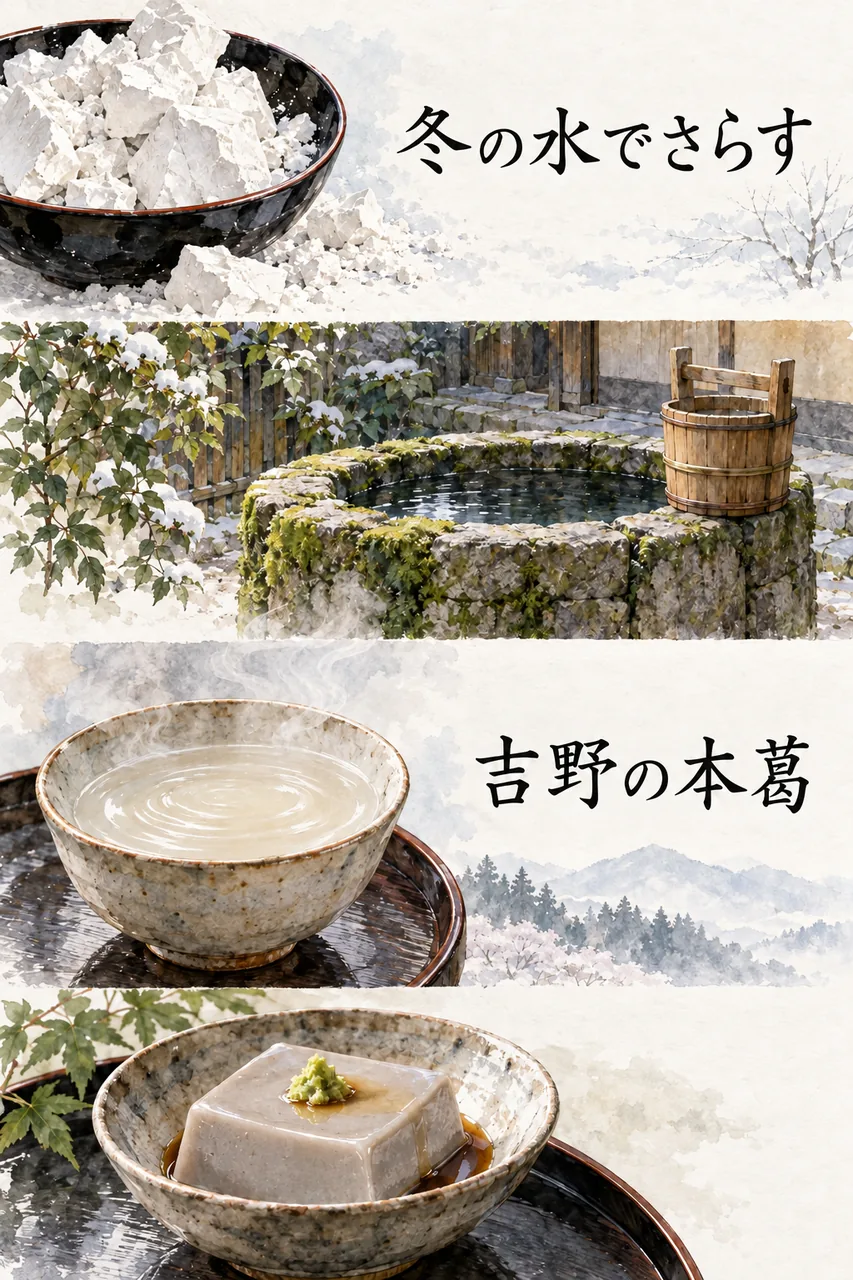
Hon kuzu is made in the coldest weeks of winter, washed in cold water over and over. Every day, like washing rice.
Morino, washing kuzu in Ouda's groundwater since the mid-16th century. Kurokawa Honke, drawing from the same well for 300 years. Tengyokudo's kuzuyu, from a house born in the village of Kuzu. And Kohachido's goma-dofu, kneaded with hon kuzu in Akizuki. Each one is kuzu shaped by Japan's winter water.
Check the ingredients — and make room in your kitchen for real Japanese kuzu.
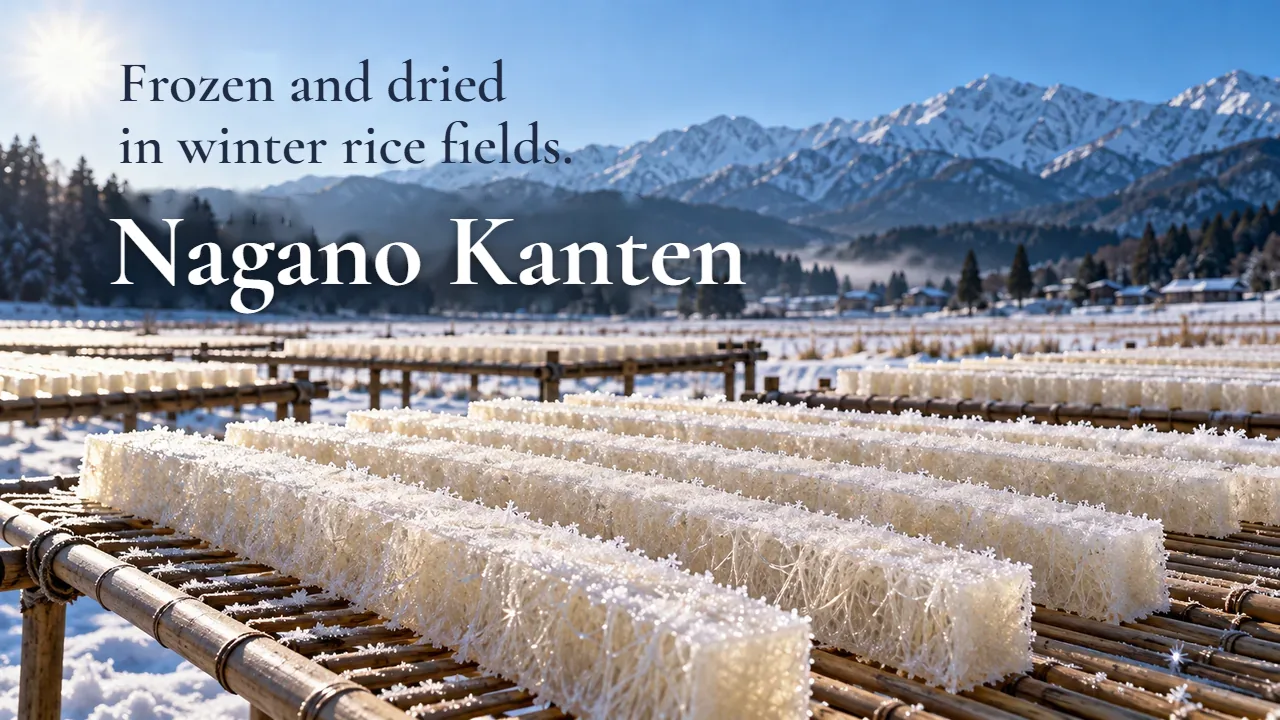
Kanten: Japanese Agar Frozen and Dried in Nagano's Winter
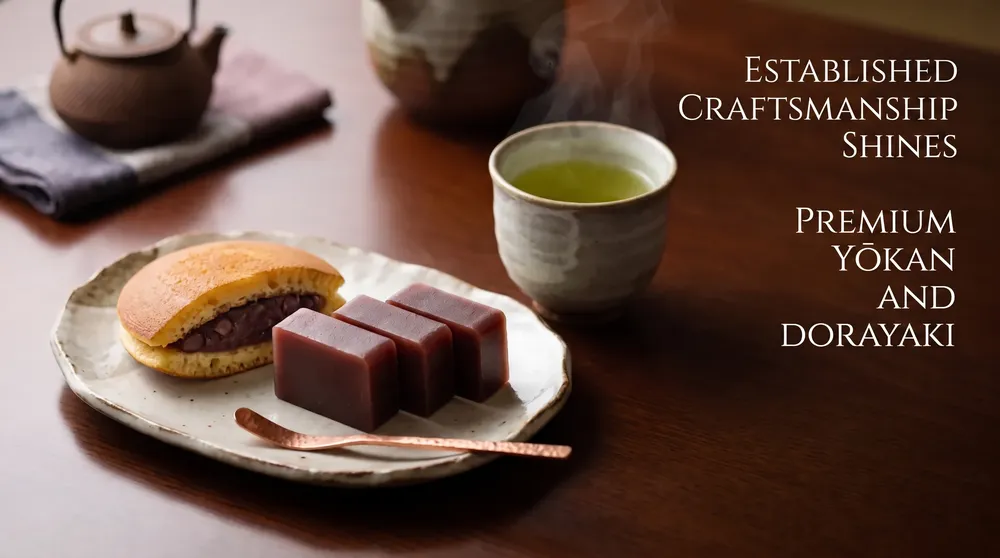
Yokan: Japan's 500-Year-Old Energy Bar