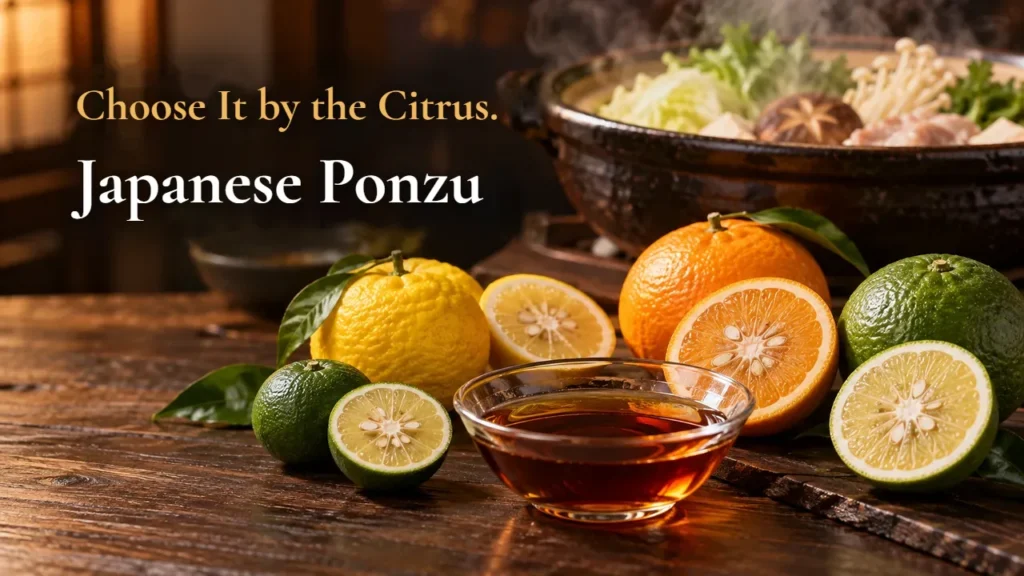
How do you choose a ponzu? The easiest thing to look at is the citrus squeezed into it.
Ponzu is citrus juice combined with soy sauce and dashi. Sudachi, yuzu, daidai, kabosu — which citrus, from where, squeezed how, changes both aroma and acidity. This guide introduces three Japanese ponzu: Asahi Ponzu from Yao, Osaka, which blends three Tokushima citrus; the daidai ponzu of Shunpanro, a historic fugu (pufferfish) house in Shimonoseki; and a kabosu ponzu hand-squeezed by a kabosu farmer in Kitsuki, Oita — with how to use and store it.
Quick Reference: Three Japanese Ponzu
| Ponzu | Citrus | Maker | For |
|---|---|---|---|
| Asahi Ponzu ▾ | Sudachi, yuko, yuzu (Tokushima) | Asahi Foods (Yao, Osaka) | Everyday hot pots |
| Daidai ponzu ▾ | Early-picked daidai (Itoshima, Fukuoka) | Shunpanro (Shimonoseki, Yamaguchi) | Fugu and white fish |
| Kabosu ponzu ▾ | Ripe kabosu (Kitsuki, Oita) | Orange Farm (Kitsuki, Oita) | When kabosu is the star |
1. Why Japanese: Citrus, Soy Sauce and Dashi
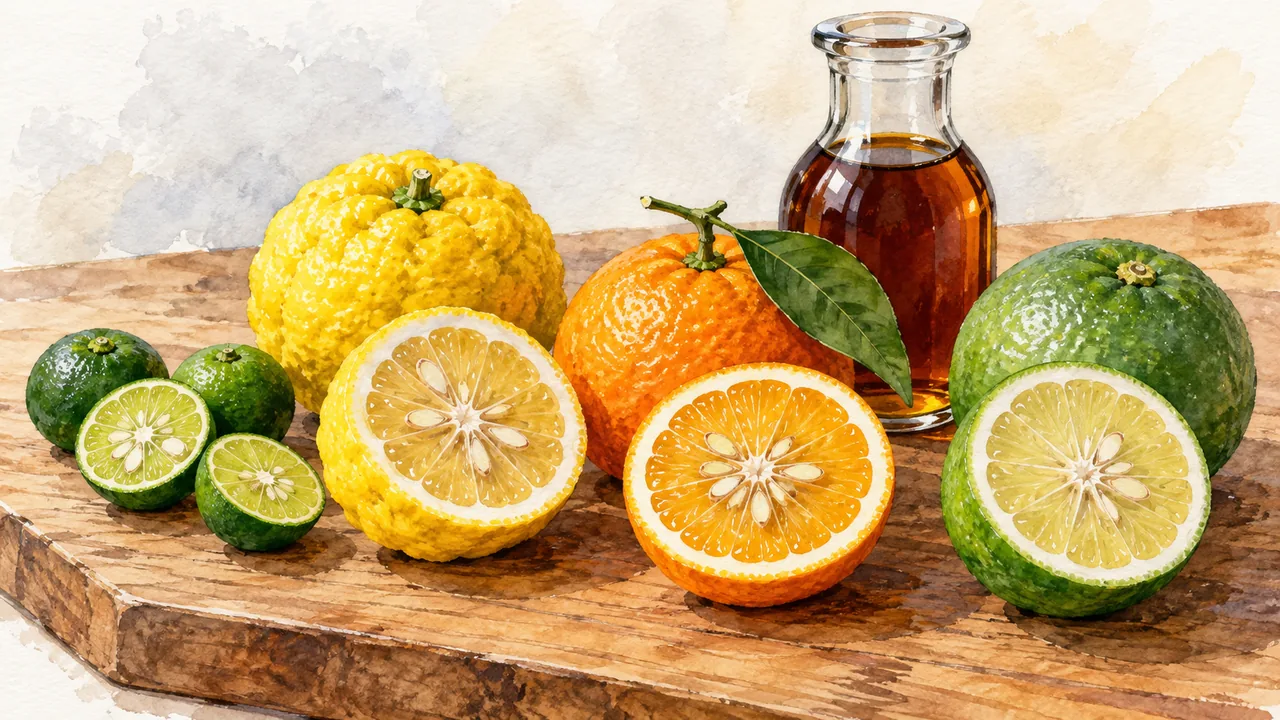
Ponzu combines citrus juice with soy sauce, vinegar and dashi of kombu or katsuobushi. It adds fresh acidity and fragrance to hot pots, simmered tofu, grilled fish and fried food. And the star of that fragrance is the squeezed citrus. Japan has several aromatic sour citrus used in ponzu — sudachi, yuzu, daidai, kabosu — and which one a maker chooses shows their thinking.
2. Yao, Osaka, "Asahi Ponzu": Three Tokushima Citrus
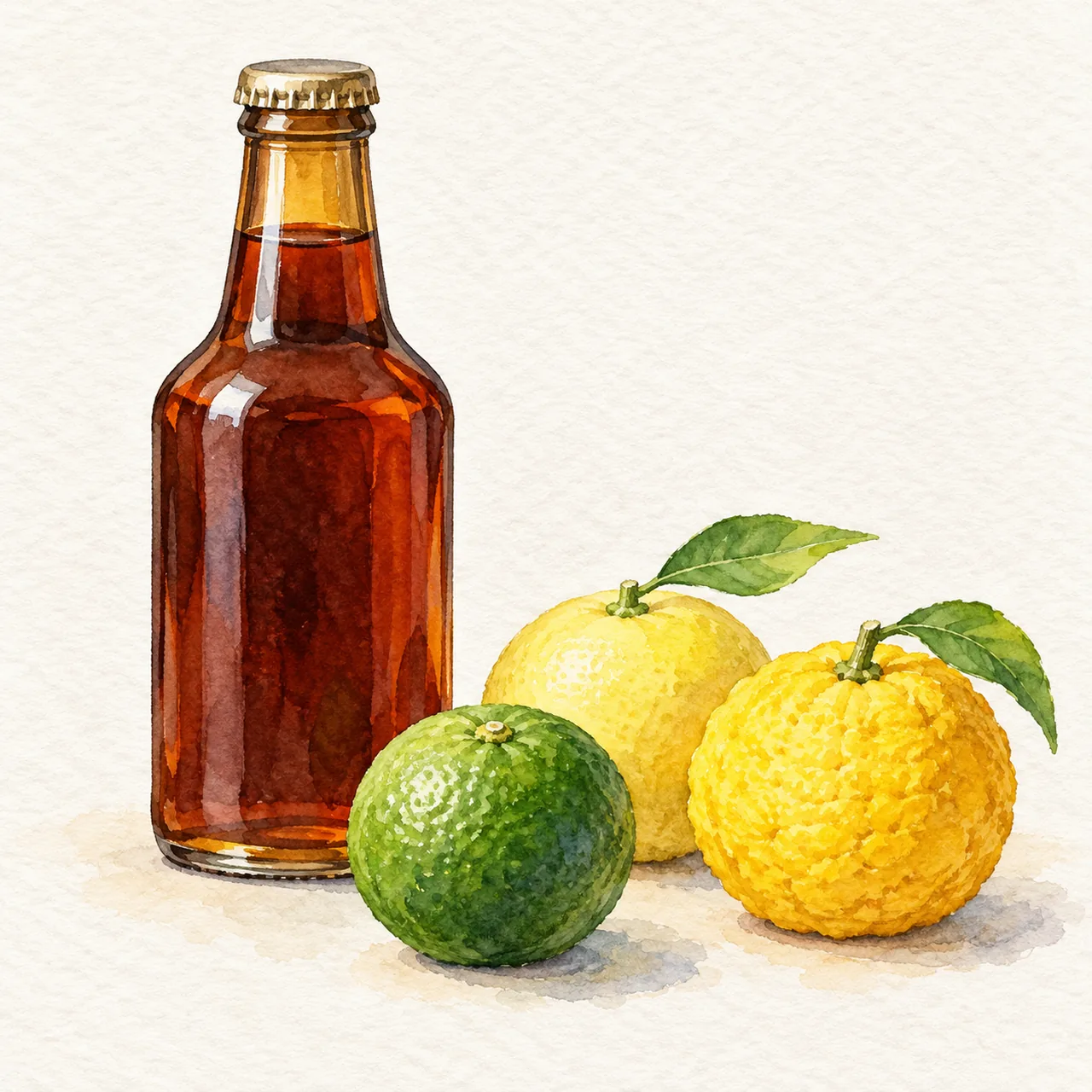
Asahi Foods was founded in 1948 in Yao, Osaka. Asahi Ponzu blends the juice of three citrus from Tokushima — sudachi, yuko and yuzu — in its own proportions, with a rich dashi of Rishiri kombu, dried shiitake and mixed bonito flakes. According to the Japan Food Journal, the recipe hasn't changed since the company's founding. To let you taste the ingredients' flavour and aroma, it uses glass bottles with crown caps.
It's fully seasoned — ready to use as is — for hot pots, udon-suki, simmered tofu, crab and fugu hot pots.
Did you know: The era of "phantom ponzu"
Asahi Ponzu was once made by hand in such small quantities that it was called "the phantom ponzu." It spread by word of mouth into a long-seller of over half a century — and in its new factory, only the steps that don't affect flavour were mechanised.
3. Shimonoseki, Shunpanro: Daidai Ponzu From Japan's First Licensed Fugu House
Shunpanro, a fugu restaurant-inn in Shimonoseki, Yamaguchi, has operated since 1888 and is known as the first restaurant officially licensed to serve fugu.
Its daidai ponzu is made by squeezing early-picked daidai grown on contract farms in Itoshima, Fukuoka, combined with naturally brewed soy sauce, Rausu kombu from Hokkaido and katsuobushi from Makurazaki, Kagoshima. Its mellow, handmade flavour brings out the umami of fugu — and it works with white-fish hot pots and simmered tofu too.
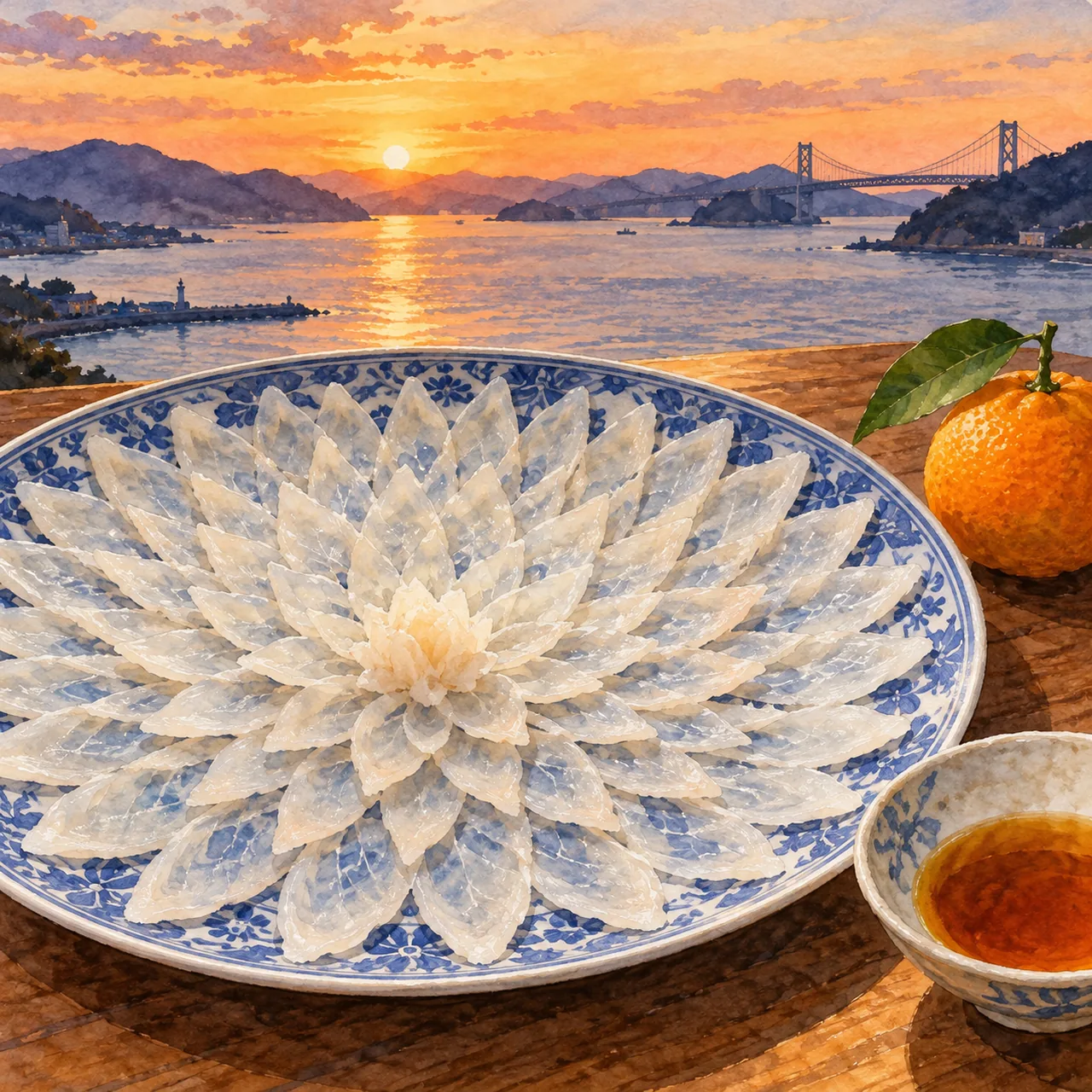
Did you know: Ito Hirobumi and the forbidden fugu
According to Shunpanro, when Ito Hirobumi, Japan's first prime minister, stayed there, the sea was too rough to fish. In desperation, the proprietress Michi — prepared to lose her head for it — served fugu, which was then forbidden to eat. The ban was lifted the following year, and Shunpanro became the first licensed fugu restaurant.
4. Kitsuki, Oita: A Kabosu Farmer Squeezes by Hand
Orange Farm grows citrus in fields ringed by green hills in Kitsuki, Oita, a well-known citrus region — satsuma mandarins, ponkan, shiranui, and Oita's specialty, kabosu.
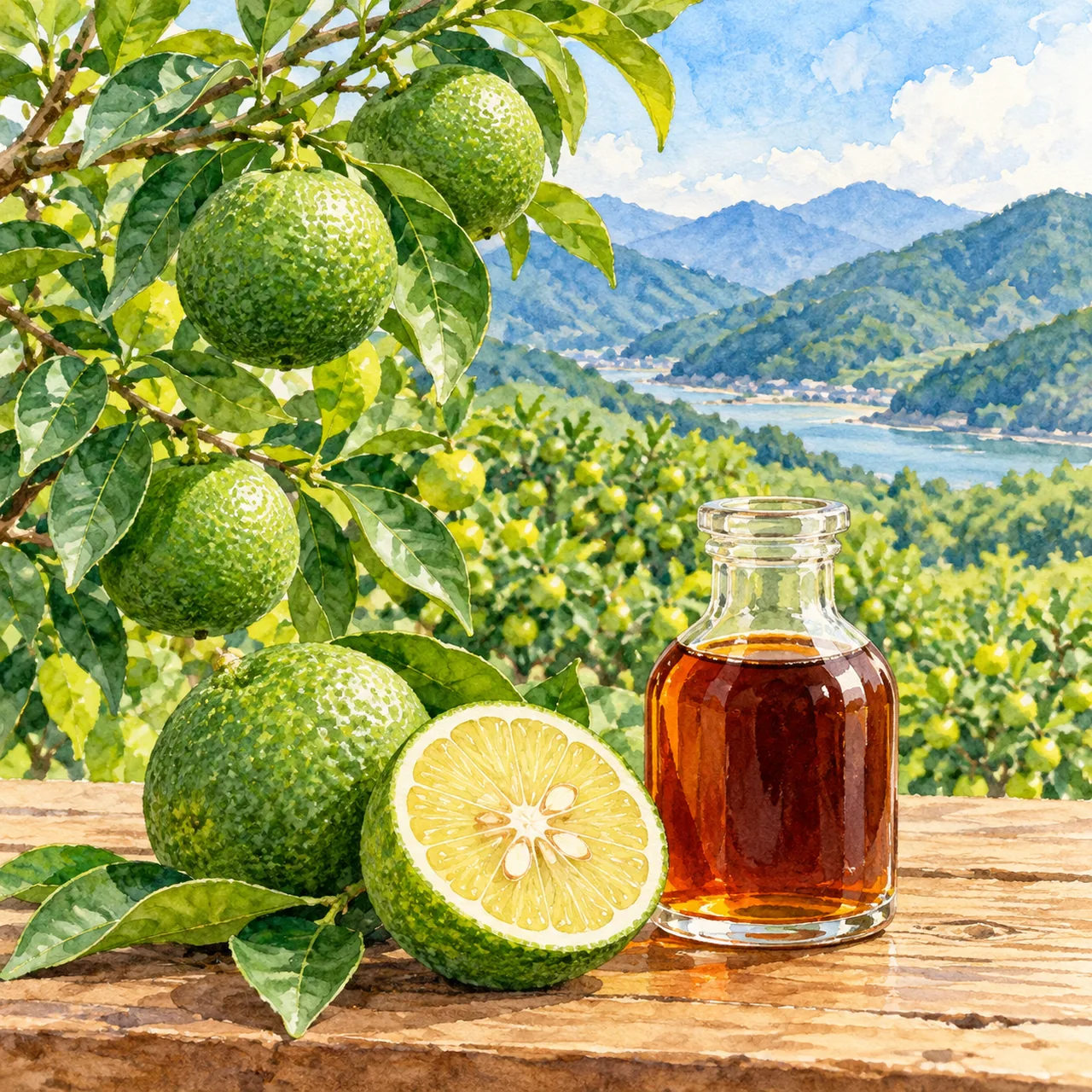
Its kabosu ponzu uses ripe kabosu from its own orchard, with hand-squeezed juice making up a generous 37%. It's seasoned with whole-soybean soy sauce, real mirin, bonito extract, salt and sugar, made by hand without food additives — a strong-flavoured ponzu for when you want kabosu's fragrance to lead, on hot pots, grilled fish or chilled tofu.
5. Buying From Outside Japan
As of November 2026, Shunpanro's daidai ponzu and Orange Farm's kabosu ponzu sell within Japan. Asahi Ponzu, the Osaka maker's own bottle, is available on Amazon.com. When choosing other ponzu, read the label for which citrus is used and where it was grown.
Asahi Ponzu, 360 ml
Sudachi, yuko and yuzu from Tokushima with Rishiri kombu dashi, in its crown-capped glass bottle. Fully seasoned — pour it straight into your dipping bowl. Refrigerate after opening.
Asahi Ponzu, 360 ml Bottle
Loading product details…
6. Using and Storing Ponzu
Not Just for Hot Pots
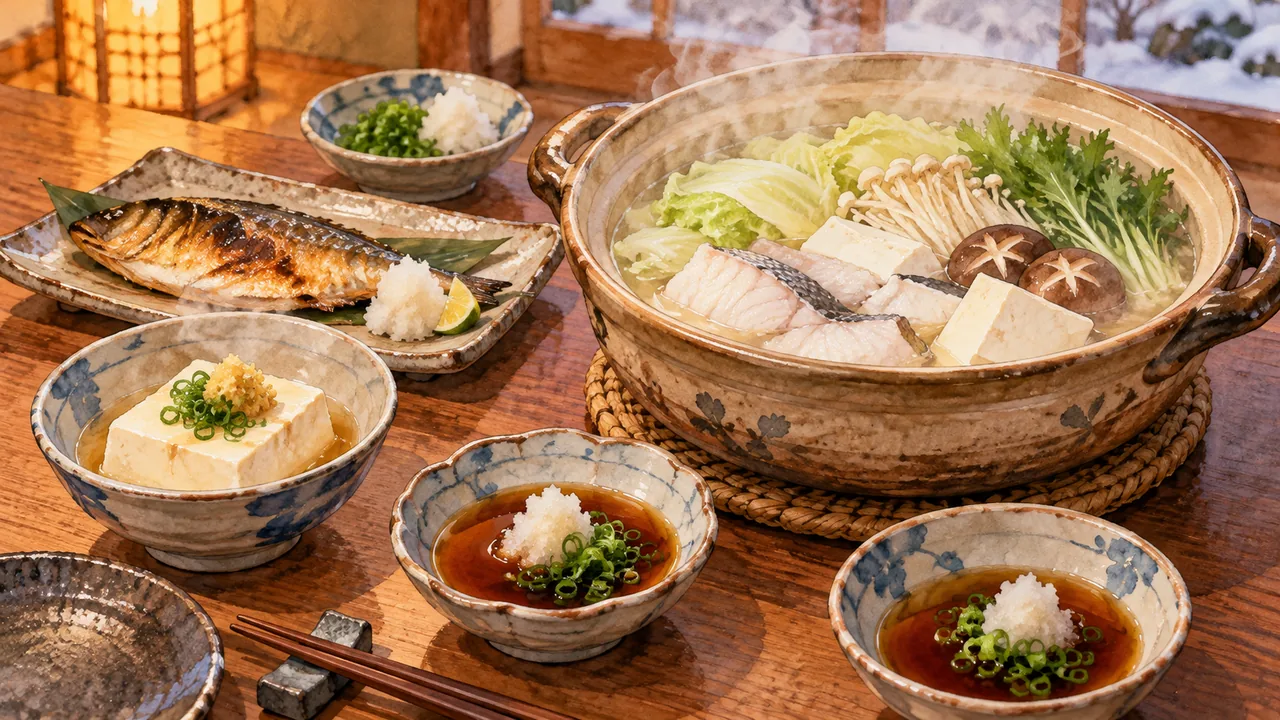
Ponzu does its best work in winter hot pots — mizutaki, fugu and crab hot pots, simmered tofu. Pour some into your dipping bowl and add grated daikon or scallions to taste. On days without a hot pot, it goes on grilled fish, gyoza, chilled tofu and salads; a fully seasoned ponzu like Asahi just needs pouring.
Refrigerate Once Opened
Keep ponzu in the fridge once opened. Asahi Ponzu keeps a year unopened and about a month refrigerated after opening; Shunpanro's daidai ponzu keeps 300 days from production, refrigerated after opening. Choosing a bottle size you'll finish soon is part of the trick.
7. Frequently Asked Questions
Why does Asahi Ponzu use glass bottles with crown caps?
So you can taste the ingredients' flavour, aroma and umami. Asahi Foods chose glass and crown caps for that reason.
Where does Shunpanro's daidai come from?
Contract farms in Itoshima, Fukuoka, picked early, squeezed and combined with naturally brewed soy sauce, Rausu kombu and Makurazaki katsuobushi.
Which ponzu suits fugu?
Shunpanro's daidai ponzu, made by a historic fugu house to bring out fugu's umami. Asahi Ponzu is also recommended for fugu hot pot.
How long does opened ponzu keep?
Refrigerate it and use it soon — Asahi Ponzu about a month after opening. Check other products' labels.
How do I use kabosu ponzu?
On hot pots, grilled fish or chilled tofu. Orange Farm's is 37% juice and strong, so kabosu's fragrance comes through clearly.
Which makes the best gift?
For a formal gift, Shunpanro's daidai ponzu — the fugu house's name is a conversation starter. For hot-pot lovers, a set of Asahi Ponzu bottles.
Final Thoughts: Choose the Citrus, Choose the Ponzu
Ponzu's face is decided by the citrus squeezed into it.
Asahi Ponzu of Yao, Osaka, blending Tokushima's sudachi, yuko and yuzu to a recipe unchanged since its founding. Shunpanro, Japan's first licensed fugu house, with early-picked Itoshima daidai. A Kitsuki kabosu farmer hand-squeezing ripe kabosu from their own orchard.
For tonight's hot pot, choose your ponzu by its citrus.
Oden Pot: Japanese Divided Pots, Donabe and Cast Iron
Oni-Oroshi: Japanese Bamboo Grater for Crisp Daikon