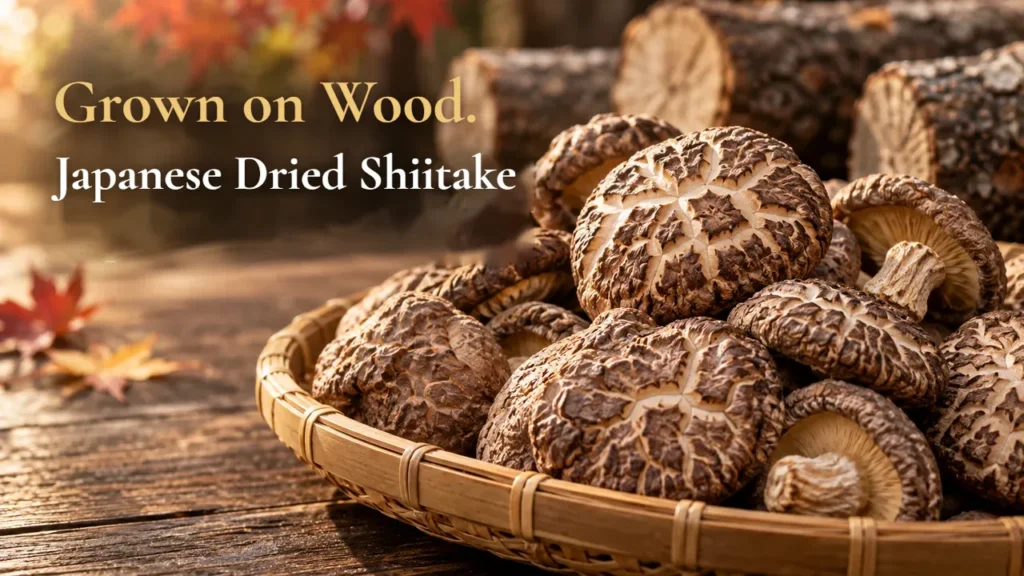
"Dried shiitake take ages to rehydrate — they're a pain to use." If that's how you feel, you may be using thick donko. For days in a hurry, there's quick-soaking koshin.
Dried shiitake come as donko, with round, thick caps, and koshin, with thin, open caps. And growing shiitake on logs — planting the fungus in kunugi oak — is said to have begun about 400 years ago in Bungo, today's Oita. This guide introduces three Japanese dried shiitake: log-grown donko from Oita grower Nabaya, koshin from Himeno Ichiro Shoten, an Oita shiitake wholesaler founded in the Meiji era, and Mino Shiitake from Gifu — with how to rehydrate and use them.
Quick Reference: Three Japanese Dried Shiitake
| Shiitake | Shape | Maker / Region | Best for |
|---|---|---|---|
| Log-grown donko (haruko) ▾ | Donko (thick) | Nabaya (Oita) | Simmered dishes, New Year osechi |
| Jo-koshin ▾ | Koshin (thin caps) | Himeno Ichiro Shoten (Oita) | Stir-fries, chirashi-zushi |
| Small donko ▾ | Donko (smaller) | Mino Shiitake (Gifu) | Simmered whole, uncut |
1. Why Japanese: Donko, Koshin — and the Log
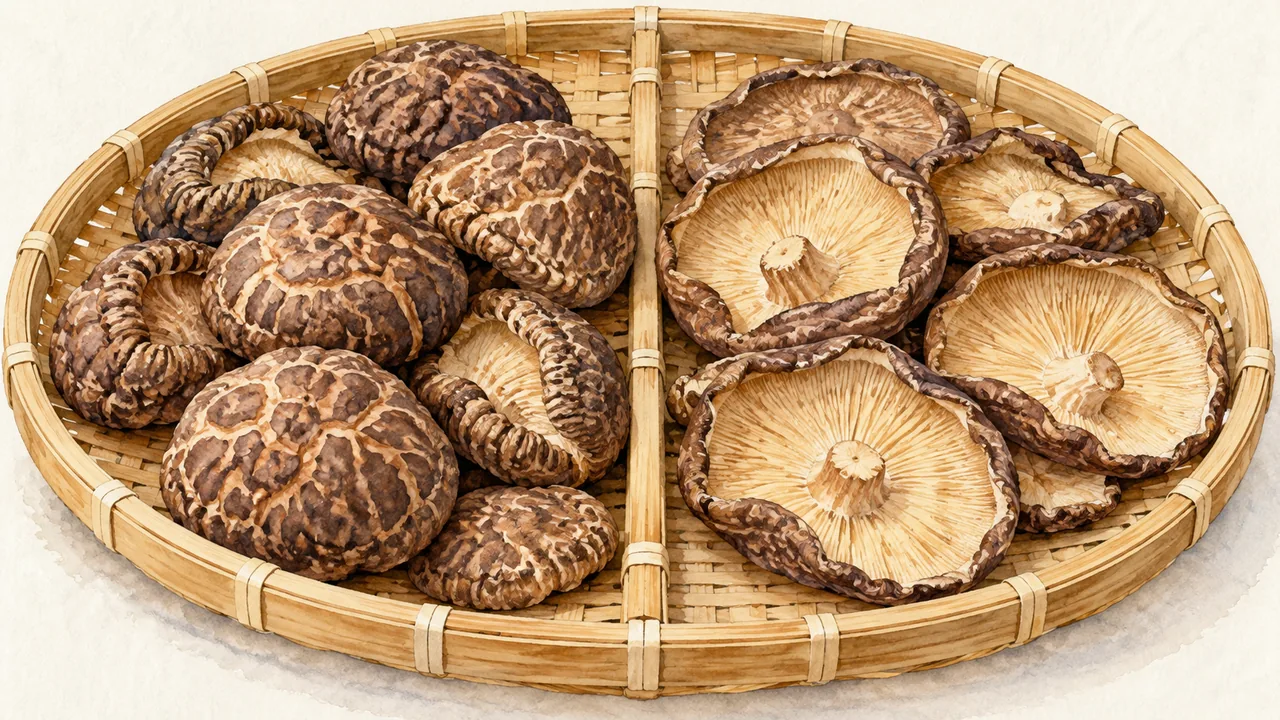
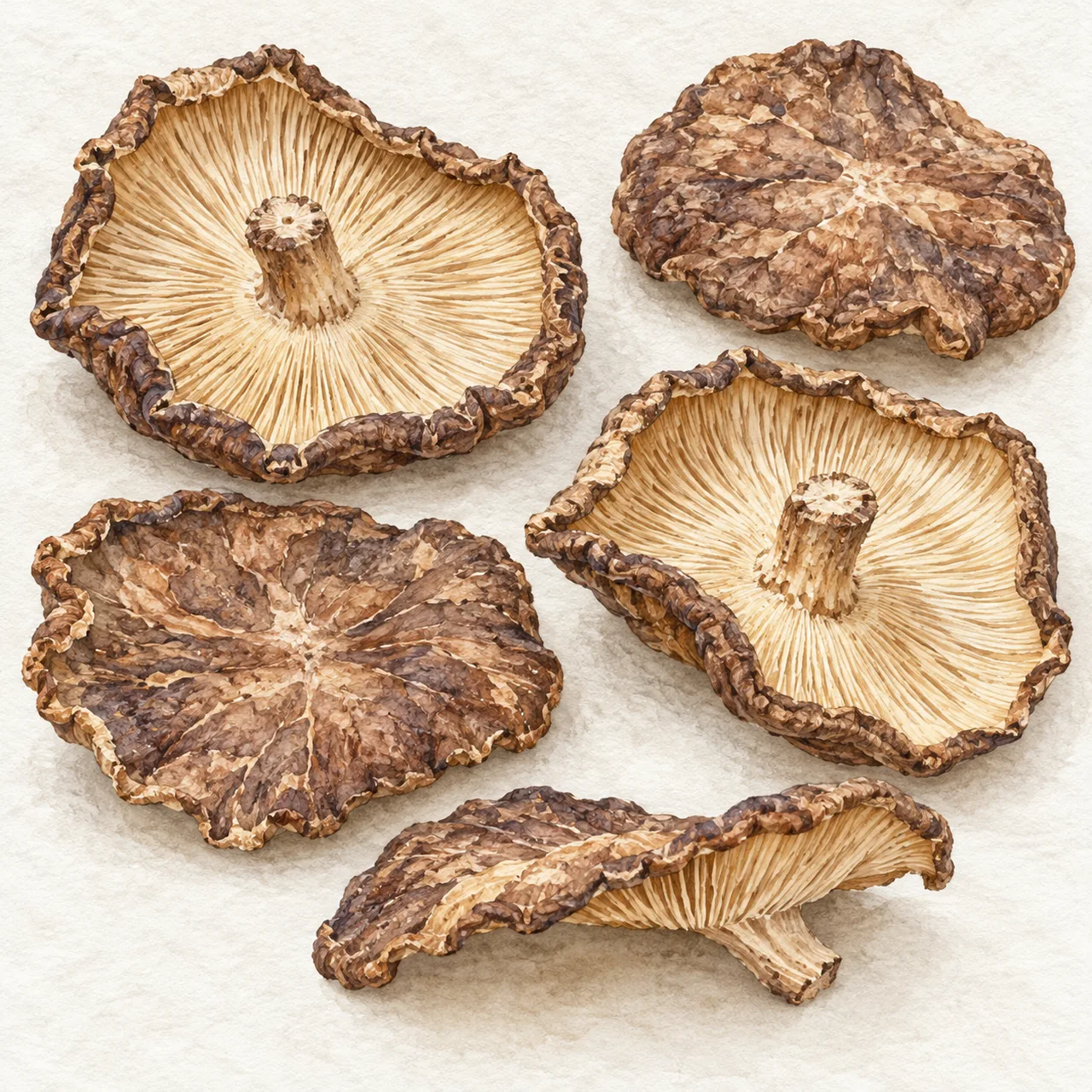
Dried shiitake come in two broad shapes: donko, with round, thick caps, and koshin, with thin, open caps. According to Oita wholesaler Himeno Ichiro Shoten, koshin have large gills and rehydrate quickly.
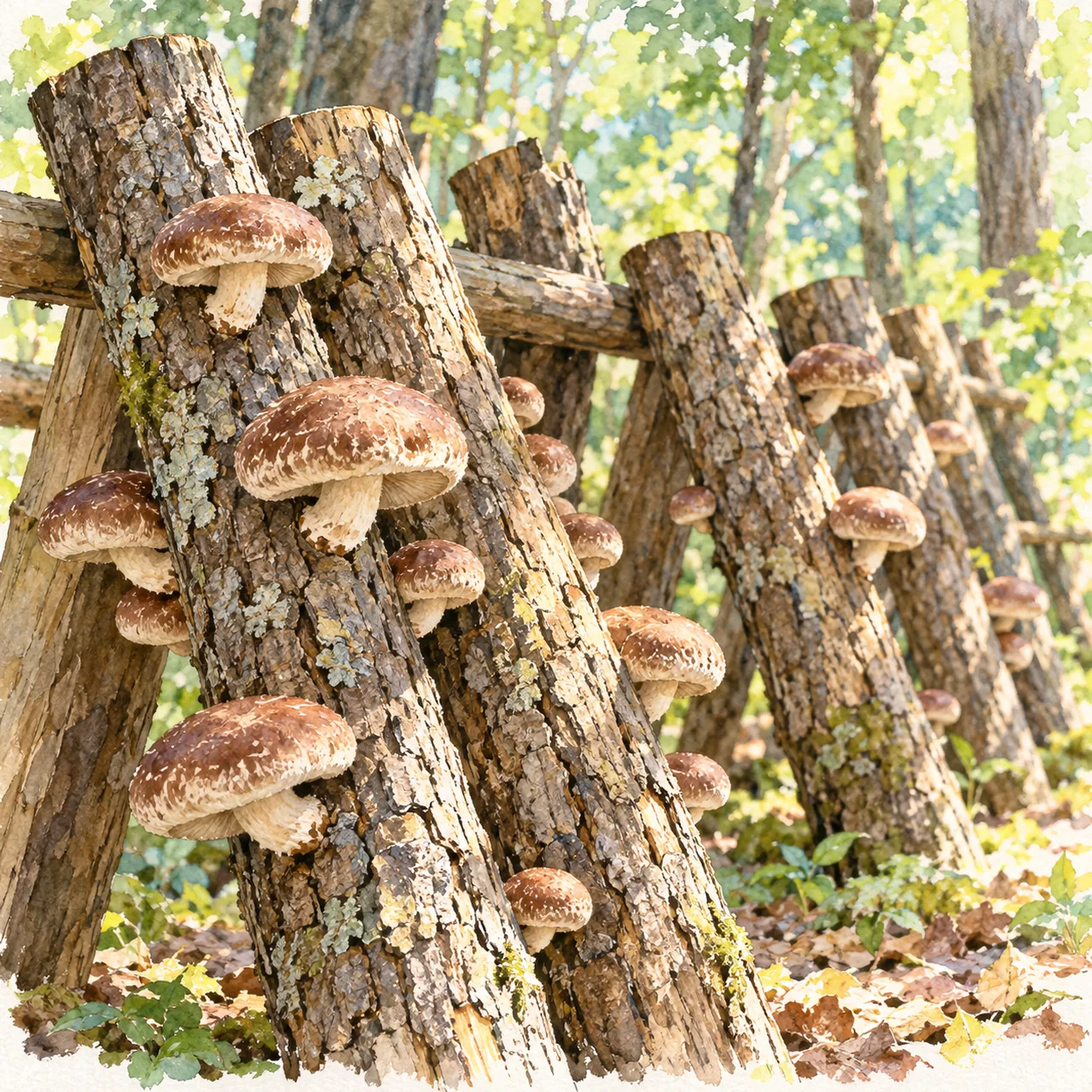
One more thing to look for: whether the ingredients say "shiitake (log-grown)". Log-grown shiitake are grown by planting the fungus in logs of kunugi oak and similar trees. All three here are log-grown — shiitake that took their time growing on wood.
2. Oita's Log-Grown Donko: A Year and a Half on Kunugi Logs
According to Oita Prefecture, log cultivation of shiitake is said to have begun about 400 years ago in Bungo. Backed by traditional skills and rich kunugi forests, Oita's dried shiitake rank first in Japan by volume, with a 41% share, and Oita has won the team title at the national quality competition 21 years in a row.
Log-grown shiitake start with felling kunugi or similar trees and hammering in plugs carrying the shiitake fungus to make hodagi (spawn logs). The logs rest for about a year and a half, are stood up at the right time, and only then do shiitake appear. Behind every mushroom are more than eighteen months since the tree was felled.
Did you know: "Haruko" are shiitake picked from winter into spring
Nabaya's donko are "haruko" — harvested and dried from January onward. According to Oita Prefecture, shiitake emerge from the logs from autumn to spring, and haruko come at the end of that season.
Nabaya sells its own log-grown shiitake directly — with both the shiitake and the logs from Oita — as thick donko with caps 4–5 cm across. Its owner, Kawai Kosaku, ran a construction business before starting to grow Oita's specialties, log-grown shiitake and kabosu, in 2009. Use them whole in simmered dishes and New Year nishime.
3. Himeno Ichiro Shoten: A Wholesaler That Began With Lanterns
Himeno Ichiro Shoten began about 140 years ago in the Meiji era, when Himeno Manji opened "Himeno Shoten" selling lanterns and candles. The second generation, Himeno Katsutaro, began handling dried shiitake and other mountain produce, and today it's known as an Oita shiitake wholesaler. It says it has stayed committed to log-grown shiitake since its founding, choosing well-shaped, well-sized mushrooms with a wholesaler's eye.
Its jo-koshin is selected from thin-capped koshin for good shape and size; the only ingredient is log-grown shiitake. Thick for a koshin, it works from simmered dishes to stir-fries — and with large gills that rehydrate fast, it's ready even for spur-of-the-moment cooking, or chopped into chirashi-zushi.
4. Gifu's Mino Shiitake: Small Donko You Don't Need to Cut
Mino Shiitake is a shiitake company in Mizunami, Gifu. This pack is Japanese log-grown donko, mostly in smaller medium-to-small sizes — small, but thick and satisfying.
Small donko can go into simmered dishes whole, without cutting, so you taste all of the shiitake's umami. A generous 300 g suits the end of the year, when there's a lot of simmering to do, and the soaking liquid can be used as dashi too.
5. Buying From Outside Japan
As of November 2026, the three makers above sell within Japan. On Amazon.com we found koshin from Oita, labelled made in Japan. Dried shiitake are grown in many countries; if you want Japanese shiitake, look for a Japanese prefecture such as Oita or Gifu and "log-grown" on the label.
Oita Koshin Dried Shiitake, 40 g
Thin-capped koshin from Oita, Japan's leading dried-shiitake region. Quick to rehydrate — slice them into stir-fries, rice dishes or soups.
Oita Koshin Dried Shiitake, 40 g
Loading product details…
6. Rehydrating and Using Dried Shiitake
Donko Slowly, Koshin Quickly
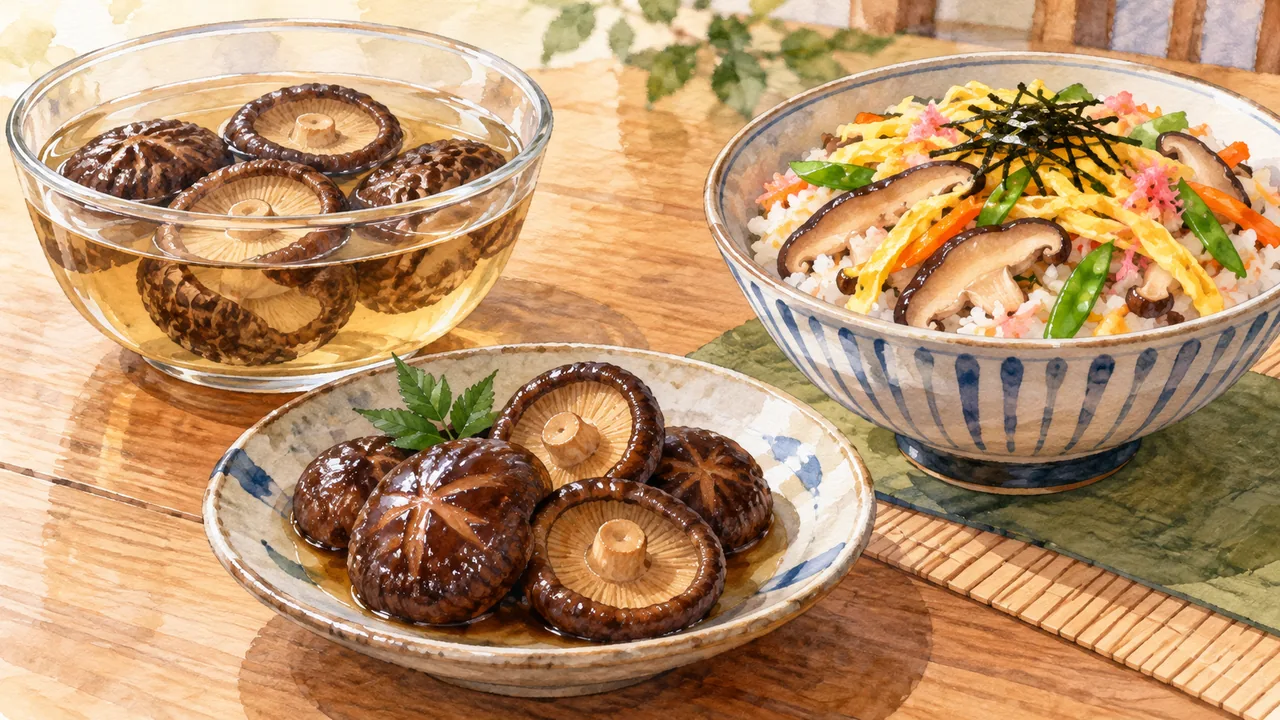
Rehydrate dried shiitake by soaking them in water. Thick donko take their time; thin koshin come back fast. Soaking them the night before you cook takes the pressure off. The soaking liquid is dashi — Mino Shiitake also recommends using it in cooking. Combine it with kombu or katsuobushi dashi and your range widens, from vegetarian simmered dishes to New Year nishime.
Sealed, Somewhere Cool
Dried shiitake are a dried food. Mino Shiitake advises keeping them in an airtight container, out of direct sunlight, somewhere cool. Close opened bags tightly.
Did you know: The people keeping Oita's shiitake going
Oita's dried shiitake lead Japan in quality and quantity, but according to the prefecture, the number of growers has been falling. Oita is recruiting new growers to protect its forests and pass the techniques on — and newcomers like Nabaya, who moved from construction to log-grown shiitake, are part of what keeps the region going.
7. Frequently Asked Questions
What's the difference between donko and koshin?
Shape and how fast they rehydrate. Donko have round, thick caps; koshin have thin, open caps with large gills and rehydrate quickly.
What are log-grown shiitake?
Shiitake grown by planting the fungus in logs of kunugi oak and similar trees. According to Oita Prefecture, the spawn logs rest about a year and a half before shiitake appear. Labels say "shiitake (log-grown)."
How do I rehydrate dried shiitake?
Soak them in water, slowly. Thick donko take longer, koshin less. Soaking the night before is safest.
Can I use the soaking liquid?
Yes — as dashi. Added to simmered dishes or soups, it spreads the shiitake's umami.
How should I store dried shiitake?
In an airtight container, away from direct sunlight, somewhere cool. Mino Shiitake's keep a year from production.
Which suits New Year nishime?
Round, thick donko. Simmer Nabaya's Oita donko or Mino Shiitake's small donko whole.
Final Thoughts: Shiitake Grown on Wood, Dashi and All
Use donko and koshin for different dishes — and remember that log-grown shiitake appear only after their logs rest a year and a half.
Donko from Oita's Nabaya, carrying on log cultivation that began in Bungo some 400 years ago. Koshin from Himeno Ichiro Shoten, an Oita wholesaler that began with lanterns. Small, uncut donko from Gifu's Mino Shiitake. All grown on wood from Japan's forests.
Add shiitake dashi to your kombu and katsuobushi — and make this year's New Year nishime with log-grown dried shiitake.

Kombu for Dashi: Rishiri, Rausu, Ma-Kombu and Aged Kelp
Katsuobushi: Arabushi vs Honkarebushi, and Shaving It