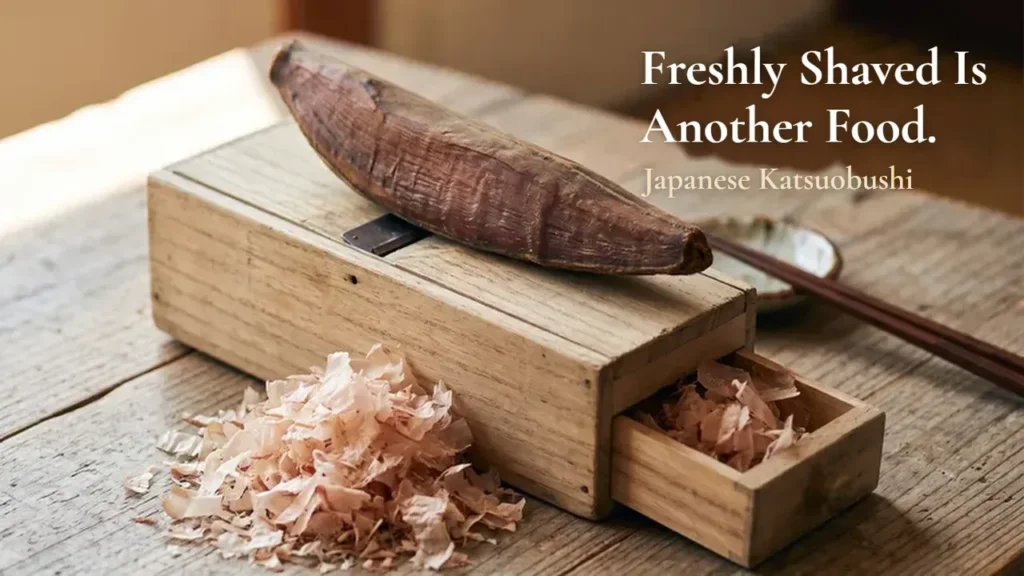
"I'd never manage to use a katsuobushi shaver." If you've ever put one back on the shelf thinking that, here's the thing: the hard part isn't the shaving. It's only how far the blade sticks out. Know where to tap with the mallet to move the blade, and you can shave on day one.
Freshly shaved katsuobushi (dried, smoked skipjack tuna) smells nothing like a packet you've just opened. The aroma rises, rides the steam and reaches you; a pinch on chilled tofu changes the whole dish. This guide covers the difference between arabushi and honkarebushi, the most confusing label in the shop — "chiai-nuki" — and how to choose a shaver and set its blade.
Quick Reference: Katsuobushi Types and What They're For
| If you want to… | Choose | Why |
|---|---|---|
| Try shaving first | Arabushi (whole) ▾ | Strong aroma, gentler price, good for practice |
| Get refined dashi | Honkarebushi (whole) ▾ | Mould-cured repeatedly; fishiness gone |
| Clear soups, chawanmushi | Chiai-nuki flakes ▾ | Clearer dashi; costs more for the work |
| Miso soup, simmered dishes | Flakes with chiai ▾ | Richer; cheaper |
| Start with the tool | Shaver ▾ | Setting the blade is 90% of it |
| Check in the shop | Tap and listen | A clear, ringing "kan-kan" means it's dry enough |
1. Why Japanese: Arabushi and Honkarebushi — Mould or No Mould
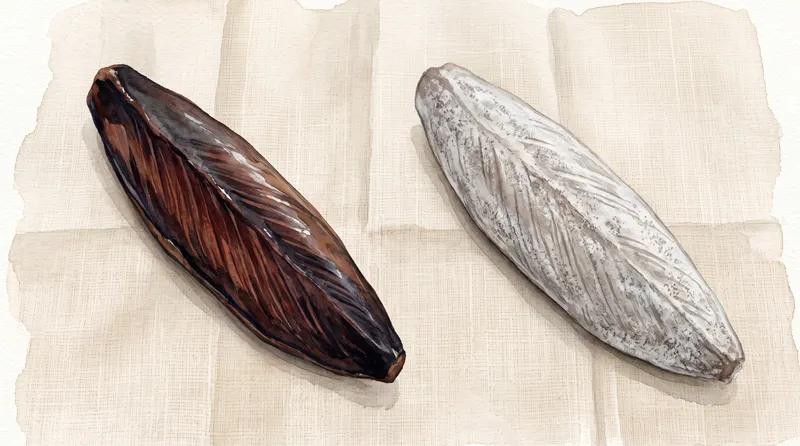
Katsuobushi divides broadly into arabushi and honkarebushi. The one difference: whether it's been mould-cured.
The Mould Is a Tool, Not a Mistake
"You eat something that's gone mouldy?" Most people seeing honkarebushi for the first time react that way. But the mould is put there on purpose. It's a Eurotium mould, known in the katsuobushi world as "good katsuobushi mould," and it has two jobs: drawing out the moisture left inside, and breaking down fat. With the fat broken down, the fishy smell disappears and the flavour becomes refined; it keeps longer, too. It isn't added to prevent spoiling — it's added to change the taste. Once you know that, the white powder looks different.
The Time Difference Is the Number of Curings
For honkarebushi, the surface of the arabushi is shaved, mould is applied, and it's dried in the sun — over and over. It takes three months to half a year, and the range is the number of times it's cured: the more curings, the more moisture leaves and the more fat breaks down. The price difference is, more or less, that time.
| Arabushi | Honkarebushi | |
|---|---|---|
| Mould-curing | None | Repeated |
| Time to finish | Short | 3–6 months |
| Taste | Strong, bold aroma | Fishiness gone; refined |
| Best for | Everyday dashi, toppings, okonomiyaki | Clear soups, ohitashi |
Honkarebushi isn't always "better." On okonomiyaki or chilled tofu, arabushi's stronger aroma stands out more. Dishes that want refinement and dishes that want aroma up front are different dishes.
Checked Piece by Piece, by Eye and Fingertip
The steps before mould-curing are the most labour-intensive. Skin, fat under the skin, bones, impurities — craftsmen remove them, checking by eye and fingertip. Every fish differs in size and condition, so it never goes exactly by the book; the touch changes each time. That's why the more neatly shaped a honkarebushi, the more handwork has gone into it. Compare them side by side in a shop and you'll see the smoothness of the shaved faces and the sharpness of the corners differ.
One Fish Gives Four Pieces
There are back pieces (obushi) and belly pieces (mebushi); one skipjack yields two of each. The difference is fat: back pieces are leaner, belly pieces richer. Sources disagree on which is better for dashi — if in doubt, start with a back piece, which crumbles less when you shave it.
2. Chiai-Nuki Isn't the "Premium" Version
Some bags of katsuobushi flakes say "chiai-nuki" — and cost more than the one next to them. It's tempting to assume pricier means better. But this is a difference of use, not rank.
Chiai is the dark-red blood-rich part between back and belly. Remove it, and you have chiai-nuki.
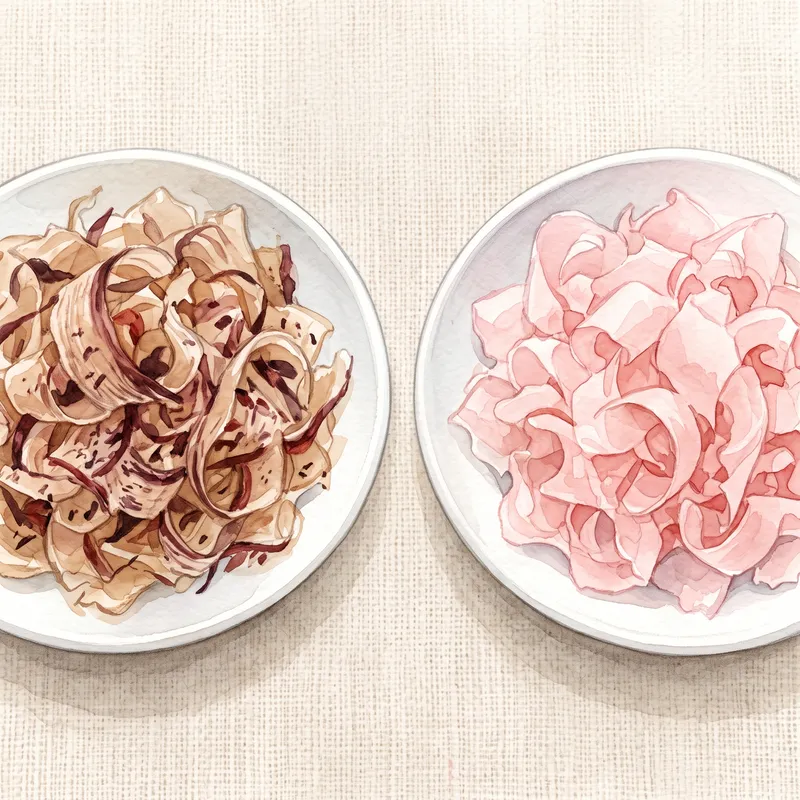
| With chiai | Chiai-nuki | |
|---|---|---|
| Dashi colour | Darker | Clear and translucent |
| Taste | Richer | Cleaner, refined |
| Flake colour | Darker | A pretty cherry pink |
| Price | Lower | Higher, for the extra work |
| Best for | Miso soup, noodle broth, simmered dishes | Clear soups, chawanmushi, dishes where colour matters |
Use chiai-nuki in miso soup and you won't notice — the miso hides it, and the richness of flakes with chiai actually suits miso soup better. In a clear soup or chawanmushi, though, the colour of the dashi is the look of the dish, and flakes with chiai can make it look cloudy. Don't buy the pricier one — choose by the dish.
3. Where It's Made: Three Cities, 98%
Japanese katsuobushi is made in a remarkably small area: Makurazaki and Ibusuki in Kagoshima, and Yaizu in Shizuoka make 98% of it.
- Makurazaki (Kagoshima): the biggest producer — the name that means katsuobushi.
- Ibusuki / Yamagawa (Kagoshima): known for honkarebushi skill and beautifully shaped pieces.
- Yaizu (Shizuoka): about 15 factories, including the one with Japan's largest output.
If one of these names is on the packet, that's where it was made. For honkarebushi especially, Ibusuki and Yamagawa are worth remembering.
4. What to Buy: Blocks, Flakes and a Shaver
For a first try, an arabushi and a shaver together is the natural way in. Starting straight with honkarebushi isn't ideal: you'll waste some while learning to set the blade, and honkarebushi is hard enough to be a tough first piece. In Japan, the makers we'd point you to are Shinmarusho's Katauoya in Yaizu (arabushi, with a factory shop where you can taste it freshly shaved), Kanehichi Shoten in Makurazaki (honkarebushi cured to classical music — "classic-bushi"), Daiya of Sanjo, Niigata (shavers made since 1946 by a factory that made bodies for carpenters' planes), and Ninben of Nihonbashi, Tokyo (founded 1699). From outside Japan, these are available on Amazon.com:
Nagao Tsubame-Sanjo Katsuobushi Shaver, Paulownia
A katsuobushi box from Tsubame-Sanjo in Niigata, made in Japan, 25.7 cm long. A drawer below catches the flakes. Check that the blade adjusts with a mallet (section 5).
Nagao Tsubame-Sanjo Katsuobushi Shaver, Paulownia (KIRI)
Loading product details…
TIKUSAN Katsuobushi Shaver Box
A Japanese-made shaver box with a drawer — the classic form of the tool. Pair it with an arabushi to learn blade setting.
TIKUSAN Katsuobushi Shaver Box
Loading product details…
TENPAKU Honkarebushi Katsuobushi Block
A whole, mould-cured honkarebushi from Japan. Its dashi is clear and refined with the fishiness gone — the one for clear soups once you're comfortable with the shaver.
TENPAKU Honkarebushi Katsuobushi Block, 200 g
Loading product details…
Ninben Hana-Katsuo Bonito Flakes
Everyday flakes from Ninben, a katsuobushi house since 1699 — the founder, Takatsu Ihei, came from Ise and started trading in katsuobushi in Edo at 20. Even with a shaver, keep a bag of flakes for daily miso soup.
Ninben Hana-Katsuo Bonito Flakes, 100 g
Loading product details…
For making noodle broth or the base for simmered dishes, look for atsukezuri (thick shavings): they're simmered longer for a stronger dashi, and are too heavy for clear soups.
5. Using a Shaver: Setting the Blade Is 90% of It
When your shaver arrives, look at the blade first. Get that right and the rest is just pushing. If it won't shave, the cause isn't your arm — the blade is out too far. Too much blade and it chips instead of shaving.
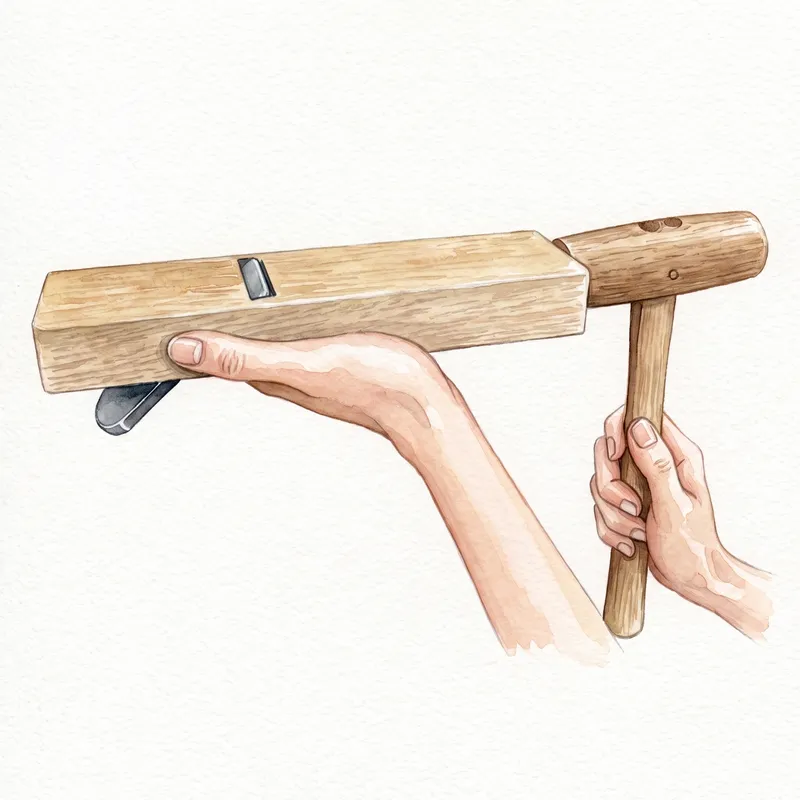
Where to Tap With the Mallet
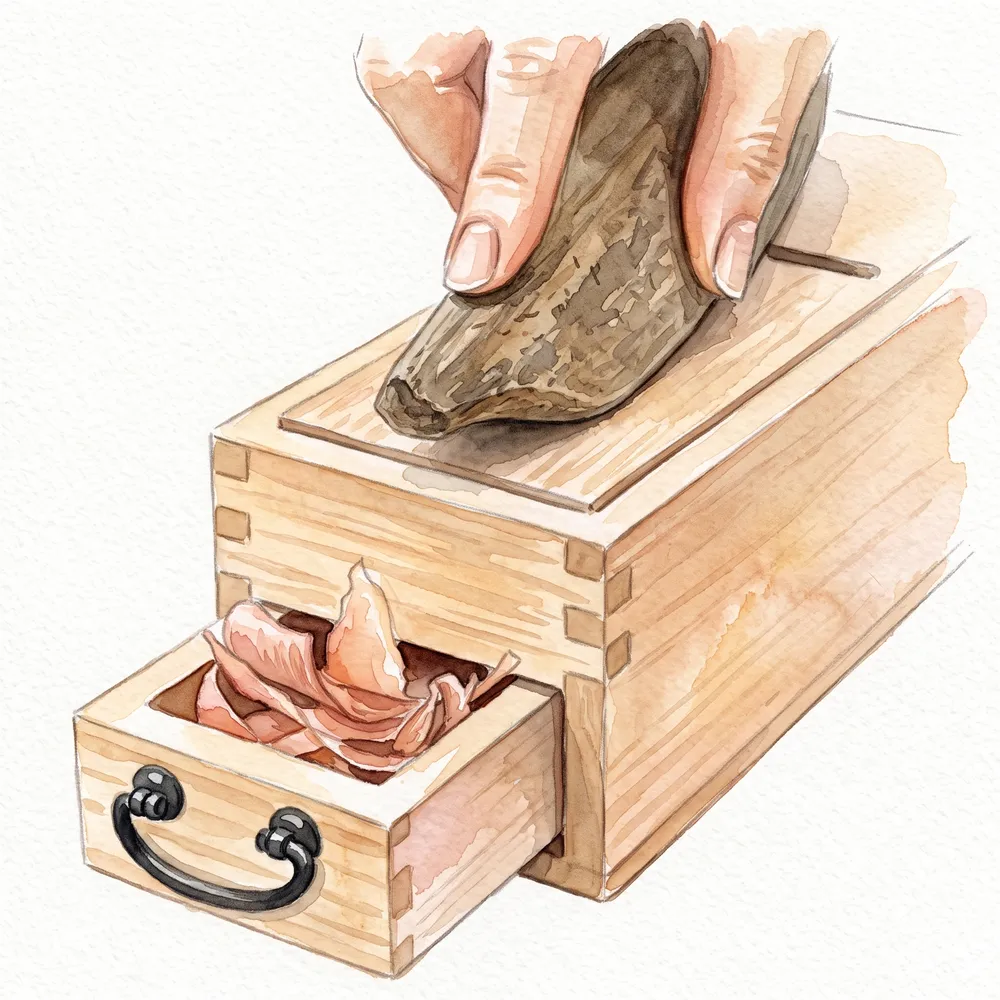
Adjusting is just light taps with a wooden mallet, and there are only two things to remember: tap the lower part of the plane block to push the blade out; tap the upper part to pull it in. The target is about the thickness of a sheet of paper when you feel it with a fingertip — more than that and you'll shave thick and chip the piece.
Start with the blade pulled in and bring it out bit by bit. If it won't shave, bring it out a touch more. In that order, you can't go wrong. If no mallet comes with it, a small hammer will do.
Shave the Wrong Way, and You Get Powder
Katsuobushi has a grain. Shave against it and you get powder, not flakes — even with the blade set perfectly.
- Point the blade's edge toward you.
- Hold the piece head-end down and shave from the head end.
- Rest the angled part at the head end on the block for a steady contact.
It takes almost no force. With the blade set right, a light push brings out thin, fluffy flakes. If you're pressing hard, that's your signal to go back and adjust the blade.
Use What You Shave the Same Day
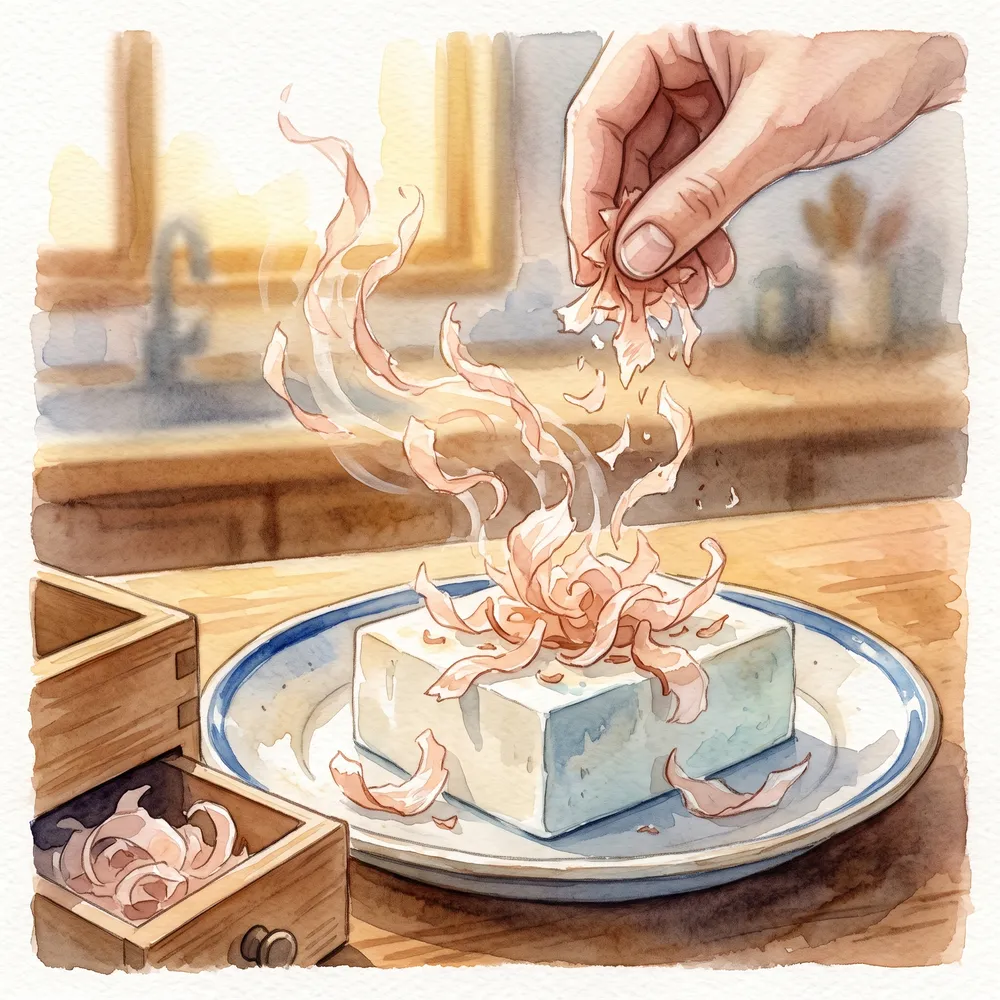
Flakes oxidise over time, dulling in colour and losing aroma. That's the whole reason to own a shaver — not that packet flakes are bad, but that all flakes start losing aroma the moment they're shaved. Shave only what you'll use that day; wrap any leftovers airtight and refrigerate.
Storing the Block
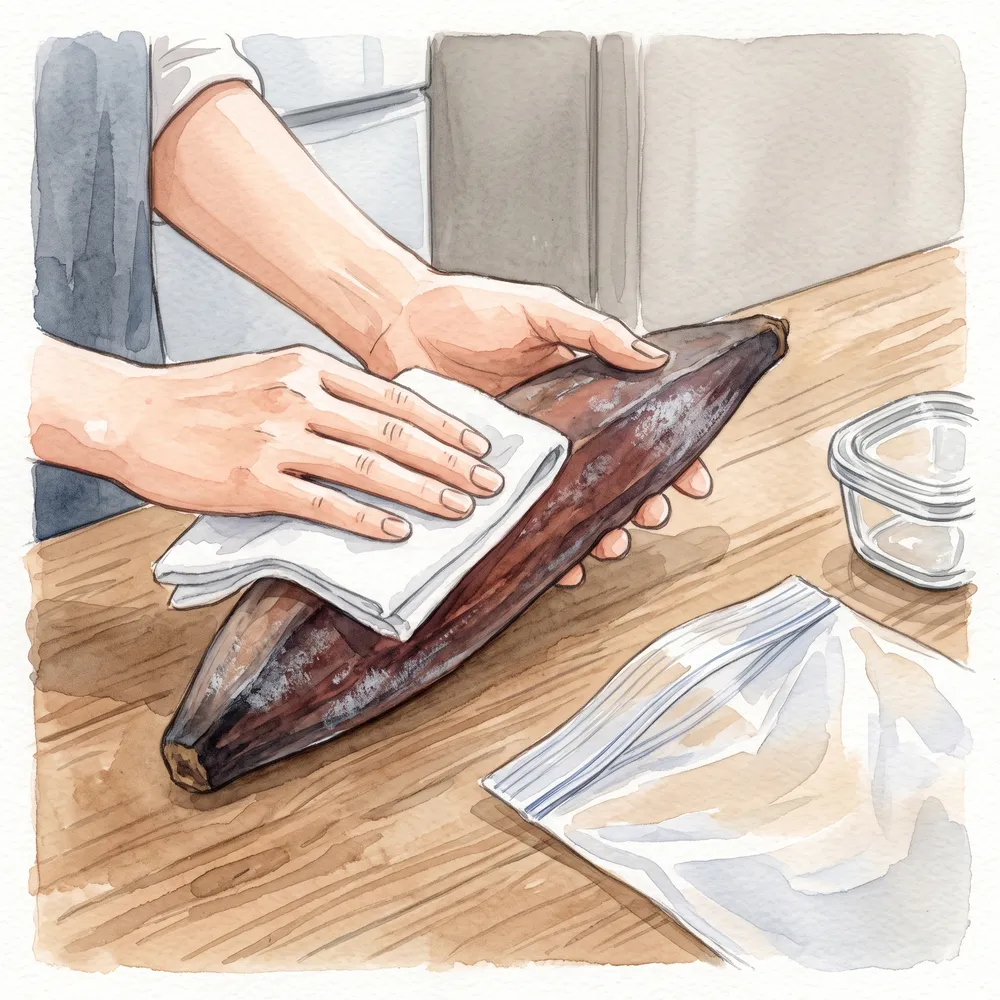
Keep unshaved pieces sealed in the fridge. Honkarebushi wears mould on its surface, so if it gets damp, new mould can appear; wipe it off with a dry cloth and it's fine to use. "Does it ring with a clear 'kan-kan' when tapped?" works at home as well as in the shop — a dull sound means it has absorbed moisture.
6. Frequently Asked Questions
Should I wash the white mould off honkarebushi?
No — water makes the piece absorb moisture. The mould is a deliberate Eurotium mould that dries the piece and breaks down fat for a refined flavour. If it bothers you, wipe it lightly with a dry cloth.
Will I really keep using a shaver?
Honestly, shaving for every meal won't last. Keep packet flakes for everyday miso soup, and shave on days when aroma is the star — chilled tofu, ohitashi. Think of the shaver as a tool for aromatic days, not a daily chore.
I only get powder. What's wrong?
Almost always one of two things. The blade is out too far — tap the upper part of the block to pull it back to paper-thin. Or you're shaving against the grain — shave from the head end.
Arabushi or honkarebushi?
Choose by the dish. Honkarebushi for clear soups and ohitashi; arabushi for okonomiyaki, chilled tofu and everyday miso soup. With a new shaver, start with arabushi — it's softer and easier to learn on.
Back piece or belly piece for dashi?
Sources disagree, so we won't say for sure. What's certain is the fat: back pieces are leaner, belly pieces richer. If in doubt, try a back piece first — it crumbles less.
How long do flakes keep?
Follow the date on the packet — but flavour fades long before. Once opened, seal and refrigerate. A block that no longer rings when tapped has taken on moisture.
Final Thoughts: Start With an Arabushi and a Shaver
Freshly shaved katsuobushi smells clearly different from a packet — and the hard part isn't shaving, only how far the blade sticks out. Tap the lower part of the block to push it out, the upper part to pull it in; aim for paper-thin; start pulled in.
Mould-cured is honkarebushi; uncured is arabushi. The white powder is a tool, not a failure — but honkarebushi isn't always better. Chiai-nuki isn't a premium version either; choose by the dish. And 98% of Japan's katsuobushi comes from Makurazaki, Ibusuki and Yaizu.
Put a shaver and one arabushi in your kitchen. You'll taste the difference in the first miso soup.

How to Make Japanese Dashi: Kombu & Katsuobushi in 4 Steps
Shichimi Togarashi: Three Old Shops, Three Recipes