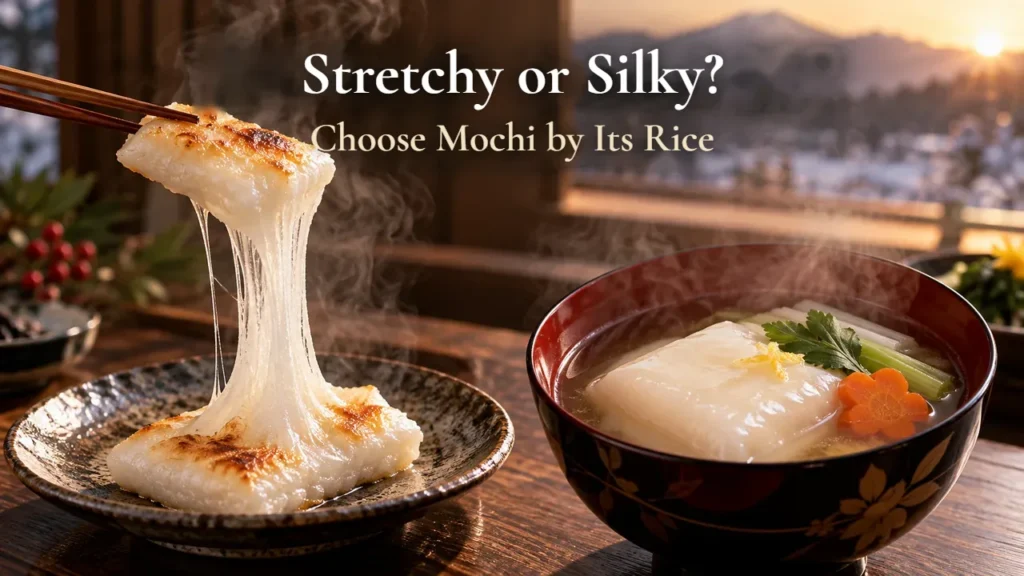
"I grilled it the same way, but last year's mochi seemed to stretch more." The difference may not be how you grilled it, but the variety of glutinous rice.
The mochigome (glutinous rice) that becomes mochi comes in named varieties. Niigata's Koganemochi gives body and stretch; Shiga's Habutae-mochi gives fine, soft smoothness. This guide introduces Japanese kirimochi (cut rice cakes) you can choose by variety, and noshi-mochi — a single slab of freshly pounded mochi delivered at year's end — with how to cut and store it.
Quick Reference: Japanese Mochi by Rice Variety
| Variety (region) | Texture | Mochi | Form |
|---|---|---|---|
| Himenomochi (Iwate) ▾ | A child of Koganemochi | Komejin's pestle-pounded noshi-mochi (year's-end delivery) | Noshi-mochi (you cut it) |
| Koganemochi (Niigata) ▾ | Body and stretch | Asahiike Farm; Sato kirimochi | Kirimochi |
| Shiga Habutae-mochi (Shiga) ▾ | Soft and fine | Sato kirimochi "Shiko no Mochi" | Kirimochi |
1. Why Japanese: The Stretch Starts With the Rice
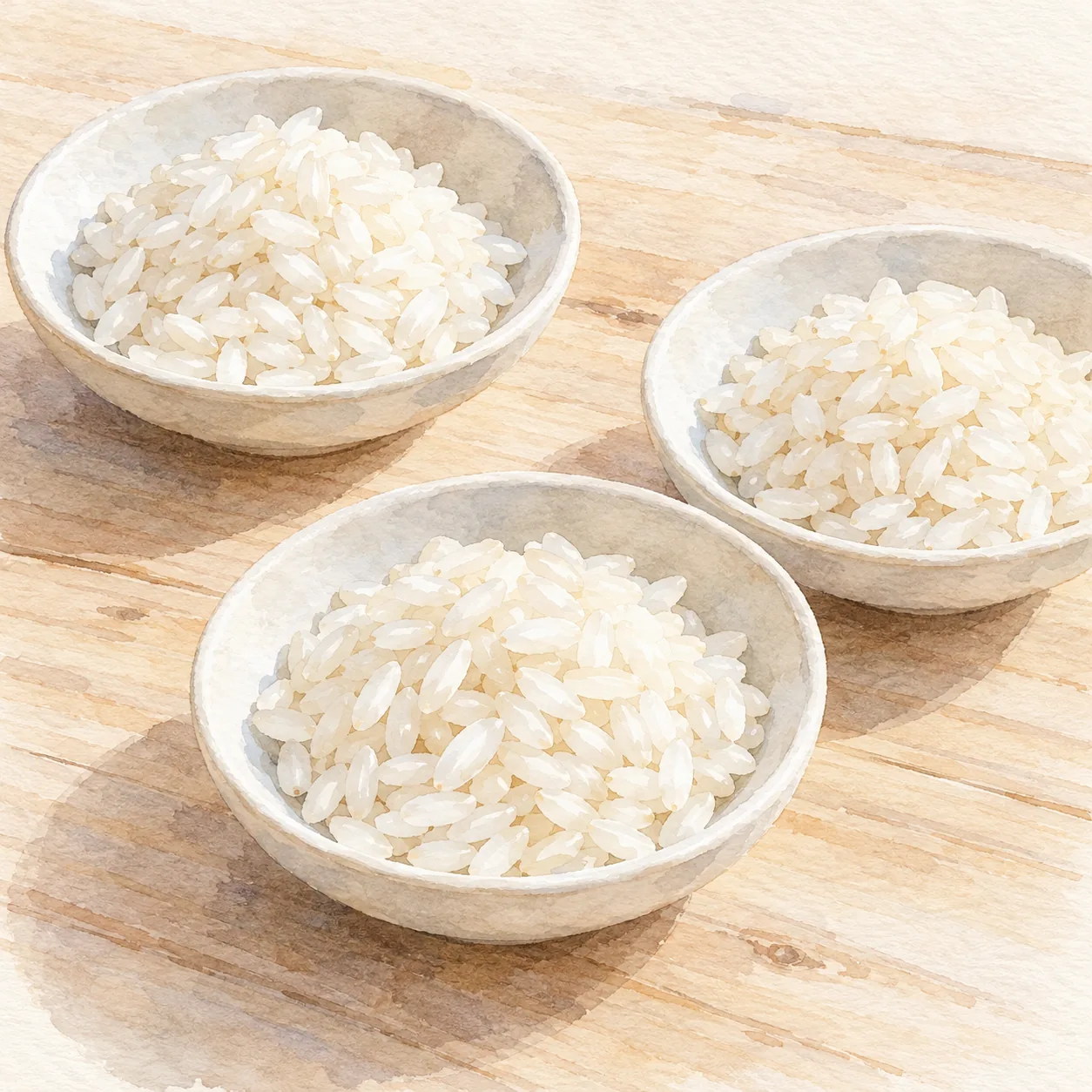
Mochi maker Mocchii writes: "Glutinous rice accounts for only about 4% of the land planted with rice, paddy and upland together." Within that small area are several varieties — Koganemochi born in Niigata; Himenomochi, born in Tohoku with Koganemochi as a parent; Habutae-mochi grown in Shiga. Change the variety, and the pounded mochi stretches and feels different in the mouth.
Kirimochi bags in Japan sometimes list the variety and region — "Koganemochi," "Habutae-mochi," "Himenomochi." Just as you'd pick rice by "Koshihikari" or "Tsuyahime," you can pick mochi by variety: do you like mochi that stretches, or a smooth mouthfeel?
2. Iwate's Himenomochi: Fresh-Pounded, as Noshi-Mochi
According to Mocchii, Himenomochi "crossed Taikei 227 with Koganemochi and was adopted as a recommended variety in 1972" — and "is grown in 13 prefectures including Iwate, more than any other variety."
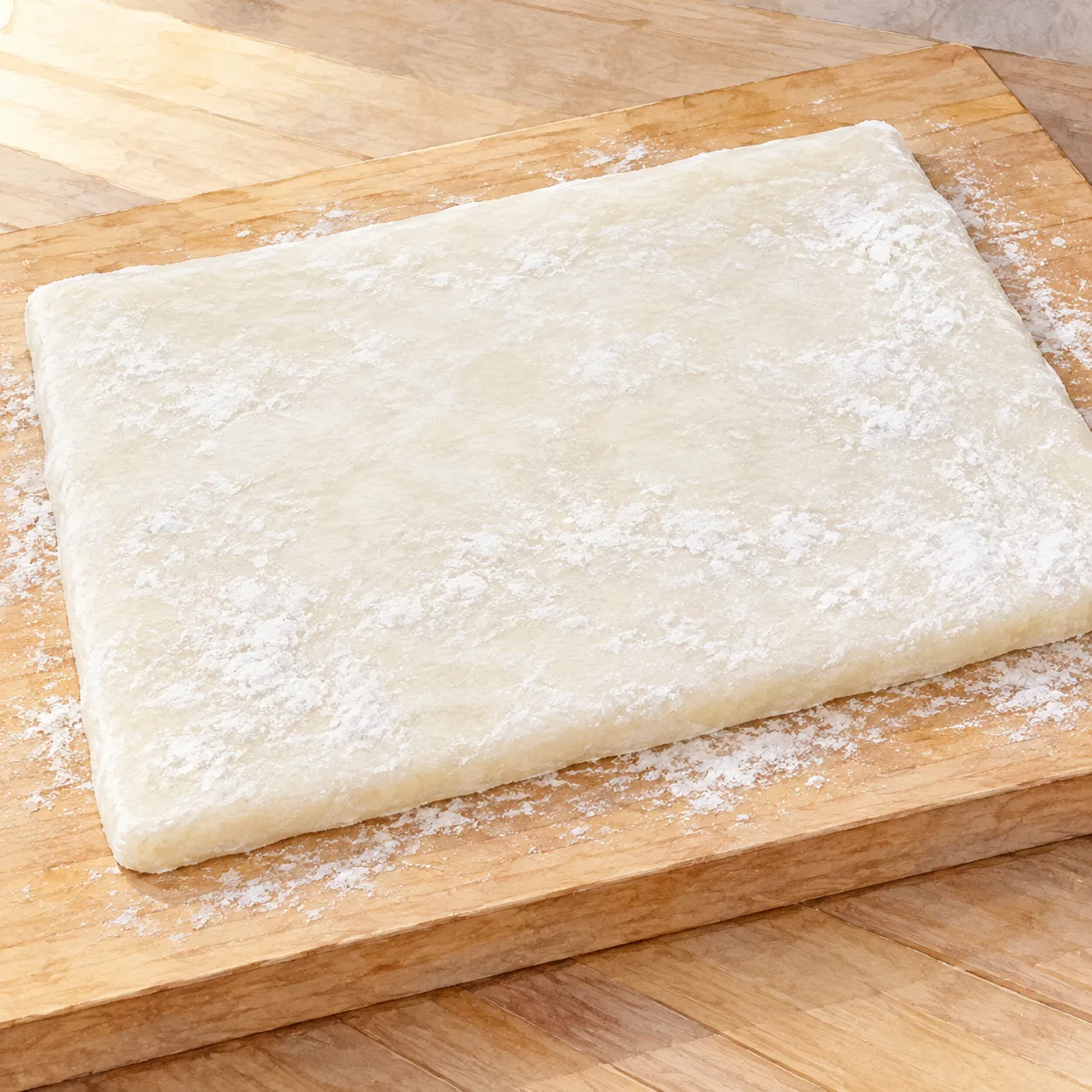
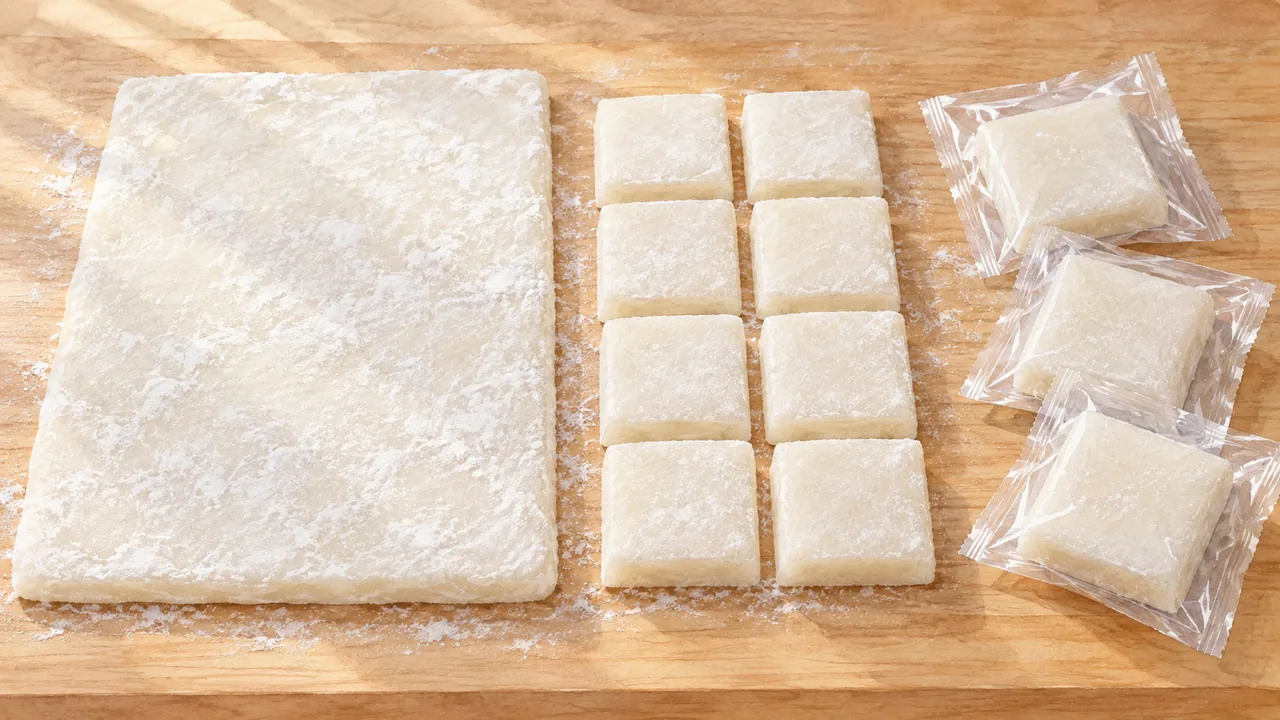
Komejin, a rice and mochi shop in Saitama, pounds 100% Iwate Himenomochi with a traditional pestle and delivers it at year's end as noshi-mochi — freshly pounded mochi rolled flat into a square slab. One shō is about 2 kg, equivalent to 30 thick pieces. Buyers' reviews: "It was fun how it stretched and stretched," and "Cutting noshi-mochi is a chore, but it's mochi worth the effort." Taking a knife to it together at year's end is part of noshi-mochi.
3. Niigata's Koganemochi: The "King of Glutinous Rice"
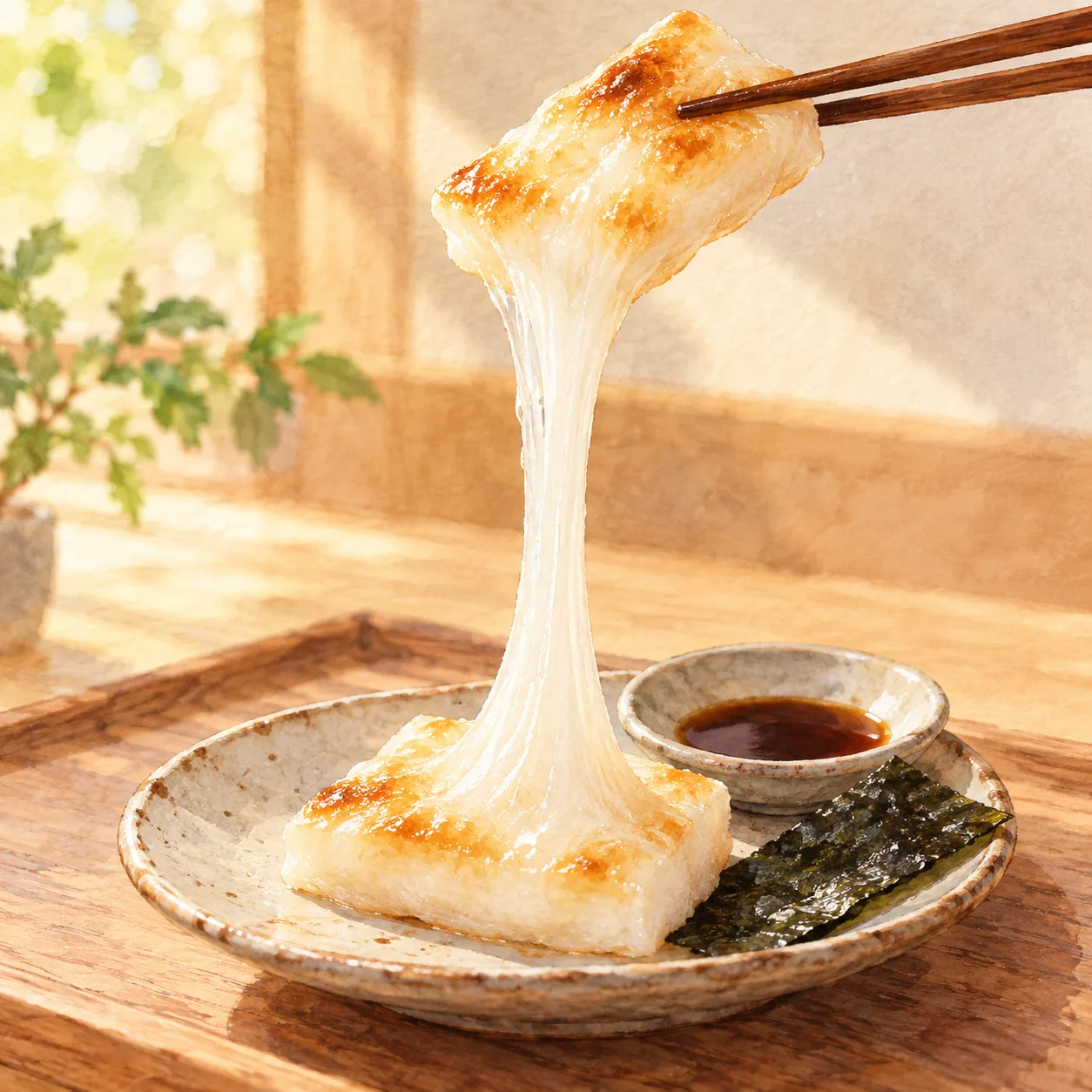
Koganemochi was crossed at Niigata's agricultural experiment station and became a recommended variety in 1958; Niigata still grows the most (Mocchii). Niigata mochi maker Sato Foods calls it "the king of glutinous rice, of the highest quality," with "a fine texture and firm body and stretch." Lift it with chopsticks and it stretches long — the variety for people who love that.
In Japan, Asahiike Farm in Niigata pounds Koganemochi into large white kirimochi — one buyer: "very fine and smooth, with a strong taste of glutinous rice" — and Sato makes a kirimochi from specially cultivated Niigata Koganemochi alone. Eat it next to ordinary kirimochi, and you'll taste the variety.
4. Shiga's Habutae-Mochi: Soft and Fine
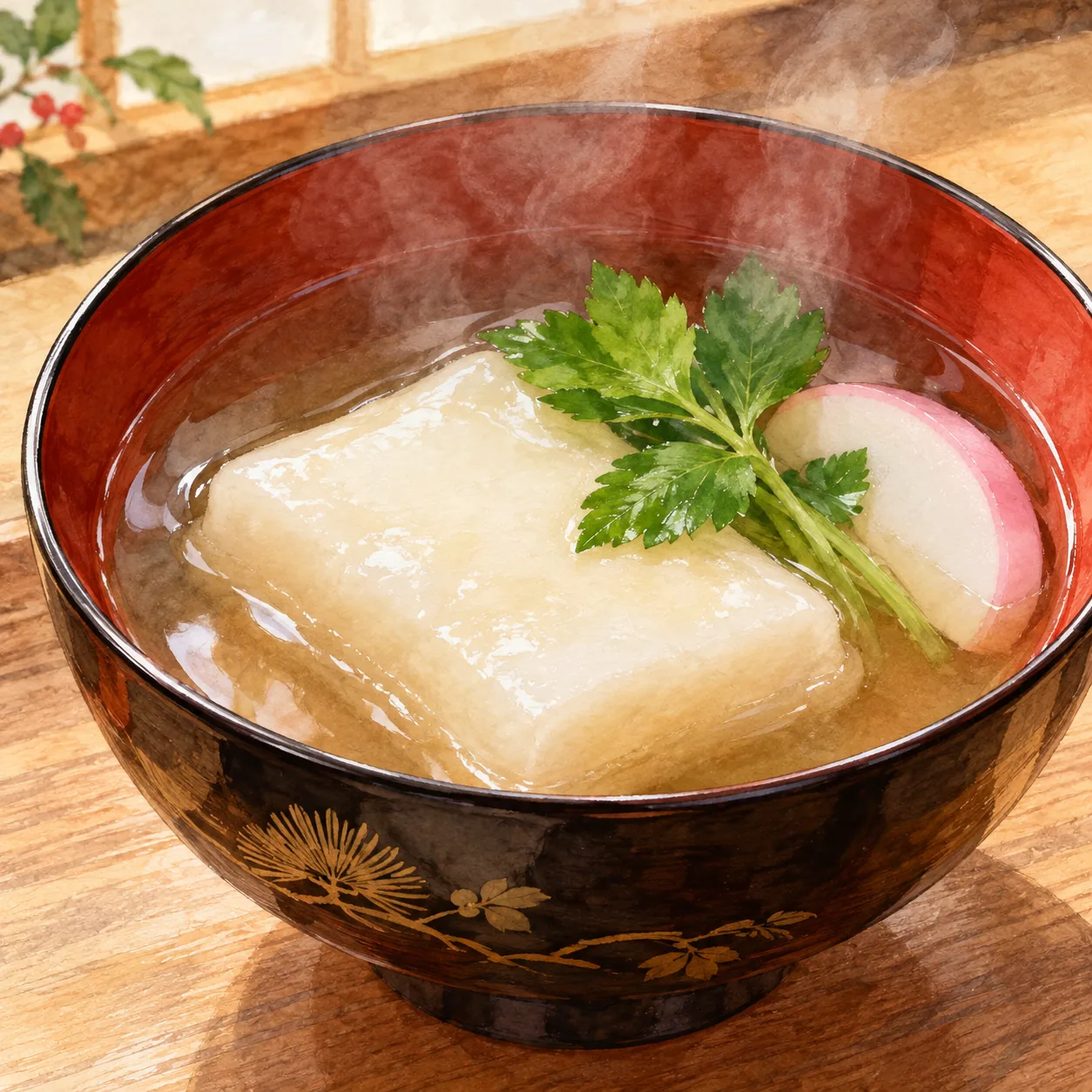
Habutae is the name of a smooth silk fabric. Shiga Habutae-mochi, bred by Shiga Prefecture's agricultural experiment station, is described as "soft, sticky, with a fine texture on the tongue." If Koganemochi is body and stretch, Habutae is smoothness — for people who like mochi that melts silkily in a bowl of ozoni.
Sato's "Shiko no Mochi" kirimochi is made from Shiga Habutae-mochi. Taste it beside the Koganemochi and the difference between stretch and smoothness is clear; if the family's tastes split, keep both.
Did you know: Himenomochi is Koganemochi's child
Himenomochi was born in Tohoku from Taikei 227 and Koganemochi — and is now the glutinous rice grown in more prefectures than any other (Mocchii). Niigata Koganemochi's bloodline has spread to rice paddies in 13 prefectures: New Year mochi is connected by a family tree of varieties.
5. Buying From Outside Japan
As of November 2026, fresh noshi-mochi and the variety-named kirimochi above sell within Japan. Shelf-stable kirimochi from Niigata's big mochi makers is available on Amazon.com — the variety isn't named on these, but both come from Niigata makers.
Sato Kirimochi, 1 kg
Sato Foods of Niigata's everyday kirimochi, individually wrapped for long keeping. Grill until it puffs, or drop into ozoni.
Sato Kirimochi, 1 kg (Pack of 2)
Loading product details…
Echigo Seika Nama Ichiban Kirimochi
Kirimochi from Echigo Seika in Niigata, made in Japan from 100% Japanese glutinous rice. Enough to keep through New Year and beyond.
Echigo Seika Nama Ichiban Kirimochi, 400 g × 5
Loading product details…
6. Noshi-Mochi or Kirimochi?
- By variety: stretchy mochi, Koganemochi; smooth mouthfeel, Habutae. Grilled with soy sauce and nori shows off stretch; ozoni shows off smoothness.
- Fresh-pounded or long-keeping: noshi-mochi for fresh-pounded taste — but it's raw mochi, about two days at room temperature. For keeping on hand, kirimochi: Sato's keeps 24 months from production.
- By household size: Komejin's noshi-mochi is one shō (about 2 kg), around 30 pieces. Count how many pieces you'll eat over New Year and choose noshi-mochi or bags of kirimochi accordingly.
7. Cutting and Storing Noshi-Mochi
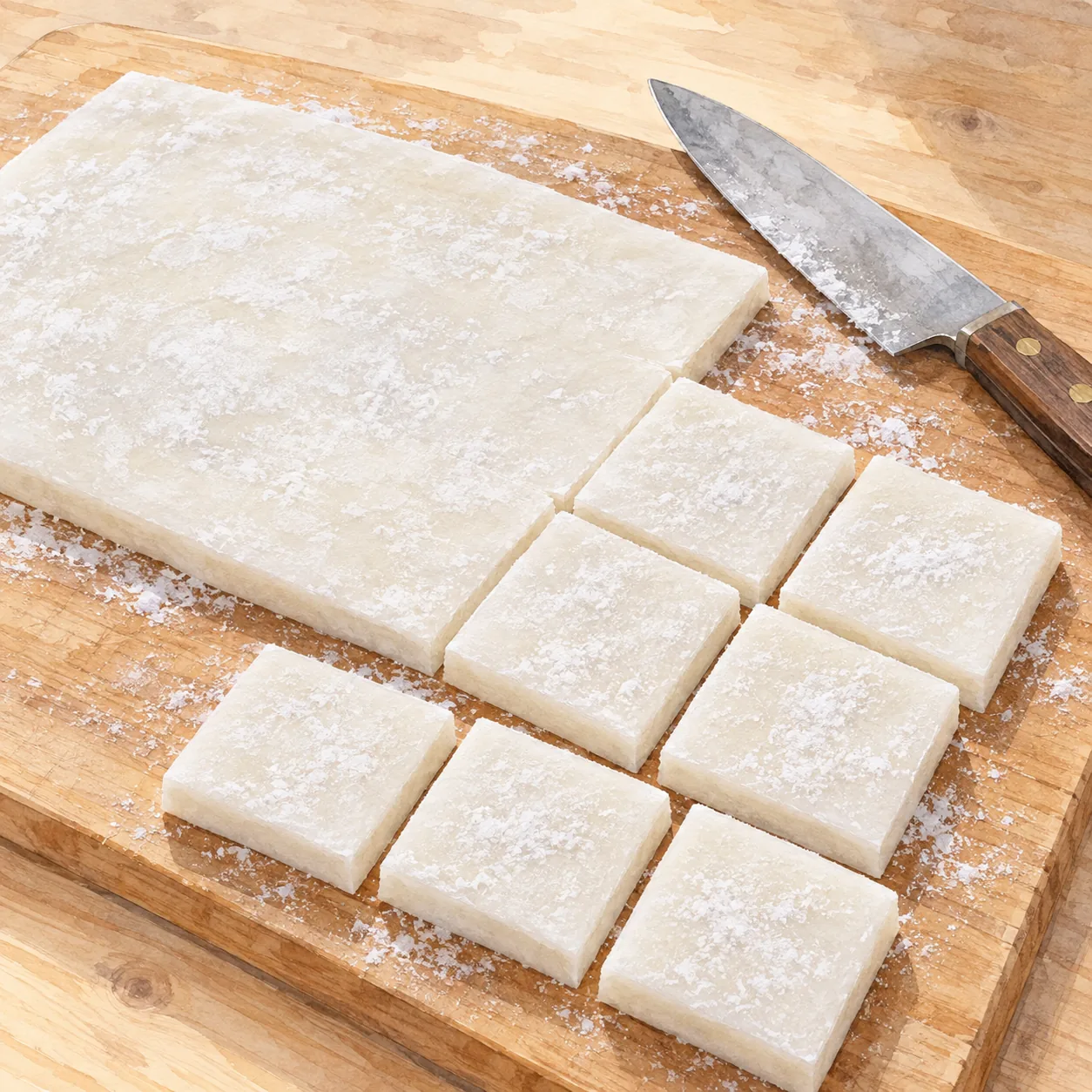
Noshi-mochi hardens as time passes. A buyer who has worked as a wagashi maker for over 40 years wrote in a review: "It was hard to cut," and "I should have cut it right away." Cut it before it hardens completely — 2 kg makes about 30 pieces, so sharing the knife work as a family is a good time.
Komejin's noshi-mochi keeps two days at room temperature (somewhere cool and dark), a week refrigerated, and three months frozen. Wrap cut pieces individually in cling film and freeze them, and you can take out one at a time whenever you want. Close opened kirimochi bags tightly and store as labelled.
8. Frequently Asked Questions
What does the rice variety change in mochi?
How it stretches, and how smooth it feels. Koganemochi has "a fine texture and firm body and stretch" (Sato Foods); Shiga Habutae-mochi is "soft, sticky, with a fine texture on the tongue."
How is noshi-mochi different from kirimochi?
Noshi-mochi is one slab of freshly pounded mochi you cut at home; kirimochi comes pre-cut in bags. Noshi-mochi for fresh taste, kirimochi for keeping and convenience.
When should I cut noshi-mochi?
Before it hardens completely. It gets harder to cut over time — even a veteran wagashi maker wished they'd cut it right away.
How long does noshi-mochi keep?
Komejin's: two days at room temperature, a week refrigerated, three months frozen. Cut and freeze what you won't finish.
Koganemochi or Habutae for ozoni?
Habutae for a smooth mouthfeel; Koganemochi for stretch and bite. Neither is "right" — try a little of both.
What kind of rice is Himenomochi?
A glutinous rice born in Tohoku with Koganemochi as a parent, a recommended variety since 1972 and now grown in 13 prefectures including Iwate — more than any other.
Final Thoughts: Stretchy Koganemochi, Silky Habutae
Differences in how mochi stretches begin with the glutinous rice variety — just 4% of Japan's rice land, holding many varieties.
Iwate's Himenomochi, Koganemochi's child, pounded by Komejin into year's-end noshi-mochi. Niigata's Koganemochi, the "king" of body and stretch. Shiga's Habutae, soft and fine.
This New Year, choose your mochi by its rice. Are you on team stretchy, or team silky?
Japan's 7 Best Brand Rice Varieties: A Mail-Order Guide
Kurikinton: Nakatsugawa's Chestnut Sweet vs New Year's