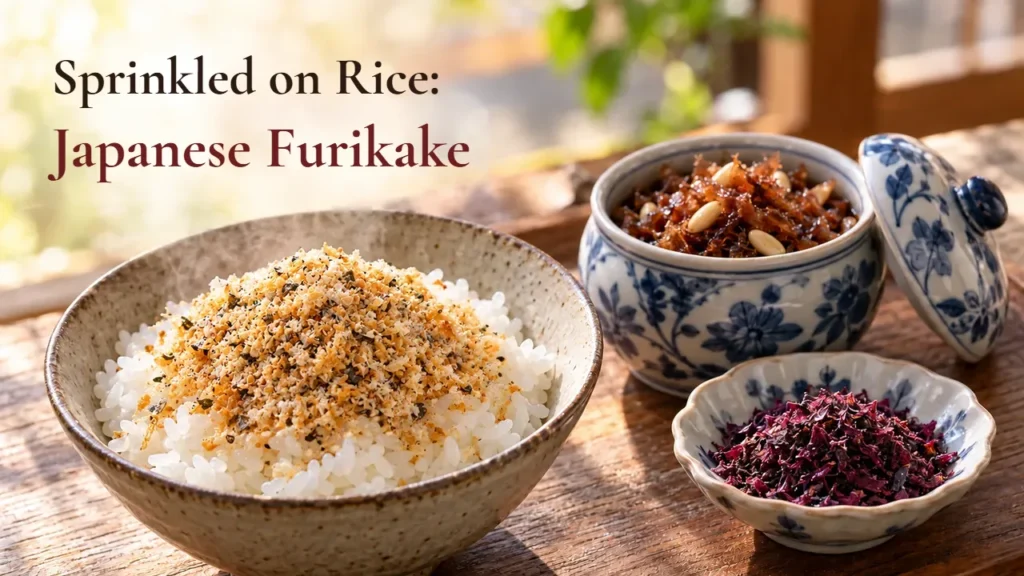
If you're going to talk about furikake, there are three years worth remembering: 1913 in Kumamoto, 1932 in Yotsuya, Tokyo, and 1970 in Hiroshima.
In 1913, "Gohan no Tomo" was born in Kumamoto — the furikake (rice seasoning) the industry's national furikake association officially recognises as the root of all furikake. In 1932, in Yotsuya, Tokyo, a gourmet founder's long-perfected Kinshobai went on sale. And in 1970 in Hiroshima, Mishima Foods wondered whether the red shiso used to colour umeboshi could become a furikake. This guide introduces those three — Futaba's Gohan no Tomo, Mishima's Yukari and Yotsuya's Kinshobai — with how to eat and store them.
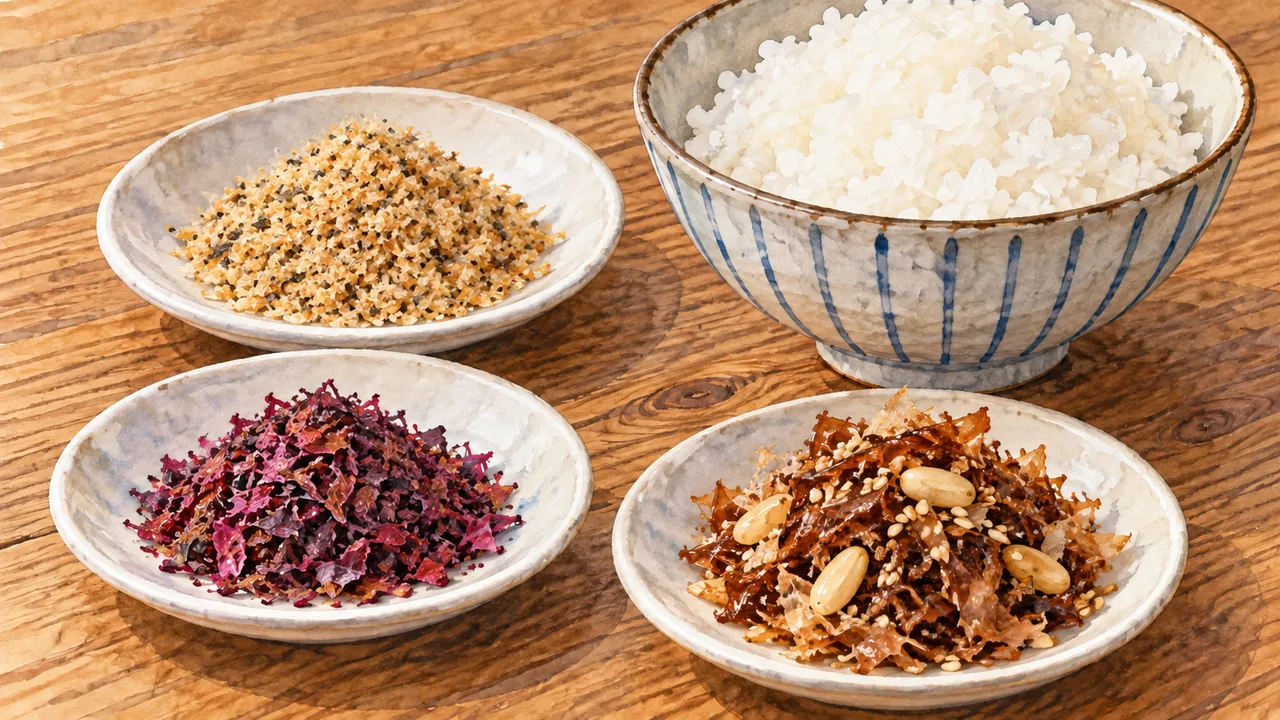
Quick Reference: Three Japanese Furikake
| Furikake | Main ingredient | Maker | For |
|---|---|---|---|
| Gohan no Tomo ▾ | Iriko (dried sardines) | Futaba (Kumamoto) | Everyday rice |
| Yukari ▾ | Red shiso | Mishima Foods (Hiroshima) | Mixed rice, onigiri |
| Kinshobai ▾ | Katsuobushi, pine nuts, wood-ear | Kinshobai (Yotsuya, Tokyo) | Formal gifts |
1. Why Japanese: It Began With a Kumamoto Pharmacist
Furikake is said to have begun in Taisho-era Kumamoto, when a pharmacist, Yoshimaru Suekichi, came up with grinding fish bones and sprinkling them on rice. What grew from it, "Gohan no Tomo," was born in Kumamoto in 1913 and spread by word of mouth as gifts to neighbours. At its 1994 general meeting, the National Furikake Association officially recognised Gohan no Tomo as the root of furikake.
Furikake today uses all kinds of ingredients — small fish, red shiso, katsuobushi, nori, sesame. What to put on rice, and how: following each maker's answer makes choosing furikake a pleasure.
2. Kumamoto, Futaba "Gohan no Tomo": Whole Dried Sardines Since 1913
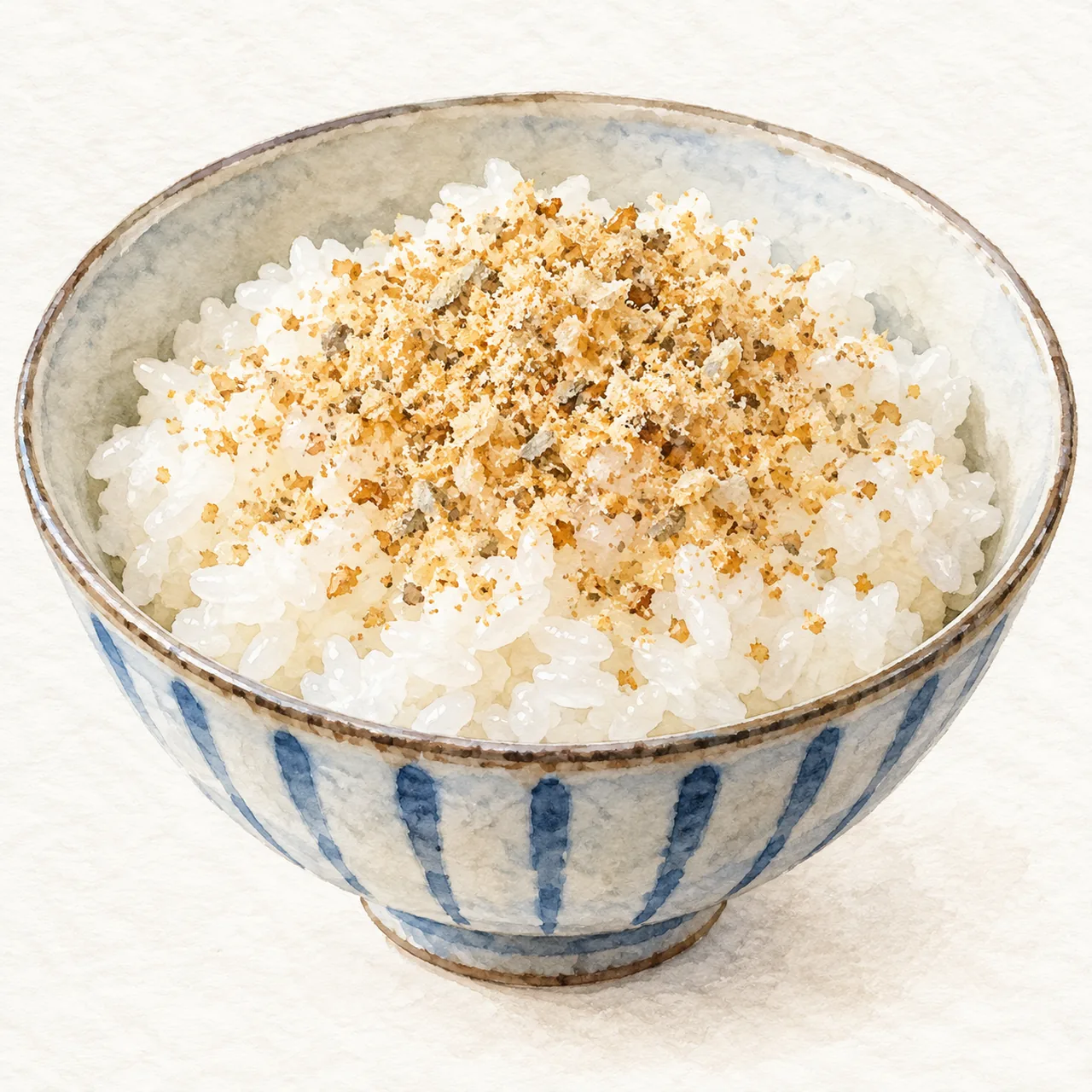
The Gohan no Tomo business passed to Futaba in 1934, and Kumamoto's Gohan no Tomo Honpo Futaba still makes it today. It uses whole iriko (dried sardines). According to the Japan Food Journal, the iriko is Japanese, the seasoning a slightly sweet soy sauce, and the blend adjusted by craftsmen — the same nostalgic taste since 1913.
The 44 g large bag comes from Futaba's furikake shop in Kumamoto. On freshly cooked rice or in a lunchbox, it's the taste Kumamoto homes grew up with.
Did you know: 6 May is "Furikake Day"
6 May is Yoshimaru Suekichi's birthday (1887), and the International Furikake Council made it "Furikake Day." Furikake's own day is the birthday of the man who dreamed up Gohan no Tomo in Kumamoto.
3. Hiroshima, Mishima "Yukari": Purple Born From Umeboshi Shiso
Mishima Foods was founded in Hiroshima in 1949. In 1970 it turned its eye to the red shiso used to colour umeboshi, and after much development produced "Yukari". It was first sold in large catering bags, then gradually spread into homes.
Mishima says its early struggles were colour and aroma. It visited growing regions again and again, held study groups with farmers, and raised the quality of its raw material. To this day it selects only seeds of chirimen red shiso, with good colour, aroma and soft leaves, and asks growers to put quality ahead of yield. Its 2024 "Yukari with Ume," made with Japanese-grown red shiso and ume, pairs the tangy shiso with crunchy bits of plum.
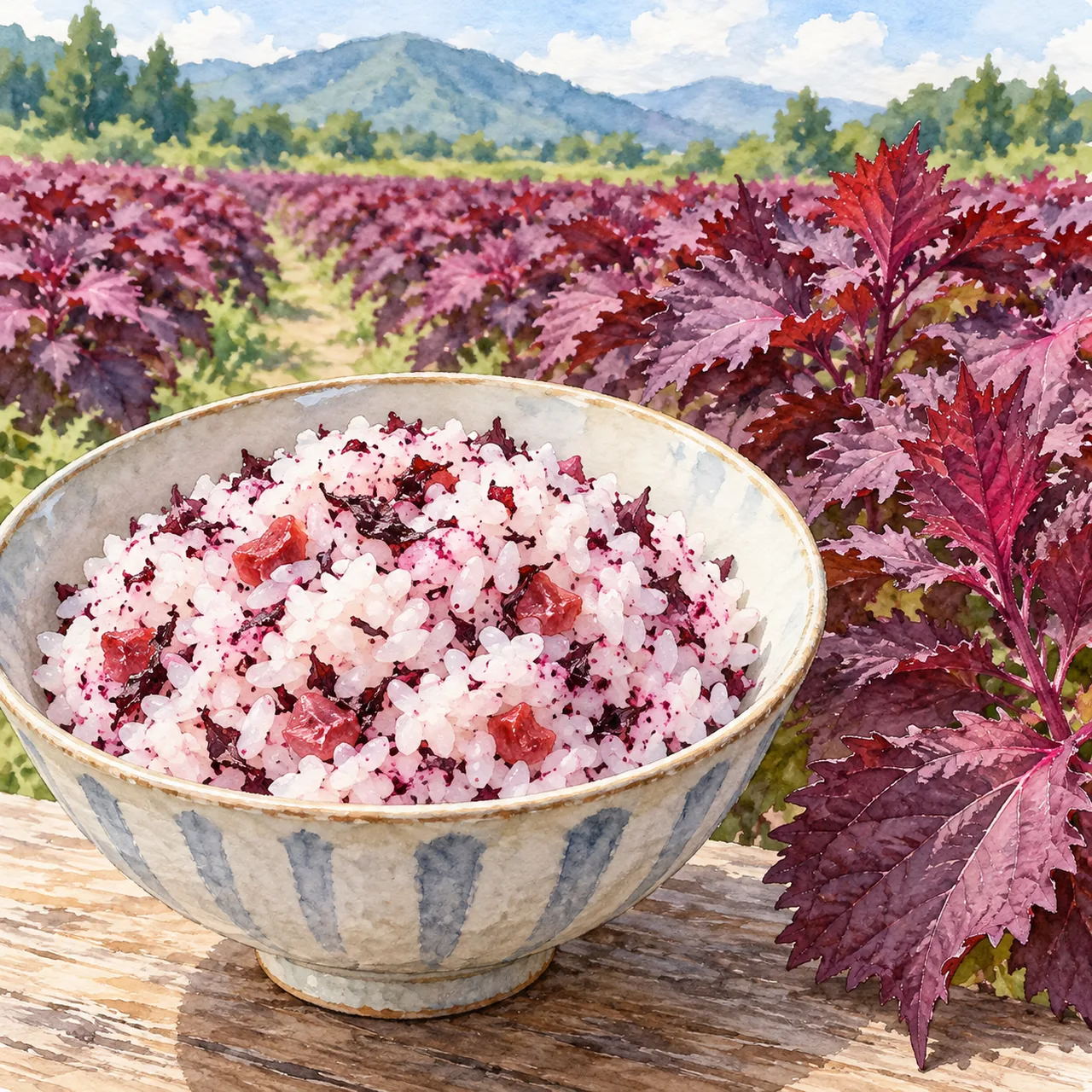
Did you know: "Yukari" means purple
Because an old poem sang of the murasaki plant as something with "yukari" (a bond, a connection), "yukari colour" came to mean purple. Mishima named its product Yukari for its purple colour and its wish to treasure its connections with people. "Yukari" is Mishima Foods' registered trademark.
4. Yotsuya, Tokyo, "Kinshobai": A Tsukudani Furikake Years in the Making
Kinshobai's founder, Kyokuo, was born into a samurai family of the Kakegawa domain and was a gourmet who travelled the country in search of good food. As a child at terakoya school, his lunchbox side dish was always shaved katsuobushi — and he didn't like it. Years later, he perfected Kinshobai with his own hands over a long time.
He never meant to sell it; he proudly served it to the people who gathered around his wife, a flower-arrangement teacher. When it was given as a wedding favour at a student's wedding, its aroma and flavour caused a stir, and in 1932 it went on sale in Samoncho, Yotsuya, Tokyo.
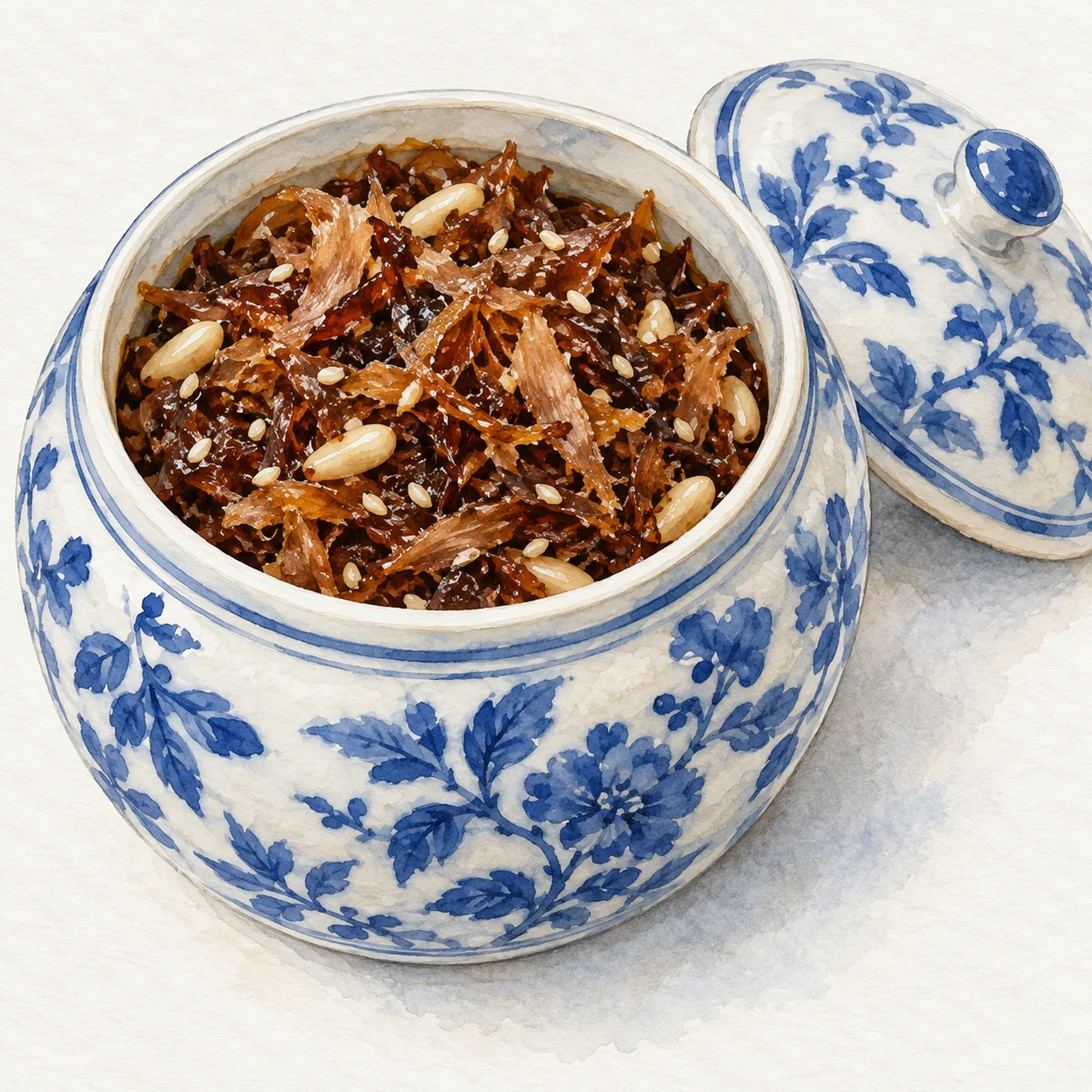
Its ingredients are soy sauce, katsuobushi, sugar, white sesame, kombu, wood-ear mushroom, pine nuts and shiitake — a tsukudani (simmered) furikake of katsuobushi with pine nuts and wood-ear. Kinshobai calls itself a traditional furikake carrying the flavour of Edo to the present. The name joins two of Kyokuo's favourite bonsai: "nishiki-matsu" (a pine) and "ume" (plum); its trademark is the phoenix, an auspicious bird of ancient China. It comes in an original Arita-porcelain container — and since it first won fame as a wedding favour, it suits formal gifts.
5. Buying From Outside Japan
As of November 2026, Futaba's Gohan no Tomo and Kinshobai sell within Japan. Mishima's classic Yukari is widely available on Amazon.com.
Mishima Yukari Red Shiso Rice Seasoning
The classic Yukari from Hiroshima's Mishima Foods — salty, tangy red shiso. Mix it into freshly cooked rice for onigiri or a lunchbox.
Mishima Yukari Red Shiso Rice Seasoning, 20 g
Loading product details…
6. How to Eat and Store It
Sprinkle, Mix In, or Over Ochazuke
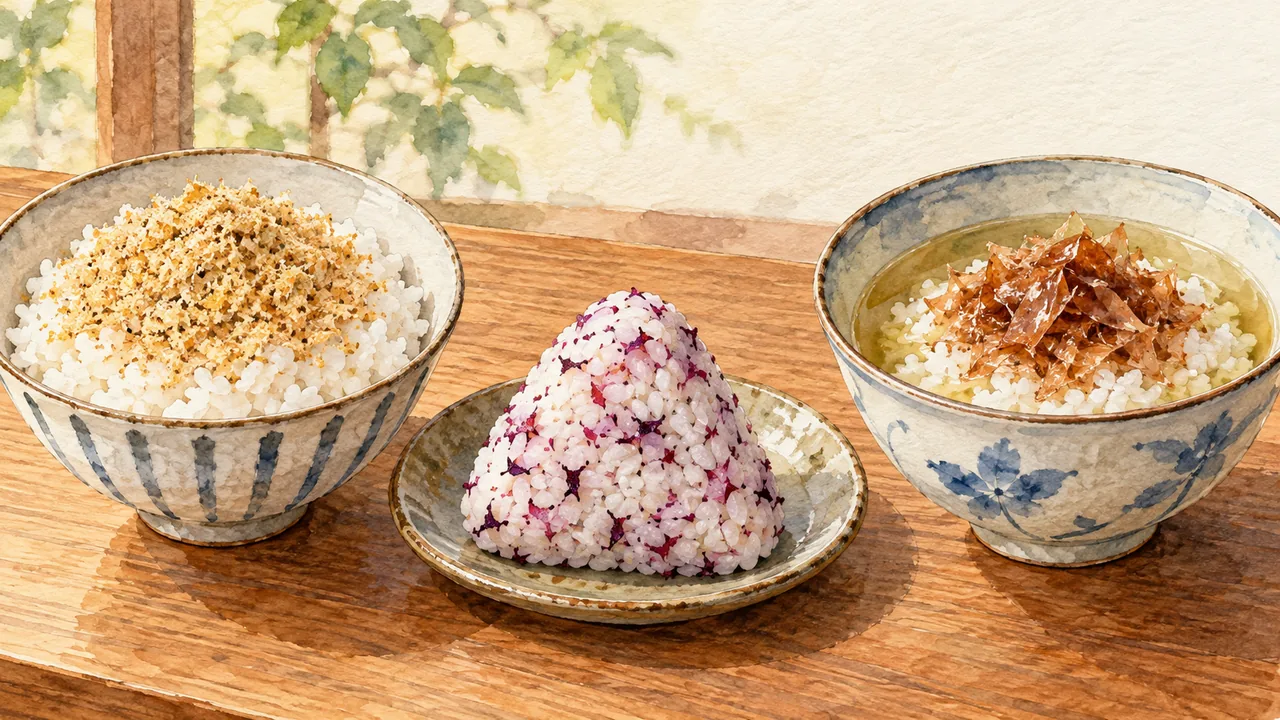
Gohan no Tomo is simply sprinkled over freshly cooked rice. For Yukari with Ume, Mishima suggests mixing about half a tablespoon (2–3 g) into a bowl of rice (about 150 g), then letting it rest until the plum softens; as onigiri, its purple looks beautiful. Kinshobai goes on rice, of course, and into ochazuke or onigiri.
Once Opened, Avoid Drying Out and Damp
Kinshobai keeps at room temperature; once opened, Kinshobai advises putting it in a lidded container to stop it drying out and eating it soon. Its best-before is 210 days from production. Dry furikake should be sealed tightly after opening and kept away from humidity — check each product's label for storage and dates.
7. Frequently Asked Questions
What is the original furikake?
Kumamoto's "Gohan no Tomo." The National Furikake Association recognised it as the root of furikake in 1994. Born in 1913, it's now made by Futaba.
When is Furikake Day?
6 May — the birthday (1887) of Yoshimaru Suekichi, who came up with the idea behind Gohan no Tomo. The International Furikake Council established it.
Is "yukari" the generic name for red-shiso furikake?
No — "Yukari" is Mishima Foods' registered trademark, named for its purple colour and the wish to treasure connections.
How do I use Yukari with Ume?
Mix it into cooked rice — about half a tablespoon (2–3 g) per bowl (about 150 g) — and let it rest until the plum softens.
Where does the name Kinshobai come from?
Two bonsai: "nishiki-matsu" and "ume." The founder, Kyokuo, chose two classics from his bonsai hobby.
Which makes the best gift?
For a formal gift, Kinshobai in its Arita-porcelain container. For a casual share, a bag of Gohan no Tomo or single-portion Yukari.
Final Thoughts: Flavours Thought Through for Rice
Furikake is a flavour makers thought through from the ingredients up, to make rice taste better.
Gohan no Tomo, born in Kumamoto in 1913 and recognised as the root of furikake, made with whole dried sardines. Mishima's Yukari, from umeboshi shiso, selected right down to the seed. Kinshobai, perfected over years by a founder who didn't like his school lunch.
For tomorrow's breakfast or a gift — choose a furikake where you can see the maker's face.
Japan's Best Rice Accompaniments: Mail-Order Ranking TOP 10
Katsuobushi: Arabushi vs Honkarebushi, and Shaving It