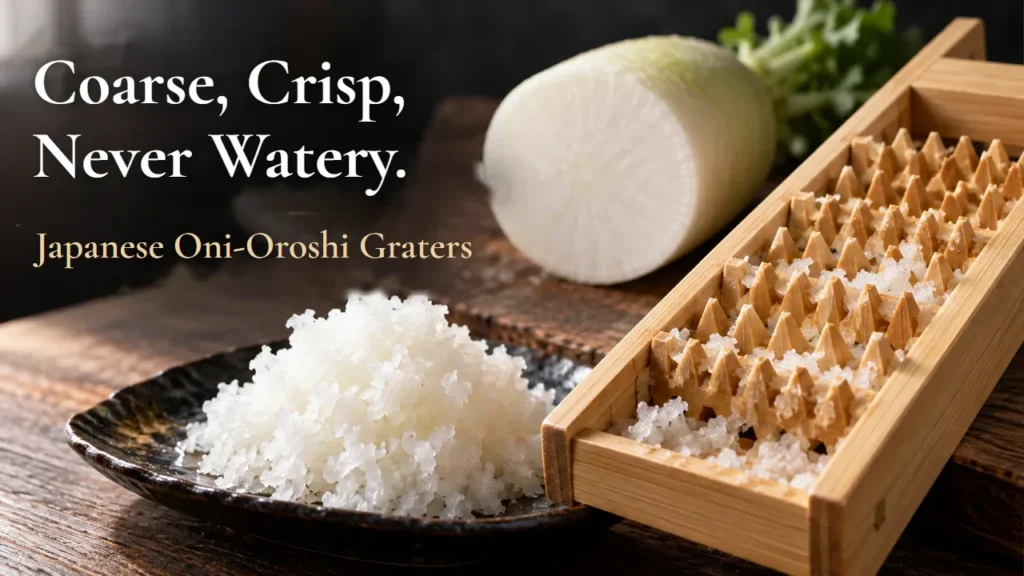
Grated daikon that melts into watery mush in the hot pot. A puddle on the plate next to your grilled fish. The difference may not be the daikon at all — it may be the teeth of your grater.
An oni-oroshi ("demon grater") grates daikon radish coarsely with big teeth of bamboo or stainless steel. Because it doesn't pulverise the radish, less water comes out, and you get crunchy, crisp grated daikon that holds its shape in a hot pot and on top of grilled fish or soba. This guide introduces six Japanese-made oni-oroshi — bamboo graters from Taketora, founded in 1894, and others, plus stainless graters from Tsubame-Sanjo — with how to use them and how to make bamboo last.
Quick Reference: Japanese Oni-Oroshi at a Glance
| Oni-oroshi | Material | Made in | Best for |
|---|---|---|---|
| Taketora bamboo oni-oroshi ▾ | Carbonised moso bamboo | Susaki, Kochi | A grater from a bamboo specialist |
| Sakai Sangyo oni-oroshi ▾ | Japanese moso bamboo | Japan | An easy grip |
| Shuchikudo carbonised bamboo ▾ | Carbonised Kyushu bamboo | Kyushu | The old-fashioned shape |
| Yagi Chiku Kogyo with tray ▾ | Bamboo | Satsumasendai, Kagoshima | Grating at the table |
| Tsuboe large oni-oroshi ▾ | Thick stainless plate | Tsubame, Niigata | Big batches, easy washing |
| Shimomura double-sided grater ▾ | Stainless, with drainer | Tsubame-Sanjo, Niigata | Coarse and fine in one |
1. Why Japanese: Coarse Grating Keeps Daikon From Going Watery
Bamboo Teeth That Look Like a Demon's
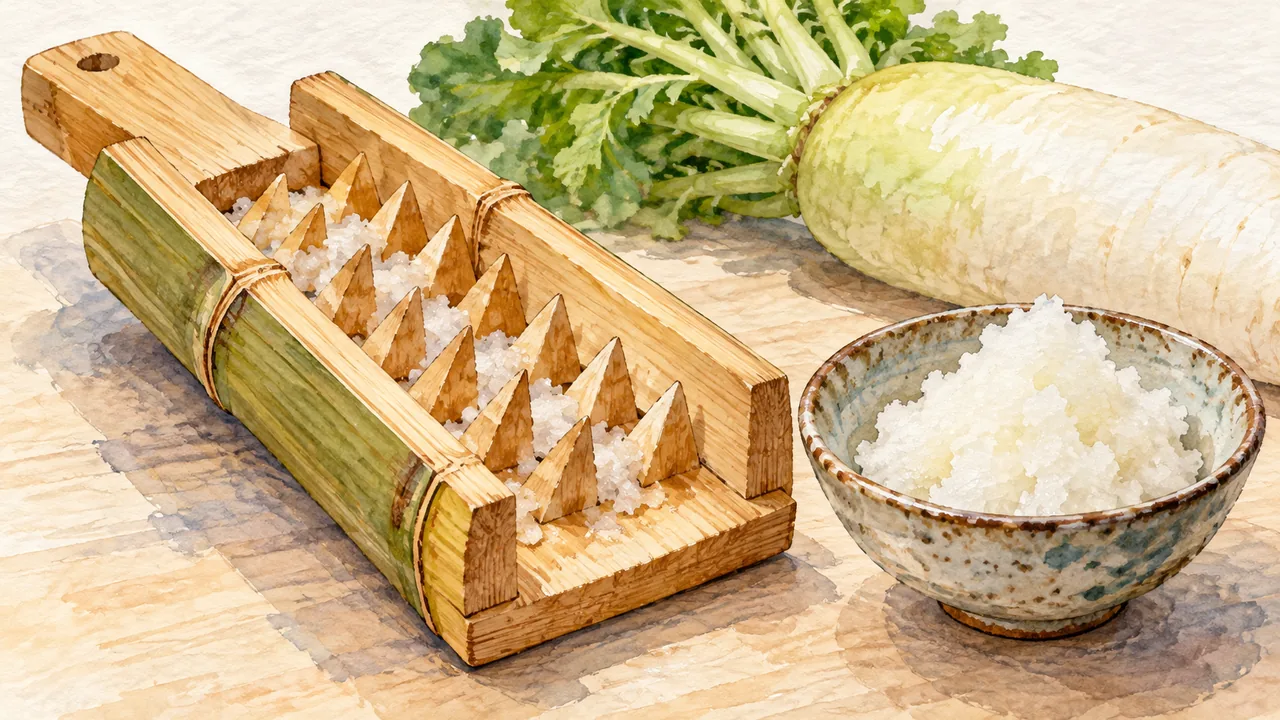
Taketora, in Kochi, explains the name: the bamboo teeth bring to mind an oni's (demon's) teeth — hence oni-oroshi. Instead of the fine teeth of an ordinary grater, it has rows of large triangular teeth that shave the daikon coarsely rather than crushing it.
Taketora writes that bamboo conducts little heat, so the food doesn't warm as you grate; and because it grates coarsely, water and fibre are less likely to escape — giving light, crisp grated daikon. Shuchikudo, a Kyushu bamboo-craft shop, likewise says an oni-oroshi grates daikon and apples coarsely "without releasing much water." With less water and little grains of daikon left intact, it doesn't dissolve in the pot and keeps its crunch.
2. Bamboo Oni-Oroshi: Taketora and Sakai Sangyo
Taketora (Yamagishi Chikuzaiten) was founded in Osaka in 1894 as a bamboo merchant; its second generation moved to the "village of tiger bamboo" in Anwa, Susaki, Kochi. It's known for torafu-dake (tiger-striped bamboo), which it calls the only one of its kind in Japan.
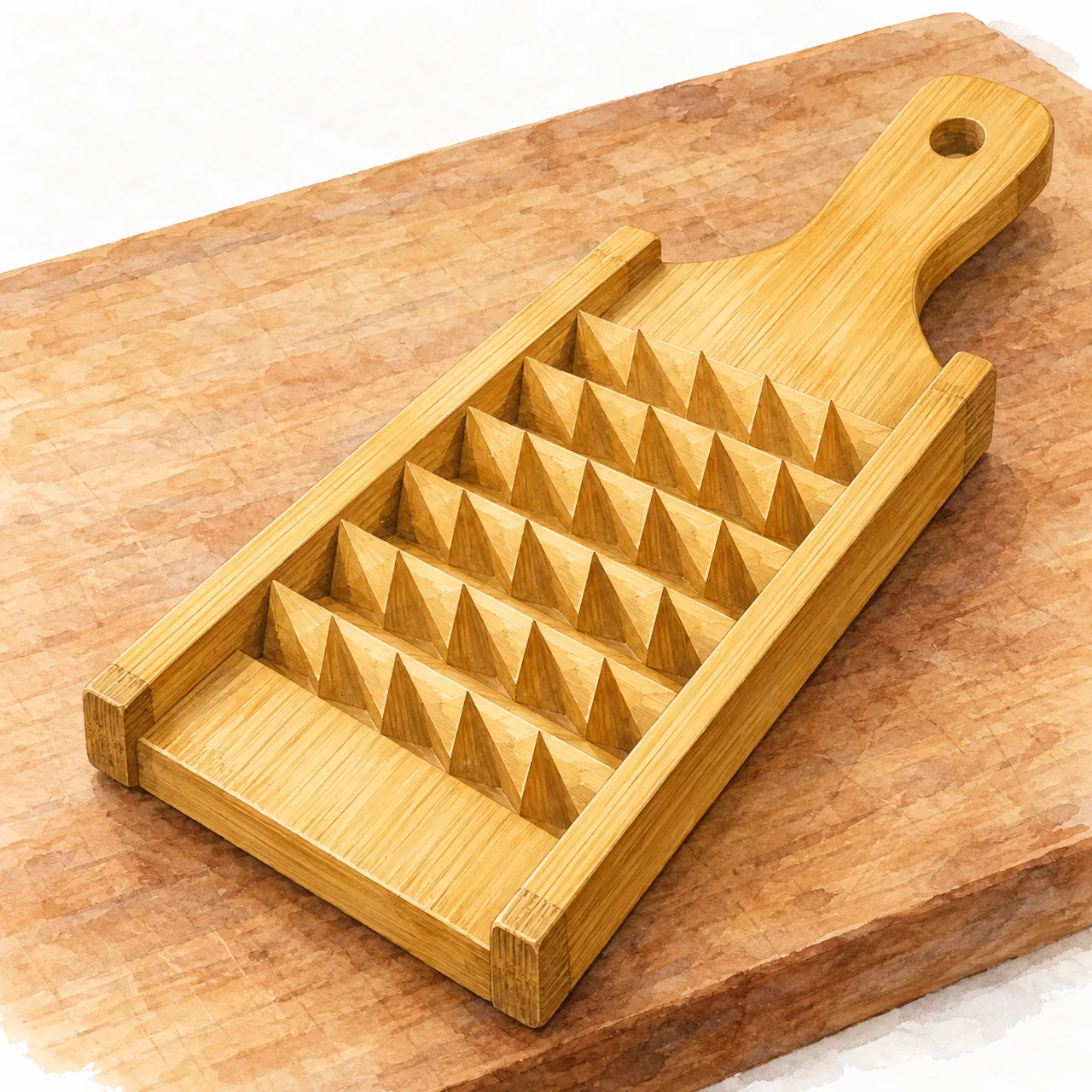
Its oni-oroshi is made by skilled craftsmen in its bamboo workshop from carbonised Japanese moso bamboo. Thick-walled bamboo is split, carved and polished into the body; bamboo teeth are fitted into slots and fixed with nails. The handle has a hole so you can hang it to dry.
Taketora Bamboo Oni-Oroshi: From a Kochi Bamboo Specialist
A carbonised-bamboo grater from a shop that has handled bamboo for more than 130 years. Carbonising means steam-roasting the bamboo right through in a special kiln under high heat and pressure — which, according to Taketora, makes it resistant to insects and mould without chemicals. Each one is handmade from natural bamboo, so shape and colour vary a little. There's also a set with a bamboo plate, so you can grate and bring it straight to the table.
Sakai Sangyo Japanese Oni-Oroshi: Easy to Hold, Easy to Grate
An easy-grip oni-oroshi of Japanese moso bamboo, made in Japan. The maker says it "grates daikon while keeping as much of the fibre as possible, for fresh, fluffy, crisp grated daikon." The screws holding the teeth are stainless, and the comfortable grip makes it easy to work — people even use it for making baby food. Not dishwasher-safe; wash by hand.
3. Made From Kyushu Bamboo: Carbonised Bamboo and a Satsuma Craftsman
The oni-oroshi sold by bamboo-craft shop Shuchikudo is made of carbonised bamboo from Kyushu. In the listing's words, it's "a grater in a nostalgic, old-fashioned shape," grating daikon and apples coarsely without releasing much water.
Yagi Chiku Kogyo in Satsumasendai, Kagoshima, makes a bamboo oni-oroshi by Kagoshima craftsmen, sold as a set with its own tray. You can bring it to the table tray and all, and grate right there at a meal of grilled fish or hot pot.
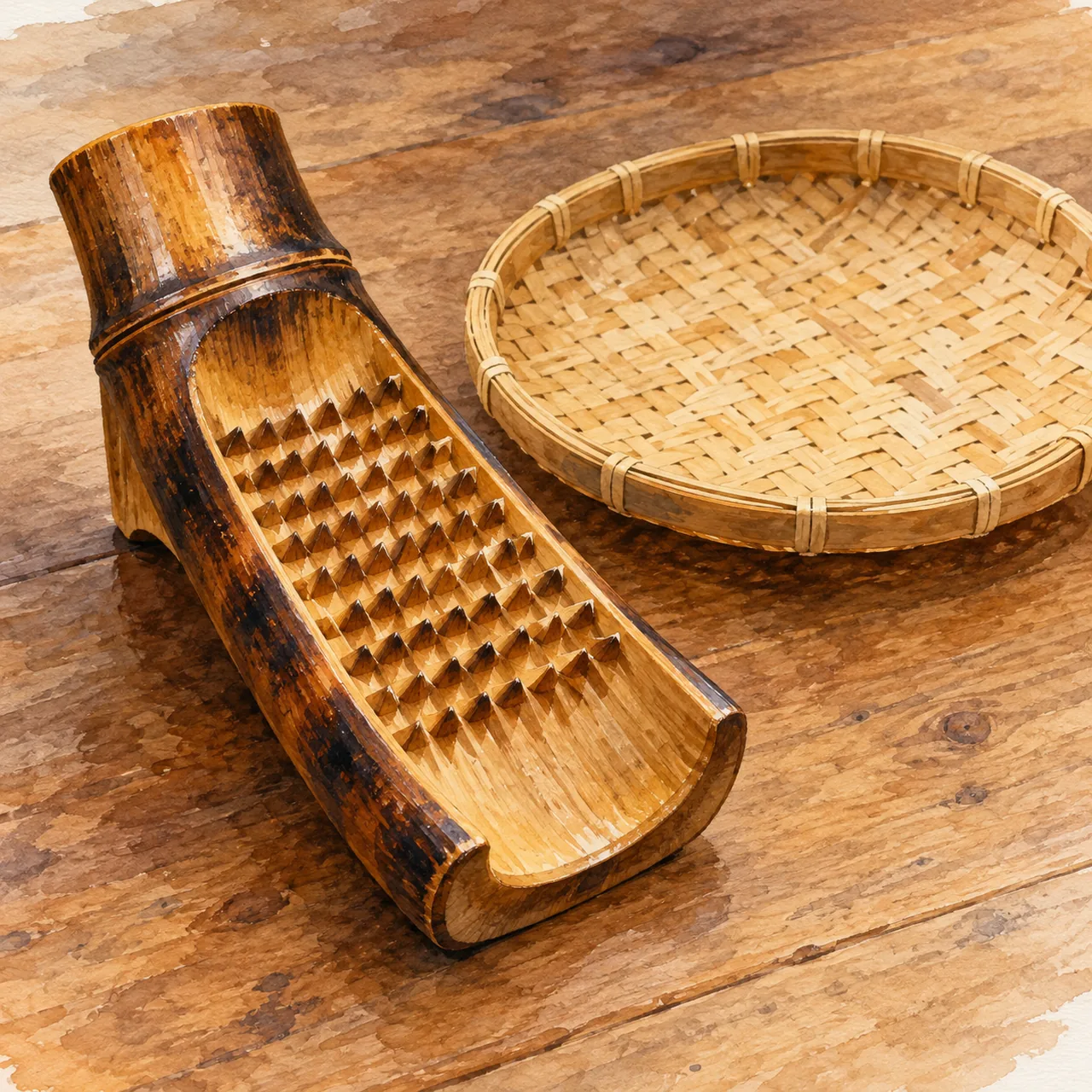
Did you know: Carbonised bamboo is amber because it's been steam-roasted
A carbonised-bamboo oni-oroshi is a deeper amber than fresh bamboo. According to Shuchikudo, steam-roasting bamboo in a high-pressure kiln drives out its starch (sugars), leaving dense, hard bamboo that insects won't eat. That colour isn't paint — it comes from heat and pressure. For a tool that gets wet and dries again every day in the kitchen, the bamboo itself has been made stronger.
Shuchikudo Carbonised Bamboo Oni-Oroshi (Recommended Item): Kyushu Bamboo, Classic Shape
A firm, dense oni-oroshi of carbonised Japanese bamboo from Kyushu, listed as a "recommended item" by the craft shop. Besides daikon, it grates apples without releasing too much juice, keeping their flavour. There's also a smaller size, handier for a single serving alongside grilled fish.
Yagi Chiku Kogyo Oni-Oroshi With Tray: A Kagoshima Craftsman's Work
A bamboo piece from Yagi Chiku Kogyo in Satsumasendai, which the listing says is "made by craftsmen in Kagoshima." It grates coarsely for drier, nicely textured daikon, and the tray means you can grate at the table without a cutting board. As a piece of bamboo craft, it also makes a good gift.
4. Tsubame-Sanjo Stainless: Tsuboe and Shimomura
Tsuboe of Tsubame, Niigata, started out making files — Tsubame's main industry at the time — and used that skill to become a maker of blades (according to the company's own introduction, quoted by its retailer).
Its large oni-oroshi has big teeth raised on a thick stainless plate. The professional large and extra-large sizes have bigger teeth and a thicker plate, so you can grate a lot of daikon in one go.
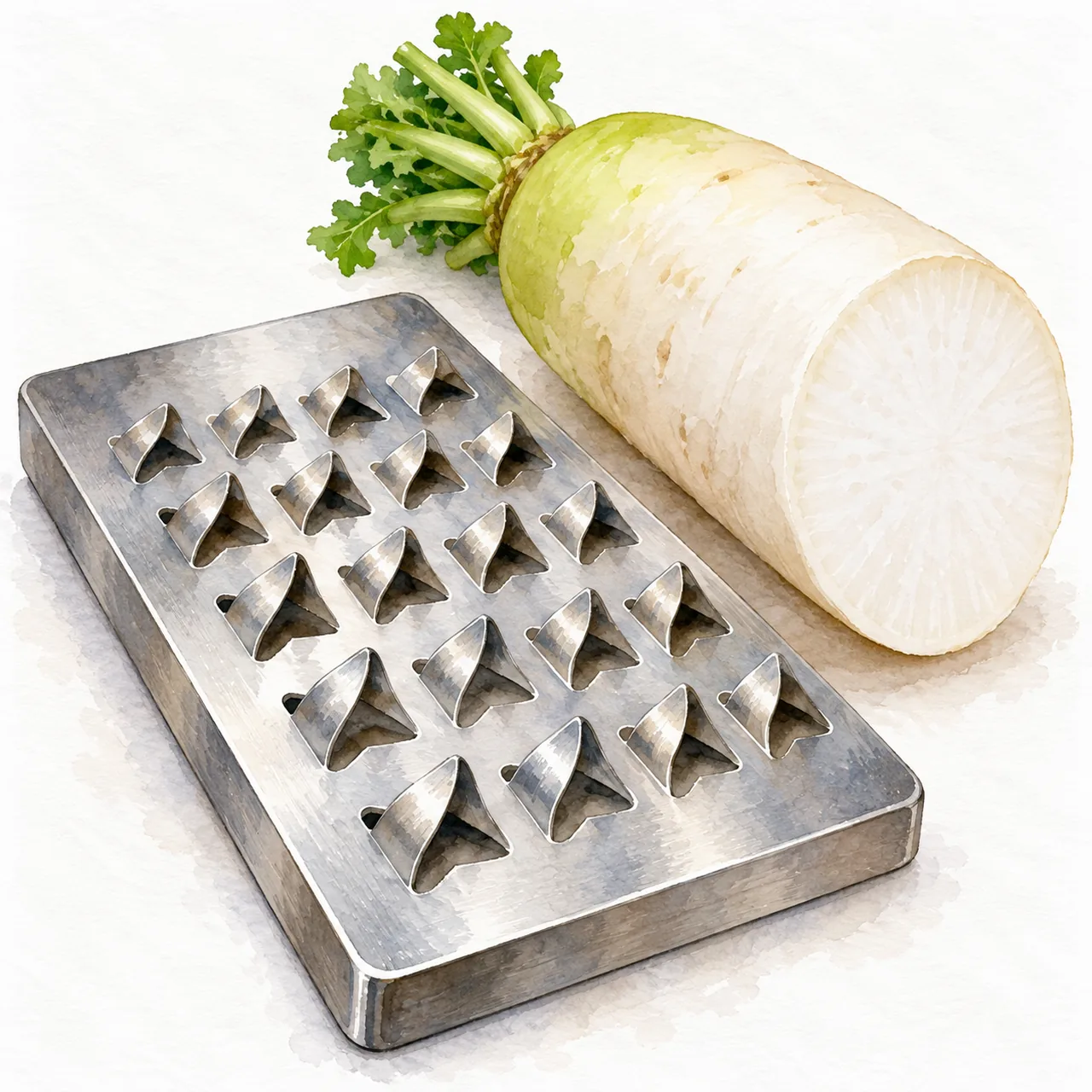
Did you know: Tsubame's metalwork began with Japanese nails
Tsuboe's introduction says manufacturing in Tsubame began long ago, in the Kan'ei era (from 1624), with hand-forged Japanese nails. From nails to files, from files to blades. The big teeth of a stainless oni-oroshi come from a town that has spent centuries shaping metal.
Tsuboe Large Oni-Oroshi: Coarse Grating on Thick Stainless
Easy-to-wash stainless that handles big batches. Thick stainless plate made in Tsubame-Sanjo, in four sizes — small, medium, large and extra-large — described by the retailer as "a simple grater with a nostalgic feel." Besides daikon, it works on apples and other fruit and on hard cheese. There's no need to dry it as carefully as bamboo, so it's the one to choose if you'll use it every day.
Shimomura Full Veggie Fuwa-Shaki Double-Sided Grater: Oni-Oroshi and Condiments in One
A Japanese-made grater from Shimomura Kogyo in Tsubame-Sanjo that grates three ways: coarse oni-oroshi, fine, and for condiments, using both sides. It has a drainer and non-slip feet, so you can drain grated daikon without spilling it. At 133 g it's light and fits easily in a drawer — a good first grater if you just want to try oni-oroshi.
5. Buying From Outside Japan
As of November 2026, the Taketora, Sakai Sangyo, Shuchikudo, Yagi Chiku Kogyo and Tsuboe graters are sold through Japanese shops. On Amazon.com, we found a Japanese-made bamboo oni-oroshi and the Shimomura double-sided grater from this guide.
Morikuru Bamboo Oni-Oroshi, 265 mm
A Japanese-made bamboo oni-oroshi, 265 mm long, with the big triangular teeth that grate daikon coarse. Treat it like any bamboo grater: rinse quickly and dry it completely.
Morikuru Bamboo Oni-Oroshi Daikon Grater, 265 mm
Loading product details…
Shimomura Full Veggie Double-Sided Grater FV-659
The Tsubame-Sanjo grater from section 4: oni-oroshi, fine and condiment grating in one, with a drainer and non-slip feet.
Shimomura Full Veggie Double-Sided Grater FV-659
Loading product details…
6. How to Grate, and What to Serve It With
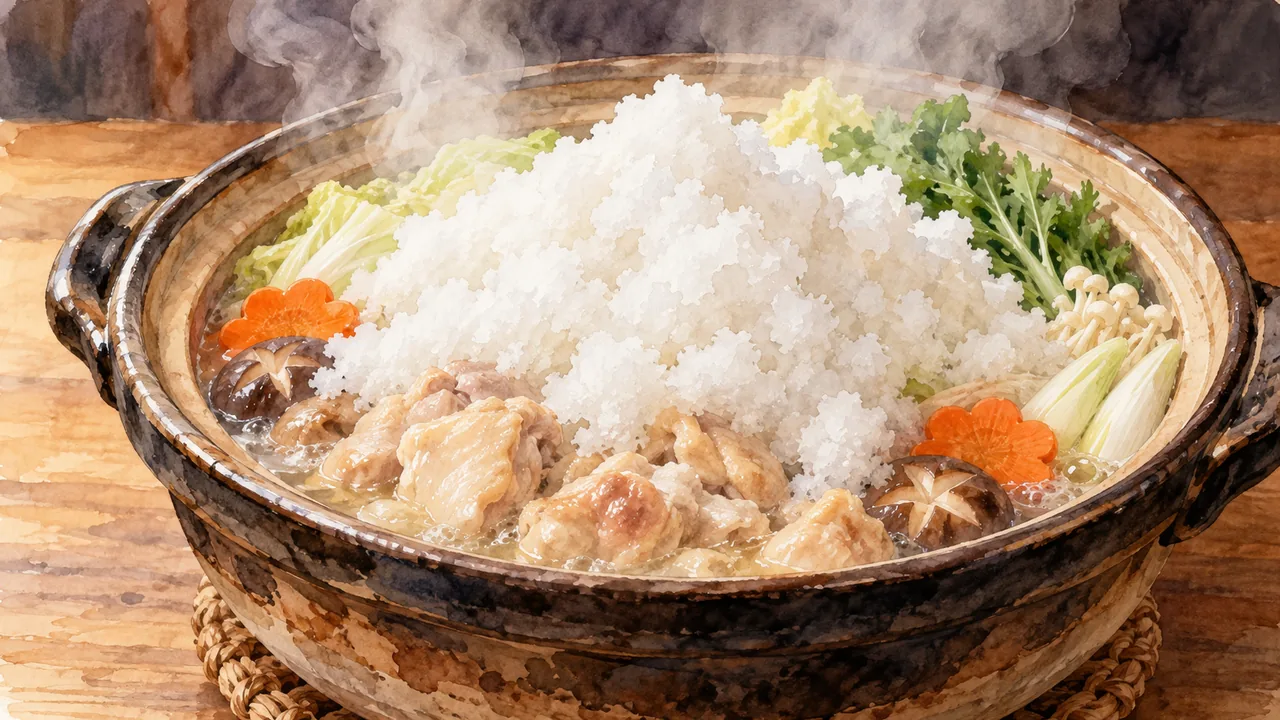
Light Pressure, Long Strokes
Because the teeth are big, an oni-oroshi grates with light pressure and long, sweeping strokes. Peel the daikon and cut it to a thickness that's easy to hold. If you try to grate right to the end while pinching it with your fingers, the teeth can catch your hand — Taketora also advises handling it with care. Don't force the last small piece; use the end in cooking.
Mizore Nabe, Grilled Fish, Oroshi Soba
- Mizore nabe (sleet hot pot): Coarse grated daikon keeps its grains even when simmered. Add plenty, so it looks like fresh snow.
- Grilled fish: With little water, it won't pool on the plate. Perfect with oily saury or yellowtail.
- Oroshi soba and udon: The crisp texture is lovely with cold noodles.
- Beyond daikon: Apples, carrots and hard cheese grate coarsely too (according to Tsuboe).
7. Making a Bamboo Oni-Oroshi Last
Taketora advises rinsing it quickly when dirty and drying it completely. That's what the hole in the handle is for: hanging it up to dry after use.
Sakai Sangyo's oni-oroshi isn't dishwasher-safe. Don't leave bamboo tools soaking; drain them right after washing and dry them somewhere airy. Stainless needs far less care in drying — stainless if you'll grate almost daily, bamboo if you'll use it now and then and enjoy the feel of the tool.
8. Frequently Asked Questions
How is an oni-oroshi different from a regular grater?
The size of the teeth, and how coarse the result is. An oni-oroshi grates coarsely with big teeth, so less water comes out and the crunch stays. A fine grater suits smooth grated daikon and condiments.
Bamboo or stainless?
Bamboo for its feel and old-fashioned character; stainless for easy washing and big batches. Bamboo needs drying after use but is light and gentle on the hands. Tsuboe's stainless grater comes in professional sizes too.
Won't a bamboo oni-oroshi go mouldy?
Rinse it quickly after use and dry it completely. Taketora's grater is carbonised to resist insects and mould, and has a hole for hanging to dry. Avoid soaking and the dishwasher.
How much grated daikon goes in a mizore nabe?
Enough to cover the ingredients. Daikon grated on an oni-oroshi doesn't dissolve when simmered, so you can add plenty without it turning watery.
Can I use it for things other than daikon?
Yes — apples, carrots and hard cheese grate coarsely too. Tsuboe says its grater works on fruit such as apples and on hard cheese as well as vegetables.
I'm worried about cutting my hand.
Don't grate the daikon down to a stub. The teeth are big, so pinching the last bit with your fingers can bring your hand into them. Finish while it's still a comfortable length, and use the end in simmered dishes or miso soup.
Final Thoughts: Crunchy Daikon, From Bamboo and Tsubame-Sanjo
Grated daikon goes watery because it's ground too fine. An oni-oroshi grates coarsely with big teeth, for drier, crisper daikon.
Taketora, founded in 1894, uses carbonised moso bamboo; Shuchikudo, carbonised Kyushu bamboo; Yagi Chiku Kogyo, a Kagoshima craftsman's hands. Tsuboe brings the skills of a file-making town, and Shimomura puts coarse and fine on one grater. Bamboo or steel, all made by Japanese makers to grate daikon well.
This winter, pile oni-oroshi daikon generously onto a mizore hot pot.

Japanese Graters: Copper & Tsubame-Sanjo Steel for Fluffy Daikon
Soba-Making Tools: Knead, Roll, Cut — 6 Japanese Picks