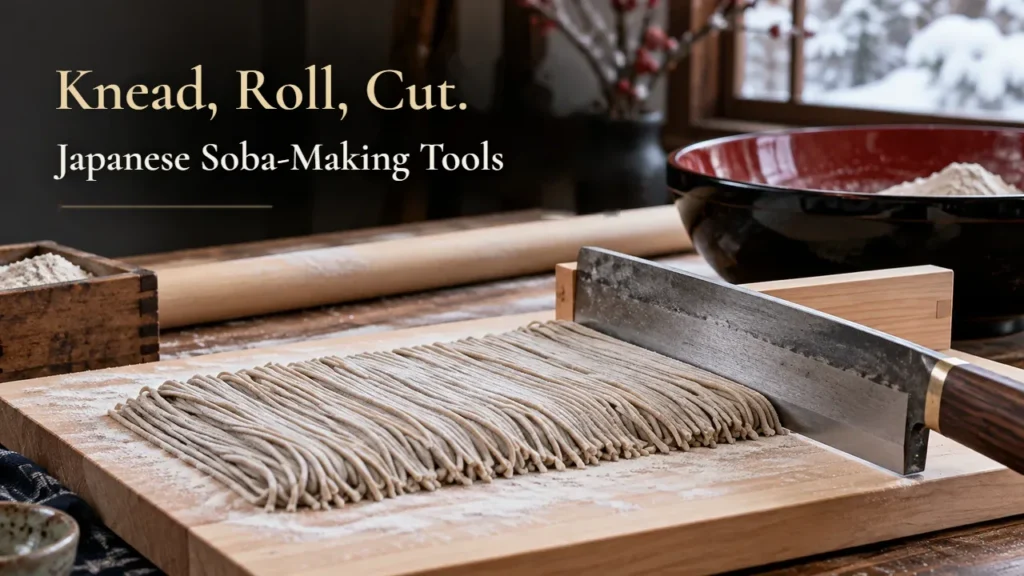
Making soba by hand comes down to three steps: knead, roll, cut. And there's a tool for each — a wide bowl to bring flour and water together, a long rolling pin and board to stretch the dough thin, and a cutting guide and a square-bladed soba knife to slice it into even strands.
The usual way to start in Japan is with a set, then replace one tool at a time as you get hooked. This guide follows that path through six Japanese-made tools: a starter set from a Niigata woodworking maker, a 42 cm kneading bowl, a hand-polished hinoki rolling pin, a bamboo-and-paulownia cutting guide, and soba knives — including one from Echizen, a blade-making town with about 700 years of history. At the end of December, many Japanese families eat a bowl of soba on New Year's Eve; this is how to make your own.
Quick Reference: Soba-Making Tools at a Glance
| Step | Tool | Maker / Region | Size |
|---|---|---|---|
| All | Five-piece soba set ▾ | Nagano Sangyo (Niigata) | 4–5 servings (about 600 g) |
| Knead | Kneading bowl 42 cm ▾ | Kishu lacquerware region (Wakayama) | 42 cm across |
| Roll | Hinoki rolling pin ▾ | Tamanihon | 40 mm × 1 m |
| Cut | Bamboo & paulownia cutting guide ▾ | Nagano Sangyo (Niigata) | 25 × 30 cm |
| Cut | Echizen soba knife 330 mm ▾ | Echizen blades (Fukui) | About 330 mm, about 670 g |
| Cut | Full-steel soba knife 300 mm ▾ | Honmamon | 300 mm, about 730 g |
| Cut | Hounen Kihan soba knife 240 mm ▾ | Hounen Kihan | 240 mm |
1. Why Japanese: One Tool for Each Step
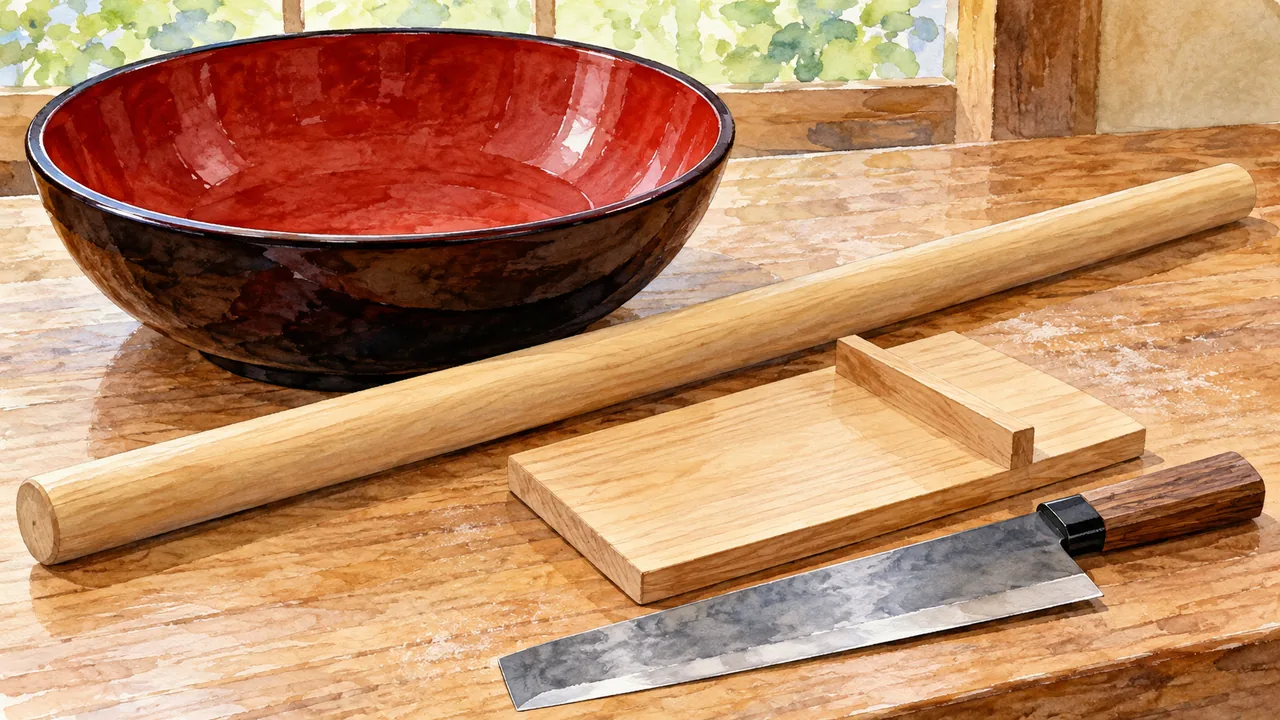
Handmade soba is made in three steps. You mix and knead buckwheat flour and water in a kone-bachi (kneading bowl), roll the dough thin with a menbo (rolling pin), then fold it and cut it with a soba-kiri bocho (soba knife), using a koma-ita (cutting guide) as a ruler. The maker of the set below sums it up: with this one set, you can do everything from kneading to rolling to cutting. Once you have the tools, all you need is flour and water.
There's no need to start with top-tier tools for every step. Make soba with a set first, then upgrade whichever step starts to bother you — a bigger bowl, a longer pin, a serious knife. Each time one tool changes, you'll notice your soba change a little too. That's the pleasure of soba tools.
2. Start With a Set: A Niigata Woodworking Maker
Nagano Sangyo is a maker of wooden household goods in Nishikan-ku, Niigata city. Its company profile describes some eighty years of working with natural wood, handling everything from planning and manufacturing to wholesale and retail. Soba tools are part of that woodworking.
Its five-piece set has everything: a board for rolling, a magnolia-wood rolling pin, a cutting guide, a stainless noodle knife and a kneading bowl. A demonstration DVD and instructions are included, so you can start on your own.
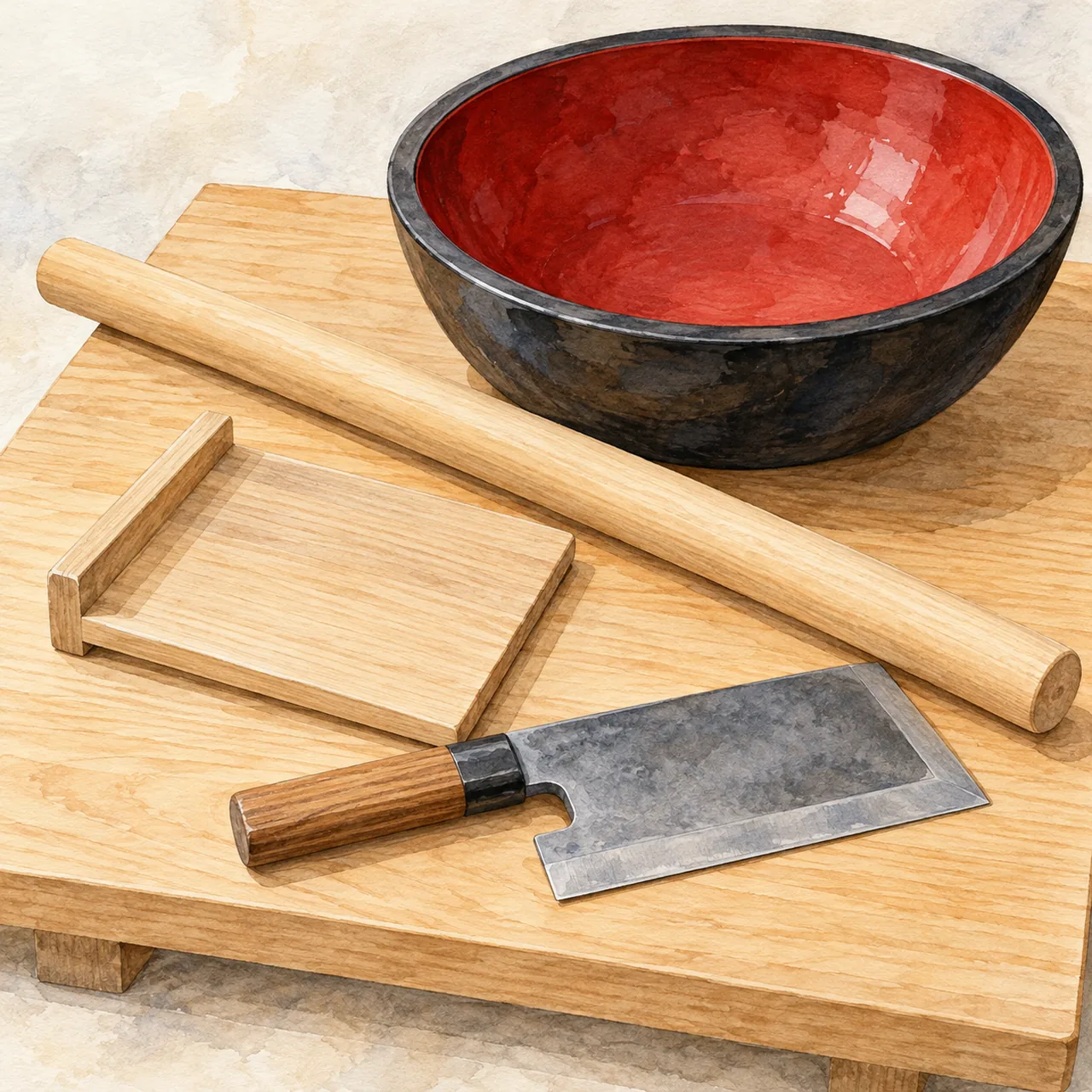
Nagano Sangyo Five-Piece Soba Set (M): Knead, Roll and Cut With One Set
A Japanese-made set for 4–5 servings — about 600 g of soba. Inside: a noodle board, a magnolia rolling pin (3 cm × 80 cm), a cutting guide, a 24 cm stainless noodle knife, a 36 cm kneading bowl, instructions and a demonstration DVD. Just right for a family's New Year's Eve soba. There are also S (2–3 servings) and L (5–6 servings) sizes.
3. Knead: A Bigger Bowl
The kone-bachi is a wide bowl for mixing buckwheat flour and water and bringing them together into one ball of dough. The bigger the bowl, the more freely you can move your hands without spilling flour over the edge. The set's bowl is 36 cm; keep going and you'll want a size up.
The classic kneading bowl is black outside and vermilion inside. Pale buckwheat flour stands out against the vermilion, so it's easy to see how the kneading is going.
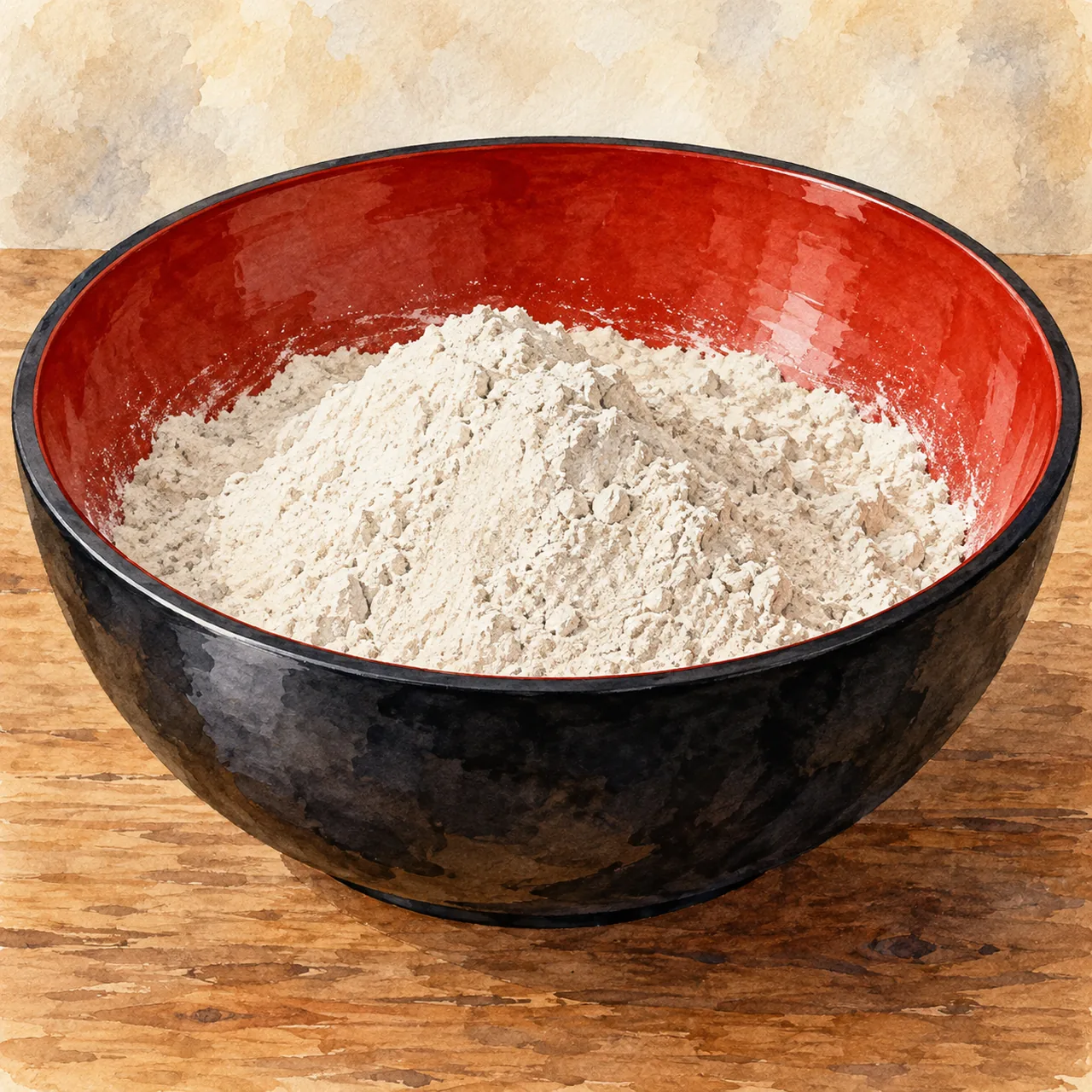
Kneading Bowl 42 cm, Black Outside and Vermilion Inside
Made in Kainan, Wakayama — the home of Kishu lacquerware — in ABS resin with a urethane coat. Lighter and less prone to cracking than a wooden bowl. Besides soba, it's used for udon and mochi dough, and on days when everyone gathers, it doubles as a large serving bowl.
4. Roll: A Hinoki Rolling Pin and a Cutting Guide
In the noshi step, the rolling pin stretches the kneaded dough thin. The set's pin is 80 cm; with a one-metre pin you can roll the dough out wider.
Tamanihon's rolling pin is hinoki (Japanese cypress), carefully polished by hand with sandpaper. It's 40 mm × 1,000 mm, made in Japan, and suits everyone from home cooks to professionals. It arrives polished, so you can wipe in walnut oil and start using it right away.
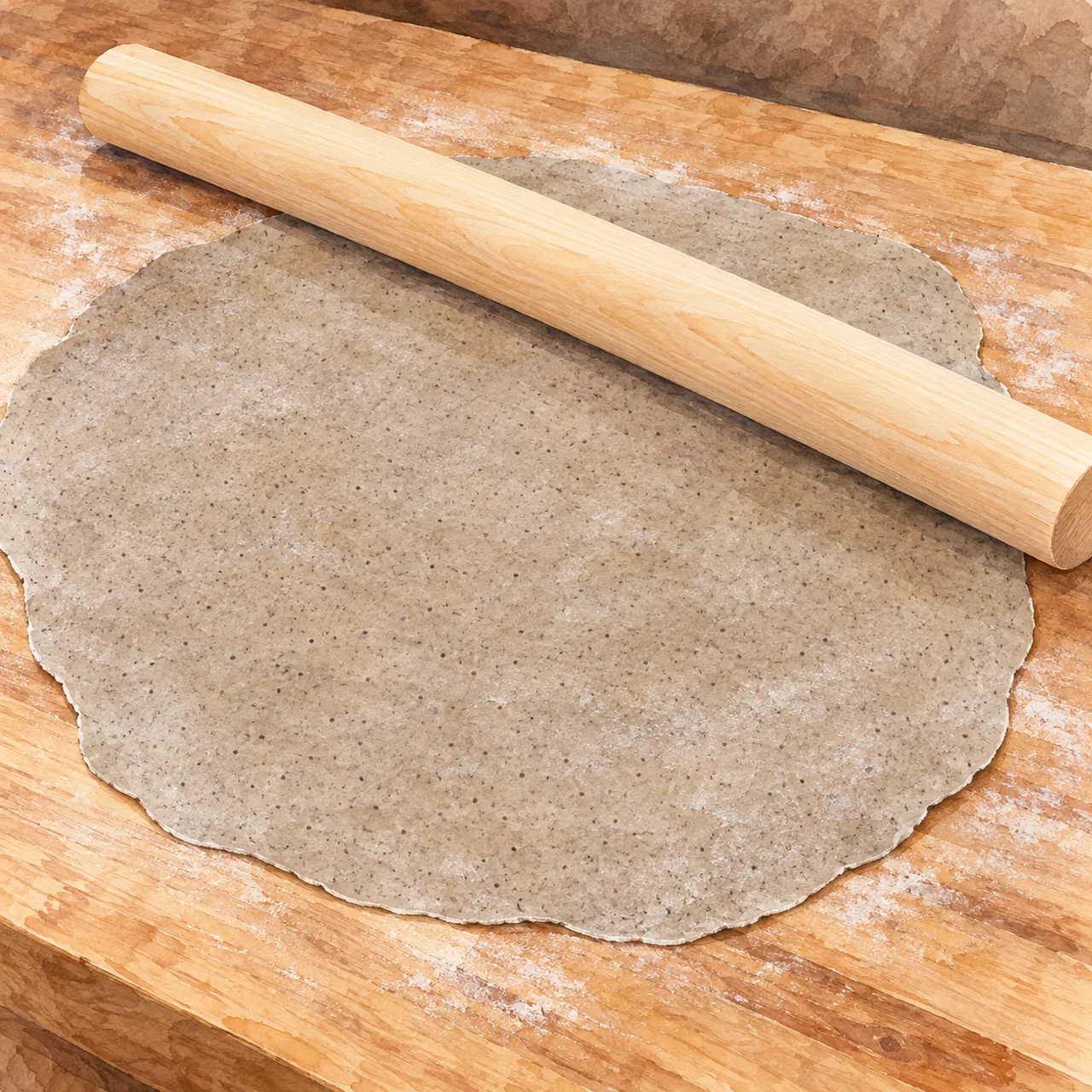
Did you know: A rolling pin is raised with walnut oil
Tamanihon's pin is meant to have walnut oil wiped in as soon as it arrives — plain wooden pins are tools you oil before first use. The more you use it, the better it fits your hands, and its colour slowly deepens. A rolling pin grows along with the person making soba.
The Cutting Guide Is the Knife's Ruler
When you cut the rolled and folded dough, the koma-ita sits beside the knife. Slide the knife along the board as you cut, nudging the board along a little each time, and the strands come out the same width. Nagano Sangyo's guide is made in Japan from bamboo and paulownia, 25 × 30 cm with a 5 cm rise, and has a finger hole in the handle. It's larger than the set's guide, so you can cut across the full width of your dough. Evenly cut soba cooks evenly too.
5. Cut: Soba Knives From the Echizen Blade Town
A soba knife has a long, square, single-bevel blade. The two knives here weigh about 670 g and 730 g. You let the weight of the long blade fall straight down along the guide to cut.
Kuzuryugawa's soba knife is Echizen uchihamono (Echizen forged blades), from Takefu in Echizen city, Fukui. Blade about 330 mm, width about 128 mm, weight about 670 g — in rust-resistant stainless cutlery steel, with an ebony handle. It's the knife to choose once you've decided to keep making soba.
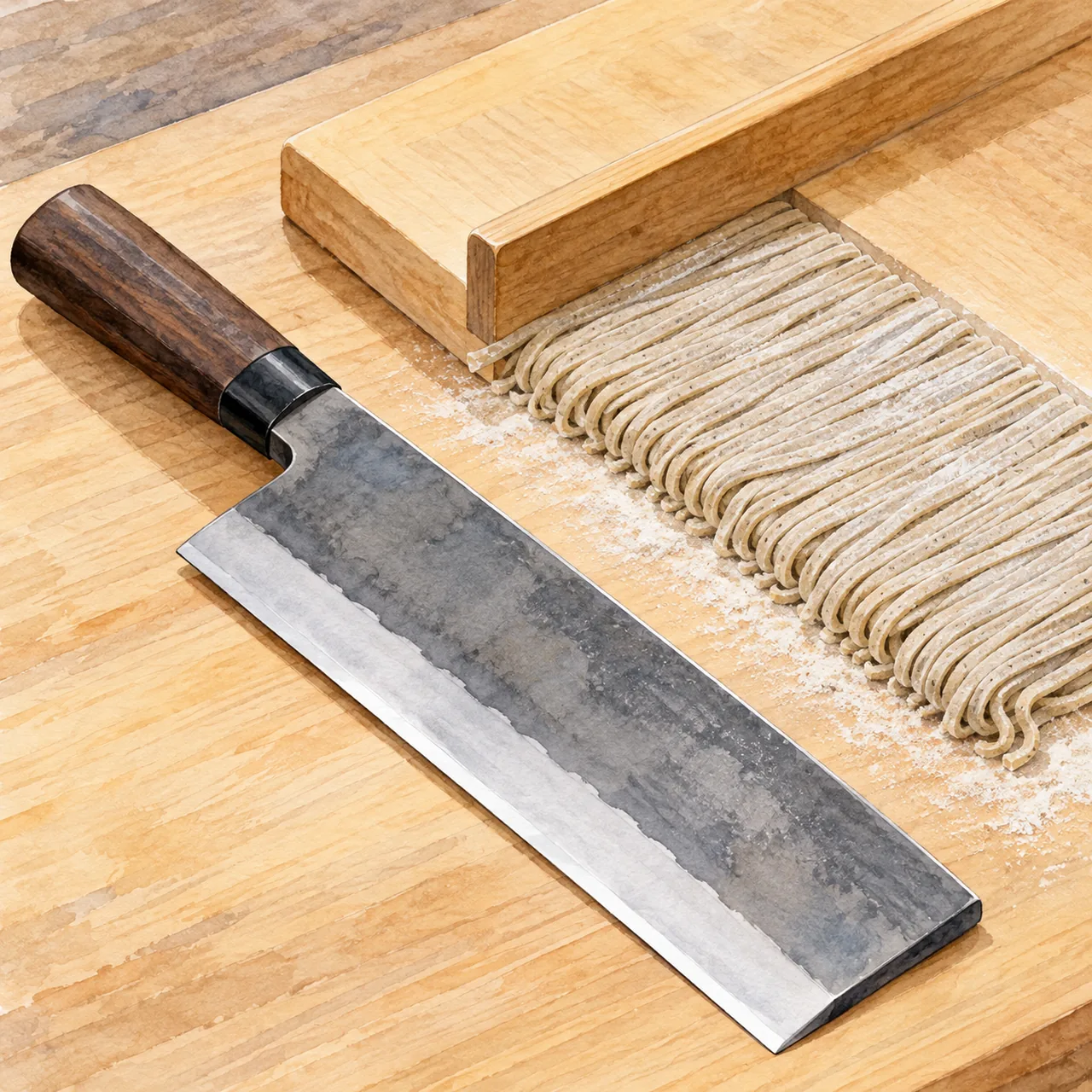
Did you know: Echizen blades began with a swordsmith's sickles
According to the Fukui Prefecture tourism association, Echizen blade-making began about 700 years ago, when the Kyoto swordsmith Chiyozuru Kuniyasu came to Fuchu (today's Echizen city) in search of good water for forging swords — and made sickles for the farmers nearby. From swords to sickles, from sickles to kitchen knives. Your New Year's soba can be cut with a knife from that town.
Honmamon Full-Steel Soba Knife 300 mm: The Weight of Carbon Steel
Planned by a knife specialist for people starting out in soba-making, and made in Japan. Blade 300 mm, about 730 g, full carbon steel (hagane) with a wooden handle. Unlike stainless, it rusts, so wash it and wipe it dry straight after use — a knife for people who want to care for a steel tool.
6. Buying From Outside Japan
As of November 2026, the set, bowl, rolling pin, cutting guide and the two knives above are sold through Japanese shops, and we didn't find Japanese-made listings of them on Amazon.com. What we did find is a soba knife from Hounen Kihan, a Japanese maker of noodle tools.
Hounen Kihan Tokusen Soba Knife, Full Steel 240 mm
A full-steel noodle knife with a 240 mm blade and a 2 mm spine, made in Japan in SK-6 steel. Shorter and lighter than the knives above, it's a manageable first soba knife. Like any carbon-steel blade, keep it dry when you put it away.
Hounen Kihan Soba Knife, Full Steel 240mm
Loading product details…
If you travel to Japan, kitchenware districts and department stores are good places to see soba tools in person — and to feel the weight of a soba knife in your hand before you choose.
7. Soba for New Year's Eve
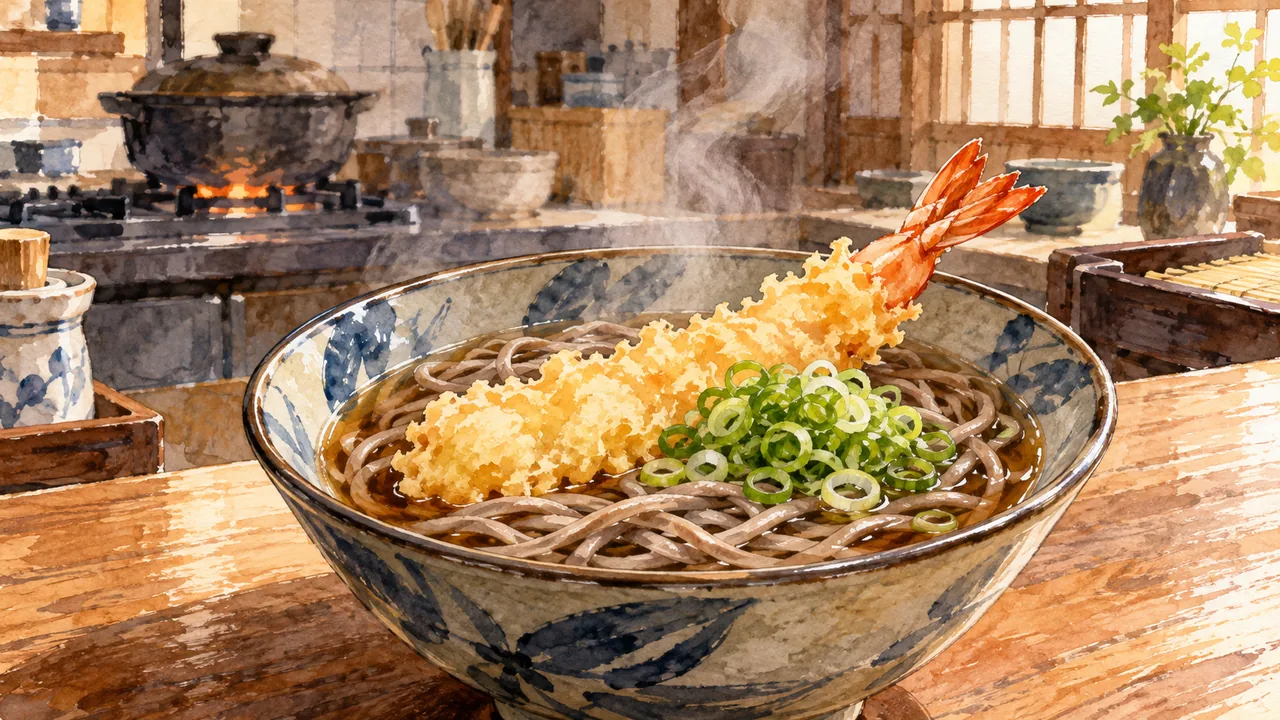
Practise a Few Times Before the Year Ends
Your first soba will almost never come out as thin and even as you hoped — too thick here, broken there. Even so, boiling and eating soba the same day you made it is a pleasure only people who make their own get to have. If you want to make toshikoshi soba (New Year's Eve soba), practise a few times through November and December. Watch the DVD, make soba, and upgrade the tool for whichever step went wrong. By the end of the year, you'll be confident making enough for the family.
Dry Your Tools Before Putting Them Away
After use, brush the flour off wooden tools and make sure no moisture remains before storing them. Carbon-steel knives rust easily, so wipe them dry right after washing. Letting your tools rest in good condition until the next batch is part of soba-making too.
8. Frequently Asked Questions
What are the minimum tools to start making soba?
Five: a kneading bowl, a rolling pin, a rolling board, a cutting guide and a soba knife. Nagano Sangyo's five-piece set includes all five plus a DVD and instructions.
Should I buy a set or individual tools?
Start with a set; once you've decided to keep going, replace tools one at a time. Upgrade whichever step bothers you first — a bigger bowl, a one-metre pin, a serious knife — and you'll feel the difference clearly.
Stainless or carbon steel for a soba knife?
Stainless if you want easy care; carbon steel if you want the weight and the pleasure of looking after it. The Echizen knife here is rust-resistant stainless; the full-steel knives rust and need wiping dry straight after use.
Which set size should I get?
M for a family of 4–5 — Nagano Sangyo's M set makes about 600 g of soba. There's S for 2–3 people and L for 5–6.
Do I need to do anything to a new rolling pin?
Wipe in walnut oil before use. Tamanihon's pin arrives hand-polished, ready for the oil.
Can I use a kneading bowl for udon or bread?
Yes. Kneading bowls are also used for udon and mochi dough, and a large one makes a good serving bowl for gatherings.
Final Thoughts: Make This Year's Soba Yourself
Soba-making is three steps: knead, roll, cut — and a tool for each.
Start with Nagano Sangyo's set from Niigata. When you're hooked, knead in a 42 cm bowl, roll with a hand-polished hinoki pin, and cut along a bamboo-and-paulownia guide with a knife from Echizen, the 700-year-old blade town.
Start practising in November, and you'll be making the family's New Year's Eve soba by the end of the year.
Japanese Soba: Usually Not Gluten-Free, and Why
Japanese Kitchen Knives: Best Types & Brands