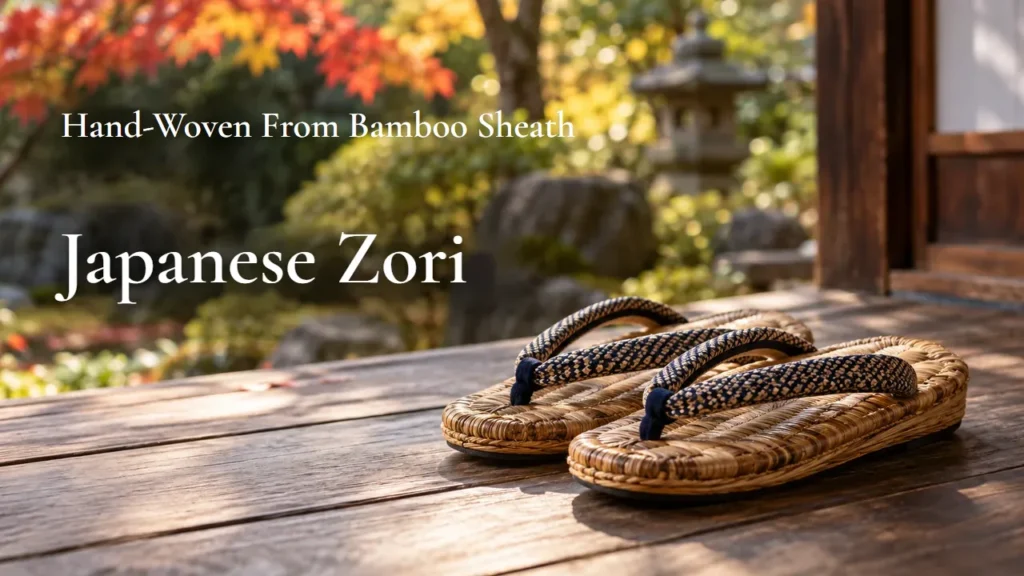
To choose zori (Japanese thonged sandals), start with the material. Bamboo sheath for everyday wear, tatami for formal kimono days, cushioned "cafe zori" for days of long walking. Change the material, and the feel underfoot changes — and so does what you wear them with.
Bamboo-sheath zori come with a story worth knowing. Karube Zori of Sagae, Yamagata, says it now supplies 95% of Japan's demand for hand-woven zori. A craft that began in Yamagata in the late Edo period, some two hundred years ago, is today held up by a single company. This guide introduces five Japanese-made pairs — bamboo-sheath zori from Yamagata and Oita, tatami zori by Osaka craftsmen, and cafe zori from Kyoto's Hishiya — plus how to find your size and care for plant-fibre zori.
Quick Reference: Japanese Zori at a Glance
| Zori | Material | Maker / Region | When to wear |
|---|---|---|---|
| Chikusui Tombo ▾ | Hand-woven bamboo sheath | Karube Zori (Sagae, Yamagata) | Everyday outings (men's) |
| Madoka ▾ | Bamboo sheath, urethane sole | Karube Zori (Sagae, Yamagata) | Indoors (unisex) |
| Hita bamboo-sheath zori ▾ | Bamboo sheath | Hita, Oita | Yukata, casual wear (women's) |
| Tatami zori, 5 layers ▾ | Tatami (Nanbu-omote) | Osaka Zori Cooperative-certified | Formal kimono days |
| Calenblosso cafe zori ▾ | EVA base, Vibram sole | Hishiya (Kyoto) | Kimono on long-walk days |
| Asayu igusa zori ▾ | Igusa rush tatami top | Asayu Japan | Casual wear, summer |
1. Will Zori Fit Your Feet?
Short answer: yes, if you size by your shoe size in centimetres. Zori aren't sized as finely as shoes, which makes it hard to know what fits. Karube Zori's guide is to take your shoe size in centimetres and choose from 1 cm smaller to 1.5 cm larger.
For reference, the women's M bamboo-sheath zori below is about 23.5 cm long, and Hishiya's cafe zori in size S has a base of about 23.0 cm. If you have larger feet, look at length in centimetres rather than "S/M/L": the Asayu Japan igusa zori listed below include men's pairs at 30 cm (US Men 12). Shops that set the thong after you order — like the tatami zori in this guide — will fit it to your tabi (split-toe sock) size.
2. Why Japanese: Choose Zori by Material
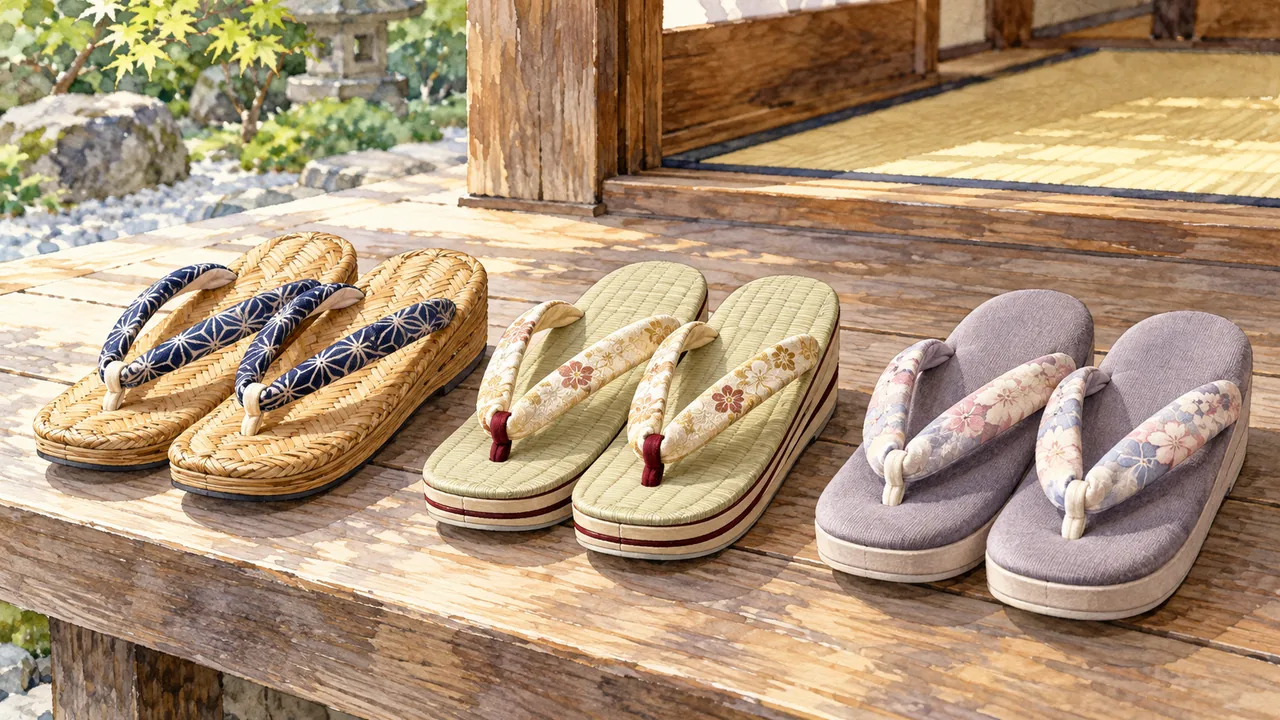
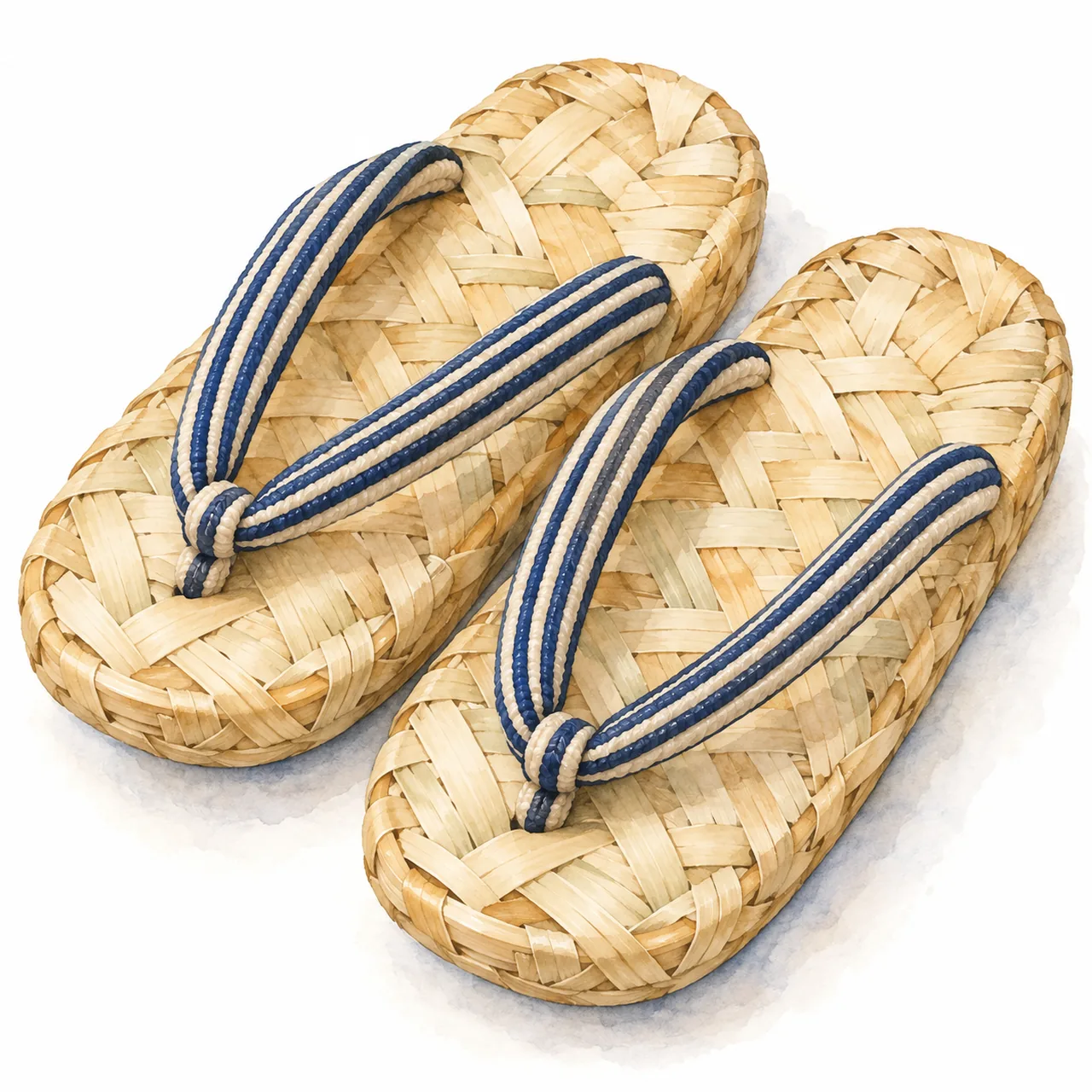
Bamboo-sheath zori are woven from the sheaths that fall naturally from bamboo shoots as they grow, Karube Zori explains. The natural fibre feels good underfoot, and they suit yukata, casual clothes and wearing around the house.
Tatami zori have a surface of woven tatami (igusa rush and similar) stretched over the base. Zori built up in several layers go with formal kimono.
And there are modern zori, like cafe zori, built from cushioning and rubber soles. Start from where you're going and what you'll wear, and the choice is easy.
3. Hand-Woven Bamboo Zori From Yamagata: 200 Years, Held Up by One Company
Karube Zori is a zori maker in Sagae, Yamagata. On its montbell partner page, it explains that the Murayama area, where Sagae lies, has made zori since the late Edo period. Of Japan's four great zori-making regions, the last to begin was Yamagata-omote; today the others have stopped production, and the company supplies 95% of national demand for hand-woven zori.
When chairman Karube Toshio returned to Yamagata after his father's sudden death, the makers left were mostly ones with no successors. Driven by the thought that "at this rate, Japan's zori tradition will be lost," he went into the trade — and the company now holds the largest share.
Did you know: 25 million pairs a year at the peak
According to Karube Zori, at the height of Yamagata's zori-making, the Murayama area had more than 70 makers producing 25 million pairs a year. After the Second World War, as daily life became Westernised, demand fell sharply. The company also writes: "Hand-woven zori are like human faces — no two are the same." Each pair woven by a craftsman's hands has a slightly different face.
Karube Zori Hand-Woven Bamboo Zori, Chikusui "Tombo": For Men's Everyday Wear
Outdoor bamboo-sheath zori hand-woven by craftsmen in Sagae. The men's pair in the Chikusui series, woven carefully from natural bamboo sheath — for small outings, shopping, a trip to a café. Light with jinbei or samue, and with Western clothes too. Because they're hand-woven, no two pairs are alike.
Karube Zori Bamboo-Sheath Sandals "Madoka": Bamboo Sheath for Indoors
The feel of bamboo sheath, as everyday house slippers. The upper is bamboo sheath, the sole a durable urethane for indoor use, and each strap is finished on a sewing machine by a craftsman. Unisex. Karube Zori says it is trying new things, such as zori for indoor use, while protecting traditional hand-weaving. A good first pair if you've never worn zori.
4. Bamboo-Sheath Zori From Hita, Oita
Bamboo-sheath zori are also made in Hita, Oita, in Kyushu, and the retailer introduces them as a traditional specialty of Oita Prefecture.
The women's M is about 23.5 cm long and 9 cm wide, with a firm non-slip sponge on the sole. You can choose the pattern of the thong. They go with kimono, yukata and everyday clothes alike, and the retailer notes they're popular as a gift. A unisex L size is also available. In summer, try them barefoot with a yukata.
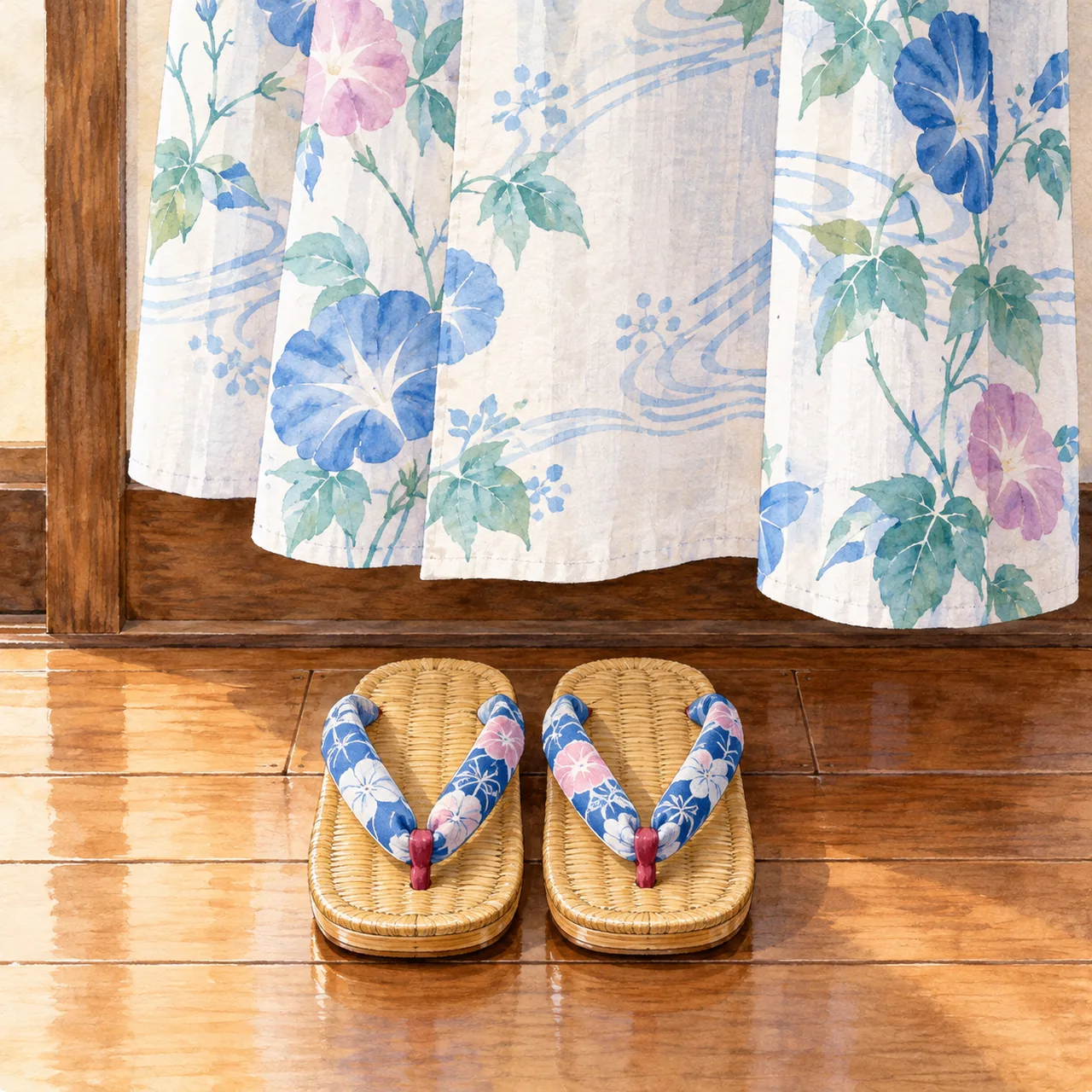
5. Tatami Zori: Made by Osaka Craftsmen for Formal Days
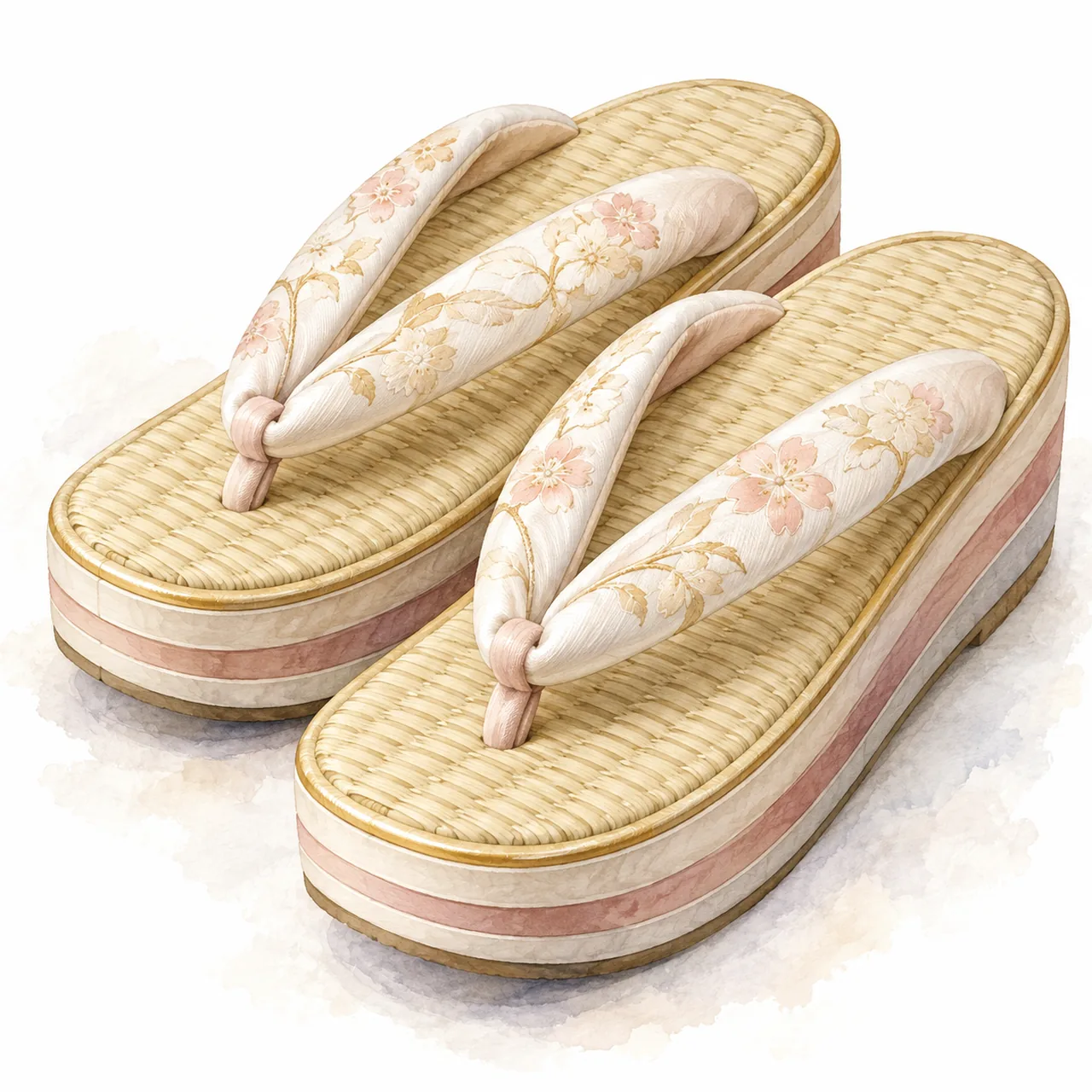
Tatami zori stack the base in several layers and cover the top with tatami. The pair here is a five-layer zori with a Nanbu-omote top, certified by the Osaka Zori Cooperative and made by its skilled craftsmen. The retailer praises the handwork, the curves, the smooth surface and the technique of stitching sole to body.
After you order, the shop asks your tabi size and then sets the thong before sending them. And it offers maintenance and aftercare with no time limit — zori meant to be worn for a long time.
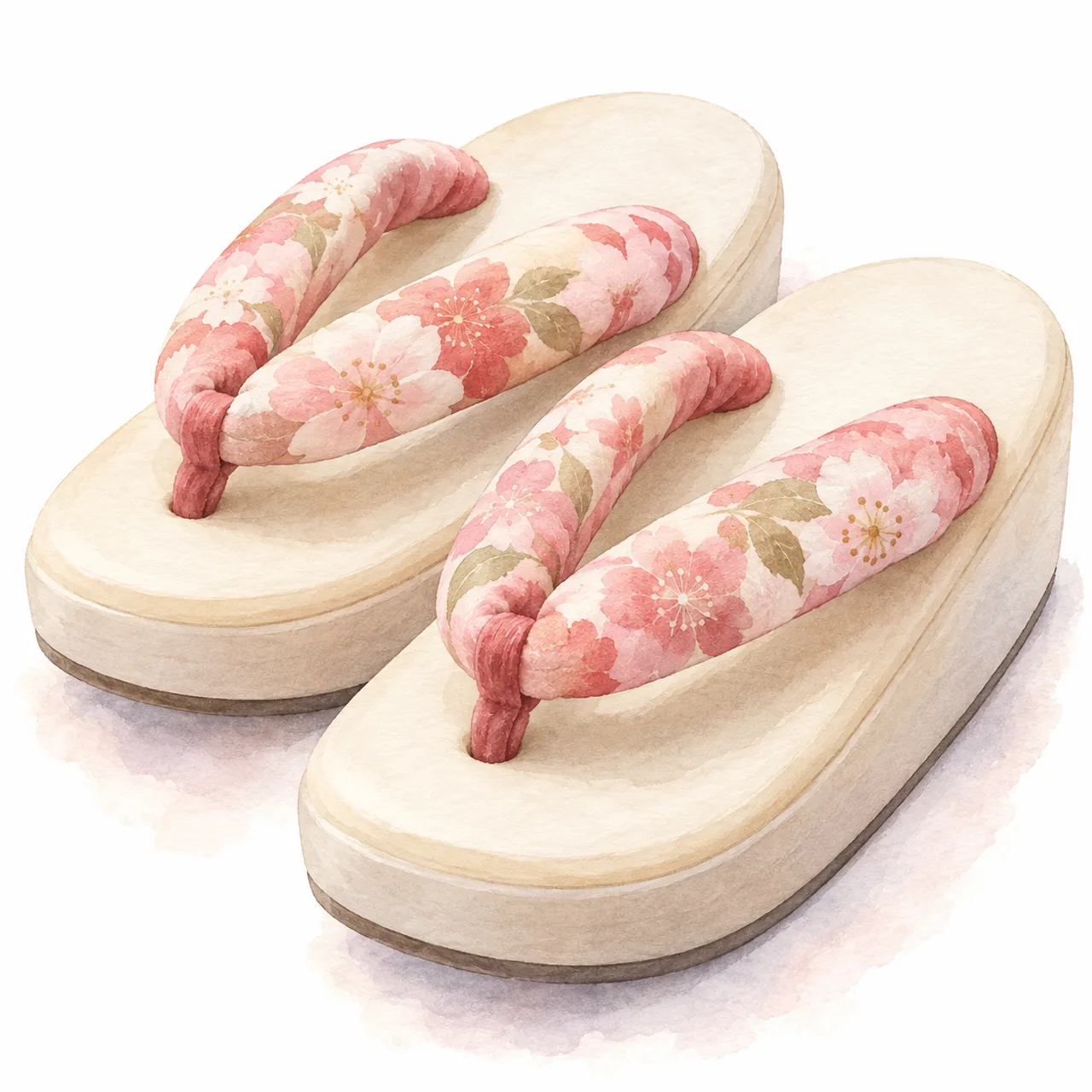
6. Cafe Zori: Modern Zori for Long Walks
Hishiya is a traditional footwear shop founded in 1926. Its brand Hishiya Calenblosso makes cafe zori with an EVA base and a Vibram sole, soft and springy underfoot. The retailer says the plump thong keeps your feet from tiring.
Made in Japan by Hishiya, with a PVC top. Sizes S, M and L. They're the pair for a full day of walking in kimono — the theatre, a trip — and the many colour combinations make matching them to your kimono part of the fun.
7. Buying From Outside Japan
As of November 2026, the five pairs above are sold through Japanese shops, and we didn't find them on Amazon.com. What you can buy there are Japanese-made igusa (rush) tatami-top zori from Asayu Japan. These are flat, casual sandals for everyday and summer wear — not the layered tatami zori for formal kimono — with cotton thongs and sizes listed in centimetres.
Asayu Japan Igusa Tatami Zori for Women, Sakura Red
Made in Japan, with an igusa rush tatami top, cotton thongs and a TR sole. 270 mm long, for feet of 24.0–26.5 cm. The cool, smooth feel of rush underfoot is the pleasure of tatami zori.
Asayu Japan Igusa Tatami Zori for Women, Sakura Red
Loading product details…
Asayu Japan Igusa Tatami Zori for Men, Mosaic
Made in Japan, igusa rush top, cotton thongs, TR sole. 283 mm long, for feet of 25.0–27.5 cm; Asayu also lists men's pairs at 30 cm (US Men 12).
Asayu Japan Igusa Tatami Zori for Men, Mosaic
Loading product details…
8. Caring for Plant-Fibre Zori
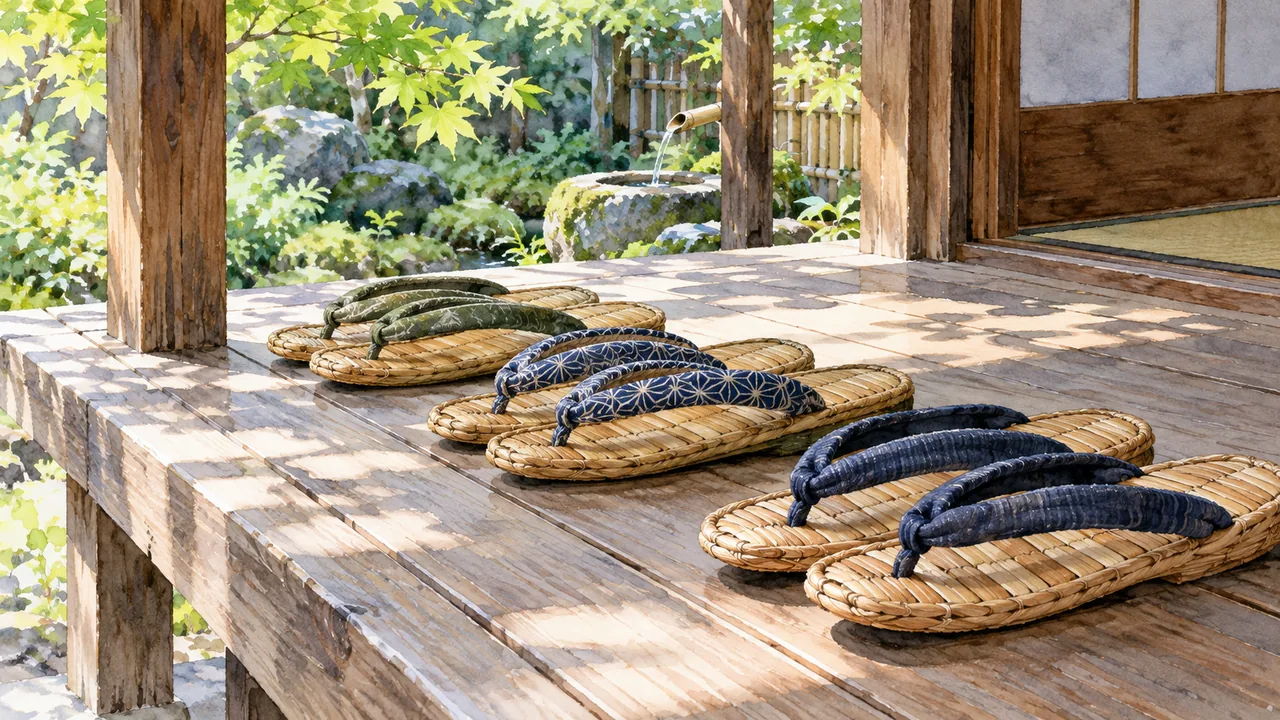
Don't wash zori made of plant fibres such as bamboo sheath or tatami. As Karube Zori puts it: "For plant-fibre zori, moisture is the enemy." If they get dirty, wipe them with a tightly wrung cloth and let them dry thoroughly in an airy, shaded spot. That's how they last.
Did you know: Bamboo sheath is the skin a shoot sheds
According to Karube Zori, bamboo sheath is the skin that peels away naturally as a bamboo shoot grows — nothing is cut from the bamboo to get it. The sheaths shed as shoots become bamboo are gathered up, and craftsmen weave them into zori pair by pair. Bamboo-sheath zori are a kind of gift from the bamboo grove.
9. Frequently Asked Questions
What's the difference between zori and setta?
This guide covers bamboo-sheath, tatami and cafe zori. Setta — including modern setta with sneaker-like soles — are covered in our setta sandals guide.
How do I choose my zori size?
Take your shoe size in centimetres and choose from 1 cm smaller to 1.5 cm larger, as Karube Zori recommends. If the shop sets the thong for you, give them your tabi size.
Can I wash bamboo-sheath zori?
No. Moisture is the enemy of plant-fibre zori. Wipe dirt off with a tightly wrung cloth and dry them well in the shade.
Which zori are right for formal kimono?
Layered tatami zori. The Osaka Zori Cooperative-certified pair here has five layers and a Nanbu-omote top, and the shop sets the thong to your tabi size after you order.
My feet hurt when I walk a long way in zori.
Try cushioned cafe zori. Hishiya Calenblosso's cafe zori use an EVA base and Vibram sole, and their plump thong is said to keep feet from tiring. Checking the size and how the thong sits matters too.
Can I wear bamboo-sheath zori indoors?
Yes — there are indoor versions. Karube Zori's "Madoka" has a bamboo-sheath upper on a urethane sole made for indoor use, and is unisex.
Final Thoughts: Japanese Handwork, From the Feet Up
Choose zori by material: bamboo sheath for every day, tatami for formal days, cafe zori for long walks.
Two hundred years of zori-making in Yamagata are now carried by Karube Zori, which supplies 95% of Japan's hand-woven zori. Bamboo-sheath zori from Hita, tatami zori by Osaka craftsmen, cafe zori from Kyoto's Hishiya — all made by Japanese makers for comfort underfoot.
Size from your shoe size, keep plant fibres away from water — and take your first walk in woven bamboo.

Setta Sandals: Traditional Thong, Modern Sole
Tabi Socks: Why the Toe Is Split, and Which Kind