The kanzashi in this guide aren't hair sticks — they're flowers made of silk. Each petal is a tiny square of silk folded and pinched by hand, a technique called tsumami-zaiku ("pinching craft"), then gathered into plum blossoms, cherry blossoms and round clusters to wear in the hair with a kimono.
Before comparing colours, decide one thing: will it clip into the hair, or be pinned into an updo? That splits the choices into clips that suit shorter hair and kanzashi that sit in a styled updo — and the right size for a three-year-old's Shichi-Go-San is different from an adult's. This guide introduces the tsumami kanzashi of Oharibako, a workshop in the Nishijin area of Kyoto, chosen by how they fasten and when they're worn.
Quick Reference: Choose by Hairstyle and Occasion
| If you want… | Oharibako piece | How it fastens |
|---|---|---|
| A small touch of flowers | Three-sakura clip ▾ | Clip |
| A fuller cluster of flowers | Six-sakura clip ▾ | Clip |
| A three-year-old's Shichi-Go-San | Double-plum snap-clip pair ▾ | Snap clip |
| A seven-year-old's styled updo | Double-plum kanzashi pair ▾ | Kanzashi pin |
| An adult in kimono | Hankusu clip ▾ | Clip |
1. Why Japanese: Silk Flowers From a Kyoto Workshop
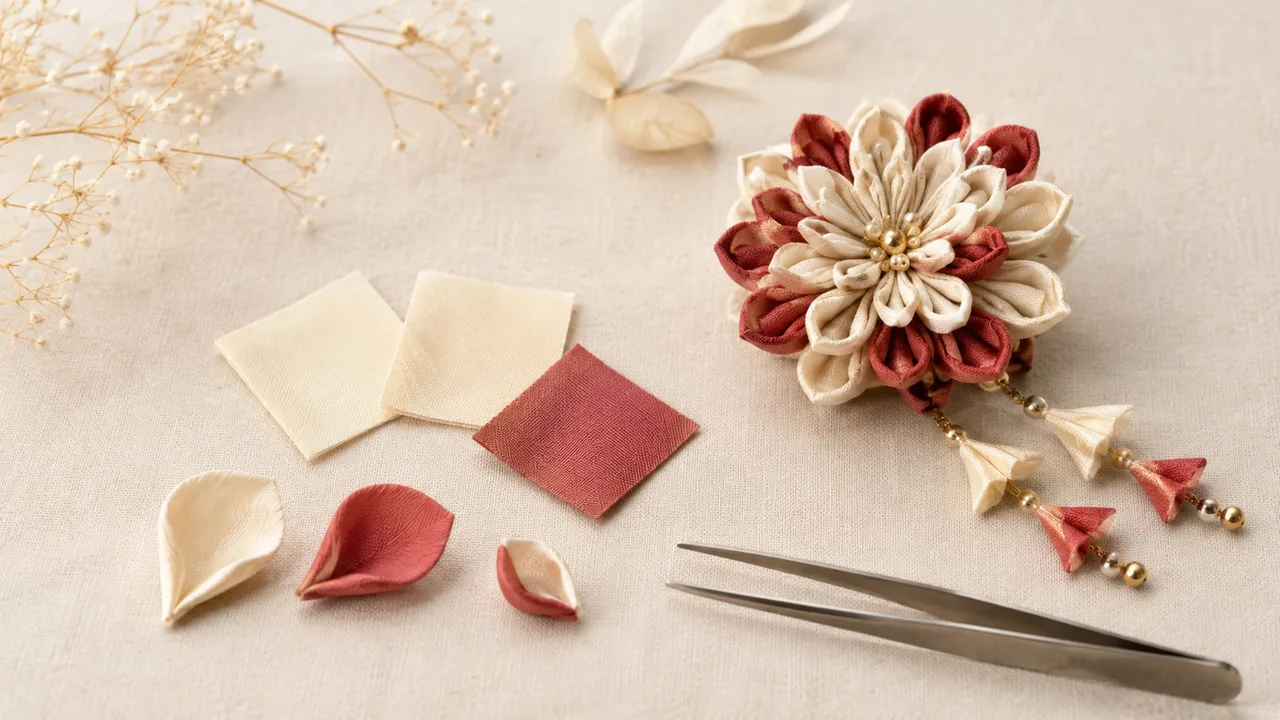
From cutting the cloth to assembling the flower
Tsumami-zaiku is the technique of cutting cloth into small squares, folding and pinching them into petals, and assembling them into flowers. Look closely and every petal has its own fold — that three-dimensional quality is what gives the ornament its expression in the hair.
Oharibako has its shop and workshop in Murasakino, in Kyoto's Nishijin district, and does the whole process in-house: preparing the cloth, cutting it, pinching each petal, and assembling the finished piece. Its English site describes it as a family workshop that makes kanzashi entirely by hand, and says that in 2026 it was named a Certified Kyoto Handcraft Store by the City of Kyoto — one of only two shops in Kyoto certified for hana-kanzashi (flower kanzashi).
Enjoy the sheen of the silk and the texture of the cloth
These pieces use pure silk. Its sheen looks bright or calm depending on which way each petal faces. Look at the plump edges of the flowers and the fineness of the layering, not just the shine. When buying online, side views and photos of the piece being worn tell you more than a straight-on shot.
Did you know: round petals and pointed petals
Tsumami-zaiku has two basic petals: the rounded maru-tsumami and the pointed ken-tsumami. Notice which one a piece uses and you'll see why some flowers look sweet and others look crisp — a good way to find the expression you like.
2. Starting Small: Cherry-Blossom Clips
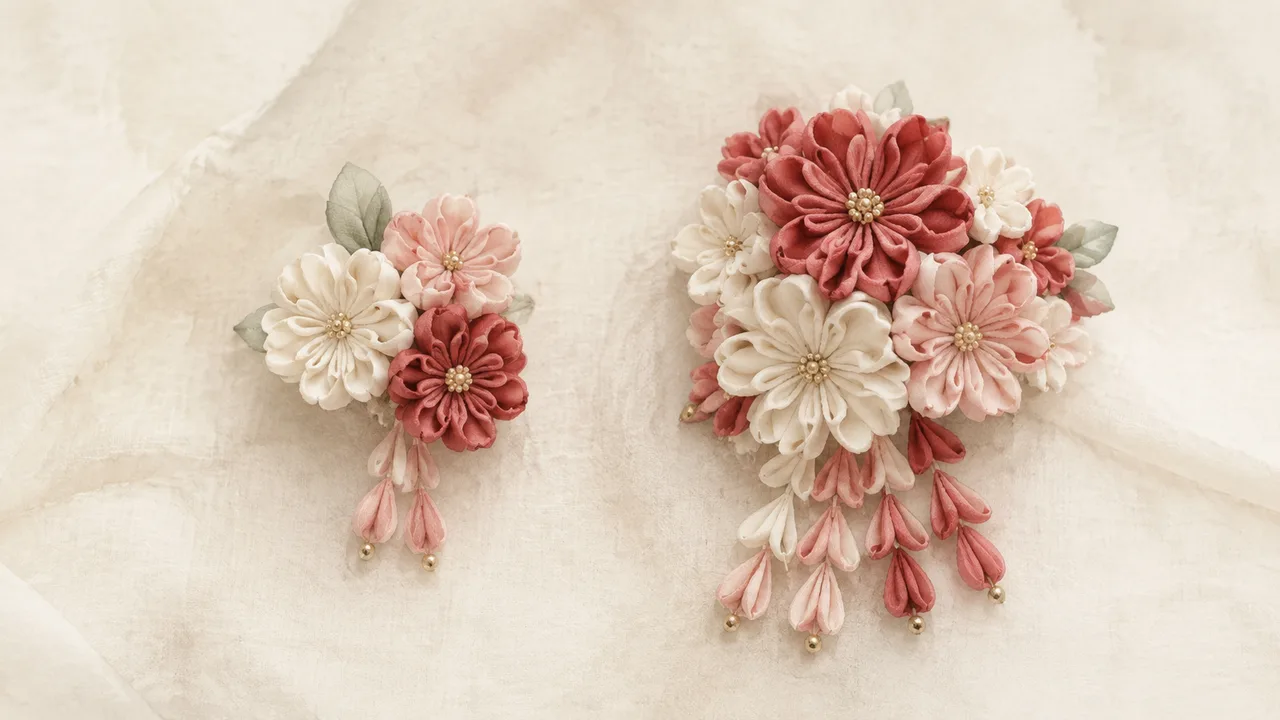
Flowers for days without an updo
If you aren't planning a high updo, start with a clip. It holds onto a tied or braided section of hair, so you don't need a large styled updo to wear it. A clip still needs enough hair to grip, though, so very short hair won't hold every piece.
Oharibako's three-sakura clip gathers three cherry blossoms, with the flowers about 6 cm (2.4 in) across at their widest — a good place to start if a large ornament feels like too much. The six-sakura clip gathers six blossoms to about 10 cm (4 in), for when the hair ornament is the point of the outfit; it also works as a corsage. Choose by where it will sit — beside the ear, or on a bun at the back — not just by the number of flowers.
3. For Shichi-Go-San: Snap Clips and Kanzashi
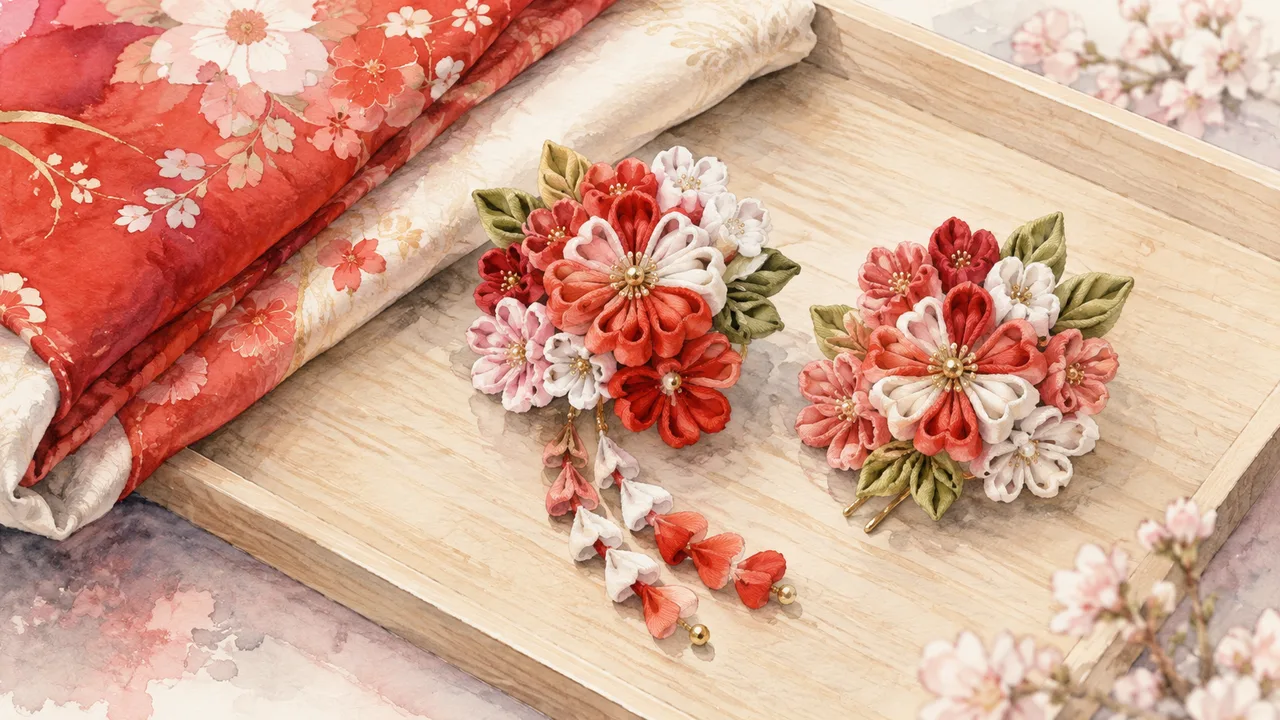
The same double plum, different fittings
Shichi-Go-San is the Japanese celebration of children at ages three, five and seven, when girls of three and seven often wear kimono. Oharibako's double-plum (yae-ume) pair comes in two versions: a snap-clip pair for three-year-olds and a kanzashi-pin pair for a seven-year-old's styled hair. The flowers look alike, so read the product name to the end.
Every child's hair is different, and Oharibako also shows the snap-clip set worn at seven. If a hairdresser will style the hair, show them the hairstyle you want and the ornament together beforehand.
Plan for both the photo shoot and the shrine visit
If the photo session and the shrine visit are on different days, have the ornament ready by the earlier date — and try it with the hairstyle before the day. Colours in stock arrive sooner than colours made to order, so check the delivery time when you order.
4. Tsumami Kanzashi for Adults
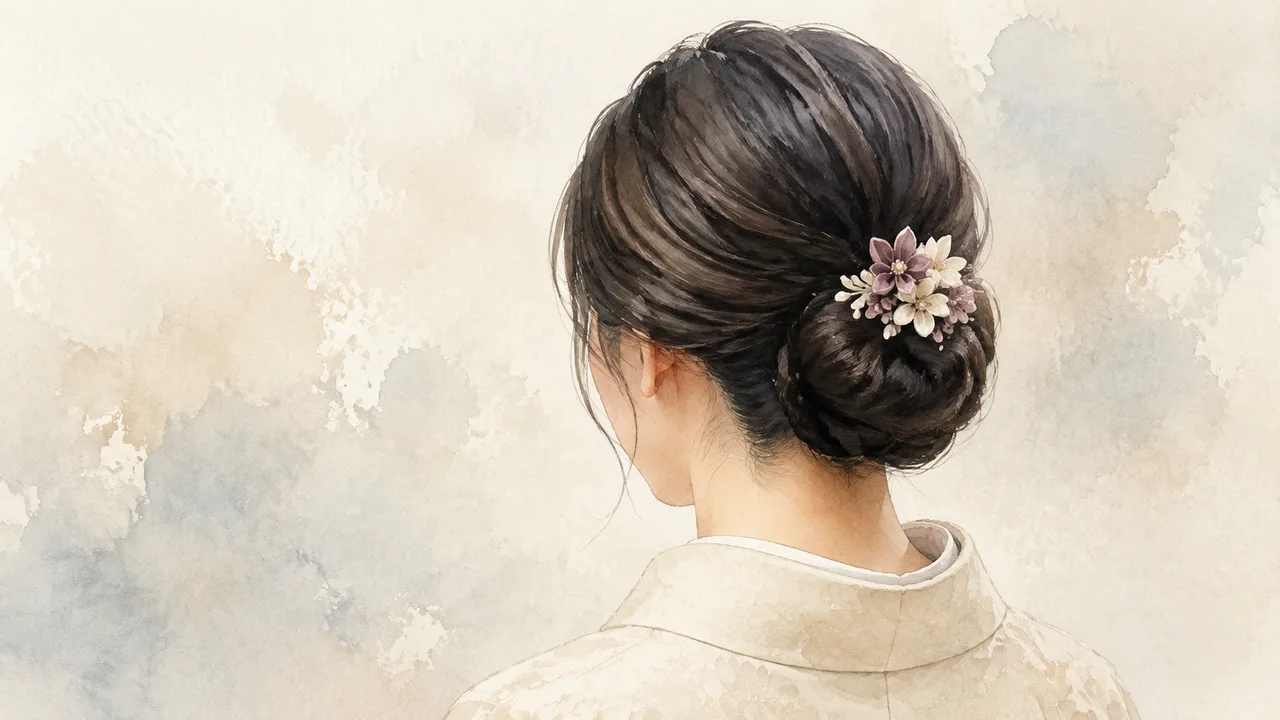
Sweetness is adjustable with colour and size
Tsumami kanzashi often bring to mind children at Shichi-Go-San or young women in furisode. But Oharibako also suggests them for adults at ceremonies and family occasions — the craft is too fine to leave to children alone.
Its hankusu clip is named for its shape, like half of a kusudama ball, with petals gathered into a round cluster. It suits a hakama or furisode, and equally a kimono worn to a family celebration. For a quieter look, pick up a pale or deep colour from the kimono itself.
5. How to Choose: Hairstyle, Size and Colour
Pick one colour out of the kimono
If you can't decide on a colour, look at the small colours inside the kimono's pattern, not only the ground colour. White flowers on a blue kimono suggest a white ornament; a little red in the pattern suggests a red accent. This isn't etiquette — just one way to choose. Lay the photos of the kimono, obi and ornament side by side.
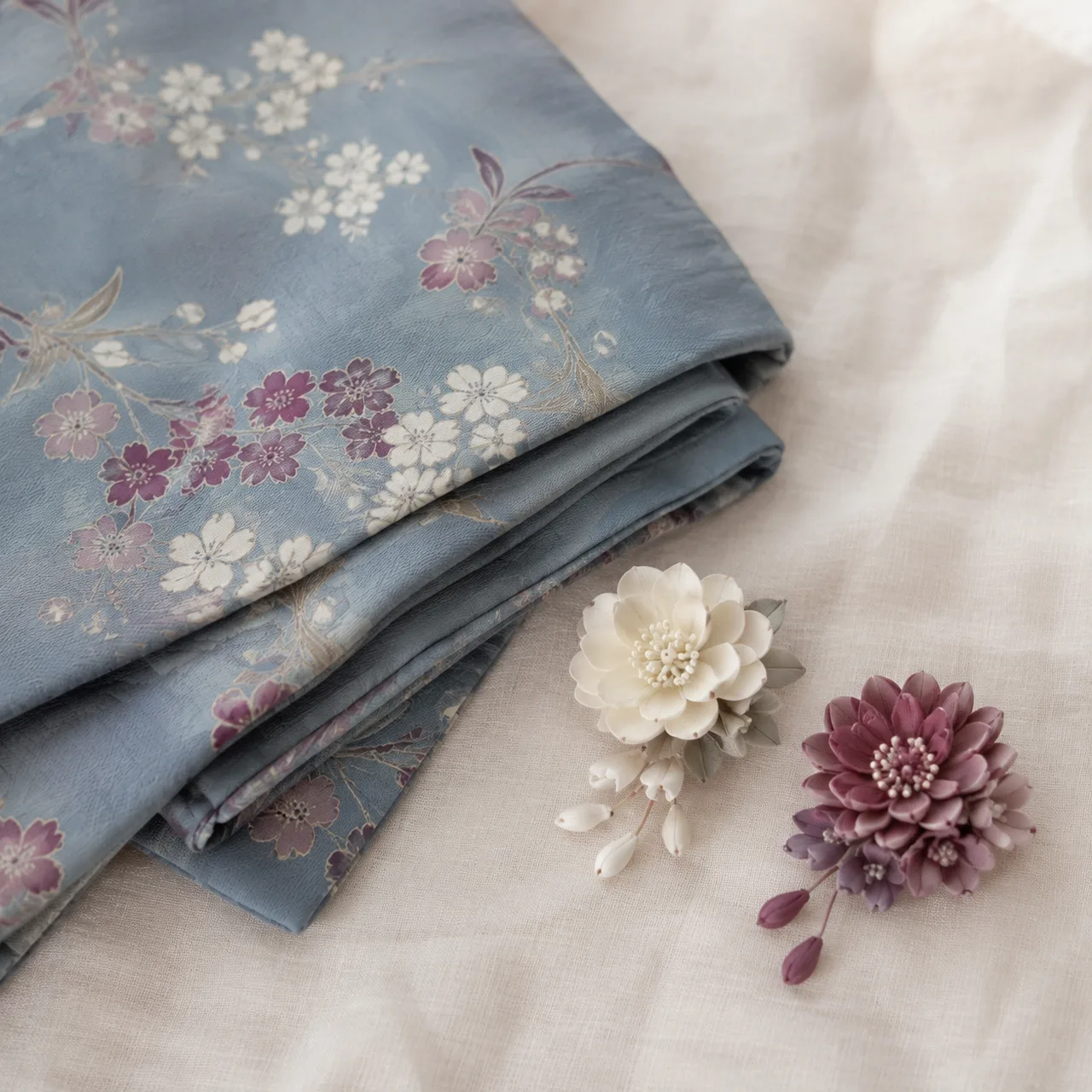
Check the flower and the dangling strands separately
A piece with small flowers can still be long once you include the dangling strands. When buying online, check the size of the flower part and of the whole piece separately. Cutting a piece of paper to roughly the size of the flower and holding it beside your head in a mirror makes it much easier to imagine.
Did you know: "shōken" and "chirimen" mean different things
Shōken means pure silk — the material. Chirimen is a crepe weave with a fine, crinkled surface. So it isn't "silk or crepe": a piece can be both. Check the material, then compare the texture and sheen in the photos.
6. Wearing It and Putting It Away
Style the hair first, then add the flowers
These tsumami kanzashi are added after the hair is styled. They aren't the single-stick kind of kanzashi used to twist and hold hair in place. Hold them by the metal fitting, not by the flowers, and use hairspray before putting the flowers in — Oharibako notes that moisture and hairspray can affect the silk and the glue.
Back in the box without crushing the petals
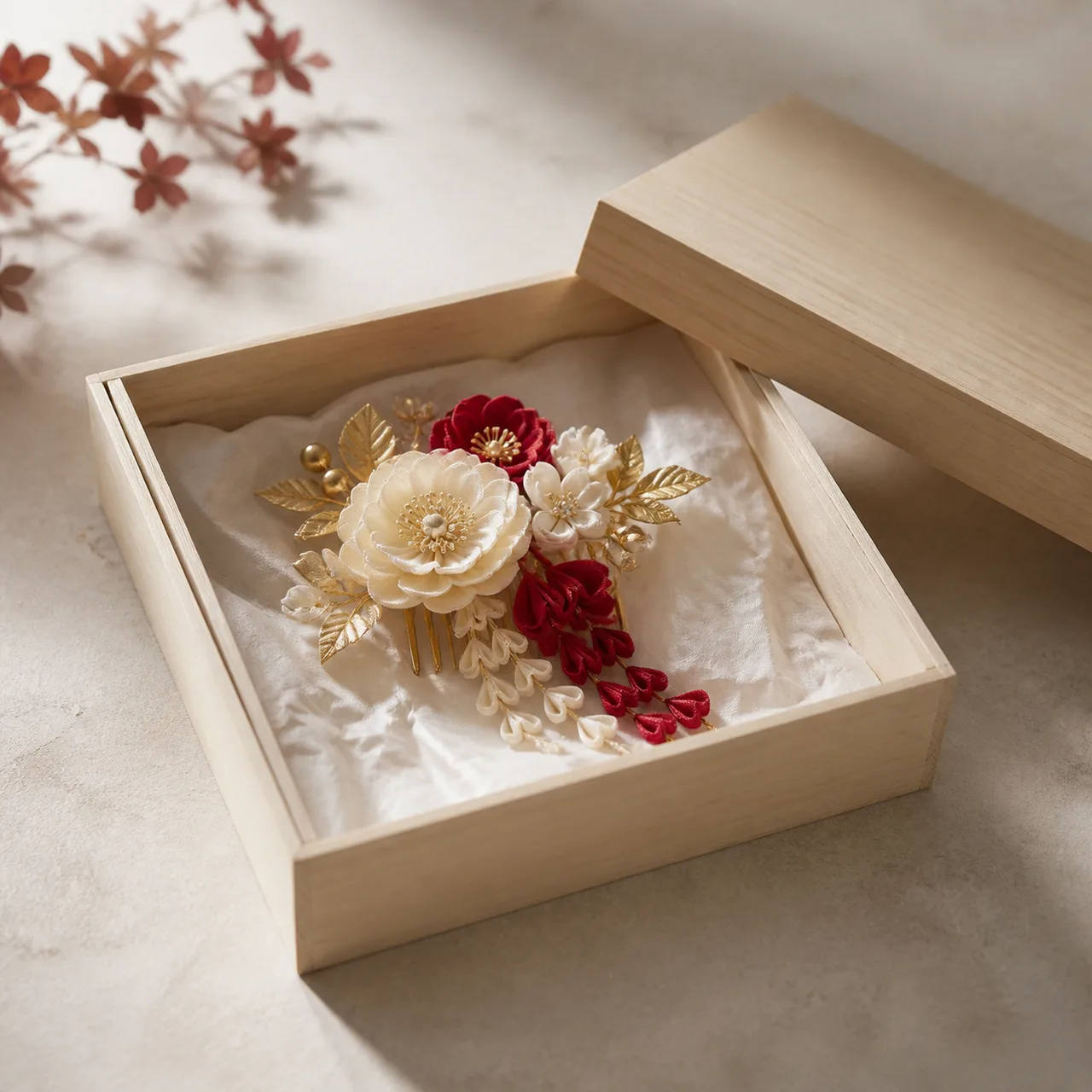
After wearing, check that no petals or strands are folded under, and put it in a box with room to spare. Don't wash it, and keep it away from damp and direct sunlight. If it gets dirty or loses its shape, don't try to fix it with water — ask the shop first.
7. Buying From Outside Japan
Oharibako's own online store has an English version, shows prices in US dollars for many countries, and ships overseas. Every piece in this guide is made in its Kyoto workshop. In stock colours arrive sooner; made-to-order colours take longer, so allow time before a ceremony.
If you're in Kyoto, the shop and workshop are a three-minute walk from the Daitokuji-mae city bus stop.
8. Frequently Asked Questions
Can I hold my hair up with one of these kanzashi?
No — these are ornaments added to styled hair. They're different from the single-stick kanzashi used to twist and hold hair in place. Style the hair first, then add the flowers.
Can I wear tsumami kanzashi with short hair?
If there's enough hair to grip, a clip or snap clip can work. How well it holds depends on the amount of hair and the size of the piece, so check the fitting and photos of it being worn.
Can the same ornament be used at ages three and seven?
Yes, if it suits the hairstyle. Oharibako shows its double-plum snap-clip set worn at seven as well. If you buy another, note that the snap-clip pair and the kanzashi-pin pair are separate products.
Can adults wear tsumami kanzashi?
Yes. Oharibako suggests pieces such as the hankusu clip for adult kimono too. Think about the colour of the kimono, your role that day, and your hairstyle when choosing size and how showy it should be.
Can I wash a silk tsumami ornament?
No — avoid washing it. Moisture can affect the silk and the glue. If it gets dirty, ask the shop rather than trying to clean it with water.
Where can I buy Oharibako kanzashi?
From its official online store, which has an English version and ships overseas, or at its shop in Murasakino, Kyoto. It also runs a store on Rakuten Ichiba for buyers in Japan.
Final Thoughts: The One That Suits Your Special Day
Small squares of silk, folded into petals, layered into a flower for the hair. Oharibako's tsumami kanzashi, made by hand in Kyoto, have the kind of detail that makes you lean in.
Start with one question: clip it in, or pin it into an updo? Then choose the size and colour — for a three-year-old's Shichi-Go-San or for an adult in kimono.
When you lay out the kimono, put the photo of the hair ornament beside it. Choosing the flower is where the day begins.
Yukata: How to Spot a Real One and Wear It Right

Mizuhiki Knots: Types, Meanings, and When to Use Each