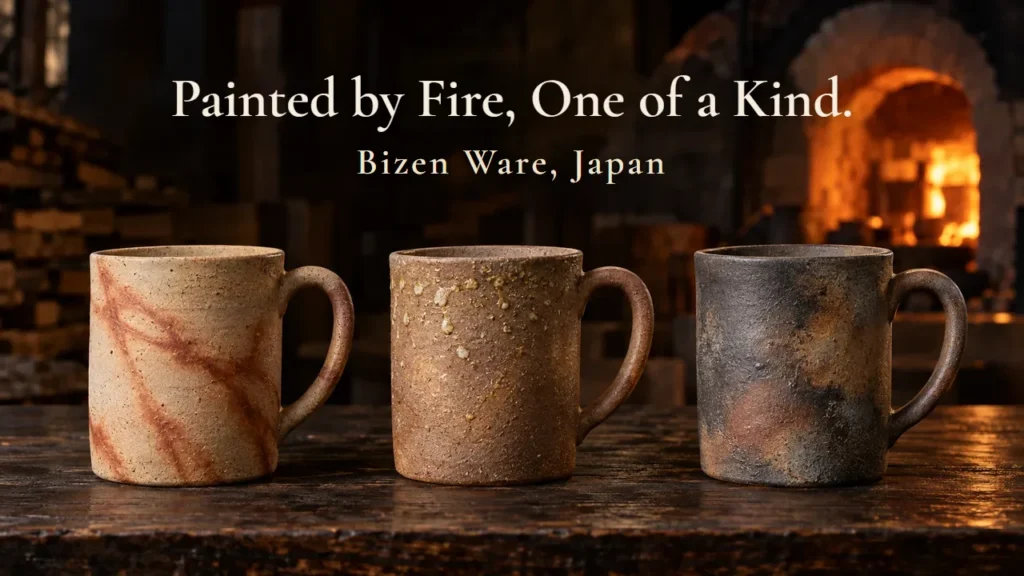
Bizen ware has no painting and no glaze. The red lines, the sesame-like specks, the smoky greys and blues are all made by the kiln — by flame, ash and straw. Which is why no two pieces are ever the same.
This guide explains how Bizen's "landscapes" (keshiki) form, and introduces two kilns in Imbe, Okayama: Konishi Touko, whose founder learned to create the smoky sangiri finish on purpose, and Shibaoka Tousendo, whose kiln favours blue Bizen. It also covers how to tell real Bizen when buying.
Quick Reference: Bizen's Four Landscapes
| Keshiki | What makes it | What it looks like |
|---|---|---|
| Hidasuki ▾ | Straw reacting with iron in the clay | Red lines on a pale body |
| Goma ▾ | Pine-wood ash melting into glaze | Specks like sesame seeds |
| Sangiri ▾ | Smoking in the kiln | Grey, dark grey, blue shading |
| Ao-Bizen ▾ | Reduction firing | A bluish-grey surface |
1. Why Japanese: The Pattern Is Made by Fire
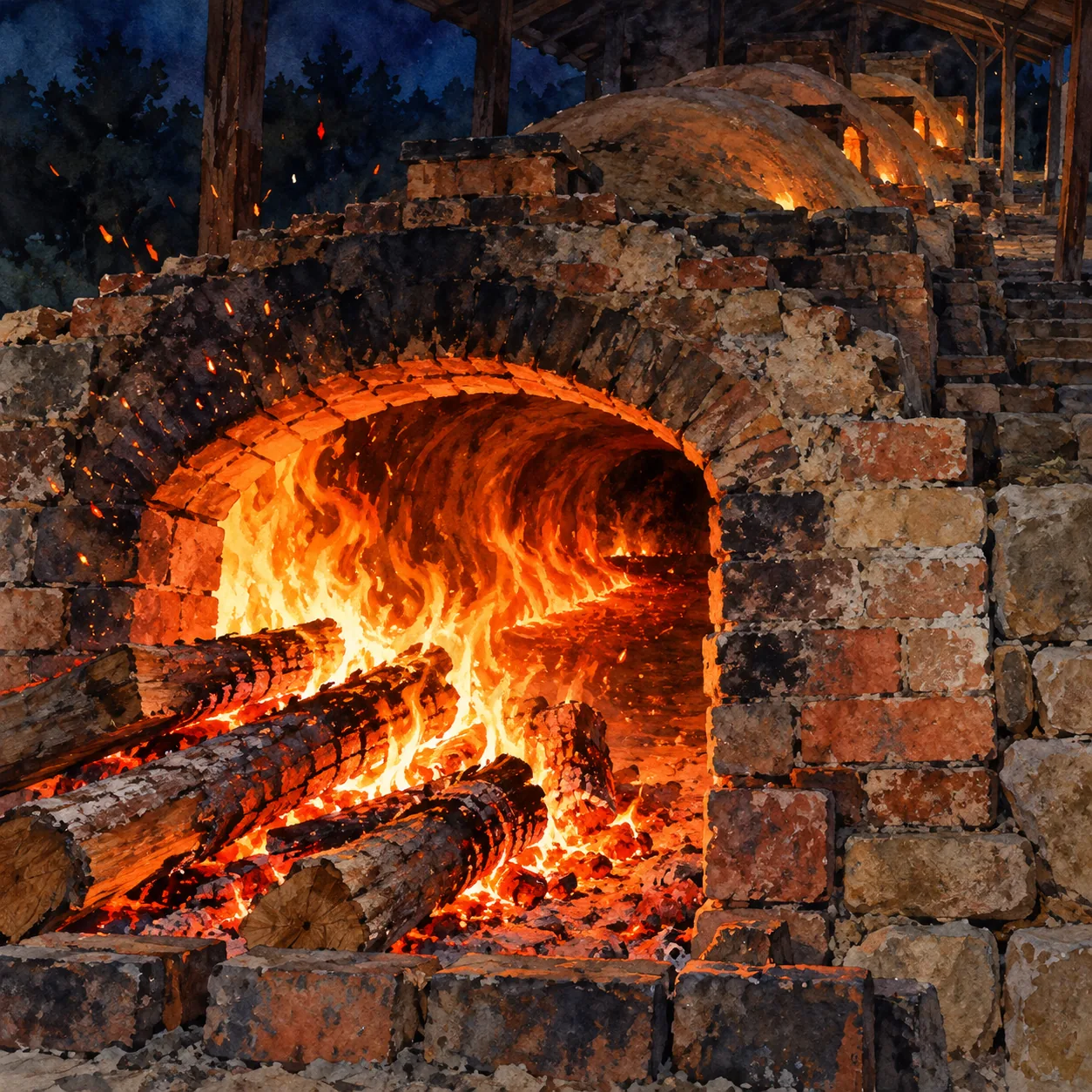
The Bizen Pottery Association describes Bizen ware as fine clay shaped piece by piece, dried, then fired as it is — with no painting and no glaze, so the character of the clay comes through. It is fired slowly for seven to ten days and nights in flames of well over a thousand degrees. The raw clay, called hiyose, comes from layers beneath the rice fields around Imbe.
Okayama Prefecture dates Bizen production to the end of the Heian and start of the Kamakura periods, describing its charm as simple yet deep, born where earth, fire and human skill compete and come into harmony. It was designated a Traditional Craft of Japan in 1982.
Did you know: Bizen's Living National Treasure
According to the Bizen Pottery Association, Kaneshige Tōyō was designated a holder of Important Intangible Cultural Property — a "Living National Treasure" — in 1956, for Bizen ware.
2. Hidasuki and Goma: Red From Straw, Specks From Ash
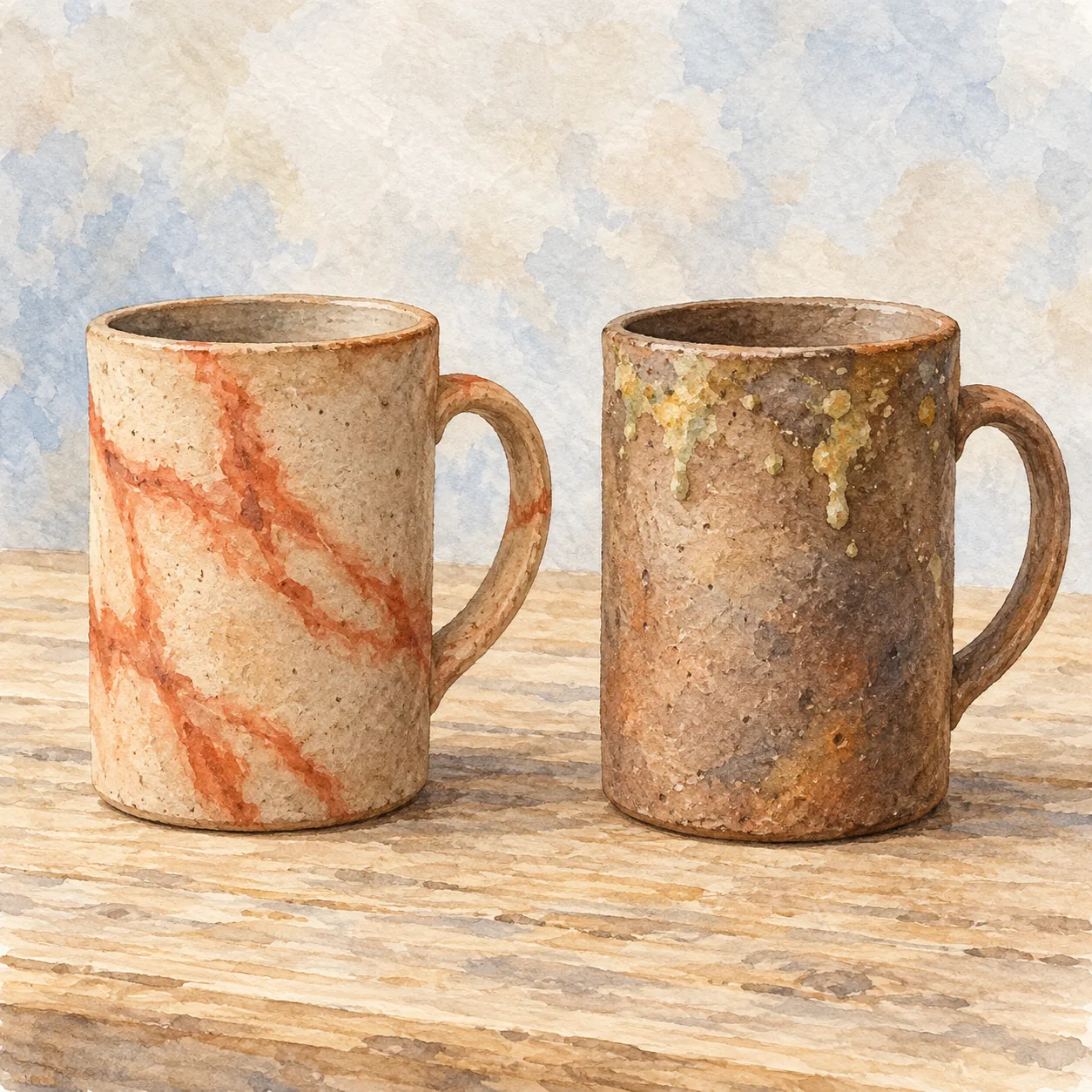
Hidasuki ("fire cords") are red lines on a pale body, formed when the components of rice straw react chemically with the iron in the clay. Goma ("sesame") happens when ash from the pine firewood settles on the piece and melts into a natural glaze, looking as if sesame seeds were sprinkled over it.
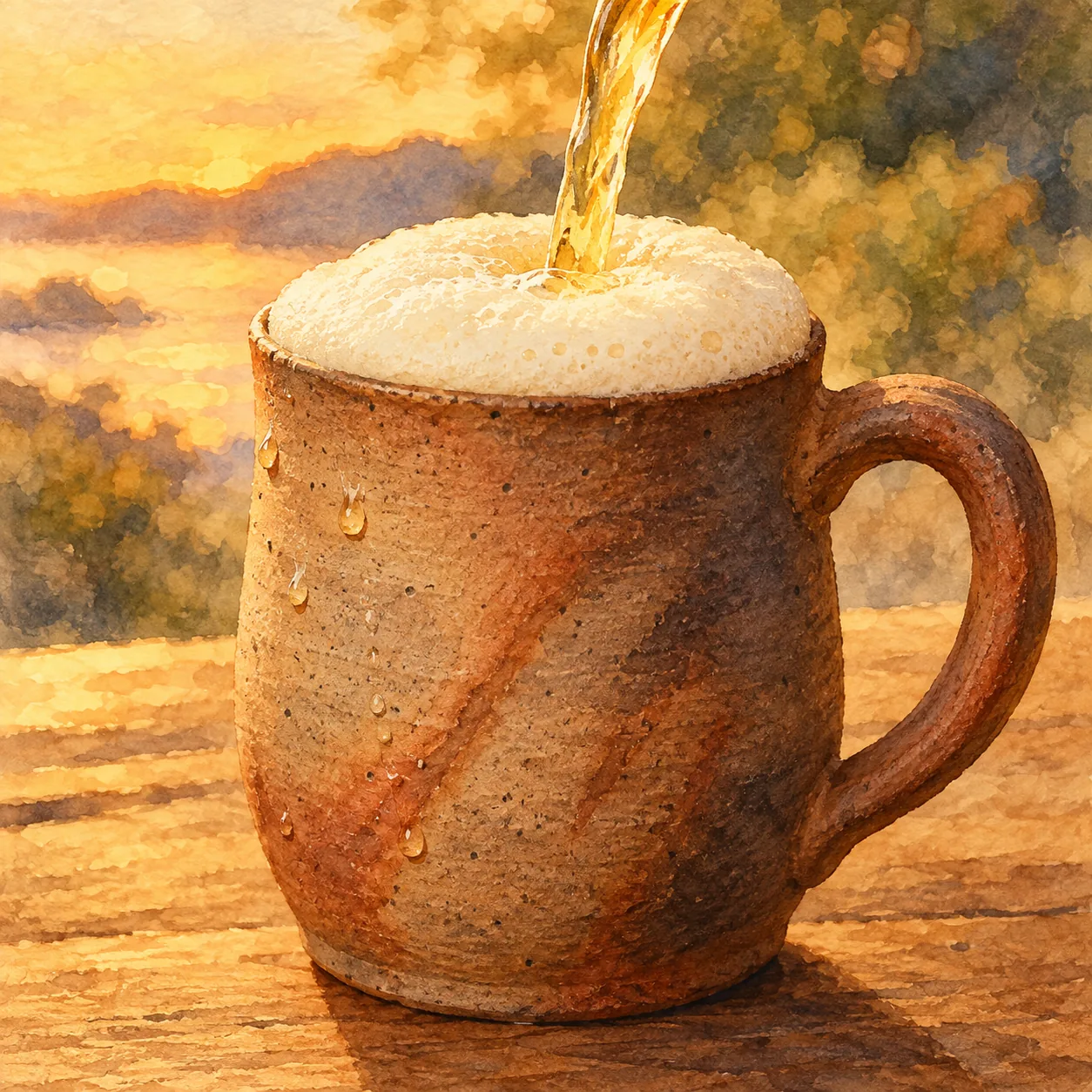
Konishi Touko's beer mugs show both: a basic hidasuki mug, and a goma mug with ash over the whole surface. The retailer describes Bizen's fine surface texture as producing a fine, long-lasting head on beer.
3. Sangiri: A Chance Effect, Made on Purpose
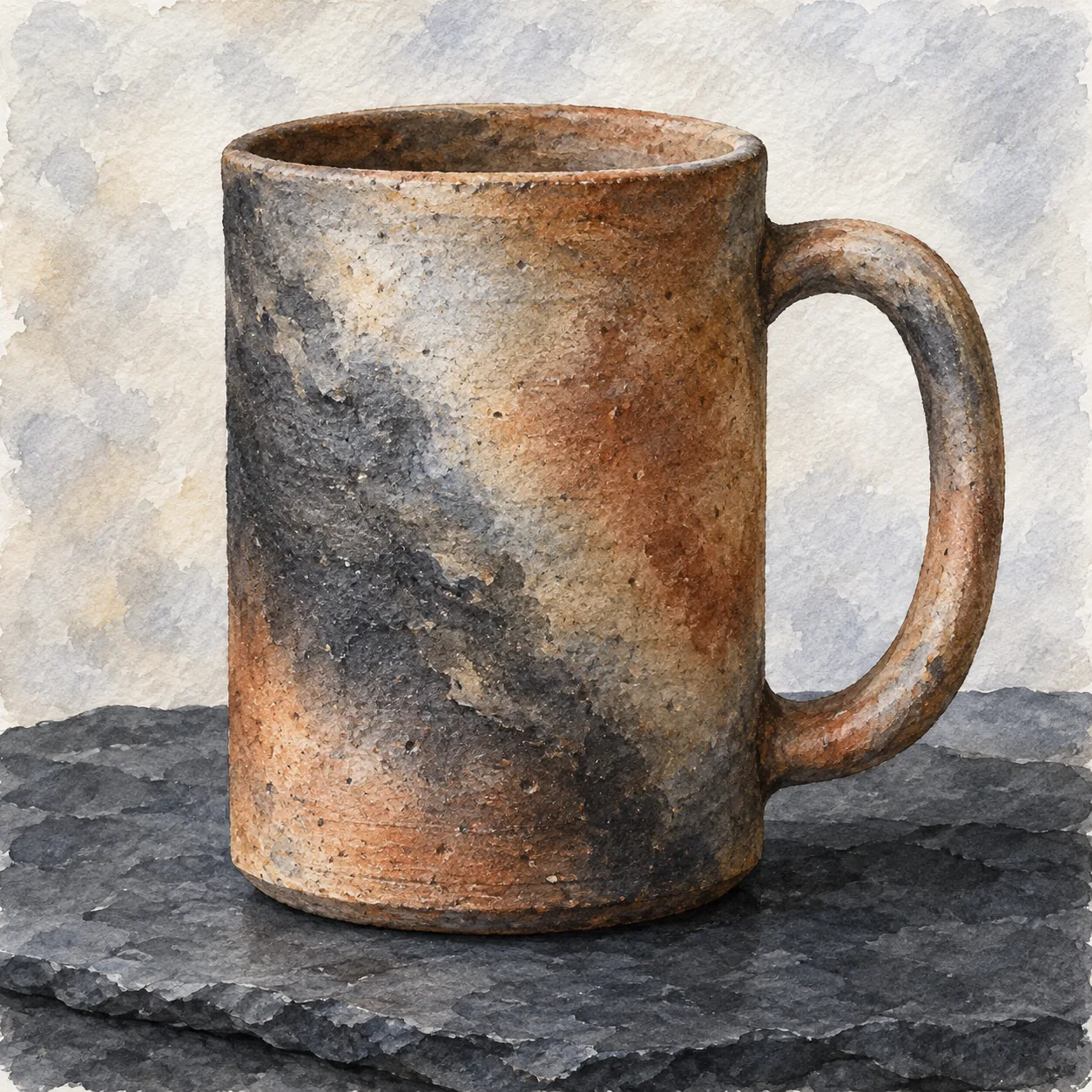
Sangiri is a natural change of colour from smoking in the kiln — grey, dark grey, blue — or one produced deliberately by adding charcoal just before the firing ends, Okayama Prefecture explains.
Konishi Touko in Imbe keeps to traditional firing with red pine, the true Bizen fuel, and puts quality over quantity. Its founder, a grandson of the Meiji-era master Nagami Tōraku, devised a way to create sangiri on purpose — an effect that had until then only happened by chance. The kiln became known as "Konishi Touko of the sangiri" — and, for its sculptural pieces, "of the saiku" too. It is now supervised by the founder's grandson, Konishi Tozo, a holder of Bizen City's intangible cultural property.
4. Ao-Bizen: Blue From a Reducing Flame
Bizen is usually reddish-brown, but in reduction firing the surface comes out bluish — Ao-Bizen. Shibaoka Tousendo, founded in Imbe in 1912 and past its hundredth year, says its kiln's structure brings out reduction colours easily, so it specialises in sangiri and Ao-Bizen. Even within Imbe, the kiln decides the colours.
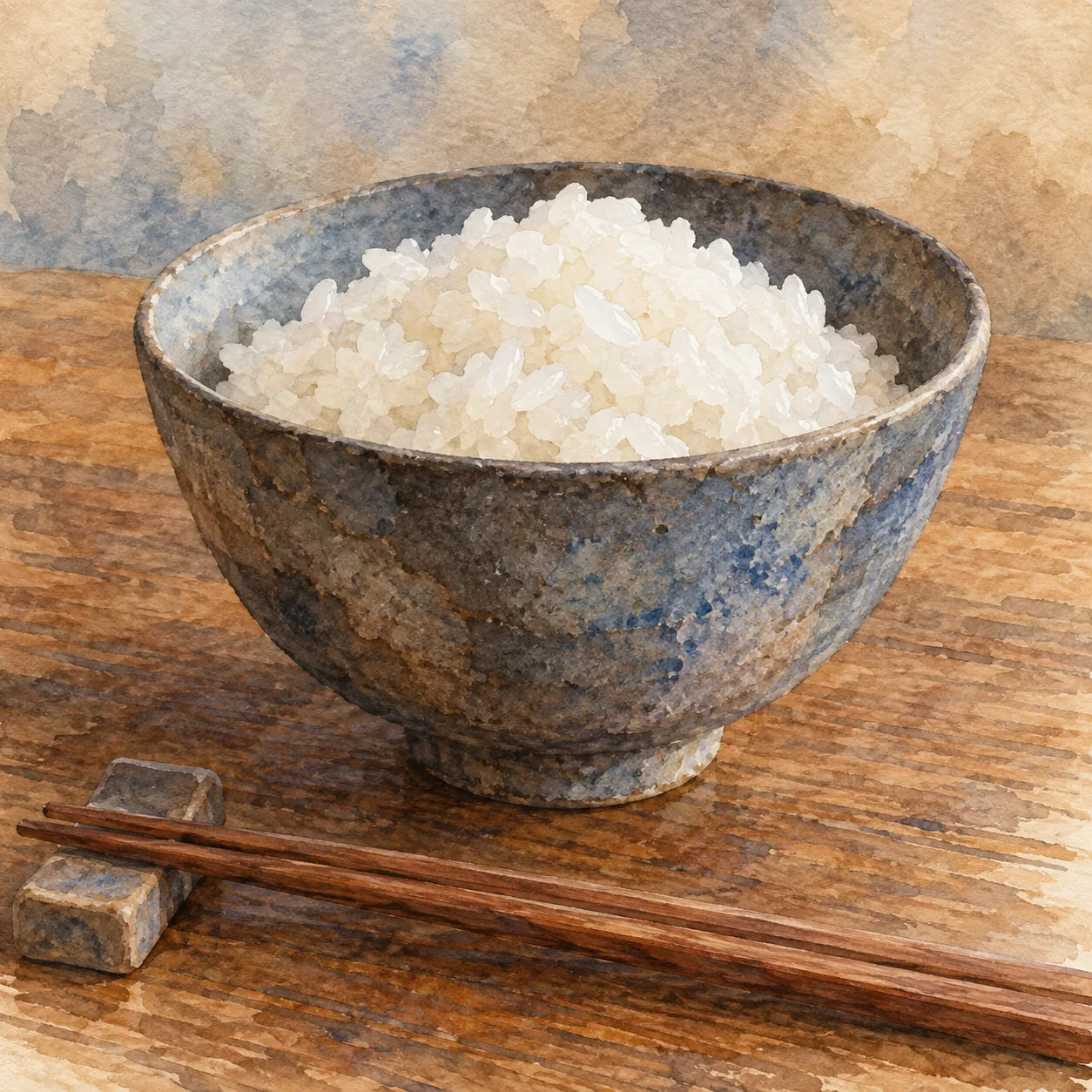
The retailer recommends Bizen rice bowls as easy to use because grains of rice don't stick.
5. The One You Get Won't Match the Photo
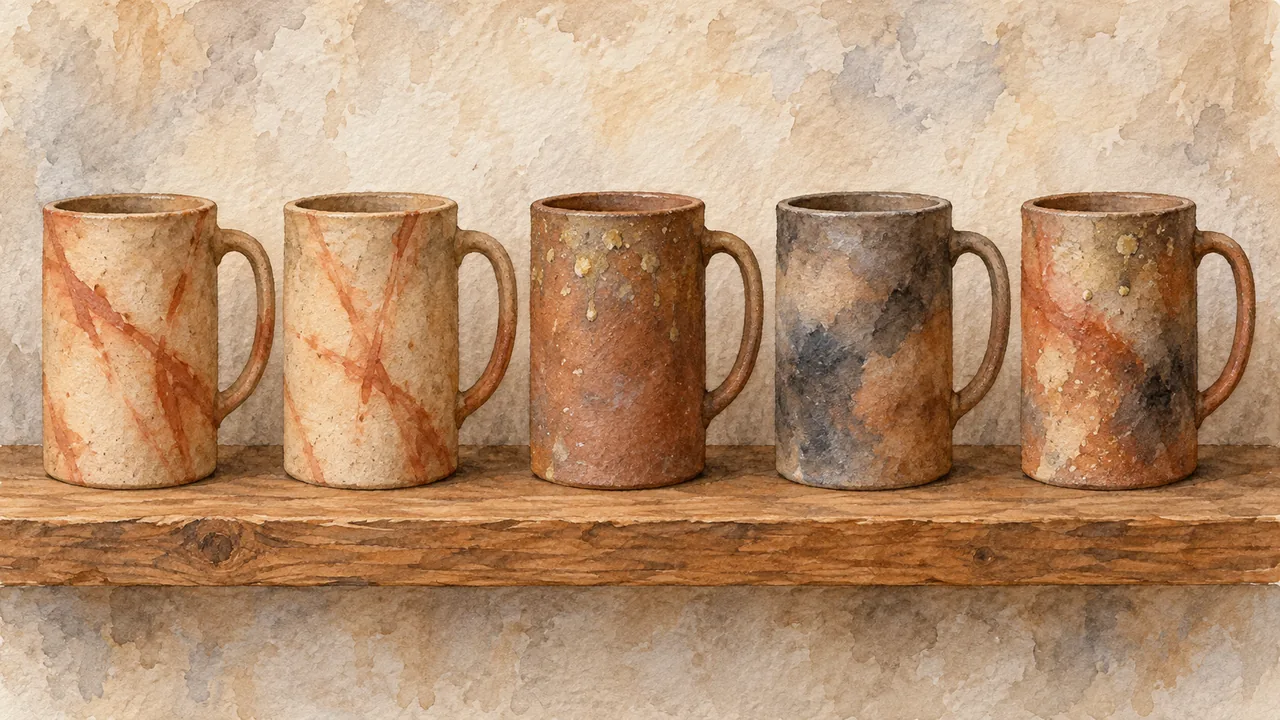
Because the flame paints each piece, the keshiki of every piece is different — and Bizen retailers note that their product photos are only examples. That isn't a flaw; it's the point. Whatever arrives is yours alone. If you give Bizen as a gift, choosing the landscape is part of the gift.
6. Buying From Outside Japan: How to Tell Real Bizen
As of November 2026, we didn't find Bizen ware from a named Imbe kiln on Amazon.com, and the kilns in this guide sell through Japanese shops. When you look elsewhere:
- "Bizen-style" or "Bizen colour" is not Bizen ware. Real Bizen is unglazed stoneware from the Imbe area of Bizen city, Okayama. Some other Japanese wares use a Bizen-like colour — fine pottery, but a different thing.
- Look for the kiln or potter's name and "Imbe" or "Okayama".
- No glaze, no painting. If the colour comes from a glaze or paint, it isn't Bizen.
If you travel to Japan, Imbe — a short train ride from Okayama — is lined with kilns and shops, and you can choose your own landscape in person.
7. Frequently Asked Questions
Does Bizen ware use glaze?
No. It is fired with no painting and no glaze. The only "glaze" is ash from the firewood that melts on the surface (goma).
What is hidasuki?
Red lines formed when straw reacts with the iron in the clay during firing.
What is sangiri?
Grey to blue shading from smoking in the kiln, natural or produced by adding charcoal. Konishi Touko's founder devised a way to create it deliberately.
Will I get the piece in the photo?
No — every piece's landscape is different. Retailers' photos are examples. That's the charm of Bizen.
Why is Bizen good for beer?
Retailers say its fine surface texture gives beer a fine, long-lasting head. It's also simply a pleasure to drink from fired clay.
How long is Bizen fired?
Seven to ten days and nights, slowly, in flames of over a thousand degrees, according to the Bizen Pottery Association.
Final Thoughts: Painted by Fire, One of a Kind
Bizen ware has no glaze and no painting. Straw draws its red lines, pine ash scatters its specks, smoke and a reducing flame turn it grey and blue.
Konishi Touko learned to make sangiri on purpose; Shibaoka Tousendo's kiln favours blue Bizen. Every piece comes out different.
Choose a landscape — and drink from a cup the fire painted for you alone.
Mino Ware: Shino White, Oribe Green, Kiseto Yellow
Arita Ware: 4 Kilns From Japan's First Porcelain Town