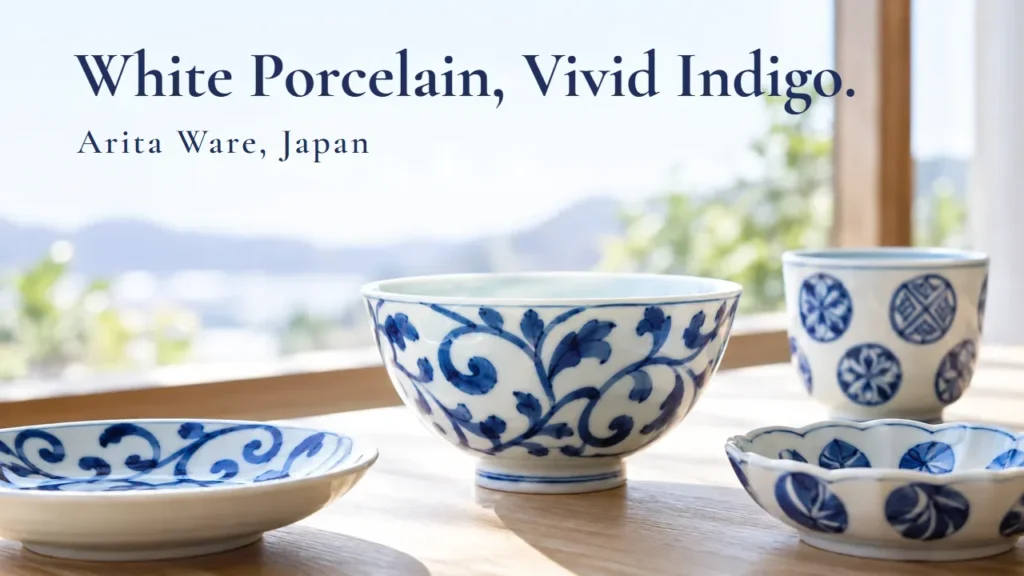
Arita, in Saga Prefecture, is where porcelain was first made in Japan — and the white of Arita's best porcelain is so fine that light shows through it. Its blue-and-white and enamelled wares, shipped from the port of Imari, once captivated Europe.
Four centuries later, the town's kilns are still making it, each in its own way. This guide introduces four: Gen-emon, painting classic Old Imari patterns by hand since 1753; Fukagawa Seiji, famous for a white you can see light through; Riso, carving patterns into porcelain on the site where the founder of Arita ware is said to have lived; and 1616 / arita japan, which leaves the glaze off altogether.
Quick Reference: Which Arita Kiln?
| Kiln | Since | Look | Everyday use |
|---|---|---|---|
| Gen-emon ▾ | 1753 | Hand-painted Old Imari indigo | Hand wash |
| Fukagawa Seiji ▾ | 1894 | Translucent white, "Fukagawa blue" | Some pieces dishwasher-safe |
| Riso ▾ | — | Carved shinogi lines | Dishwasher and microwave |
| 1616 / arita japan ▾ | 2012 | Unglazed, matte grey | Dishwasher, microwave, oven |
1. Why Japanese: The Town Where Japanese Porcelain Began
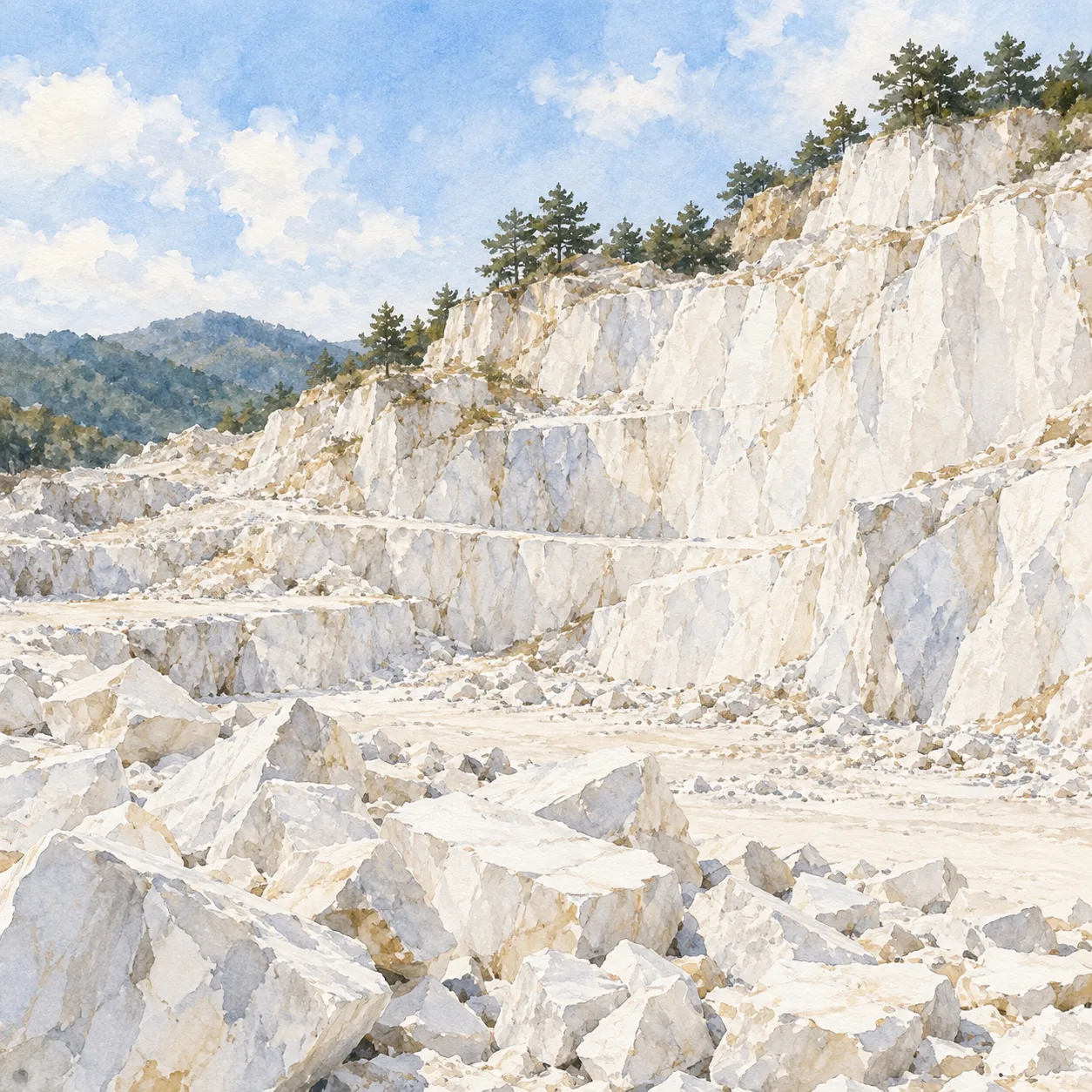
The white stone found at Izumiyama
According to Japan's Association for the Promotion of Traditional Craft Industries, Arita ware traces back to the potter Ri Sampei, brought from Korea by the lord of Saga at the end of the 16th century, who discovered porcelain stone at Izumiyama in Arita. The pieces fired there are said to be the first porcelain made in Japan.
The styles range from blue-and-white painted in a single cobalt to richly enamelled overglaze. Kakiemon and Old Imari porcelain in particular captivated Europe, exported in large quantities through the Dutch trading post in the Edo period. The association sums up its character as a beautiful white body, vivid decoration, and real usefulness and strength as tableware. Arita ware was designated a Traditional Craft of Japan in 1977.
Did you know: Arita and Imari are the same porcelain
Porcelain made in Arita was shipped out through the port of Imari, so it was also called Imari ware.
2. Gen-emon: The Spirit of Old Imari, Painted by Hand
In Maruo, Arita, since 1753
Gen-emon kiln was founded in 1753 in Maruo, Arita. In the 1950s and '60s it shifted its focus from restaurant ware to tableware for the home. In its own words, it makes vessels with traditional techniques handed down since the Edo period, "carrying on the spirit of Old Imari", and keeps a storehouse museum of Old Imari porcelain on its grounds.
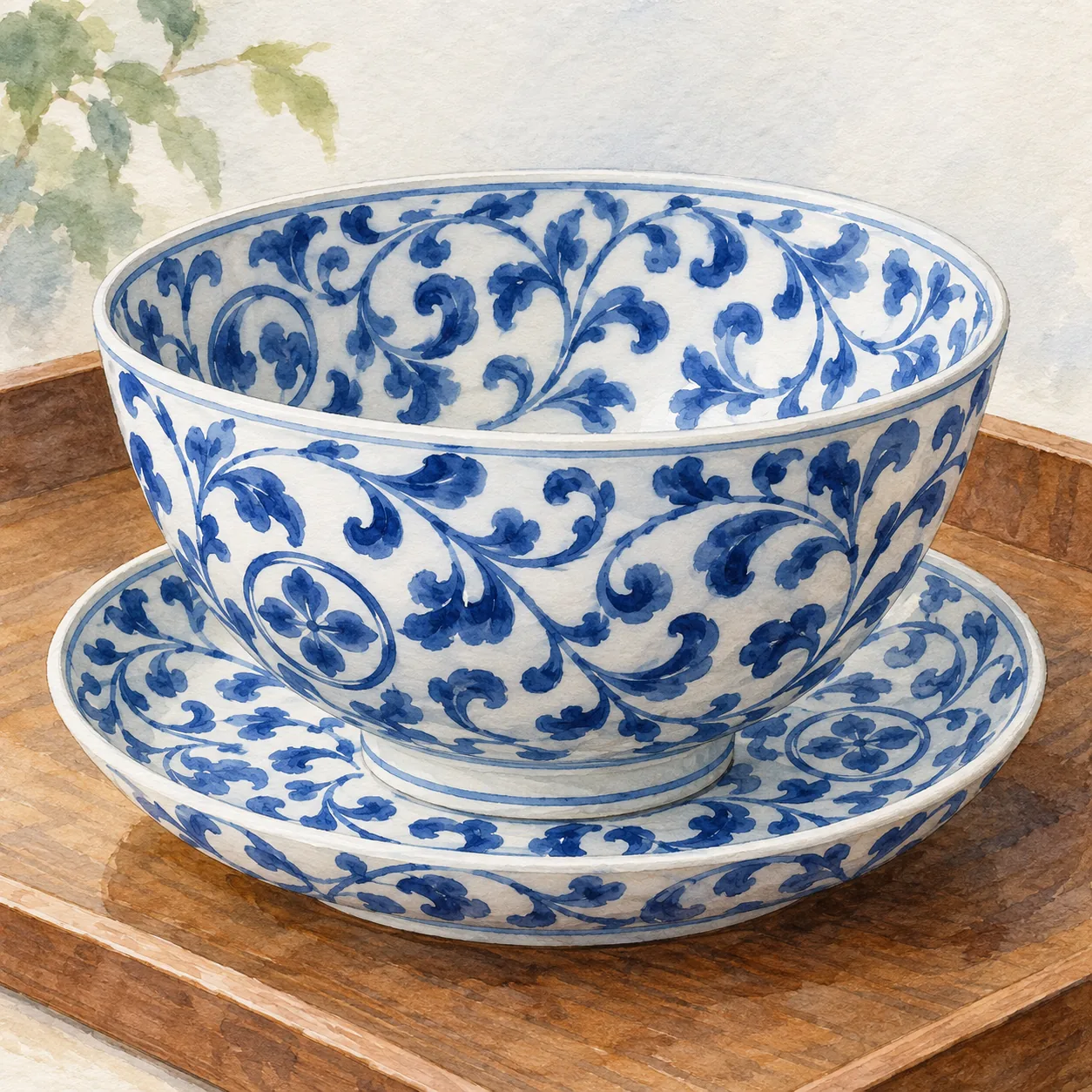
Its workshop is still a place where potters, proud of handwork, concentrate on every piece. Its karakusa (scrolling vine) pattern, painted densely by brush in indigo, is the classic look of Arita blue-and-white. These hand-painted pieces aren't for the dishwasher or oven — they're for washing by hand.
3. Fukagawa Seiji: A White You Can See Light Through
Fired to 1,350°C
The Fukagawa family has fired kilns in Arita since around 1650, and Fukagawa Seiji was founded by Fukagawa Chuji in 1894. Chuji sent a great vase to the 1900 Paris Exposition and won a gold medal; the company still supplies tableware to the Imperial household today.
Its signature is a vivid blue known as "Fukagawa blue" and a white porcelain so fine that it shows light through it. Fired at 1,350°C — higher than usual — the white comes out clear and the blue bright. The company names three things that set it apart: how it makes the clay body, its own mixed paints and painting, and that higher firing temperature.
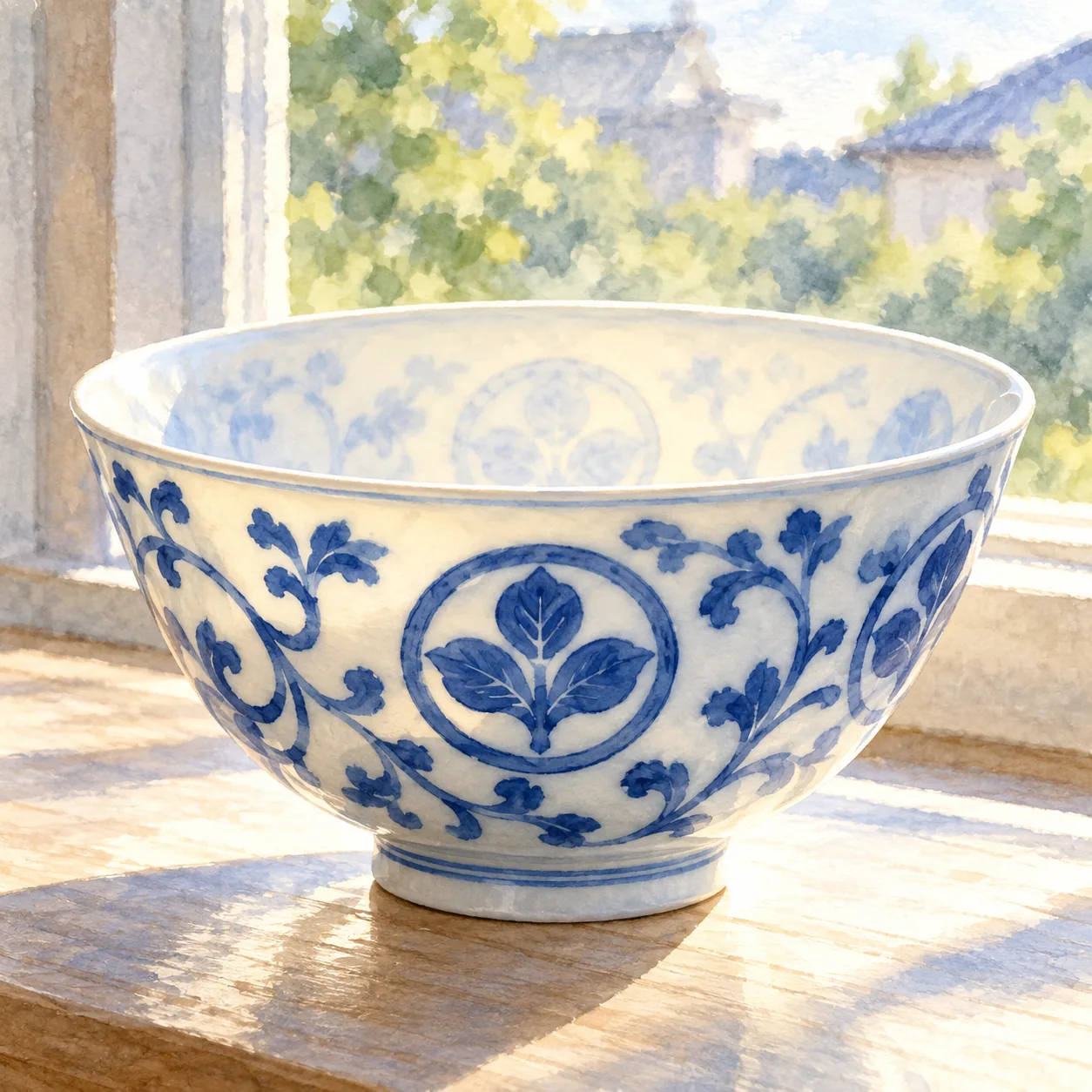
About 600 colours, mixed in-house
Its craftspeople can judge thickness down to a quarter of a millimetre by feel. With cobalt alone, its painters render the finest shading; the company has seven certified traditional craftspeople, and about 600 paint colours, almost all mixed in-house. Its trademark is Mount Fuji above flowing water.
Did you know: once a year, a wood-fired climbing kiln
To pass on porcelain-making as it was before gas and electricity, Fukagawa Seiji fires a traditional noborigama (climbing kiln) every year. The kiln reaches 1,350°C over roughly 30 to 50 hours, with craftspeople taking turns to tend the fire through the night.
4. Riso: Carving Patterns Where Arita Began
The "Ri" is for Ri Sampei
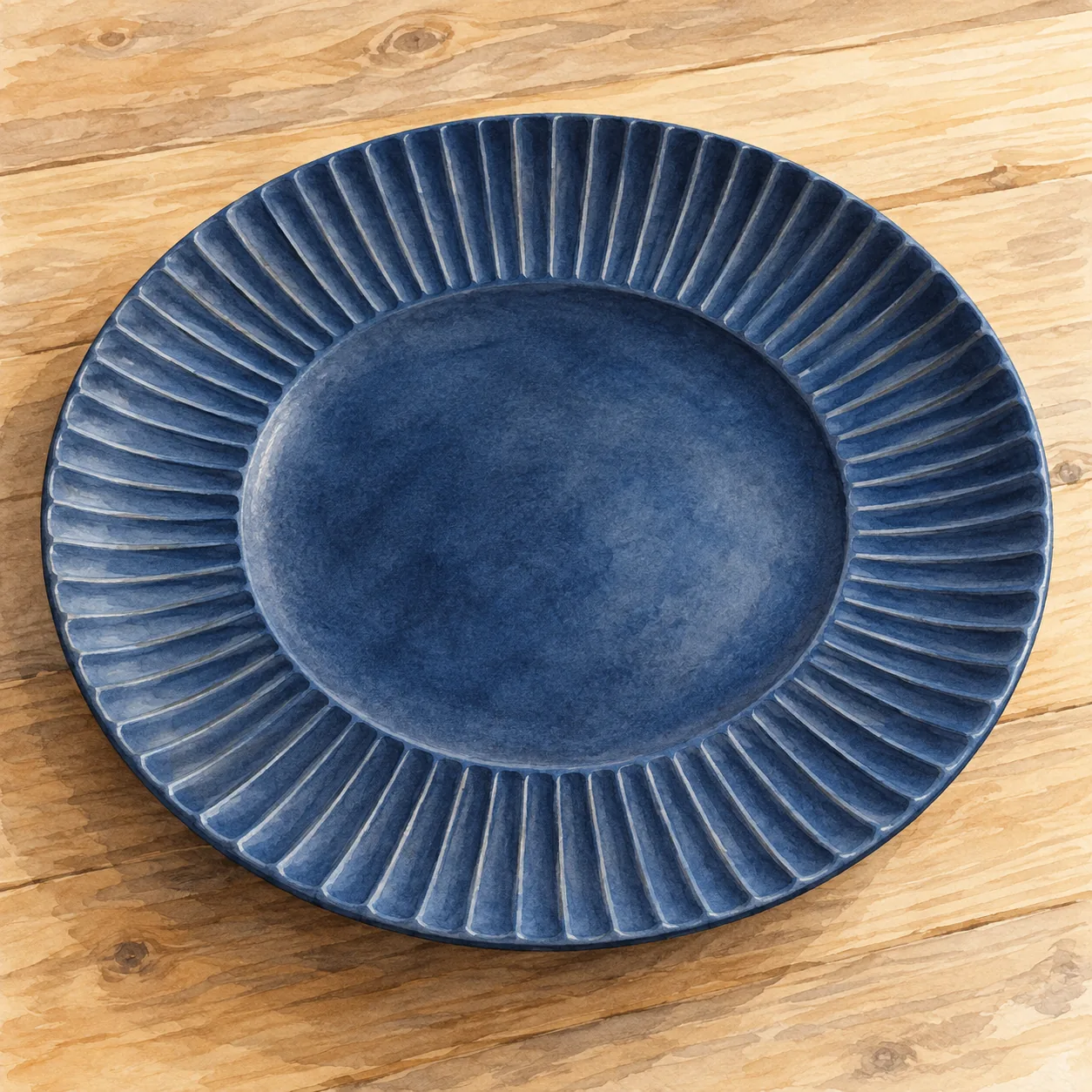
Riso kiln takes its name from Ri Sampei, the founder of Arita ware — it was established on the site of his former home. Now led by its fourth generation, Terauchi Shinji, it is devoted to blue-and-white and carries on traditional patterns such as Old Imari.
Its Shinogi series combines the traditional technique of carving lines into the clay (shinogi) with modern digital technology. Fine grooves run from rim to centre, catching light and shadow. The navy matte 24 cm (9.4 in) plate goes in the dishwasher and microwave.
5. 1616 / arita japan: Arita Without Glaze
Named for the year Arita began
The brand takes its name from 1616, the year Ri Sampei is said to have first made porcelain in Arita. It was launched in 2012 with designer Teruhiro Yanagihara as creative director, working with Arita's experienced craftspeople, and it brings in a new designer for each series. Its maker, Momota Toen, descends from the Momota family, who fired kilns under the Nabeshima domain's Arita office from 1647 to 1871. The brand was well received at its first Milan Salone and is now sold in more than 20 countries.
The TY Palace plates deliberately use no glaze. The surface is matte and slightly grippy, a warm pale grey — and they go in the oven, microwave and dishwasher.
1616 / arita japan TY Palace plates, grey (set of 6)
Unglazed Arita porcelain, designed by Teruhiro Yanagihara. A matte grey that looks good with bread and coffee as much as with Japanese food. Made in Japan.
1616 / arita japan TY Palace Plates, Gray (Set of 6)
Loading product details…
6. How to Choose: Dishwasher, Microwave and the Table You Want
1. For hard everyday use, check the dishwasher
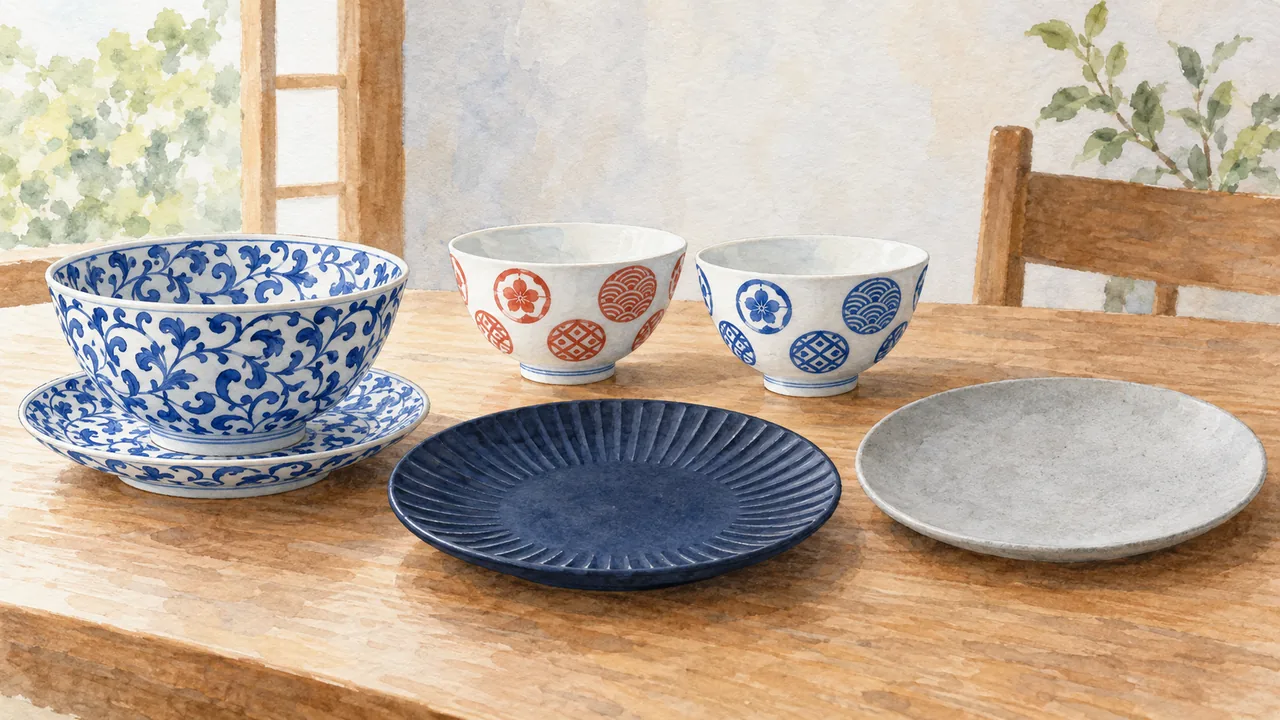
Riso's Shinogi plates and 1616's TY Palace go in the dishwasher and microwave, and TY Palace in the oven too. Fukagawa's everyday rice bowls can be dishwasher- and microwave-safe depending on the piece. Hand-painted Gen-emon pieces are for hand washing — the price of a brush-painted pattern.
2. Choose by the table you want
For classic Japanese blue-and-white, Gen-emon. For the white Arita is famous for, Fukagawa. For a modern carved texture, Riso. For something that sits as easily with toast as with rice, 1616. All four are Arita.
7. Buying From Outside Japan
- 1616 / arita japan: the TY Palace set in section 5 is on Amazon.com, listed as made in Japan, and the brand's English site lists shops and stockists in many countries.
- Fukagawa Seiji: has an English website; its online store is in Japan, and as of November 2026 it didn't list international shipping. Its own shops are in Tokyo, Osaka, Fukuoka, Saga and Arita.
- Gen-emon and Riso: sold through Japanese shops. If you live in Japan and pay resident tax, several Gen-emon and Fukagawa pieces are also offered as furusato nozei (hometown tax donation) gifts from Arita town.
- Look for "Arita" and "made in Japan" on the listing, and the kiln's name if you want a particular maker.
8. Frequently Asked Questions
When did Arita ware begin?
With the potter Ri Sampei, who found porcelain stone at Izumiyama in Arita after being brought from Korea at the end of the 16th century. The porcelain fired there is said to be the first made in Japan; 1616/arita japan takes its name from 1616, the year it is said to have begun.
What's the difference between Arita and Imari ware?
They're the same porcelain. Arita porcelain was shipped from the port of Imari, so it was also called Imari ware.
What is "Fukagawa blue"?
The vivid cobalt blue of Fukagawa Seiji. Fired at 1,350°C on a white porcelain body so fine it shows light through, it comes out clear and bright.
Is Arita porcelain dishwasher-safe?
It depends on the piece. Riso's Shinogi plates and 1616's TY Palace are dishwasher-safe; Gen-emon's hand-painted pieces should be washed by hand. Check each product's notes.
What is shinogi?
A traditional technique of carving lines into the clay to create a pattern. Riso kiln combines it with modern digital technology in its Shinogi series, so light and shadow play across the grooves.
What Arita piece makes a good gift?
A pair of Fukagawa rice bowls or a set of 1616 plates. Fukagawa's Paris gold medal and its tableware for the Imperial household give it a story to tell; 1616's modern design suits any kitchen.
Final Thoughts: A White That Light Shines Through
Arita is where Japanese porcelain began, and its Kakiemon and Old Imari wares once captivated Europe.
Gen-emon paints Old Imari indigo by hand, as it has since 1753. Fukagawa Seiji fires a white you can see light through and a blue that won gold in Paris in 1900. Riso carves patterns on the site where Arita began. And 1616 / arita japan takes the glaze away for the modern table.
Hold a piece of Arita up to the window — and see four hundred years of white.
Hasami vs Arita: Japanese Porcelain Compared

Japanese Pottery Guide: Arita, Mino & Hasami Ware Ceramics