The most important thing about soba, for anyone reading this in English, is that it is
usually not gluten-free.
Buckwheat is not wheat and contains no gluten — but buckwheat alone barely holds
together, so almost all commercial soba has wheat flour added to bind it.
Only juwari soba, made from 100% buckwheat, is free of wheat, and even
that is frequently made in facilities that handle wheat as well.
If you have coeliac disease, that paragraph is the whole article. If you do not,
read on — because the version with wheat in it is, for most purposes, the better noodle.
Quick Reference: The Ratios
| Type | Buckwheat | Wheat? | Character |
|---|---|---|---|
| Juwari 十割 | 100% | None | Strongest aroma. Fragile, breaks easily |
| Nihachi 二八 | 80% | Yes, 20% | The standard. Easiest to cook well |
| Sarashina 更科 | Refined centre | Usually | Pale, fine, delicate |
| Inaka 田舎 | Whole grain | Usually | Dark, coarse, strong flavour |
| Sarashina and inaka are about the grind, not the ratio — white flour versus wholemeal, essentially. Either can be juwari or nihachi. | |||
⚠ The Gluten Question, Properly Answered
Soba appears on a great many gluten-free lists, and it should not be there without a large asterisk.
Buckwheat is not a wheat. It is not even a grass — it is related to rhubarb and
sorrel, and it contains no gluten.
But gluten is what makes dough stretch and hold together, and without it
buckwheat dough crumbles. So the standard commercial fix is to add wheat flour,
typically twenty percent, purely as a binder.
That means most soba on most shelves contains wheat, and nothing about the
appearance of the noodle tells you so.
What to look for if it matters medically
- The words juwari or "100% buckwheat" on the packet. That is the only version made without wheat flour.
- An ingredients list of two items — buckwheat flour and water. If there is a third, read it.
- A certified gluten-free mark, if you are coeliac. Juwari soba is often produced in facilities that also handle wheat, so "100% buckwheat" describes the recipe rather than the factory.
- ⚠ In restaurants, ask. Soba is commonly cooked in water shared with wheat-based noodles, which contaminates it regardless of what the noodle itself contains.
None of this is a criticism of soba. The wheat is there for a good reason and has been for centuries. It is simply that the English-language shorthand — "buckwheat noodles, so gluten-free" — is wrong often enough to matter.
Why 100% Is Not the Best One
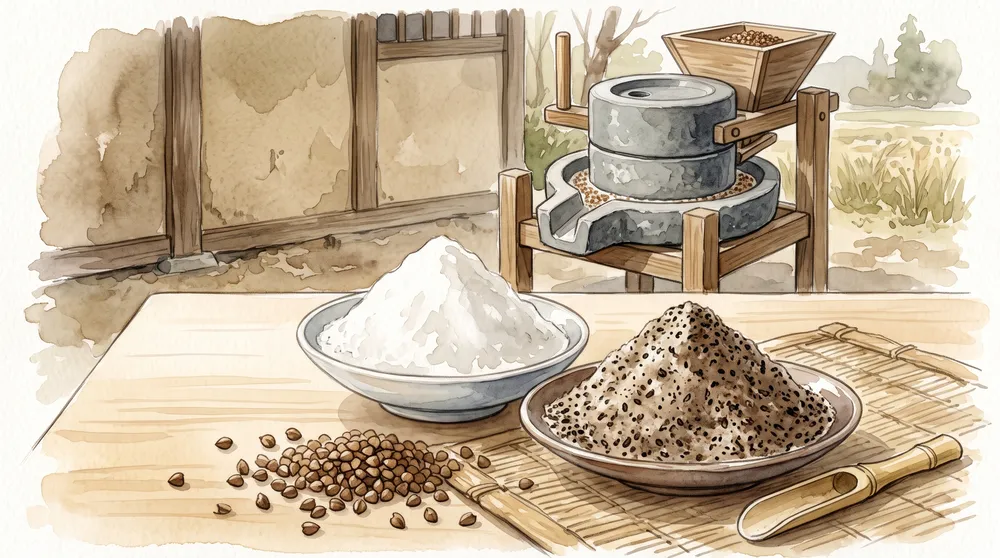
The natural assumption is that juwari — pure buckwheat — is the premium version and nihachi is the cheap compromise. That is not how soba makers see it.
Juwari has the strongest aroma and the most buckwheat flavour, and it is genuinely difficult. Without gluten there is nothing holding the strand together, so the dough is unforgiving to work, the noodles are fragile, and they break up in the pot if you cook them a moment too long.
Nihachi — eight parts buckwheat to two parts wheat — is the standard because it works. The dough is cohesive, the noodle survives boiling, and it still tastes emphatically of buckwheat.
So the honest recommendation splits.
If you need to avoid wheat, buy juwari — and accept that it demands attention at
the stove.
If you do not, buy nihachi. It is easier to cook well, more consistent, and for
a first encounter with soba it will give you a better meal.
Juwari is the enthusiast's noodle, not the upgrade.
White Flour and Wholemeal: Sarashina vs Inaka
The second variable is how the buckwheat was milled, and it maps almost exactly onto white versus wholemeal flour.
- Sarashina — the refined centre of the grain. Nearly white, fine, delicate, faintly sweet. The elegant one, and the one that shows what a dipping sauce is doing.
- Inaka — milled with the hull. Dark grey-brown, flecked, coarser and thicker, with much more of the buckwheat's earthy, nutty character. The rustic one, and the one most people mean when they say soba tastes of something.
This is independent of the wheat ratio. A sarashina can be juwari; an inaka can be nihachi. The two variables are the grind and the binder, and a packet may tell you about either, both, or neither.
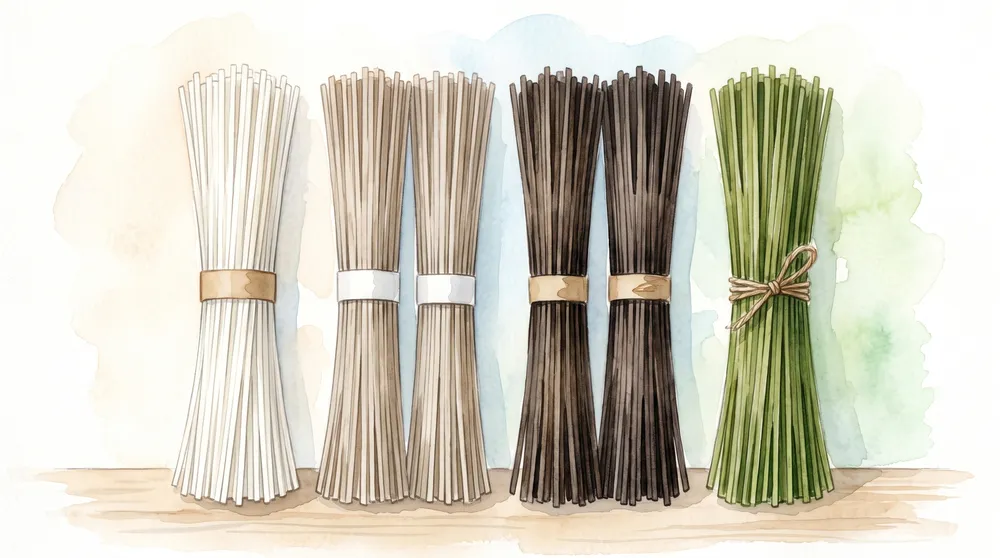
The colour in the packet tells you which you have, so this is the one
specification you can check without reading anything. Pale is refined; dark and speckled
is whole grain.
Start with something in the middle — a standard buckwheat-coloured noodle —
before deciding you prefer one extreme.
Why Japanese — The Three Great Soba Regions
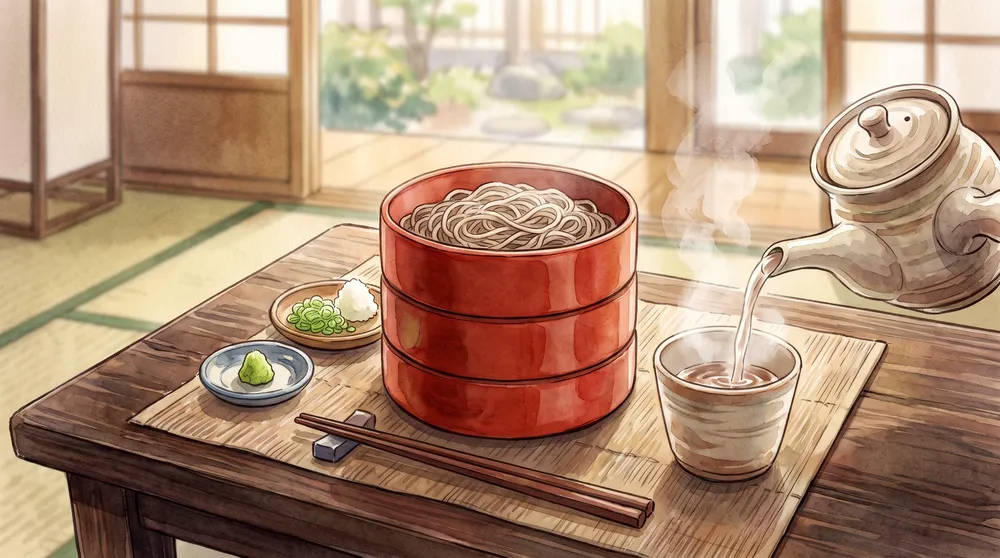
- Togakushi, Nagano. The classic. Nagano is Japan's reference soba region, and Togakushi soba is served in small coiled bundles on a woven bamboo tray. If you buy one soba and want the standard, buy something from Nagano.
- Izumo, Shimane. Milled with the hull on, so it is dark and strongly flavoured — and served in a way nobody else does, described below.
- Hegi, Niigata. Bound with funori seaweed instead of wheat, which gives it an unusually smooth, elastic texture. Covered in detail in our dried noodle guide.
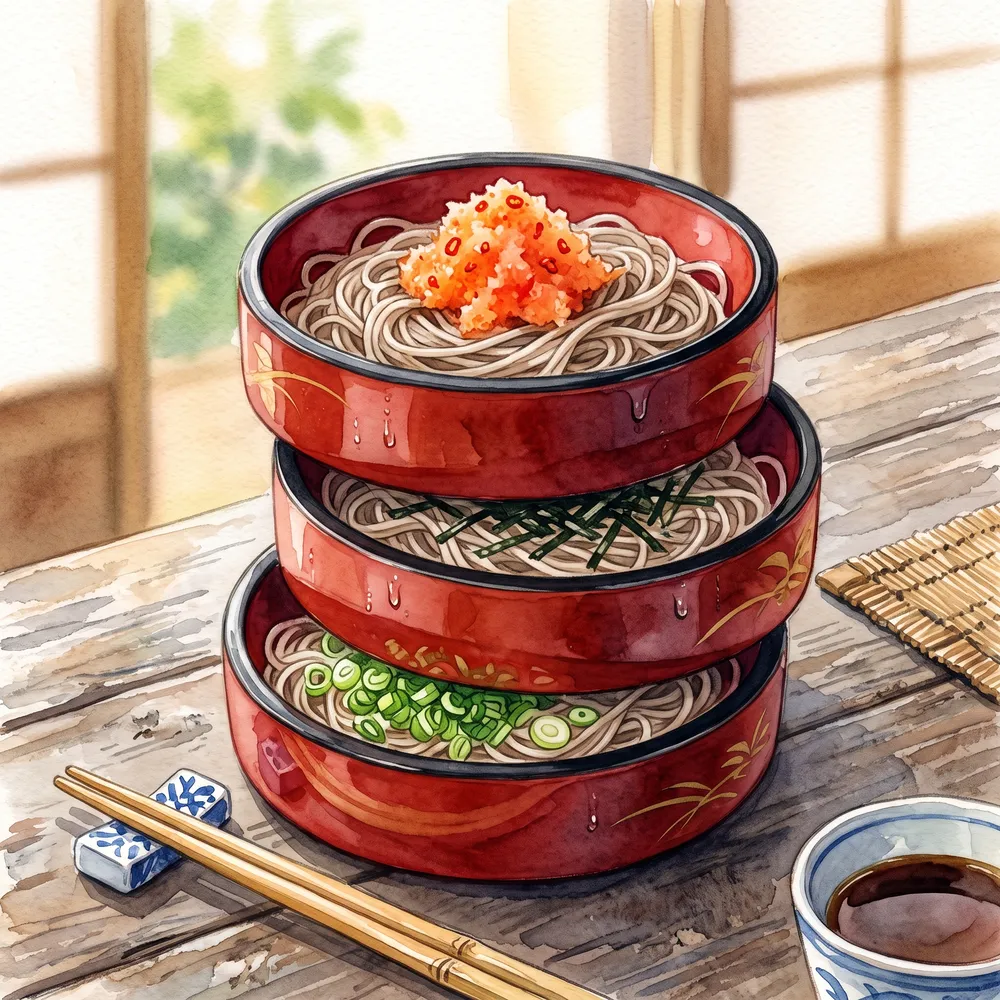
Izumo's warigo, and how to eat it
Warigo soba is served in three round lacquer bowls stacked on top of one another,
a Shimane presentation going back to the Edo period.
You do not dip. You pour dipping sauce directly onto the top bowl, eat it, and
then tip whatever sauce is left into the next bowl down before adding a little
more. Each bowl is therefore stronger than the last, and different toppings in
each make the meal change as you work down the stack.
Cooking It, and the Water You Keep
- Plenty of water, no salt. Soba dough is unsalted and does not need it in the pan either — plain boiling water, and a lot of it, so the temperature does not crash.
- Stir once at the start, then leave it alone. Juwari in particular breaks if you keep prodding it.
- Time it and taste early. Packet times are a guide; the window is narrow and juwari's is narrower.
- Rinse in cold water and rub gently. This washes off the surface starch and stops the cooking. Skipping it leaves the noodles slippery and clouds the sauce.
- ⚠ Keep the cooking water. Do not tip it down the sink.
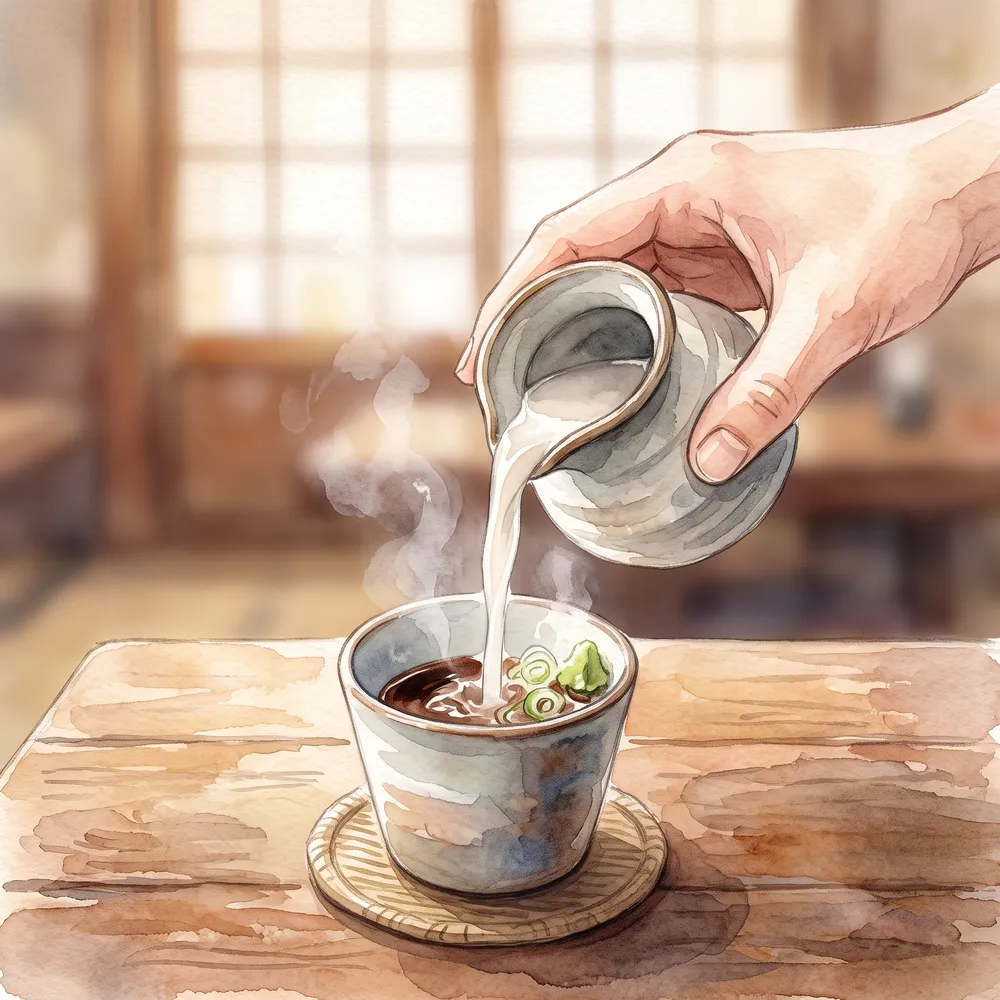
Sobayu: the last course
The water soba was cooked in is cloudy with buckwheat, and in Japan it is drunk at the end of the meal. Soba restaurants bring it to the table in a small lacquer pot without being asked.
The method matters: you do not drink it plain. When the noodles are finished and you have dipping sauce left in the cup, pour the hot cooking water into that sauce and drink it as a thin broth.
It is a genuinely good ending — savoury, faintly nutty, and it uses up the sauce rather than throwing it away. It is also the single most common thing people outside Japan pour away without knowing.
What to Buy
Juwari — if you need no wheat
Two ingredients: buckwheat flour and water. Most of what reaches
English-language shops is milled in Hokkaido or Nagano, and the good ones state the origin of
the buckwheat as well as the country of manufacture.
Cook it carefully. Set a timer, taste a strand a minute early, and handle it
gently in the colander — this is the noodle that punishes inattention.
- Buckwheat
- 100%. No wheat flour
- Ingredients
- Buckwheat flour, water
- Coeliac
- Check for a certified GF mark
- Cooking
- Fragile — do not over-boil
Nagano soba — the one to start with
Nagano is the reference region, and a standard dried soba from there is the
sensible first purchase: forgiving to cook, clearly buckwheat-flavoured, and cheap enough to
experiment with.
Look for a stated buckwheat percentage. Better makers print it; the ones
that do not are usually lower in buckwheat than you would like.
- Look for
- A stated buckwheat ratio
- Region
- Nagano, or Shimane for a darker style
- Colour
- Pale = refined; dark and flecked = whole grain
- Cooking
- Forgiving. Still rinse it cold
Buy a bottle of concentrated mentsuyu at the same time. Soba dipping
sauce is dashi, soy and mirin, and making it from scratch for your first attempt is a lot of work
before you know whether you like the noodles.
The named regional producers — Togakushi, Izumo — do not appear to sell into
English-language retail directly, so look for the prefecture on the packet rather than
hunting a brand.
Frequently Asked Questions
Are soba noodles gluten-free?
Usually not. Buckwheat contains no gluten, but most soba has wheat flour added
as a binder — commonly twenty percent.
Only juwari (100% buckwheat) is made without wheat, and if you are
coeliac you should also want a certified gluten-free mark, because juwari is often produced
alongside wheat products.
Is juwari better than nihachi?
Stronger, not better. Juwari has more buckwheat aroma and is fragile — it breaks
in the pot and demands precise timing.
Nihachi is the standard because it works: cohesive, reliable, and still
emphatically buckwheat. For a first soba it is the better meal.
What is the difference between sarashina and inaka?
The milling. Sarashina uses the refined centre of the grain and is pale, fine
and delicate; inaka is milled with the hull and is dark, coarse and much stronger tasting.
It is white flour versus wholemeal, and it is independent of how much wheat is in
the noodle.
What is sobayu and how do I drink it?
The cloudy water the soba was boiled in, drunk at the end of the meal. Do not
drink it on its own.
Pour it into the dipping sauce you have left and drink that as a thin broth. It
finishes the sauce rather than wasting it, and it is the step almost everyone outside Japan
misses.
Should I salt the cooking water?
No. Soba dough is unsalted and the noodle is seasoned by the dipping sauce, not
the pan.
Use a lot of plain water so adding the noodles does not drop the temperature —
that matters more than anything you could add to it.
How should I store dried soba?
Cool, dark and dry, away from anything strongly scented. It keeps for a long
time unopened.
Unlike hand-stretched somen, soba does not improve with age — buckwheat aroma
fades, so buy what you will use within a few months rather than stockpiling it.
Final Thoughts: Read the Packet, Keep the Water
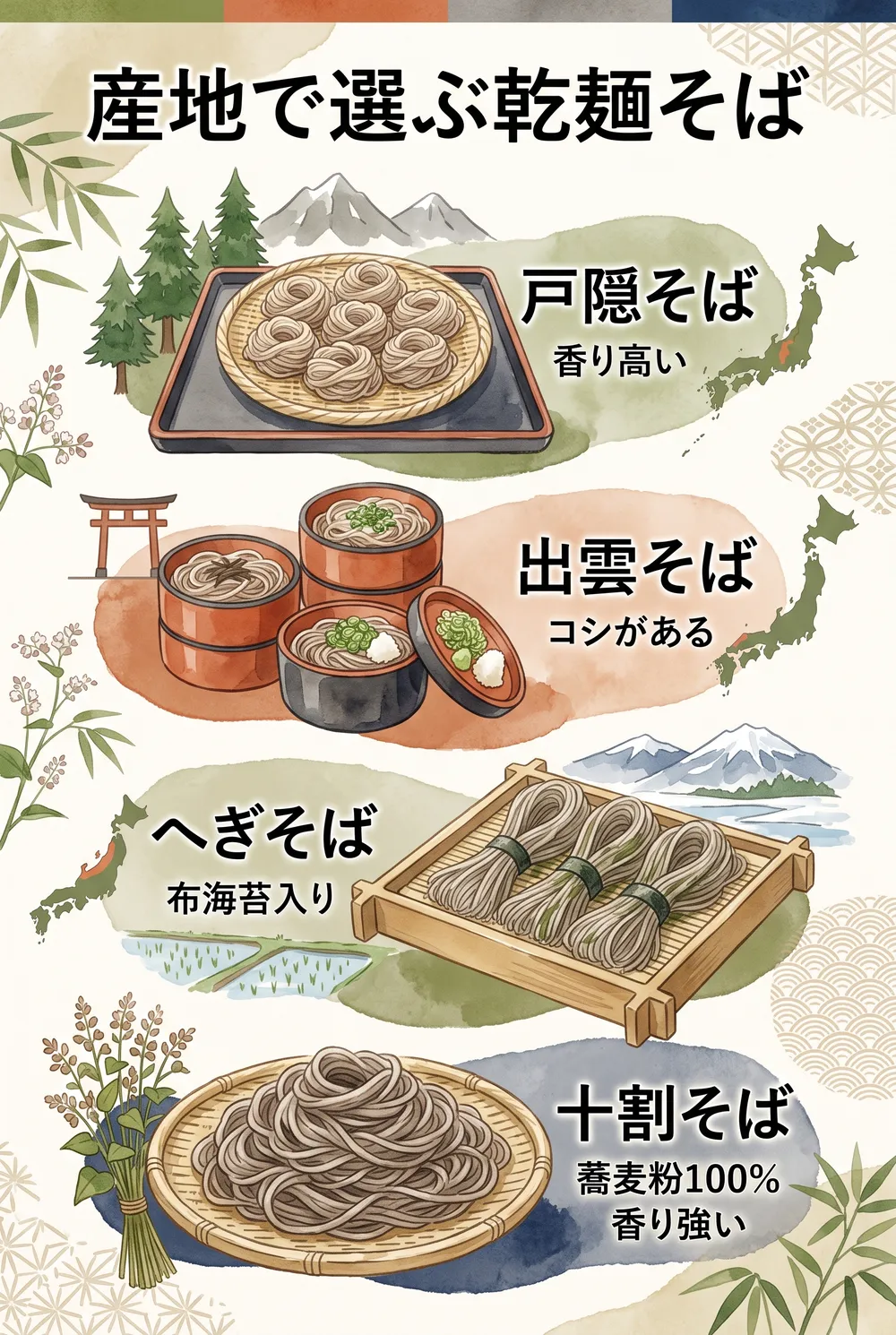
Two numbers decide what you are buying: how much buckwheat, and how finely it was milled. Everything else — region, brand, price — sits on top of those.
If wheat is a medical problem, juwari and a certified mark, and ask in restaurants. If it is not, buy nihachi and cook it properly.
And keep the cooking water. It goes into the leftover dipping sauce at the end, and it is the part of the meal nobody tells you about.
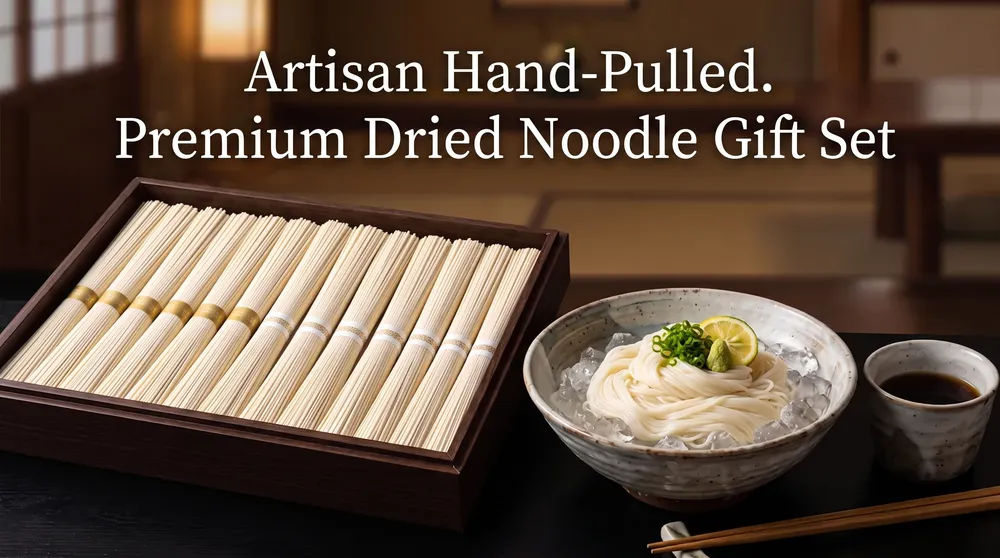
Japanese Dried Noodles: The Ones That Improve with Age
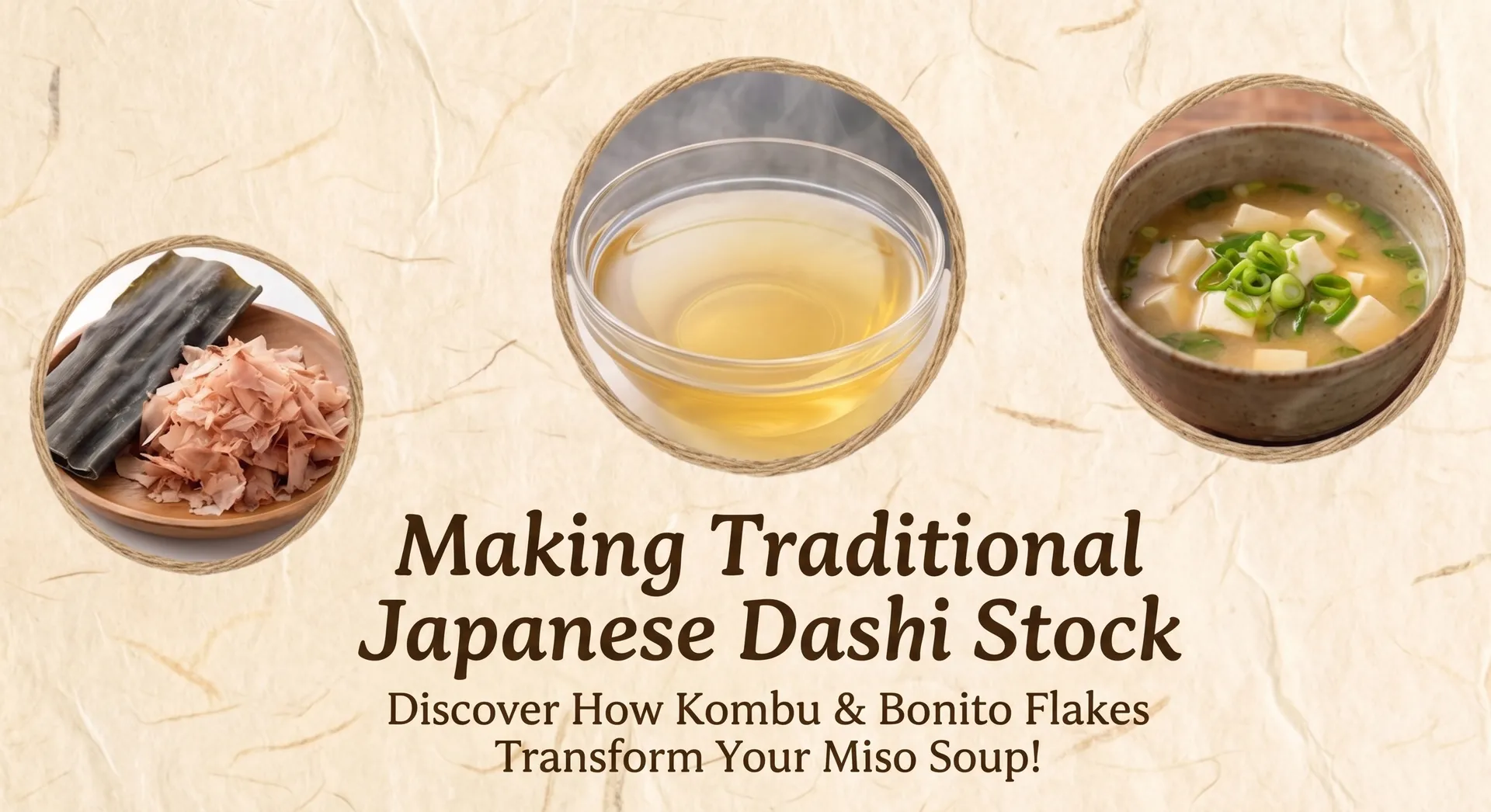
How to Make Japanese Dashi: Kombu & Katsuobushi in 4 Steps