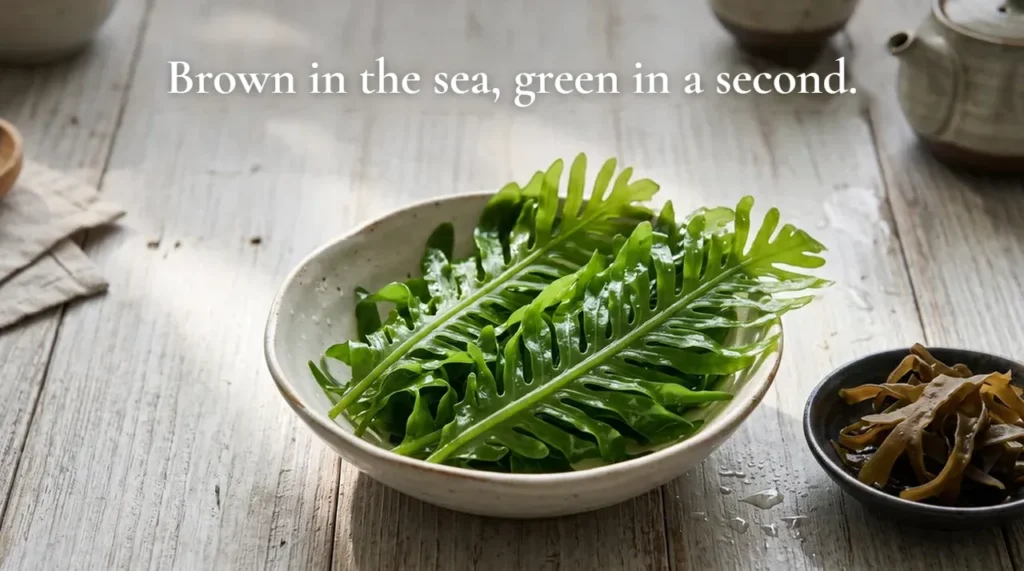
In the sea, wakame is brown. Dip it in hot water and in seconds it turns that vivid green.
Buy fresh wakame in early spring — the only time it's sold in Japan — and you can watch it happen in your own kitchen. A brown frond, a few seconds in boiling water, and it's green. You know it's coming, and it still surprises you every year.
This guide covers how Sanriku and Naruto wakame differ, the leaf, stem and mekabu, small tricks that change how wakame tastes, and two rare dried wakames: itawakame, recorded in a chronicle from 733, and Naruto's charcoal-dried wakame — plus where to find Japanese wakame outside Japan.
Quick Reference: Japanese Wakame at a Glance
| Wakame | Character | Best for |
|---|---|---|
| Fresh wakame (Feb–May) ▾ | Brown until it hits hot water | Shabu-shabu with ponzu |
| Sanriku (Miyagi, Iwate) ▾ | Thick, soft | Miso soup, simmered dishes |
| Naruto (Tokushima) ▾ | Short stems, firm bite | Salads, sunomono |
| Itawakame (Izumo, Shimane) ▾ | Sheet-dried, no seasoning | Toasted, crumbled over rice |
| Charcoal-dried (Naruto) ▾ | Never heated; springy | When you see it, buy it |
| Kuki wakame / mekabu ▾ | Crunchy stem / sticky root | Pickles; over rice or tofu |
Click a name to jump to it.
1. Spring-Only Fresh Wakame: The Moment It Turns Green
If you see "nama wakame" (fresh wakame) in a Japanese supermarket, spring has arrived. It's sold only from about February to May: wakame sprouts around November, grows through the winter sea, and is harvested now.
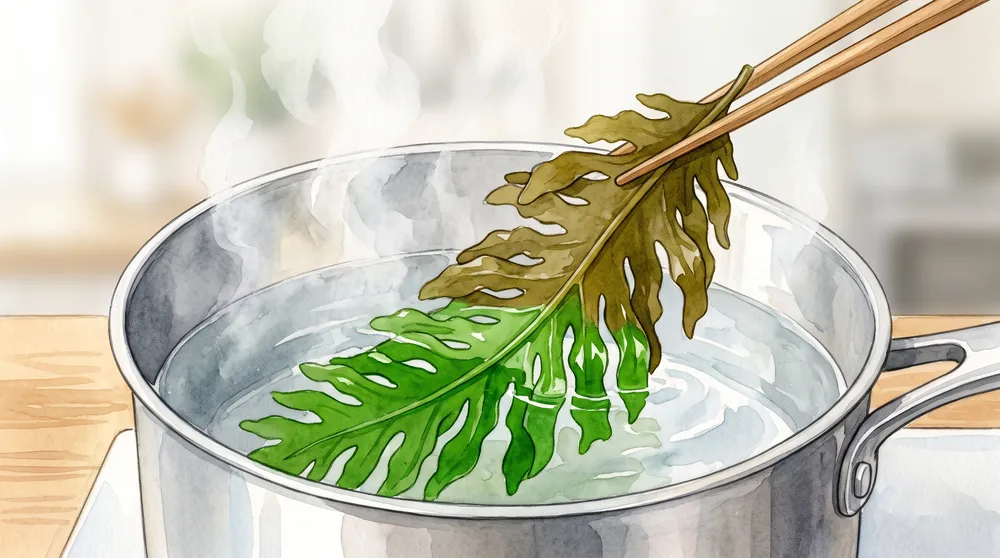
Open the bag and it's usually brown. It hasn't gone bad; brown is wakame's natural color in the sea.
Why does it turn green in hot water?
Wakame contains a brown pigment, fucoxanthin, bound to proteins. Heat breaks that bond, and the green of the chlorophyll the seaweed already has comes to the front. Strictly, the brown is a blend of five pigments — fucoxanthin, chlorophyll a and c, beta-carotene and brown-algae tannins — and heating tips the balance to green. Nothing is added; a hidden green appears, which is why it takes seconds. Into boiling water, out when green, into cold water — that's all the prep. Salted and cut wakame have already been blanched, so only fresh wakame shows you this, once a year.
The best treat: shabu-shabu
If you get fresh wakame, bring a pot of water to a boil, swish a piece through with chopsticks, and eat it the moment it turns green — with ponzu or vinegared miso. The aroma is completely different: dried wakame has a scent, but fresh wakame smells clearly of the shore.
2. Sanriku and Naruto Are Different Wakame
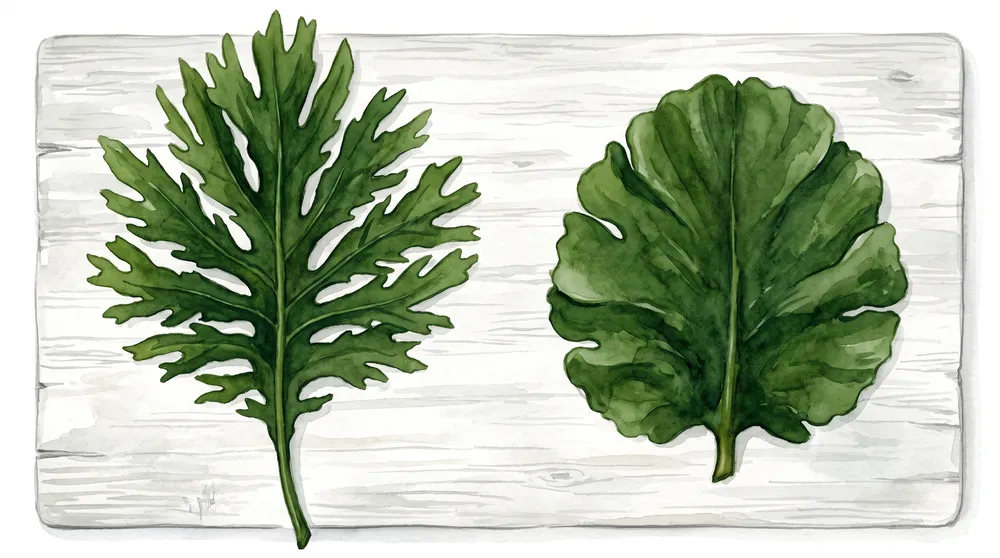
Japan's main wakame regions are Miyagi, Iwate and Tokushima — in 2024 they produced 44%, 31% and 9% of the country's farmed wakame. Miyagi and Iwate together are Sanriku; Tokushima's is Naruto. Same name, different sea, different shape, different bite.
Sanriku wakame grows thick in rough winter waves, where the cold Oyashio current brings nutrients from the north and meets the warm Kuroshio. It's soft, and in soup it settles into the broth — the natural choice for everyday miso soup.
Naruto wakame grows in the racing currents of the Naruto whirlpools. Holding fast against them, its stems stay short and firm, and it gives back a crisp bite — at its best where texture defines the dish, like salads and sunomono.
Neither is better; it depends on the use. Try Sanriku in miso soup and Naruto in a vinegared salad, and they hardly seem like the same food.
3. Leaf, Stem and Mekabu: One Plant, Three Parts
Japanese stores sell "wakame," "kuki wakame" and "mekabu" separately. They aren't different seaweeds — they're different parts of the same plant.
- Wakame (leaf) — the fluttering blade; what's usually sold
- Kuki wakame (stem) — the midrib through the leaf, with a crunchy bite; sold as tsukudani and pickles
- Mekabu — the ruffled part near the base; the sporophyll, where the next generation comes from. Chopped, it turns strongly sticky
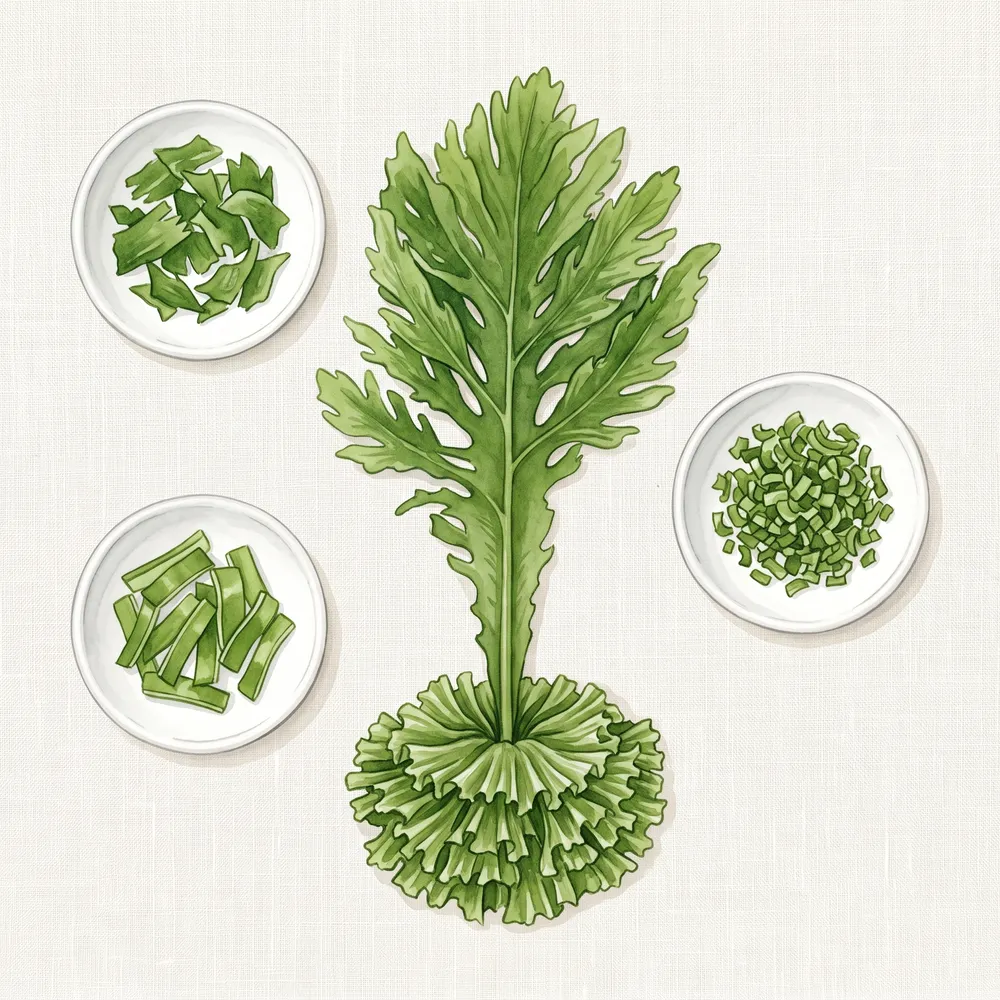
That slipperiness has a name
The slippery feel of rehydrated wakame comes from fucoidan and alginic acid, polysaccharides found in brown seaweeds like wakame and kombu. Mekabu is stickier than the leaf because it has more of them, and the finer you chop it, the more comes out — which is why people bother to mince it with a knife.
Wakame isn't a stock seaweed
Kombu is "for stock"; wakame is "for eating." The reason is umami: wakame has only about 2–50 mg of glutamate per 100 g, orders of magnitude less than kombu. That's a strength, not a weakness. Wakame doesn't fight other flavors — it leaves the miso's aroma in miso soup and the vinegar's edge in sunomono. So with wakame, texture and aroma are the stars.
Wakame also takes in seawater through its leaf surface rather than drawing nutrients through roots, so the minerals dissolved in the sea — magnesium, calcium, iron, iodine — end up in the leaf.
4. Small Tricks That Make Wakame Taste Better
① In miso soup, add it after the miso
This makes the biggest difference. Boil wakame and its aroma fades, its color dulls and its texture goes limp. Make the dashi, cook the other ingredients, lower the heat and dissolve the miso — then add the wakame and turn off the heat once it's warm. The green stays bright and the aroma stays. Rehydrate dried wakame first and add it last.
② Wakame and bamboo shoots are "deai-mono"
Wakatake-ni is wakame simmered with bamboo shoots. Both are at their best in spring, and pairings like this are called "deai-mono" — things that meet in the same season and taste right together. Use the liquid from parboiling the bamboo shoots to cook the wakame.
③ Toast itawakame and crumble it over rice
Itawakame (more in section 5) can be eaten straight from the bag, crisp like nori. Toast it lightly and its aroma rises; crumble it over hot rice and you hardly need another dish — no salt or seasoning added, yet full of flavor.
④ The more you chop mekabu, the stickier it gets
Mince mekabu finely, then put it over rice or chilled tofu with a little soy sauce. Blanch before chopping and it turns green and gets stickier. Seasoned packs are convenient, but fresh or frozen mekabu you chop yourself is far stickier.
⑤ Don't over-soak salted wakame
The point of salted wakame is its near-fresh texture, and long soaking draws that out along with the salt. Rinse, soak about five minutes, and taste. Stop while a little salt remains and adjust the seasoning of the dish instead.
5. Why Japanese: Itawakame and Charcoal-Dried Wakame
Wakame products usually means dried wakame and mekabu packs. But Japan's wakame regions keep more interesting things — one named in a 1,300-year-old record, one now made by only a handful of producers.
Itawakame (menoha): recorded in the Izumo Fudoki
In Shimane it's called "menoha." Its use is already recorded in the Izumo no Kuni Fudoki, completed in 733, and at Hinomisaki Shrine in Taisha, Izumo, the mekari ritual of wakame harvesting is still performed. It was also presented to Emperor Showa (Japan's Ministry of Agriculture, "Nippon Traditional Food Encyclopedia").
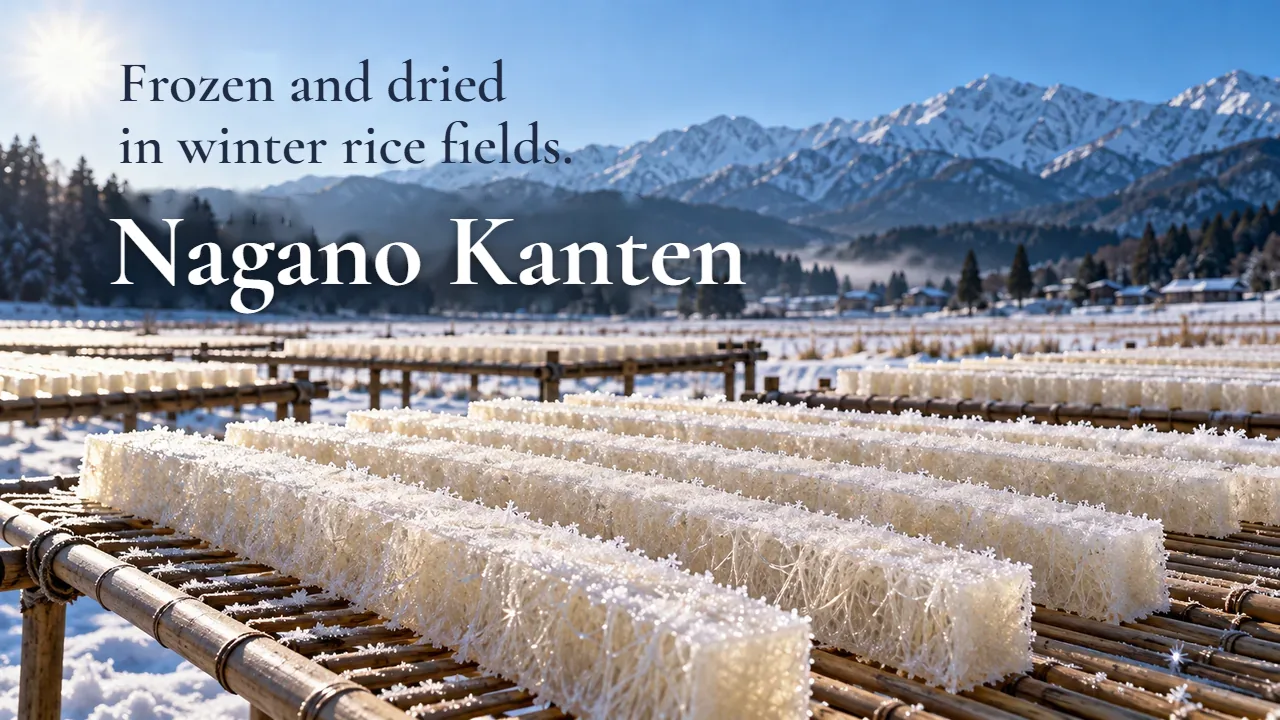
The method is unique: within four hours of harvest the wakame is carefully hand-washed, spread leaf by leaf on bamboo-blind boards, and dried slowly at low temperature for 24 hours. Nothing is added or cooked — the only salt is from the seawater it was washed in. Harvested March to May; the new shoots of March and April are said to be the best.
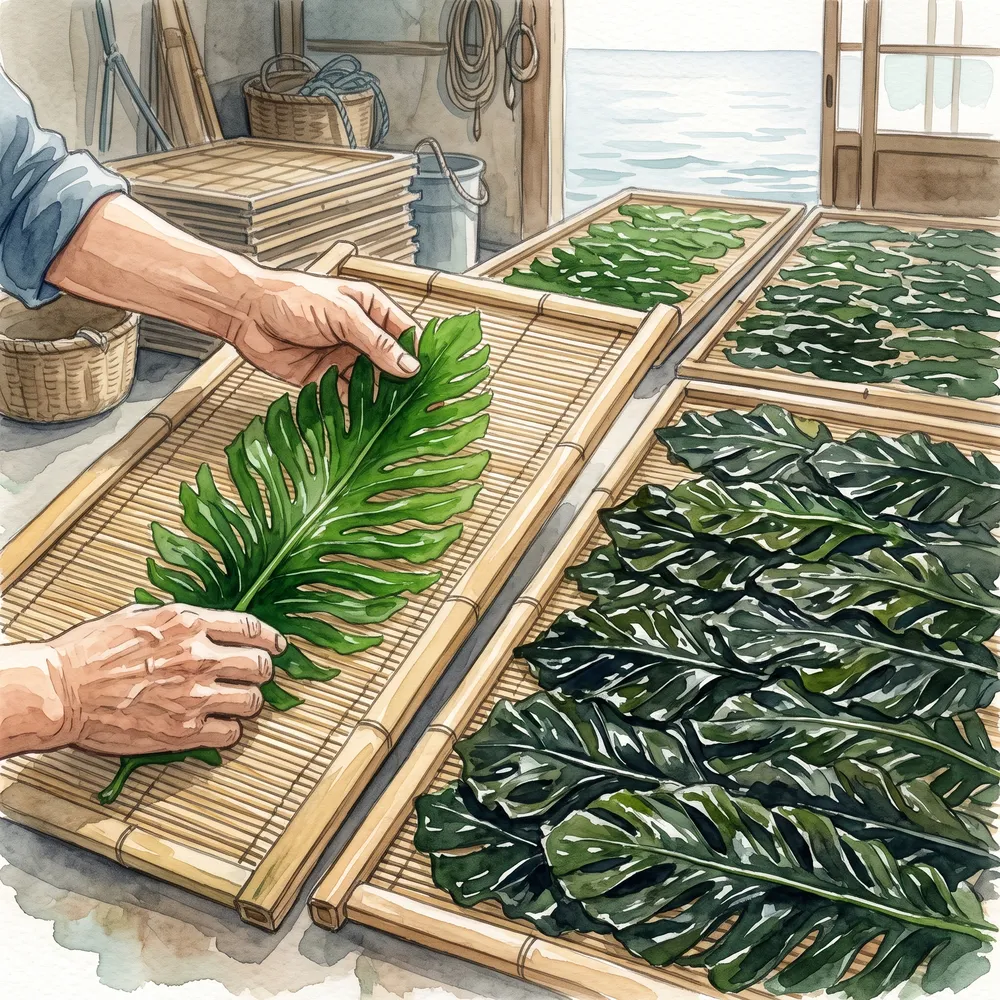
Charcoal-dried wakame: green without heat
From Naruto, there's sumiboshi (charcoal-dried) wakame. It descends from "haiboshi" (ash-dried) wakame, said to have been devised in the early 19th century by Maekawa Buntaro (1808–1882) of Satoura, Naruto: freshly harvested wakame dusted with wood ash and dried. The ash removed bitterness and kept the wakame from softening — a way to keep bright wakame at room temperature before refrigeration.
Wood-ash haiboshi is no longer made. According to a Naruto producer, good wood ash became hard to obtain, and the wastewater from processing was hard to treat, so production stopped under government guidance. Its improved successor is charcoal-drying, with activated charcoal in place of wood ash — the ingredients read "wakame / activated charcoal."
Charcoal-dried wakame is never put in hot water
Section 1 said wakame turns green in hot water. Charcoal-dried wakame is never heated at all: brown wakame straight from the sea is dusted with charcoal and sun-dried for days from mid-February until the stems are dry — and it turns green. The charcoal's alkalinity is thought to draw out the chlorophyll's green and suppress the enzyme that breaks down alginic acid, so the wakame keeps its spring. The producer says that because it's never heated, it keeps wakame's natural resilience, crisp bite and sea aroma. Both names, "sumiboshi" and "haiboshi," are still used on packages; if the ingredients say "activated charcoal," it's the same thing. To prepare: rinse off the charcoal under running water, soak in ice water about five minutes, drain and pat dry. A little leftover charcoal is harmless, the packaging notes.
Sanriku wakame (blanched and salted)
The first bag to buy. From Miyagi and Iwate: thick, soft and easy in miso soup and simmered dishes, with a near-fresh texture because it's salted. Don't over-soak it. Sold in Japan.
Naruto ito-wakame (Tokushima-certified)
For bite. The classic Naruto form is ito-wakame ("thread wakame"): boiled and dried, then separated by hand into leaf and stem and split finely with a needle before drying again. It swells about tenfold in five minutes in cold water. Look for Tokushima Prefecture's Naruto wakame certification mark (the Sudachi-kun character). Sold in Japan.
Itawakame (menoha, Shimane) and charcoal-dried ito-wakame (Naruto)
Itawakame: additive-free, eaten as is; toast and crumble over rice. A fine gift. Charcoal-dried: springy and aromatic — made by few producers and not always available, so buy it when you see it. Both sold in Japan.
6. Choosing and Storing: Read the Back of the Bag
Look at origin and method, not mood words
In Japan, country-of-origin labeling is mandatory for wakame, so "domestic," "Sanriku" or "Naruto waters" is always stated somewhere on the back. The front design and product name are separate from that; read the back. You won't find words like "natural" on wakame labels — they're not used for it — so look at origin and method instead.
Storage depends on the type
- Dried wakame, itawakame — airtight, at room temperature. Moisture spoils the rehydration and the aroma
- Salted wakame — in the fridge, still salted; desalt only what you'll use
- Fresh wakame — doesn't keep. Blanch it the same or next day, then use or freeze
Behind the price tag
Japanese wakame costs more than imports — that's true. In Iwate, farmed wakame production that once topped 40,000 tonnes is now under 20,000, and the prefecture's researchers point mainly not to the sea but to fewer people farming it. Halved production means that if buyers disappear, the wakame disappears too. Itawakame and charcoal-dried wakame are within reach now; whether they're still on shelves in ten years depends on today's purchases.
7. Buying Japanese Wakame Outside Japan
Much of the wakame sold abroad comes from elsewhere, and the Sanriku and Naruto products above are sold in Japan. One Japanese wakame that's easy to find in the US is Eden's: cultivated off the shores of Ise-Shima, Japan, hand-harvested and sun-dried, according to Eden.
Eden Wakame, Sun-Dried (2.1 oz)
Whole-leaf wakame from Ise-Shima, Mie, hand-harvested from January to April and sun-dried. Soak briefly and cut — for miso soup and salads.
Eden Wakame, Sun-Dried (2.1 oz)
Loading product details…
At a Japanese grocery store, look for 国産 (domestic), 三陸産 (Sanriku), 鳴門 (Naruto), 板わかめ (itawakame) and 炭干し / 灰干し (charcoal- or ash-dried) on the label.
8. Frequently Asked Questions
My fresh wakame is brown. Has it gone bad?
No — that's its natural color, from the pigment fucoxanthin. A few seconds in boiling water turns it green as heat breaks the pigment's bond with proteins and the chlorophyll shows. Lift it out as soon as it's green and cool it; overcooking spoils the texture.
Sanriku or Naruto — which should I buy?
Decide by the dish. Miso soup, simmered dishes and dressed salads: Sanriku, thick and soft. Salads and sunomono: Naruto, firm and crisp. If unsure, start with Sanriku — it suits more uses.
How do you eat itawakame?
Straight from the bag, crisp like nori. Better still, toast it lightly, crumble it by hand over hot rice — or scatter it on soups and noodles for a sea aroma.
Why does the wakame in my miso soup turn dull?
It probably goes in too early. Boiling dulls its color and aroma. Dissolve the miso first, add wakame last, and turn off the heat once it's warm.
Wakame is high in iodine. Is it safe to eat a lot?
At ordinary amounts, it isn't a concern. Japan's Dietary Reference Intakes (2025) set the adult recommended amount at 140 μg a day and the tolerable upper limit at 3,000 μg (2,000 μg in pregnancy and breastfeeding). Cut dried wakame has about 10,000 μg per 100 g, but the 2 g in a bowl of miso soup is about 200 μg. The upper limit refers to habitual daily intake; anyone being treated for a thyroid condition should follow their doctor's advice.
If it says "Sanriku wakame," is it Japanese?
In Japan, the stated origin on the back is the legally required origin label. The front design or product name is separate — read the back. For Naruto wakame, the Tokushima certification mark means the prefecture has checked its processing history.
Final Thoughts: Fresh Wakame, Once Each Spring
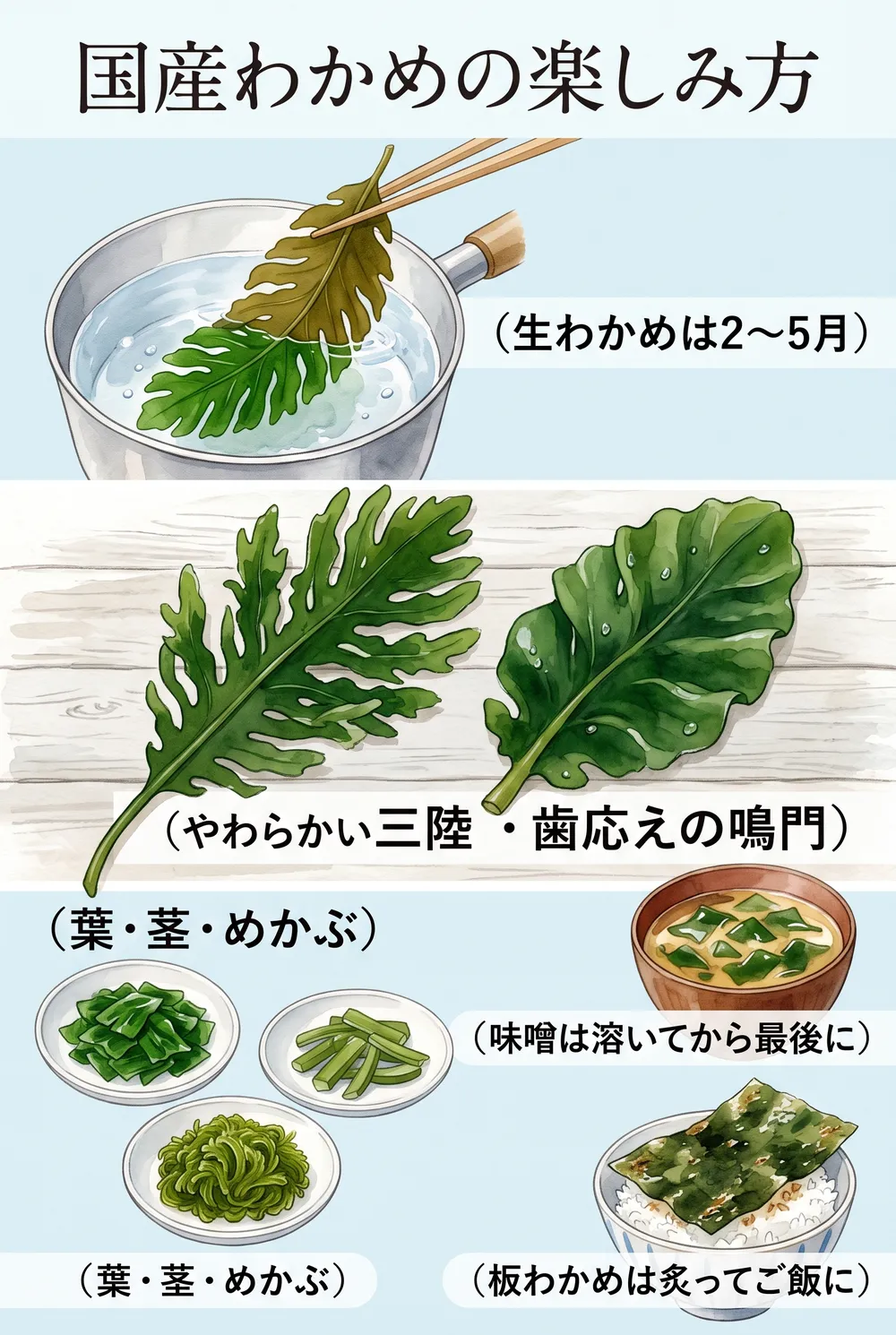
Wakame is a brown seaweed in the sea, and the seconds in which it turns green can be seen only with fresh wakame, February to May. If you're in Japan in spring, try it once — as shabu-shabu.
Day to day: soft Sanriku in miso soup, crisp Naruto in vinegared salads — added after the miso. Leaf, stem and mekabu are one plant. And Japan's wakame towns keep things worth seeking out: itawakame from the Izumo Fudoki, and Naruto's charcoal-dried wakame, green without ever being heated.
Read the back of the bag, and choose Japanese wakame — while the people who farm it are still there.
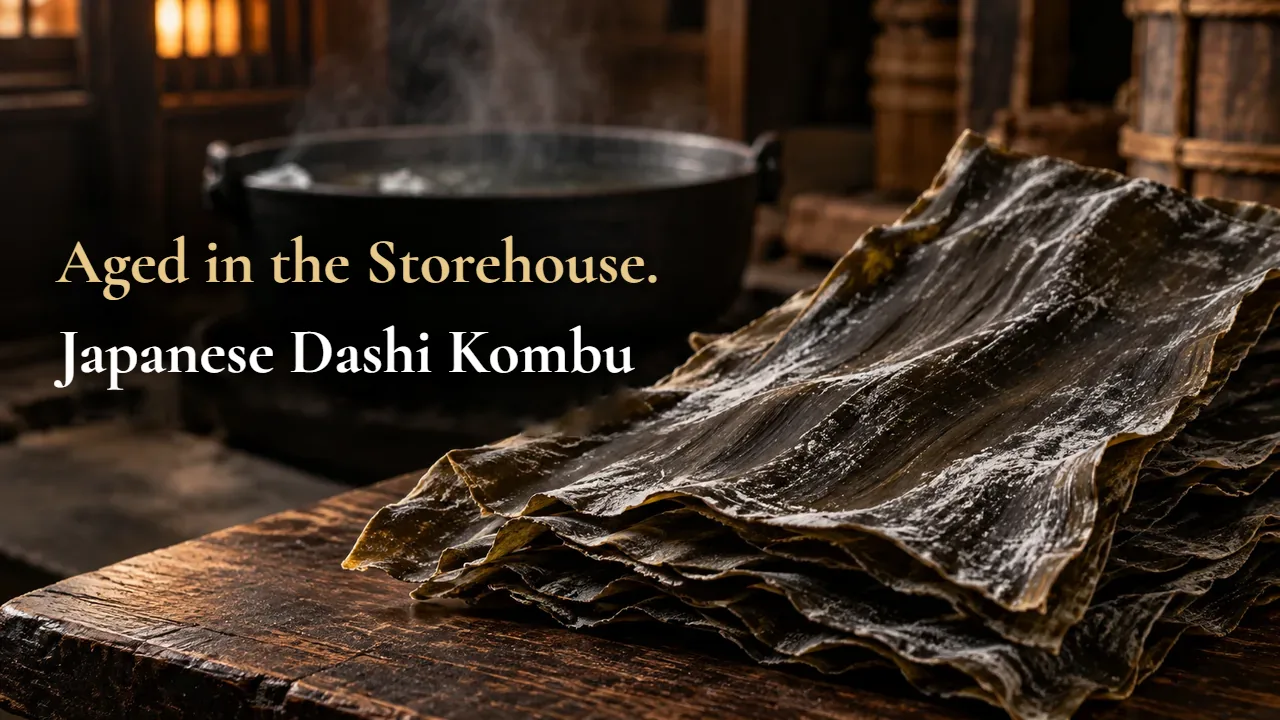
Kombu for Dashi: Rishiri, Rausu, Ma-Kombu and Aged Kelp

Japanese Dashi Packs & Miso Soup Guide: 6 Best Picks