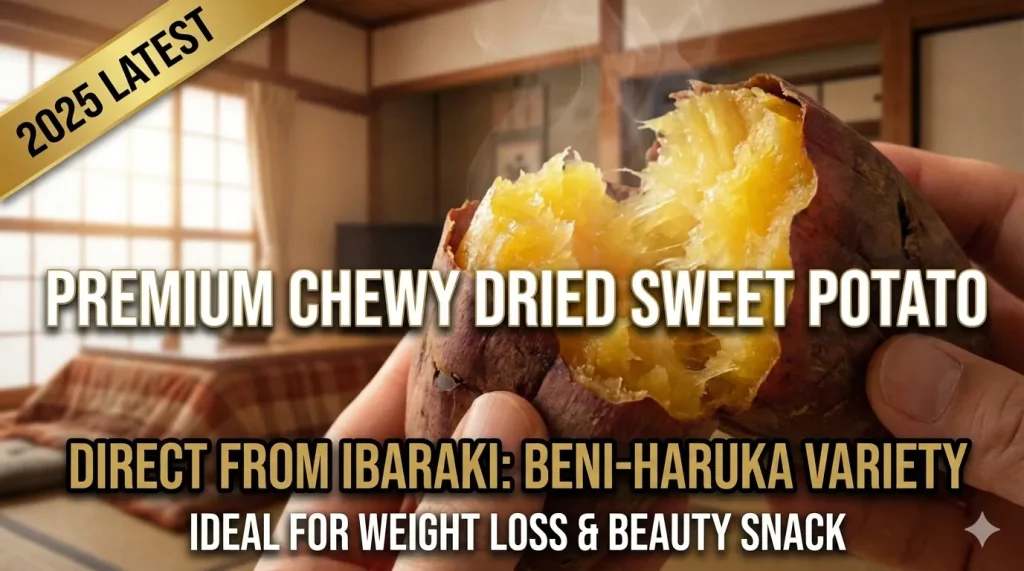
Time to update your idea of hoshiimo (dried sweet potato).
Forget the white, chalky preservation food you might remember from your grandparents' kitchen.
Today's hoshiimo is a premium natural sweet — no sugar added, yet sweeter than jam, with a dense,
sticky richness reminiscent of salted caramel.
We've focused on Ibaraki Prefecture's beni-haruka variety — home to 90% of Japan's hoshiimo
production — plus a few celebrated makers from further afield. Whether you're looking for a guilt-free winter snack
or a standout seasonal gift, these are the brands worth knowing.
Quick Reference: Hoshiimo Varieties & Shapes at a Glance
| Type | Characteristics | Texture | Best For |
|---|---|---|---|
| Beni-haruka (flat / hiraboshi) | High sugar content, honey-sweet | Soft and sticky | First-time hoshiimo buyers |
| Beni-haruka (whole / maruboshi) | Semi-fresh, juicy interior | Dense like yokan wagashi | Those seeking premium luxury |
| Tamayutaka | Classic old-school flavor | Firm, chewy | Fans of the traditional style |
| Irregular (wake-ari) | Misshapen but same quality | Varies by variety | Great value for home use |
1. How to Choose: Beni-Haruka and the Hiraboshi vs. Maruboshi Debate
Do you want sticky and luscious, or firm and chewy? Knowing the variety and shape gets you to the texture you're imagining.
① The variety: beni-haruka is the clear choice
Tamayutaka was once the dominant variety, but today beni-haruka (紅はるか) is in a class of its
own.
Its natural sugar content is said to exceed even the celebrated Annoh-imo (安納芋). After drying, the sugars
concentrate into something close to honey, dripping through golden, translucent slices. It holds its softness even
when cold — and the color is gorgeous.
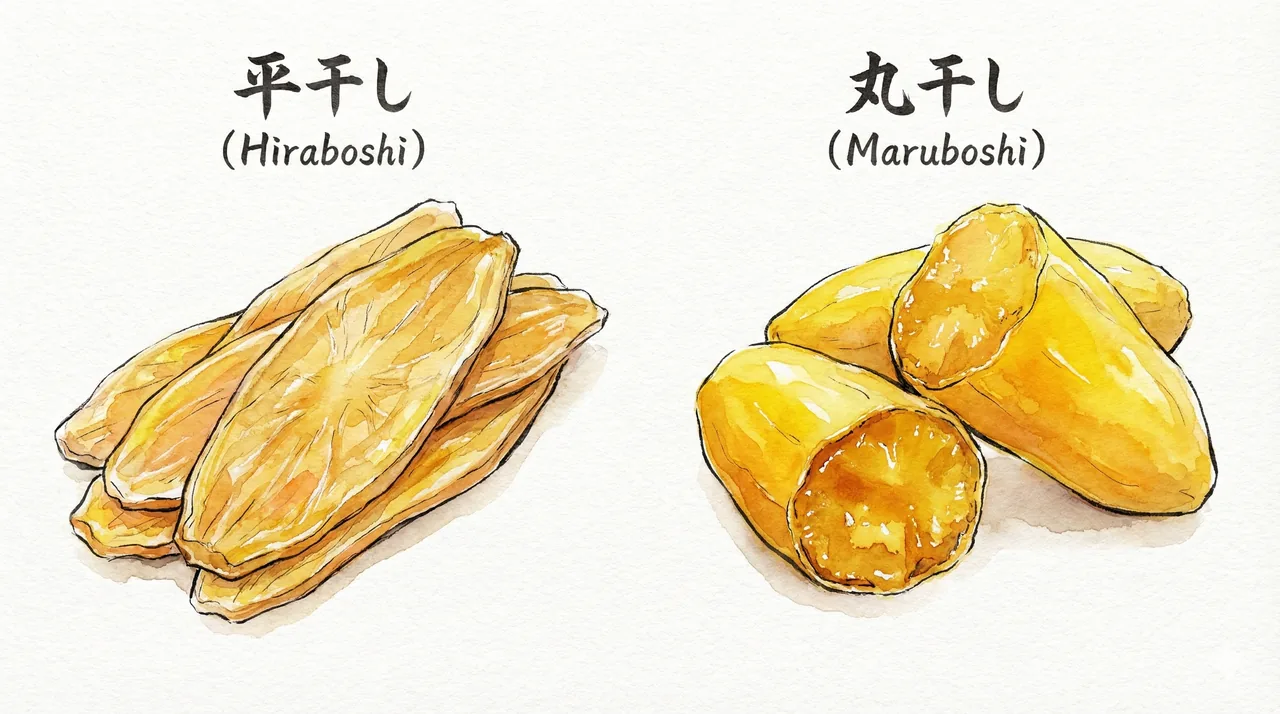
② The shape: hiraboshi (flat) vs. maruboshi (whole)
[Hiraboshi — sliced and dried]:
The classic. Potato sliced and dried into flat pieces. A gentle chew, with sweetness that builds with every bite.
Generous portion counts make this a good value too.
[Maruboshi — whole and dried]:
A small potato dried whole and intact — rare and prized. Because it's never cut, moisture remains inside, leaving
the center semi-fresh and intensely juicy. The texture is almost like a soft, sweet yokan (Japanese bean jelly). A
luxury item.
2. Top 5 Hoshiimo Mail-Order Brands
The gold standard names from the hoshiimo heartland of Ibaraki — plus a legendary out-of-region maker — selected for quality, consistency, and reputation.
[No.1] Koda Shoten (Ibaraki) / Beni-Haruka
The pioneer of Ibaraki hoshiimo. The gift choice that never disappoints.
Rigorous quality control means every box is reliably excellent — the true workhorse of the gift market.
Their golden, translucent hiraboshi slices strike the perfect balance: soft but not collapsing, firm but not
tough. The packaging is quietly elegant, making this the most frequently chosen hoshiimo for oseibo (year-end
gifts) and omiyage.
[No.2] Imokuniya (Ibaraki) / Beni-Haruka
Rakuten ranking regular. The best balance of quality and value going.
One of the most dynamic hoshiimo specialty shops in online retail right now.
Using Ibaraki's beni-haruka, no additives, no colorings — and stocking everything from single-serving packs
and family-size bags to the rare maruboshi, making it easy to find exactly what you need whether you're buying
for yourself or as a gift.
[No.3] Tsukada Shoten (Ibaraki) / Irregular (Wake-Ari) Hoshiimo
Quantity over appearance — the smart buy for serious home consumption.
Wake-ari means the pieces are irregular in shape or have slight aesthetic imperfections (known as shirota),
sold at a more accessible price. The flavor? First-rate.
This is the brand for the classic Japanese winter fantasy: kotatsu (heated table), a blanket, and enough
hoshiimo to eat without restraint. Exceptional value.
[No.4] Oimoya (Shizuoka) / Nidaime Oimoya no Hoshiimo
Rakuten Shop of the Year winner. A hoshiimo legend.
From Shizuoka — another significant hoshiimo-producing region alongside Ibaraki — comes Oimoya, a name that
has achieved near-mythical status in online food retail.
Their obsession with the hanjuku (semi-fresh, soft) texture produces something less like dried sweet potato
and more like a concentrated Japanese confection. Sales open and sell out within hours. Varieties like
beni-kiseki and the rare izumi are sourced at peak season by their craftspeople.
[No.5] Lapoppo Farm / Bichō Daigakuimo (Candied Sweet Potato)
[Special pick] A new-texture sweet potato experience — crispy outside, fluffy within.
For when you want a change from hoshiimo. Lapoppo is a sweet potato sweets specialist, and this frozen
daigakuimo (candied sweet potato) using domestic beni-haruka is their star product.
Eat it semi-thawed for an ice cream-like chill, or warm it in the oven for a hot, fluffy version. The
crackling toffee coating is an irresistible contrast to the dense, sticky hoshiimo experience.
3. One Minute to Magic: The "Toasted with Butter" Method
Wonderful as-is, but a little heat and one small addition take hoshiimo to a different level entirely.
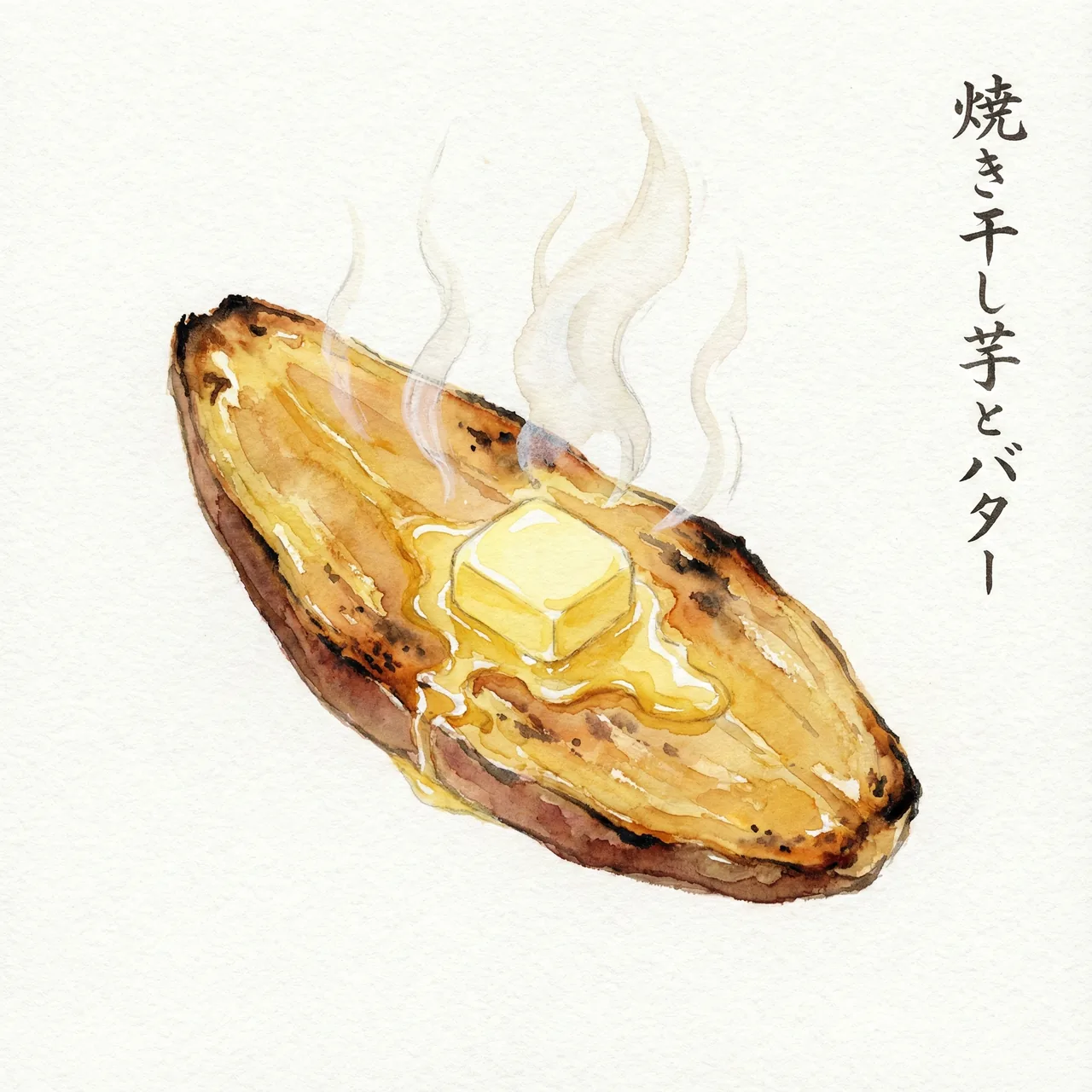
Toast in the oven for 1–2 minutes
Put a piece in an oven toaster just until the surface starts to crisp (about 1–2 minutes).
The heat unlocks the potato's natural sugars, sending up a warm, roasted-sweet aroma. The outside firms slightly
while the inside stays soft.
The sinful upgrade — hoshiimo with salted butter:
While it's still hot, place a small pat of salted butter on top and let it melt in.
The salt amplifies the potato's sweetness to a level that's almost unreasonable. It's one of those combinations
that seems too simple to be this good.
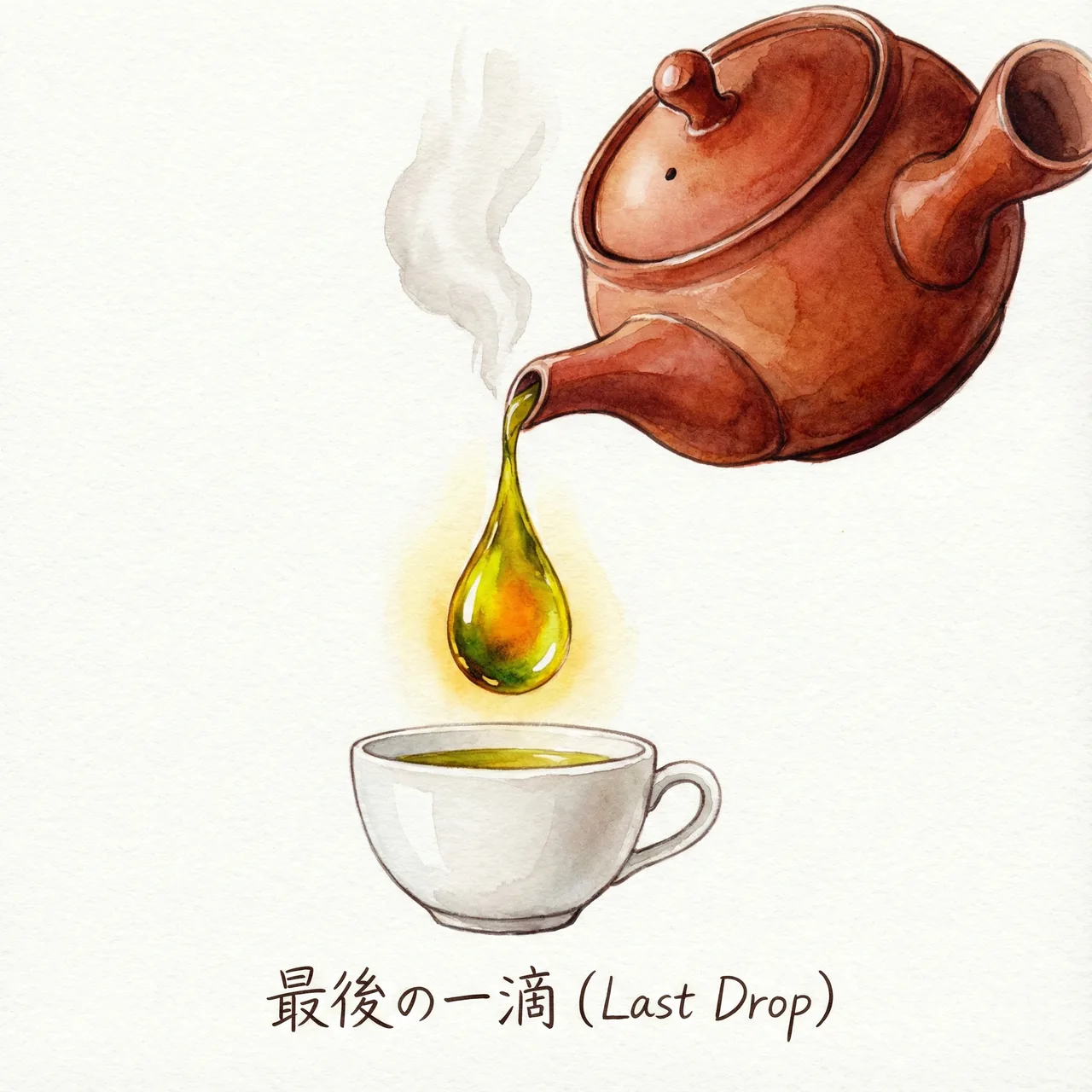
Rich hoshiimo calls for real green tea.
A bite of dense, sweet hoshiimo — then a sip of warm, slightly astringent green tea.
That interplay of sweet and bitter, looping back and forth, is the whole point of the Japanese snacking
tradition.
If you're going to enjoy this properly, skip the plastic bottle and try brewing it fresh in a kyusu
(teapot) — the fragrance alone transforms the experience.
4. Frequently Asked Questions
There's white powder on the surface. Is it mold?
Not mold — no need to worry. That white coating is shirota: natural sugars from the potato that
have crystallized on the surface as it dried. The more white powder, the higher the sugar content — it's actually
a mark of quality.
(Mold, by contrast, appears fluffy and has a musty smell, making it easy to tell the difference.)
How should I store it? Can I freeze it?
After opening, refrigerate. For longer storage, freezing works beautifully.
Wrap each piece individually in cling film, place in a zip-lock bag, and freeze for up to 3–6 months. Thaw
naturally at room temperature, or go straight from the freezer to the oven toaster.
Can I eat hoshiimo on a diet?
Hoshiimo with no added sugar is rich in natural sweetness and dietary fiber, making it a much
gentler option than processed snacks in terms of blood sugar response.
That said, it's calorie-dense at around 270kcal per 100g, so portions matter. Two to three pieces (about 30–50g)
as a snack substitution is a realistic daily amount.
What's the difference between beni-haruka and annoh-imo hoshiimo?
Both are sticky-style (nettori), but beni-haruka tends to be higher in sugar with a more golden,
visually appealing color.
Annoh-imo (Tanegashima) has a richer, deeper sweetness with an almost cream-like texture — great
for those who want a more intense flavor profile.
In the hoshiimo market, beni-haruka currently dominates — more widely available and consistently reliable.
Tips for choosing hoshiimo through Japan's furusato nozei (hometown tax) scheme?
Ibaraki Prefecture — particularly Hitachinaka and Tokai-mura — has some of the most impressive hoshiimo
furusato nozei offerings in Japan.
These typically arrive frozen in generous quantities — great value for family households.
For gifting purposes, specifying premium-grade with minimal shirota gives a presentation-worthy result.
Is it safe for children?
Hoshiimo is one of the most child-friendly snacks available — typically additive-free and low in
common allergens.
However, flat and whole-dried pieces can be chewy enough to be difficult for small children. Lightly warm them in
a toaster first and cut into small pieces before serving to toddlers.
5. Final Thoughts: A Golden Winter Experience
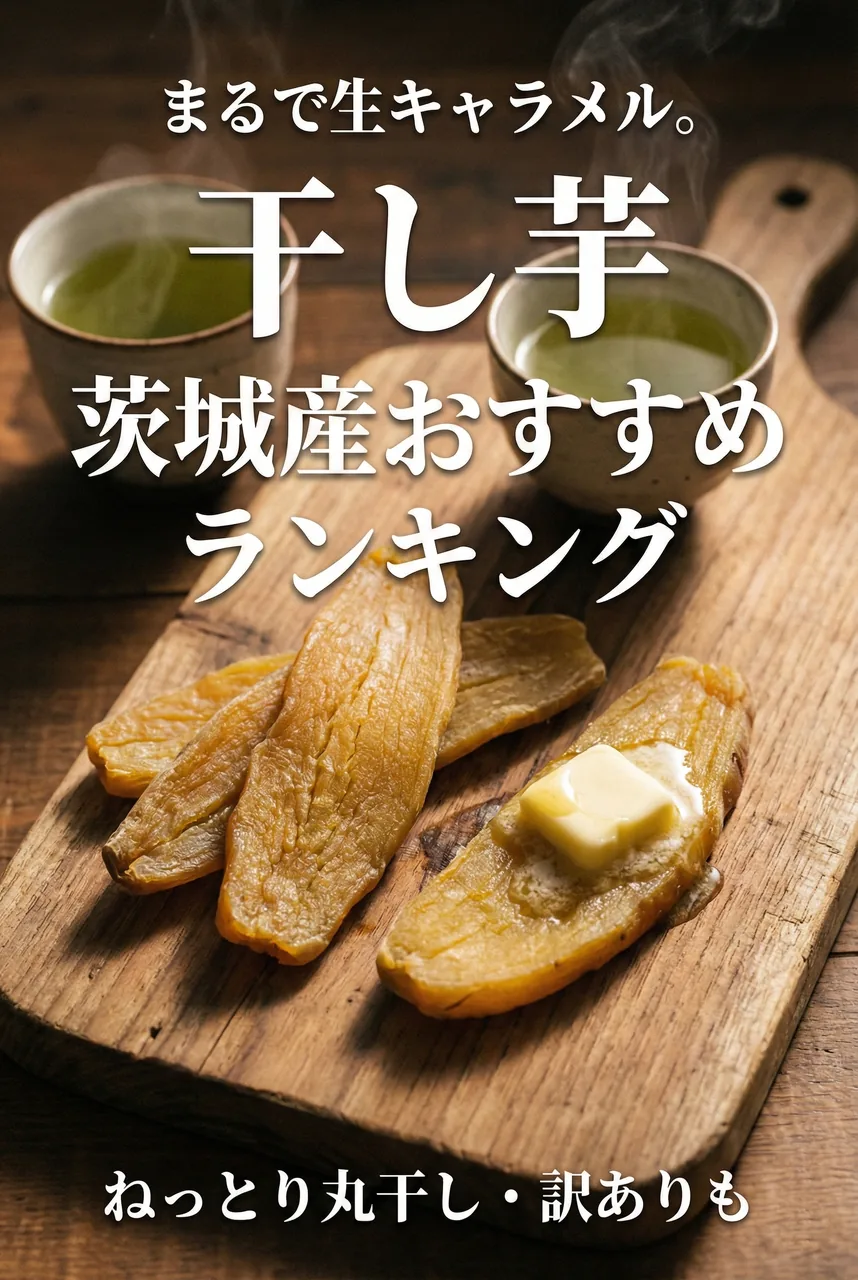
A warm room. Cold winter outside. A cup of freshly brewed green tea. A piece of golden hoshiimo.
Few things in Japanese winter life are this quietly satisfying.
Guilt-free, fiber-rich, and intensely natural. Treat yourself to beni-haruka at its seasonal best.

Japanese Rice Accompaniments: Top Mail-Order Picks That Make Every Bowl Exciting

Japanese Premium Jams & Spreads: 5 Best Mail-Order Picks