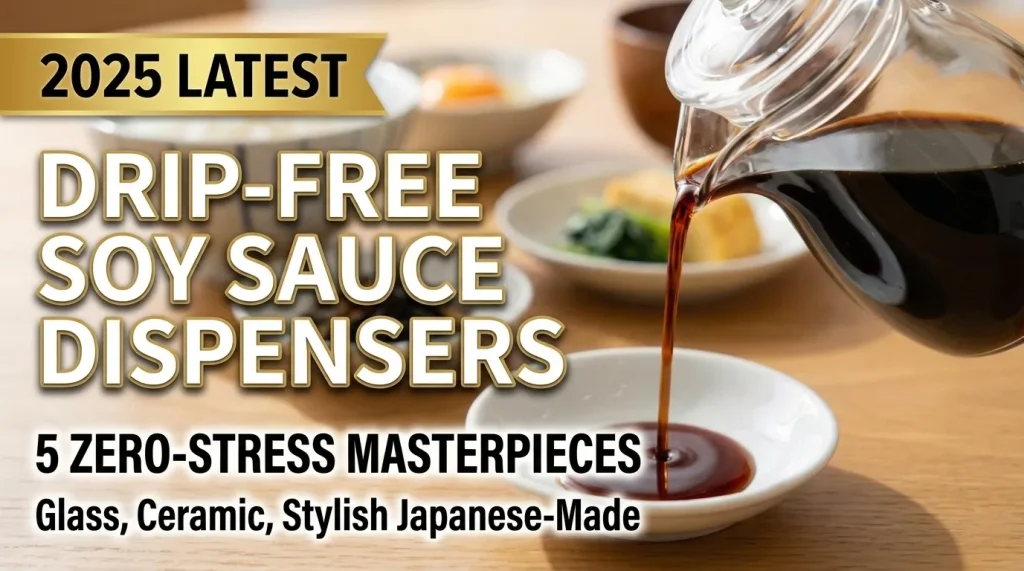
You tip the bottle, pour a little soy sauce — and then it happens. That slow, inevitable drip down the side that
leaves a ring on the table.
Ready to be done with that particular frustration?
It might sound like a small thing. But a soy sauce dispenser made seriously by Japanese craftspeople stops
completely and cleanly — every single time, without wiping.
Today we're looking at made-in-Japan soy sauce bottles that combine exceptional drip-free function with the kind of
beauty that actually improves the look of your table.
1. Drip-Free Is Non-Negotiable: How to Choose Wisely
Choosing by looks alone leads to regret. Start with the material and understand the mechanism that makes drip-free possible.
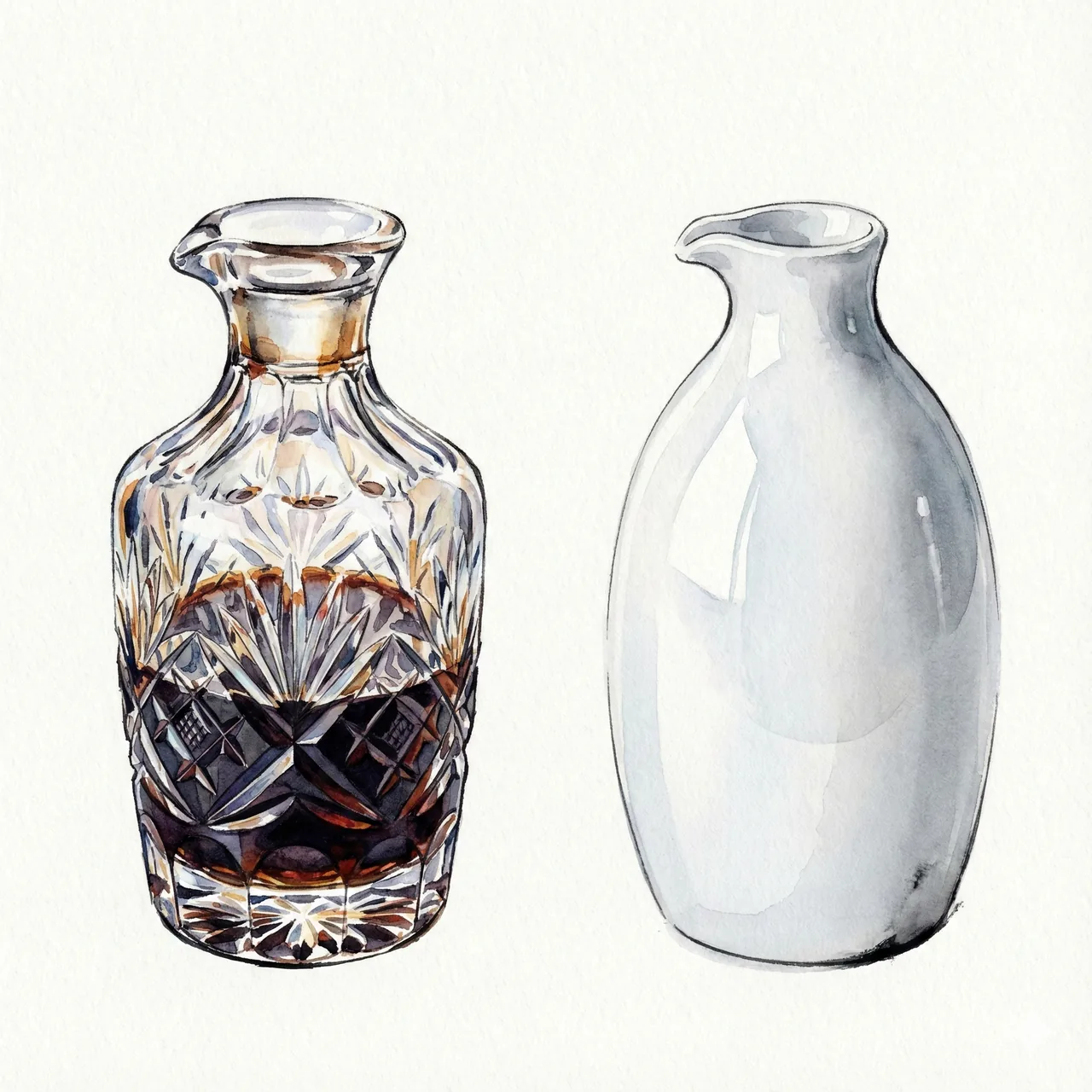
① Choose by material: glass vs. ceramic
[Glass] — See the level, no absorbed odor
You can see how much soy sauce remains at a glance, and the glass never takes on the soy sauce smell. Light
and clean-looking — works with any table setting. Brands like Hirota Glass and Tsugaru Vidro are well
known.
[Ceramic / Porcelain] — Light-blocking, Japanese aesthetic
You can't see the contents, but the opaque body blocks light and slows oxidation, keeping soy sauce fresher
longer. An ideal match for traditional Japanese tableware. Hakuzan Touki (Hakuzan Pottery) is the most
celebrated example.
② Why doesn't it drip? The mechanism explained
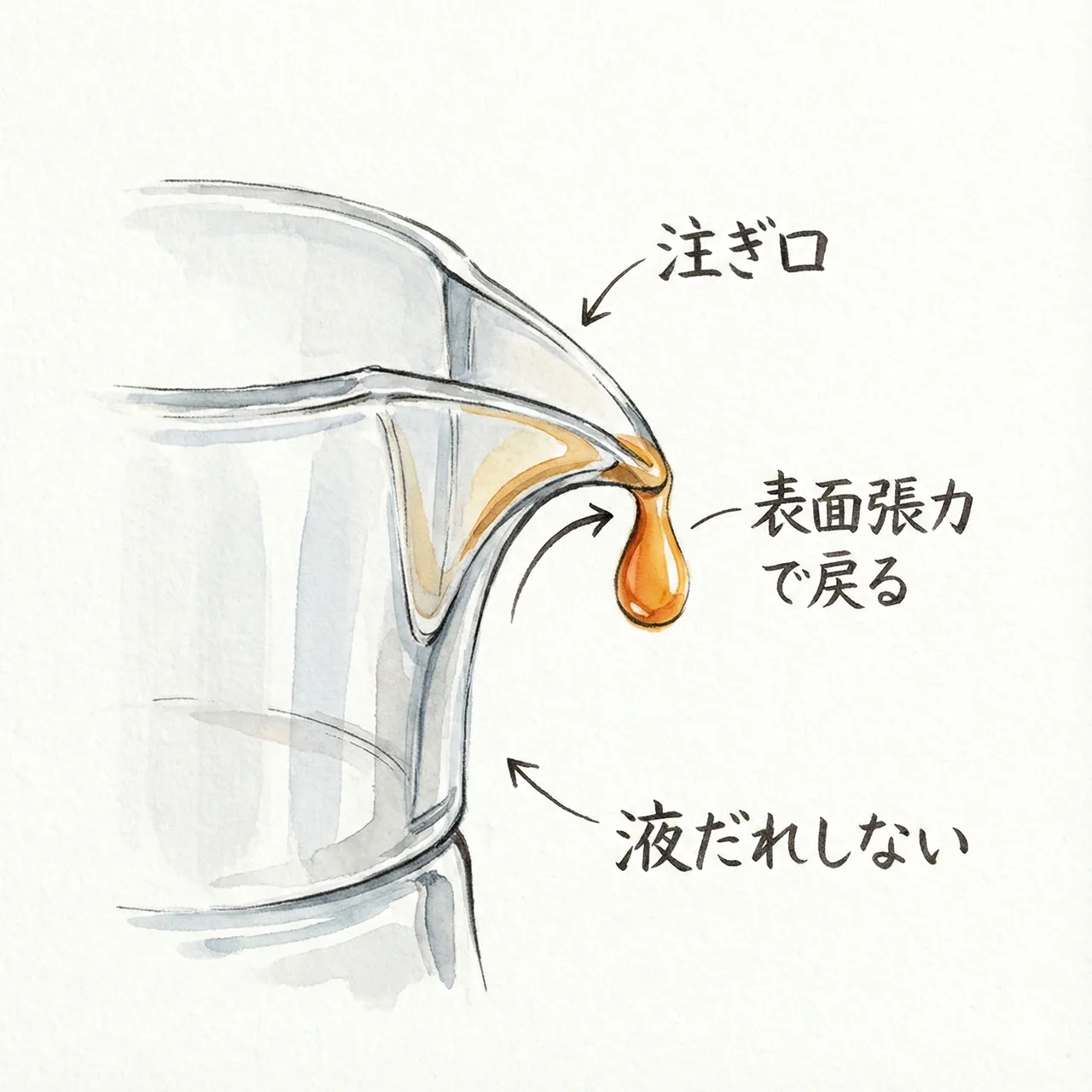
The difference between a premium dispenser and a cheap one comes down to the spout cut and the
ground-glass fit.
When craftspeople hand-grind two glass surfaces together — the stopper and the bottle neck — the fit becomes so
precise that not even a hair could pass between them. The surface tension of the liquid is used to stop the flow
cleanly the moment you tilt back.
That level of precision is the hallmark of true made-in-Japan craftsmanship.
2. Top 5 Japanese Soy Sauce Dispensers That Don't Drip
For anyone who is absolutely done with stained tablecloths. Functional excellence and beautiful design, chosen together.
[No.1] Ishizuka Glass (Aderia) / THE Soy Sauce Bottle
"The most beautiful drip-free soy sauce bottle in the world" — that was the brief.
Co-developed by creative unit THE and long-established glassmaker Ishizuka Glass.
High-clarity crystal glass. A specially engineered spout that went through countless prototypes. The result:
it stops cleanly no matter how carelessly you tip it. The smooth, unwaisted silhouette is also easy to clean
and stays hygienic. The definition of form and function achieved together.
Highlights: Absolutely drip-free, high transparency
[No.2] Hakuzan Touki (Nagasaki) / G-Type Soy Sauce Bottle
The Japanese standard. Loved for over 60 years without a redesign.
In production since 1958 — Good Design Award winner, and its design has never changed, because there's nothing
to change.
Reassuringly stable in form, available in a generous range of colors, and impressively resistant to dripping.
Hakuzan Touki also makes celebrated rice bowls and other tableware — pairing this dispenser with other pieces
from the same maker creates an instantly coherent table.
[No.3] Hirota Glass (Tokyo) / Revival Soy Sauce Bottle
Retro-modern glass from Tokyo's shitamachi tradition. A design with memory.
Made in Tokyo's old downtown district — this bottle carries a quietly nostalgic silhouette that feels like it
belongs to a different, slower era.
A traditional ground-glass stopper fits the bottle neck with precision, preventing leaks through surface
tension. The right choice for a minka-style interior or a relaxed, traditional Japanese table setting.
[No.4] Tsugaru Vidro (Aomori) / Soy Sauce Bottle
Aomori's living traditional craft. Four seasons, bottled in glass.
Each piece is individually mouth-blown (chubuki) by hand — a designated traditional craft of Aomori
Prefecture.
Color ranges inspired by cherry blossom, the sea, the Nebuta Festival, and more catch light like cut
gemstones. The visual beauty alone would be enough, but the drip-resistant spout is engineered to match. For
anyone who wants their table to feel like it holds something special.
[No.5] KIHARA (Saga) / Arita Porcelain Soy Sauce Bottle
Traditional Japanese motifs, reinterpreted for the modern table.
Plum-and-crane, Mt. Fuji, wave-and-plover — classic Japanese design vocabulary redrawn in a contemporary
vocabulary by KIHARA's Arita porcelain craftspeople.
An independent drip-prevention spout structure keeps the table clean, while the decorative surface makes it a
natural conversation piece and a thoughtful gift for international guests.
3. Maintenance: Preventing Clogs and Extending Life
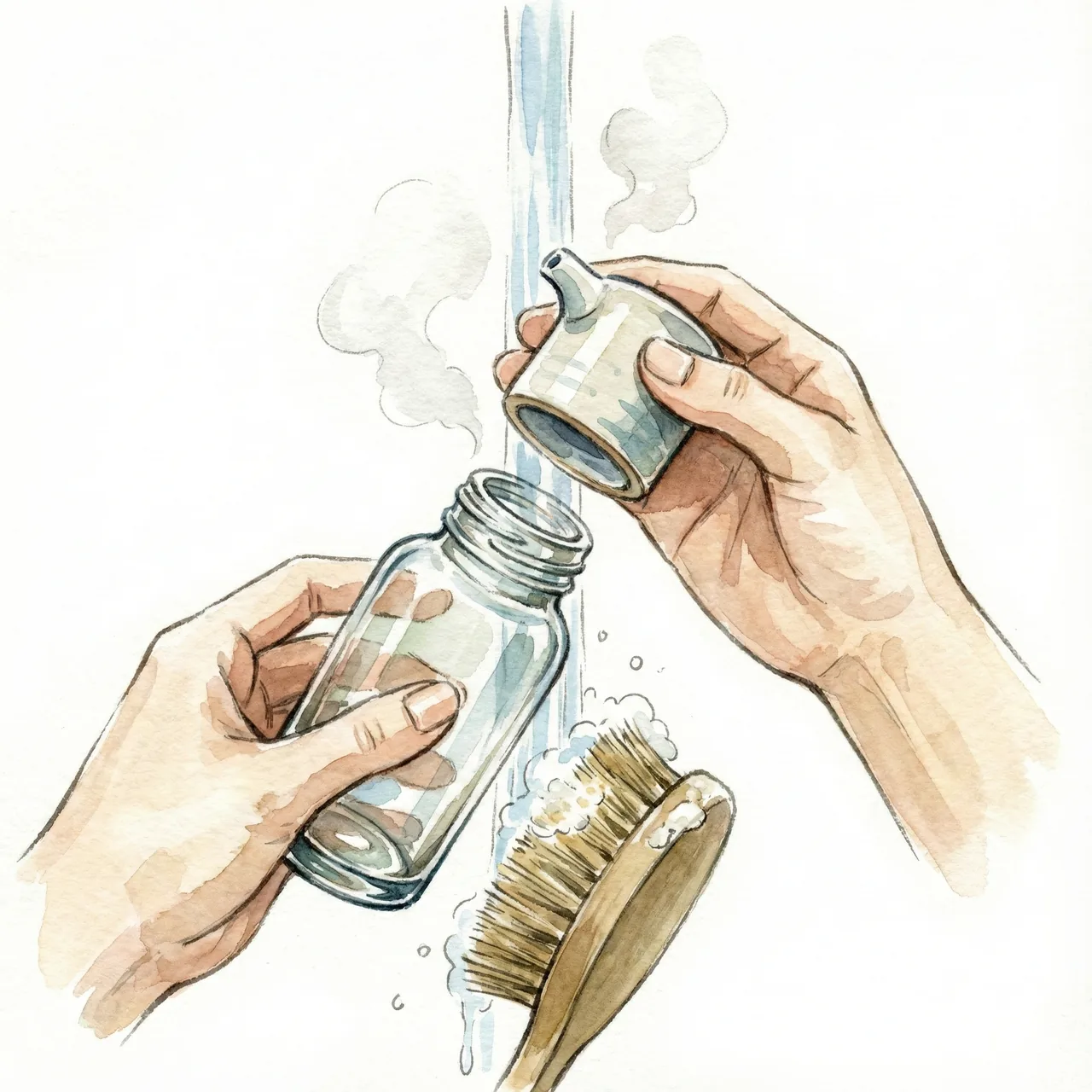
Never top up — refill from zero
Old soy sauce left in the bottle doesn't just lose flavor — as the water evaporates, the remaining solids
thicken and can harden the spout into an immovable plug.
The two rules:
1. Only fill the bottle with a 2–3 day supply at a time. Don't fill it to the brim.
2. When it's empty, wash and dry the bottle before refilling with fresh soy sauce.
Follow these two habits and you'll always have soy sauce at its best — and a spout that cuts cleanly every time.
4. The Perfect Dispenser Deserves Perfect TKG
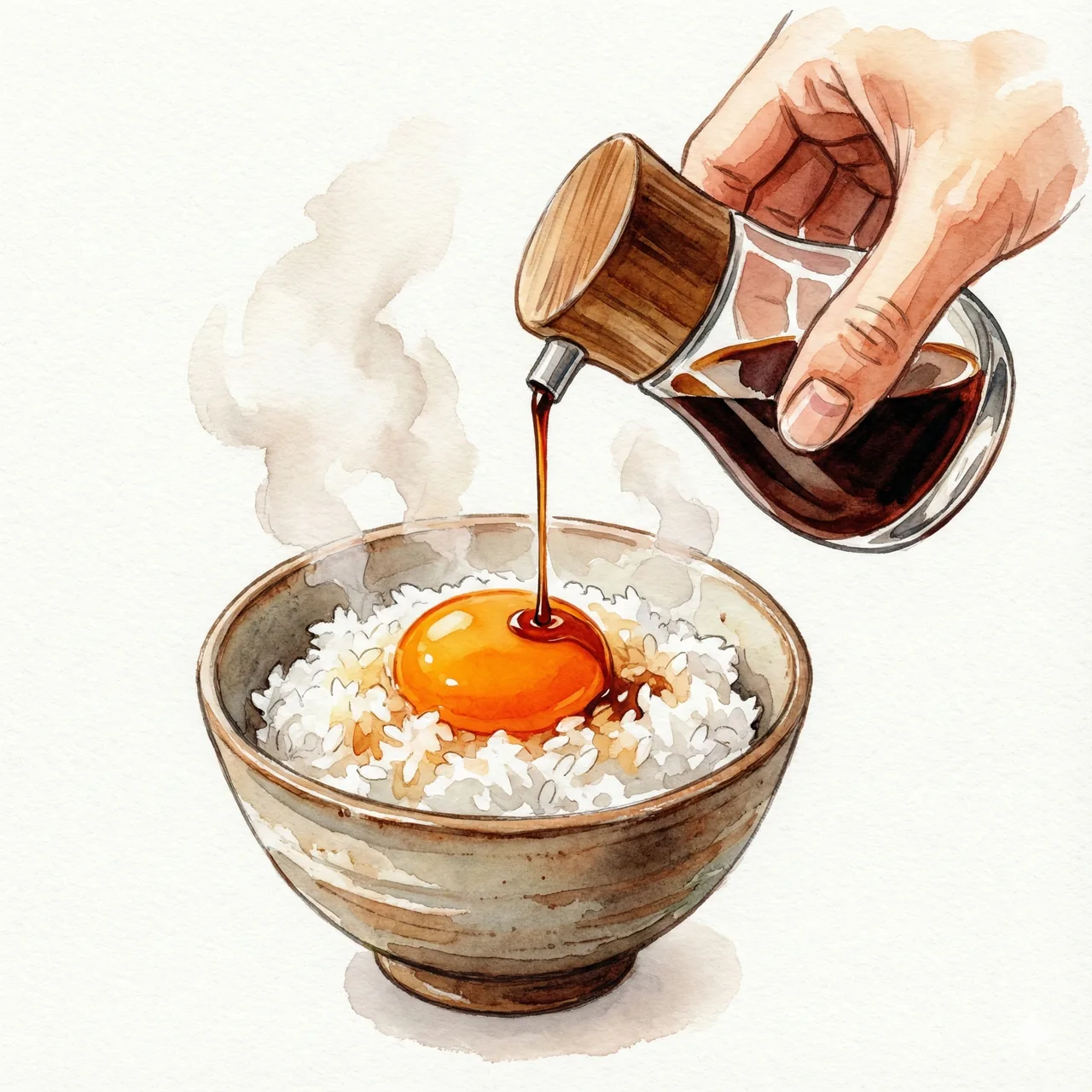
Once you have a bottle that stops on command, the first thing you should test it on is TKG — tamago kake gohan (egg on rice).
Drop by drop, exactly where you want it.
A tiny dot on the yolk. A slow circle around the white. Precisely the amount you intended, landing exactly where
you aimed.
A great dispenser makes that kind of control effortless — and it genuinely enhances the experience of
eating.
If you haven't yet tried a truly premium egg for your TKG, this is the moment.
Premium Japanese Eggs Over ¥100 Each: Mail-Order TKG Ranking
5. Frequently Asked Questions
The stopper has seized and I can't remove it.
Do not force it — glass can shatter. The dried soy sauce residue is acting like adhesive, but it dissolves easily
with moisture.
Place the whole bottle in a bowl of warm water (40–50°C / 104–122°F) and leave it to soak for
about 10 minutes. The hardened residue softens and the stopper will turn freely again.
Can I use it for vinegar, chili oil, or sauce?
Vinegar / ponzu: Fine. Glass and porcelain are acid-resistant.
Chili oil / olive oil: Use with caution. Oils have different viscosity and surface tension than
soy sauce — a spout engineered for soy sauce may not cut oil cleanly, potentially dripping.
Sauce (tonkatsu, Worcestershire): Not recommended. Too thick — will clog the spout.
Can I use bleach to clean it?
Most standard glass and porcelain (including Arita ware) can handle kitchen bleach, but crystal
glass and pieces with gold or silver decoration may cloud or lose color when exposed
to bleach.
Always check the product's care instructions before using any bleaching agent.
6. Final Thoughts: A Small Tool That Lifts Your Quality of Life
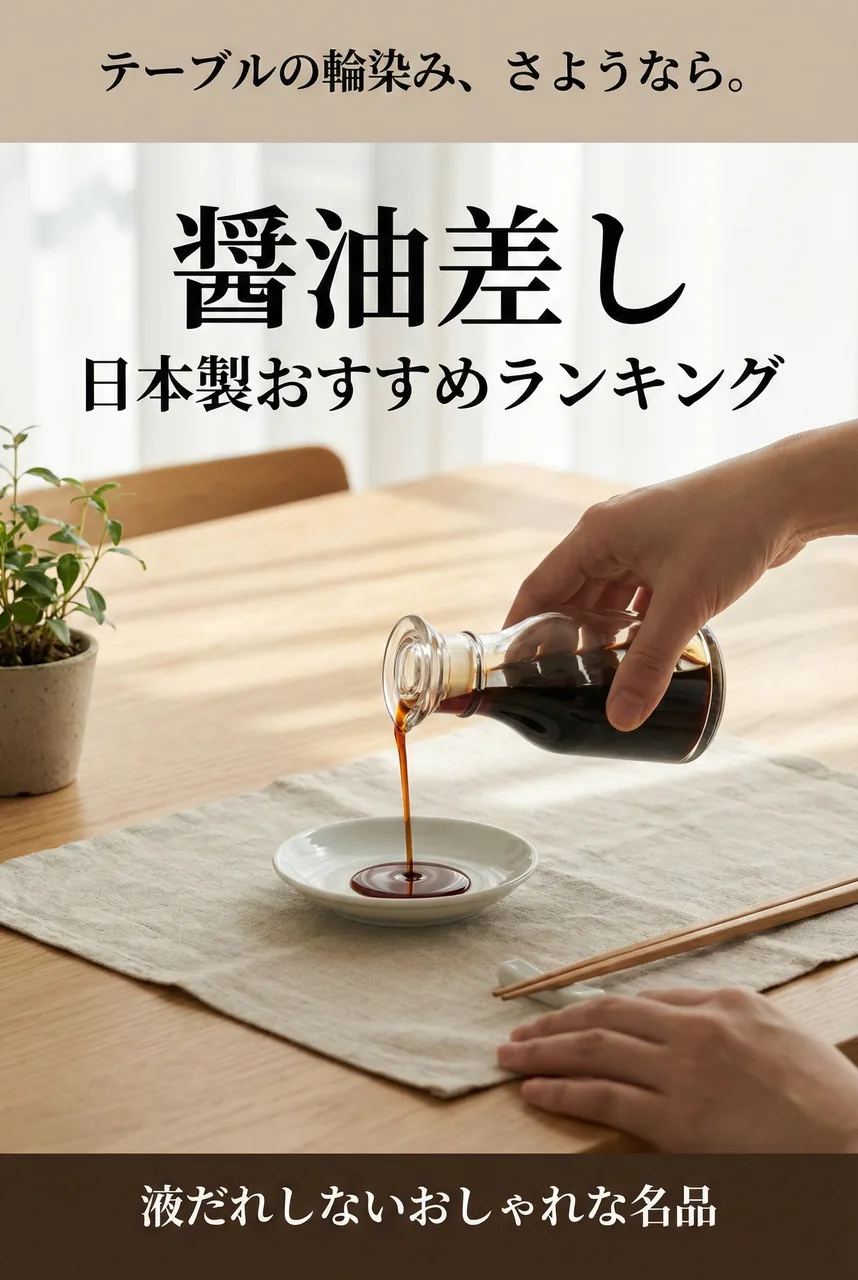
"It's just a soy sauce bottle" — that thought is understandable.
But being freed from the unconscious tension of "will it drip?" at every meal is a meaningful improvement in
daily life — larger than it sounds.
Beautiful tools change the atmosphere of a table.
Find the one you'd be happy to use every day — for a long time.