
"Rice is rice — they're all the same, right?"
If that's what you think, you're missing out on one of Japan's greatest culinary pleasures.
Hokkaido rice with its intense stickiness and sweetness. Aomori rice with a clean, distinct bite. And the perennial
king: Niigata Uonuma Koshihikari.
Japan's premium rice scene has entered what producers themselves call a "warring states era" — more intensely
individual, regionally proud varieties than ever before.
From this abundance, we've curated the "Magnificent Seven" (Kami Nana) — seven varieties selected
for texture, emotion, and the kind of quality that genuinely changes how you think about a bowl of rice.
Each comes with the producer's story, because that context is what makes the difference unmistakable.
Quick Reference: Japanese Brand Rice Regions at a Glance
| Region | Variety | Flavor profile | Cooked texture |
|---|---|---|---|
| Niigata | Koshihikari | Perfect balance of aroma, sheen, stickiness & sweetness | Sticky, strong cohesion |
| Miyagi | Hitomebore | Well-balanced stickiness with a clean finish | Balanced, moderate cohesion |
| Akita | Akitakomachi | Rich sweetness and aroma; stays good cold | Soft, mildly sweet |
| Hokkaido | Yumepirika | Intense stickiness, dense sweetness; doesn't harden cold | Ultra-sticky, very soft |
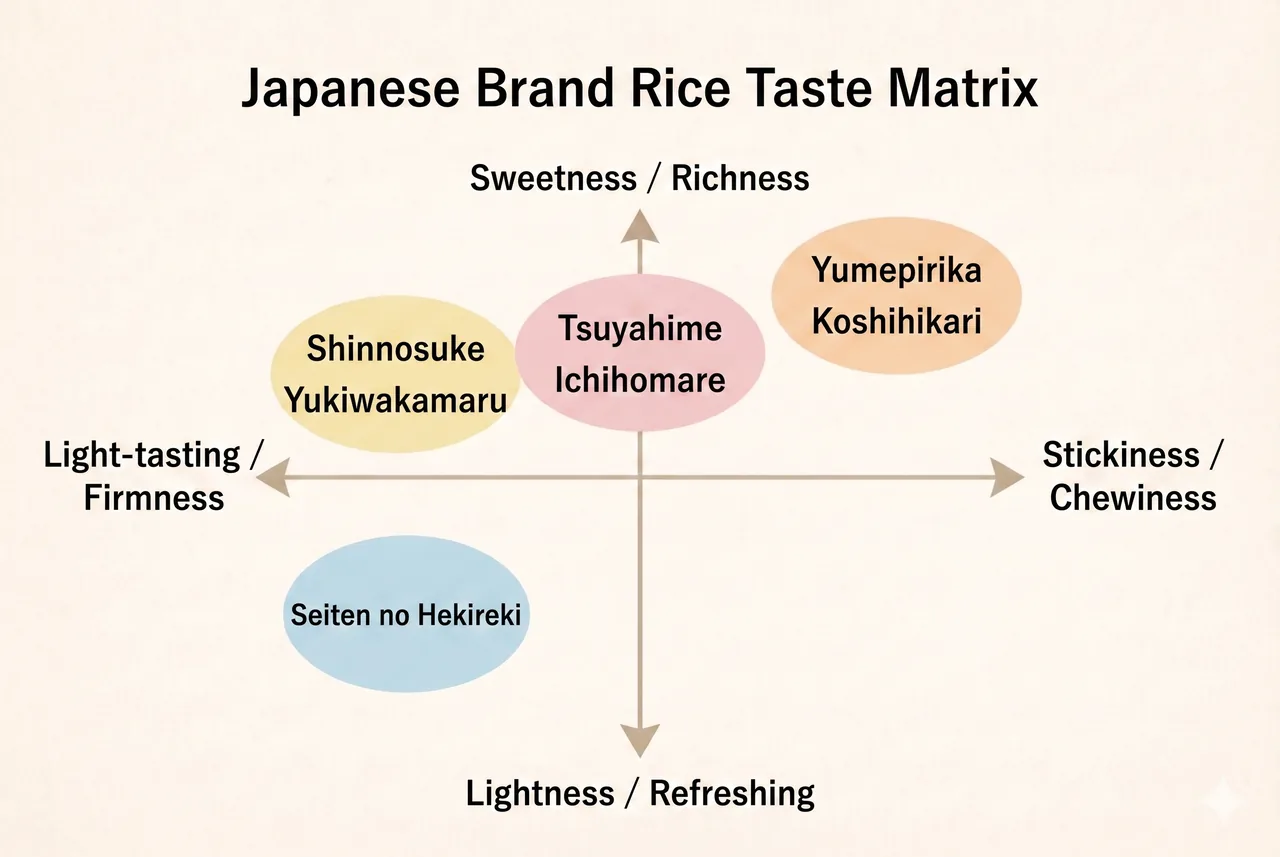
1. Sticky vs. Firm: Where Do You Fall on the Texture Map?
The most important factor in choosing rice is texture.
Are you in the "sticky and sweet" camp — rice that almost eats itself — or the "clean and distinct" camp — where
every grain stands apart and lets your accompaniments shine?
Check the chart below first to find your starting point.
2. Japan's Magnificent Seven Brand Rice Varieties
Seven varieties, each a statement of regional pride and years of agricultural craft. Here's what makes each one unique — and what to eat it with.
[Hokkaido] Yumepirika
Tagline: "Sweet. Rich. Hokkaido's masterpiece."
The variety that rewrote what Hokkaido rice could be. Its low amylose content creates an almost mochi-like
stickiness combined with a dense sweetness that makes it tempting to eat plain.
"No side dish needed" is something people say about Yumepirika without exaggerating. It also holds its texture
well cold — a big advantage for bento.
Best with: Plain white rice first — then all Japanese cuisine
[Yamagata] Tsuyahime
Tagline: "Beautiful when cooked, beautiful when cold."
The name means "sheen princess," and the cooked grain earns it — a luminous gloss that stands apart from the
moment the lid comes off.
High in glutamic acid (the natural umami compound), Tsuyahime delivers a sophisticated sweetness from the very
first bite. Its flavor holds up perfectly cold, making it the ideal rice for onigiri and bento.
Best with: Onigiri, bento, Japanese breakfast
[Niigata] Uonuma Koshihikari (Minamiuonuma / Shiozawa)
Japan's undisputed "King of Rice" — the one to buy when nothing else will do.
Aroma, sheen, stickiness, sweetness — Uonuma Koshihikari balances all four with a precision no other variety
has matched.
The Uonuma district is blessed with extreme day-night temperature swings and pure snowmelt water, creating the
conditions for rice that's simply better. If you're buying for a gift and can't go wrong, this is it.
Best with: Gifts, special occasions
[Aomori] Seiten no Hekireki ("Bolt from the Blue")
Tagline: "Light and clean — the new standard."
A newer variety from Aomori Prefecture that challenges the assumption that "good rice must be sticky."
Each grain is slightly larger, with a firmer bite that breaks apart cleanly on the palate. It doesn't
overpower — it steps aside to let your accompaniments come forward.
This is the rice that works beautifully under a pile of fresh seafood or a rich curry.
Best with: Breakfast, seafood rice bowls, curry
[Fukui] Ichihomare
Fukui's answer to Koshihikari — crafted to surpass the legend.
The name means "rice honored as Japan's finest (ichi = first; homare = honor)." Developed in Fukui, the
birthplace of Koshihikari itself, with the explicit goal of exceeding its ancestor.
The cooked grain is silky-white with exceptional sheen. A gentle sweetness spreads through the mouth like a
cloud. This is what "next generation" looks like.
Best with: Japanese cuisine, steak and meat dishes
[Yamagata] Yukiwakamaru ("Young Snow Prince")
Tagline: "Firm grains. New texture. New delicious."
Released as the "younger sibling" of Tsuyahime. Yukiwakamaru's defining quality is its firm, bouncy grain —
each one holds its own even under sauce or heat.
It doesn't go soggy under curry, doesn't clump in fried rice, and stays satisfying from the first spoonful to
the last grain. Exactly the rice you want when the dish matters as much as the bowl it comes in.
Best with: Curry, rice bowls (donburi), fried rice
[Niigata] Shinnosuke
Tagline: "A revolutionary flavor born from Niigata's rice heritage."
A late-maturing (okute) variety with large, beautiful grains and a depth of flavor — a rich, full sweetness —
that Koshihikari doesn't offer in quite the same way.
Shinnosuke doesn't harden easily when cold and retains its quality even over longer storage periods. It's
built for people who eat rice seriously and often.
Best with: Onigiri, satisfying everyday meals
3. How to Cook Premium Rice Perfectly: Washing, Soaking & the Ice Trick
The same rice cooked two different ways can taste worlds apart.
Before you invest in a more expensive rice cooker, revisit the basics: how you wash and soak the
rice has far more impact than any appliance upgrade.
These are techniques anyone can start using today.
The Fundamentals: Washing & Soaking (universal to all varieties)
The first contact with water is where premium rice is either honored or wasted.
Re-examine these steps — small changes here produce immediately noticeable results.
Use mineral water (or filtered water) for the first rinse:
Dry rice absorbs water most
aggressively on first contact. Use soft mineral or filtered water instead of tap water, swirl briefly, then
discard immediately to avoid re-absorbing any bran residue.
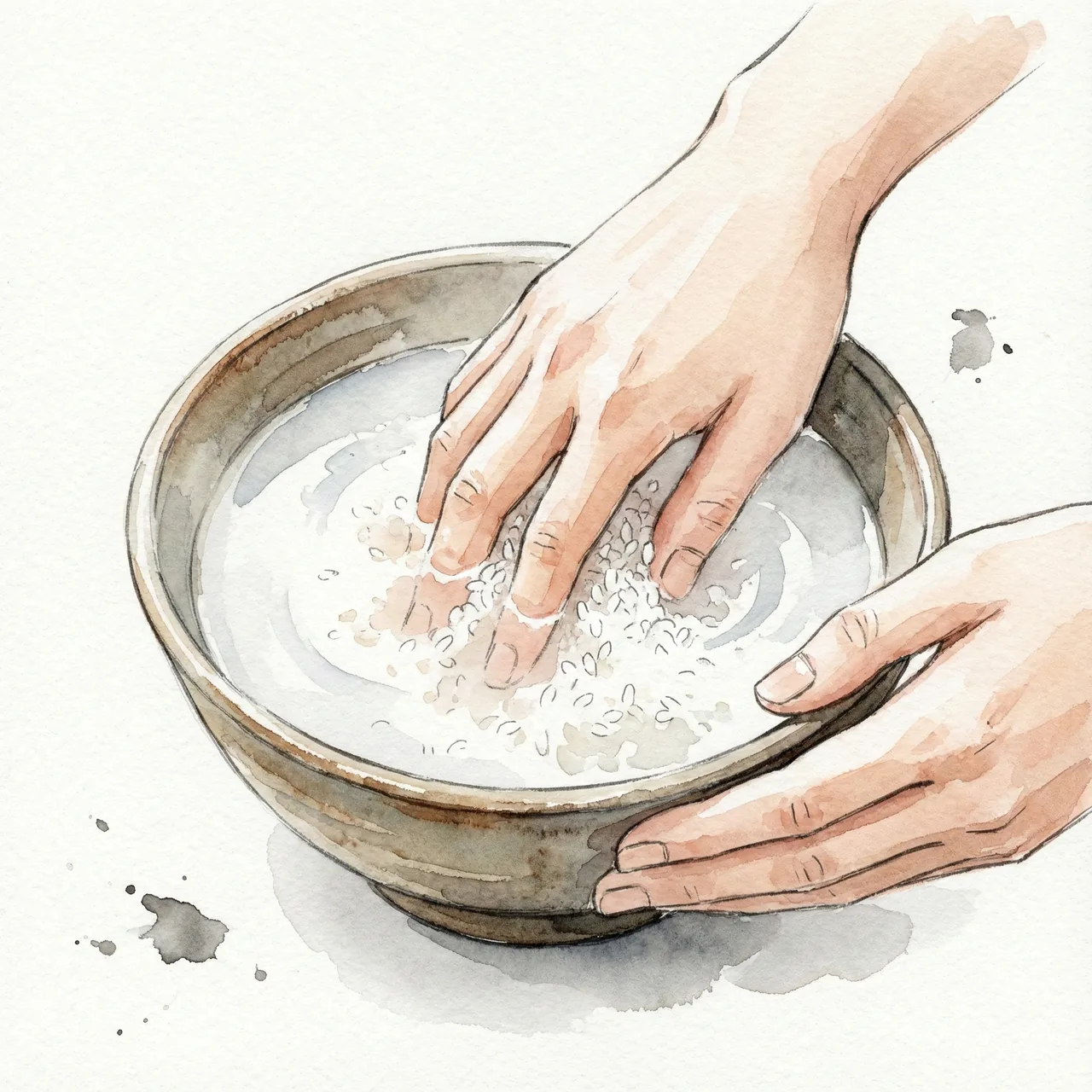
Wash gently with your fingertips — no pressing:
Modern milling means rice doesn't need
aggressive scrubbing. Cradle the rice lightly in cupped hands and rotate with your fingertips — like holding a
baseball — until the water runs just slightly cloudy. That's enough.
Always soak before cooking:
Soaking allows water to reach the very center of each grain,
producing a fluffier, more evenly cooked result. Aim for 30 minutes in summer, 1 hour in winter. The grain is
ready when it transitions from opaque white to a translucent, slightly clear appearance.
Rice Cooker Tip: One Ice Cube Changes Everything
There's one easy trick you can do right before pressing the cook button that genuinely improves even older rice.
The ice trick
Drop 1–2 ice cubes into the pot just before starting (and reduce water by the equivalent
amount).
The lower starting temperature extends the time before boiling, giving the rice's starches more time to
gelatinize and convert to sugars. The result: noticeably sweeter, glossier rice.
Fluff immediately after cooking:
Use a rice paddle to cut a cross pattern, then turn from the bottom, folding air into the grains. This releases
excess steam and coats each grain in a protective layer of vapor — the secret to that restaurant-quality sheen.
Donabe (Clay Pot) Method: Forget "Start Low, Go Slow"
Clay pot cooking has a reputation for being difficult — it's not.
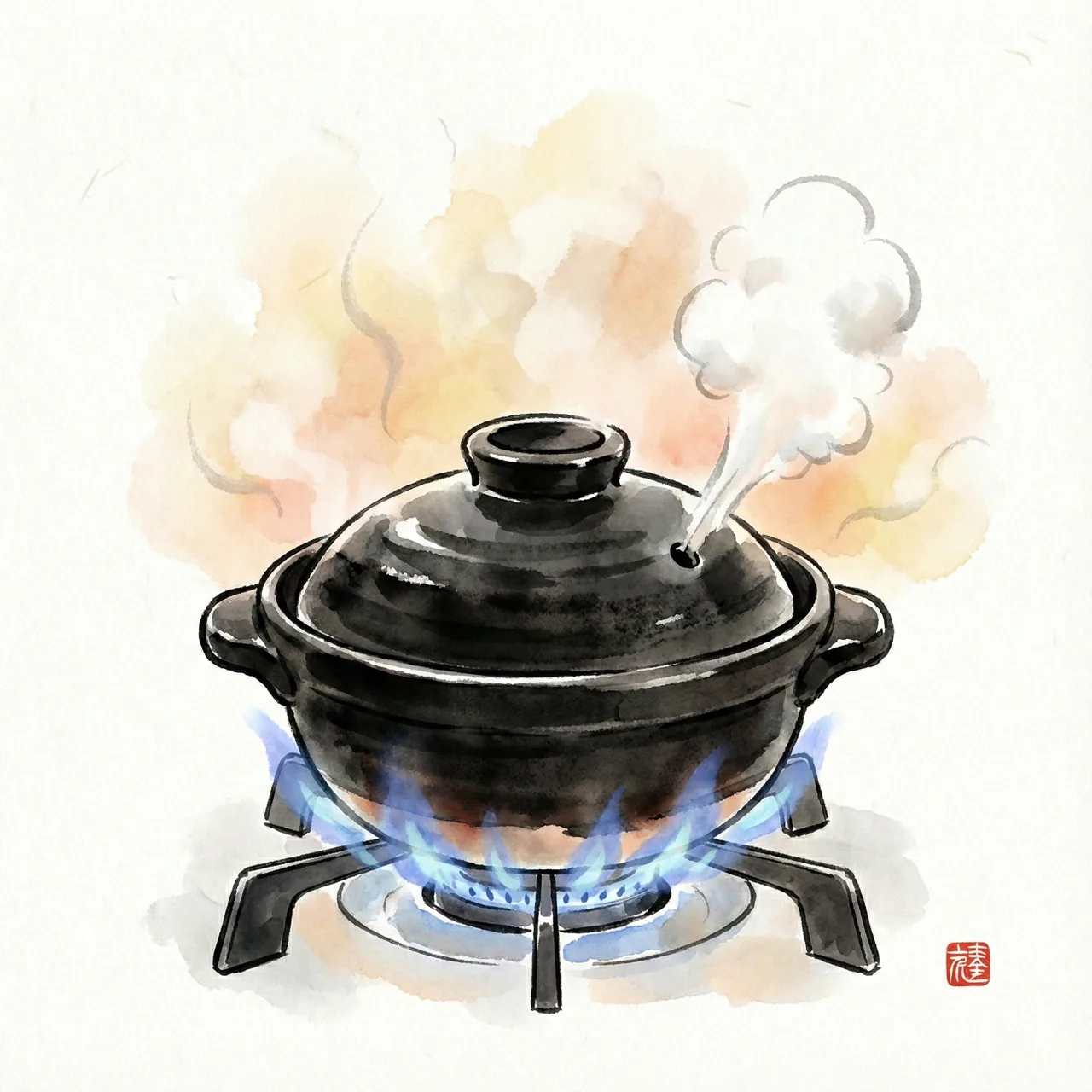
The modern consensus: medium-high heat from the start, aiming to reach a boil in about 10 minutes.
Three steps to perfect donabe rice
- To boiling (medium-high heat): Heat until steam flows vigorously from the lid vent (~10 min).
- Simmer (low heat): Drop to low and let water evaporate (~10–15 min).
- Rest (heat off): Remove from heat and leave undisturbed for 10–15 min. Do not open the lid — the residual heat cooks the center. This step is non-negotiable.
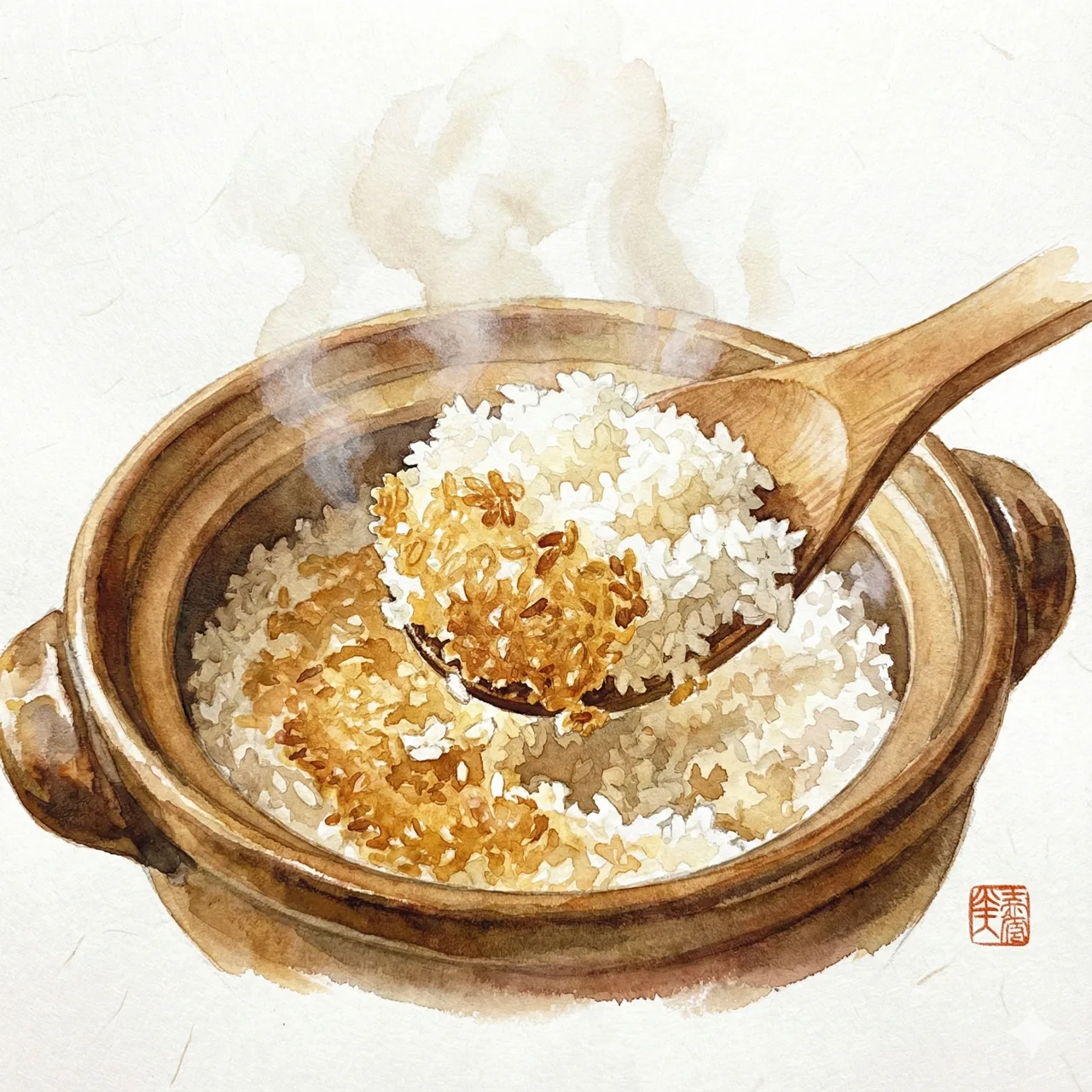
The donabe exclusive: okoge (crispy bottom crust)
When you hear a soft crackling sound near the end of the low-heat phase, that's the sign of
okoge — the slightly caramelized, fragrant crust at the bottom of the pot.
Far-infrared heat from the clay creates fluffy interior rice with a perfectly burnished bottom. Eating it is one
of the most satisfying experiences Japanese cooking offers.
※ Dedicated rice-cooking donabe (炊飯土鍋) simplifies the heat management considerably — even beginners get
professional results.
The Ultimate Donabe Rice Guide: Best Made-in-Japan Clay Pots
4. Frequently Asked Questions
How should I store rice at home?
Rice is a fresh food product. The best storage is the vegetable drawer of your refrigerator — it
keeps humidity stable and protects against heat, oxidation, and insects.
Transfer from the bag into a sealed container (a 2-liter plastic bottle works perfectly) to prevent odor
absorption and pest access.
How long does milled rice stay at its best?
The moment rice is milled, it begins to oxidize and gradually lose flavor.
As a rough guide: buy no more than a 2-month supply in winter, and no more than 2–4 weeks' worth in summer.
What's the real difference between brand rice and ordinary supermarket rice?
Brand rice earns its designation through careful attention to variety, growing region, and farming method — and
consistent high scores in the national taste ranking system.
It typically has higher natural sugar content, and balances aroma, stickiness, and sheen more precisely than
commodity rice.
Since you eat it every day, a modest upgrade in rice quality produces a noticeably higher overall satisfaction
with meals.
How do I choose between "sticky" and "firm" varieties?
If you love eating plain white rice — just a bowl on its own — lean toward the sticky camp
(Yumepirika, Koshihikari).
If you mainly eat rice alongside strong flavors — curry, donburi bowls, stir-fries — the firm
camp (Seiten no Hekireki, Yukiwakamaru) serves you better.
Not sure? A tasting comparison set is the most satisfying way to find your answer.
Which variety makes the best gift?
For a gift, you want recognizable prestige — that's Uonuma Koshihikari (Niigata), which
essentially everyone in Japan knows and respects.
For something a little more surprising and personal, Tsuyahime and Ichihomare are both warmly received.
A multi-variety tasting set that includes small portions of several brands is a great gift for food-loving
recipients — interesting, conversation-starting, and guaranteed to be enjoyed.
Should I choose no-wash (musenmai) or regular white rice?
No-wash rice is a genuine convenience win for busy weeknights. But with regular white rice, the act of washing
removes residual bran and releases more of the grain's natural fragrance as it cooks.
If you want to fully experience what a premium variety has to offer, take the two extra minutes to wash and soak
regular white rice — it makes a real difference.
5. Final Thoughts: The Ultimate Luxury Is in the Rice Bowl
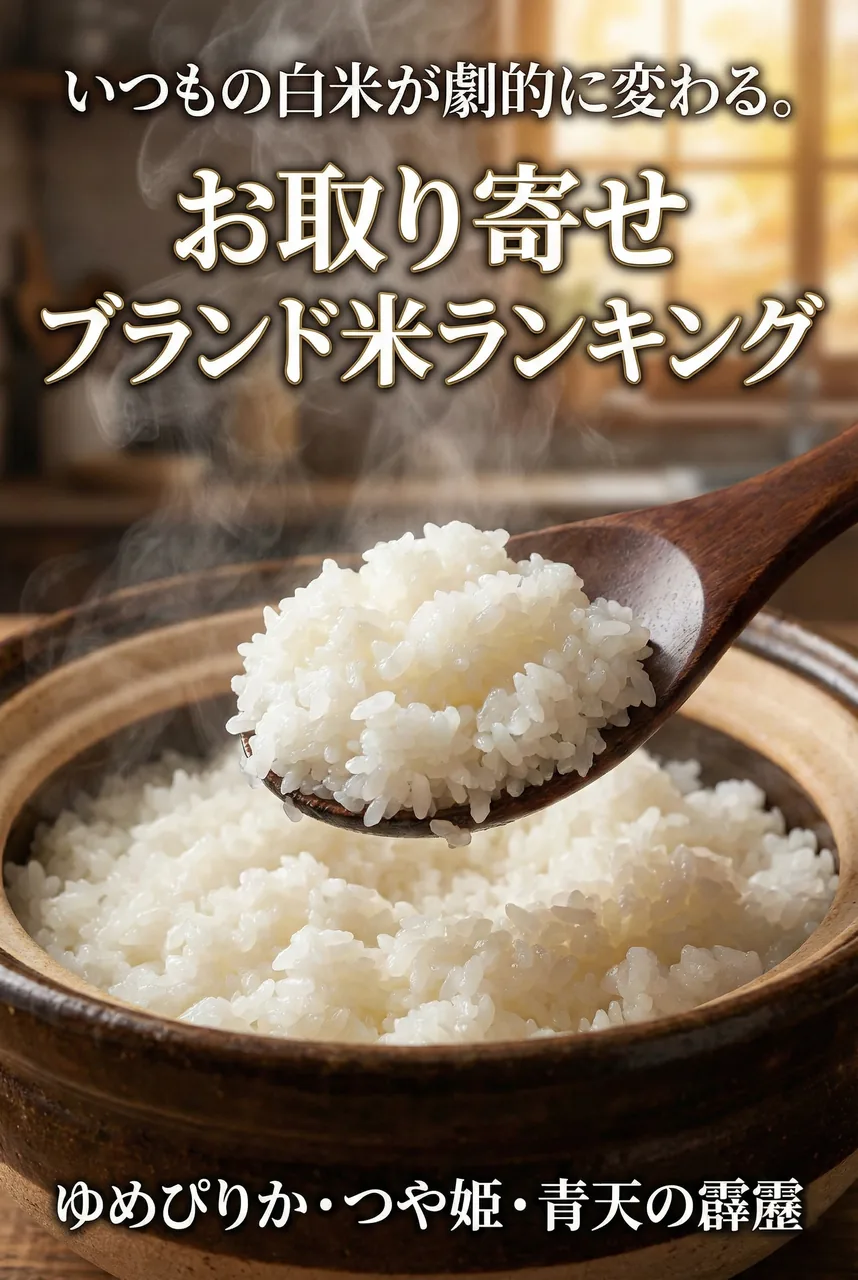
The melting stickiness of Yumepirika. The clean, piercing bite of Seiten no Hekireki. The aristocratic sweetness
of Tsuyahime.
Japan is home to rice varieties so individual, so proudly regional, so genuinely different from each other — and
most of the world hasn't even begun to discover them.
Find the variety that speaks to you. Cook it with care.
That single bowl of rice — perfectly washed, properly soaked, cooked in a clay pot with a light crust at the
bottom — contains a kind of luxury that no restaurant tasting menu can quite replicate.
Now that you have the perfect rice, it's time to find the perfect companion for it.
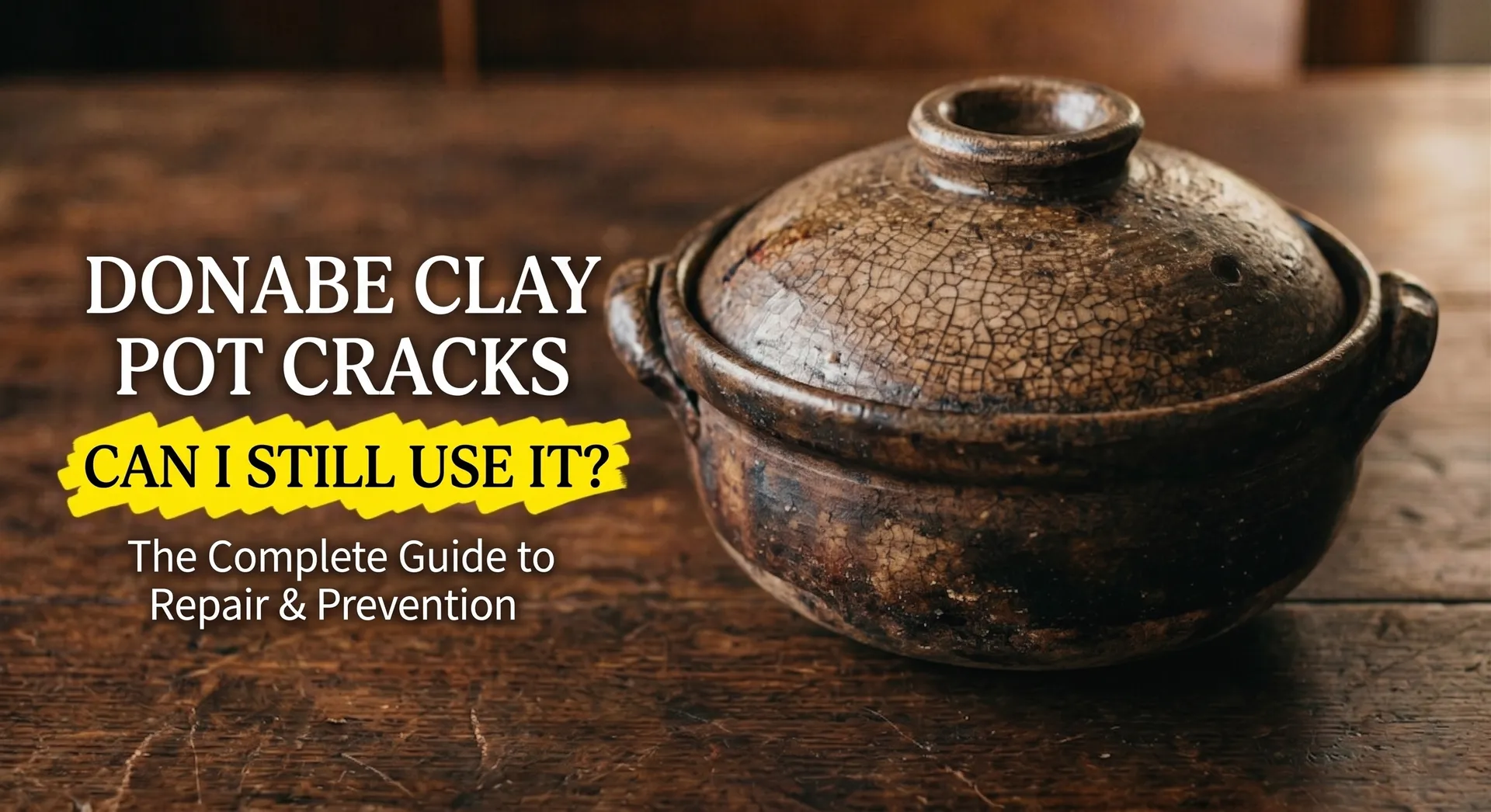
The Ultimate Donabe Rice Guide: Best Made-in-Japan Clay Pots
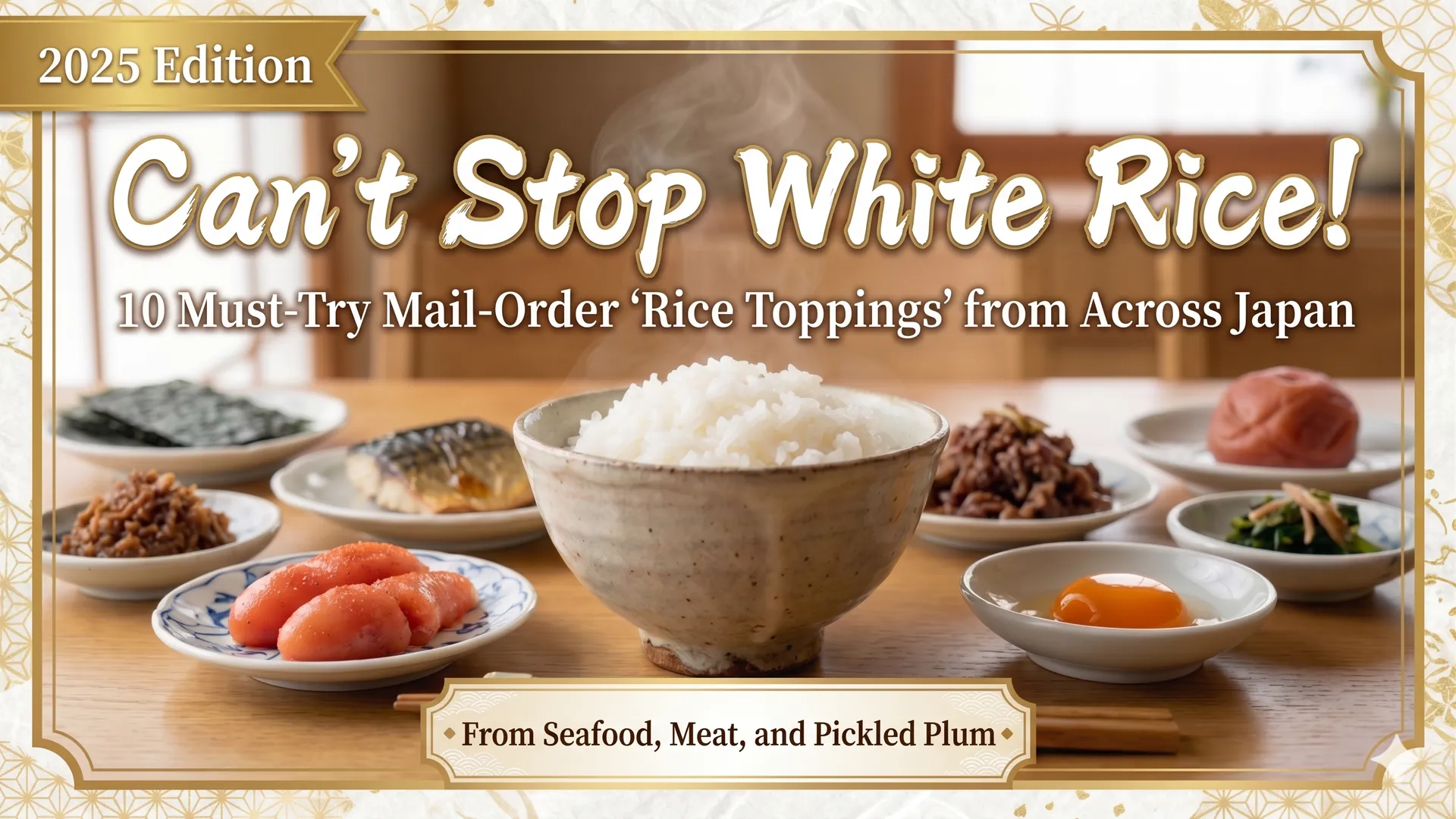
Rice Accompaniment Ranking: Japan's Best Mail-Order Toppings