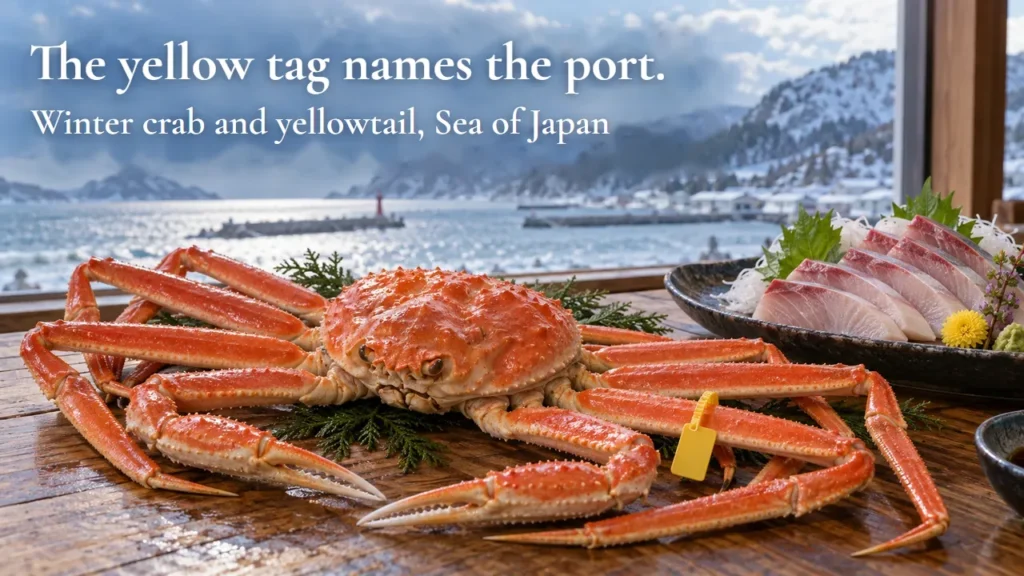
A yellow tag on the leg of a snow crab.
It means this crab was landed at a port in Fukui.
In November, snow crab (zuwaigani) season opens on the Sea of Japan. This guide chooses winter crab and yellowtail by which port they were landed at: Echizen crab with its yellow tag, Matsuba crab tagged as Tottori's, female crab caught for just two months, and Himi kan-buri — winter yellowtail auctioned at Himi fishing port.
All of them come only in winter, and they're shipped live or chilled within Japan. So this is a guide for eating them in Japan: what the tags mean, when each season opens, and how they're served.
Quick Reference: Sea of Japan Winter Seafood at a Glance
| Seafood | Landed at | Proof | Season |
|---|---|---|---|
| Echizen crab ▾ | Fukui Prefecture's ports | Yellow tag | From November |
| Matsuba crab ▾ | Sakai, Tottori, Ajiro, etc. | Tottori tag | November–March |
| Oyagani / seiko crab (female) ▾ | Tottori, Fukui | — | November–December only |
| Himi kan-buri ▾ | Himi fishing port, Toyama | Sales certificate, one per fish | After the "declaration" |
1. Why Japanese: Winter on the Sea of Japan Comes with a Port's Name
Tags and certificates tell you where it's from
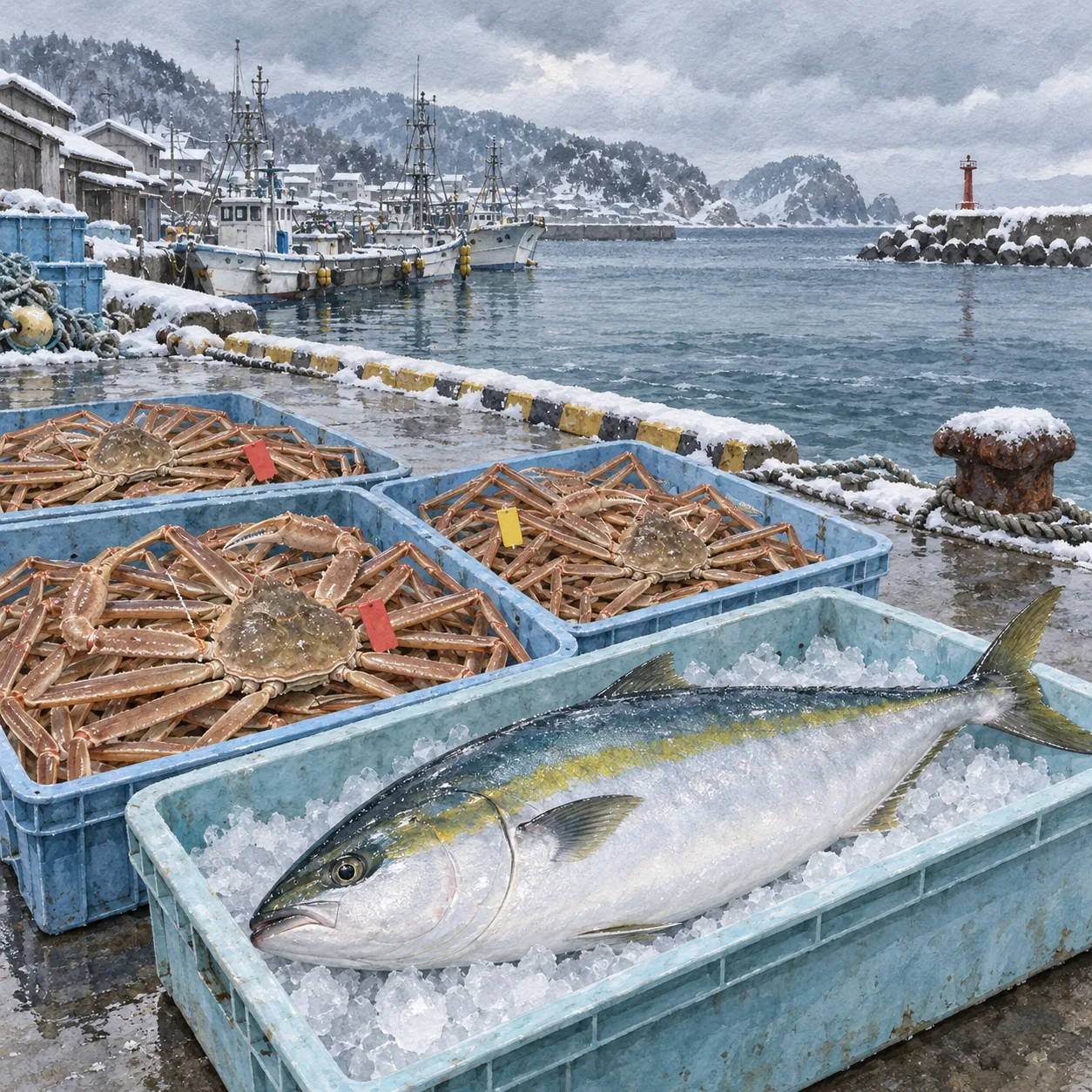
Crab and yellowtail from the winter Sea of Japan come with proof of which port they were landed at. Echizen crab has a yellow tag, Tottori's Matsuba crab has its own tag, and Himi kan-buri carries a sales certificate, one per fish. Each is a rule set by the local fishing cooperative or municipality.
And each comes only in winter. Crab season opens in November; Himi kan-buri starts only after a "declaration." Waiting is part of the pleasure.
2. Echizen Crab and Its Yellow Tag: Fukui
The first crab in Japan to wear a tag, in 1997
According to Echizen Town, Echizen crab means "male snow crab landed at a fishing port in Fukui Prefecture" — at Echizen port first of all, and also Mikuni, Tsuruga and Obama.
In 1997, Echizen Town was the first in Japan to brand its crab with tags. The yellow tag is the proof of Echizen crab. The name itself is old: "Echizen crab" appears in 1511, in the diary of the court noble Sanjonishi Sanetaka.
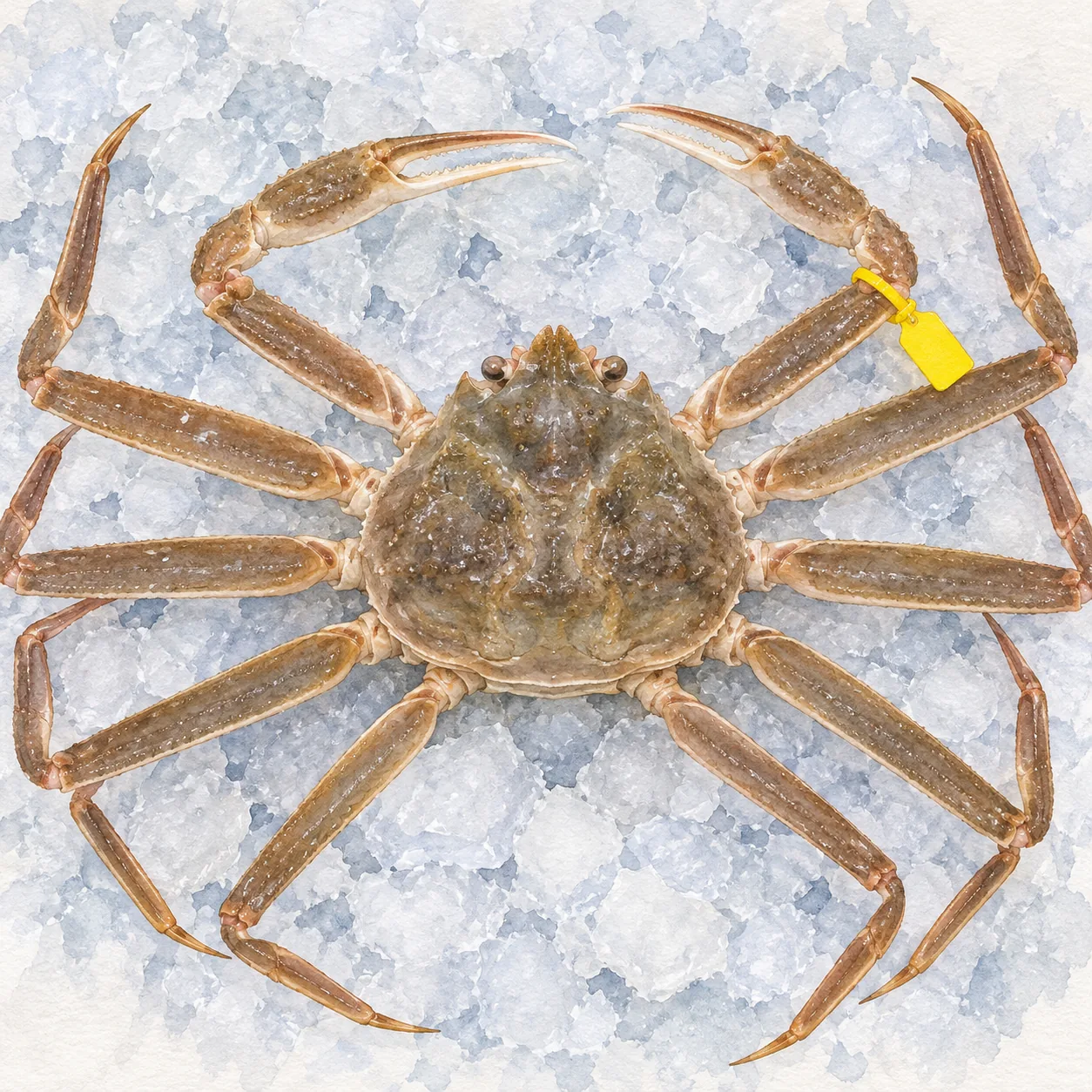
Live Echizen crab, male, 900–1,000 g — Fukui
In Japan, shops buy Echizen crab at auction and ship it live, yellow tag attached. The weight is before cooking (2–2.2 lb). It arrives chilled and must be boiled or prepared at once — as sashimi or crab shabu-shabu. Shipped within Japan only.
3. Tagged Matsuba Crab: Tottori
Proof of Tottori, for shells 11 cm and up
In Tottori, mature male snow crab is called "Matsuba crab." The main ports are Sakai, Tottori and Ajiro.
According to Tottori Prefecture, high-quality Matsuba crab with a shell at least 11 cm (4.3 in) wide, landed by the prefecture's offshore trawlers, goes to market with a tag certifying it as Tottori's. The season runs from November to March.
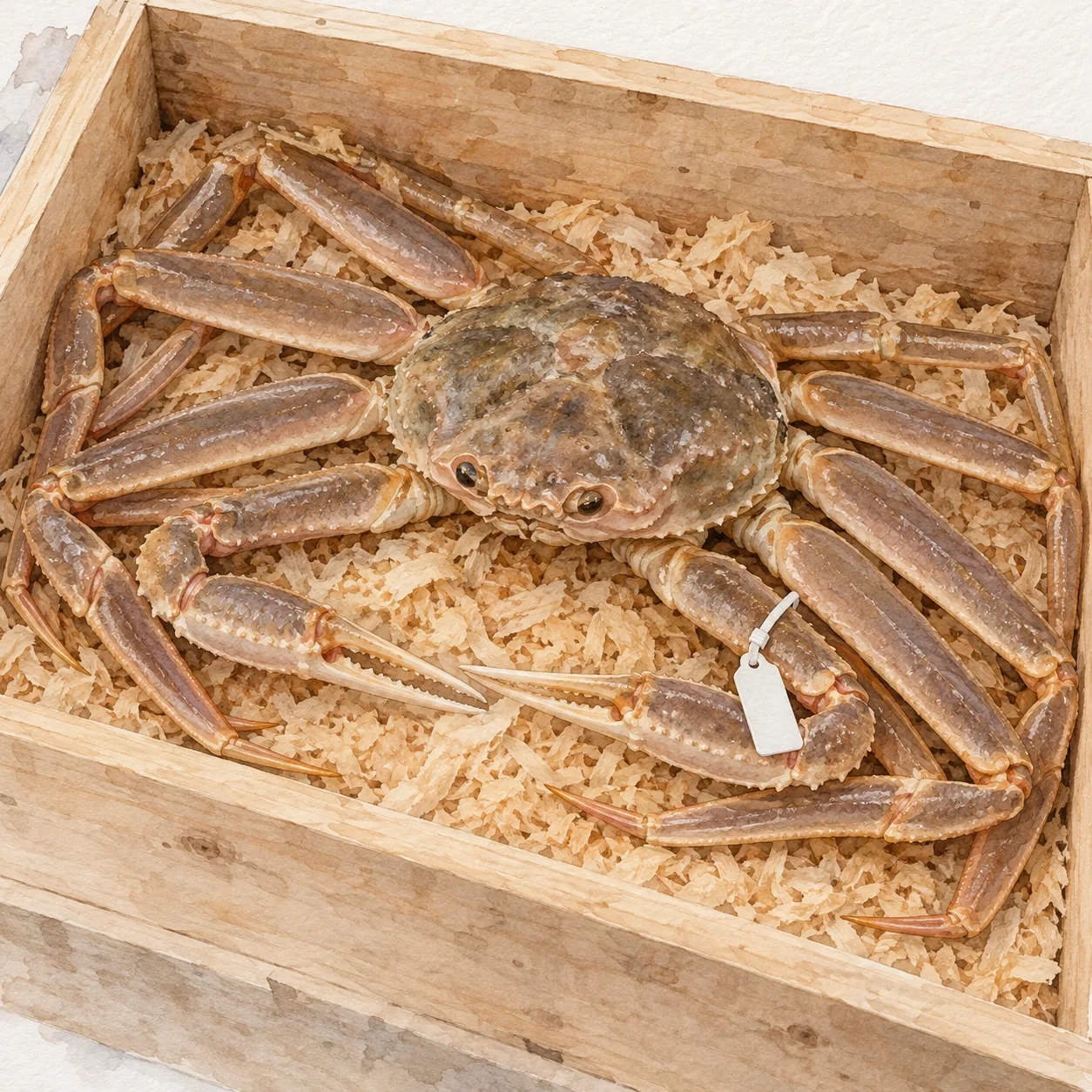
Live tagged Matsuba crab, large, 850 g+ — Sakaiminato, Tottori
Live Matsuba crab shipped from Sakaiminato, hand-picked, as the fish shop puts it, by the owner. Shipping starts around November 9 as the catch comes in — rough seas keep boats in port, so leave room on dates. Within Japan only.
4. Female Crab, for Just Two Months
Female snow crab ends with the year
Female snow crab has a different name in each region: "oyagani" in Tottori, "seiko-gani" in Fukui; shops also write "sekogani" or "kobako-gani."
According to Echizen Town, the seiko crab season is just two months, November 6 to December 31, to protect the stock. Tottori also limits oyagani to November–December. They're about a third the size of males, but Echizen Town describes them as "packed with crab miso" — the rich innards, and the roe.
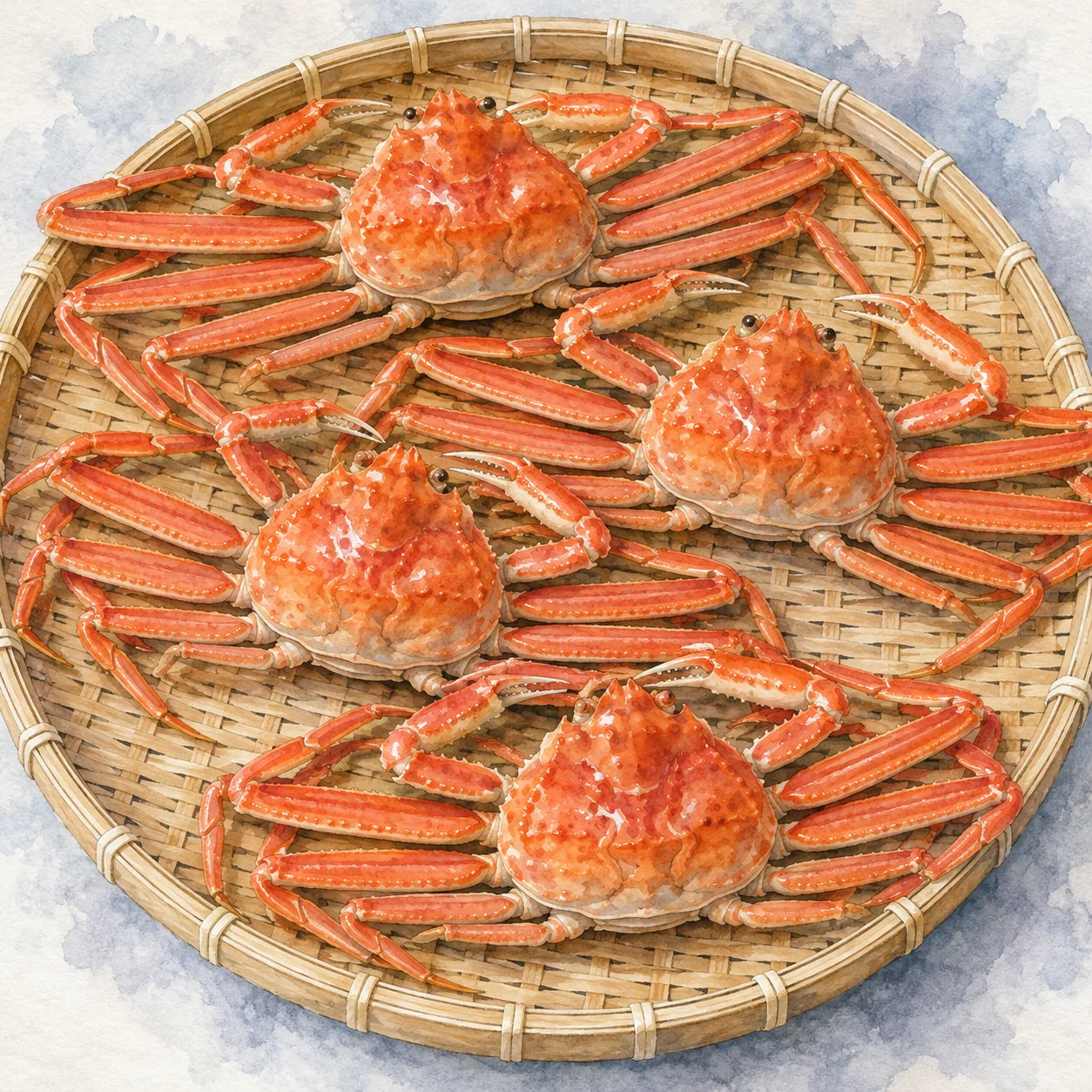
Hama-yude seko crab (oyagani), small, 1 kg (8–10 crabs) — Tottori
Female snow crab from Tottori, boiled on the dock. Ready to eat as it arrives: lift off each shell and spoon the meat and miso over rice. With the season ending in December, it's a winter feast you can only have before the year ends. Within Japan only.
5. Himi Kan-Buri: Toyama
Yellowtail that starts with a "declaration"
According to the Himi tourism association, "Himi kan-buri" is yellowtail caught in set nets in Toyama Bay and auctioned at Himi fishing port during a period fixed by a council of the Himi fishing cooperative and others.
The council looks at the size, number and shape of the fish being landed and issues a "Himi kan-buri declaration"; only then does shipping begin. After that, each fish carries a sales certificate proving it was auctioned at Himi, and ships in a uniform blue box. The declaration date varies each year — it was November 20 in the 2024 season.
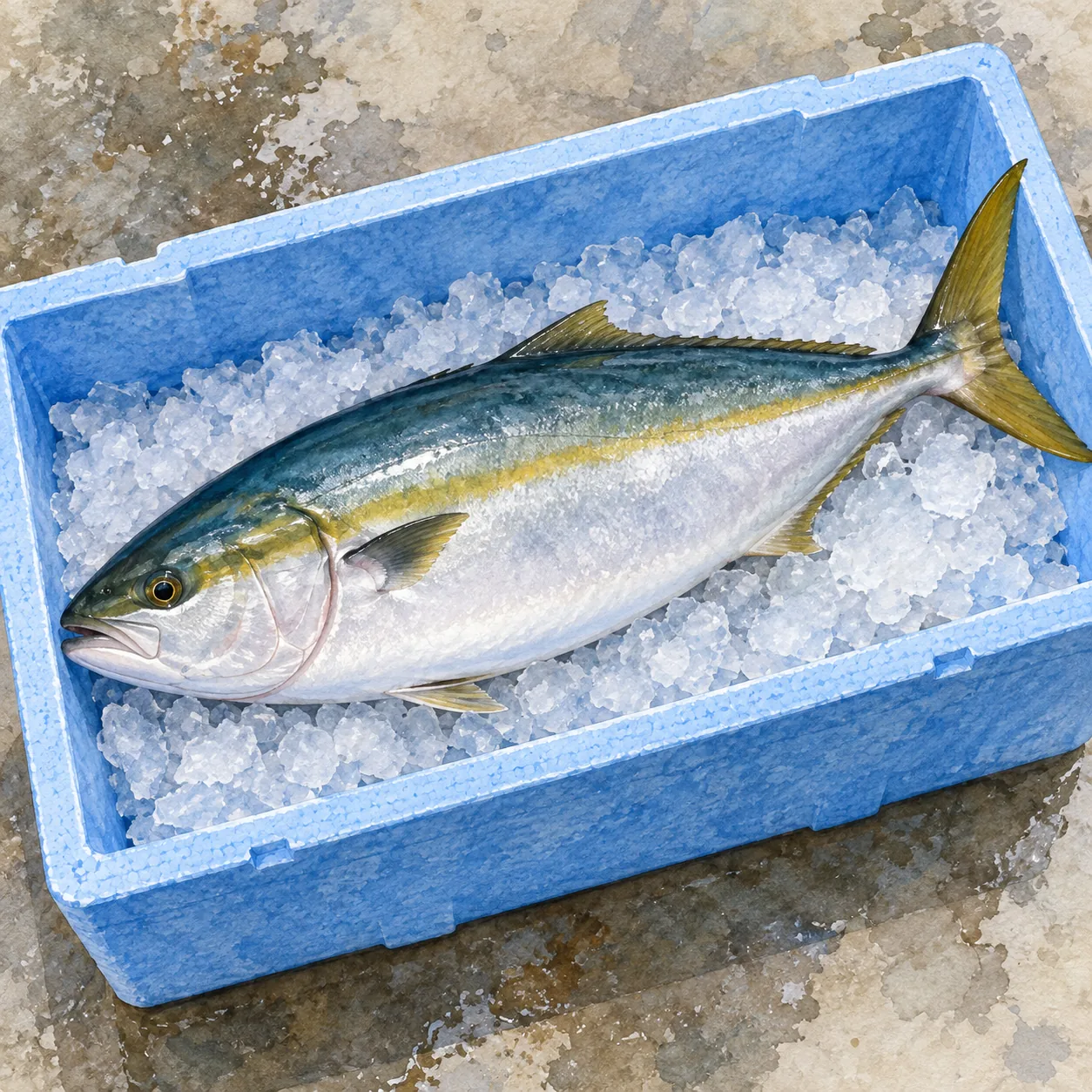
Himi kan-buri for shabu-shabu — Himi, Toyama
In Japan it's offered as a furusato nozei (hometown tax) gift from Himi City: 8–10 kg (18–22 lb) Himi kan-buri processed on landing day and shipped the same day. For visitors, the place to taste it is Himi itself in winter.
6. When and How to Eat Them
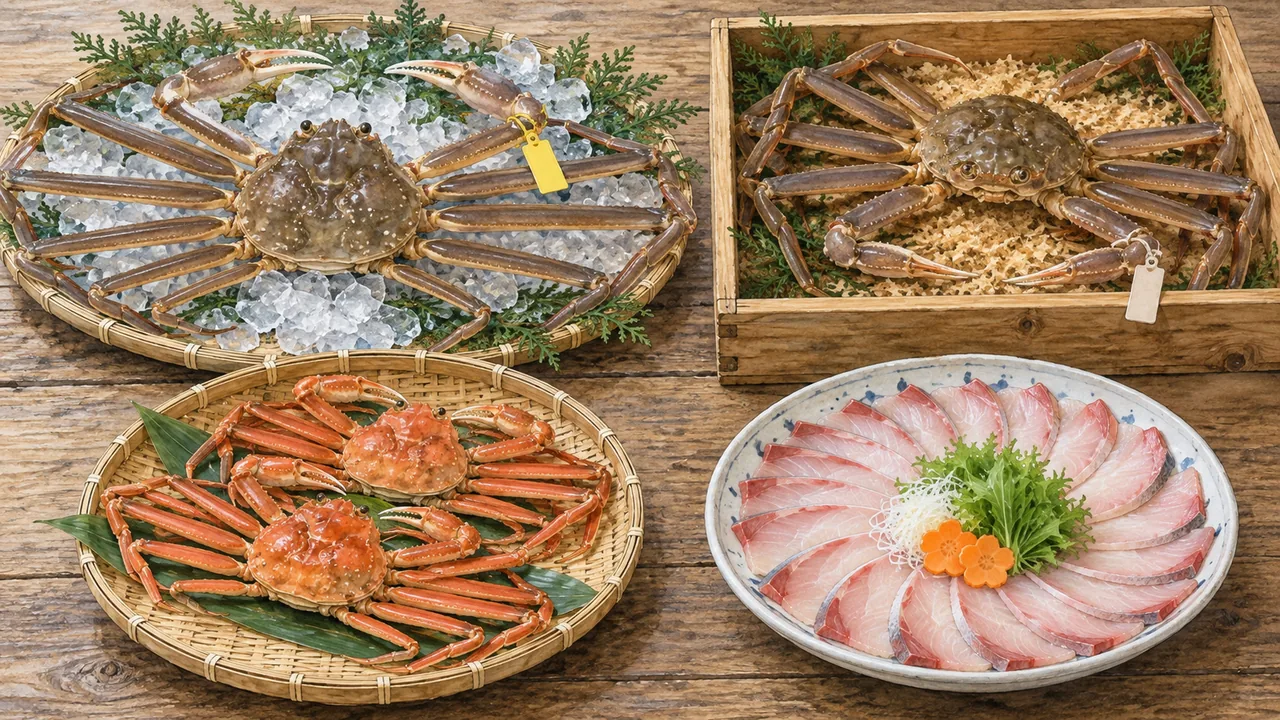
① Timing: wait for the opening and the declaration
Crab from the November opening; female crab only until December; Himi kan-buri after the declaration, which moves each year. Plan a winter trip to the Sea of Japan coast — Fukui, Tottori or Toyama — around these dates.
② How it's served
Live crab can be eaten as sashimi, crab shabu-shabu or grilled; it must be cooked the day it arrives. Dock-boiled female crab is eaten as is. Yellowtail comes thin-sliced for shabu-shabu: swish through hot broth and dip in ponzu.
7. Eating Winter Seafood in Japan
Live crab and fresh yellowtail are shipped only within Japan, and fresh seafood generally can't be taken across borders. If you're in Japan in winter, the best way is to go to the coast: crab-season ryokan and restaurants around Echizen and Mikuni in Fukui, Sakaiminato and Tottori, and Himi in Toyama serve them through the season.
When you order, ask to see the tag — 越前がに (Echizen-gani) or 松葉がに (Matsuba-gani) — or look for ひみ寒ぶり on the menu. Female crab is せいこがに / 親がに / 香箱がに, and only until December.
8. Frequently Asked Questions
Are Echizen crab and Matsuba crab different crabs?
Both are male snow crab. Landed in Fukui Prefecture it's "Echizen crab"; in Tottori, "Matsuba crab." Each carries its own tag as proof of the port.
Since when has Echizen crab had a yellow tag?
Since 1997, when Echizen Town became the first in Japan to brand its crab with tags.
Until when can I eat female crab (seiko-gani)?
The season runs November to December. According to Echizen Town, the seiko crab season is November 6 to December 31, to protect the stock.
What makes "Himi kan-buri" different from other winter yellowtail?
Only yellowtail caught in Toyama Bay set nets during the set period and auctioned at Himi fishing port qualifies, each with a sales certificate.
When does Himi kan-buri season start?
When the "Himi kan-buri declaration" is issued, which varies by year. In the 2024 season, it was November 20.
Can I take Japanese crab home?
Live and fresh crab is shipped only within Japan, and most countries restrict bringing in fresh seafood. Enjoy it in Japan, during the season.
Final Thoughts: A Port's Name on Your Winter Table
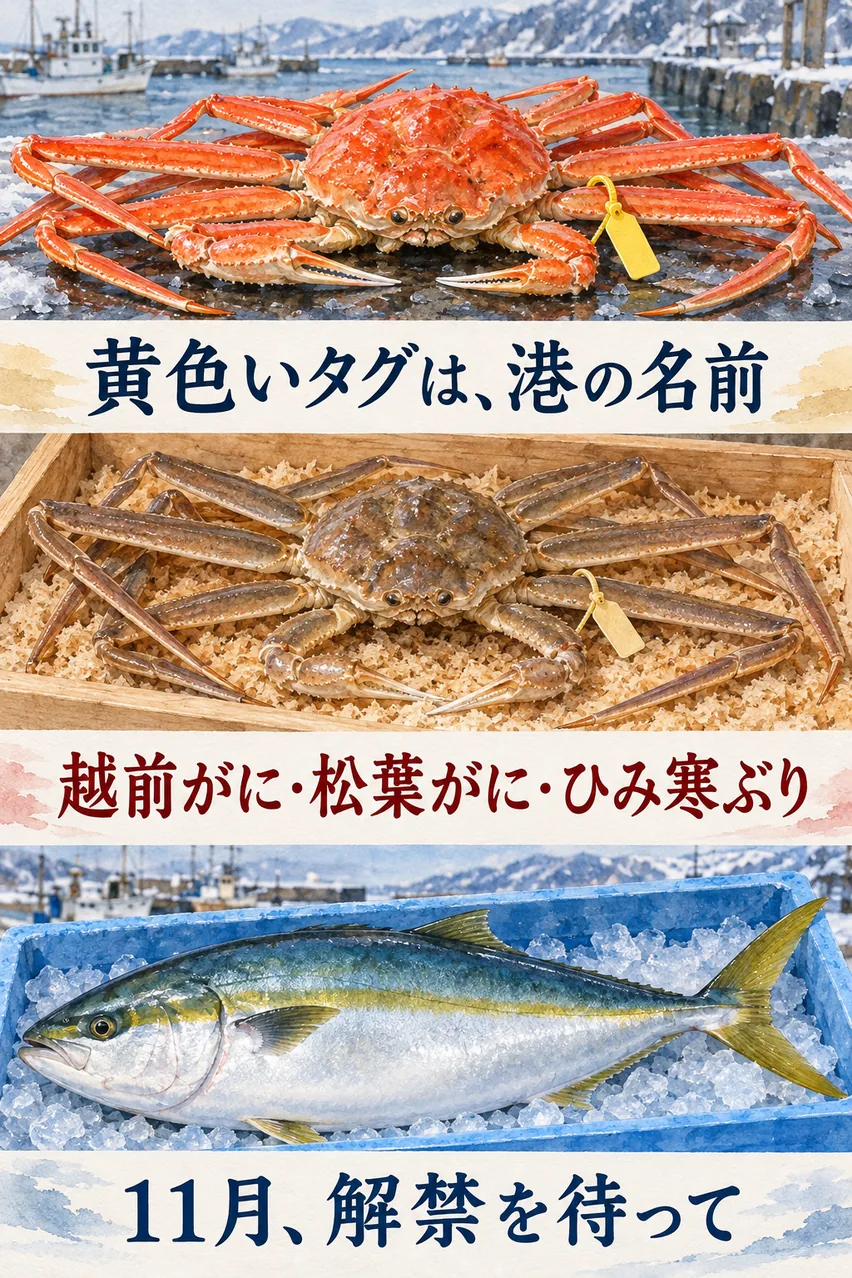
Winter crab and yellowtail from the Sea of Japan come with the name of their port.
Fukui's Echizen crab, tagged first in Japan in 1997. Tottori's Matsuba crab, tagged when its shell reaches 11 cm. Female crab, only until the year ends. And Himi kan-buri, which waits for its declaration.
If you're in Japan this winter, head to the coast and ask to see the tag.
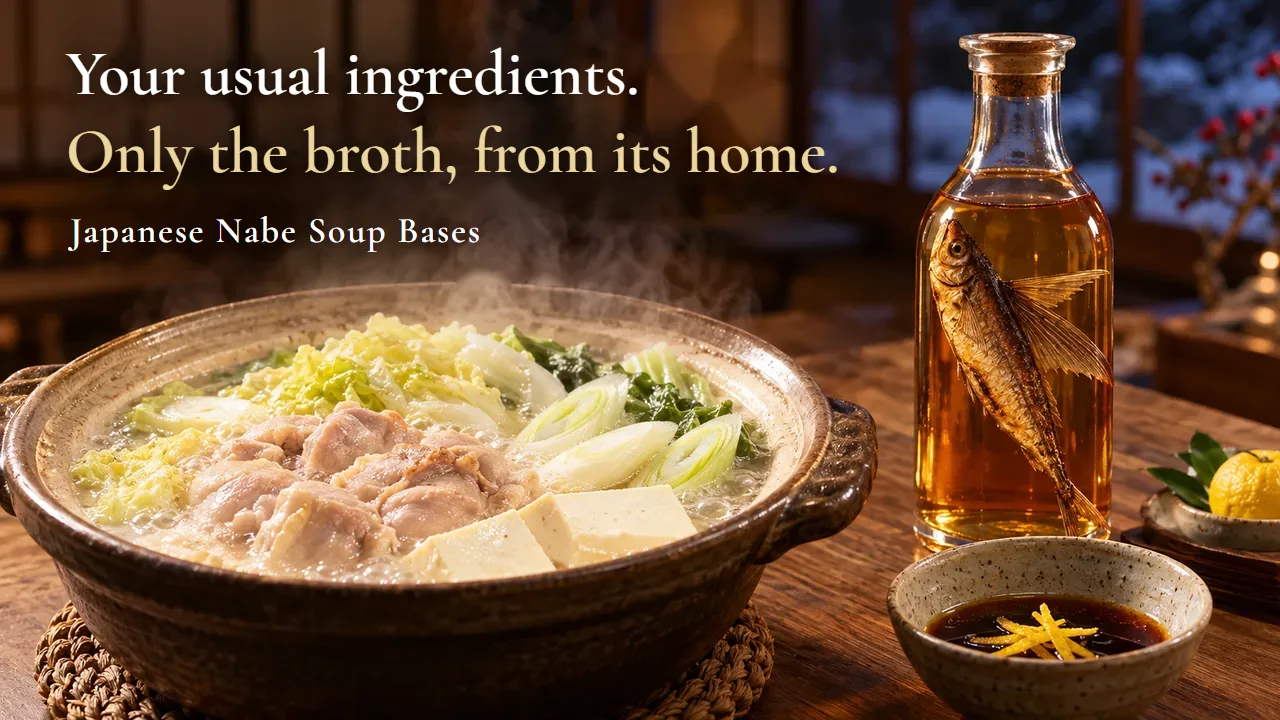
Japanese Nabe Soup Base: Mizutaki, Shiro Dashi, Ago, Ponzu
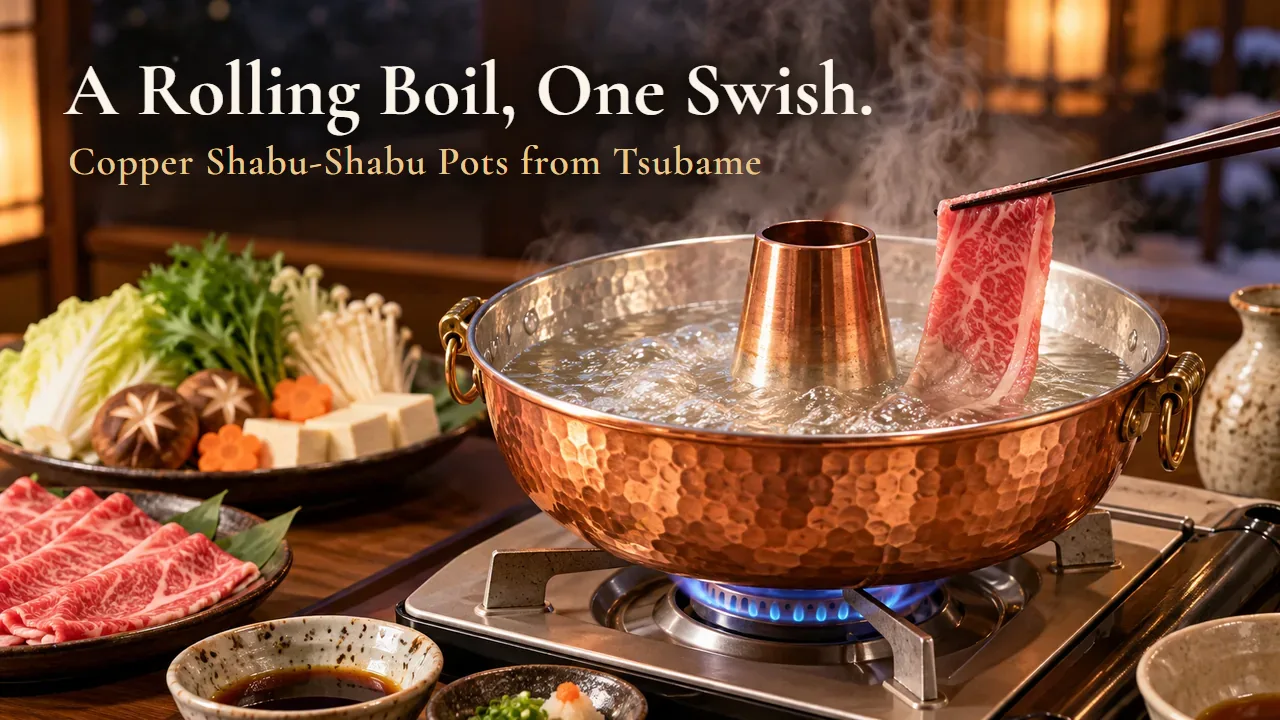
Shabu-Shabu Pot: Japanese Copper From Tsubame