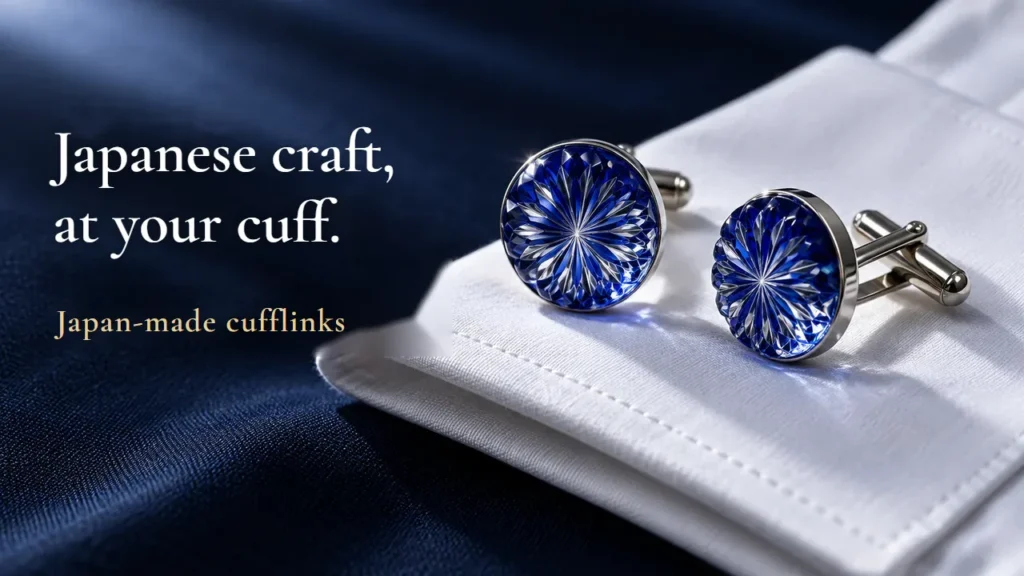
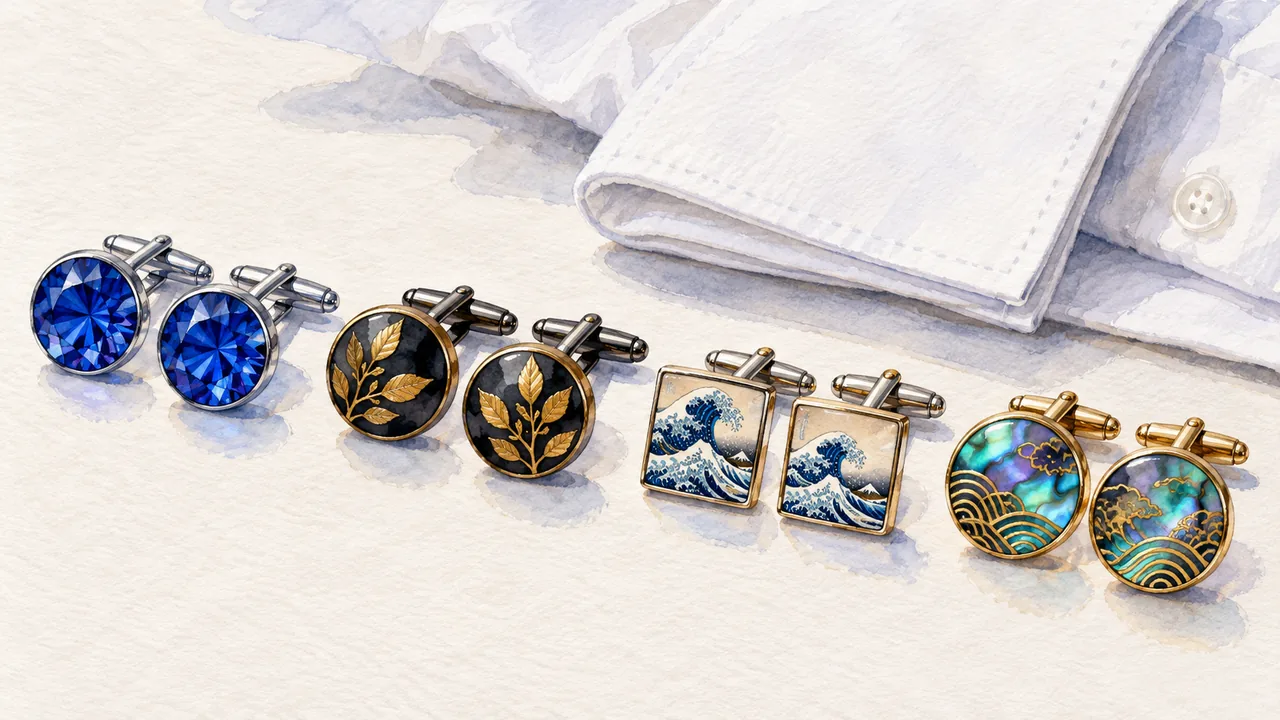
Japanese craft cufflinks come in four techniques: cut glass, gold inlay, cloisonné, and mother-of-pearl with gold leaf.
Each packs a craftsman's skill into a face the size of a fingertip.
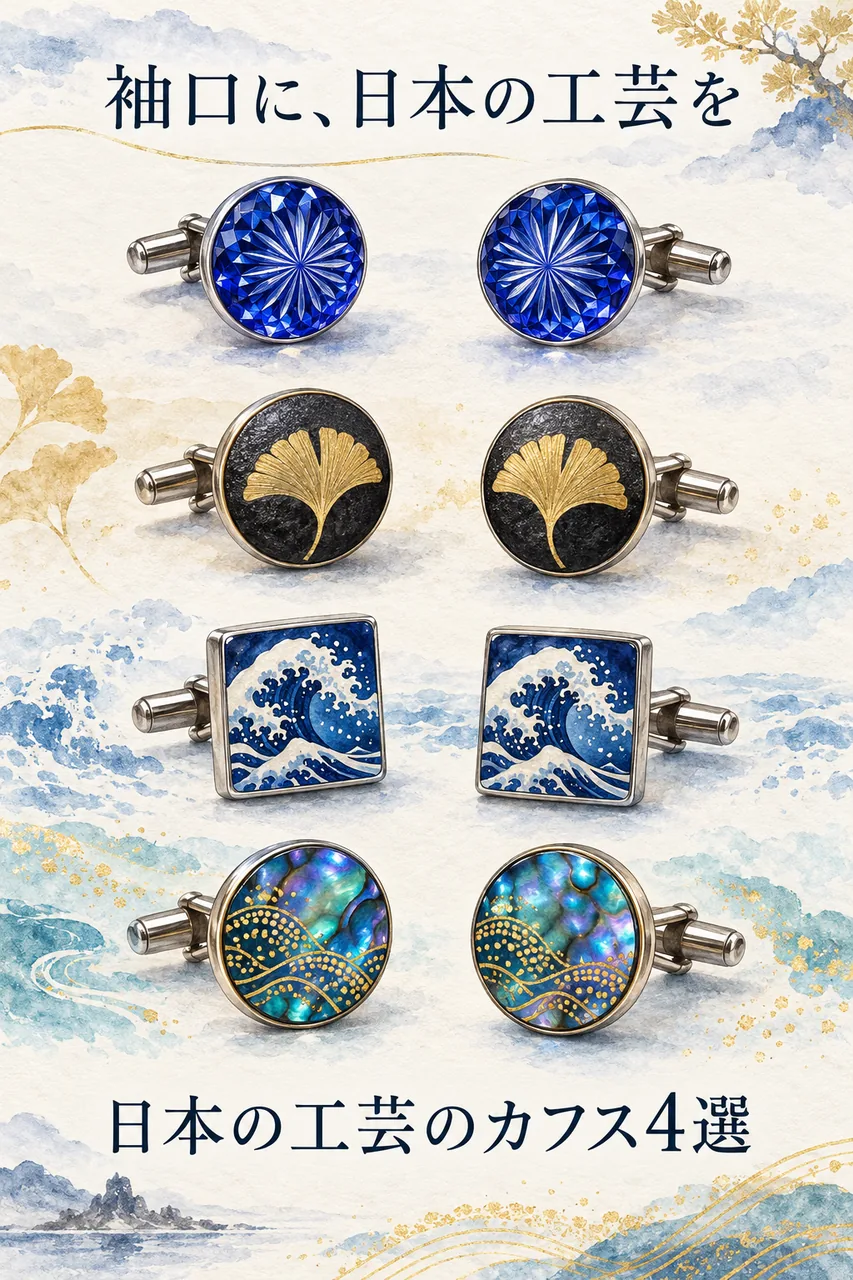
A chrysanthemum pattern cut by an Edo kiriko glass cutter. Higo zogan from Kumamoto, the inlay technique that once decorated sword guards. Tokyo cloisonné, fired seven times and polished to 0.05 mm. And a Kyoto kinsai craftsman painting kimono patterns in gold leaf on abalone shell.
This guide covers four Japan-made cufflinks, how to wear them, and how to choose one as a gift — and two you can buy on Amazon.com.
Quick Reference: 4 Japanese Craft Cufflinks at a Glance
| Cufflinks | Craft | Maker | Look |
|---|---|---|---|
| Edo kiriko ▾ | Cut crystal glass | Horiguchi Glass (Tokyo) | Sparkles in the light — on Amazon.com |
| Higo zogan ▾ | Pure gold inlaid in iron | Kumamoto | Black and gold, weighty dignity |
| Tokyo cloisonné ▾ | Glassy enamel fired on metal | Hatakeyama Shippo (Tokyo) | Fine pictures, glossy color |
| Kyoto kinsai ▾ | Mother-of-pearl with gold-leaf kimono patterns | NSplus (Kyoto) | Shifts color with the angle |
Click a cufflink to jump to it.
1. Why Japanese: A Whole Craft on a Tiny Face
You see them every time you check your watch
Japan has cufflinks that pack an entire craft into that small face: Edo kiriko glass cutting, Higo zogan inlay of gold in iron, cloisonné enamel fired onto metal, and Kyoto kinsai, painting kimono patterns in shell and gold leaf. Each was refined over generations on larger pieces — vessels, sword fittings, kimono — and now sits at your cuff.
2. Edo Kiriko: A Chrysanthemum That Scatters Light
A kiriko workshop founded in 1921
Horiguchi Glass began in 1921, when its founder apprenticed himself to a master of Edo kiriko cut glass. The skills were handed down along with the name "Shuseki," and lead today to Horiguchi Kiriko, run by the third generation.
The cufflinks are cut with a "kikka-mon" (chrysanthemum pattern) built from straight lines. In light, the fine cuts scatter it, giving crystal glass's clear brilliance — a small flash every time your cuff moves.
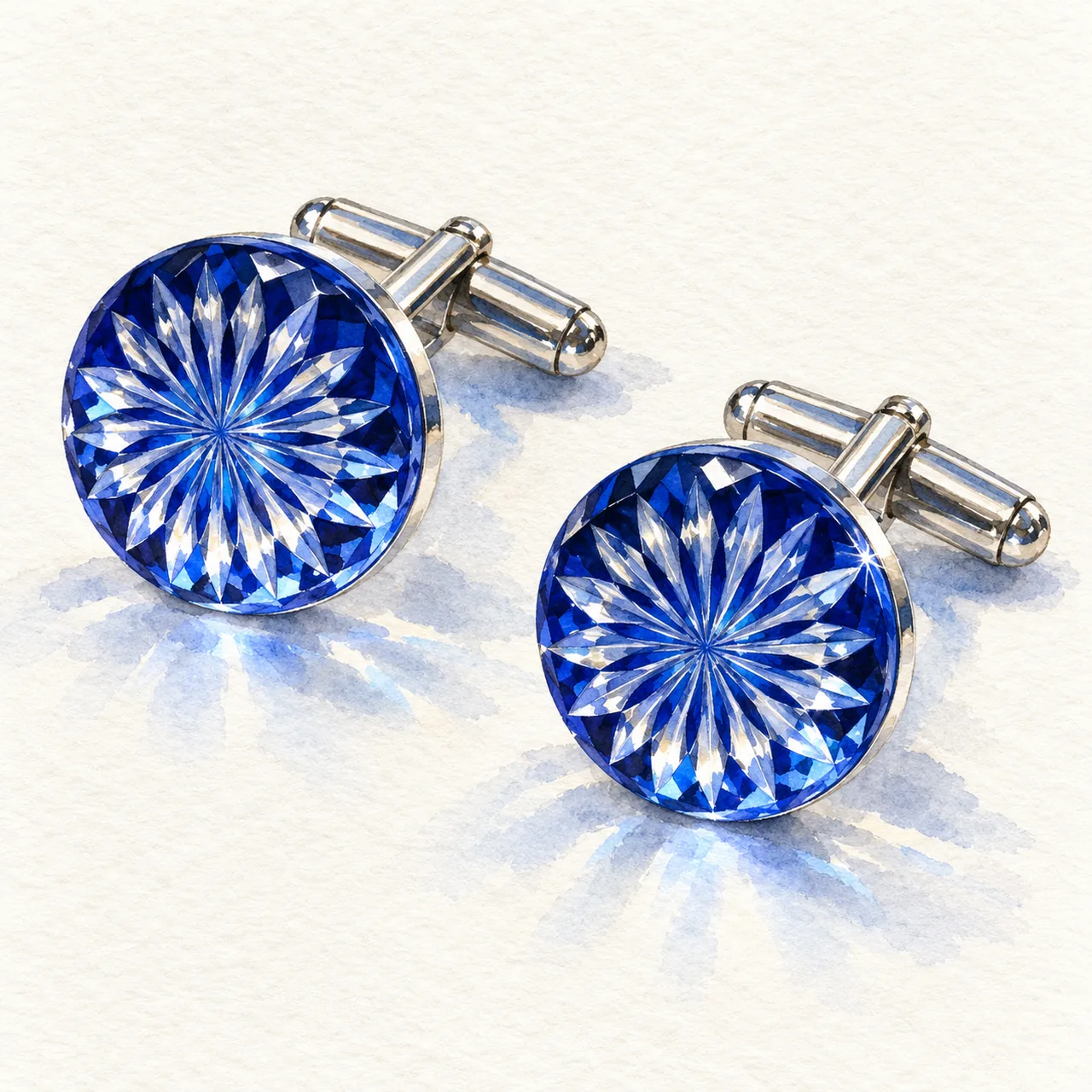
Horiguchi Glass Edo Kiriko Crystal Cufflinks — cut by a kiriko craftsman
Edo kiriko cufflinks cut by Horiguchi Glass's craftsmen. 14 mm (0.55 in) across, crystal glass with a chrysanthemum pattern; rhodium-plated brass fittings. Several colors; in Japan, deep "ruri" blue is the classic Edo kiriko color.
The ball on the back is made larger so they don't slip out. For weddings and ceremonies, or an everyday suit. Available on Amazon.com in black, red, clear, green, purple and light blue.
Horiguchi Glass Edo Kiriko Crystal Cufflinks (Black)
Loading product details…
3. Higo Zogan: From Sword Guards to Shirt Cuffs
From gunsmiths to "Higo kinko"
Higo zogan is a traditional craft of Kumamoto that inlays gold and silver into an iron base to make patterns. It began about 400 years ago, in the early Edo period, as decoration that gunsmiths applied to gun barrels and to sword tsuba (guards).
Hosokawa Tadaoki, lord of Kumamoto, retained master craftsmen to make sword fittings, and many celebrated tsuba and mountings were made — known nationwide as "Higo kinko" (Higo metalwork). When the Meiji government's ban on wearing swords cut demand for sword fittings, the skills moved to personal accessories (Kumamoto Prefectural Traditional Crafts Center).
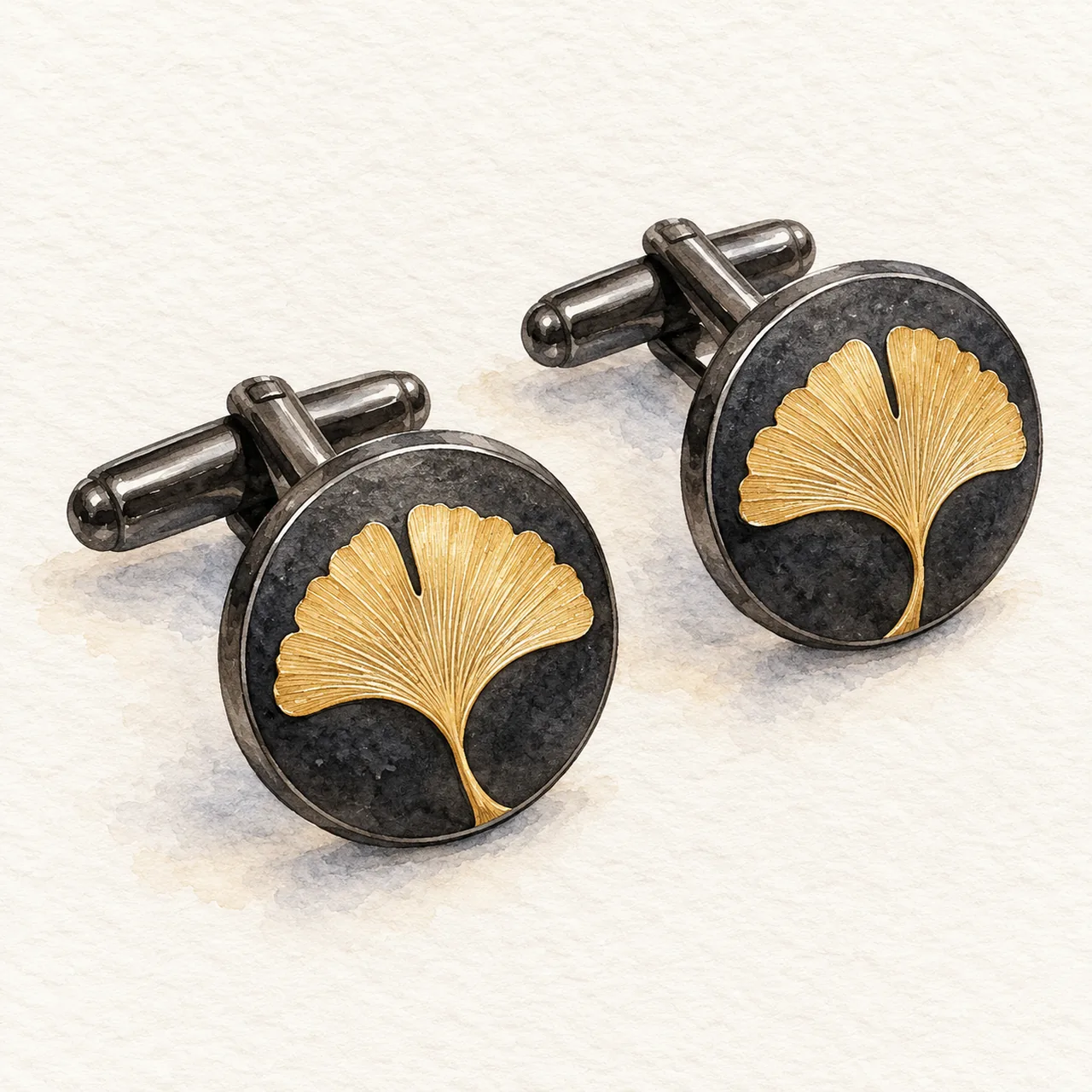
Most Higo zogan is "nunome zogan"
Higo zogan techniques include nunome zogan ("cloth-texture inlay," where the iron is finely cross-hatched to grip the gold) and horikomi zogan (carved inlay); most today is nunome. The crafts center describes gold and silver set into black iron as having the weight and dignity of samurai culture.
Higo Zogan Cufflinks, Ginkgo K-01 — pure gold ginkgo on black iron
Calm black ground, pure gold contrast. A classic shape, with a gold ginkgo leaf that quietly stands out. Cherry, iris, arabesque and other patterns let you change with the seasons; matching tie pins exist. Sold in Japan.
4. Tokyo Cloisonné: Fired Seven Times, Polished to 0.05 mm
Fired again for every color
Shippo (cloisonné) is glassy enamel laid on gold, silver or copper and fired at around 800°C (1,470°F). Its colors and luster were likened to the seven treasures of the Buddhist sutras — hence "shippo," "seven treasures."
Hatakeyama Shippo's cufflinks repeat enamel, firing and an acid wash for each color, then are polished and fired one last time — seven firings in all — with polishing done to 0.05 mm precision.
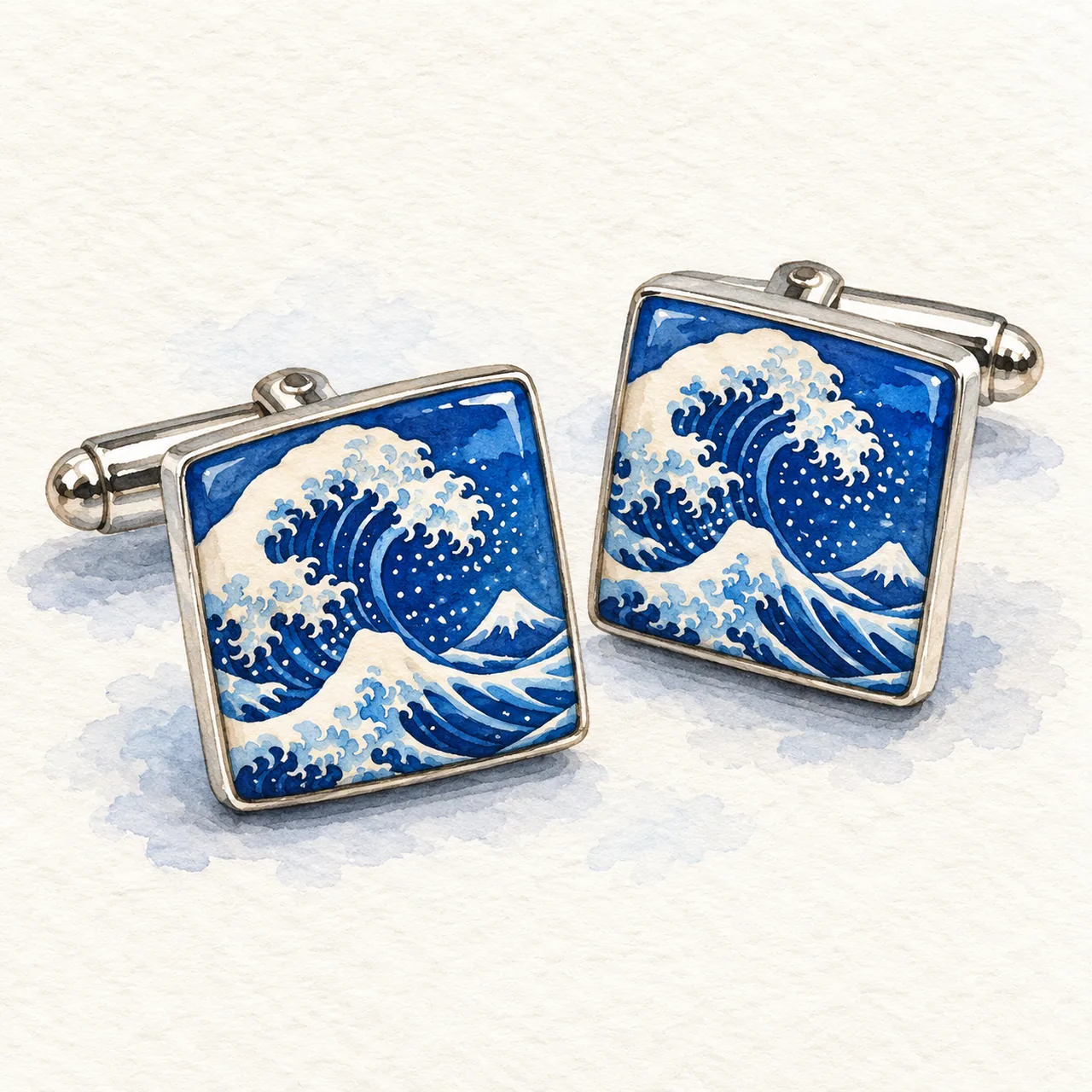
Hatakeyama Shippo "The Great Wave off Kanagawa" Cufflinks — Hokusai's wave, at your cuff
Hokusai's great wave, fired seven times onto a cufflink. 18 × 18 mm (0.7 in). Hatakeyama Shippo has won the Tokyo Governor's Prize in the "Tokyo Tejigoto" craft program, among others.
Cloisonné is glassy and can crack if dropped or knocked hard. Wipe with a soft cloth after wearing; the workshop offers paid repair and repolishing. Sold in Japan.
5. Kyoto Kinsai and Raden: Cuffs by a Kimono Craftsman
Kinsai, which grew up with Kyo-yuzen
Kinsai decorates kimono with gold and silver leaf and metallic powders. It developed alongside Kyo-yuzen dyeing, and its history goes back to the Momoyama and early Edo periods.
NSplus is the brand of a Kyoto certified traditional craftsman of kinsai, who has worked on kimono for more than 30 years and wanted to bring the craft beyond kimono. Natural abalone shell is used as raden (mother-of-pearl inlay), and kimono patterns are painted over it in gold leaf.
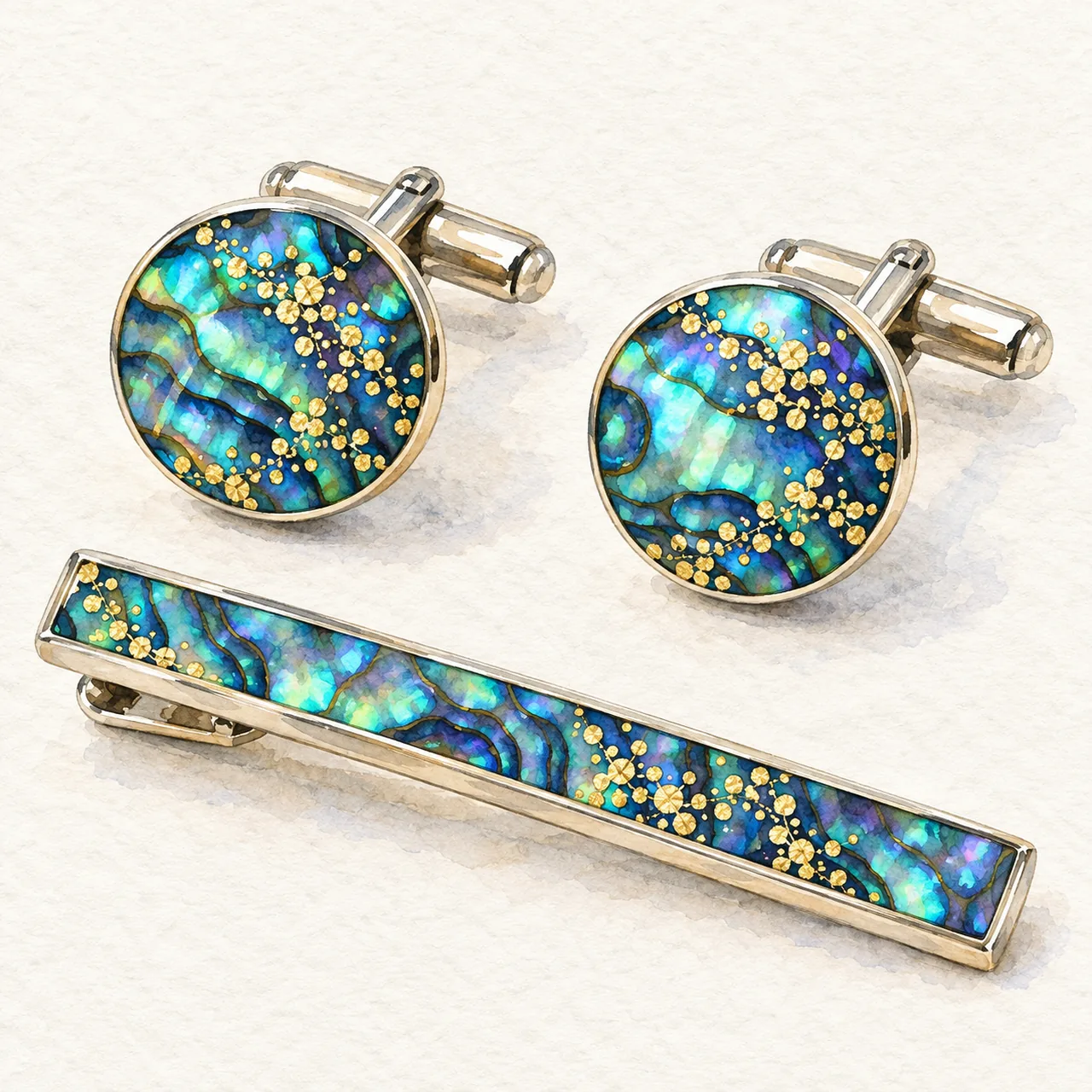
NSplus Kyoto Kinsai Tie Pin and Cufflink Set, Black Abalone Raden, Same-Sarasa Komon — color that changes with the angle
The deep iridescence of black abalone, with a fine shark-skin kimono pattern in real gold leaf. The shell glows blue or green depending on the angle. A tie pin and cufflink set.
Each is handmade one of a kind, so the pattern differs slightly from the photos. Sold in Japan.
6. Choosing and Wearing Cufflinks
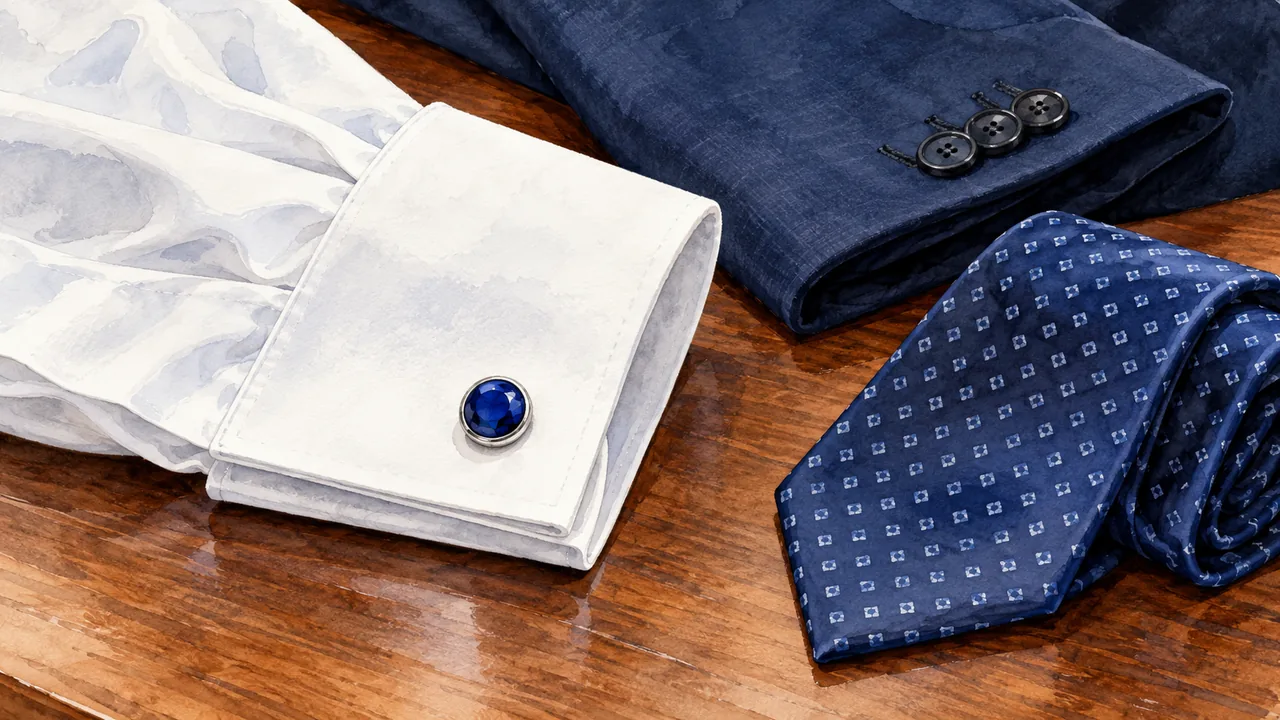
By occasion: sparkle for ceremonies, calm for work
For weddings and ceremonies, Edo kiriko that catches the light or iridescent raden shine. For an everyday work suit, Higo zogan's black and gold is easy to wear. Hokusai's wave in cloisonné is a conversation starter.
Check your shirt cuffs
Cufflinks need a shirt with buttonholes on both sides of the cuff (French or convertible cuffs); a regular buttoned cuff won't take them. Edo kiriko cufflinks have a larger back ball to stay put, so they may be hard to fit through small buttonholes — check yours.
Japan's state decorations are colored with cloisonné
According to Hatakeyama Shippo, the coloring of Japan's orders and decorations has always been done in cloisonné, and Tokyo's "metal shippo" descends from that work. The same fine skills go into its cufflinks.
7. Buying Japanese Cufflinks Outside Japan
Horiguchi Glass's Edo kiriko cufflinks are on Amazon.com (card in section 2). The Higo zogan, Hatakeyama cloisonné and NSplus pieces are sold in Japan.
If you like the idea of Hokusai's wave at your cuff, there's also an enamel Great Wave cufflink on Amazon.com labeled made in Japan — a different maker from Hatakeyama Shippo, and a more affordable way in.
Hokusai Great Wave Enamel Cufflinks
The Great Wave in translucent enamel, made in Japan. A playful pair for an everyday suit.
Hokusai Great Wave Enamel Cufflinks
Loading product details…
8. Frequently Asked Questions
What kind of shirt do cufflinks need?
A shirt with buttonholes on both sides of the cuff. Regular buttoned cuffs won't take them. Edo kiriko cufflinks have a larger back ball, so check buttonhole size too.
Are they appropriate for work?
Choose calm colors and they go with an everyday suit. Higo zogan's pure gold on black has a quiet presence.
Won't cloisonné cufflinks crack?
Cloisonné is glassy and can crack if dropped or knocked hard. Wipe with a soft cloth after wearing; Hatakeyama Shippo offers paid repair and repolishing.
What is Higo zogan?
A Kumamoto traditional craft that inlays gold and silver into iron. It began in the early Edo period decorating sword guards; after the Meiji sword ban, the skills turned to accessories.
Can I match a tie pin?
NSplus sells a tie pin and cufflink set, and Higo zogan has tie pins in the same patterns — the same craft at your chest and cuffs.
Which makes the best gift?
Edo kiriko for someone who attends many weddings; Higo zogan for someone in a suit every day. For a conversation piece, Hokusai's wave in cloisonné or one-of-a-kind raden.
Final Thoughts: One Craftsman's Skill, at Your Cuff
A cufflink is a face the size of a fingertip. A whole Japanese craft fits on it.
Horiguchi Glass's cut chrysanthemum. Higo zogan's pure gold, from the craft of sword guards. Tokyo cloisonné, fired seven times and polished to 0.05 mm. A Kyoto kinsai craftsman's kimono pattern on abalone. Each was refined on larger things — vessels, swords, kimono.
For a big day, or an ordinary one — wear Japanese craft at your cuff.
Japanese Silk Ties: The Mill That Scrapped Its Looms
Edo Kiriko as a Gift: Patterns, Colors & Best Brands to Buy