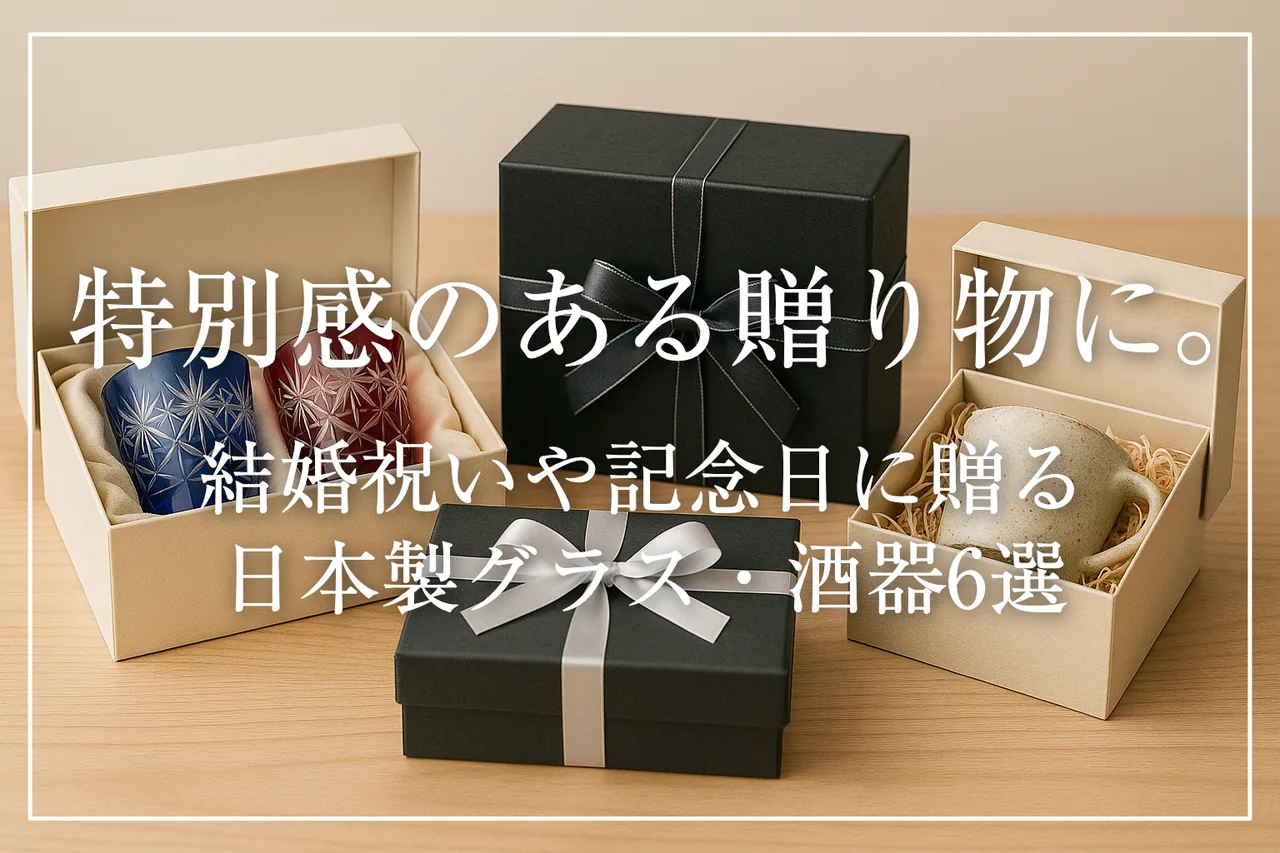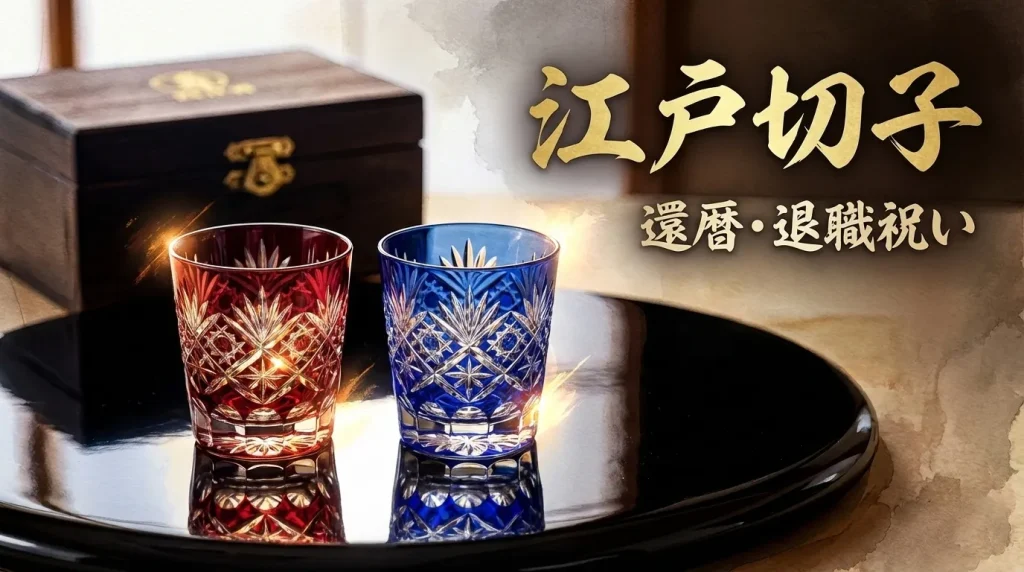
Edo kiriko — the hand-cut glass tradition of Tokyo — is Japan's most gifted drinkware, and for good reason.
Every pattern carved into the glass carries a centuries-old wish: health, protection, long life, or prosperity.
When you give an Edo kiriko glass, you're giving a message encoded in light.
This guide explains what each pattern means, how to choose the right color, and which brands are worth the
investment — so you can gift with confidence.
Quick Reference: Edo Kiriko Patterns and Their Meanings
| Pattern | Meaning | Best Occasion |
|---|---|---|
| Asanoha (hemp leaf) | Health, growth, vitality | Retirement, recovery, longevity |
| Yarai (bamboo fence) | Protection, warding off misfortune | Housewarming, new beginnings, father's day |
| Rokkakukagome (hexagonal) | Banishing evil spirits, longevity | 70th / 77th / 88th birthday milestones |
| Kikutsunagi (linked chrysanthemum) | Immortality, nobility, eternal fortune | 60th birthday (kanreki), senior gifts |
What the Patterns Mean
Edo kiriko patterns are not decorative choices — they are symbolic vocabulary with roots in Edo-period Japan (1603–1868). Each geometric motif carries a specific wish for the recipient.
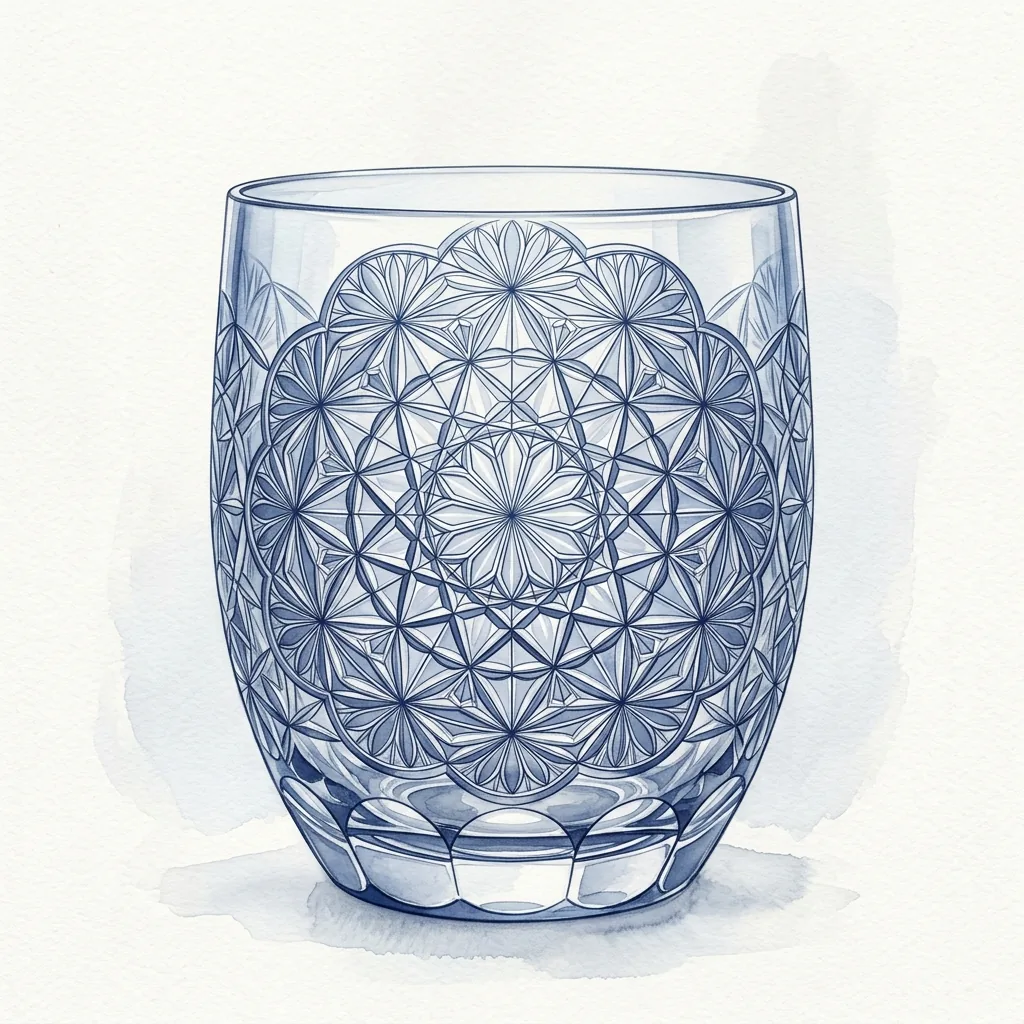
Asanoha (麻の葉) — Health and Vitality
The hemp plant grows straight and fast, reaching full height in a single season. This made it a symbol of
resilient health and steady growth in Japanese culture.
The asanoha pattern — a six-pointed star formed from overlapping triangles — is the most popular motif in kiriko
gifting precisely because health is universally wished for.
Best for: retirement gifts, post-recovery well-wishing, longevity celebrations.
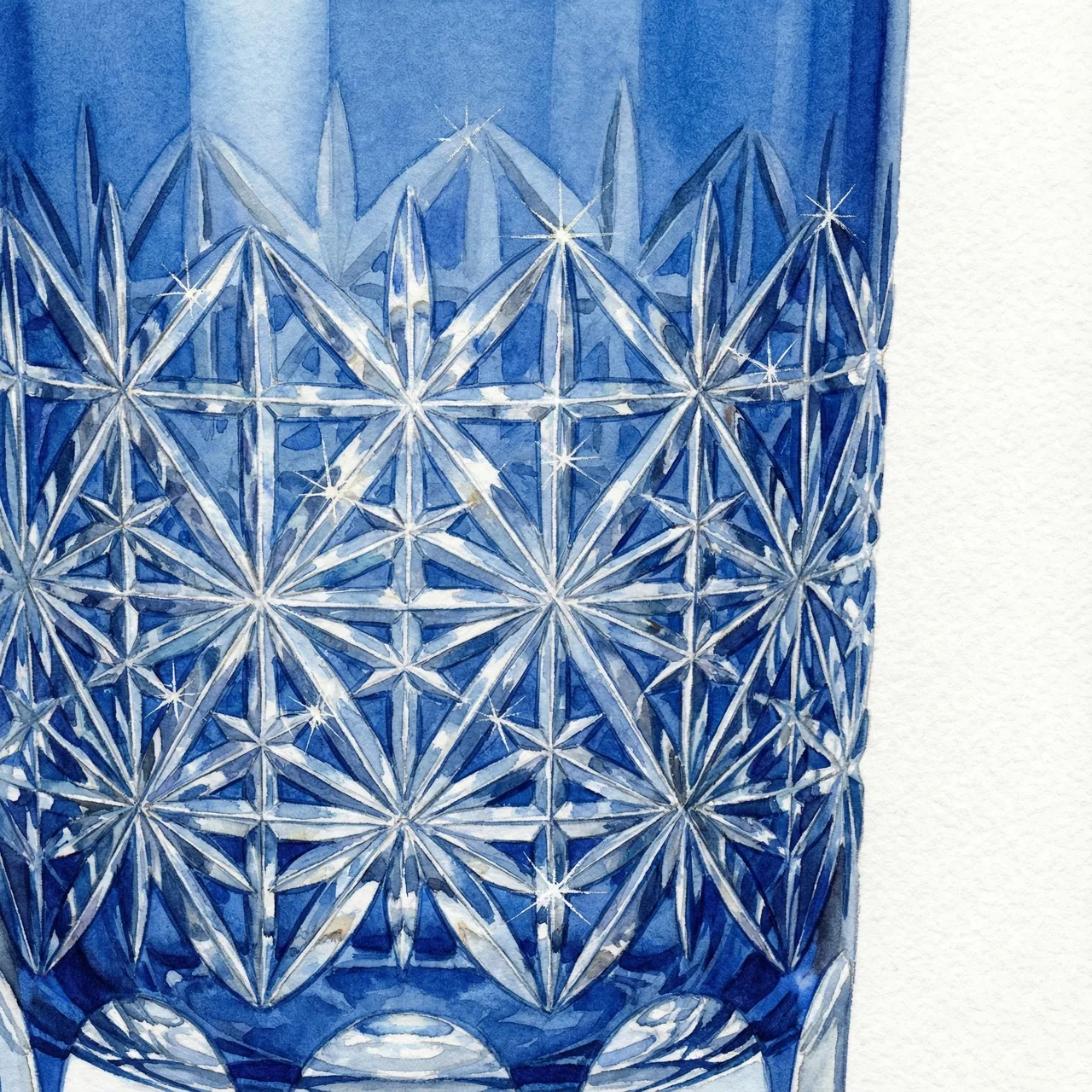
Yarai (矢来) — Protection and Warding Off Misfortune
Yarai is the lattice of bamboo poles used in Edo-era Japan to fence off areas from danger or intrusion. As a
kiriko pattern, the interlocking diagonal cuts symbolize a protective barrier — keeping harm away from the
person you give it to.
Best for: housewarming, new job, new chapter milestones — "may nothing bad come your way."
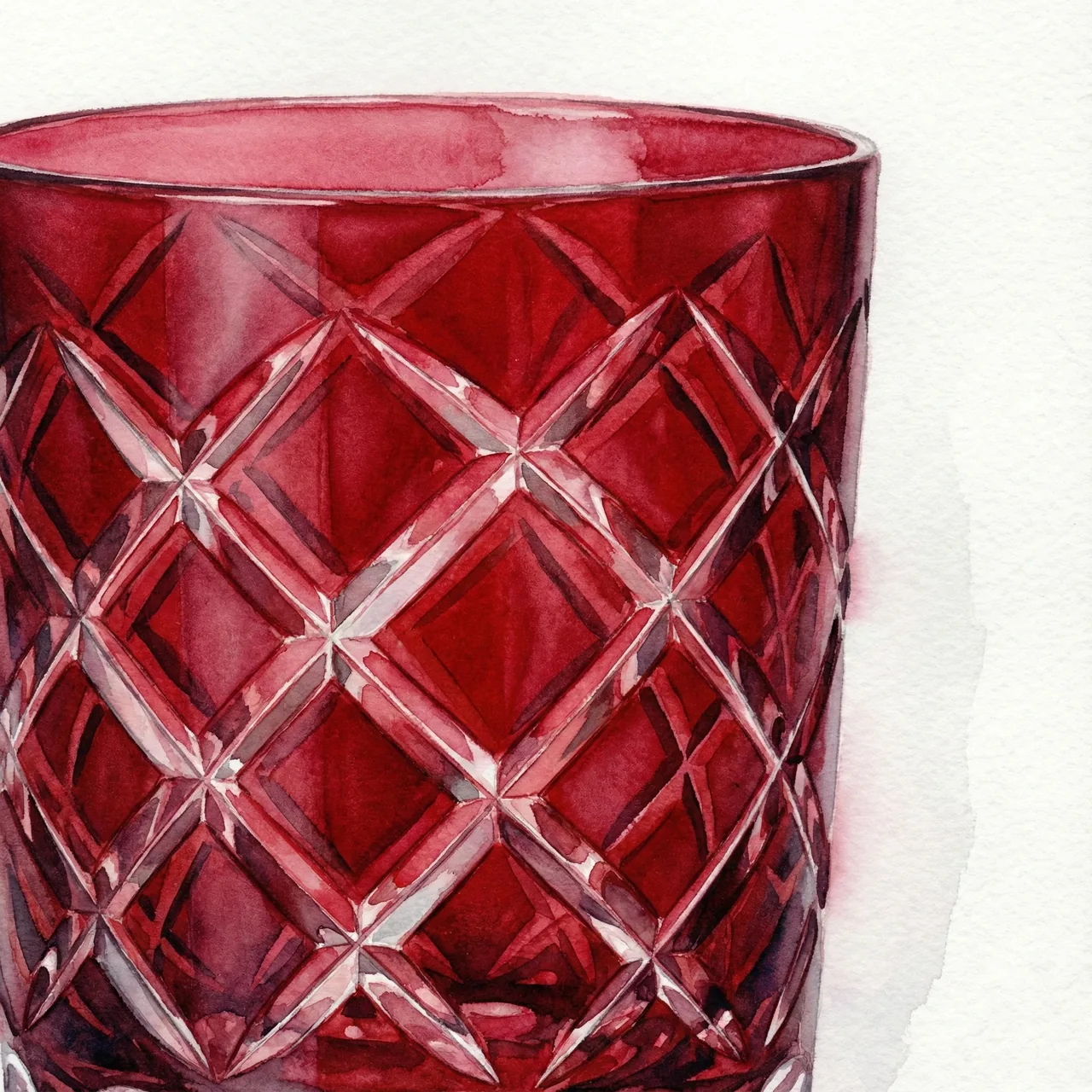
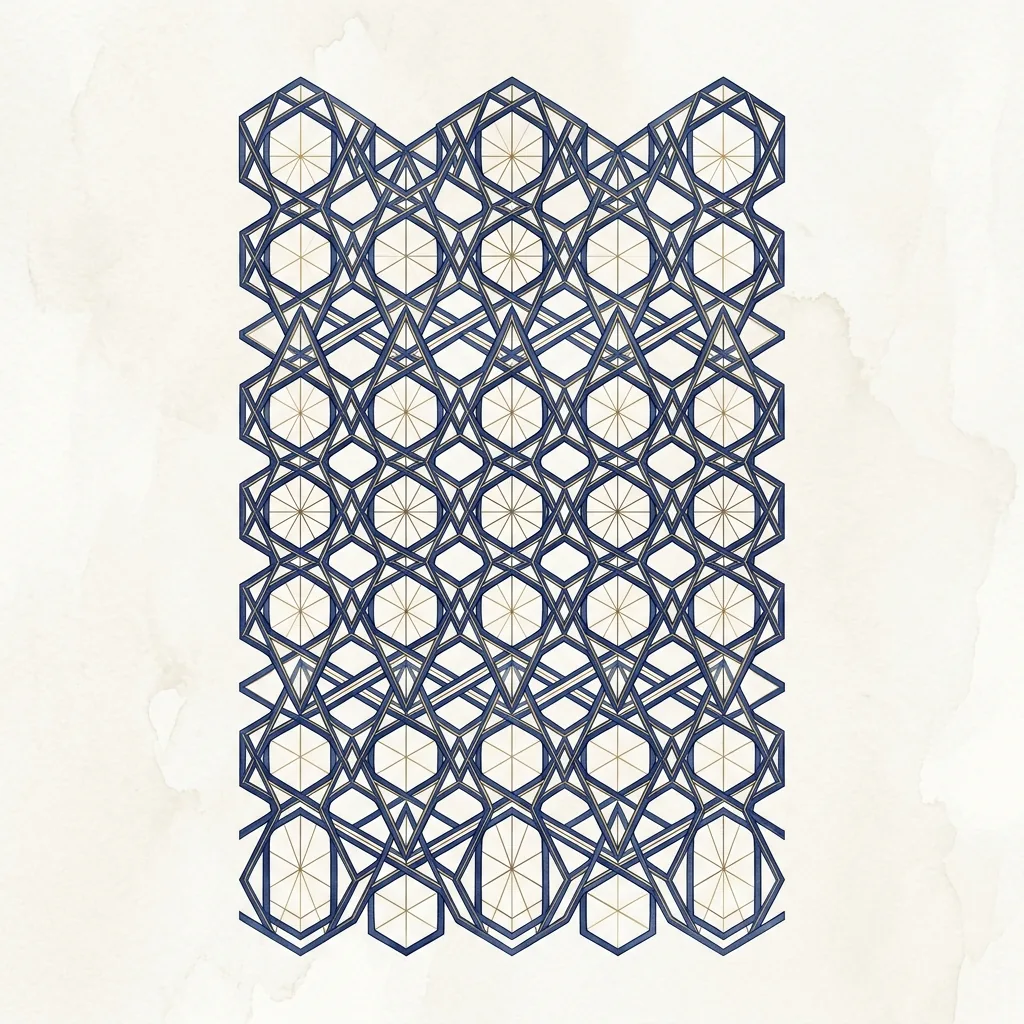
Rokkakukagome (六角籠目) — Longevity and Banishing Evil
The hexagonal Star of David-like lattice is believed in Japanese folk tradition to repel evil spirits. Combined
with the hexagon's association with long life (the shape appears in honeycomb — a structure that lasts), this
pattern is ideal for major longevity milestones.
Best for: 70th birthday (koki), 77th (kiju), 88th (beiju) celebrations.
Kikutsunagi (菊繋ぎ) — Immortality and Noble Esteem
The chrysanthemum (kiku) is Japan's imperial flower, associated with the Emperor and with immortality. Linked
chrysanthemum rings suggest perpetual fortune — an unbroken chain of good luck.
Best for: 60th birthday (kanreki), senior colleagues, respected elders — gifts where formality
and esteem matter.
Why Red for the 60th Birthday — and Edo vs Satsuma Kiriko
The 60th Birthday Tradition: Always Red
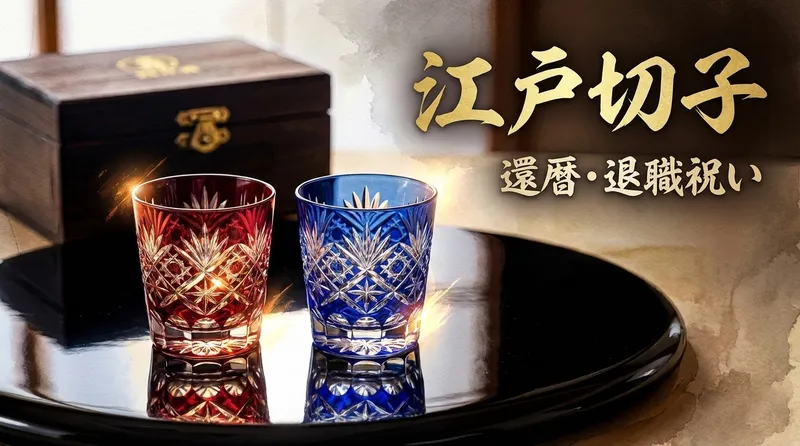
In Japanese culture, the 60th birthday (kanreki) is celebrated with the color red — a tradition tied to the belief
that red wards off evil and marks a symbolic "second birth." Historically, a red sleeveless jacket (chanchanko)
was gifted.
Today, a red Edo kiriko rock glass has become the modern equivalent — practical, beautiful, and
loaded with meaning.
The red color in Edo kiriko is called doaka (copper red), produced by adding copper to the glass melt. It
is technically demanding and rarer than the blue (ruri) glass — which adds to its prestige.
Edo Kiriko vs Satsuma Kiriko: Key Differences
Both are Japanese cut-glass traditions, but they look and feel very different:
- Edo kiriko (Tokyo): Thin glass walls, sharp cuts, brilliant flash. The colored layer over clear glass produces a crisp two-tone contrast. Lighter and more comfortable for daily use.
- Satsuma kiriko (Kagoshima): Thick glass walls, gradual color fade from the cut edges outward — the famous "bokashi" gradient. More sculptural; closer to a decorative object than everyday drinkware.
For gifting drinkware meant to be used — poured into at dinner, held in the hand, clinked at celebrations — Edo kiriko is the more practical and commonly gifted choice. Satsuma kiriko is for collectors or display.
Best Edo Kiriko Brands for Gifting
Edo kiriko is a registered trademark in Japan — only glassware certified by the Edo Kiriko Cooperative can carry the name. These are the brands worth investing in.
KAGAMI Crystal — Imperial Household Standard
Japan's first and most prestigious crystal glass manufacturer. KAGAMI supplies the Imperial Household Agency, the Prime Minister's Office, and Japanese embassies worldwide. Their Edo kiriko is cut from lead-free crystal with an exceptionally high refractive index — every cut catches light like a prism.
- Material
- Lead-free crystal glass
- Made in
- Tokyo, Japan
- Best for
- Retirement gifts, 60th birthday, formal presentations
- Price range
- $150–$500 per piece; pair sets $250–$600
Tajima Glass — The Mt. Fuji Kiriko
Tajima Glass is the studio behind the famous Fuji-san glass — a hand-blown soda glass with a 3D Mt. Fuji sculpted into the base. Pour beer and it turns gold; pour whisky and it glows amber; pour cassis soda and you get a rare "red Fuji." This is Edo glassware (Edo garasu) rather than traditional kiriko cuts, but it is made by certified craftspeople in the same Tokyo lineage — and it produces a reaction unlike any other gift.
- Material
- Hand-blown soda glass
- Made in
- Tokyo, Japan
- Best for
- Casual celebration gifts, Japan enthusiasts, anyone who loves beer
- Price range
- $60–$130 per piece
Hirota Glass — Sumida River Series
Founded in 1899 in Tokyo's Sumida district — the historic heart of Edo glassblowing. Hirota's Sumidagawa series uses soda glass with a distinctive soft, warm tint that evokes the Edo period. Less formal than KAGAMI Crystal, but deeply rooted in Tokyo craftsmanship. A good choice when you want something historically authentic at a more accessible price point.
- Material
- Soda glass (mouth-blown)
- Made in
- Tokyo, Japan
- Best for
- Sake lovers, Japan culture enthusiasts, accessible premium gifting
- Price range
- $50–$120 per piece
How to Care for Kiriko Glass
No Hot Liquids or Microwave
Most Edo kiriko is made from non-heat-resistant glass. Pouring hot sake or boiling water into it creates a sudden temperature differential that can crack the glass. Use kiriko for cold sake, room-temperature whisky, and iced cocktails — not kanzake (warmed sake).
Hand-Wash Only — Remove Rings First
Dishwashers are off-limits for two reasons: water pressure can chip the cut edges, and the movement causes contact
with other dishes. Hand-wash with mild dish soap and a soft sponge.
An often-missed tip: remove rings and bracelets before washing. A diamond-set ring will scratch kiriko glass on
contact. Use a soft brush or old toothbrush for the cut grooves where residue can accumulate.
Store Upright, Not Rim-Down
Storing glasses rim-down on a shelf is common, but the rim is the most vulnerable part of kiriko. Store upright or in the original gift box to protect the cut edges.
FAQ
How do I know if an Edo kiriko glass is authentic?
"Edo kiriko" is a registered trademark protected by the Edo Kiriko Cooperative of Tokyo. Authentic pieces come
with a certification sticker or certificate of authenticity.
If a product is significantly cheaper than expected and sold without documentation, it is likely a mass-produced
imitation (press glass rather than hand-cut glass). Always buy from reputable Japanese retailers or established
brands like KAGAMI, Tajima, or Hirota.
Is giving glassware as a gift bad luck (because it can break)?
This is a common concern but largely unfounded in modern Japan. The word "kiru" (to cut) in kiriko actually
carries a positive meaning — "cutting open the future" or "cutting through to success." Many Japanese people gift
kiriko specifically at milestones for this reason.
If you are still concerned, add a note saying "May this glass help you cut a bright path forward" — it frames the
gift meaningfully and puts the symbolism in your favor.
What color should I choose for a pair gift?
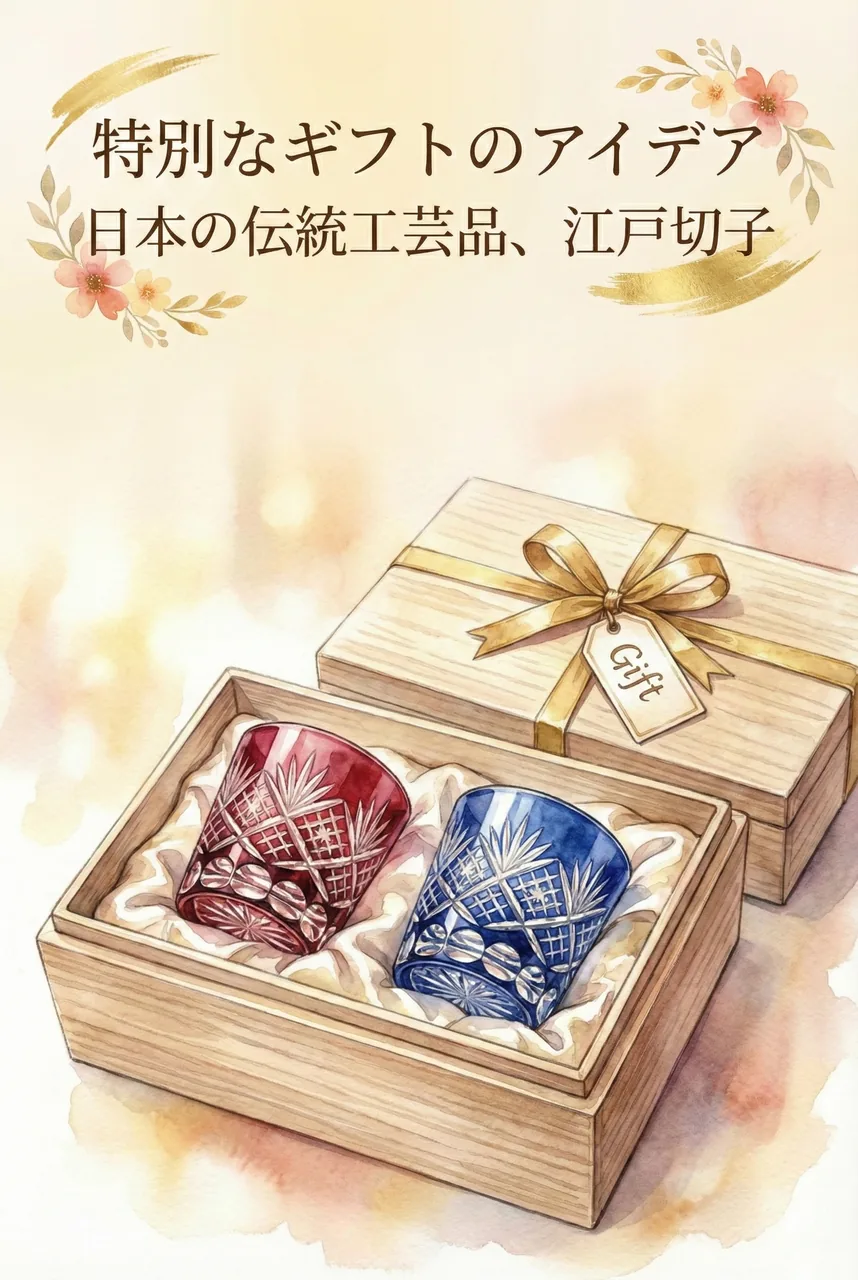
The classic pair combination is red (doaka) and blue (ruri) — the two primary Edo kiriko colors.
Red and blue together suggest complementary opposites (yin-yang), and in Japan the red-blue pairing evokes the
auspicious red-and-white (kohaku) color combination used for celebrations.
For couples, this pair is the standard choice for wedding gifts, silver anniversaries, and golden anniversaries.
Can I get a kiriko glass engraved with a name?
Yes, many shops (and some Amazon Japan sellers shipping internationally) offer name engraving on the base of
kiriko glasses. Since kiriko often has cuts that extend to the bottom, make sure to choose a design with a flat
engraving area — sellers who offer this service will specify it in the product listing.
Budget an additional 2–4 weeks for delivery if ordering with engraving.
What is the difference between kiriko and regular cut glass?
Western cut glass (like Waterford crystal) and Edo kiriko share the same basic technique — wheel-cutting patterns
into glass. The differences are in the aesthetic tradition:
Edo kiriko uses Japanese geometric patterns (asanoha, yarai, etc.) that carry specific cultural meanings. The
glass tends to be thinner-walled than European crystal, making it lighter and more comfortable to hold for long
periods. The color-over-clear layering is also distinctively Japanese.
What is a reasonable budget for kiriko gifting?
Budget tiers for Edo kiriko as a gift:
- $60–$130: Tajima Mt. Fuji glass or Hirota Sumidagawa — excellent impression, personal occasion
- $150–$300: KAGAMI Crystal single rock glass or old-fashioned — retirement gift, 60th birthday standard
- $300–$600: KAGAMI Crystal pair set in paulownia wood box — formal presentation, senior colleagues, wedding gift
- $600+: Named-piece KAGAMI with certificate — honorary retirement, government or corporate gifting
Summary
Edo kiriko is one of the few gifts where every element — the pattern, the color, the material, the craft — carries
deliberate meaning.
Choose asanoha for health, yarai for protection, rokkakukagome
for longevity, and kikutsunagi for esteem. Go red for the 60th birthday,
red-and-blue pair for couples.
For format and brand: KAGAMI Crystal for the most formal occasions, Tajima Mt. Fuji for something unforgettable and
accessible, Hirota for deep Tokyo tradition.
Edo Kiriko vs Satsuma Kiriko: Best Brands Ranked
Usuhari Glass: Japan's Ultra-Thin Blown Glass Explained