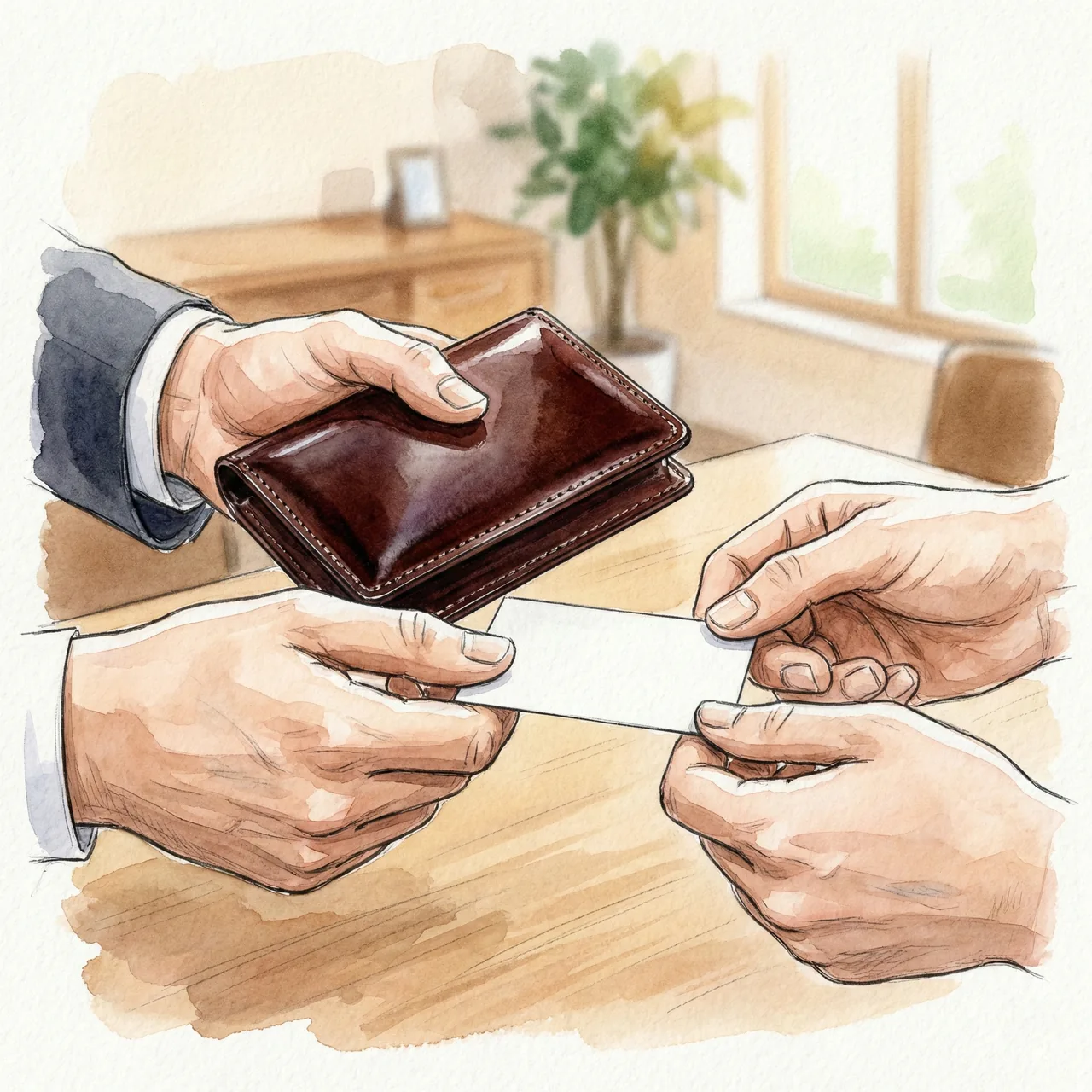
The moment you say "nice to meet you," attention goes to your face — and your hands.
A worn-out faux leather case or a flimsy plastic holder can undermine an otherwise strong first impression, no matter how well your suit fits or how polished your shoes are.
In business, your card case is your proxy — it represents you when you're not in the room.
In professional settings, an obvious luxury brand logo can read as showy. What earns genuine respect is visible quality: the sheen of good leather, the precision of fine stitching. Japanese leather goods communicate that you take care of your tools — and by extension, your work.
This guide covers what to look for in a business card holder, and the Japanese brands that do it best.
Quick Reference: Card Case Materials at a Glance
| Material | Character | Durability | Price Range |
|---|---|---|---|
| Cordovan (horse leather) | Extraordinary gloss that deepens with use | Exceptional | ¥30,000–¥100,000+ |
| Inden (deer leather + lacquer) | Soft, light, traditional Japanese patterns | High | ¥5,000–¥20,000 |
| Aluminum | Sleek and modern; resists water and stains | High | ¥3,000–¥10,000 |
| Carbon fiber | Ultra-light with a technical, modern look | High | ¥3,000–¥15,000 |
1. Why Japanese-Made | The 3 Seconds That Win Trust
Why do Japan's senior executives and business leaders consistently reach for Japanese leather goods rather than European luxury brands?
There's a practical answer underneath the aesthetic one.
A visible logo can backfire. Quiet quality never does
Depending on industry and context, a prominent luxury logo can read as flashy or even arrogant. There are business cultures — particularly in Japan — where a brand's value is expected to speak through quality rather than branding.
A Japanese leather card case with no visible logo but evident material quality conveys: "this person takes care of their tools." Before a single word is exchanged, that reads as trustworthy.
That's the three-second advantage.
Edge finish and stitch quality: where Japanese craftsmanship is genuinely unmatched
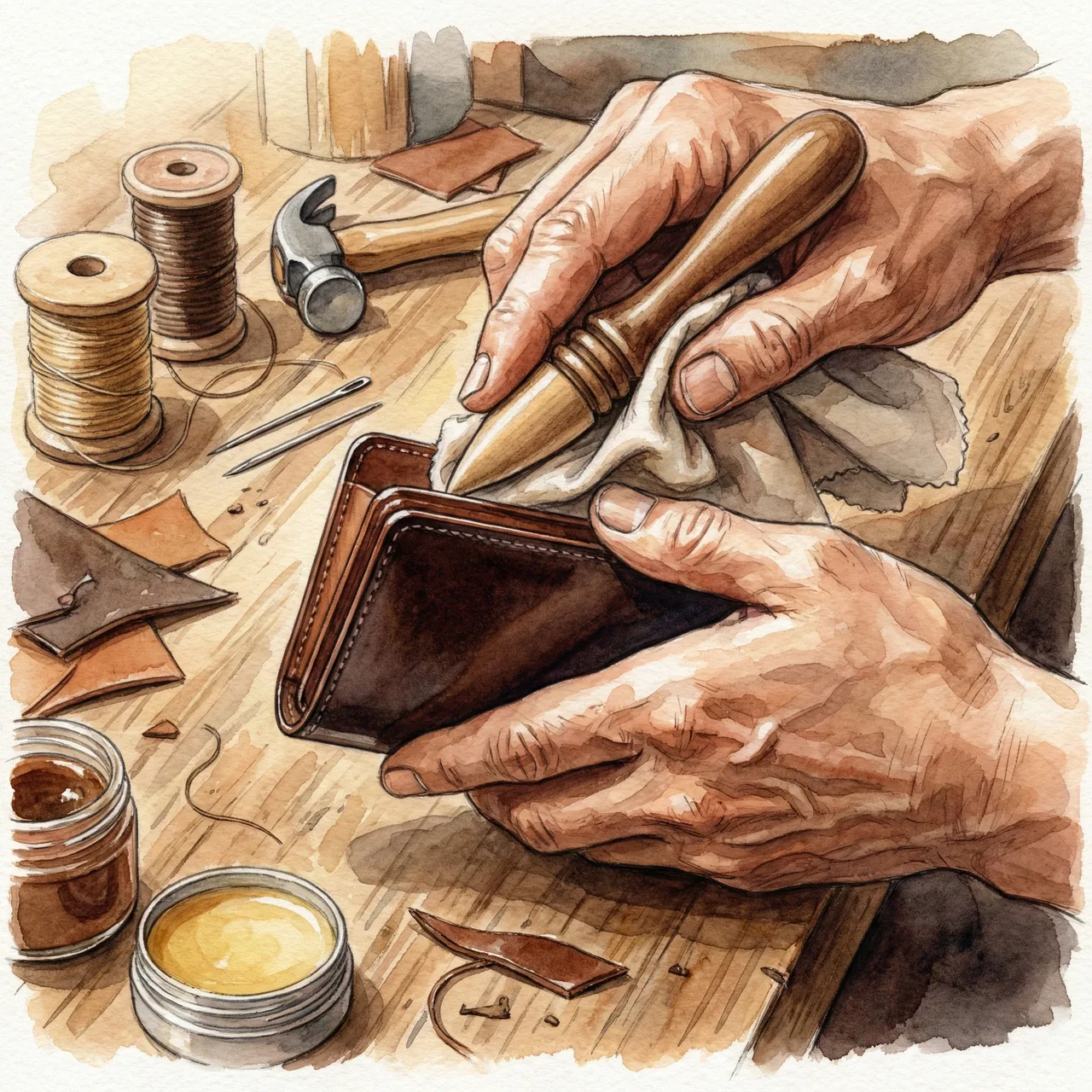
A card case's lifespan is determined by its corners and edges (koba). Japanese craftspeople spend extraordinary care on the koba: the leather is skived thin, folded back (heri-gaeshi), and the cut edge is burnished multiple times until it's smooth, sealed, and uniform.
The result is a case that can be pulled in and out of a jacket pocket dozens of times a day, for years, without fraying, splitting, or collapsing at the corners. That's not an accident — it's an obsession.
2. Choosing by Material | Cordovan vs. Tochigi Nude Leather vs. Inden
The leather you choose determines the impression it makes today — and how it looks ten years from now.
Cordovan | The rarest leather — gloss that signals serious status
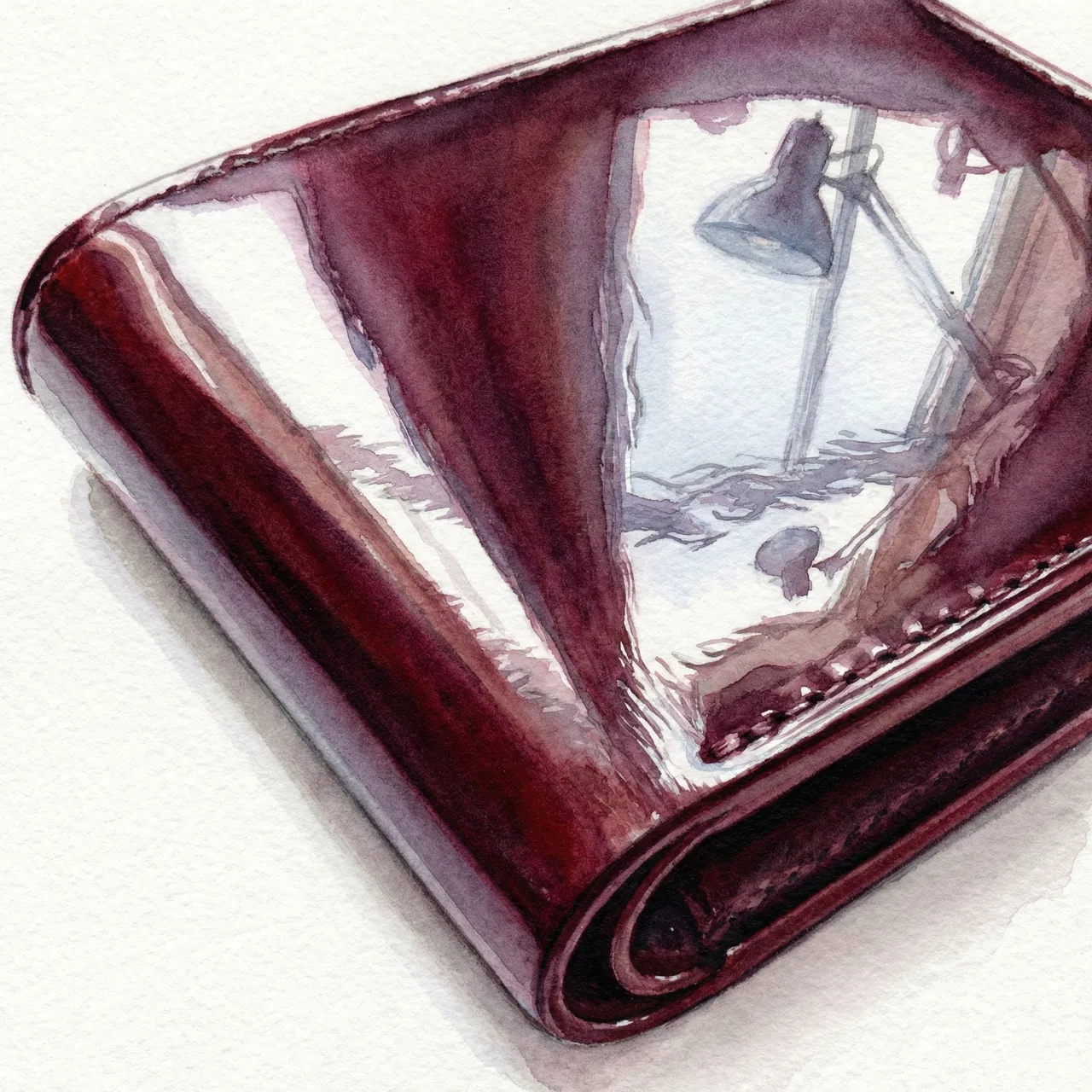
Taken only from a small section of a draft horse's rump, cordovan is genuinely rare. Its fiber density is several times that of cowhide, which gives it extraordinary durability and an unmatched surface clarity.
The signature quality: its gloss deepens with use, developing a wet-looking luminosity that is immediately readable as exceptional quality.
For senior professionals, or anyone whose card exchange should communicate seriousness, this is the material that delivers.
Tochigi / nude leather | Grows with you — from new employee to decade veteran
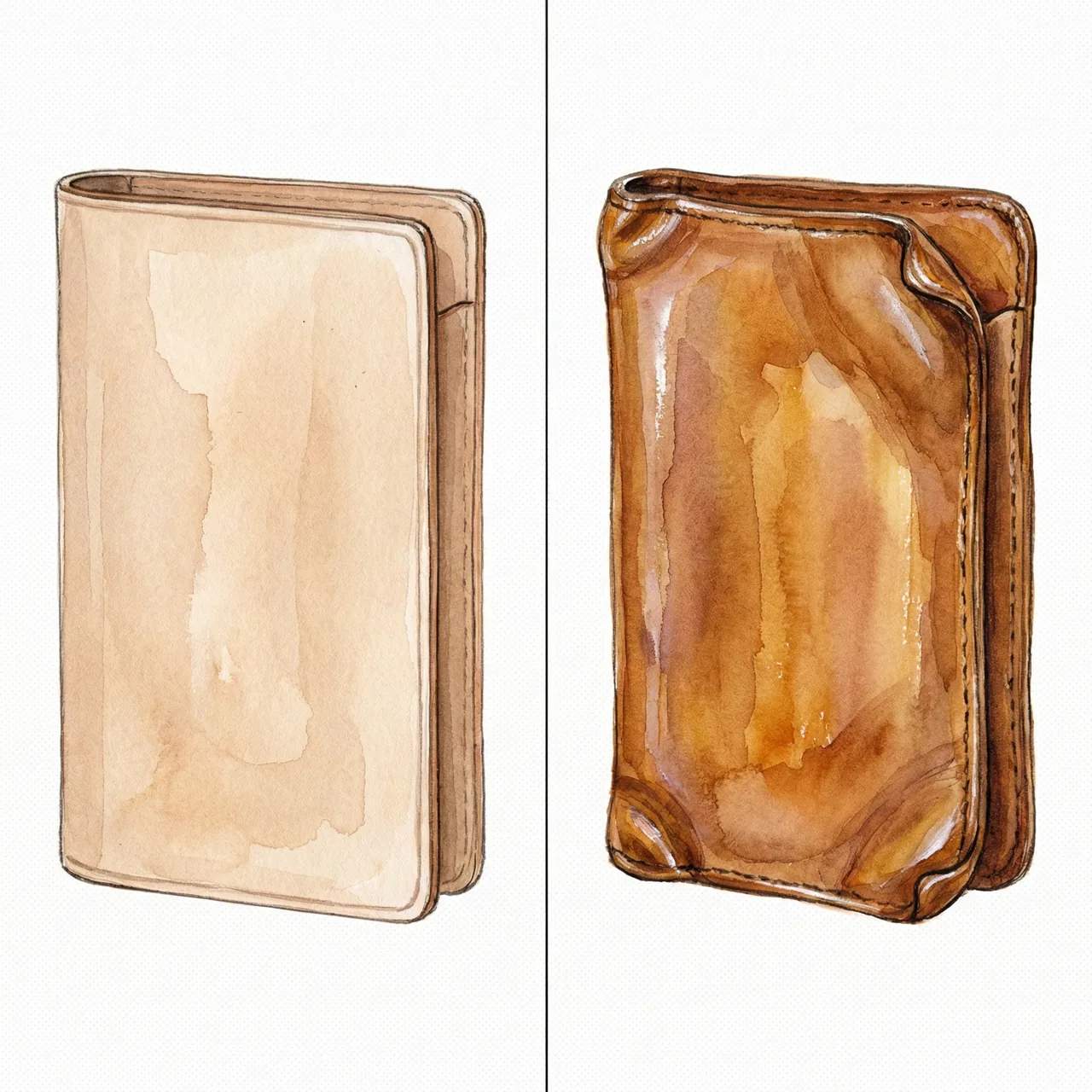
Vegetable-tanned nude leather (nube-gawa) starts matte and slightly stiff. Over months of daily use, hand oils and light exposure transform it into a warm amber with a soft natural sheen.
There's a particular resonance to carrying a card case from your first job that has changed color along with your career. Scratches become part of the texture rather than damage.
For anyone who wants to start a relationship with an object and carry it for a decade, this is the right material.
Inden (deer leather + lacquer) | 400 years of Japanese craft in your pocket
Inden is a Yamanashi craft tradition dating back to the Edo period: lacquer (urushi) patterns applied to supple deer leather.
The leather itself is extraordinarily soft and light, and the lacquer patterns — dragonflies, waves, hemp leaves — also function as a subtle grip texture.
Works equally well with a suit or traditional wear, and for those who meet international clients, it's a genuine conversation starter.
3. Choosing by Gusset | Card Capacity and Your Job Type
Choosing purely on looks leads to problems: "it won't hold enough cards" or "it makes my jacket pocket bulge."
The gusset structure — the shape that creates the case's internal volume — is the practical decision.
Tooshi-machi (full-box gusset) | 50-card capacity — essential for sales roles
The tooshi-machi has gusset material running the full height of the sides, creating a box-like interior. It holds 50–60 cards, which is enough for a full day of intensive networking without risk of running out.
Because the structure is supported on all sides, the case holds its shape even when nearly empty.
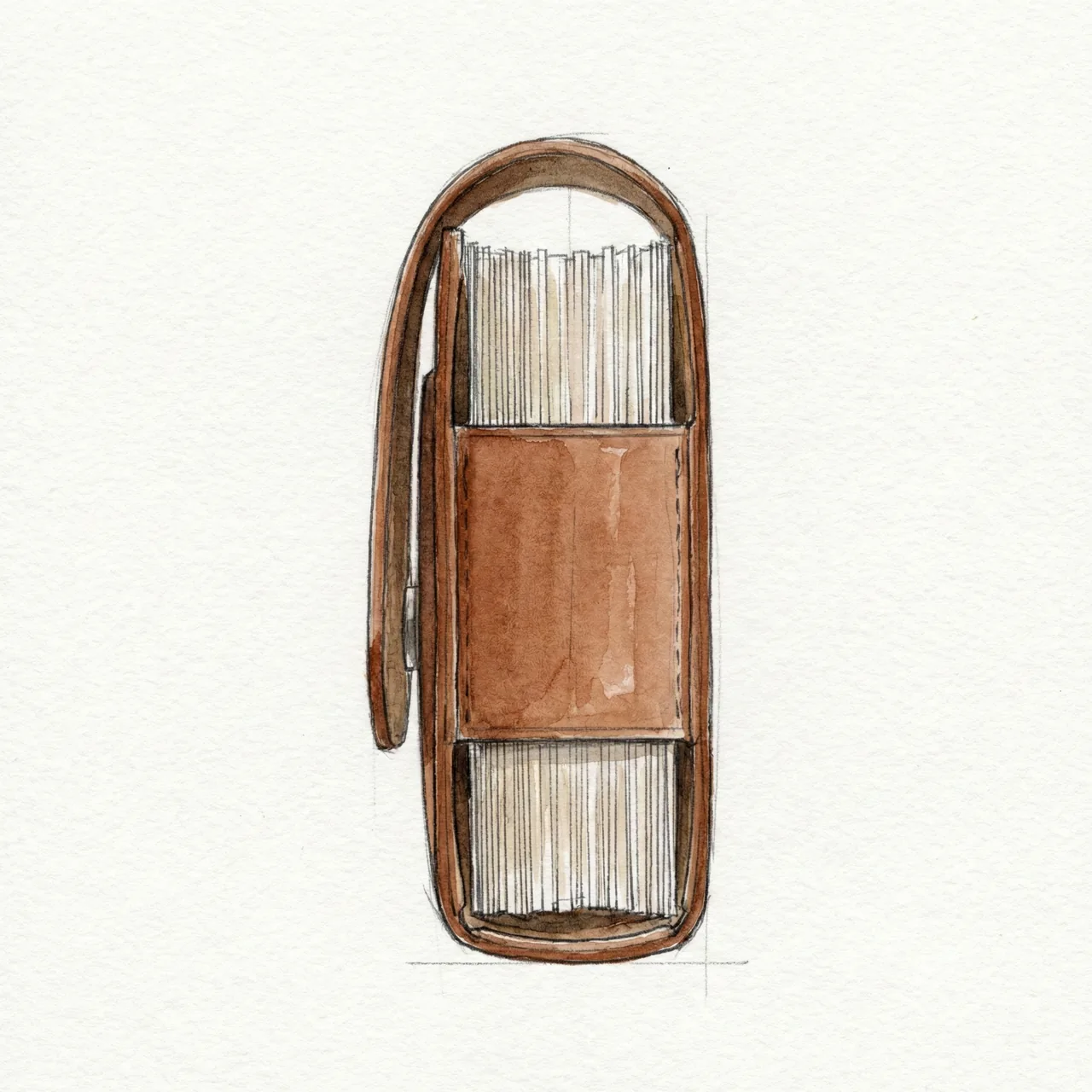
Sasa-machi (tapered gusset) | 20–30 cards — for executives who value a clean silhouette
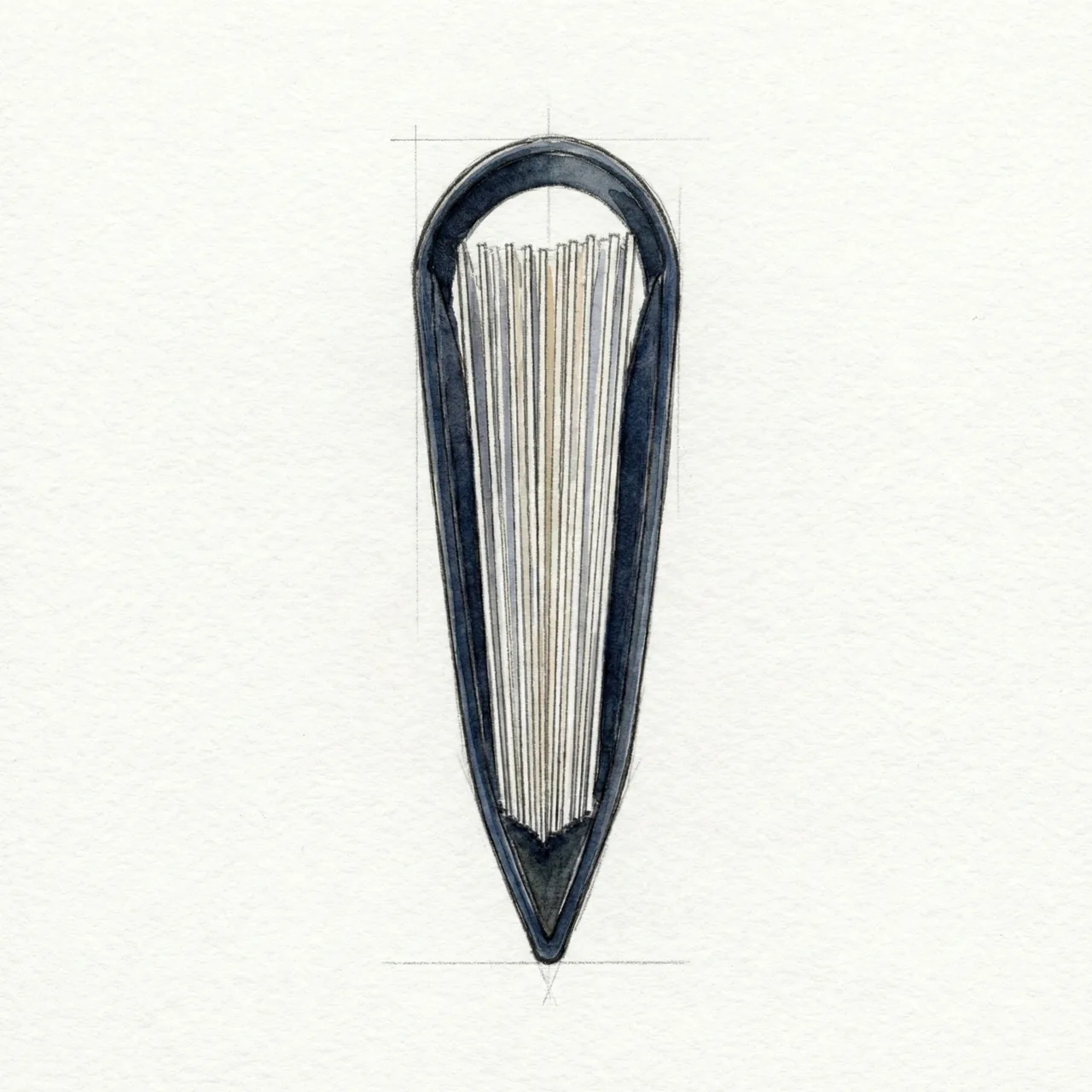
The sasa-machi tapers toward the bottom, creating a V-shape when viewed from the side — like a bamboo leaf. It holds 20–30 cards and lies almost flat in an inside jacket pocket without creating visible bulk.
Ideal for anyone whose role involves fewer but more deliberate card exchanges, or who prioritizes the look and feel of a slim carry.
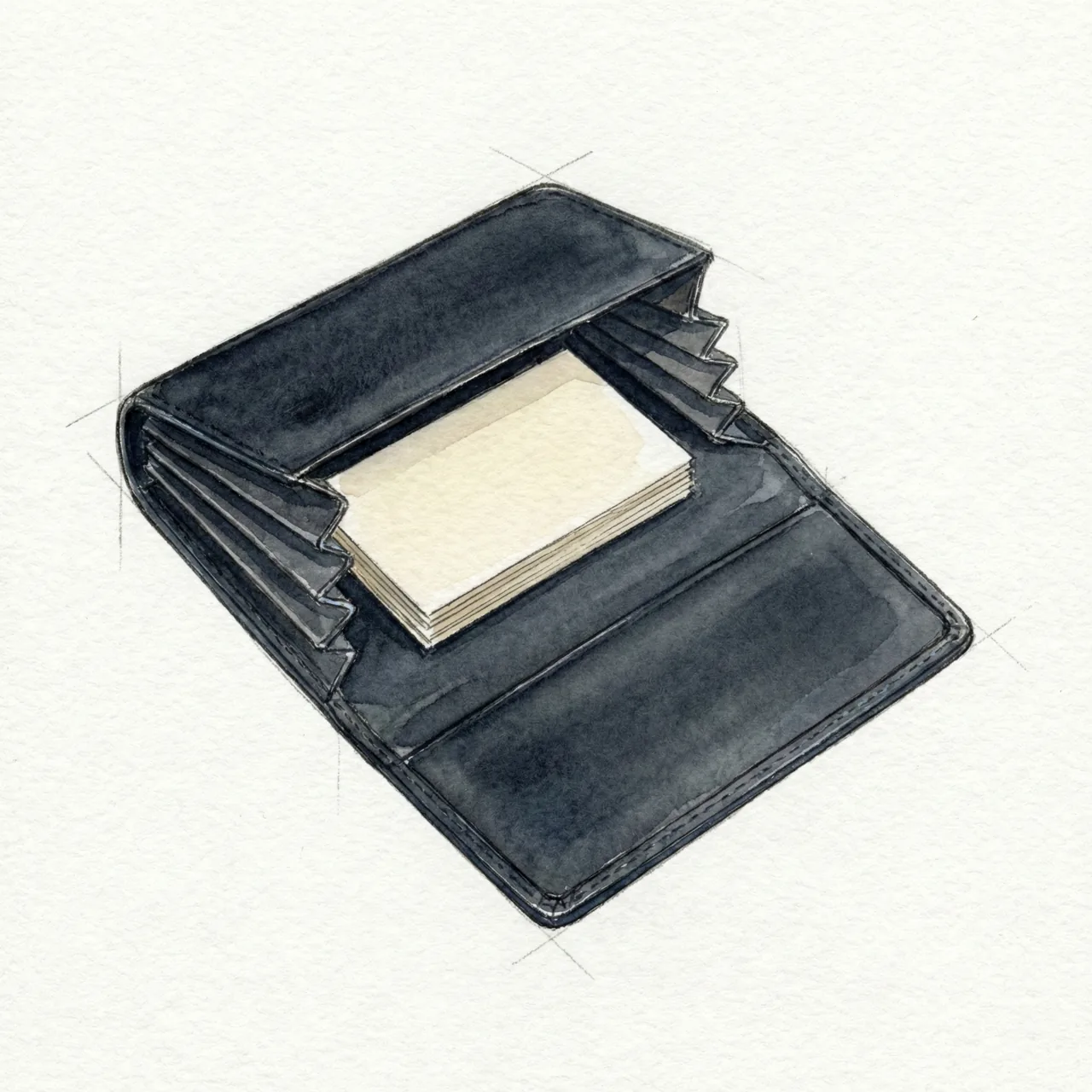
Fuukin-machi (accordion gusset) | Japanese-exclusive technique — cards never catch on anything
Where standard gussets fold inward, the fuukin-machi folds outward — like a bellows or accordion. The interior stays completely flat, so card corners never snag on a leather flap when drawing or receiving a card.
The construction is technically demanding enough that its presence in a card case is essentially a quality signal on its own.
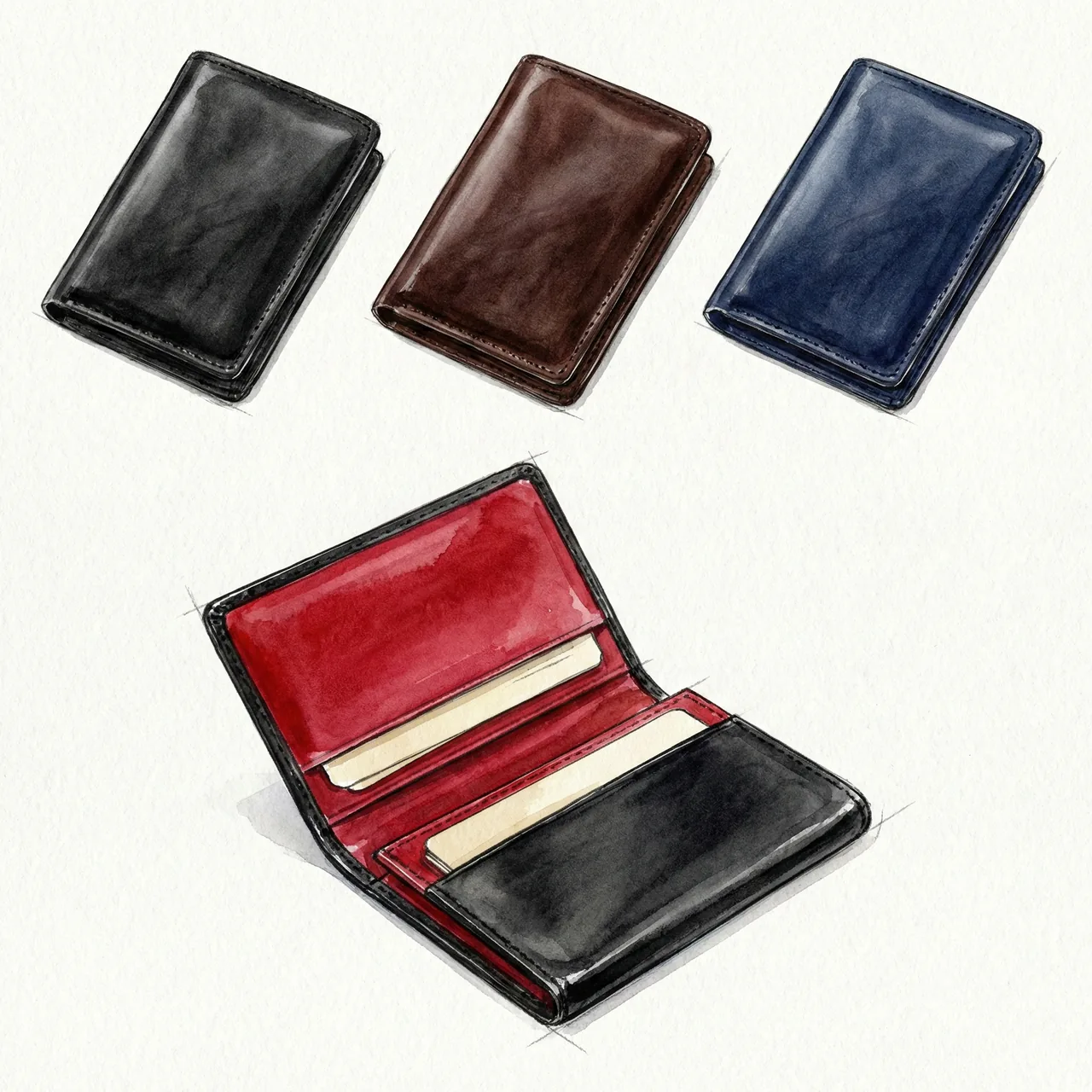
4. Color and Etiquette | Black, Brown, Navy — What Each Signals
Color is a communication tool in professional settings. The baseline guidance: match your card case to your shoes or belt for visual coherence.
- Black: The most formal, the most universally appropriate. When uncertain, black is never wrong.
- Dark brown: Projects reliability with a slightly softer, warmer feel. Pairs naturally with brown dress shoes.
- Navy: Intellectual and modern. Works well in creative industries or with blue-toned suits.
- Natural / nude: Casual at first — but the aging journey is the most rewarding. May read too informal in conservative industries.
The interior color trick
Bi-color cases — black or navy on the outside, with a red, mustard, or green lining inside — are a subtle way to express personality without compromising formal appearance.
Closed, they look entirely conventional. Opened for a card exchange, they reveal a flash of character. Within the rules, but not without personality.
5. Care and Maintenance | Building a Habit of "Growing" Your Leather
A good leather card case, properly maintained, lasts a decade or more.
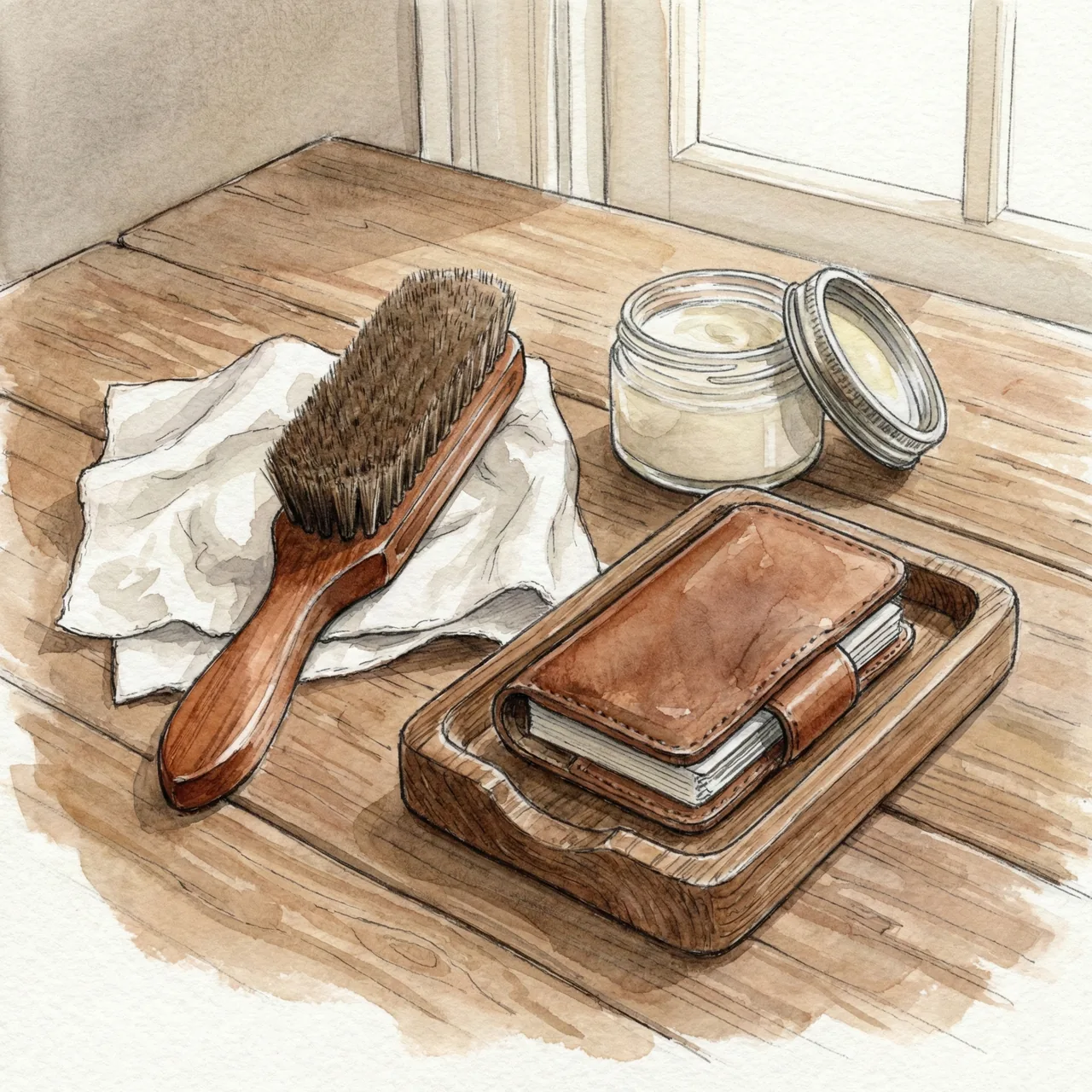
Daily care is just brushing and dry-wiping. Cream once every few months — not more
For day-to-day upkeep, a soft cloth wipe or a horsehair brush to remove dust is all you need. The leather absorbs oils from your hands naturally, so over-conditioning with cream leads to mold or staining rather than benefit.
Apply a rice-grain amount of leather conditioner only when the leather visibly begins to dry out — typically every few months at most.
Give it rest. Let it breathe away from your pocket
Leaving the case in a suit pocket overnight traps the day's sweat and humidity against the leather, causing it to become soft and misshapen over time.
When you get home, take it out of your pocket and leave it somewhere with air circulation. That single habit prevents most long-term deformation.
6. 3 Recommended Japanese Leather Card Case Brands
Three brands that stand at the top for material quality, technical execution, and depth of heritage.
GANZO — Cordovan Card Case
Japan's pinnacle leather brand. Nothing compromised.
Run by AJIOKA, one of Japan's most respected leather goods manufacturers, GANZO operates with the philosophy that every material and every process should be the best available — without exception.
Their cordovan card cases are finished to a standard that approaches fine art: the koba is burnished to a glassy surface, the stitching is microscopically uniform, and the leather itself develops a wet, translucent gloss that grows more striking year by year.
If the goal is a single, definitive lifetime purchase, GANZO belongs at the top of the shortlist.
CYPRIS — New Cordovan and Vegetable-Tanned Series
Over a decade of consecutive department store buyer awards — for good reason.
CYPRIS has won Japan's department store buyers' excellence award for more than ten consecutive years, an achievement that reflects both consistent quality and genuine market respect.
Their technical hallmark is the "kiku-yose" (chrysanthemum gather): the leather at the corner is cut into tiny increments and gathered like a flower to create a perfectly rounded edge — a technique so demanding that only a handful of craftspeople in Japan can execute it properly.
Models with nude leather interiors offer the added pleasure of watching the inside age differently from the outside.
Inden-ya — Inden (Lacquered Deer Leather) Card Case
Four hundred years of tradition. The spirit of Japan carried in a pocket.
Based in Kofu, Yamanashi, Inden-ya is the original house of koshu-inden — the craft of applying lacquer to deer leather that has been practiced in this region since the Edo period.
The lacquer patterns include traditional motifs: the dragonfly (tombo), said to never fly backward and therefore associated with fortitude and victory; ocean waves (seigaiha); hemp leaf (asanoha). Each carries meaning.
Equally at home with traditional clothing or a business suit, and for those who meet international clients regularly, it is a genuine ambassador for Japanese craft culture.
7. Frequently Asked Questions
What do I do with received cards during a meeting?
Don't put them away immediately — use your card case as a holder.
Japanese business card etiquette calls for placing received cards on the table to your left (toward the seat of honor), with your own card case serving as a "cushion" underneath them.
With multiple people, arrange the cards either by rank or by seating order. Only put cards away after the meeting ends.
Is leather vulnerable to rain or moisture?
Yes — water is the primary enemy of leather card cases.
If your case gets wet, do not rub it. Press a soft dry cloth gently against the surface to absorb moisture, then leave it to dry in the shade with good air circulation.
Never use a hair dryer — rapid heat causes leather to harden and warp permanently.
How full should I keep the case?
Fill it to about 80% capacity — never pack it to the limit.
Overfilling stretches the leather, and when the cards are depleted, you're left with a misshapen case that has lost its structure.
If you need to carry backup stock, keep a sealed box of cards at the bottom of your bag rather than overloading the case itself.
Can women use men's brand card cases?
Absolutely — many women specifically prefer them.
GANZO and CYPRIS designs are clean, unembellished, and gender-neutral by design. Colors like camel, navy, and wine red are particularly popular with professional women.
The understated quality of these cases reads as "competent and serious" regardless of who carries them.
Can a loose stitch or worn koba be repaired?
Yes — and this is one of the key differences between Japanese brands and cheaper alternatives.
Most reputable Japanese leather brands offer re-stitching and koba refinishing as paid maintenance services. The craftspeople who made the product can restore it to near-original condition, which is precisely why these cases are called "lifetime" purchases rather than "long-lasting" ones.
Confirm repair availability before purchasing — it's worth asking.
Final Thoughts: Your Card Case Is Your Proxy
A business card case is a samurai's sword.
No matter how good the swordsmanship, a rusty blade can't win a battle.
A Japanese leather card case will start slightly stiff — like the beginning of any serious relationship.
Over months of meetings and handshakes, it softens to your grip, deepens in color, and becomes something that couldn't belong to anyone else.
When you're ready to walk into a first meeting with full confidence: choose the right companion, and let the leather do the talking.