
You magnify the text, and the letters still look soft at the edges.
The difference may not be the magnification — it may be the lens.
A magnifier is a one-lens tool, so whether it uses highly clear glass, and whether it's designed to control distortion, changes what you see. And in Sabae, Japan's eyeglass town, a company that has long supplied eyeglass materials has craftsmen make magnifiers you wear at your neck.
This guide covers four Japan-made magnifiers — a Sabae pendant loupe, a wooden hand magnifier with a clear glass lens, a large brass-rim magnifier and a 10x jeweler's loupe — plus how to choose magnification and lens size. One of them is on Amazon.com.
Quick Reference: 4 Japan-Made Magnifiers at a Glance
| Magnifier | Power | Feature | Best for |
|---|---|---|---|
| KISSO pendant loupe ▾ | — | Sabae eyeglass material, worn at the neck | Price tags and menus, out and about |
| MIZAR-TEC wooden hand magnifier ▾ | 2.5x | Clear glass, wooden handle | Books and papers — on Amazon.com |
| Brass-rim magnifier R-115 ▾ | 1.8x | Brass rim, big 115 mm lens | Newspapers and maps |
| Jeweler's loupe RK-28 ▾ | 10x | Two clear glass lenses to control distortion | Gems, minerals, print detail |
Click a magnifier to jump to it.
1. Why Japanese: Clarity Comes from the Lens
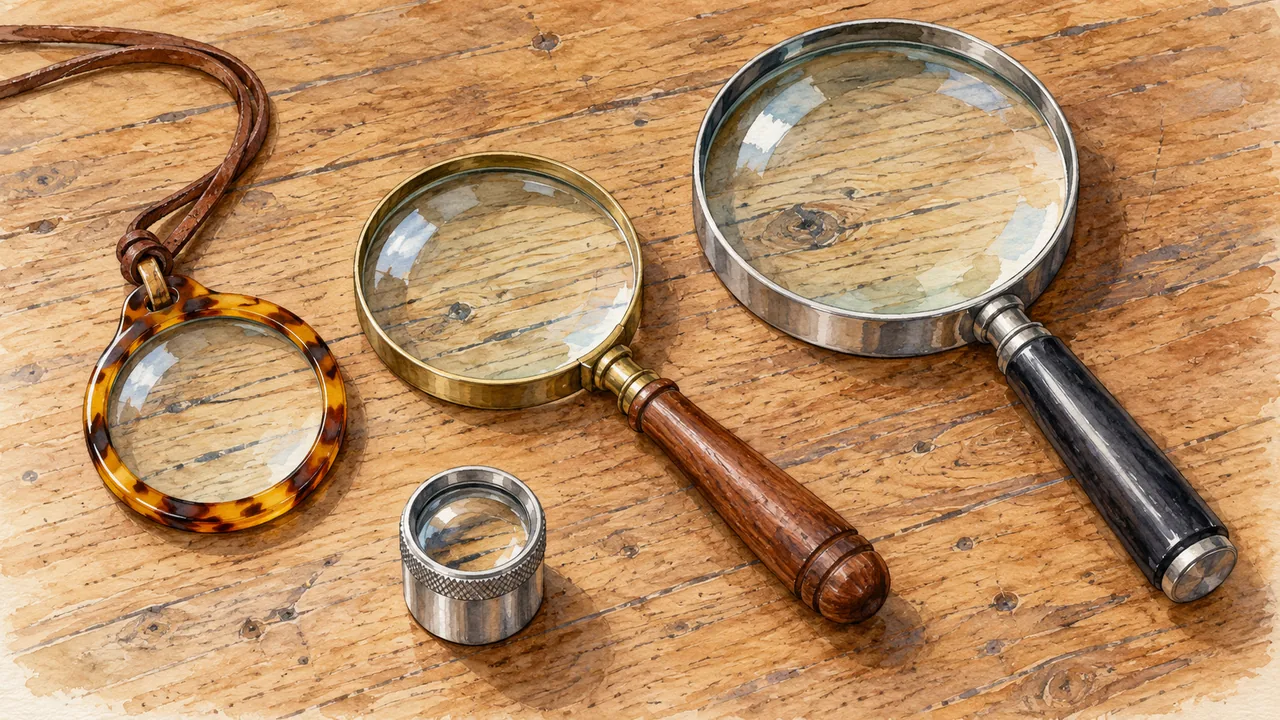
Glass lenses, and designs that control distortion
A magnifier's job is to show what you want to see bigger and clearer. Every magnifier here uses glass lenses — highly transparent "shiro-garasu" (literally "white glass," meaning clear, colorless glass) or scratch-resistant glass — and the jeweler's loupe combines two lenses to control distortion.
The other question is where you'll use it and for what. A pendant for price tags when you're out, a big lens for the newspaper, high power for the details of a gem.
2. Sabae's Pendant Loupe: From Eyeglass Material to Your Neckline
A materials company in Japan's eyeglass town
Kissoh was founded in 1995 in Sabae, Fukui — Japan's eyeglass town — as a trading company for eyeglass materials. Anticipating that titanium frames would be made in earnest in Sabae, it began supplying materials there.
In 2010 it launched the accessory brand KISSO, using cellulose acetate, the same material as eyeglass frames. Skilled craftsmen assemble the patterns by hand and polish layer upon layer.
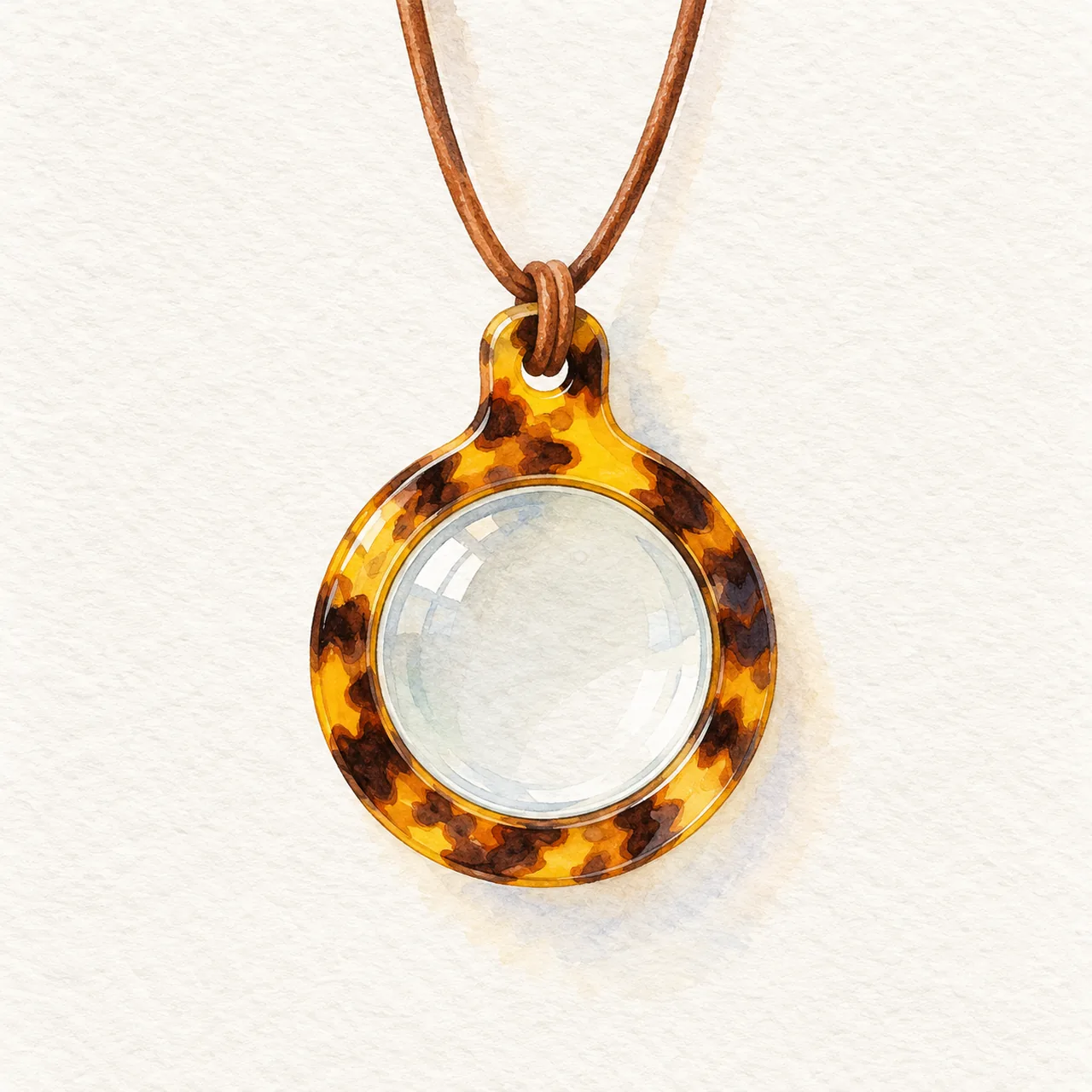
About a week per millimeter, just to dry
KISSO's cellulose acetate is made mainly from cotton, and drying it alone takes about a week for every millimeter of thickness, the company says. A firm that has seen materials from around the world chose vivid Italian acetate — then Sabae craftsmen cut and polish it into each loupe.
KISSO Pendant Loupe EGA-386, Yellow Horn — a necklace that's also a magnifier
Jewelry when you're not using it, a magnifier when you are. Hanging at your chest, it's right there for a restaurant menu, a price tag or the small print on medicine. Glass lens, leather cord.
50 × 61 × 4 mm (2 × 2.4 × 0.16 in); country of origin Japan. Handmade, not machine-made, so no two patterns are alike. Also in black, white and marine blue. Sold in Japan.
3. A Wooden Hand Magnifier: Clear Glass, Crisp View
A handle that's warm in the hand
MIZAR-TEC's wooden hand magnifier has a wooden handle and a lens of highly transparent clear glass for a crisp view. The lens is large, so it magnifies a wide area at once — good for reading books and documents. Keep one in a desk drawer and you'll reach for it every time the print is small.

MIZAR-TEC Wooden Hand Magnifier, 2.5x — the crisp view of clear glass
The warmth of wood, the clarity of clear glass. 2.5x, made in Japan, with a 90 mm (3.5 in) lens. A gift for a family member who reads, or one for your own desk — a big lens for reading widely. Available on Amazon.com.
MIZAR-TEC Wooden Handheld Magnifier, 2.5x (90 mm)
Loading product details…
4. A Brass-Rim Magnifier: 115 mm for Reading Newspapers
A brass rim around the lens
"Kana-waku" — a metal rim around the lens — is the classic shape of a hand magnifier. Loupe no Wakusei's R-115 sets a large glass lens about 115 mm (4.5 in) across in a chrome-plated brass rim.
At 1.8x the power is modest, but you see a wide area at once — newspaper pages, maps and dictionaries, read slowly as you move the lens.
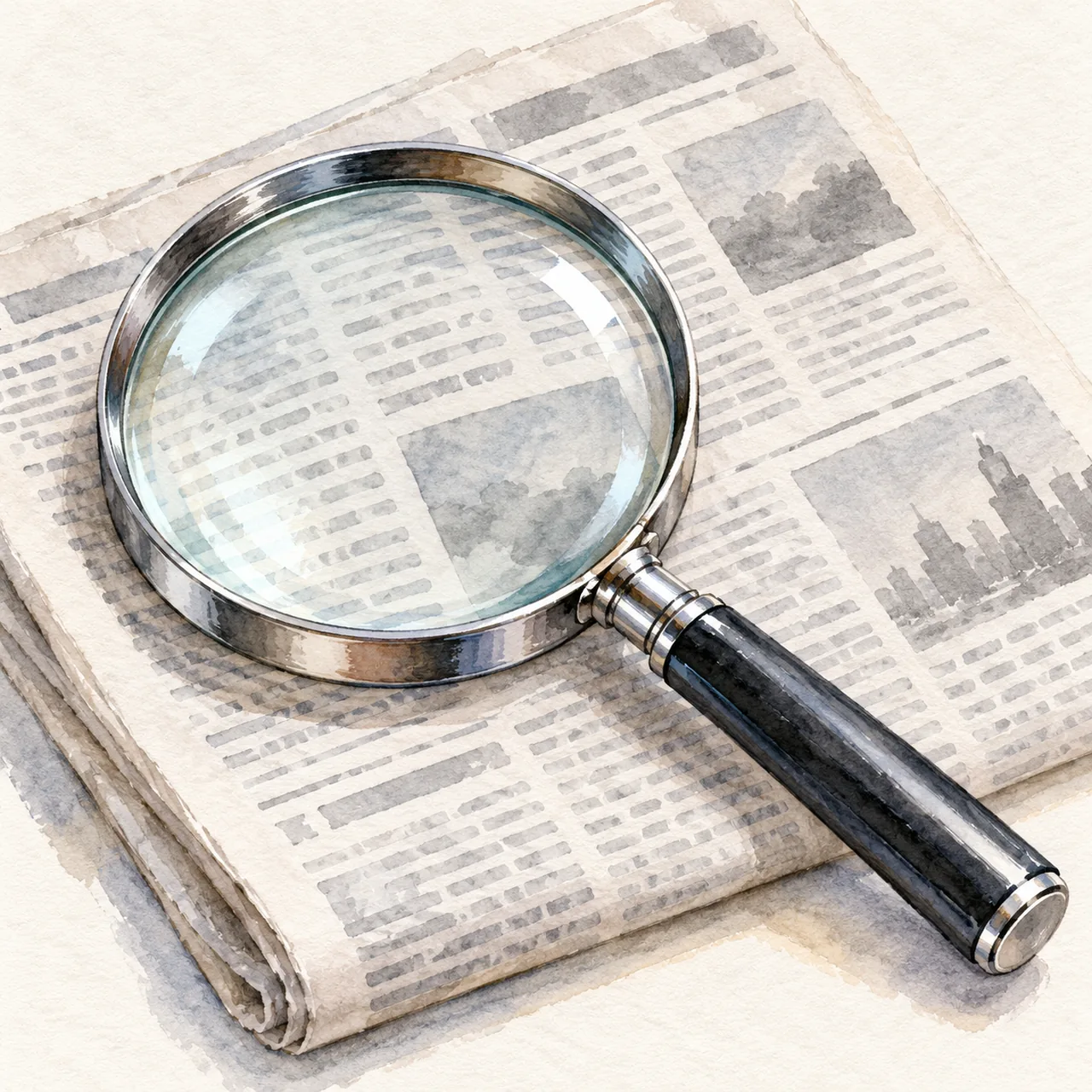
Loupe no Wakusei Brass-Rim Magnifier, 1.8x, 115 mm, R-115 — the classic shape
A scratch-resistant glass lens in a brass rim — "the very image of a magnifier," as the shop puts it. Made in Japan, carefully finished, with an easy-grip resin handle. A gift for someone who reads the paper every morning. Sold in Japan.
5. A Jeweler's Loupe: Two Lenses, No Distortion at 10x
More power, more distortion — unless you design for it
To see gems, minerals or the dots of a printed image, you need around 10x. iPlanet's RK-28 jeweler's loupe combines two lenses of high-grade clear glass to control distortion. Its lens is about 28 mm (1.1 in): you hold it close to your eye and look in to check detail invisible to the naked eye.
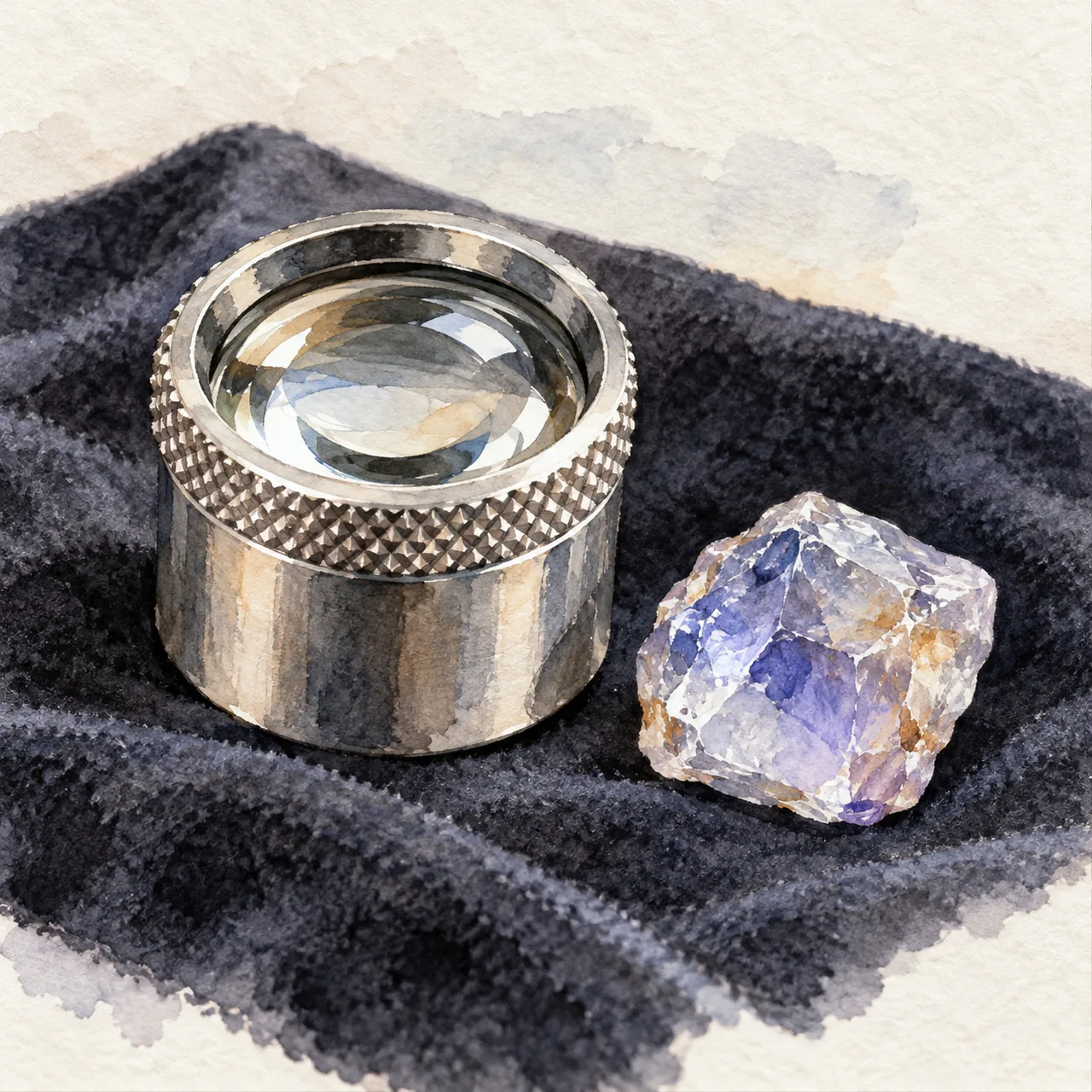
iPlanet Jeweler's Loupe, 10x, 28 mm, RK-28 — look inside the stone
Two clear glass lenses, crisp even at 10x. A Japan-made loupe for gems, minerals, stamps and printed matter — for when ordinary power isn't enough, or a gift for someone who collects stones or stamps. Sold in Japan.
6. Choosing Magnification and Lens Size
The higher the power, the smaller the lens
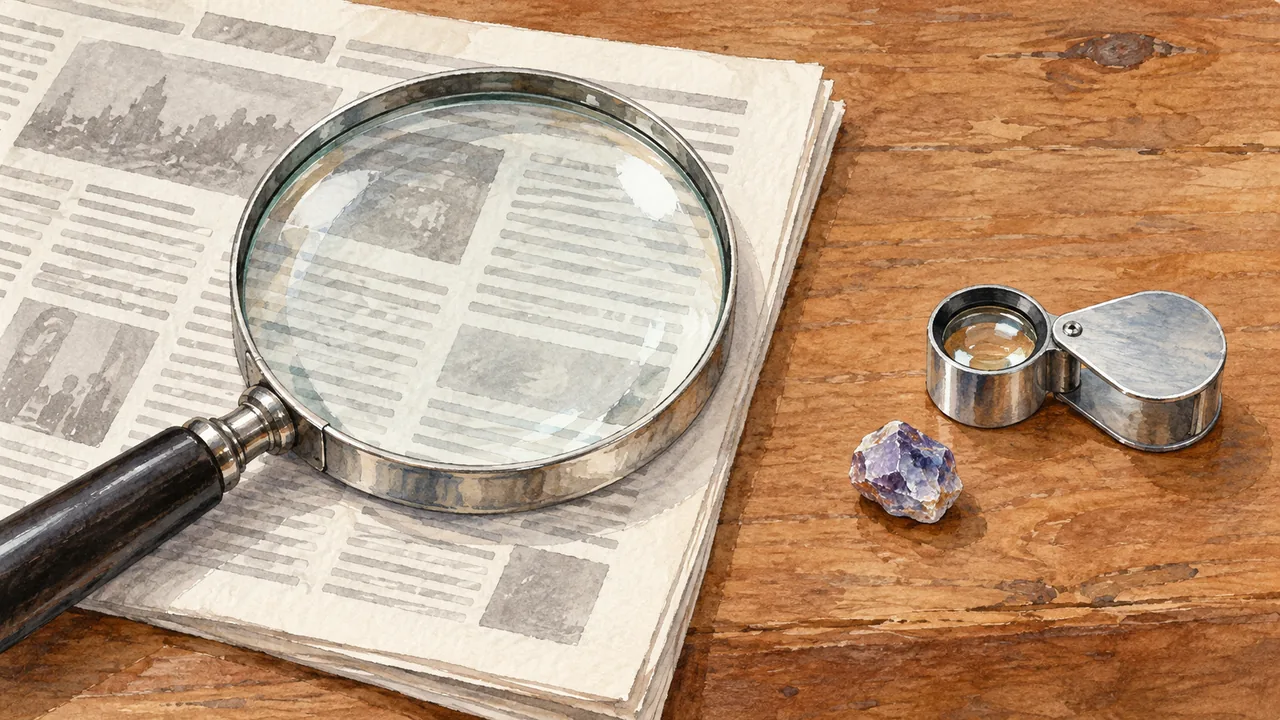
Lined up, the four here show it clearly: 1.8x has a lens about 115 mm across; 10x, about 28 mm. Power goes up as the lens gets smaller. To read newspapers and books widely, choose low power and a big lens; for the detail of a gem or print, high power and a small lens. Start from what you want to see.
Carry it, or keep it on the desk?
Out and about, a pendant loupe is handiest — no digging through your bag. At home, keep a hand magnifier by your desk. With glass lenses, wipe with a soft cloth after use and they stay clear.
"White glass" means clear glass
Japanese magnifier listings often say "shiro-garasu," white glass. It isn't cloudy — it means highly transparent, colorless glass. MIZAR-TEC's and iPlanet's magnifiers both use it for a crisp view.
7. Buying a Japanese Magnifier Outside Japan
MIZAR-TEC's wooden 2.5x hand magnifier is on Amazon.com (card in section 3); MIZAR-TEC also lists other Japan-made magnifiers there. The KISSO pendant loupe, Loupe no Wakusei's brass-rim magnifier and iPlanet's jeweler's loupe are sold in Japan.
Shopping in Japan? Look for ルーペ (loupe), 拡大鏡 (magnifier), 白ガラス (clear glass), 鯖江 (Sabae) and 日本製 (made in Japan).
8. Frequently Asked Questions
What power do I need to read a newspaper?
Low power with a big lens reads easiest. The brass-rim magnifier here is 1.8x with a lens about 115 mm across — you see a wide area at once.
What power do I need for gems or stamps?
For fine detail, a 10x jeweler's loupe. iPlanet's RK-28 is 10x and combines two clear glass lenses to control distortion.
Can a pendant loupe be worn as everyday jewelry?
Yes. KISSO's pendant loupe is eyeglass-frame acetate, cut and polished by hand — jewelry when you're not using it.
Glass lens or plastic lens?
All the magnifiers here use glass. Loupe no Wakusei describes glass lenses as scratch-resistant, and clear "white glass" gives a crisp view.
How do I care for the lens?
Wipe it with a soft cloth after use. Fingerprints and dust make even a good glass lens look cloudy.
Which is best as a gift?
A pendant loupe for someone often out; a hand magnifier for someone who reads books or the paper; a 10x jeweler's loupe for a collector of stones or stamps.
Final Thoughts: See What You Want to See, Clearly
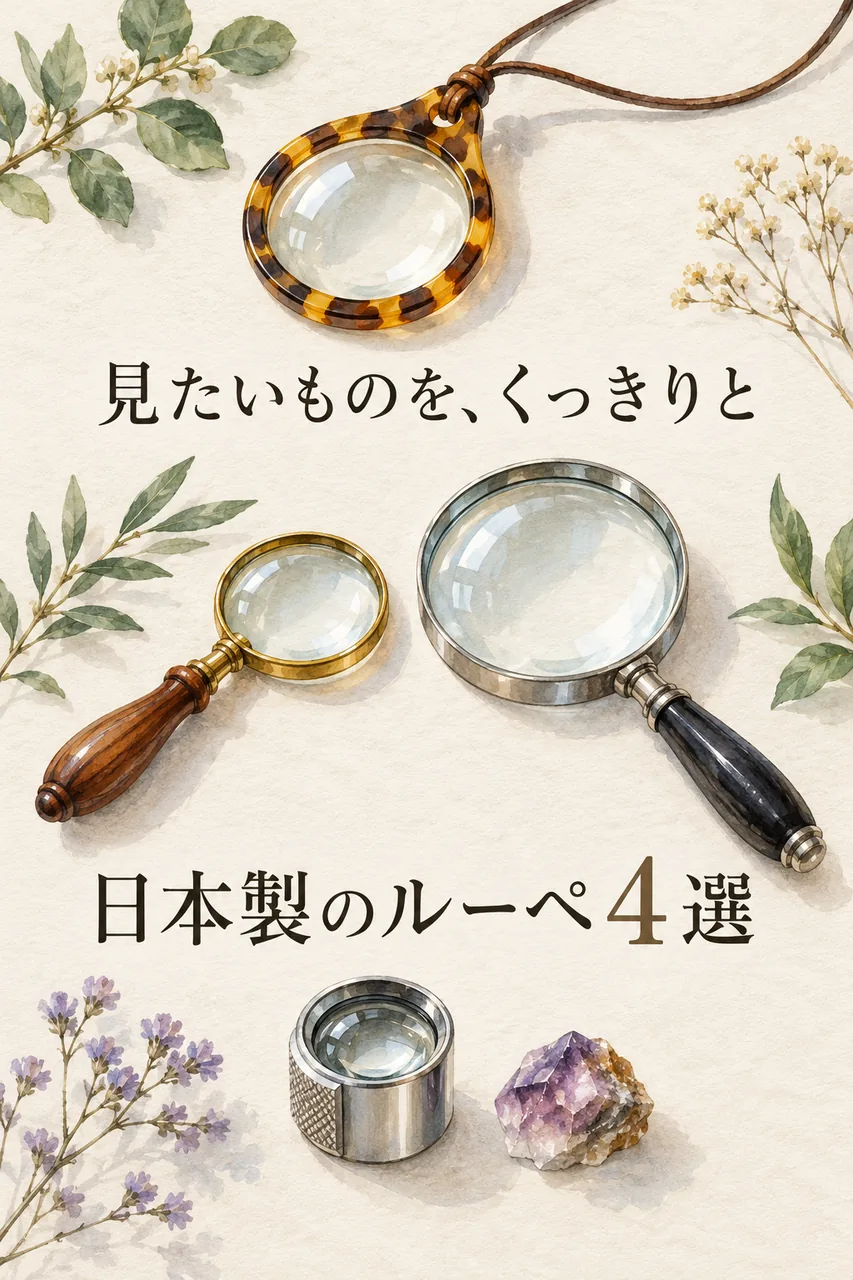
A magnifier is a one-lens tool. That's why the lens and finish change what you see.
KISSO's pendant loupe, made by hand in Sabae from eyeglass material. MIZAR-TEC's clear glass and wooden handle. A brass-rim magnifier with a big lens. A 10x loupe of two clear glass lenses.
Decide what you want to see, and choose a Japanese lens to see it clearly.

Sabae Glasses: Celluloid, Titanium & 2 Brands Worth Buying
Japanese Glasses Cases: 5 Made in Wood, Inden and Leather