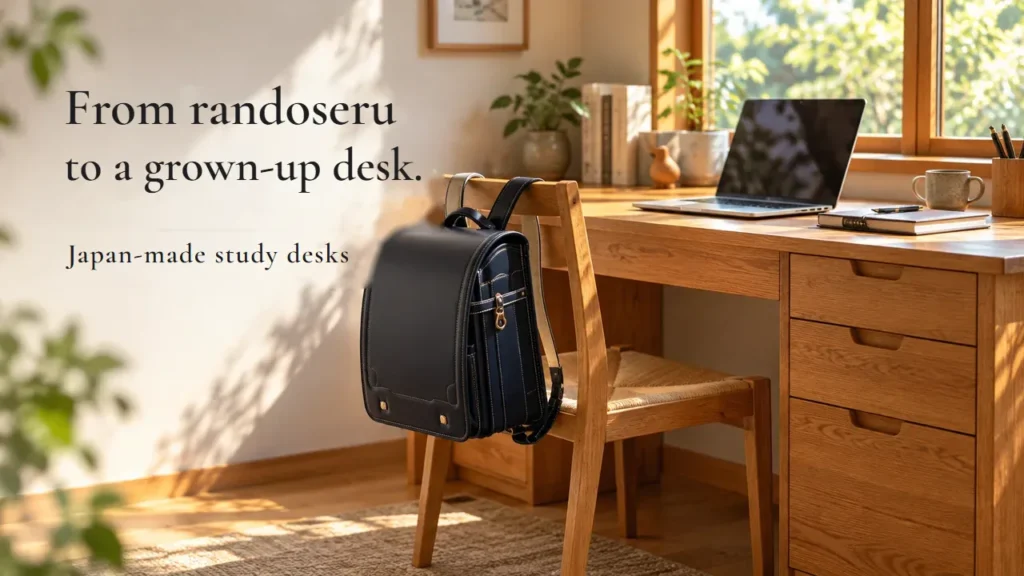
Fifty years. That's how long one family has used a Hamamoto Kogei study desk, across two generations.
The "customer voices" page on the maker's site carries the line: "Parent and child, two generations, fifty years. I'm grateful my mother chose this desk."
In Japan, buying a gakushu-zukue — a child's study desk — is a tradition when a child starts elementary school, along with the randoseru backpack. It's often thought of as a desk for six years. But a desk made of solid wood can go on being used into adulthood: middle school, high school, exams, and a working life.
This guide covers five Japan-made study desks from Hamamoto Kogei in Hiroshima, Karimoku in Aichi, Hida Sangyo in Takayama, and Sugi Kojo, a maker of school desks — plus how to choose width, depth and height, and the warranties and repairs that keep a desk going.
Quick Reference: 5 Japan-Made Study Desks at a Glance
| Desk | Made in | Wood | W × D × H | For you if… |
|---|---|---|---|---|
| Hamamoto No.09 ▾ | Hiroshima | Solid oak (nara) | 100 × 65 × 73 cm | A desk for two generations |
| Hamamoto No.17 ▾ | Hiroshima | Solid oak (nara) | 100 × 65 × 73 cm, 4 heights | Height that grows with the child |
| Karimoku Pure Nature SU3315 ▾ | Aichi / Gifu | Oak | 100 × 65 × 72.3 cm | A future study desk |
| Hida Sangyo cobrina ▾ | Takayama, Gifu | Oak (nara) | 105 × 55 × 70 cm | No bulky feel in the room |
| Sugi Kojo Kukka ▾ | Ukiha, Fukuoka | Alder | 100 × 53 × 74 cm | A Japan-made desk at an approachable price |
Click a desk to jump to it. 100 cm ≈ 39.4 in; 65 cm ≈ 25.6 in; 73 cm ≈ 28.7 in.
1. Why Japanese: A Study Desk Isn't Done in Six Years
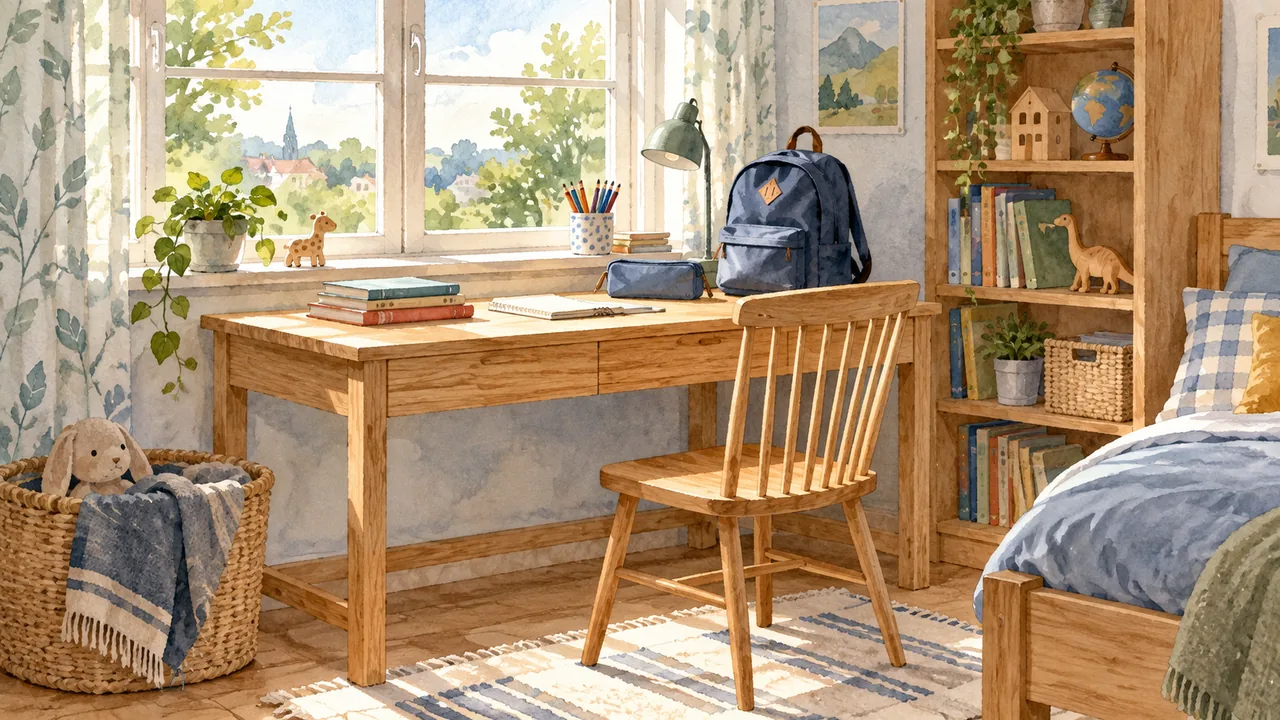
"Together until they're grown"
Hamamoto Kogei's site lists comments from families who chose its desks: "I want them to keep using it, unchanged, as an adult." "It'll surely be with them until they're grown up."
These aren't desks with cartoon characters or childish trim. They're plain desks of solid wood — so the same desk works for a first-grader, a high-schooler and a working adult. Hamamoto also suggests "living room first, then the child's room": in the early grades, the desk sits in the living room near the family; when the child starts studying alone, it moves. The room changes; the desk doesn't.
2. Hamamoto Kogei: Solid Oak, Made in Hiroshima
Committed to making everything in Japan
Hamamoto Kogei is a Hiroshima furniture maker. According to Hiroshima Prefecture's company profile, it was founded in 1948 and makes furniture in two factories in the prefecture. Its woods are Japanese oak (nara) and oak.
Its site says: "Under rigorous quality control, we carry out everything from processing to finishing in Japan" — so the makers can feel what the users feel and bring it into the furniture.
It began as a woodworking association for deaf workers
According to Hiroshima Prefecture's company profile, Hamamoto Kogei was founded in 1948 as the Hiroshima Deaf Welfare Woodworking Association, becoming Hamamoto Kogei Co. in 1952 and running its own sawmilling and furniture making in Ujina, Hiroshima. A company that began with woodwork in postwar Hiroshima now makes desks used by parents and their children.
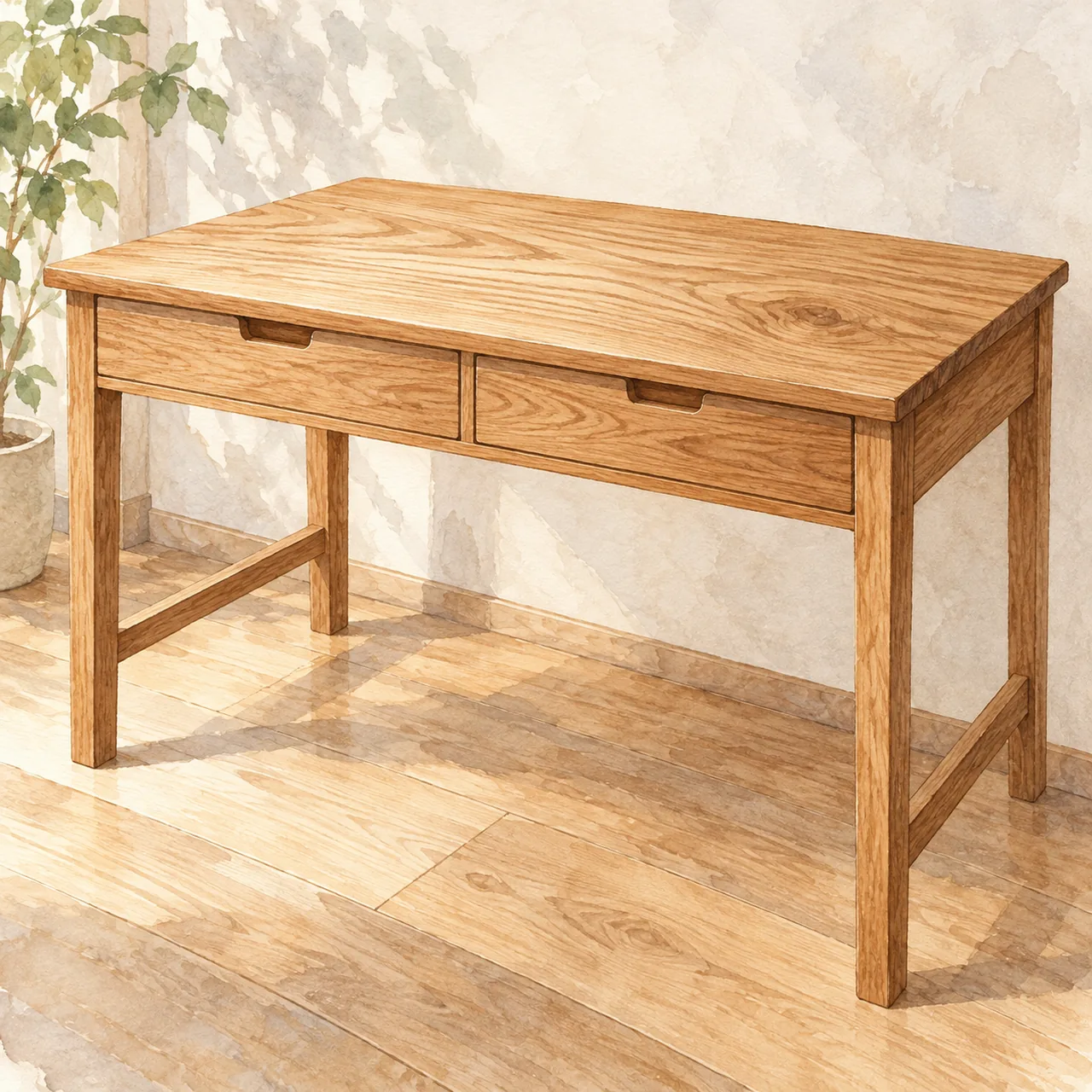
Hamamoto Kogei No.09 Desk, Width 100 — the solid-oak standard
A solid-oak study desk for two generations. The first series listed on Hamamoto's study-desk site, "a standard desk using plenty of fine solid nara and oak." 100 × 65 × 73 cm (39.4 × 25.6 × 28.7 in); the desk arrives assembled.
Natural, dark or café finish; dark and café are made to order and take about 60 days, so order by year's end for an April school start. A hutch, wagon or rising side unit can be added later. Sold in Japan.
Hamamoto Kogei No.17 Desk, Width 100 — four heights as the child grows
From a first-grader's height to an adult's. Hamamoto's height-adjustable model: the top can be set at four heights, to suit a small new pupil and a tall teenager alike. Same solid oak, 100 × 65 × 73 cm. As the body grows, the desk adjusts. Sold in Japan.
3. Karimoku and Hida Sangyo: Grown-Up Desks from Woodworking Towns
Karimoku: made in its own factories in Aichi and Gifu
Karimoku is an Aichi maker devoted to wooden furniture. Its press materials say it produces in its own factories in Aichi and Gifu and manages quality from materials to repairs. The Pure Nature desk — an oak top on slender round legs — looks less like a study desk than a grown-up desk for a study.
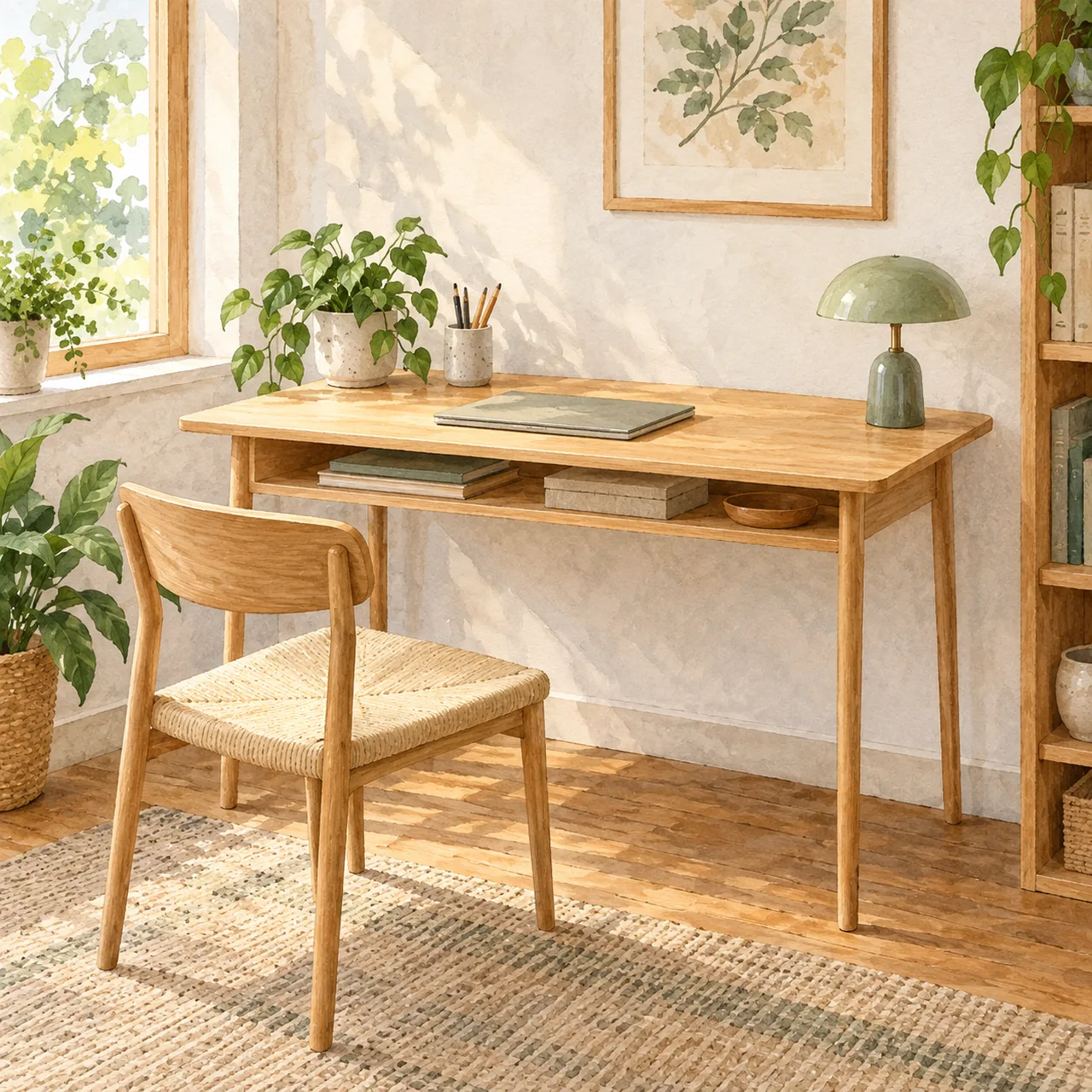
Karimoku Pure Nature Desk SU3315 — from child's room to study
When the child grows up, it simply becomes a study desk. 100 × 65 × 72.3 cm; oak, with a top of edge-joined oak boards and a shelf at foot level for textbooks and dictionaries. Three-year warranty; delivery in 3–4 weeks, self-assembly. Sold in Japan.
Hida Sangyo: from Takayama, "the sacred ground of woodworking"
Hida Sangyo of Takayama, Gifu, calls Hida-Takayama "the sacred ground of woodworking." Its cobrina desk is also a Takayama hometown-tax gift, listed as made and processed in Takayama. At 55 cm deep and 70 cm high, it's a little shallower and lower than the others — less imposing in a room.
Hida Sangyo cobrina Desk, Width 105 — a trim 55 cm deep
Fits a child's room or a corner of the living room. Oak (nara), 105 × 55 × 70 cm (41.3 × 21.7 × 27.6 in); also 95 cm wide. Combines with a book stand, shelf and wagon. Self-assembly. Sold in Japan.
4. Sugi Kojo: A Study Desk from a School-Desk Factory
A maker that knows classroom desks
Sugi Kojo is a furniture maker in Ukiha, Fukuoka. Senshukai, a major Japanese catalog retailer, introduced it when they made study desks together as "a factory with a long history of making school furniture." Classroom desks get used, bumped and leaned on every day — this is a study desk from a factory that knows that kind of toughness.
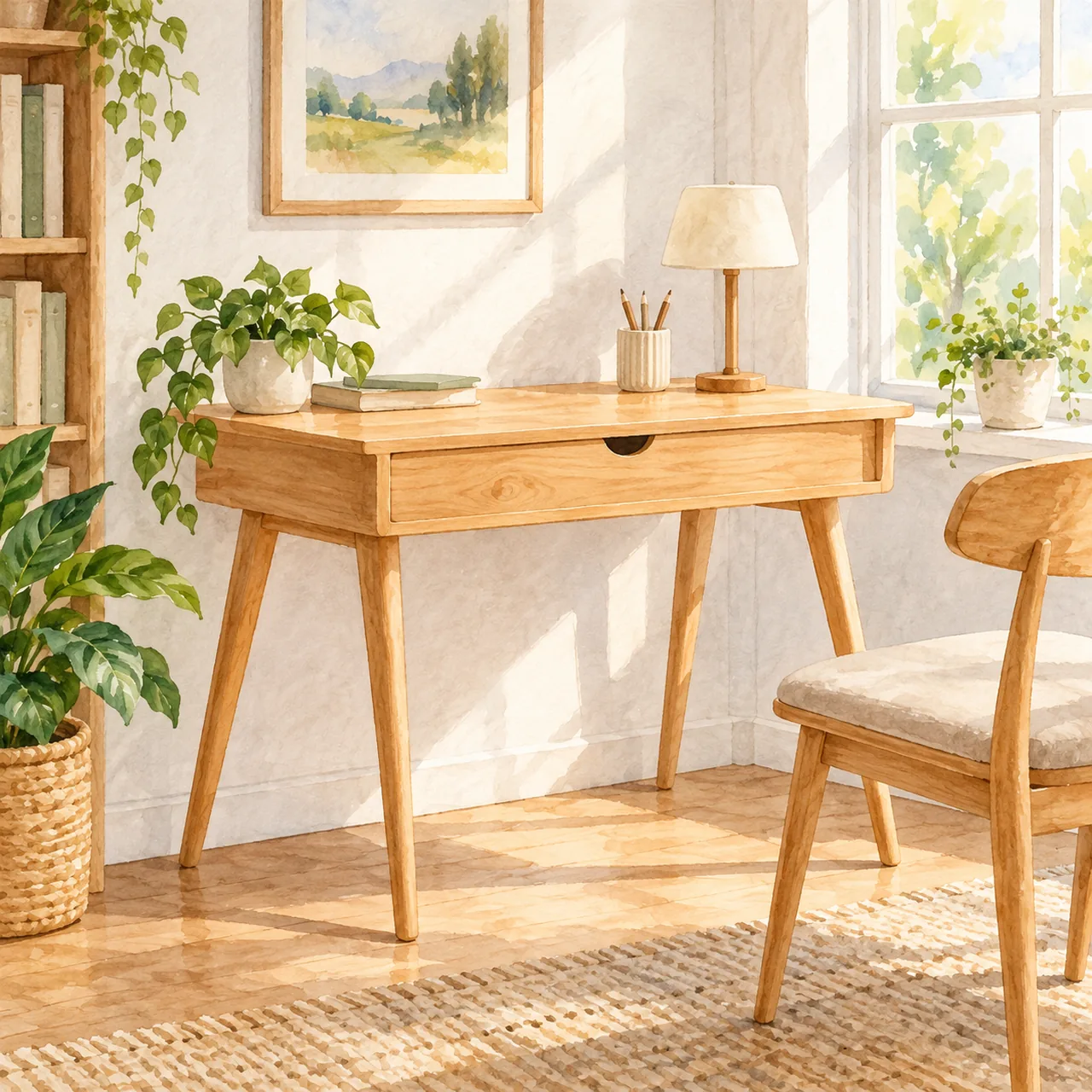
Sugi Kojo Kukka Desk 100 — a Japan-made study desk that arrives assembled
No assembly; use it the day it arrives. Alder, 100 × 53 × 74 cm (39.4 × 20.9 × 29.1 in), with angled legs that make sitting down and getting up easy. Uses F★★★★ materials (Japan's lowest formaldehyde-emission grade) and is certified as Japanese-made furniture. Sold in Japan.
5. Choosing by Width, Depth, Height and Room
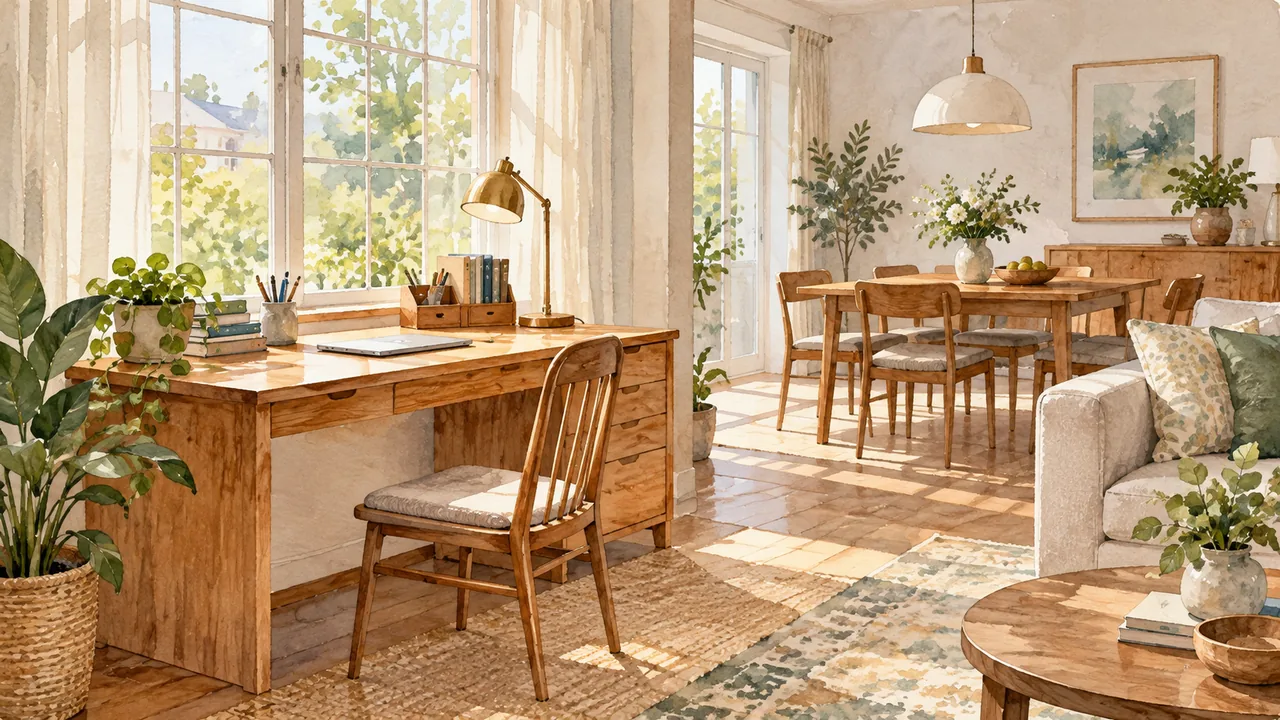
① Width and depth: start from where it goes
All five desks here are 100–105 cm wide. The difference is depth: 53 cm (Sugi Kojo) to 65 cm (Hamamoto, Karimoku). A deeper top leaves room beside open textbooks and notebooks — and later a laptop. For a small room, Hida Sangyo's 55 cm or Sugi Kojo's 53 cm fits more easily.
② Height: can it fit the body?
These desks are 70–74 cm high — about the same as an adult desk. For young children, adjust with the chair and a footrest, or choose an adjustable-height desk like Hamamoto's No.17.
③ Allow for delivery time
Some solid-wood desks are made to order: Hamamoto's dark and café finishes take about 60 days, Karimoku 3–4 weeks. For an April school start, decide by the end of the year.

6. Making It Last: Warranty, Repair and Care
Hamamoto: a five-year warranty on everything
Hamamoto Kogei gives a five-year quality warranty from purchase on all its products, repairing or replacing items that fail in normal use. After the warranty, it still takes repairs through the store where you bought it or a nearby dealer — though its site is honest that products over ten years old may not be repairable, depending on parts.
F★★★★: care for the air, too
"F★★★★" ("F four-star") on Japanese furniture marks the grade with the lowest formaldehyde emission from adhesives and the like. Sugi Kojo's Kukka uses materials of this grade. For a desk a child leans over for hours a day, thought given even to the invisible air is reassuring.
Solid wood deepens in color with use
Solid wood darkens over the years; Hamamoto's warranty notes that natural changes in solid wood that don't affect use aren't defects. It's not wear — it's the wood maturing. When the desk arrives, read the maker's care guide once.
7. Buying a Japanese Study Desk
These five desks are large furniture sold and delivered within Japan; we couldn't find them on Amazon.com. If you live in Japan, they're available through furniture stores and online shops.
Look for 学習机 (gakushu-zukue, study desk), 無垢材 (solid wood), ナラ (Japanese oak) and 日本製 or 国産 (made in Japan).
8. Frequently Asked Questions
Can a study desk be used into adulthood?
A plain solid-wood desk can. Hamamoto Kogei's customers report "two generations, fifty years."
When should I order a study desk?
For an April school start in Japan, by the end of the year. Hamamoto's dark and café finishes take about 60 days to make; Karimoku about 3–4 weeks.
If my child studies in the living room, do we need a desk?
Start it in the living room and move it to the child's room later. Hamamoto itself suggests "living room first, then the child's room."
How deep should the desk be?
65 cm if they spread out a lot; 53–55 cm for a small room. Here, Hamamoto and Karimoku are 65 cm, Hida Sangyo 55 cm, Sugi Kojo 53 cm.
The desk is too high for my child.
Adjust with the chair and a footrest, or choose an adjustable desk. Hamamoto's No.17 sets the top at four heights as the child grows.
Can it be repaired if it breaks?
Hamamoto Kogei warranties all products for five years and takes repairs through dealers after that, though products over ten years old may not be repairable depending on parts.
Final Thoughts: From Randoseru to a Grown-Up Desk
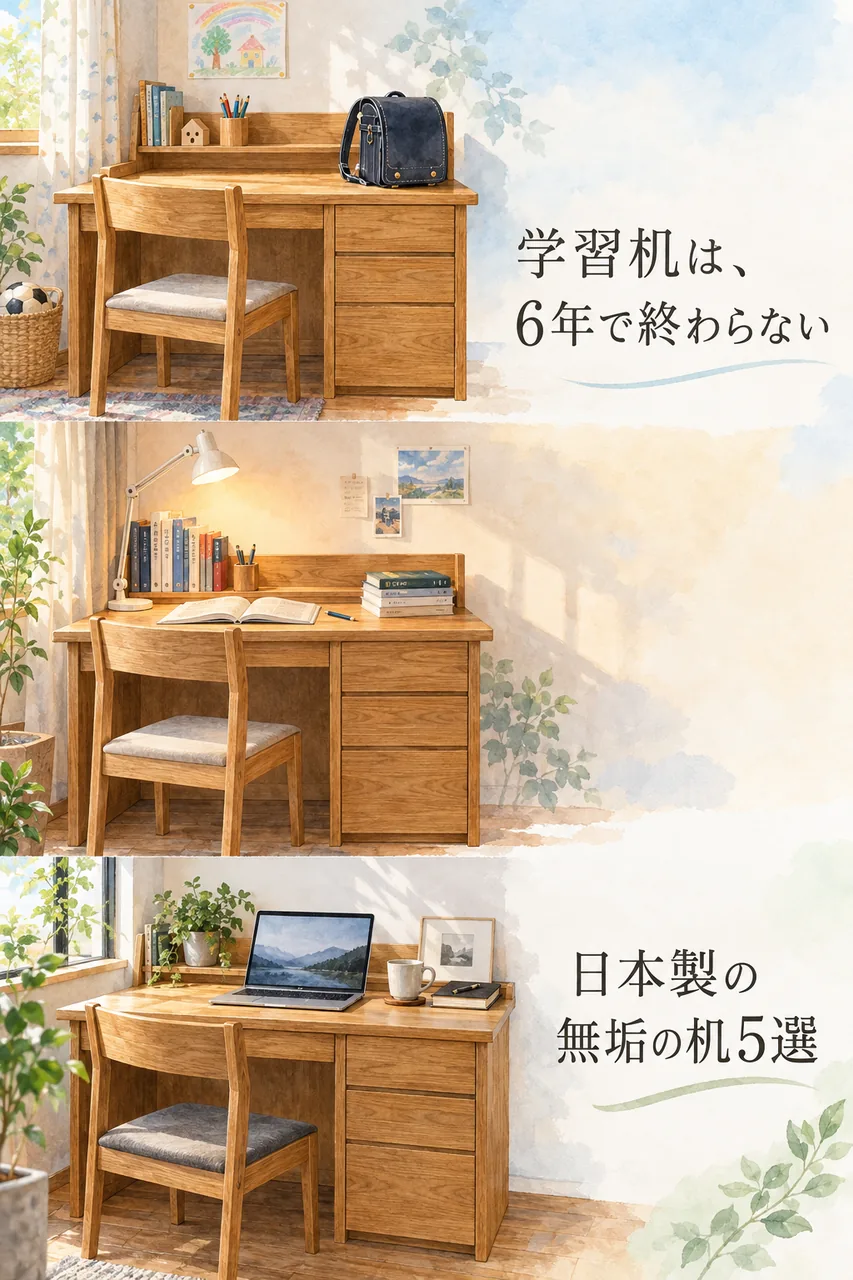
A study desk isn't done in six years. A plain desk of solid wood can be used into adulthood — Hamamoto's customers speak of fifty years.
Hamamoto Kogei, making solid oak desks in two Hiroshima factories. Karimoku, in its own factories in Aichi and Gifu. Hida Sangyo, from the woodworking town of Takayama. And Sugi Kojo, a maker of school desks.
Choose a desk your child can grow into — and keep.
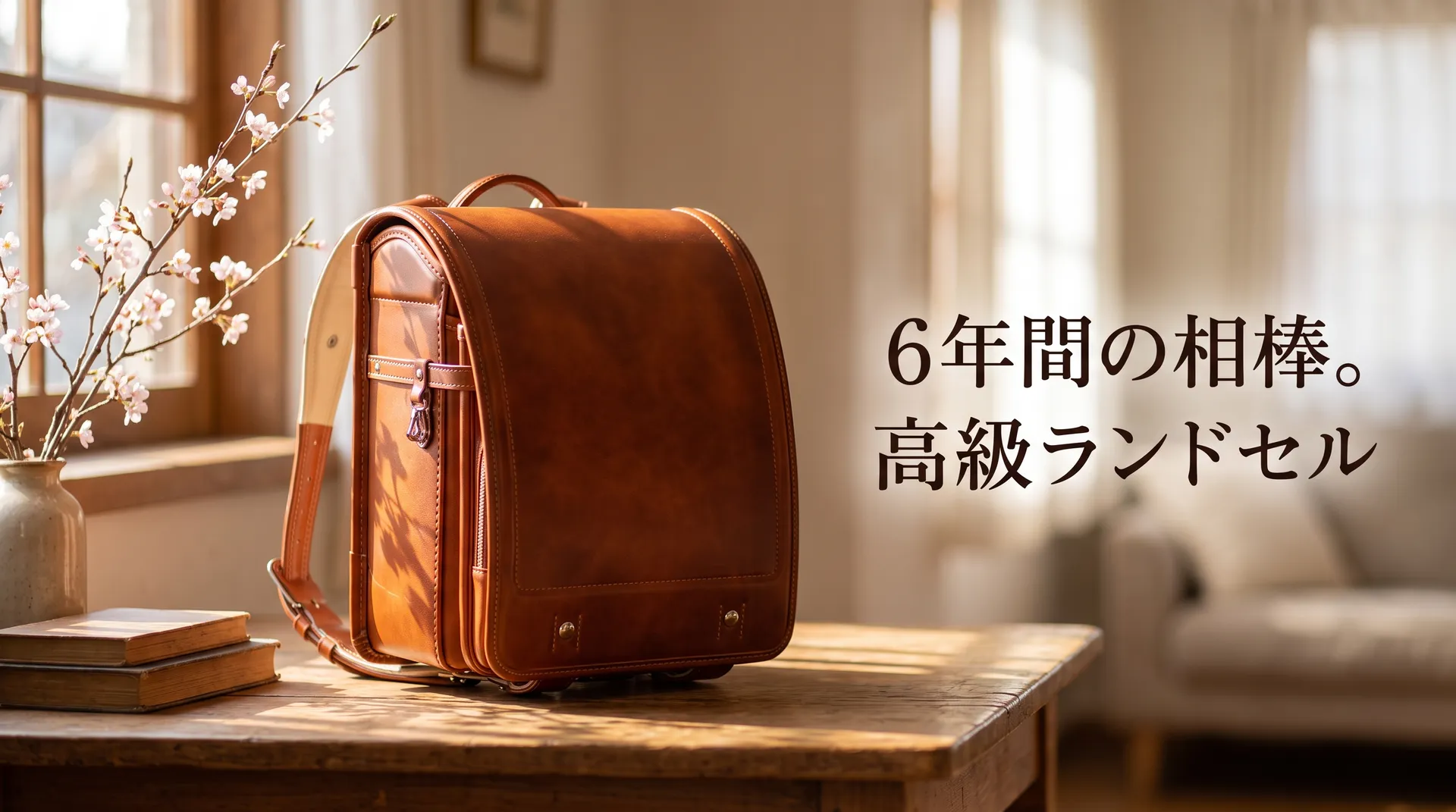
Randoseru: The Japanese School Bag, and the Adult Version

Japanese Wooden Furniture: Hida, Karimoku, Tendo & Maruni