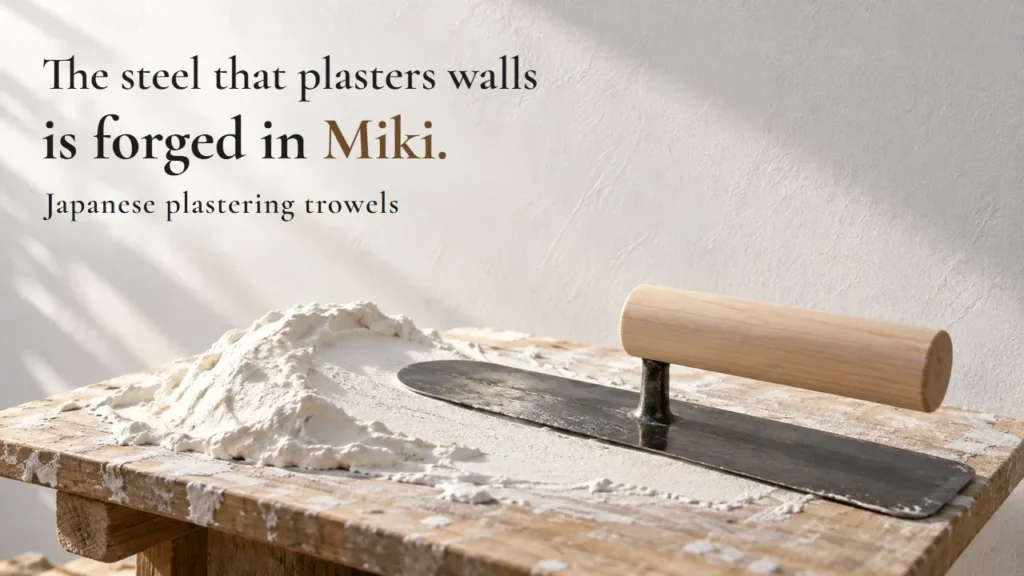
A freshly plastered lime wall, smooth and seamless.
What makes it is a plasterer's hand — and one thin blade of steel: the kote, the Japanese plastering trowel.
This guide chooses trowels by where they were forged. The plastering trowel is one of the officially designated traditional crafts of Miki, a town in Hyogo Prefecture famous for carpenters' tools. You'll find a hand-forged finishing trowel from a traditional-craft workshop, trowels from Kajiwara Kote Seisakusho, four generations and about 100 years in the trade, a long round-nosed floor trowel, and an easy-to-handle hon-yaki square trowel.
Plasterers abroad use Japanese trowels too — so this guide also shows where to buy one outside Japan.
Quick Reference: Japanese Plastering Trowels at a Glance
| Trowel | Maker | Type / length | Best for |
|---|---|---|---|
| Hand-forged finishing trowel ▾ | Kanemitsu (traditional-craft workshop) | Finishing, 210 mm (8.3 in) | Final wall surface |
| HISIKA Shigetsugu mortar trowel ▾ | Kajiwara Kote Seisakusho | Pressing, 210 mm (8.3 in) | Pressing mortar |
| SHINARI round-nosed floor trowel ▾ | Kajiwara Kote Seisakusho | Round nose, 360 mm (14.2 in) | Concrete floors |
| Banshu-Miki hon-yaki square trowel ▾ | Made in Miki | Square, 240 mm (9.4 in) | Spreading over large areas |
| Modern Masters Japanese trowel ▾ | Made in Japan | Pointed, 240 mm (9.4 in) | Buying outside Japan |
Click a trowel to jump to it. To choose by material, go to section 6 ▾.
1. Why Japanese: Trowels Are Forged in Miki
From a rebuilt castle town to a town of carpenters' tools
According to Japan's Association for the Promotion of Traditional Craft Industries, Miki was destroyed once, at the end of the 16th century, when Hashiba (later Toyotomi) Hideyoshi besieged and took Miki Castle. To rebuild, Hideyoshi exempted the townspeople from taxes, and carpenters gathered from all over to rebuild the shrines, temples and houses — which is how Miki's carpenters' tools began.
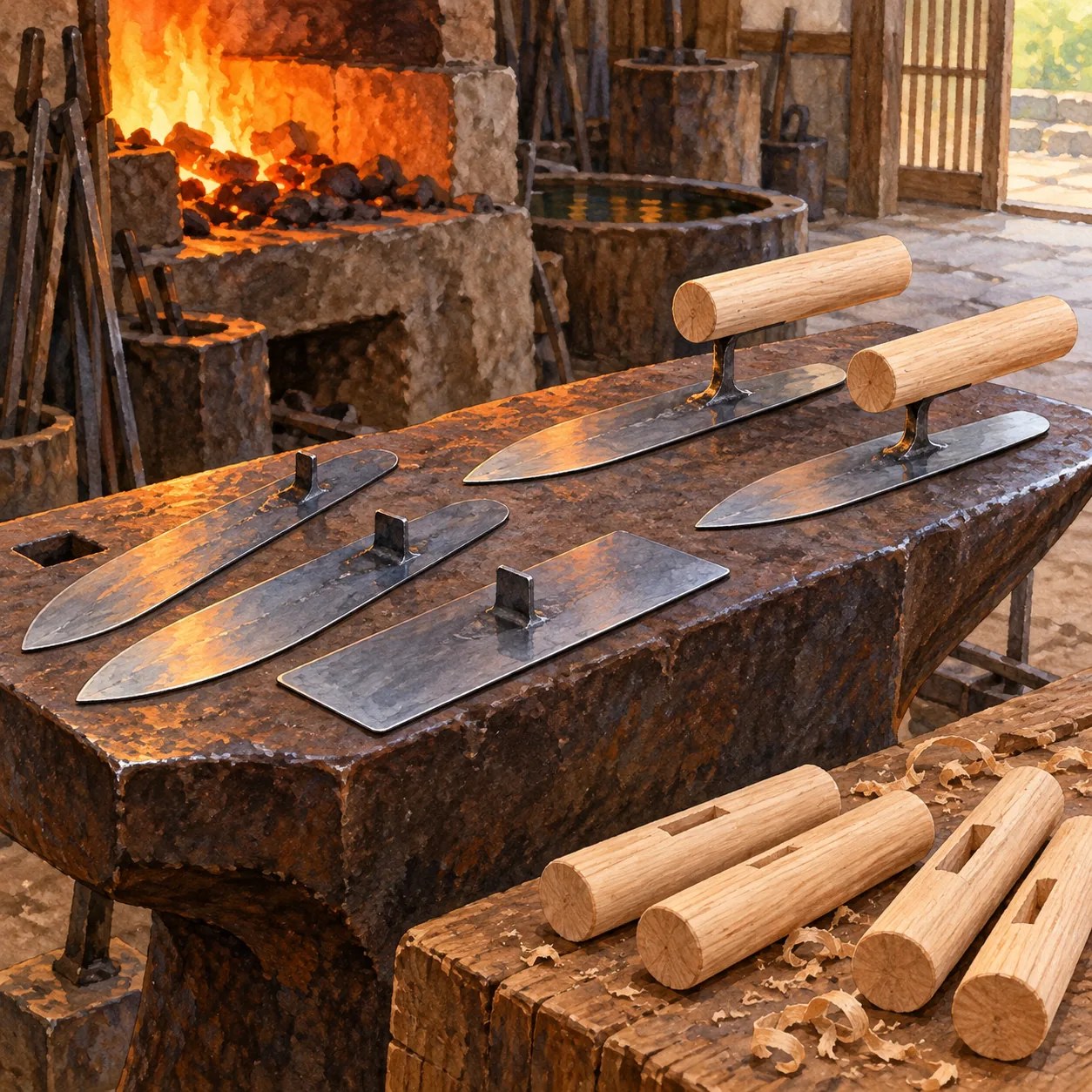
Today, "Banshu Miki Uchi-Hamono" (Banshu-Miki forged blades) is a nationally designated traditional craft covering saws, planes, chisels, plastering trowels and small knives. The trowel is one of the five. The rules for the craft specify that after quenching, a trowel is pressed flat to remove any warping, and that finishing is done by hand.
Plasterers overseas use Japanese trowels too
Japanese trowels are sold abroad. Lancaster Lime Works, a lime-building supplier in Pennsylvania, sells Japanese trowels from a Miki maker and says they are "considered the best plastering trowels for applying natural materials." In the UK, the natural building supplier Mike Wye stocks Japanese trowels for clay walls and for tadelakt, the polished Moroccan lime plaster.
2. A Finishing Trowel Hand-Forged at a Traditional-Craft Workshop
Yasugi Blue #1 steel, fully forged
Kanemitsu's "Hon-tanzo Teuchi" finishing trowel is, in the seller's words, "hand-forged at a workshop designated for traditional crafts." It is a hon-yaki (fully hardened) trowel of Yasugi Aogami #1 (Blue Paper #1) steel, a steel well known to knife lovers.
A finishing trowel makes the last surface of a wall.
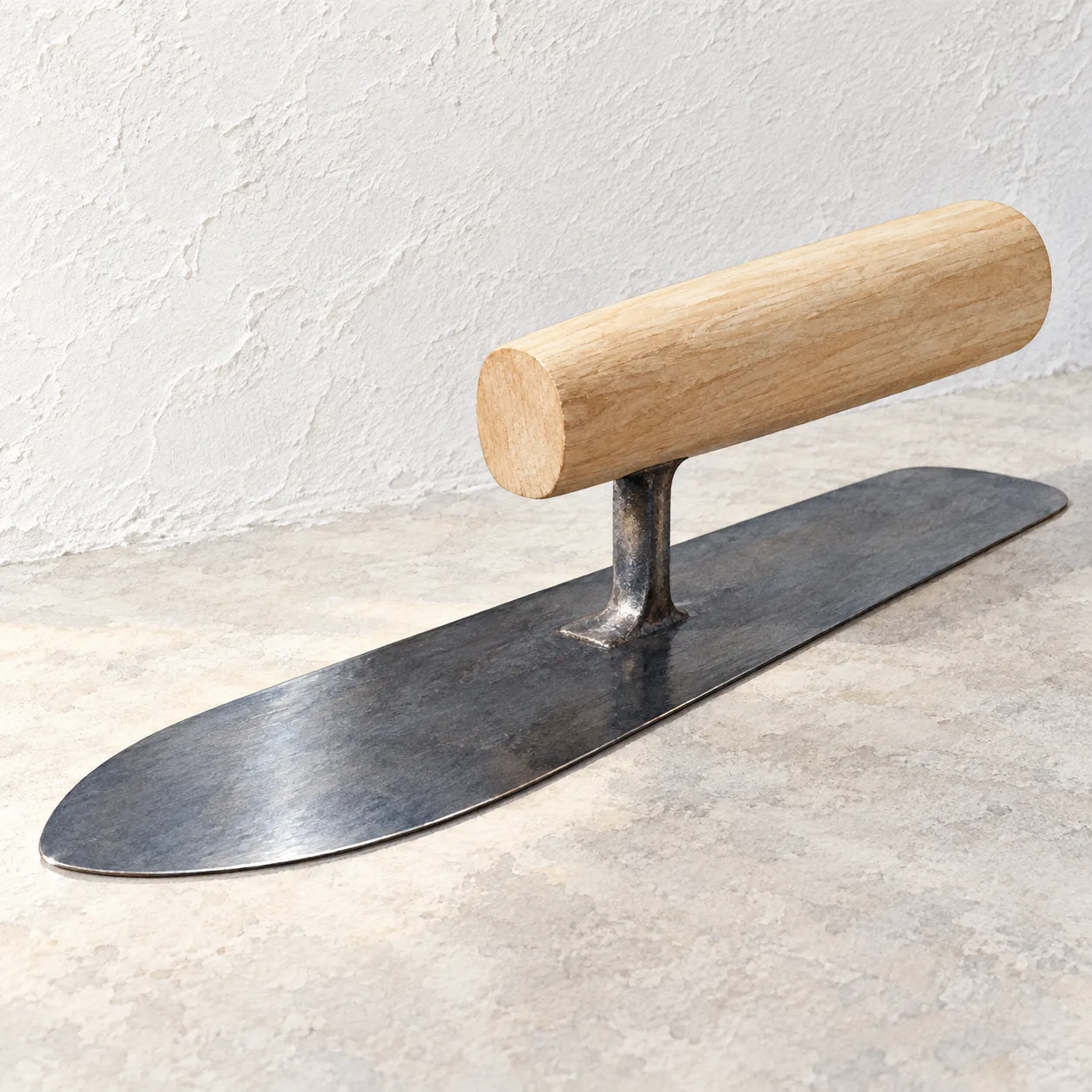
Kanemitsu Hand-Forged Finishing Trowel, 210 mm, Hon-Yaki Yasugi Blue #1 — Miki, Hyogo
A hand-forged finishing trowel from the Banshu-Miki tradition. 210 mm (8.3 in). Made to order from the maker.
For a plasterer who wants the tool used every day to be a hand-forged piece from Miki. Sold in Japan.
3. Four Generations, About 100 Years: Kajiwara Kote Seisakusho
A trowel that fits your hand better the more you use it
Miki's Kajiwara Kote Seisakusho has made plastering trowels for four generations — about 100 years. As Miki's blade shop "Miki Kajiya-mura" describes it, Kajiwara makes trowels that feel right from the start and fit the hand better the more they're used.
The blades are knife steels such as Yasugi steel, quenched and tempered to suit each, giving them hardness and resilience. Every handle is hinoki cypress. The white-handled "Betsuuchi HISIKA" is finished precisely by hand down to the details; the black-handled "HISIKA" is machine-finished — the steel and heat treatment are the same.
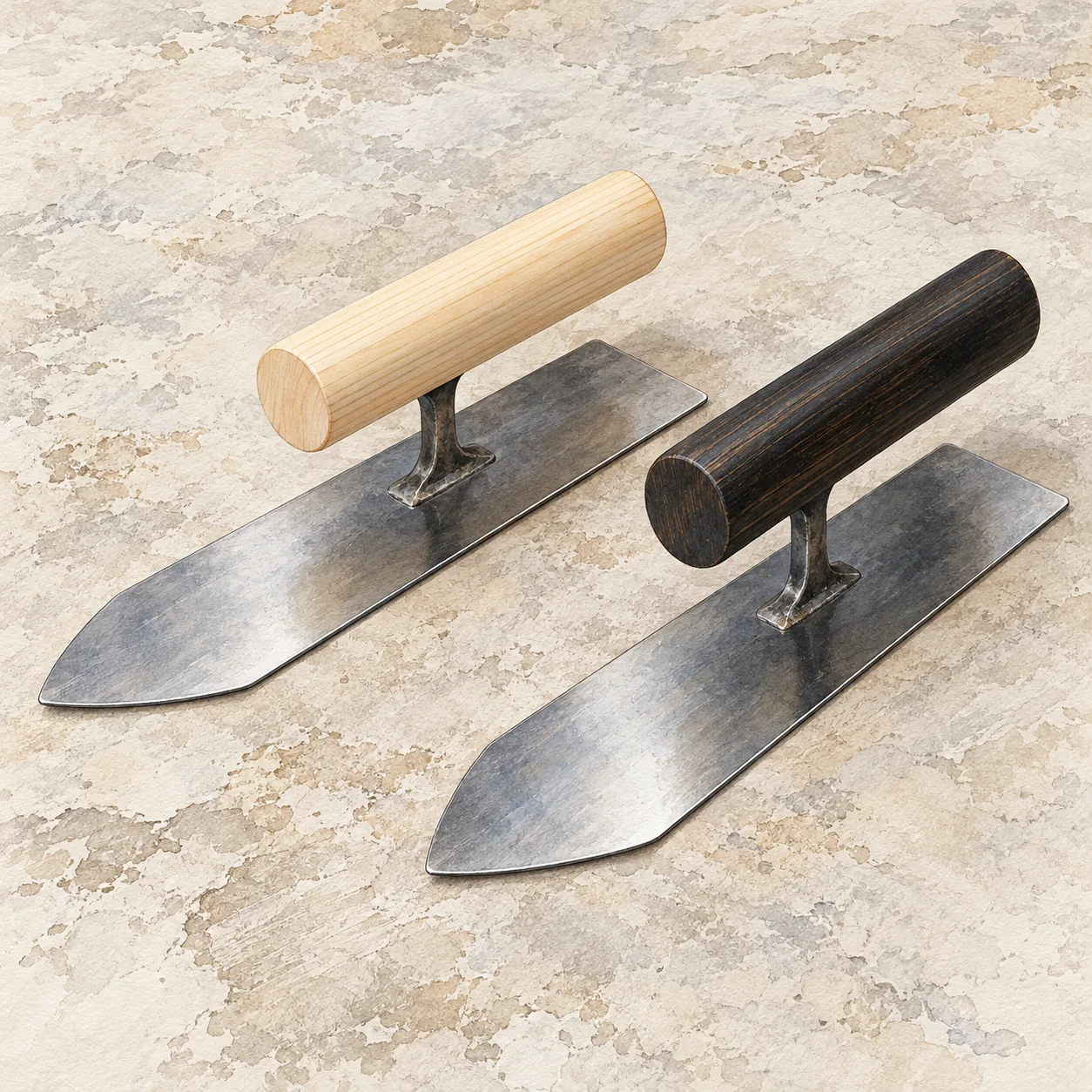
Kajiwara HISIKA Shigetsugu Hon-Yaki Mortar Trowel, 210 mm — Miki, Hyogo
A hon-yaki trowel for pressing mortar. About 210 mm (8.3 in) overall, with a handle of about 115 mm (4.5 in).
Sold by Dogu-ya Zenzaemon, a traditional tool shop in Shiga — for those who like to choose from a specialist. Sold in Japan.
4. A Long Round-Nosed Trowel for Floors
360 mm long, 0.4 mm thick
A doma-gote is a trowel for finishing floors. Kajiwara's "SHINARI" ("flex") is a round-nosed floor trowel — at 360 mm (14.2 in), far longer than the 210 mm finishing trowel in section 2.
The seller describes it as "a round-nosed trowel for finishing earthen floors," 360 mm long, 100 mm (3.9 in) wide and 0.4 mm thick. Of the round-nosed shape, Miki trowel maker Kaneshika says it "finishes the joins that tend to appear where coats overlap, without unevenness."
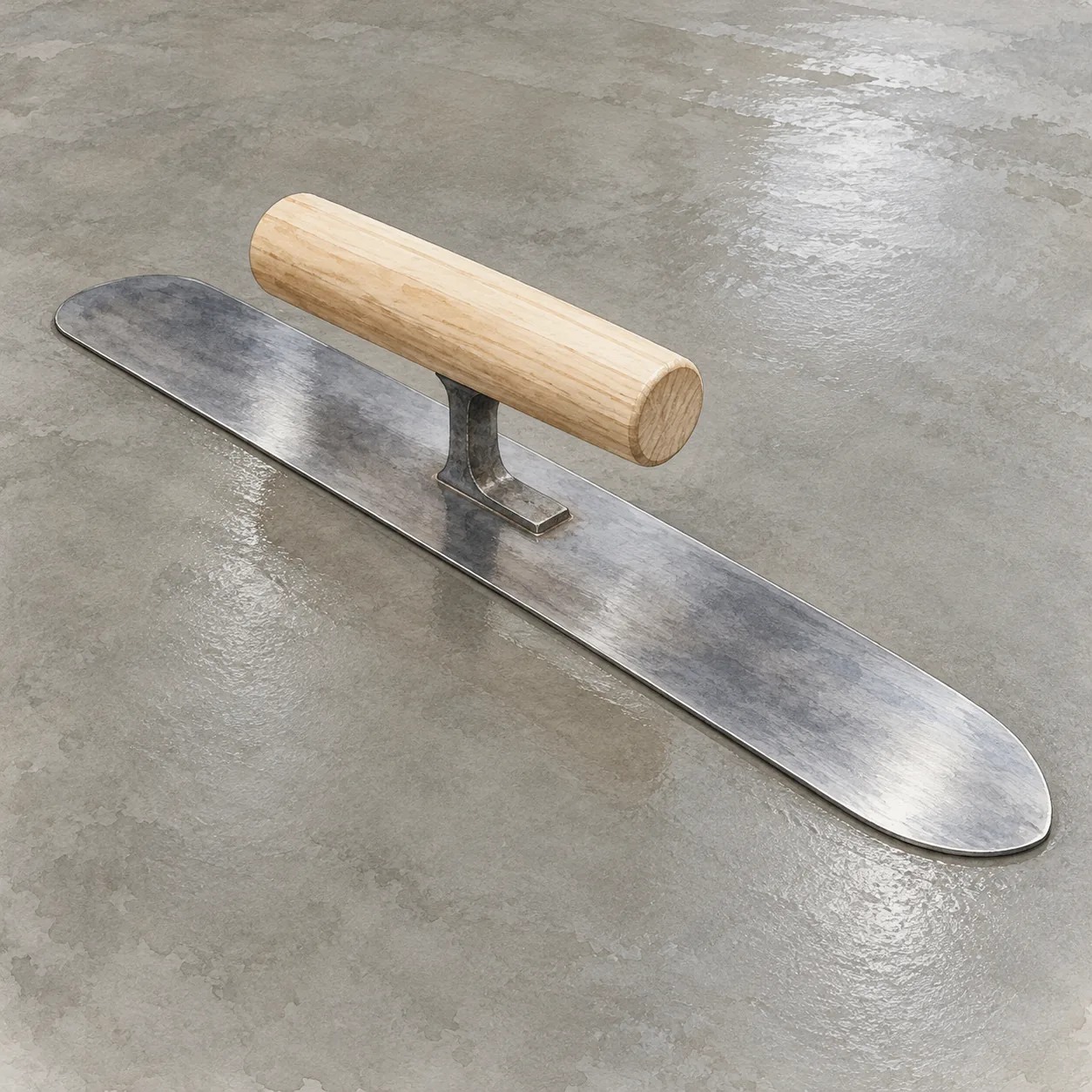
Kajiwara SHINARI Round-Nosed Floor Trowel, 360 mm — Miki, Hyogo
A long round-nosed trowel for finishing floors. Available from 300 to 420 mm (11.8–16.5 in).
Also for finishing an entryway, earthen floor or garage floor yourself. Sold in Japan.
5. A Hon-Yaki Square Trowel for Large Areas
The square trowel: the basic tool for spreading
Kaneshika's product description calls the square trowel "ideal for spreading and repairing large areas: concrete, walls, floors, gutters."
This "Banshu-Miki made" hon-yaki square trowel is described by the seller as "hon-yaki, with flexibility, and easy to handle." The rivets that hold the blade are stainless, so they resist corrosion.
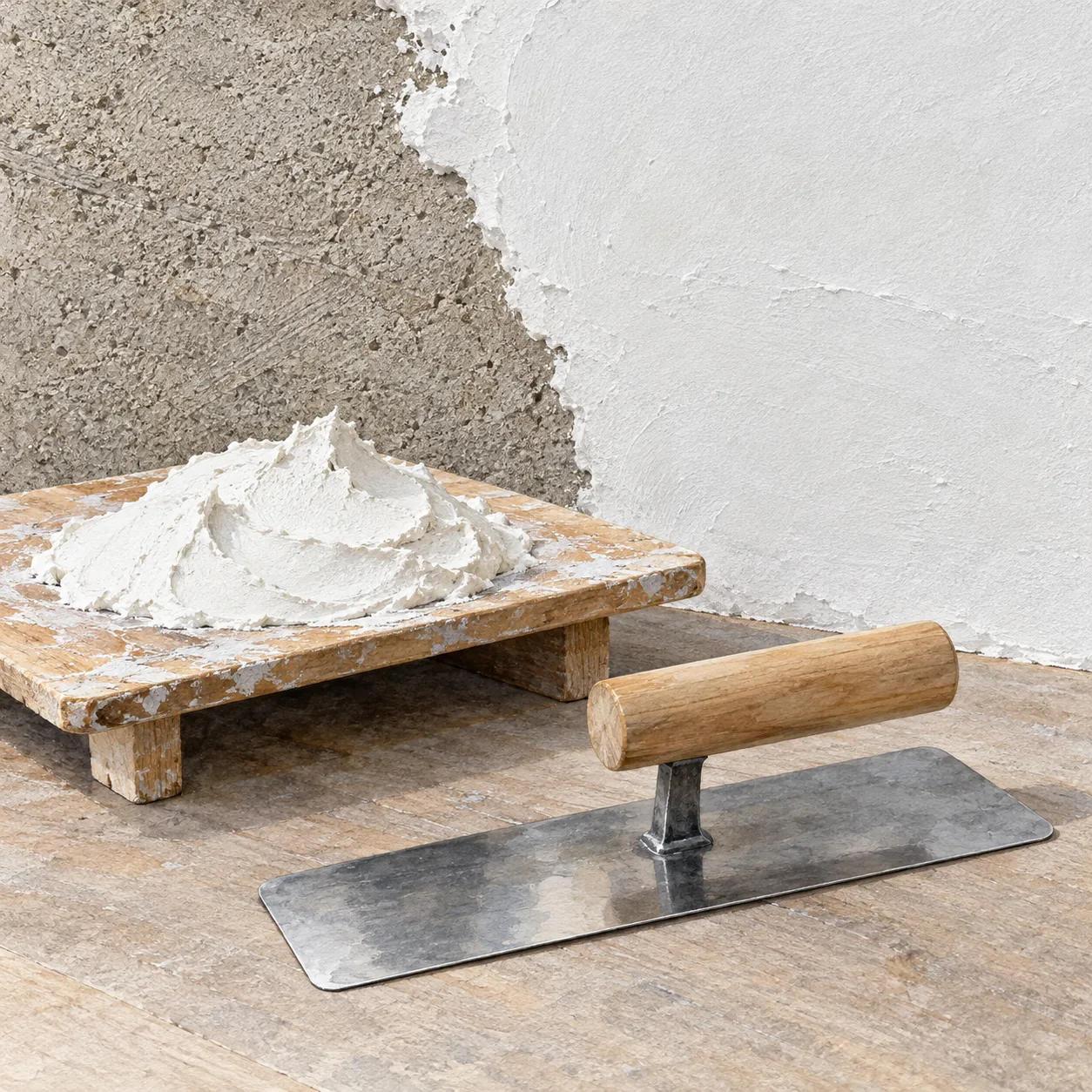
Banshu-Miki Hon-Yaki Square Trowel, 240 mm, Stainless Rivets — Miki, Hyogo
A hon-yaki square trowel made in Miki. 240 mm (9.4 in); also 255 mm (10 in).
A good first trowel for trying wall repairs or replastering yourself. Sold in Japan.
6. Choosing by What You're Plastering
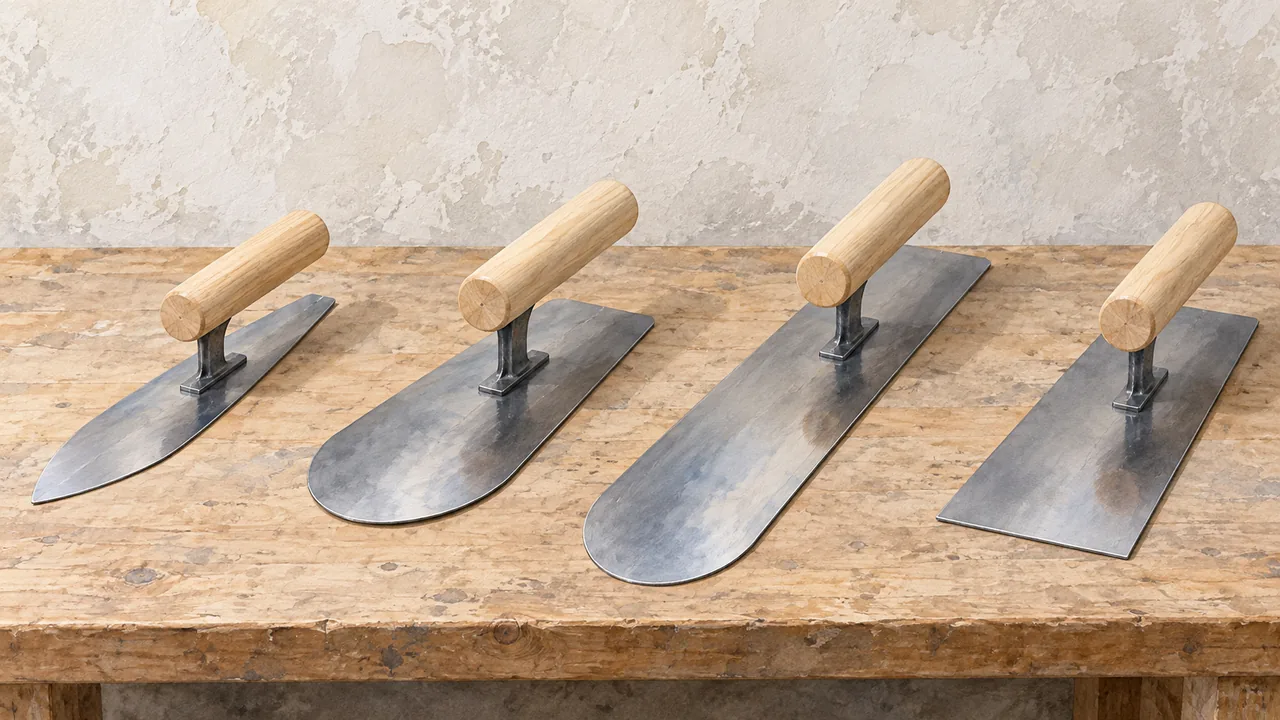
① The final surface of a wall: a finishing trowel
Kaneshika describes the finishing trowel as suited to "spreading mortar in general, finishing details and polishing." For smoothing lime or clay walls, the hand-forged finishing trowel in section 2.
② Pressing mortar: a pressing trowel
For pressing down freshly applied mortar, Kajiwara's mortar trowel in section 3.
③ Floors: a floor trowel. Large areas: a square trowel
Concrete floors call for the long floor trowel in section 4; spreading material over a large wall, the square trowel in section 5.
Miki's other carpenters' tools
Miki's planes and chisels are in Japanese Chisels and Planes: Why a Kanna Needs Setting Up, and saws and hammers in Japanese Saw & Hammer Guide.
7. Buying a Japanese Trowel Outside Japan
The four trowels above are sold in Japan; we couldn't find them on Amazon.com. Outside Japan, natural-building suppliers are the best place to look: Lancaster Lime Works in the US carries trowels from a Miki maker, and Mike Wye in the UK stocks Japanese trowels for clay and tadelakt.
On Amazon.com, one Japanese trowel listed with Japan as its country of origin is Modern Masters' 240 mm pointed trowel, made for Venetian plaster and other fine finishes.
Modern Masters 240 mm Japanese Pointed Trowel (SZT240P)
A pointed Japanese finishing trowel, 240 mm (9.4 in), made in Japan. Thin and light, for smooth plaster finishes.
Modern Masters 240 mm Japanese Pointed Trowel (SZT240P)
Loading product details…
Shopping in Japan, or from a Japanese tool shop online? Look for 左官鏝 (sakan-gote, plastering trowel), 仕上鏝 (finishing), 土間鏝 (floor), 角鏝 (square), 本焼 (hon-yaki) and 三木 (Miki).
8. Frequently Asked Questions
Are Japanese plastering trowels a traditional craft?
Yes. Trowels are part of "Banshu Miki Uchi-Hamono," a nationally designated traditional craft of Miki, Hyogo. It was designated in 1996 and covers five items: saws, planes, chisels, trowels and small knives.
Why did Miki become a town of carpenters' tools?
After Miki Castle fell, carpenters gathered from across the region to rebuild the town, and that grew into a tool-making industry. Hideyoshi exempted the townspeople from taxes to speed the rebuilding.
What's the difference between Kajiwara's "Betsuuchi HISIKA" and "HISIKA"?
The steel and heat treatment are the same; the finishing differs. The white-handled Betsuuchi HISIKA is finished precisely by hand; the black-handled HISIKA is machine-finished.
Are Japanese trowels used outside Japan?
Yes — natural-building suppliers in the US and UK sell them. Lancaster Lime Works calls Japanese trowels "considered the best plastering trowels for applying natural materials."
Which trowel is for concrete floors?
A floor trowel (doma-gote). Kajiwara's SHINARI, described by its seller as a round-nosed trowel for finishing floors, comes in lengths from 300 to 420 mm (11.8–16.5 in).
What are the handles made of?
Kajiwara's handles are all hinoki cypress. The rules of the Banshu-Miki craft also specify wooden handles.
Final Thoughts: The Steel That Plasters Walls Is Forged in Miki
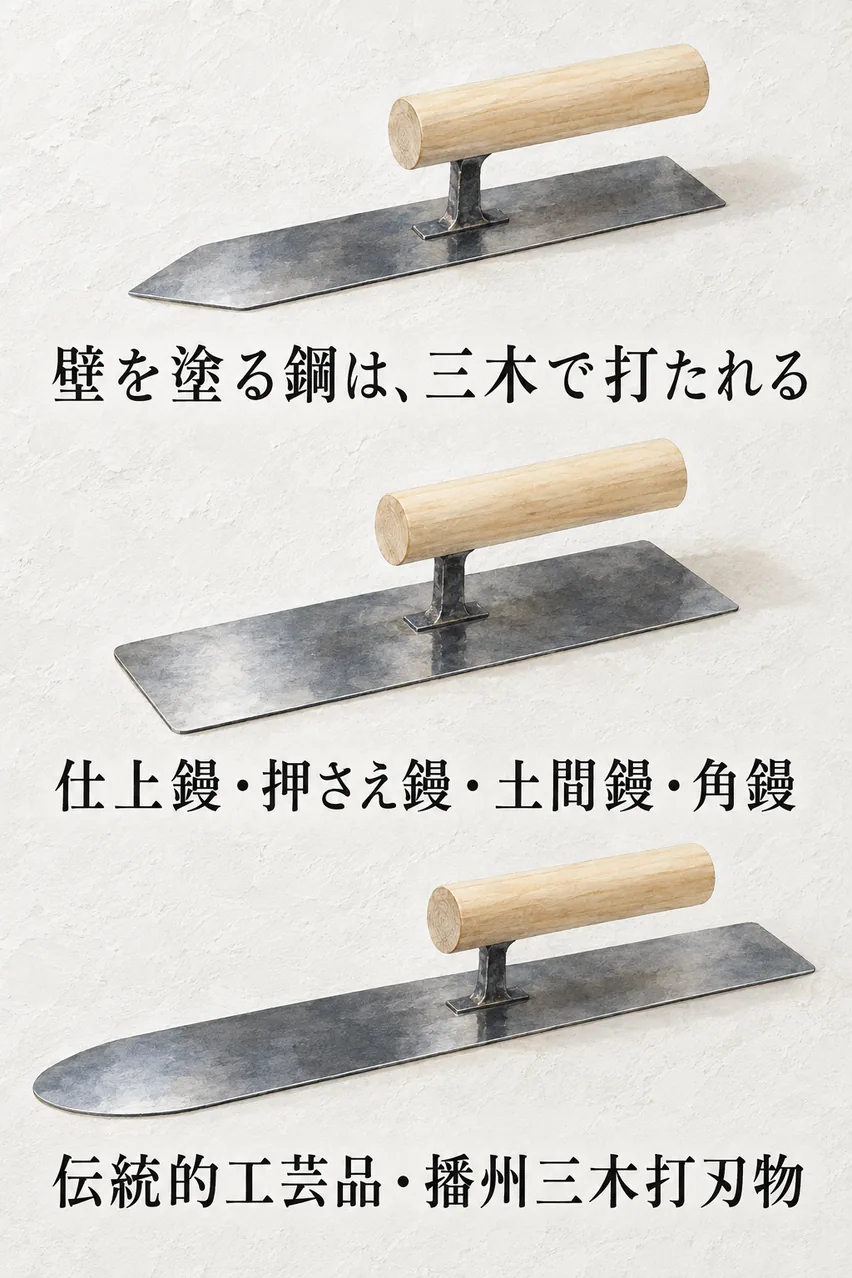
Behind every smooth wall is a single blade of steel.
Kanemitsu's finishing trowel, hand-forged at a traditional-craft workshop. Kajiwara's pressing and floor trowels, four generations in, with hinoki handles that settle into your hand. An easy-handling hon-yaki square trowel from Miki.
Plaster your wall with steel from the town where Hideyoshi's carpenters gathered.
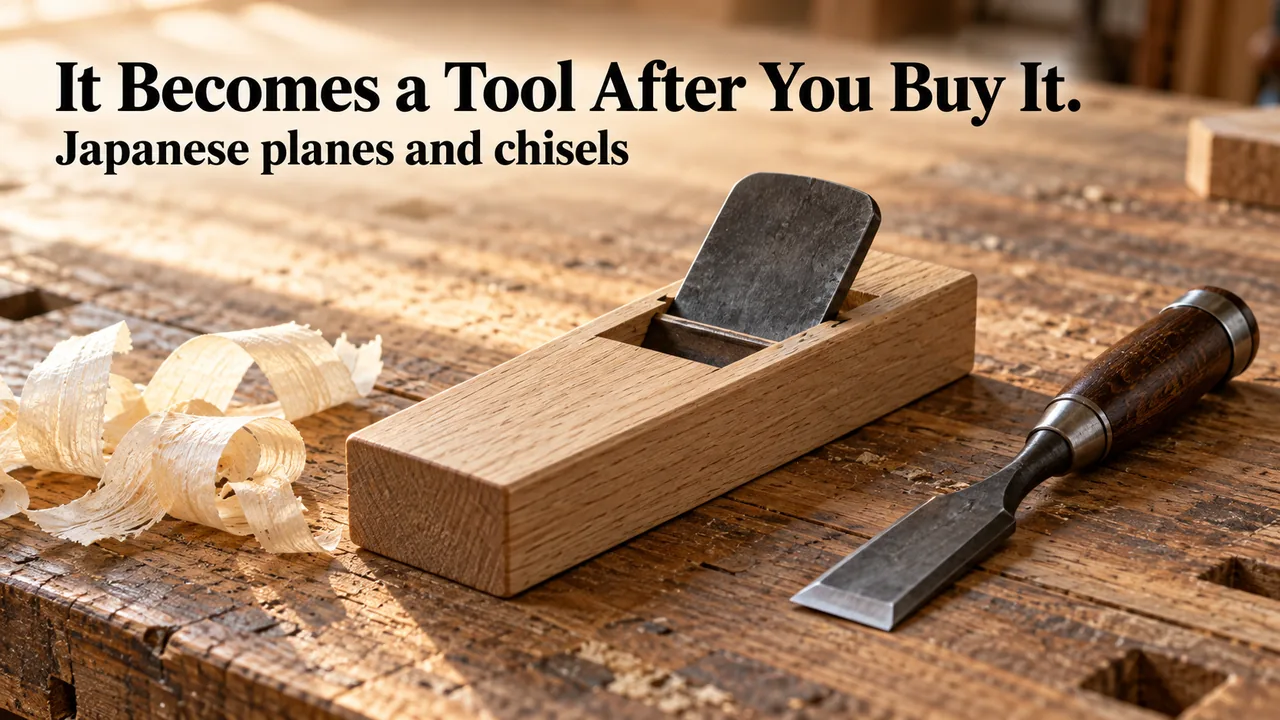
Japanese Chisels and Planes: Why a Kanna Needs Setting Up
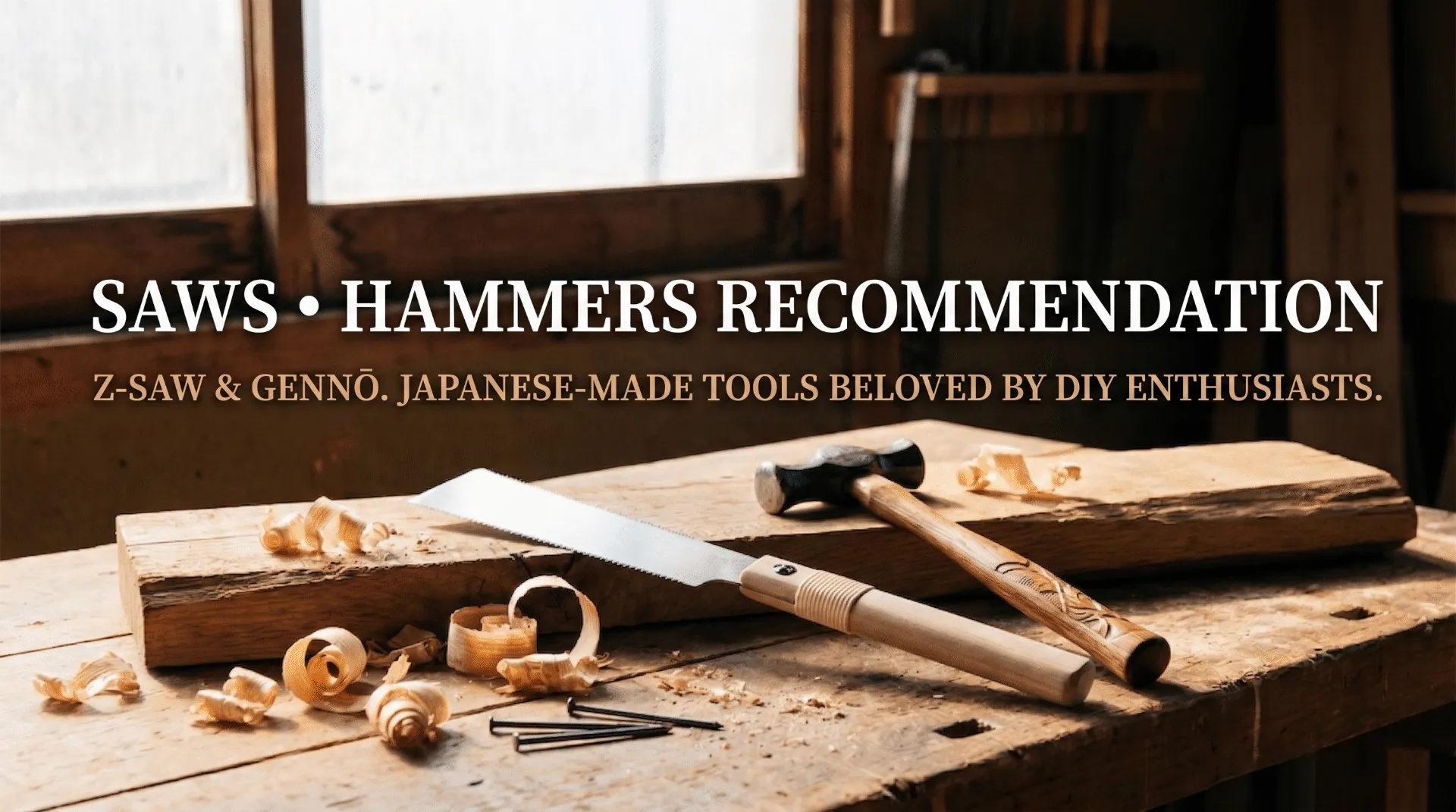
Japanese Saw & Hammer Guide | Z-SAW and Genno for DIY