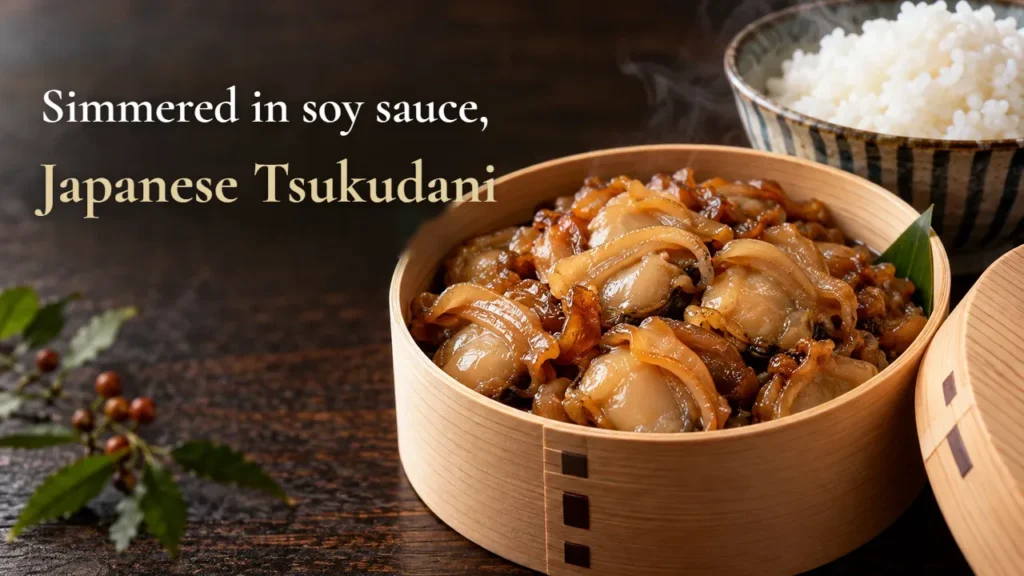
A little on a bowl of hot rice, and you can't stop eating.
That's tsukudani — and it's best ordered from the places that make it.
Tsukudani is local seafood, fish or kelp simmered down in soy sauce until it keeps, made to go with rice. In Kuwana, an old shop shucks wild clams one by one by hand and simmers them in a soy sauce base kept going since the day it opened. On Shodoshima, the island of soy sauce, tsukudani made with the island's own soy sauce spread after the war.
This guide covers three Japanese tsukudani: clam shigureni from Kaishin Shoten in Kuwana, chirimen sansho from Nomura Tsukudani in Kyoto, and shiitake kombu from Shimanoka on Shodoshima — plus how to eat and store tsukudani, and what you can buy outside Japan.
Quick Reference: Japanese Tsukudani at a Glance
| Tsukudani | Made from | Maker | Best for |
|---|---|---|---|
| Hamaguri shigureni ▾ | Wild Kuwana clams | Kaishin Shoten (Kuwana, Mie) | A formal gift |
| Chirimen sansho ▾ | Baby sardines, sansho berries | Nomura Tsukudani (Uji, Kyoto) | Onigiri, ochazuke |
| Shiitake kombu ▾ | Hokkaido kombu, shiitake | Shimanoka (Shodoshima, Kagawa) | Everyday rice |
| Nori tsukudani ▾ | Japanese nori seaweed | Shimanoka (Shodoshima) | Buying outside Japan |
Click a tsukudani to jump to it.
1. Why Japanese: Local Ingredients, Local Soy Sauce
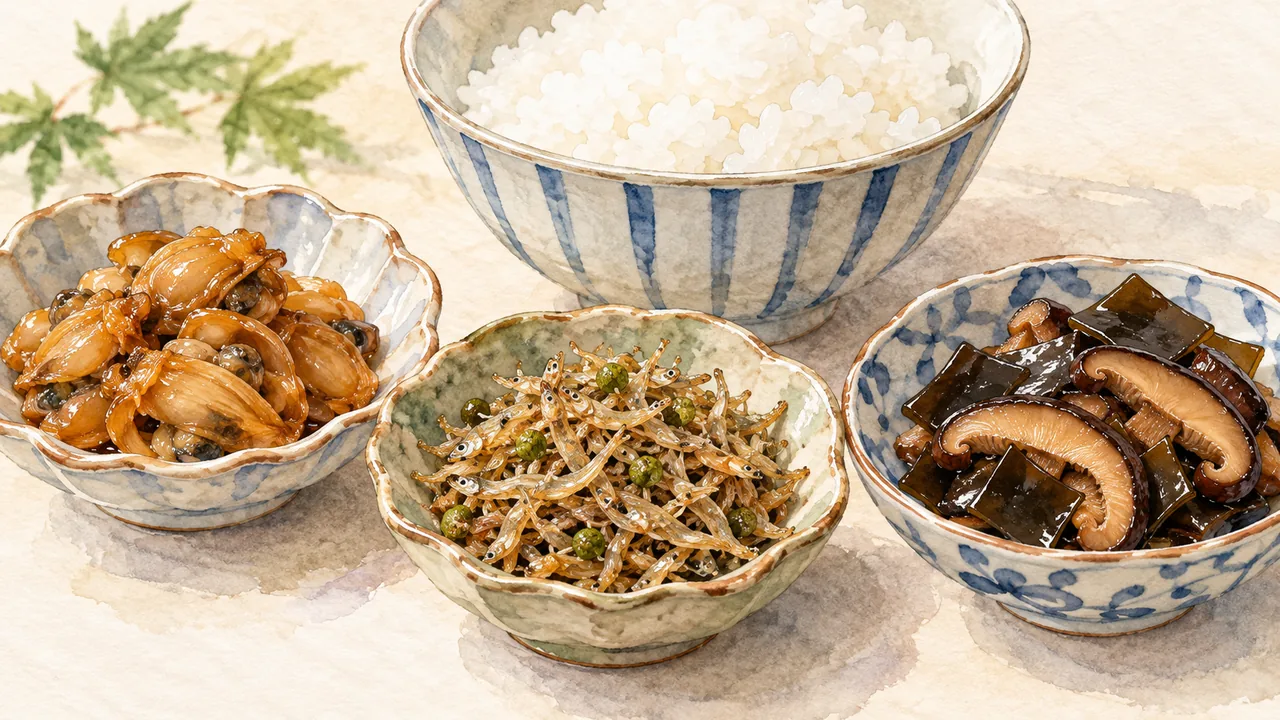
Simmered down until it keeps
Tsukudani is fish, shellfish, seaweed and the like simmered down in soy sauce and sugar. The name is said to come from Tsukudajima, an island district of old Edo (Tokyo). It keeps well, and a small amount goes a long way with rice — so all over Japan, places developed tsukudani that cook local ingredients in local soy sauce.
Wild clams in Kuwana; baby sardines and sansho berries in Kyoto; kombu and shiitake on Shodoshima, the island of soy sauce. Look at the pairing of ingredient and soy sauce, and choosing tsukudani becomes part of the pleasure.
2. Kaishin Shoten, Kuwana: Clams Shucked One by One
A soy sauce base kept going since 1912
Kaishin Shoten is an old shop in Kuwana, Mie Prefecture, founded in 1912. It buys wild Kuwana hamaguri clams directly from the fishing port, and while they are still fresh, shucks them one by one, by hand.
The clams are then simmered until plump in a soy sauce base handed down since the shop's founding — the soy sauce and sugar the family has insisted on for generations, topped up and kept going. No preservatives or chemical seasonings are used. In Kuwana, clams simmered this way are called shigureni.
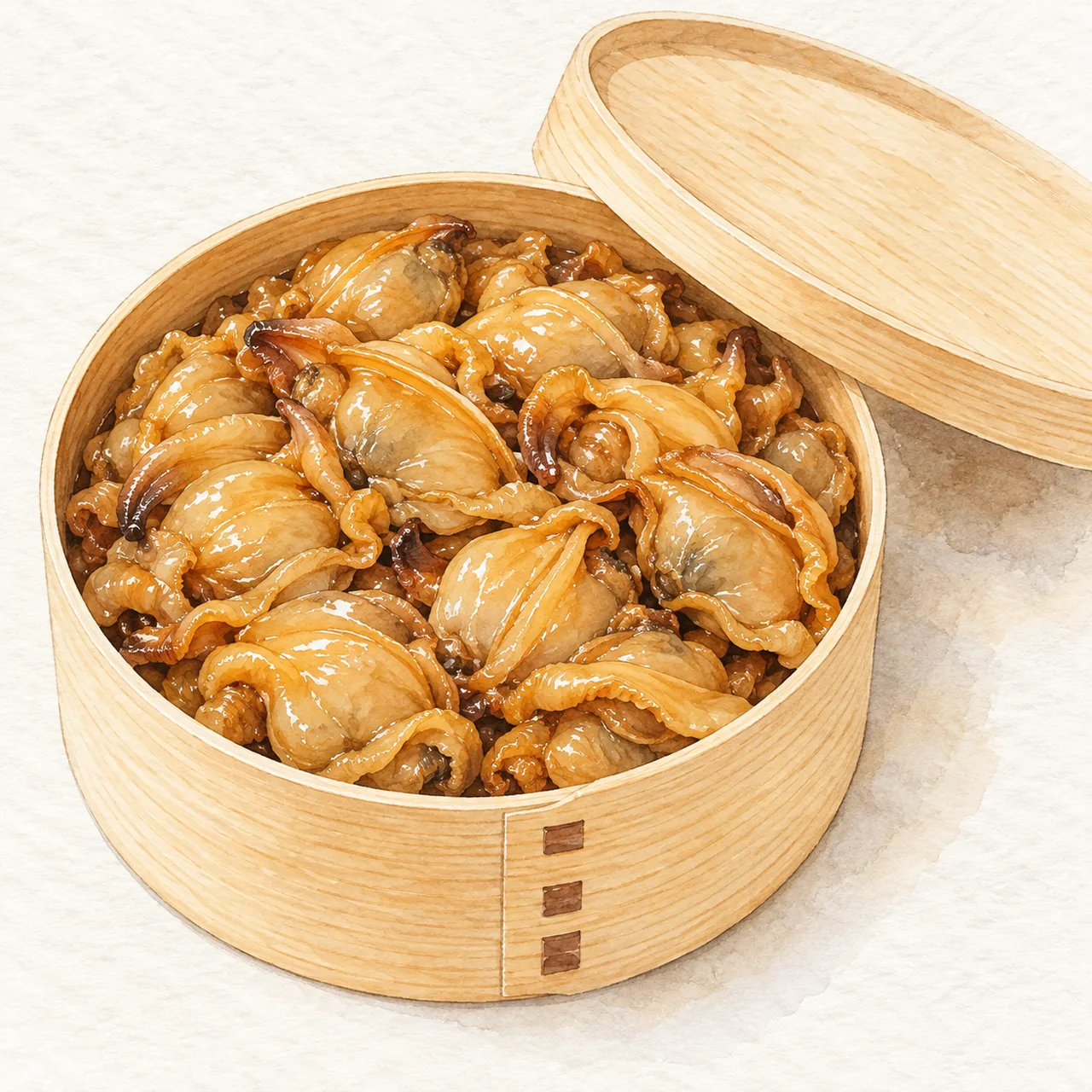
Kuwana clams, a good-luck food since the Edo period
According to Kaishin Shoten, Kuwana's clams have been a good-luck food since the Edo period — eaten on pilgrimages to Ise Shrine and at weddings. Now that wild clams have become rare, they are treasured as a special gift.
Kaishin Shoten Kuwana Hamaguri Shigureni, 200 g in a bentwood box — two ways of simmering
"Ni-hamaguri," which lets the clam speak for itself, and "taki-hamaguri," fragrant with caramelized soy sauce. Wild Kuwana clam shigureni packed in a round bentwood box, from Kaishin Shoten's own shop.
The bentwood box makes it ready to give as a year-end or celebration gift. Eat it with hot rice or in ochazuke. Sold in Japan.
3. Nomura Tsukudani, Kyoto: Chirimen Scented with Sansho
Kyoto tsukudani and obanzai
Nomura Tsukudani is a Kyoto tsukudani maker founded in 1931. In Uji, Kyoto Prefecture, it makes tsukudani, obanzai (Kyoto home-style side dishes) and osechi New Year dishes.
Chirimen sansho is Kyoto's tsukudani of tiny chirimen-jako (dried baby sardines) simmered with tingling sansho berries (Japanese pepper). Within the soy sauce flavor, every sansho berry you bite releases a bright, citrusy aroma.
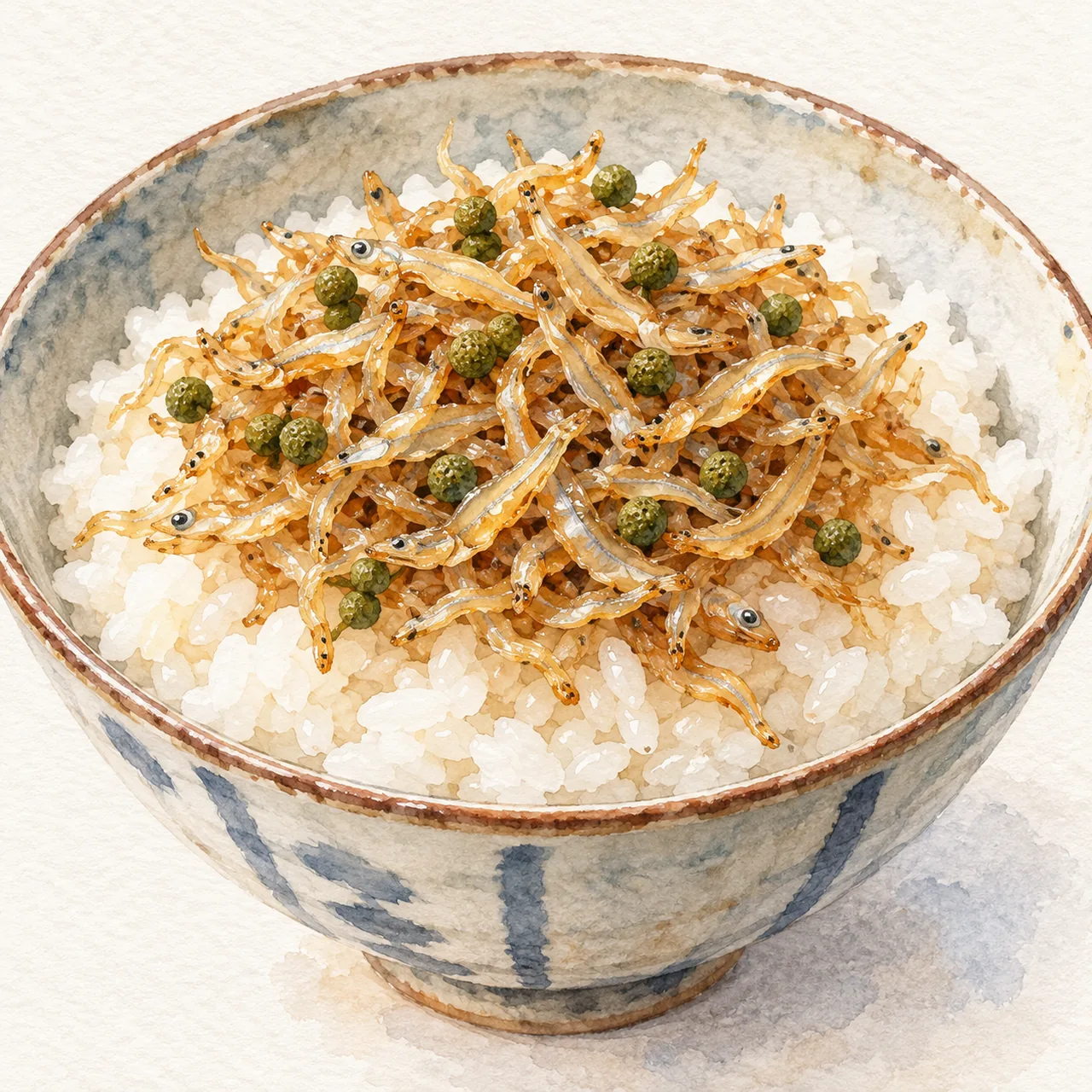
Nomura Tsukudani Chirimen Sansho 150 g — for onigiri and ochazuke
Kyoto tsukudani of baby sardines and sansho berries. 150 g, made by Nomura Tsukudani in Uji and sent from its own shop.
On rice, of course — and in onigiri or scattered over ochazuke. One tub in the fridge makes breakfast and bento easy. Sold in Japan.
4. Shimanoka, Shodoshima: Tsukudani from the Island of Soy Sauce
From soy sauce island to tsukudani island
Shodoshima, in the Seto Inland Sea, is an island of soy sauce, where brewing began in the Edo period. As brewing flourished, tsukudani made with that soy sauce spread after the Second World War — the island is even said to have simmered sweet potato vines in its soy sauce in the hard years after the war.
Shimanoka is a tsukudani maker on Shodoshima. Its shiitake kombu is cubed Hokkaido kombu and sliced shiitake simmered in Shodoshima soy sauce.
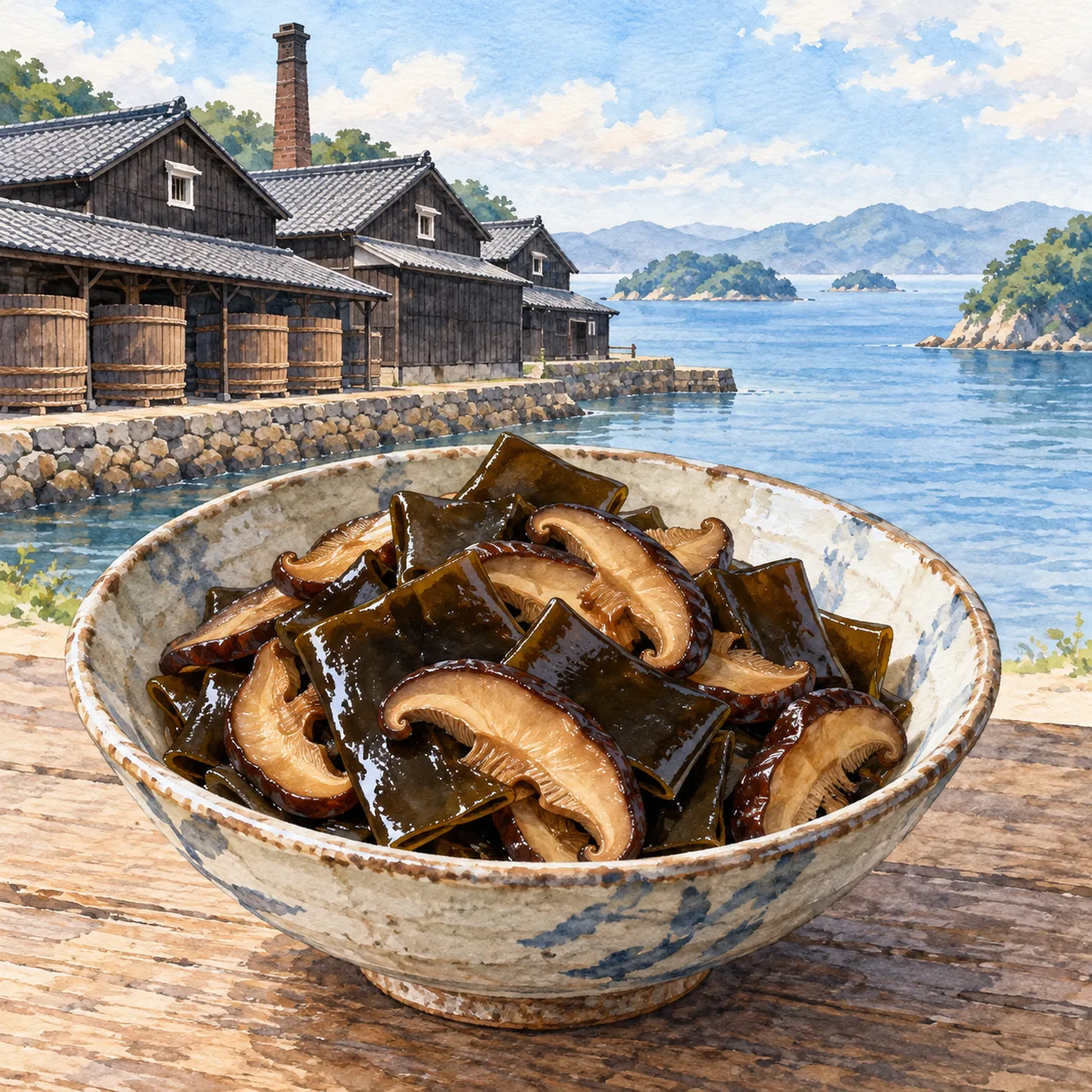
Kombu and shiitake, meeting again in tsukudani
Kombu and dried shiitake are both dashi ingredients. Shimanoka's shiitake kombu simmers the two together in soy sauce to go with rice. Ingredients you'd normally use to make stock become something you eat as is — a pairing only a country of dried foods and soy sauce would come up with.
Shimanoka Shodoshima Shiitake Kombu 500 g — kombu and shiitake in island soy sauce
Cubed Hokkaido kombu and sliced shiitake, simmered in Shodoshima soy sauce. A generous 500 g, from Shimanoka's own shop.
There's plenty, so you can use it freely with everyday rice and bento. Also sold as a set of five. Sold in Japan.
5. How to Eat and Store Tsukudani
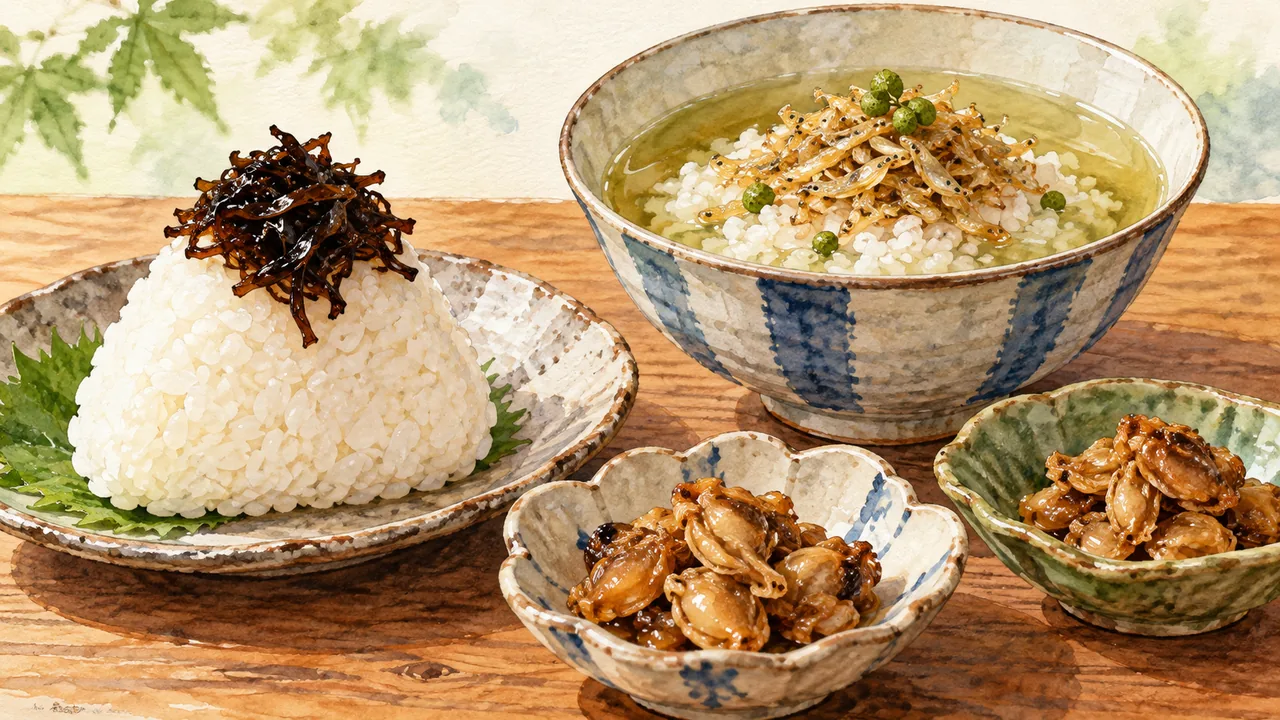
Rice, onigiri, ochazuke
Tsukudani is at its best in a small amount on freshly cooked rice. It's also a classic filling for onigiri (rice balls) and a topping for ochazuke (rice with tea or broth poured over). Chirimen sansho is good on chilled tofu or tossed through pasta, too.
Clam shigureni also makes a fine snack with sake. Take a little from the box onto a small plate and enjoy it slowly.
Refrigerate once opened
Tsukudani keeps well, but store it in the fridge once opened. Nomura Tsukudani says its chirimen sansho should be kept below 10°C (50°F) after opening and eaten soon.
Use a clean, dry spoon or chopsticks to serve it, and it stays good longer.
6. Buying Tsukudani Outside Japan
The three products above are sold in Japan; we couldn't find them on Amazon.com. But Shimanoka — the Shodoshima maker in this guide — does sell its nori tsukudani there: Japanese seaweed simmered in Shodoshima soy sauce, labeled Made in Japan.
Shimanoka Nori Tsukudani (80 g × 3)
Japanese nori seaweed simmered in Shodoshima soy sauce — the same island, the same maker as the shiitake kombu above. Spread a little on rice, or use it in onigiri.
Shimanoka Nori Tsukudani (80 g × 3)
Loading product details…
Kombu with Ginger Tsukudani (100 g)
Hokkaido kombu tsukudani with ginger, made in Japan. If you want to try kombu tsukudani like Shimanoka's shiitake kombu, this is the closest one sold in the US.
Kombu with Ginger Tsukudani (100 g)
Loading product details…
At a Japanese grocery store, look for 佃煮 (tsukudani) on the label, and しぐれ煮 (shigureni) for clams. Clam and fish tsukudani may face import rules in some countries, so check before bringing it home from Japan.
7. Frequently Asked Questions
What's the difference between shigureni and tsukudani?
Shigureni is one name within the tsukudani family. In Kuwana, clams simmered in soy sauce are called shigureni, and Kaishin Shoten keeps two styles: ni-hamaguri and taki-hamaguri.
How long does tsukudani keep once opened?
Refrigerate it after opening and eat it soon. Check the label for the unopened best-before date — Nomura Tsukudani's chirimen sansho is good for 180 days from production.
Which makes the best gift?
For a formal gift, Kaishin Shoten's clam shigureni in its bentwood box. Kuwana clams have been a good-luck food since the Edo period.
How do you eat chirimen sansho?
On rice is the classic way. It also works in onigiri and over ochazuke. Enjoy the bright aroma of the sansho berries.
Why is Shodoshima known for tsukudani?
Because it's an island of soy sauce. Brewing began there in the Edo period, and as it flourished, tsukudani made with the island's soy sauce spread after the war.
Can chirimen sansho contain shrimp or crab?
Nomura Tsukudani notes that its baby sardines are caught by a method in which shrimp and crab can be mixed in. If you have allergies, check the ingredients label.
Final Thoughts: Local Ingredients, Simmered in Soy Sauce
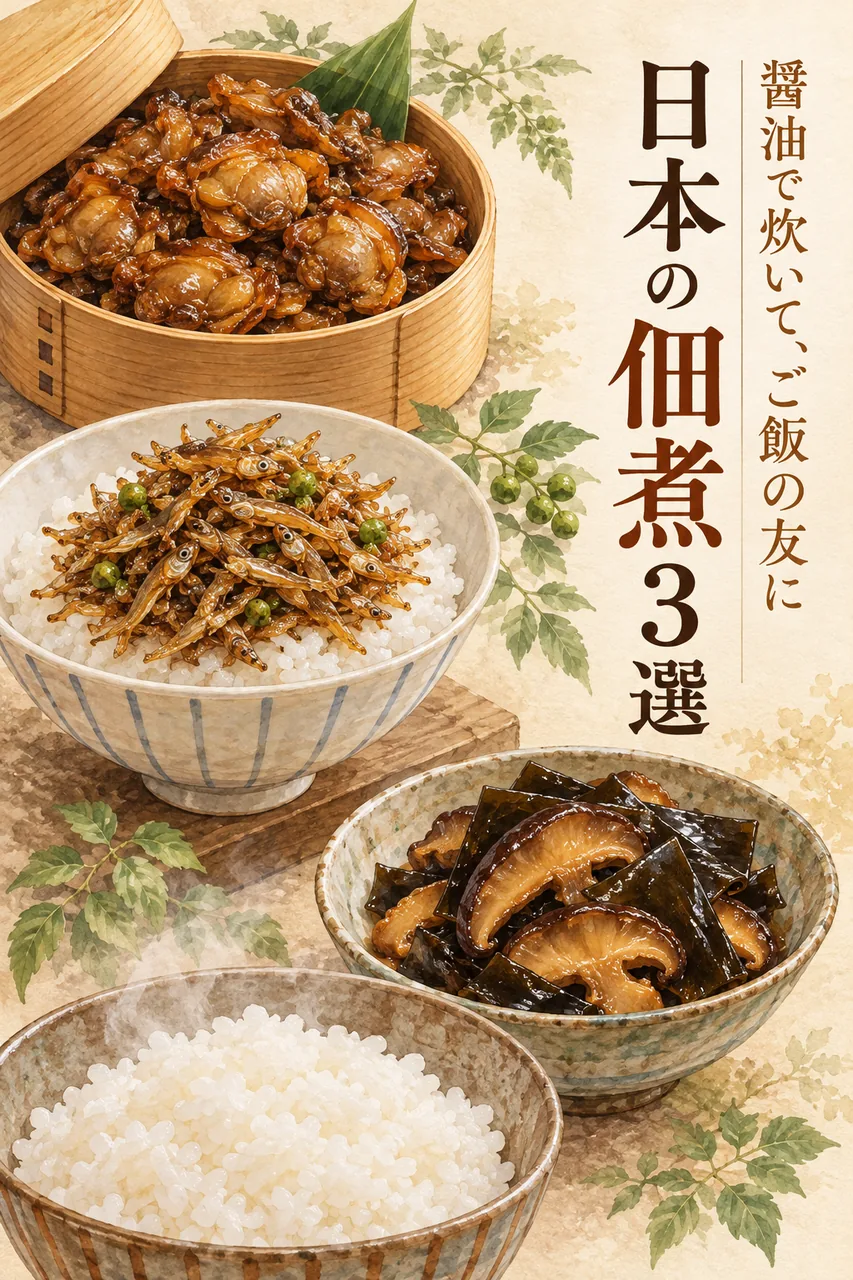
Tsukudani is local ingredients simmered in soy sauce — Japan's companion to rice.
Kaishin Shoten in Kuwana, founded in 1912, hand-shucking wild clams and simmering them in a soy sauce base kept going for generations. Nomura Tsukudani's chirimen, scented with sansho berries. Shimanoka's shiitake kombu, cooked on the island of soy sauce. Each one is made from local ingredients and soy sauce.
For a year-end gift, or tomorrow's breakfast — try tsukudani from where it's made.

Japan's Best Rice Accompaniments | Mail-Order Ranking TOP 10
Kombu for Dashi: Rishiri, Rausu, Ma-Kombu and Aged Kelp